Welcome to my service dedicated to the repair, rebuilding, and production of transformers and inductors for vintage and Hi-Fi equipment. With many years of experience in the field, I offer a tailor-made service to bring your audio devices back to life. From repairing faulty transformers to faithfully rebuilding original parts, I guarantee superior results. My approach involves maximum attention to detail and the use of advanced techniques. A professional, reliable, and customized service to meet customers’ needs. Send your faulty sample, and I’ll take care of the rest. Let’s restore the melody of the past together!

For those interested in commissioning work from me
Minimum cost for rewinding a vintage transformer: €120, plus shipping costs. Please, no time-wasters sending a transformer to get a quote and then deciding the cost is too high and asking to have it sent back. If you have a radio output transformer, consider using the universal output transformer for vintage radios.
Guide to Transformer Dimensions
In certain circumstances, it may not be necessary to have the original transformer for reproduction, especially if complete electrical data is available. However, to ensure precise work, I kindly ask customers to provide two key measurements: the lamination width and the stack thickness of the transformer. This simple collaboration in providing accurate details is essential to ensure the success of the job. In the two images below, I clearly show how to take the required measurements.
| Lamination width | Stack thickness |
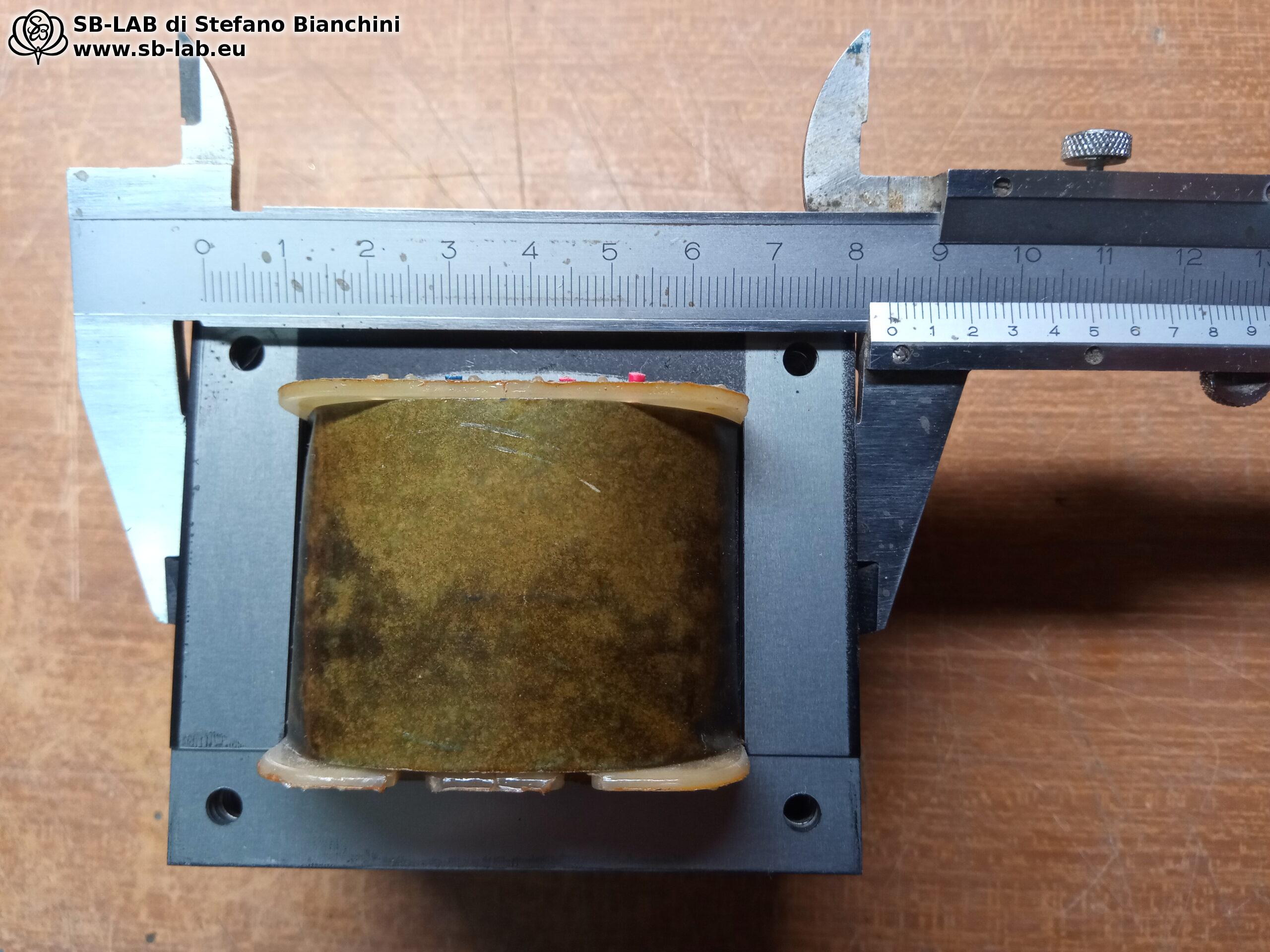 |
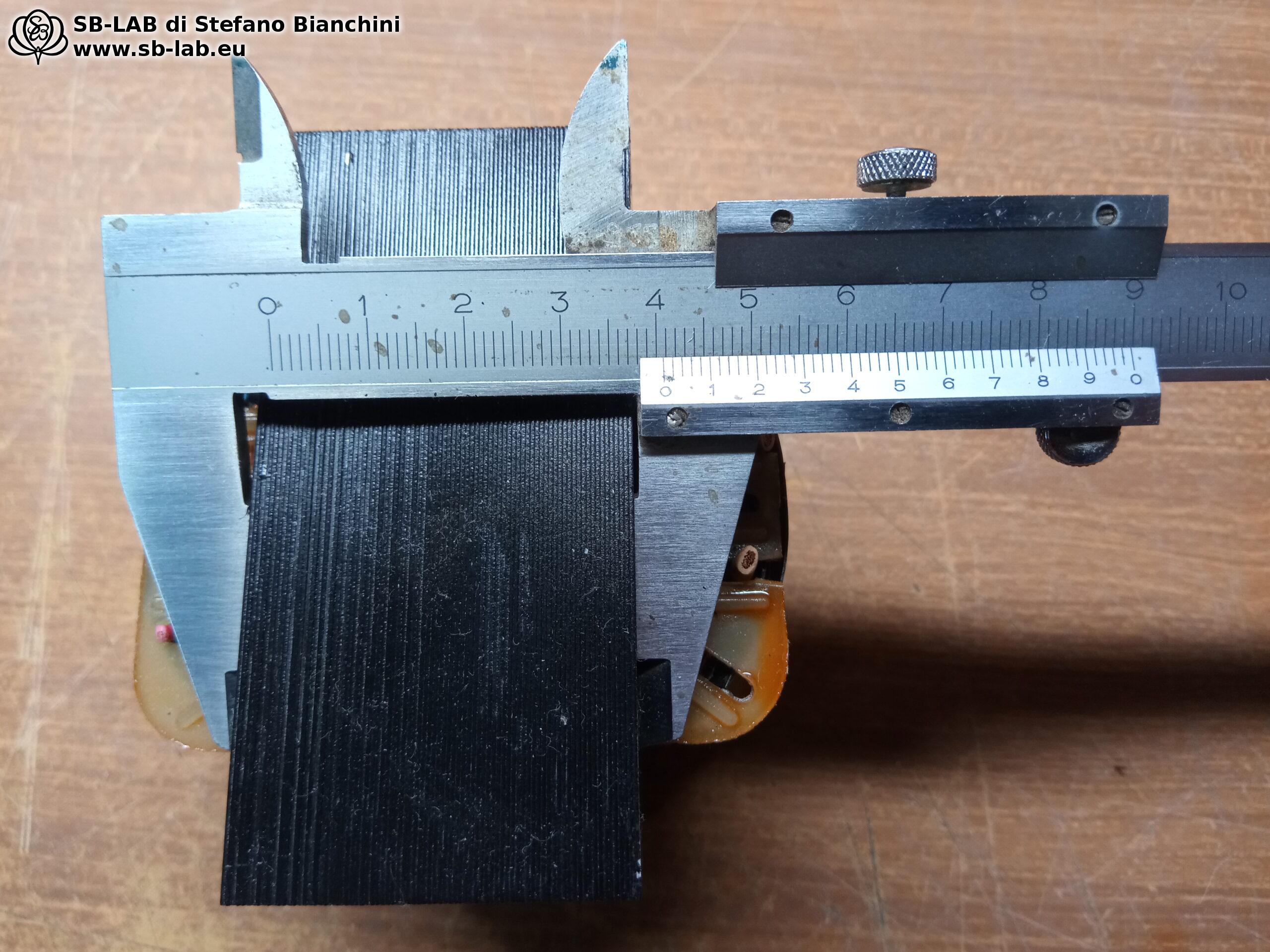 |
 |
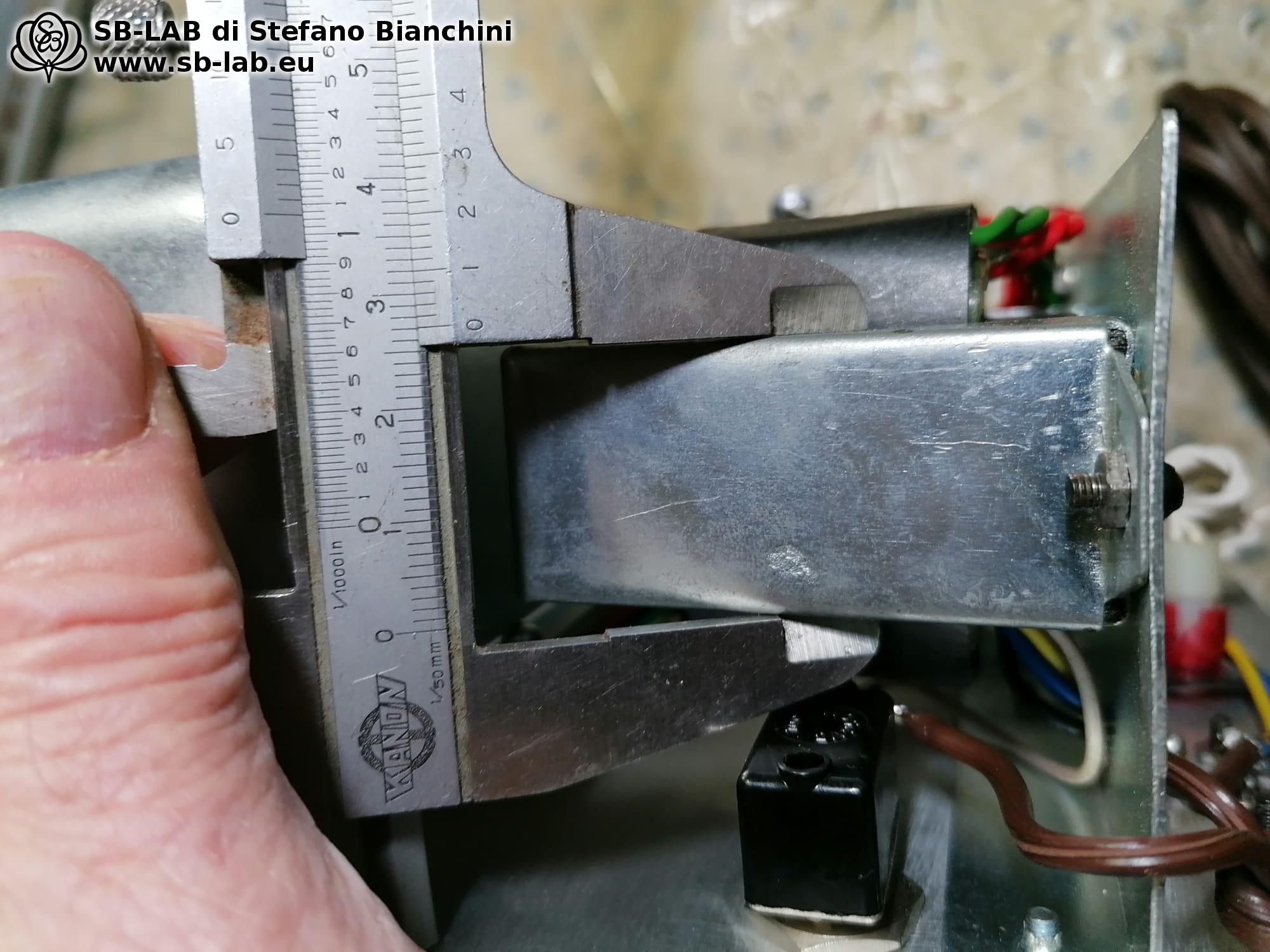 |
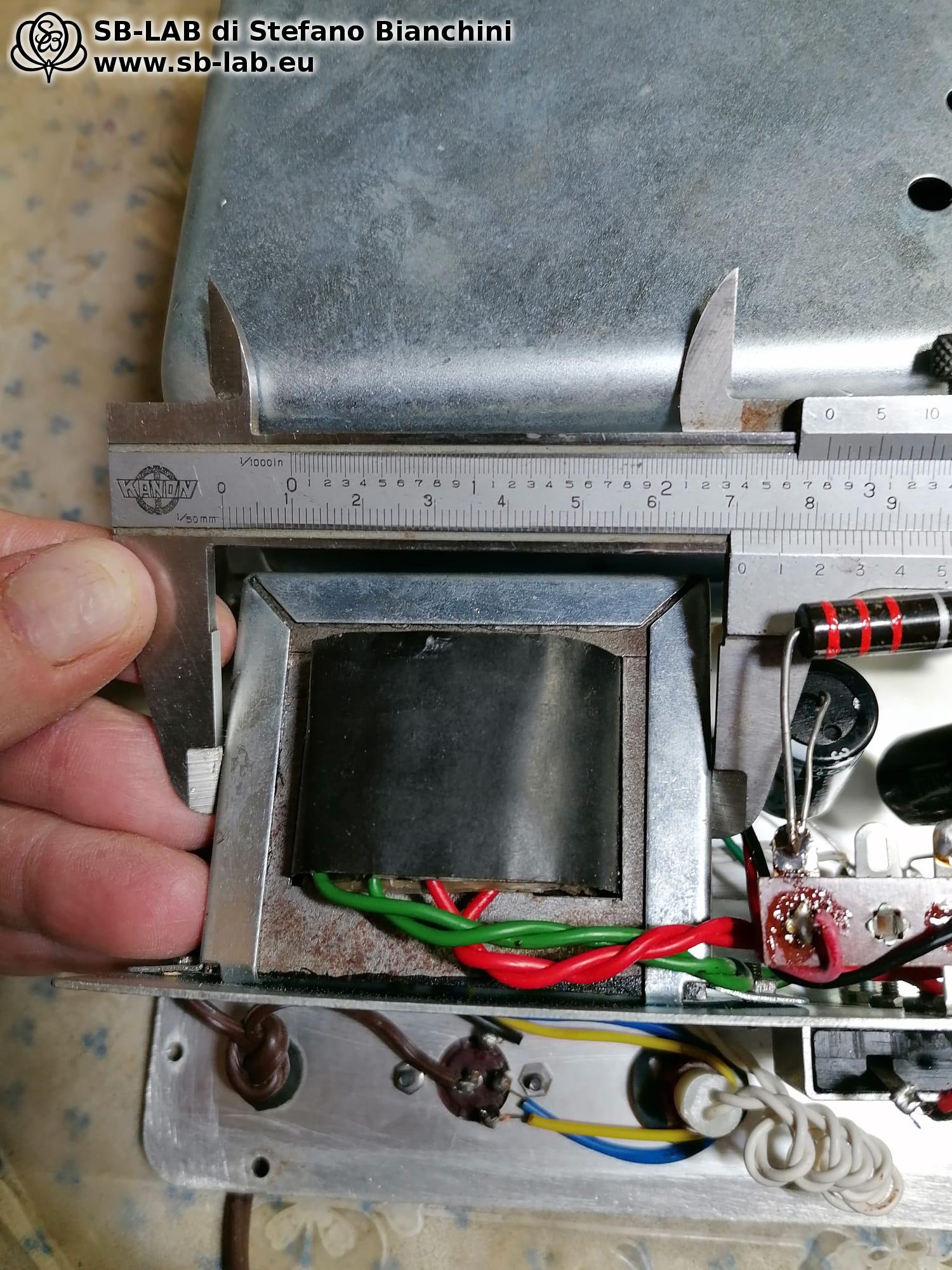
Unfortunately, many times customers send other dimensions that are completely useless for reproducing transformers. Below, I show some images with incorrect or not very informative measurements that make it difficult to understand the required specifications. It is essential to accurately provide the requested dimensions—that is, the lamination width and the stack thickness—to ensure precise and efficient reproduction.
Useless measurement…
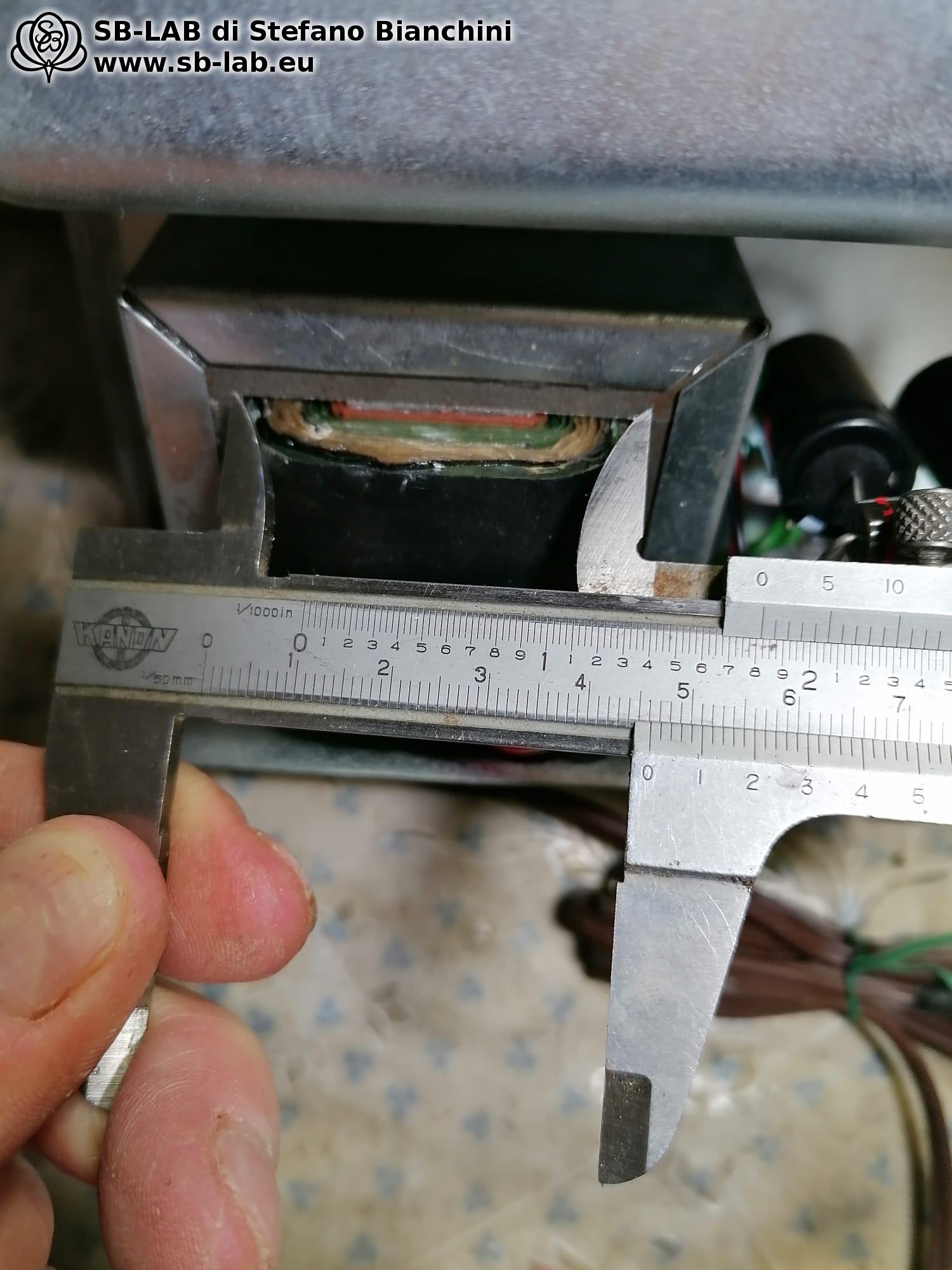
Useless measurement…
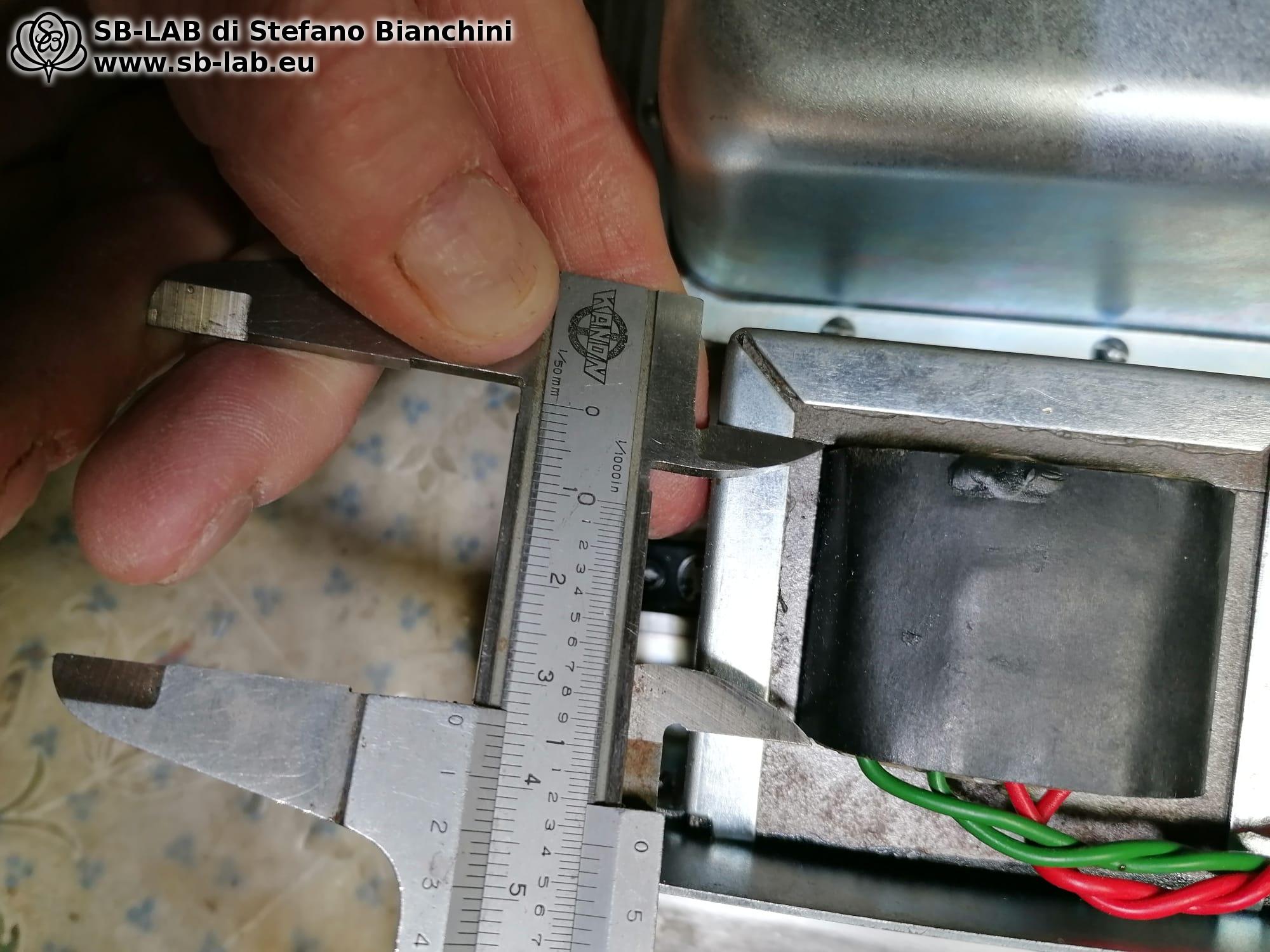
Useless measurement…
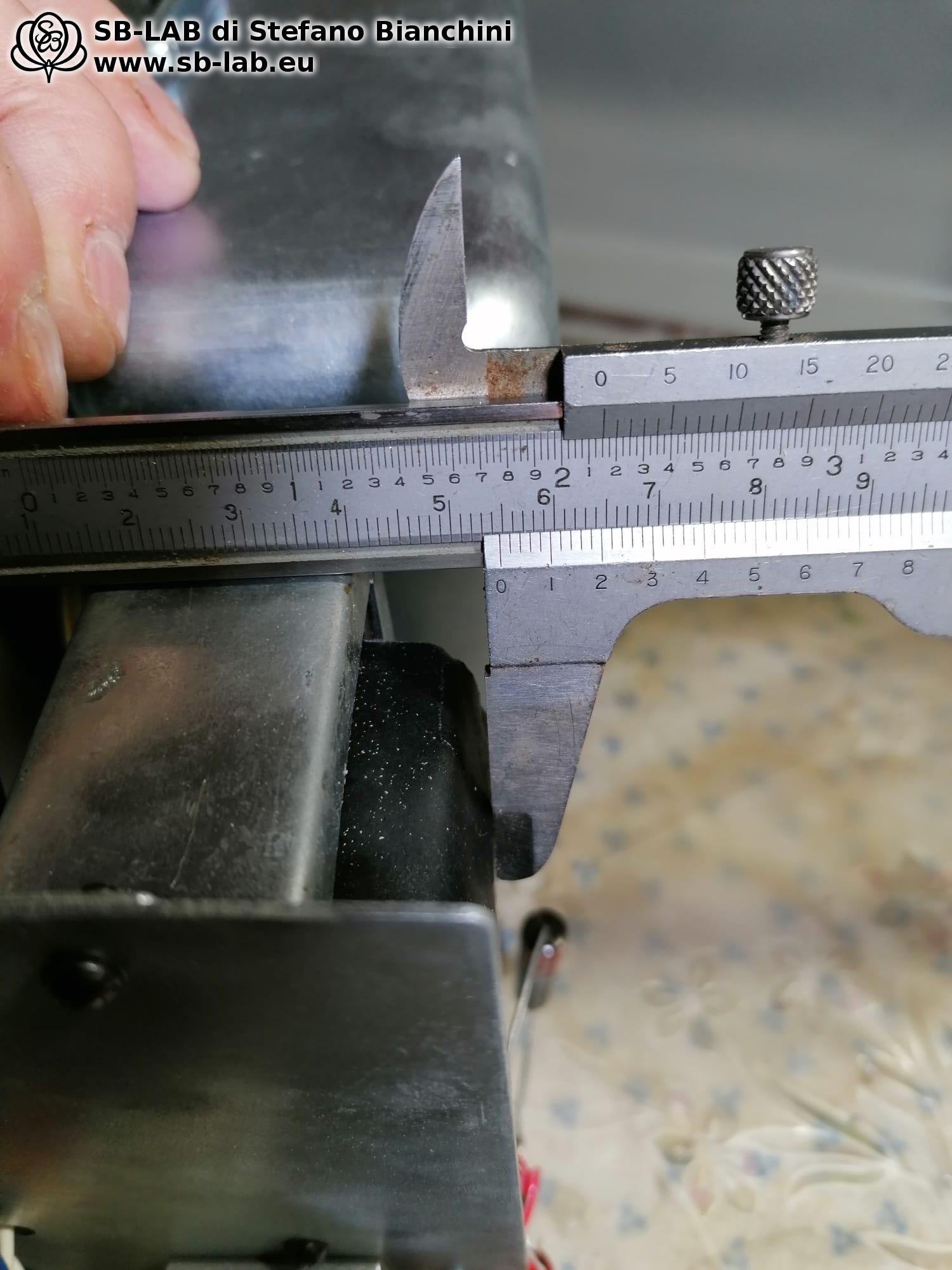
To ensure an efficient service, I kindly ask customers to provide only the essential measurements for reproducing the transformer: lamination width and stack thickness. Send a clear photo of the transformer with a caliper to make sure you are communicating the correct dimensions. Please do not send a slew of measurements without specifying which is the width and which is the thickness. Also, do not include additional measurements unless specifically requested. This ensures a smooth and precise process in reproducing your transformers. For all other cases, keep reading the article.
Audio and power transformers, chokes, and field coils for vintage radios
You must send me the original damaged part; afterwards, a quotation will be issued! Most of these old transformers necessarily have to be rewound on the original bobbin, since 90% of them do not have standard dimensions. As a result, a newly made part would not fit properly, and a brand-new transformer made with modern materials would look out of place on an 80-year-old radio.
When I receive the original damaged transformer, I will assess whether it is possible to remake it completely new or whether it is necessary to retain some of its parts (laminations, bobbin, covers, etc.). Based on the item, I will inform you of the rebuilding cost.
If you have a burnt transformer, it is essential to send it in its entirety; it is not possible to provide a quotation based on a photo sent by email or a radio schematic. In the worst case, you may lose the shipping cost, as the quotation is without obligation.
Always specify the radio model (or models that use the same circuitry). Sometimes this can be helpful when data is uncertain. Send a few photos by email, which can still be useful.
Audio and power transformers and chokes for vintage musical and Hi-Fi equipment.
You will need to send me the original damaged part; afterwards, a quotation will be issued. Many of these transformers may have non-standard dimensions, special bobbins, or particular windings. Therefore, it will be necessary to unwind the transformer to understand its structure or recover laminations, the bobbin, and any covers.
In the case of a stereo Hi-Fi, the pair of output transformers will need to be replicated. It is possible to rewind only the damaged transformer, but there is no guarantee that, although rewound and rebuilt in the same way, it will be “sonically” identical to its older counterpart. From experience, the newly rewound transformer often turns out to be BETTER than the old transformer, with a slightly wider bandwidth and lower distortion. It is difficult to determine the cause of this improvement, but it could be due to the deterioration of materials (enamels, resins, impregnants) over the years. Consequently, many vintage Hi-Fi amplifiers may not reproduce exactly the original sound they had when new.
When I receive the original damaged transformer, I will evaluate whether it is possible to repair it, remake it completely new, or whether it is necessary to keep some of its parts (laminations, bobbin, covers, etc.). Based on the item, I will inform you of the rebuilding cost.
If you have a burnt transformer, it is essential to send it in its entirety; it is not possible to provide a quotation based on a photo sent by email or a radio schematic. In the worst case, you may lose the shipping cost, as the quotation is without obligation.
Always specify the model of the device (or models that use the same circuitry). Sometimes this can be helpful when data is uncertain. Send a few photos by email, which can still be useful.
Audio and power transformers and chokes for modern musical and Hi-Fi equipment.
You will need to send me the original damaged part; afterwards, a quotation will be issued. Usually, modern equipment uses standard laminations and bobbins, except for those from the USA and the UK, which often use inch-standard laminations instead of metric (I only have “metric” materials). In some cases, transformers may be impregnated with “glassy” resins, making the unwinding operation very difficult and, in some cases, impossible. It is helpful to know the brand and model of the device, while the schematic can provide further information. Sometimes the original must be unwound to copy it; other times it may be possible to remake it completely new without issues. Sending a few photos by email can still be helpful.
Please note the following: I believe some people think I want the damaged transformer only to force them to commission the job. Some try to avoid this by asking me for a quote for a completely new transformer with the electrical characteristics (or assumed characteristics) of the damaged one installed in their device. This sometimes leads them to believe that the new transformer—made with new materials, new bobbins, and new laminations—must necessarily be identical to the old one. Or they think that the cost of rewinding the old transformer is similar to that of a new transformer.
The reality is different, and it seems you are not aware of the issues related to quotations for spare parts and their physical construction. If you opt for this procedure, you waste your time, I waste my time, and other people waste time calculating and preparing something that will ultimately be unsuitable. The price may not match your expectations, or you may risk buying a transformer that does not fit correctly in its intended location or that looks completely different. If you intend to replace a burnt transformer with an original salvage part bought on the used market, go ahead, because winding a transformer from scratch is certainly more expensive.
Transformers for low-value devices: Unwinding and rewinding a transformer is a time-consuming operation; labor is not free, and the Italian state requires taxes in any case. It is unrealistic to expect the cost of a rewinding job to be proportional to the value of the item you want to repair or that an unwound and rewound transformer will cost less than the few coins for which you could find the original spare part at an electronics flea market. In some cases, people have requested rewinds of transformers for devices so inexpensive that it would have been more convenient to buy the entire device again rather than remake the transformer. Therefore, please keep these rules in mind:
- If you can find the original part, say so immediately and state the price; I will tell you whether it is worth trying to rewind the broken one or if it is more convenient to buy the original spare part.
- If you can find a complete replacement amplifier, say so immediately and state the price; I will tell you whether it is worth trying to rewind the broken one or if it is more convenient to buy another amplifier.
- If you generally expect to spend a modest amount, say so and indicate the amount you would like to invest, as transformer rewinding is not a cheap operation.
- Preparing a quotation takes time, and in some cases there are situations that “cannot be quoted” (as described later in the article). If you proceed with a job—even if it wasn’t quoted—you commit to settling the bill. It is irrelevant if, in the meantime, you have found a spare part at a stall for 5 euros.
- You must be sure you really want to repair the device you own, because rewinding a transformer is not a cheap operation and even preparing quotations takes time.
US Transformers with 110V Primary
If you send me a 110V primary power transformer to be rewound, I will automatically assume it needs to be converted to 230V to be used on the Italian mains. If you want it to remain at 110V for some reason unknown to me, you must explicitly inform me.
Why it is necessary to have the original part, even if faulty
In the photo below you can see two laminations:
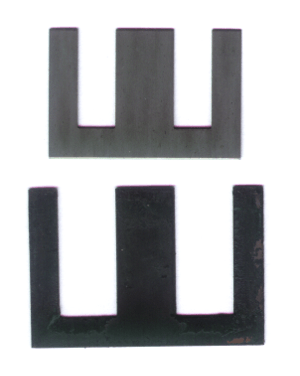
At the top, a current-production standard column-10 lamination; at the bottom, a lamination from a vintage transformer, also column 10 but completely non-standard. In fact, apart from the center-leg section—which you can see is the same as the modern lamination—all the other dimensions are different. In such cases, it is therefore impossible to build an electrically compatible replacement transformer that also has the same physical size as the original using new materials. It is necessary to have the original transformer in order to recover the laminations and the bobbin.
In the photo below: on the right, an original vintage part; on the left, a transformer that was burnt and has been rewound, preserving its original bobbin and laminations.
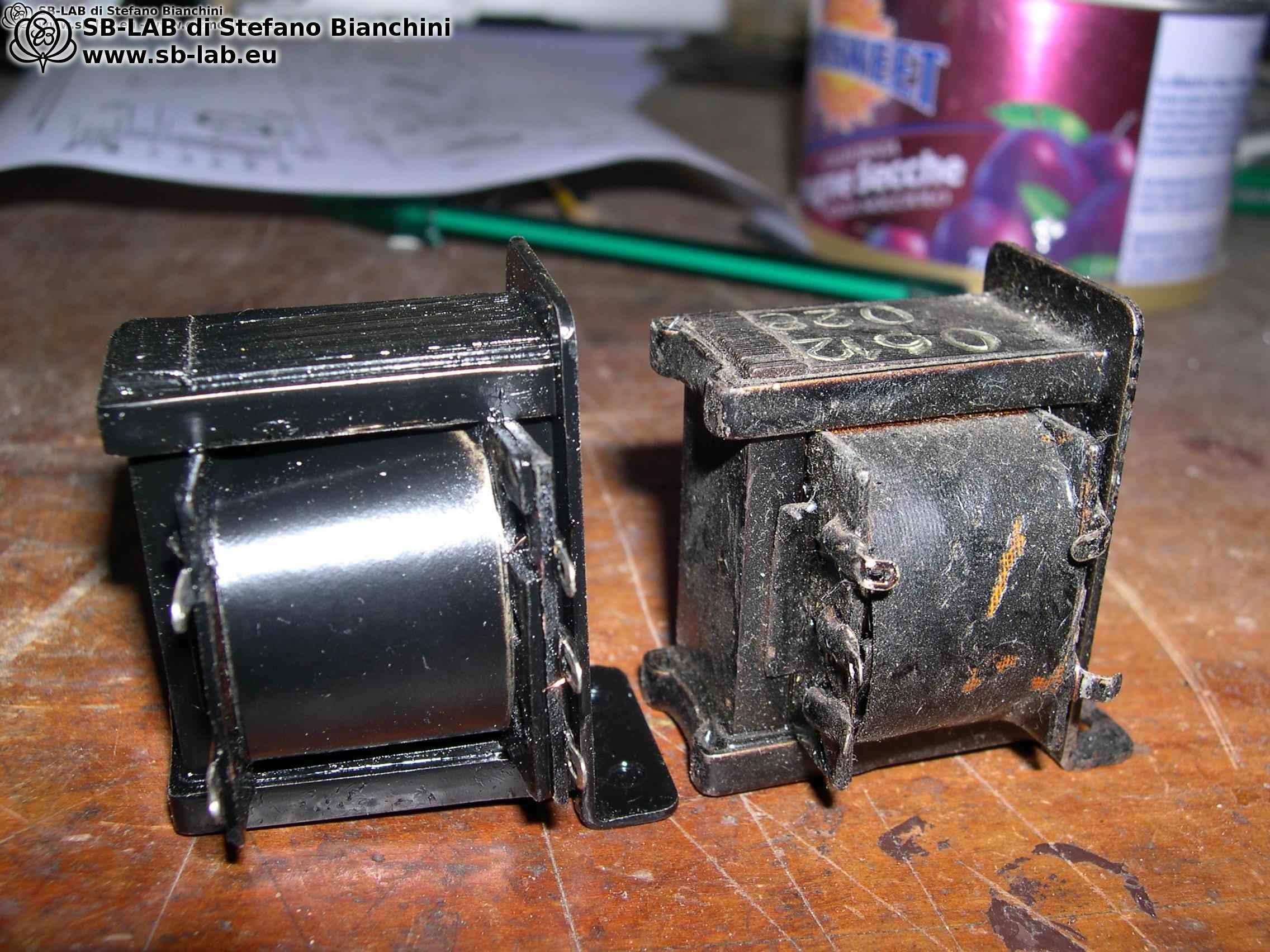
I would point out the L-shaped bracket mounted on these transformers. Even if they had standard dimensions (which sometimes happens), the presence of such a mounting bracket on the transformer prevents the construction of a new part without recovering at least that bracket. In transformers from vintage equipment there can be countless reasons that make it necessary to recover the original part. In addition to laminations and bobbins, there are various covers, brackets, supports, bells, sometimes with the rectifier socket or voltage selector onboard, terminal blocks, etc. All are mechanical details that make recovering the original part mandatory.
Audio Transformers: When the output transformer is completely missing, it is possible to build a compatible replacement. To do this, it is necessary to understand how the original was mounted in its seat, the available space, and the distance between the mounting holes. This is essential to make something that can be mechanically installed in its seat. Next, it is essential to know the audio valve and at least the speaker impedance…
A small clarification about impedances: a transformer does not have an impedance of its own; it “transforms.” This means the transformer modifies the speaker’s impedance, greatly increasing it. However, even a small change in the speaker’s impedance results in a significant change in the impedance seen by the valve. Therefore, it is essential to know the radio’s speaker impedance, which is anything but obvious.
As with many other things of the time, standards did not exist. Today, speakers are made at 2/4/8 ohms, but if you take different models of vintage radios—even with the same output valves—you may find speakers at 4.6 ohms, 11 ohms, 2.4 ohms, 14 ohms, 6.2 ohms, etc.
To measure a speaker’s impedance, you need an impedance meter; you do not measure it with a simple ohmmeter. I am equipped to perform these measurements. So, if you want a truly perfect transformer for your radio and you do not know your speaker’s impedance, you can ship it to me. I will measure it myself and make a custom audio transformer.
Field Coils
I can also rewind field coils of electrodynamic loudspeakers. Times may vary; please ask from time to time for updated information. To contact me, use the contact form available here.
Jobs I do not accept
If you have a damaged transformer and you have tried to open it yourself by unwinding it by hand, or someone else has attempted to rewind it without success, I’m sorry, but I cannot accept the job. Deformed laminations resulting from careless disassembly that behave like an accordion during reassembly, making reinsertion difficult; torn leads and confusion about where they went; transformers already rewound by a local tinkering retiree who, unfortunately, did not have wire of the correct gauge and tried to rewind it with what he had, causing uncertainty about the original structure. Transformers damaged by unsuccessful rewinding attempts by friends or customers, with statements like “I’ll give you the laminations to reuse; the voltages and currents are these”; then, once the material is received, the calculations are done and the winding does not fit the lamination window. Either it must be redone and the laminations are ruined, or it turns out later that a voltage is missing. I do not accept transformers extracted from resin with a blowtorch, which crumble as soon as they are touched; any extraction operation must be carried out by me, carefully evaluating its feasibility. Therefore, if you need to rewind a transformer, please send it to me in absolutely original condition; if it has been tampered with, I am forced to decline any availability.
I do not accept requests to rewind transformers for Geloso PA amplifiers.
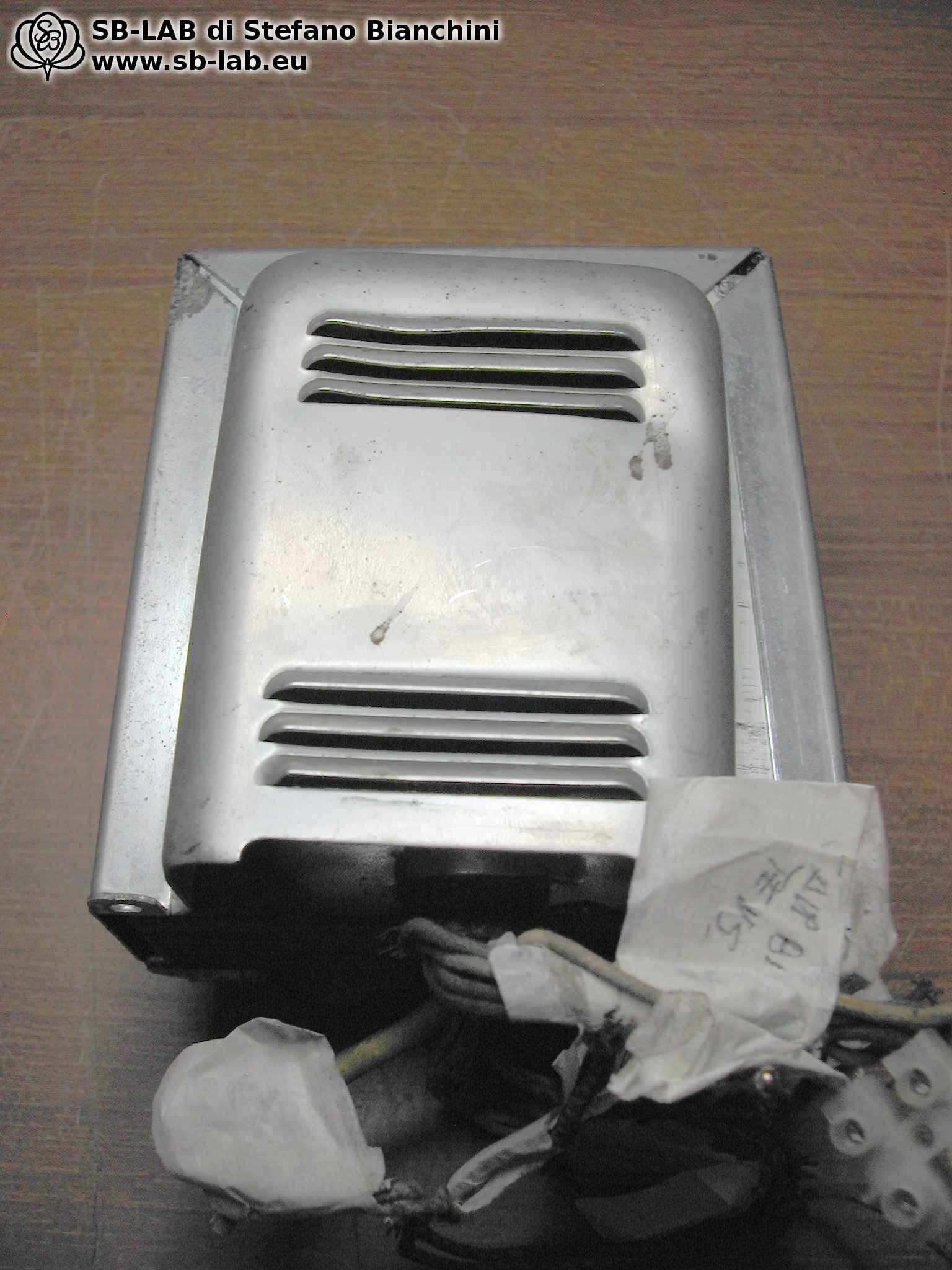
Unwinding and rewinding these transformers always becomes very expensive, and for a number of reasons I will not list, over the years I have received dozens of requests for cost estimates. The rejection rate has been 100%, therefore I am not interested in examining them.
I do not accept requests to rewind toroidal transformers, because they cannot be unwound. However, I am willing to build a new toroidal transformer knowing the voltage and current specifications. In this case, the faulty original can only be useful to know the physical size of the transformer.
Moreover, I do not accept requests to wind new replacement transformers for vintage equipment without physically having the broken original in hand. If the transformer is completely missing, I do not produce transformers based on assumed data or on drawings of the transformer’s dimensions, as such information is often completely non-standard. I am willing to make “replacement” transformers only if I can physically have in hand the entire device on which they will be mounted, so that I can assess mechanical issues.
Jobs that cannot be quoted
There is no doubt that it is possible to repair or rewind practically anything with excellent results. As I wrote above, we need to have the part in hand to give a quotation, but there are some cases in which it is impossible for us to determine a price. See the photos below for an example:
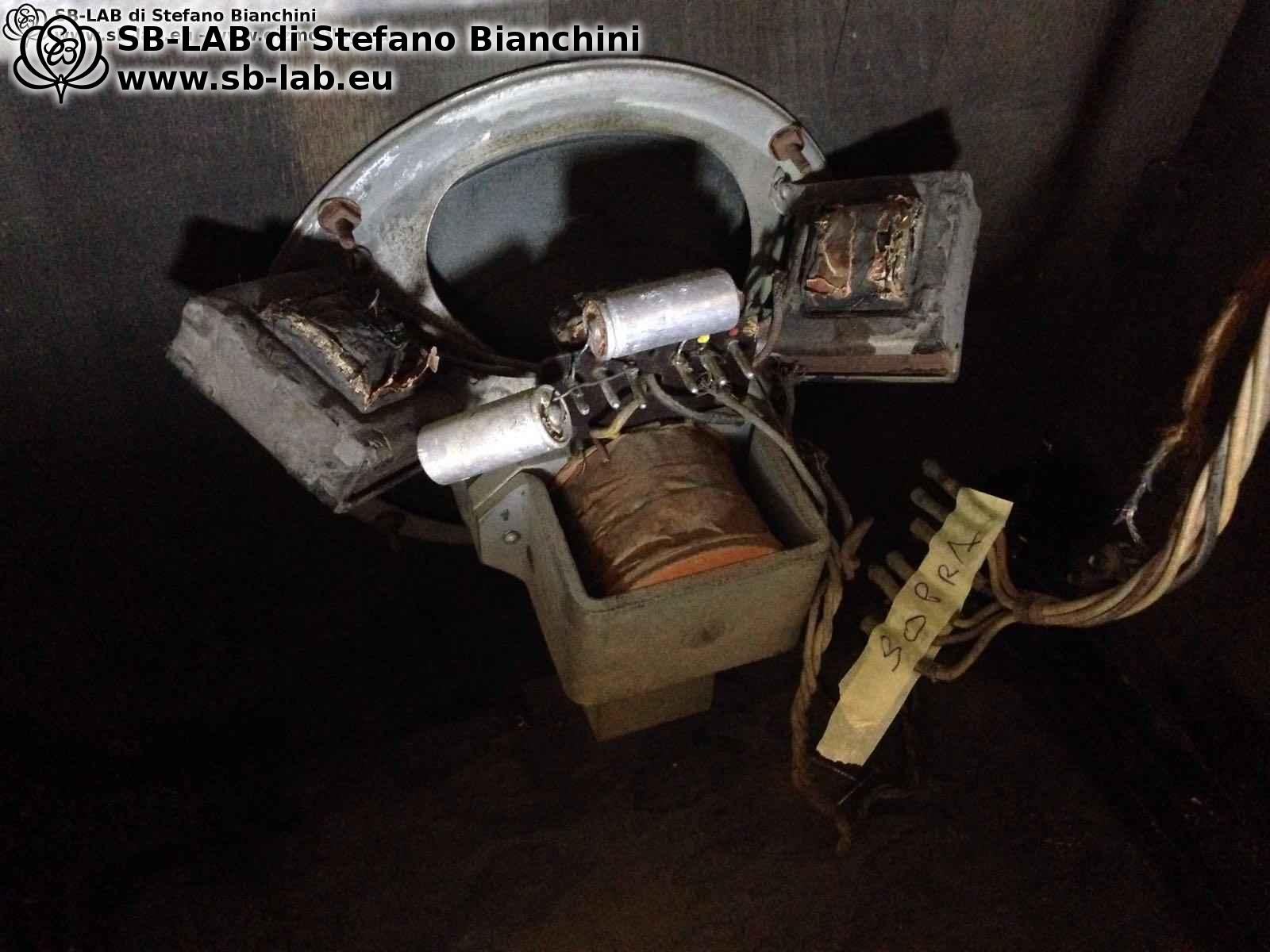
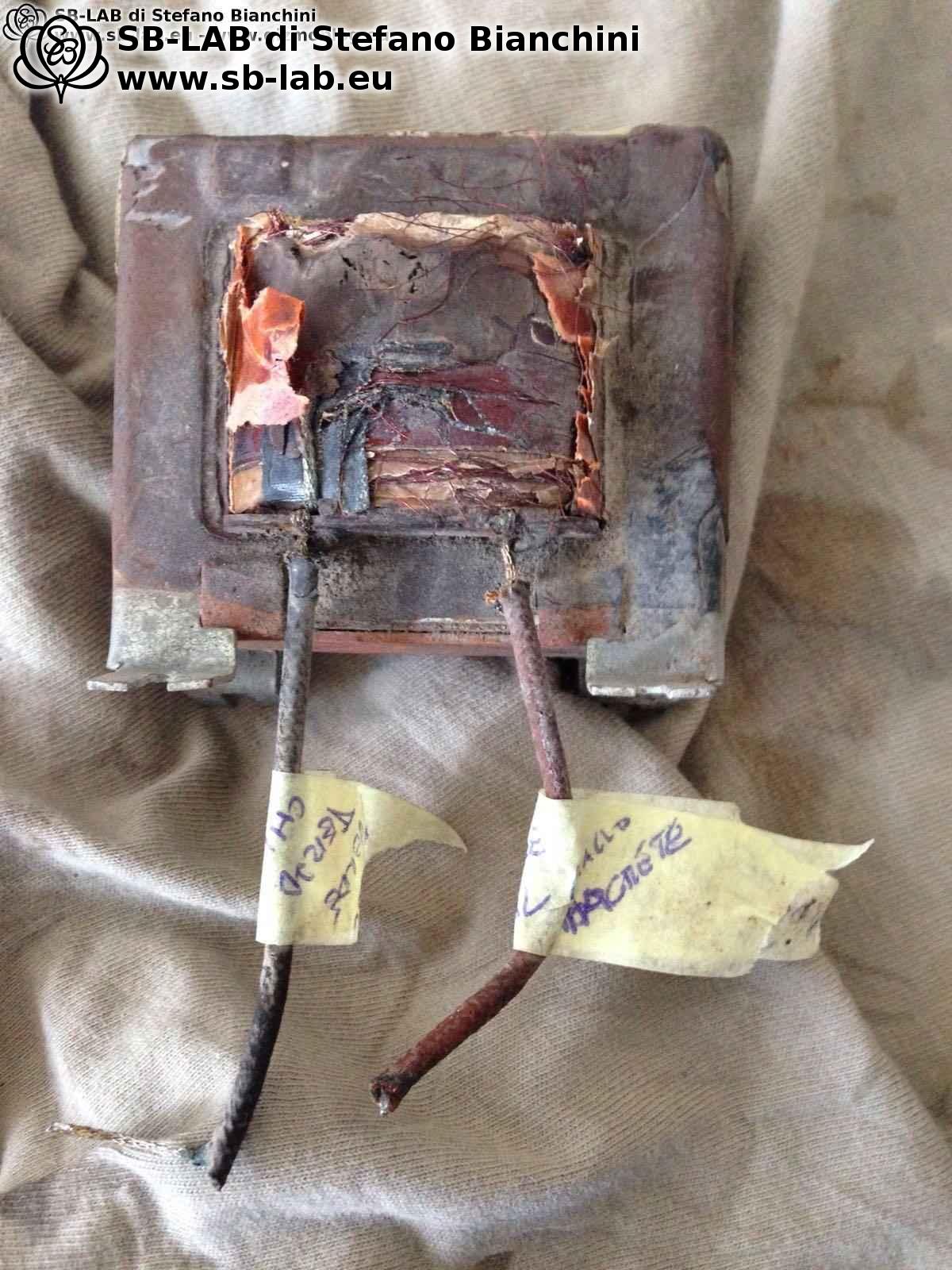
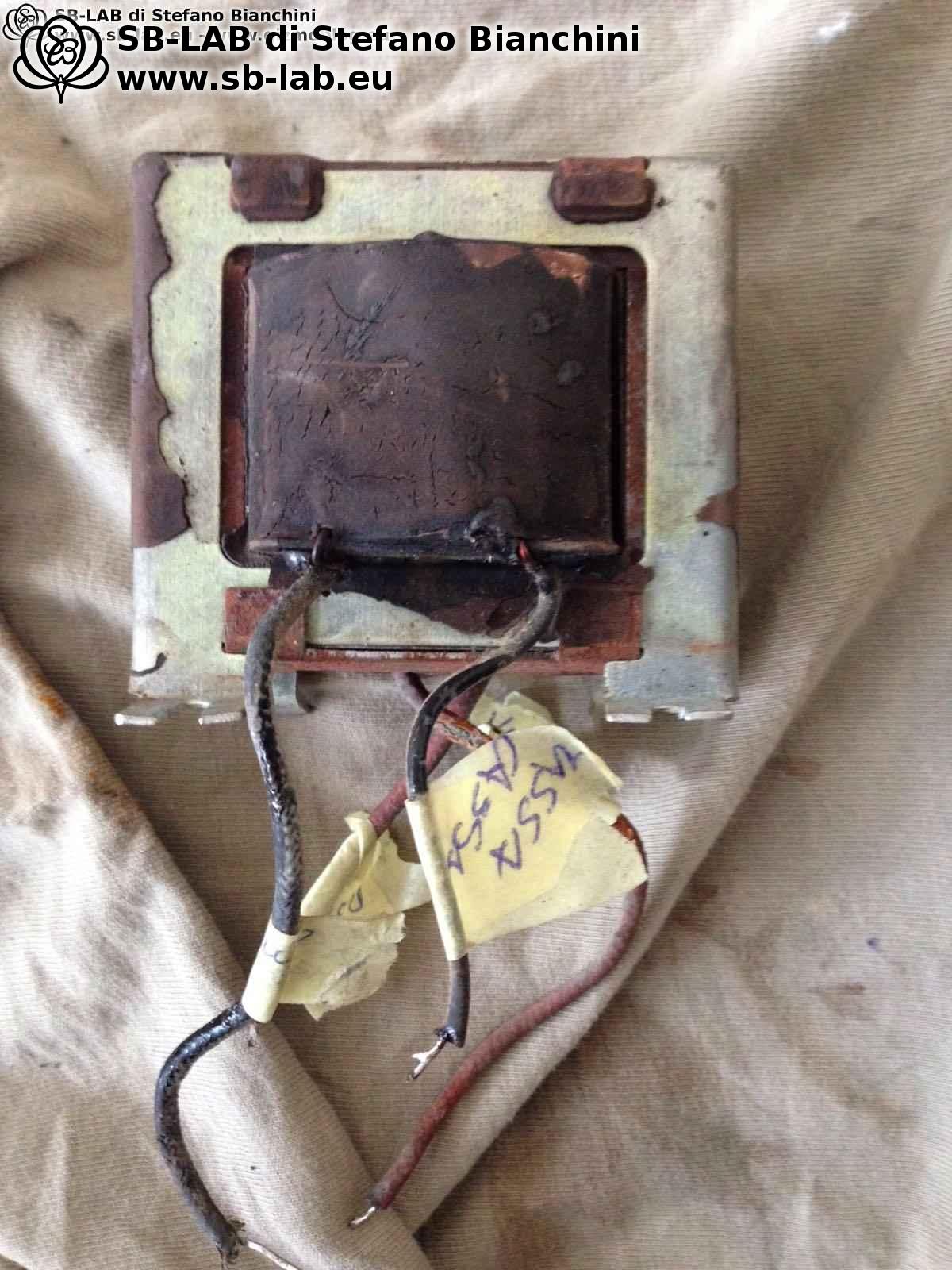
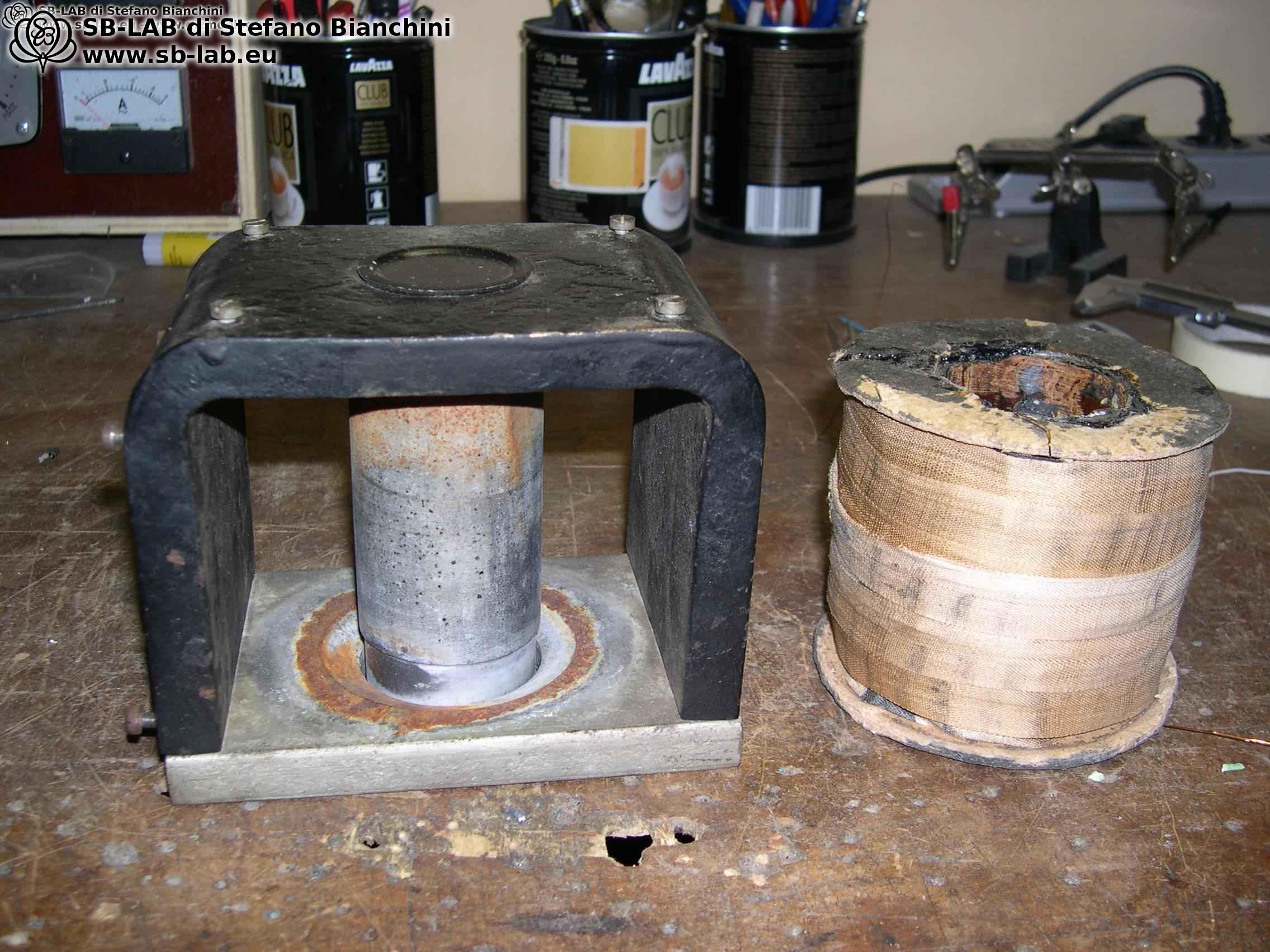
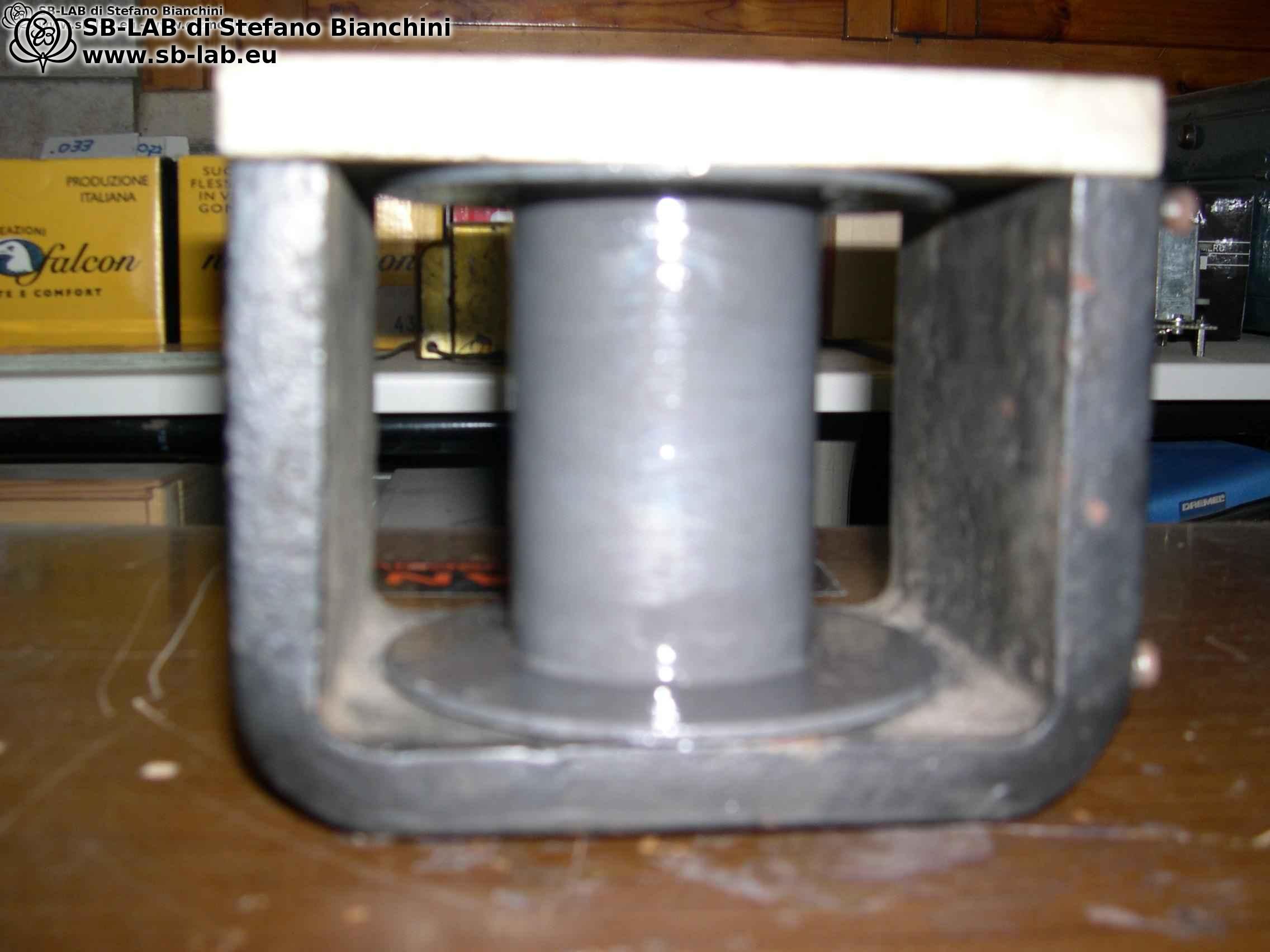
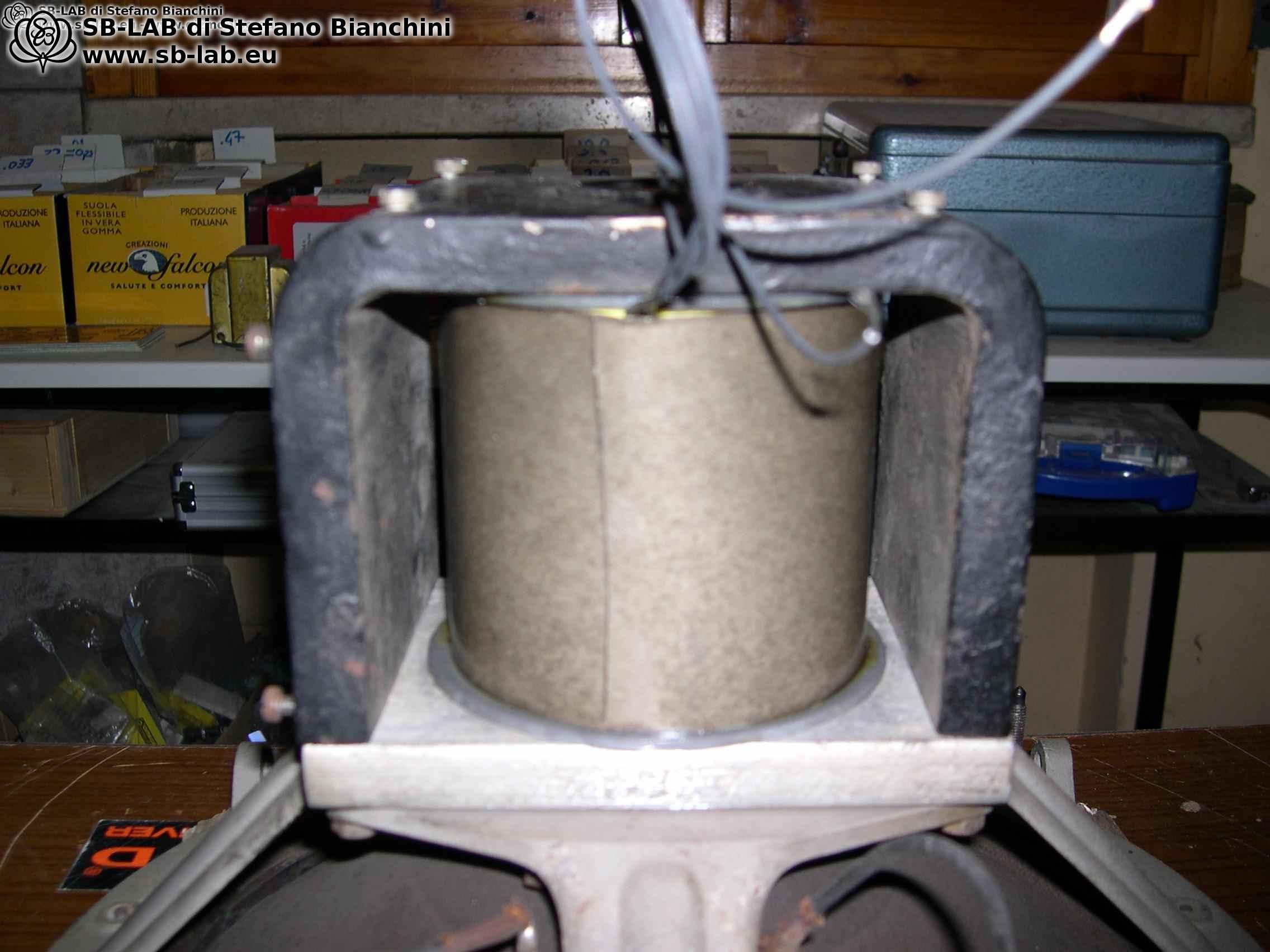
In the photos you can see the speaker block of a 1938 radio, consisting of a choke, an output transformer, and a field coil. This radio suffered years of humidity and the attack of rodents that gnawed the papers, the insulation, and even the copper. At first inspection, the most damaged components were certainly the transformer and the choke, made—moreover—of very thin copper wire. Rewinding the choke is fairly simple: once the wire gauge is known, you just strip everything off and rewind until it fits. The output transformer requires a bit more work, but fortunately the gnawed and therefore broken copper was present only in the first layers; the rest unwound easily. Then comes the surprise: we take the field coil in hand which apparently had not suffered rodent damage, and what was supposed to be just a safety inspection turns into a nightmare. Removing the outer paper layer we discover that:
- It had suffered an impact in the past, so there was a dent in the copper with signs of oxidation.
- The copper has an infinitesimal thickness with an exaggerated number of turns, as very rarely seen.
- The copper shows enamel that, in places, appears lighter because it has practically come off in patches.
Problem: The field coil necessarily has to be remade, because it cannot be powered; in 99% of cases it does not work, and in the remaining 1% it might operate only for a few hours before failing.
Second problem: It is essential to recover the cardboard bobbin without breaking it, which implies the need to unwind all the copper that surrounds it. The machine cannot perform this operation on its own, but the high number of turns present makes it difficult to determine the time required. The operation begins without knowing the precise duration, also because wire of this thickness often breaks during unwinding, making the time involved uncertain.
In the end, it was possible to remake this field coil…
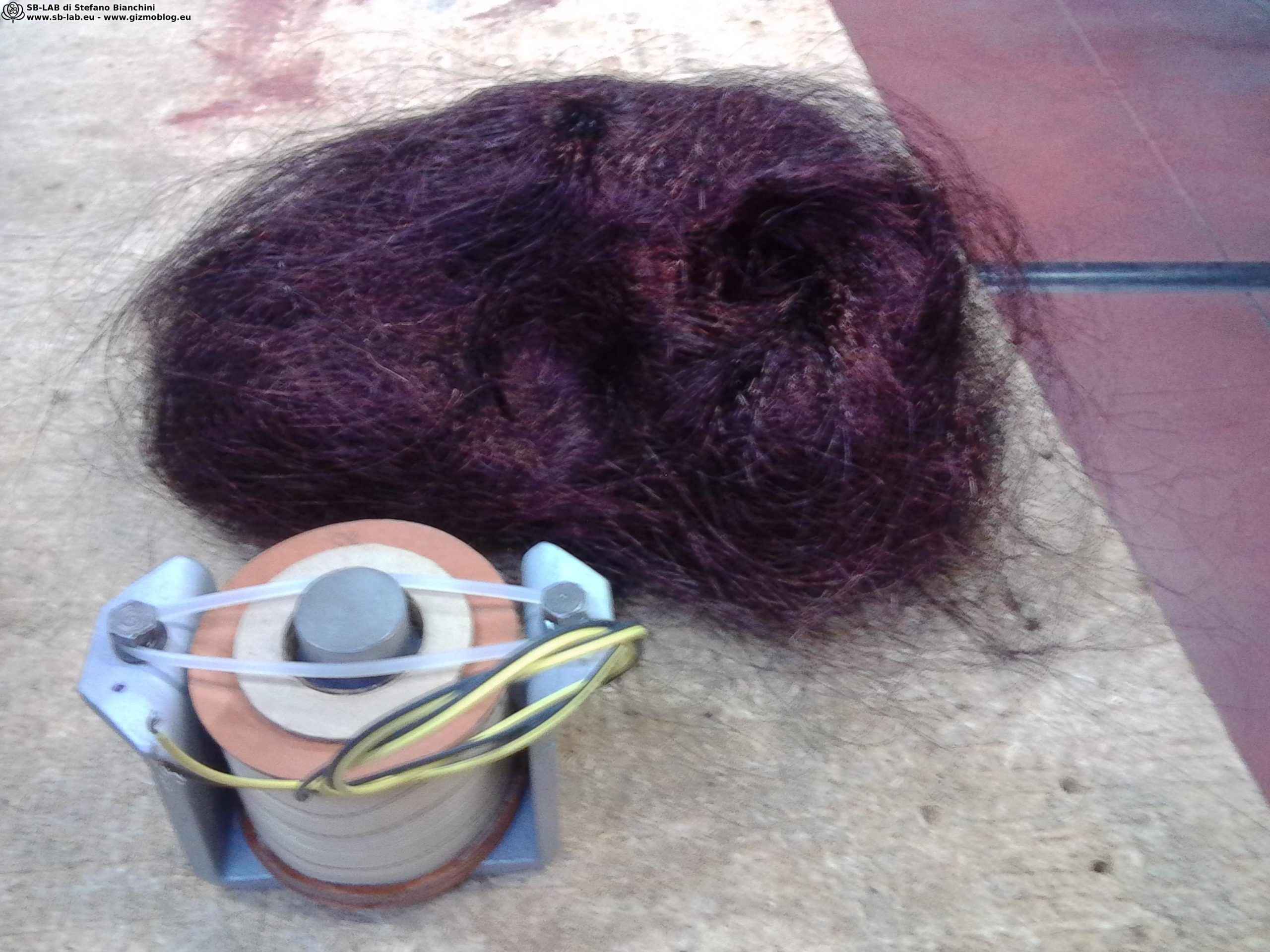
There were more than 44,000 turns in it—who knows how many kilometers of wire (in the photo you can see the wad of old copper). Disassembly required almost a full working day. In the end, the entire set was rebuilt, albeit at a not modest cost.
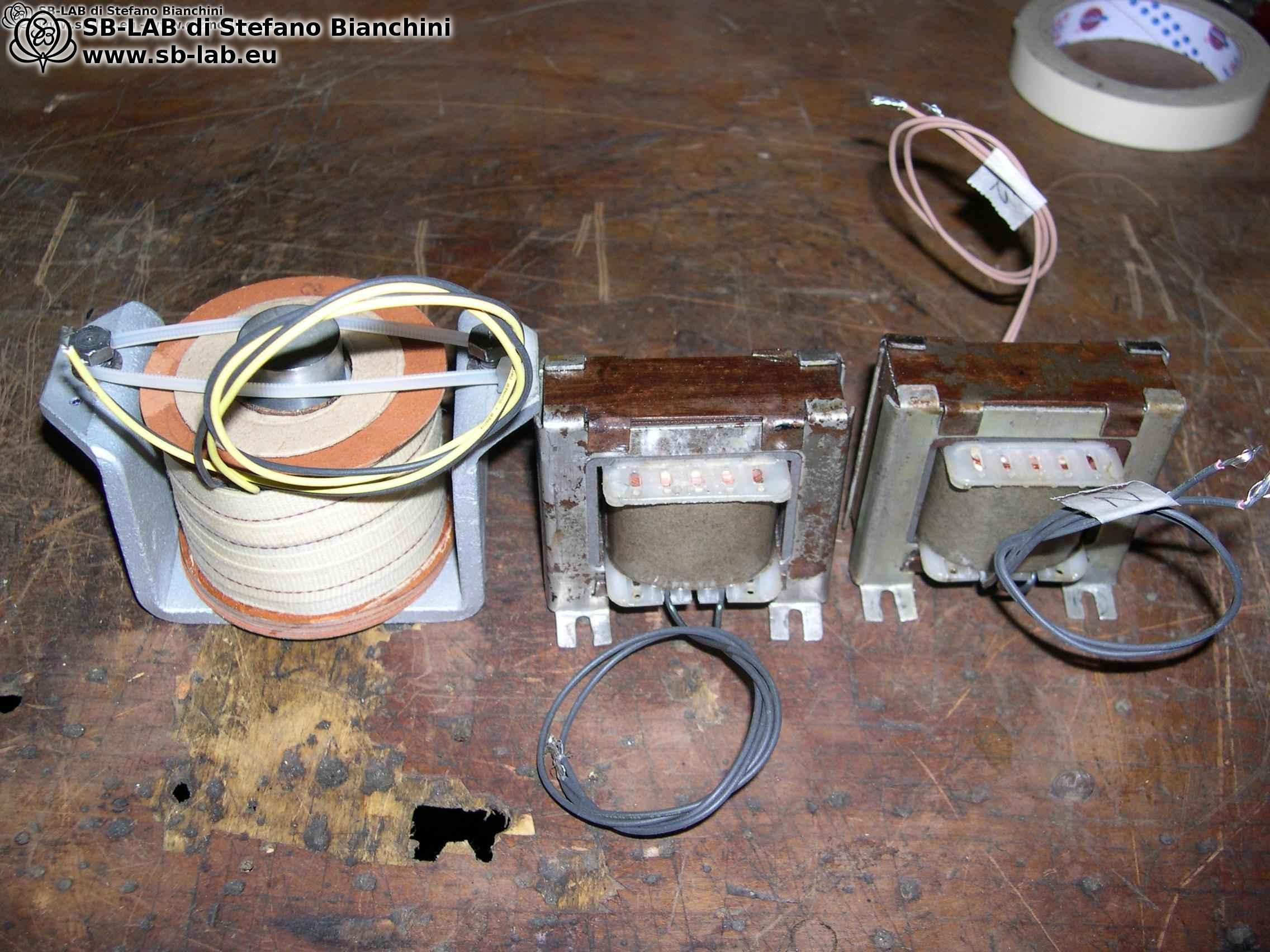
Restoration is sometimes a question mark as well. Finding original spare parts in good condition is like playing the lottery, because in most cases the parts found are in poor condition, just like the ones you have—especially if it is very old equipment. Re-printing a bobbin with 3D printing, when the original was available, would have made no sense because it would have required the same time, only focused on producing the part. So, if you send me transformers to rewind and—for some reason I cannot know in advance—I contact you saying that the part or one of the parts cannot be quoted, unfortunately it could be one of these situations.
Exceptions and Special Repairs: An Emblematic Case with the Luxman MQ-70 Demo
Important Note: This paragraph documents a historical job I performed in the past, demonstrating my ability to extract transformers embedded in tar. However, I would like to inform you that I no longer carry out this type of work. The main reason is that it requires considerable time and effort, and most people ultimately do not accept the associated cost estimate. In addition, I would like to stress that the operation is hazardous to health, as extraction generates tar fumes that can be harmful if inhaled—comparable to smoking hundreds of cigarettes. To ensure my safety and that of others, I have chosen not to perform this procedure anymore.
In situations where the transformer is embedded in tar or presents particularly complex conditions, my current practice is to produce a completely new replacement transformer. This choice ensures the component’s quality without facing the challenges and risks associated with extracting transformers embedded in tar. By opting for this solution, I can offer a more efficient and safer service to meet customers’ needs.
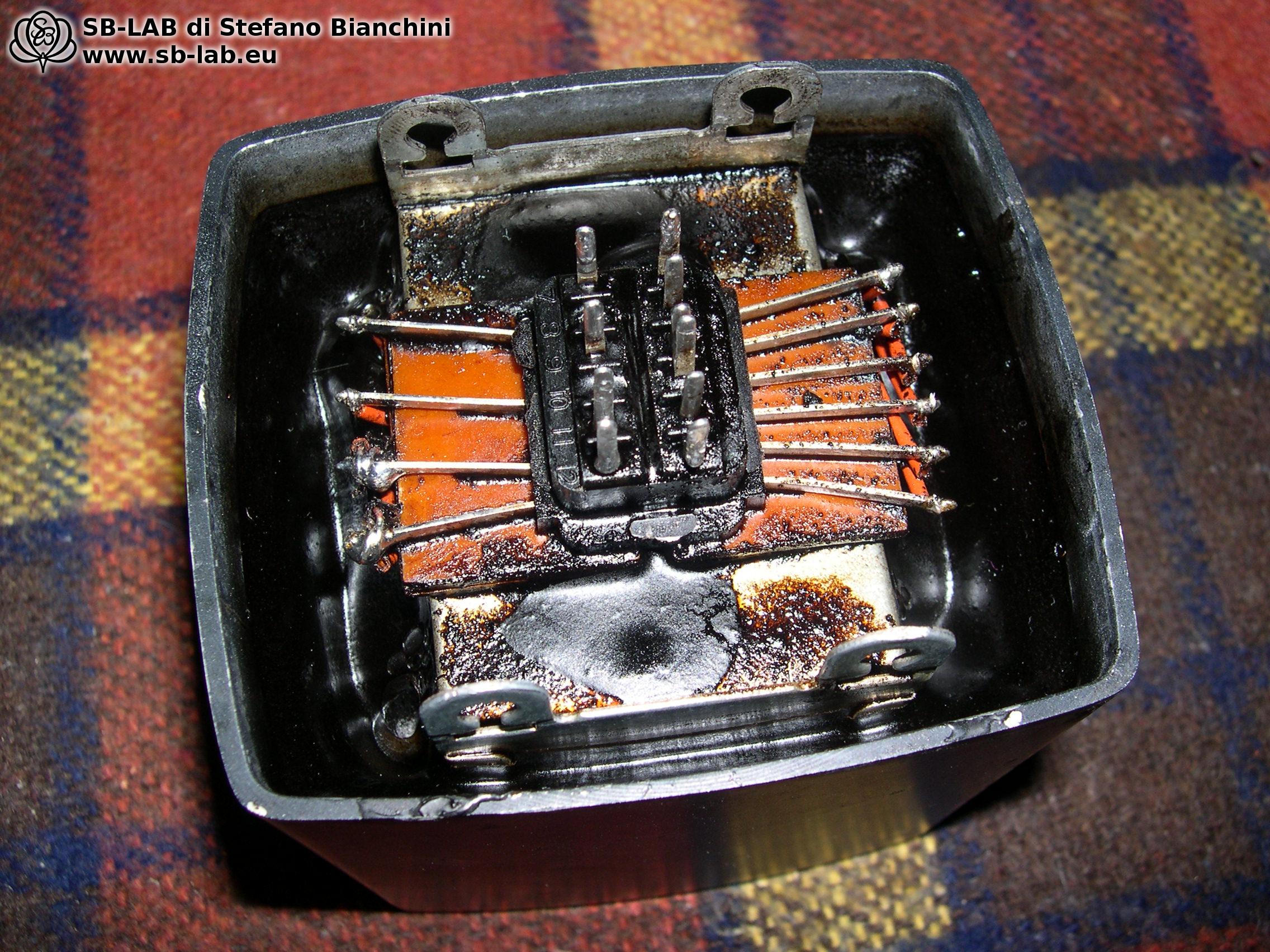
There are cases in which, to provide an accurate quotation, a bit of manual work is necessary. For example, I can mention a pair of “Luxman MQ-70” transformers embedded in tar. The customer, during repair of the unit, discovered that one of the two was damaged but still wanted a quotation. To obtain such a quotation, I would be forced to perform one of my “magic tricks” to extract the transformer and clean it before assessing its disassembly and unwinding. This work is beyond the subsequent cost estimate. In this case, even if one decided not to proceed with the repair, I would like to be fairly compensated for extracting the transformer from the tar. Here is how the work was done in this case: once the cover was removed, the transformer was found to be locked in its box in a pour of tar.
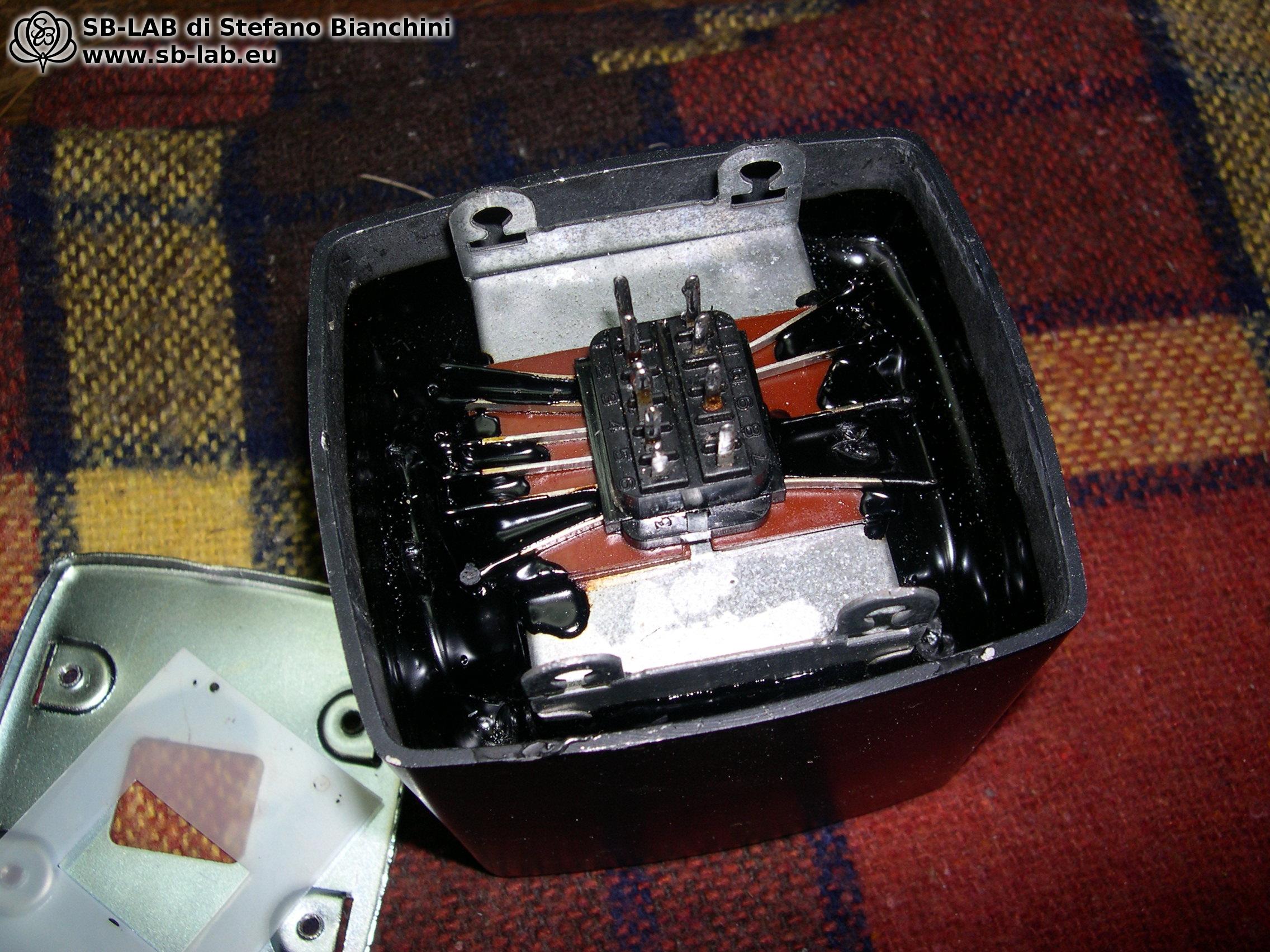
The first step is to extract the transformer from the tar in a non-destructive way, preserving both the transformer and its box.
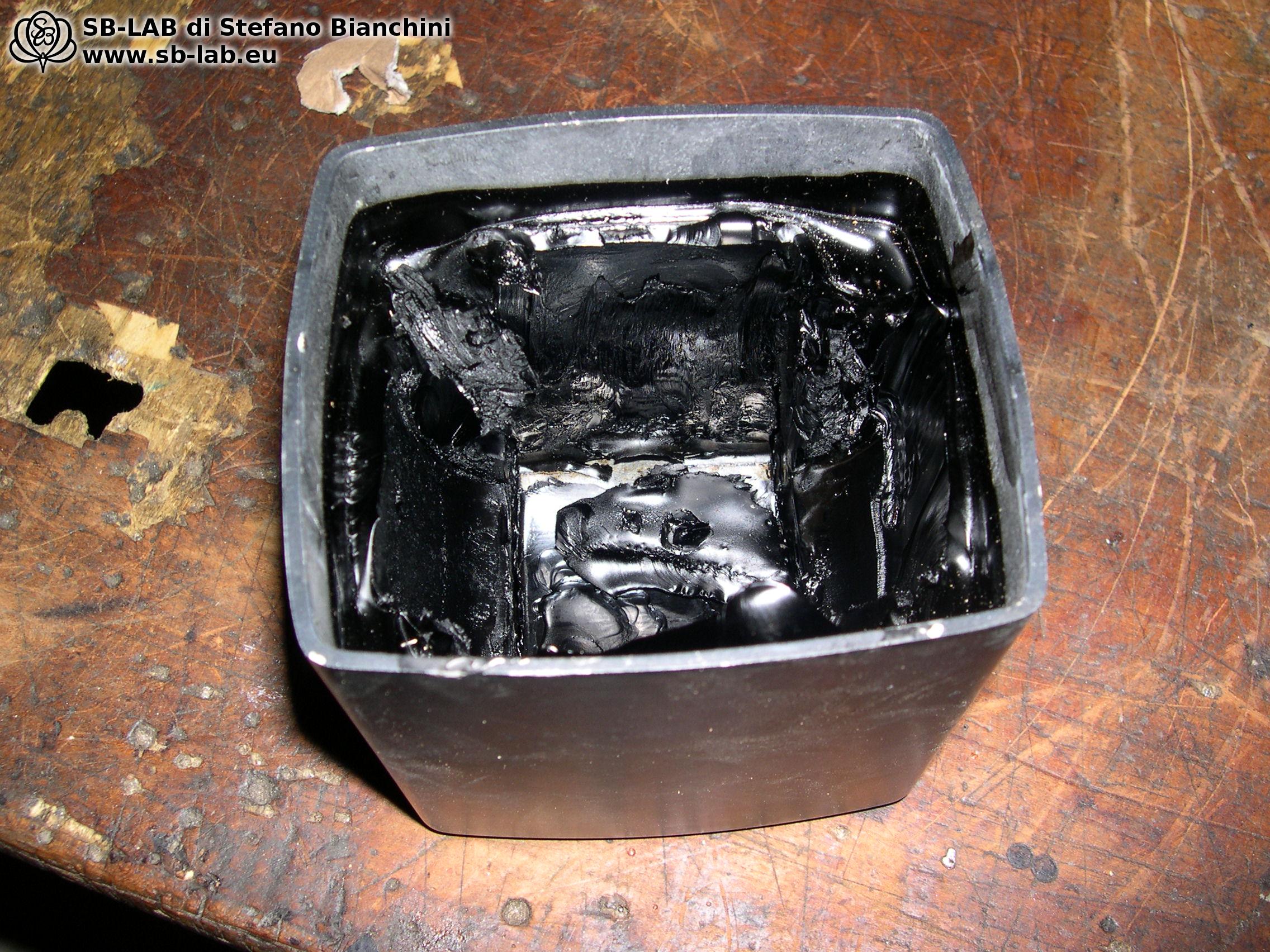

The second step involves thoroughly cleaning the transformer both externally and internally, removing tar between the turns and the paper layers. This process is essential to ensure effective unwinding.
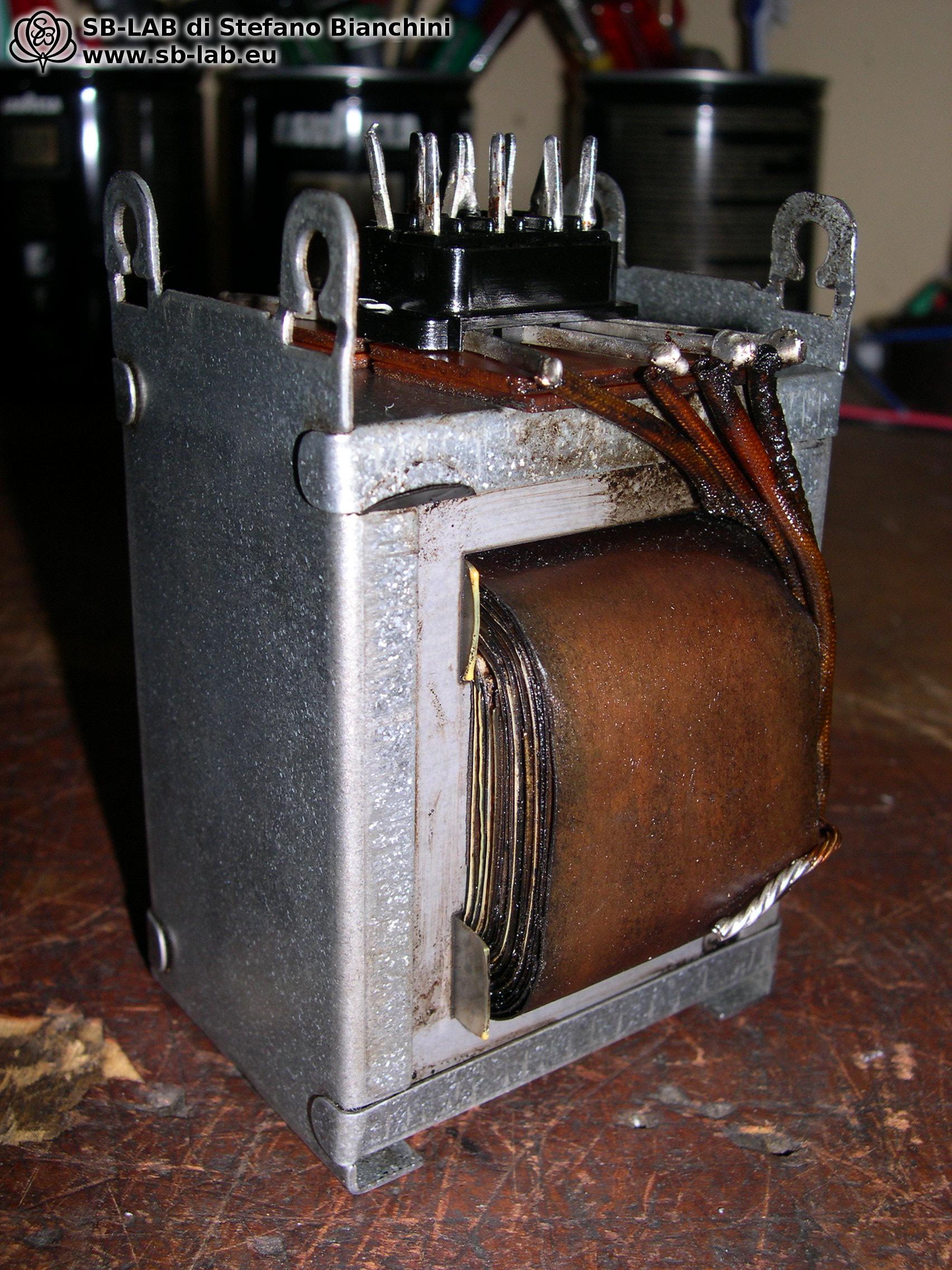
This is the rewound transformer, identical to the original, using the same technique and the same materials.
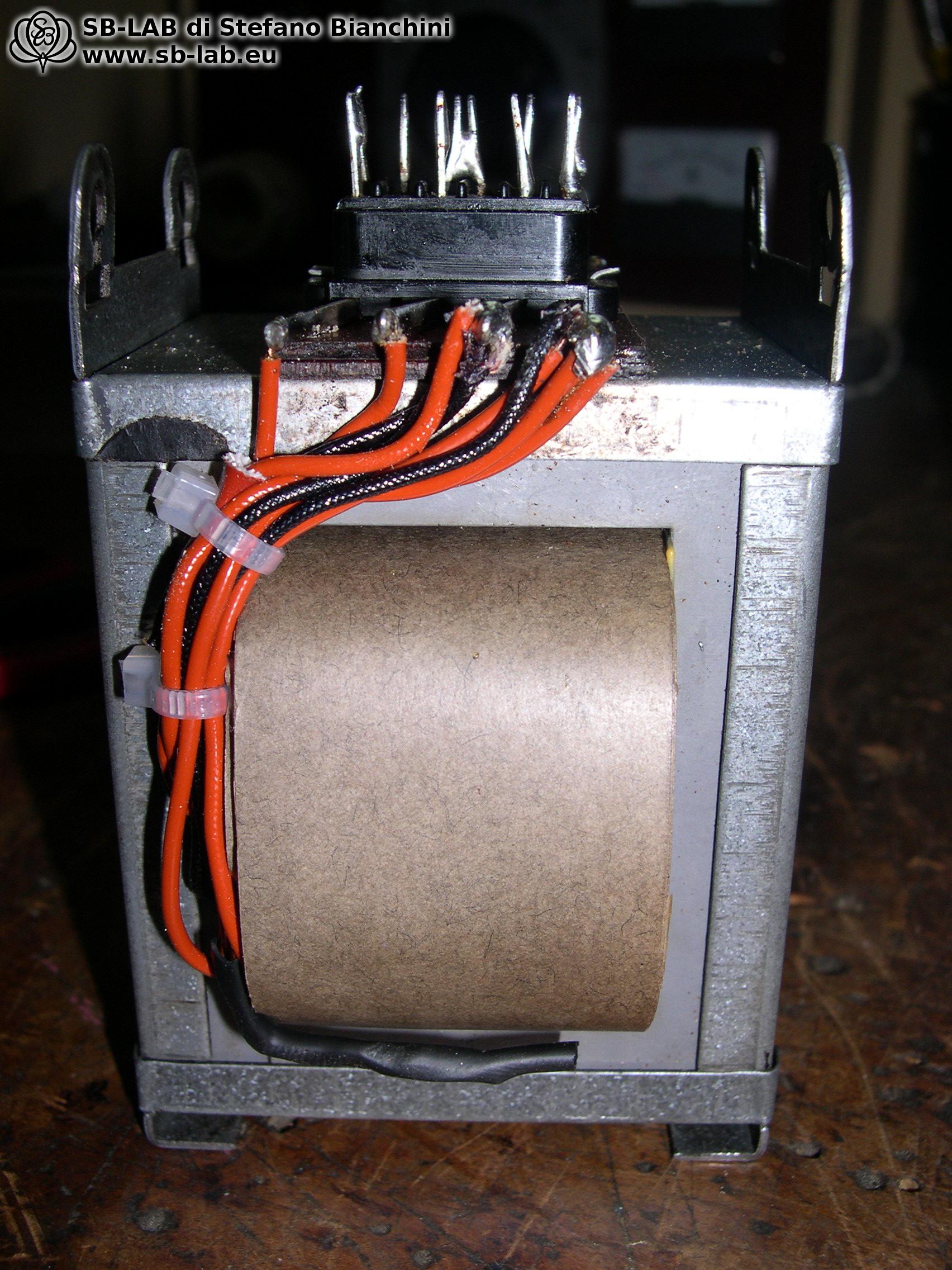
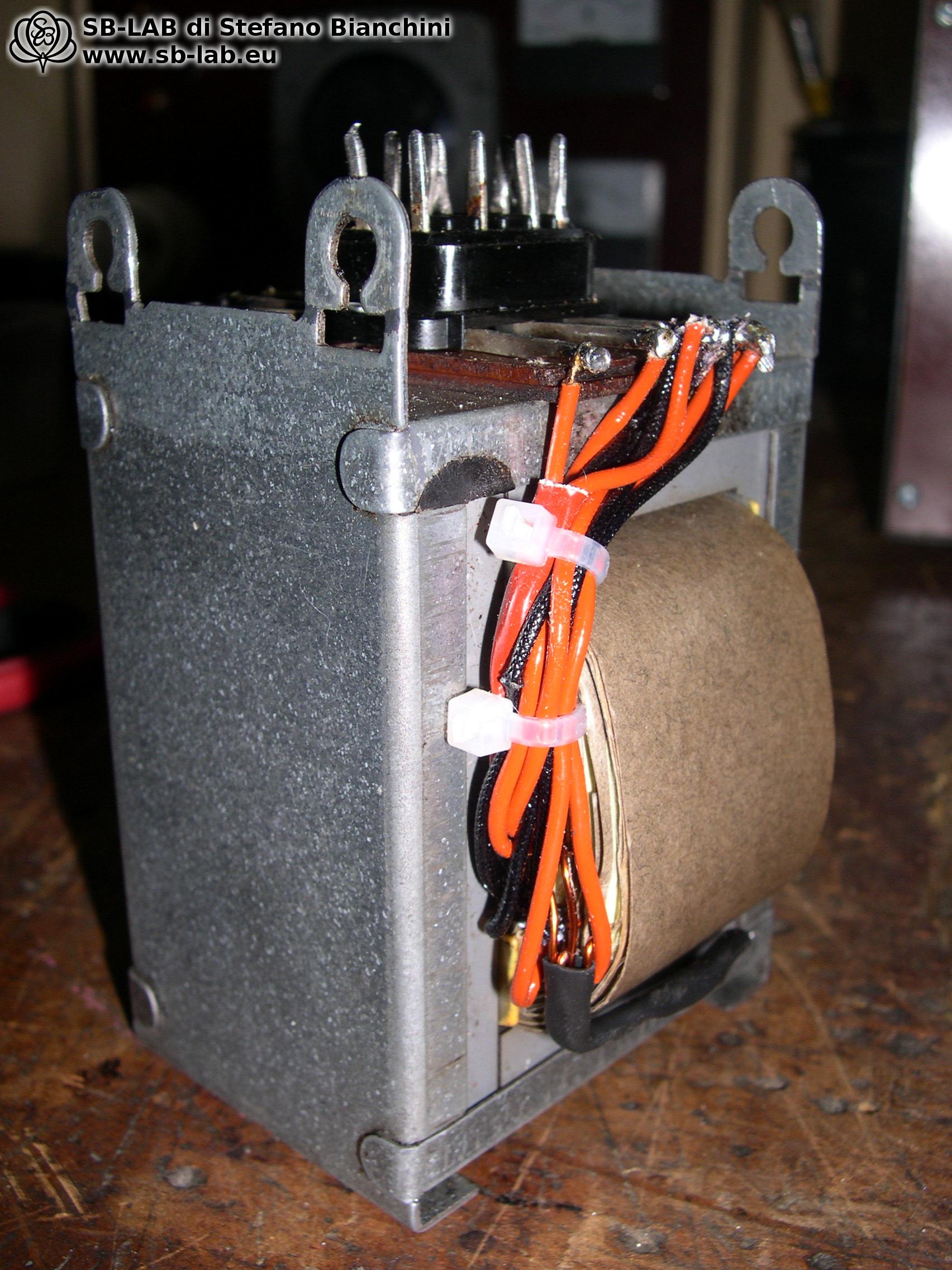
Placed back in the box and re-embedded in tar.
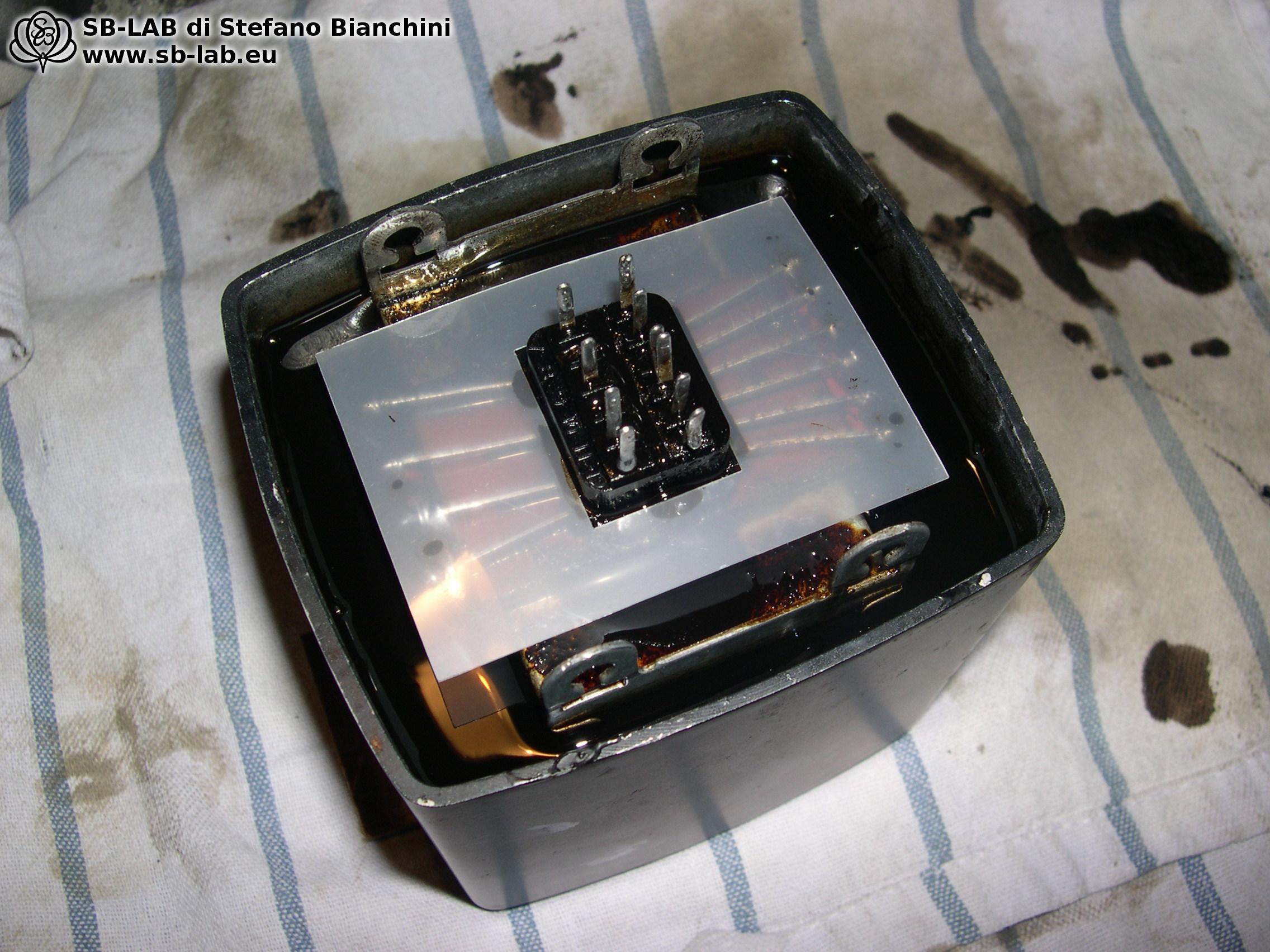
Here it can already be seen hardened and closed up.
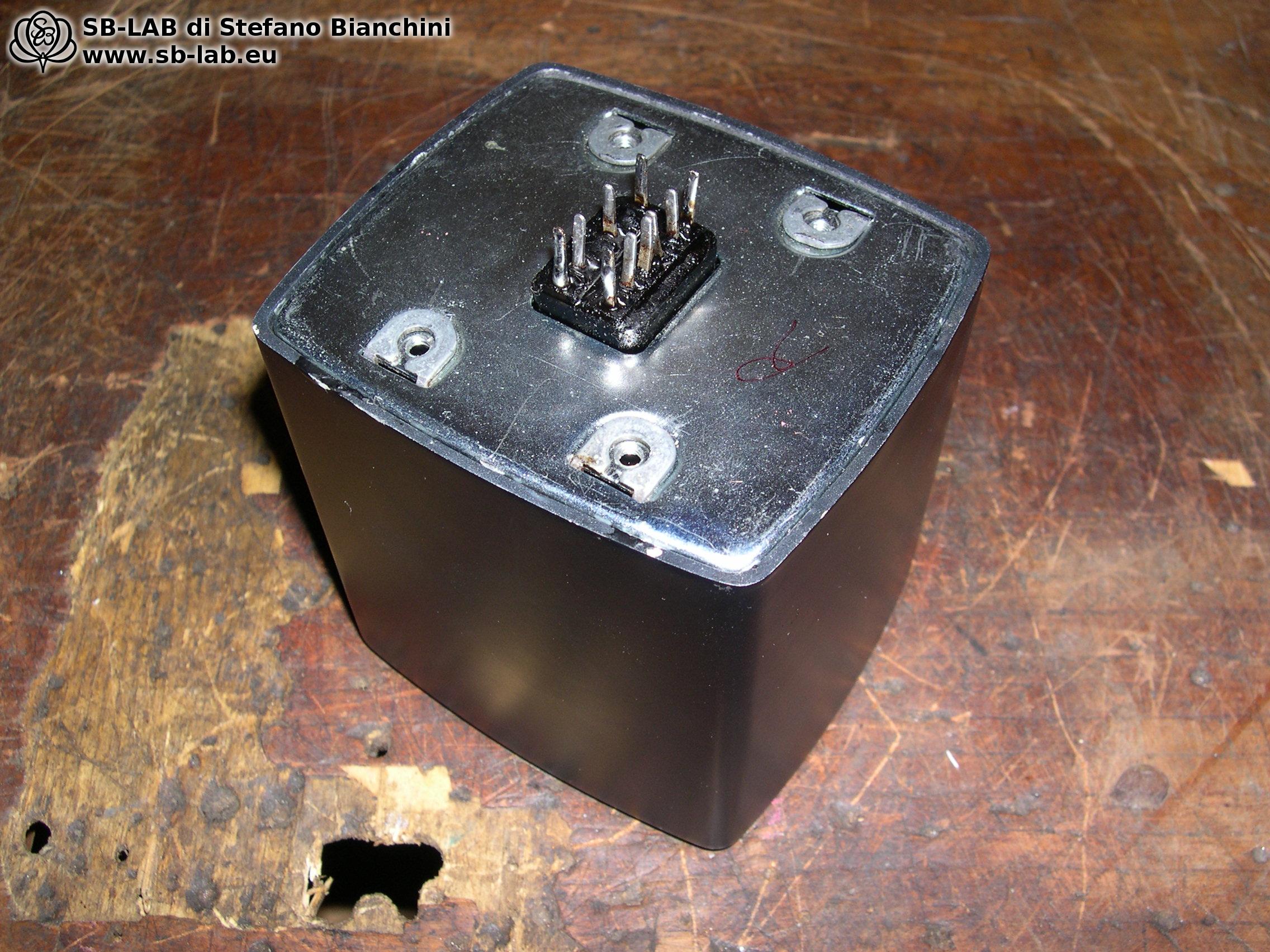
Other Examples of My Work
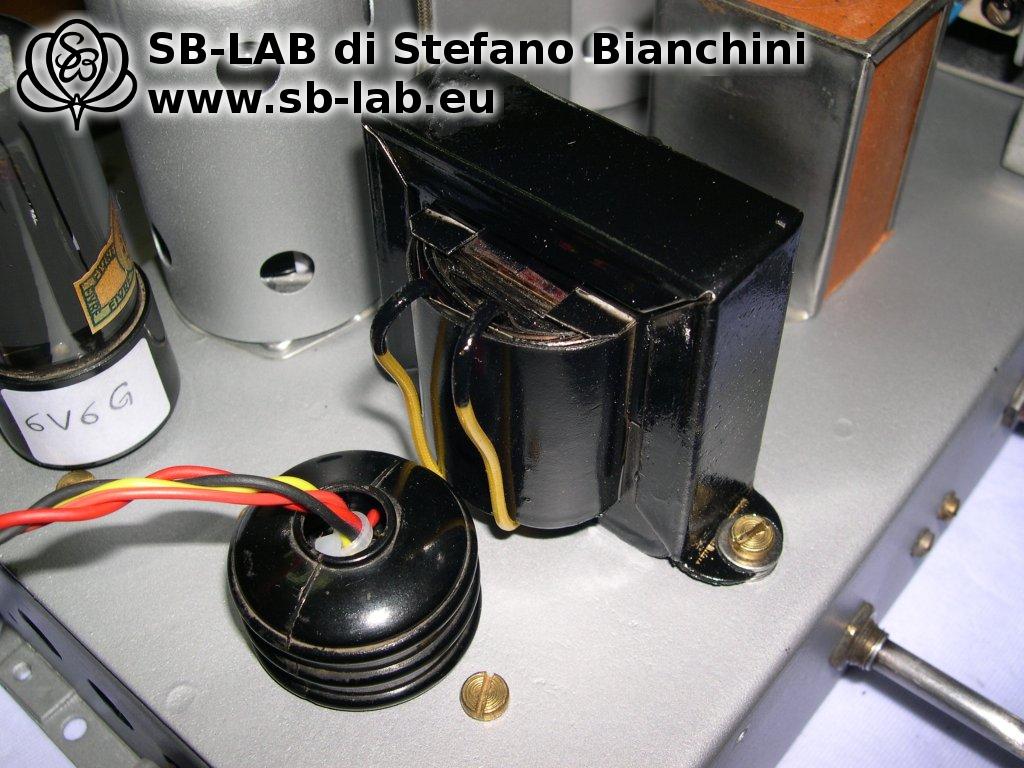
The audio transformer of a CGE radio (early 1940s) with a 6V6 output valve, which had a burnt primary, was unwound and rewound on the same original laminations. This particular transformer required careful work because it had no bobbin and was wound on a simple piece of cardboard. The dimensions and construction features, along with the inability to use modern insulation, required traditional methods. Therefore, it was rewound on cardboard exactly like the original, using the same materials.
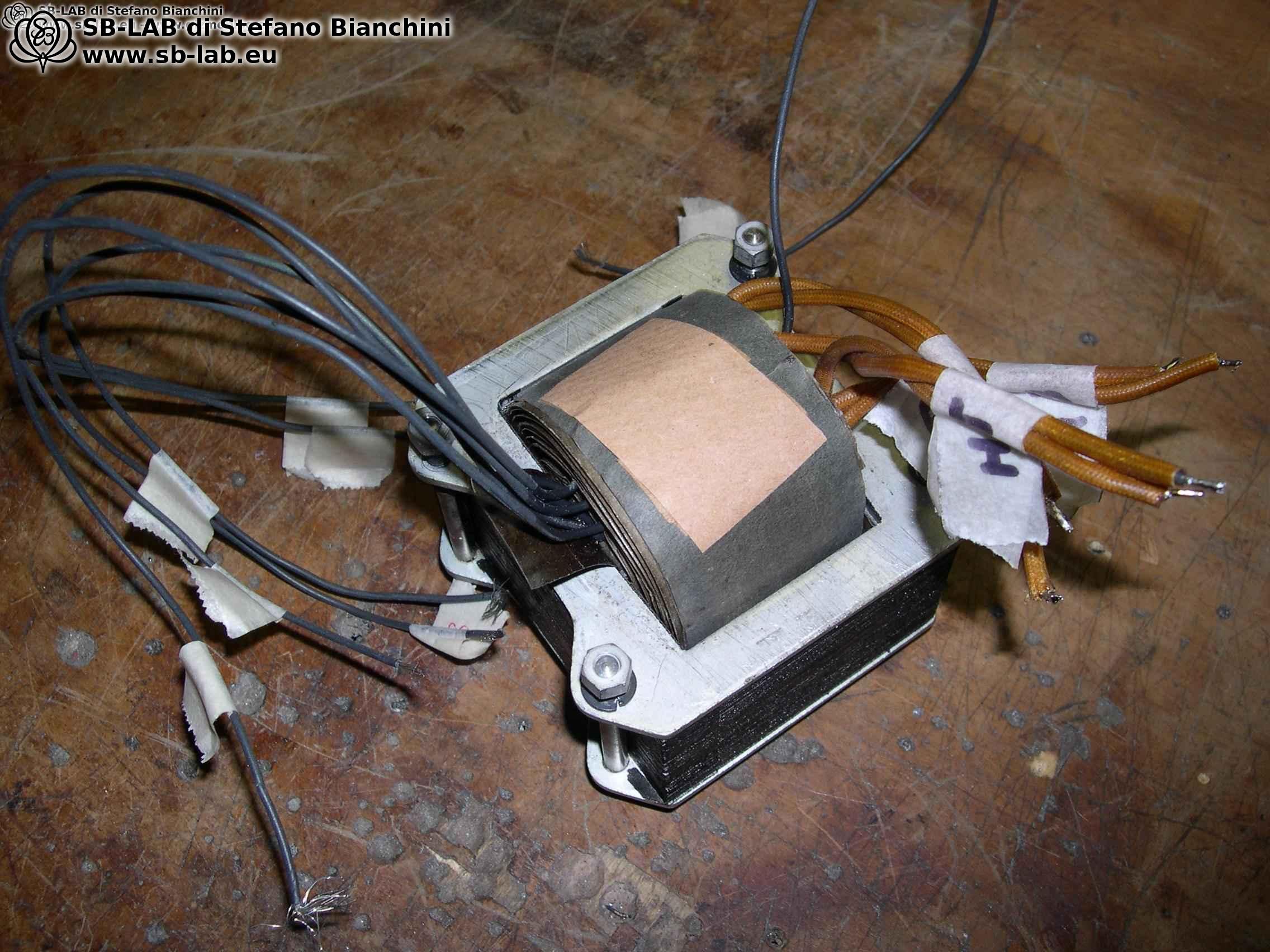
A transformer and a choke from the 1920s rewound…
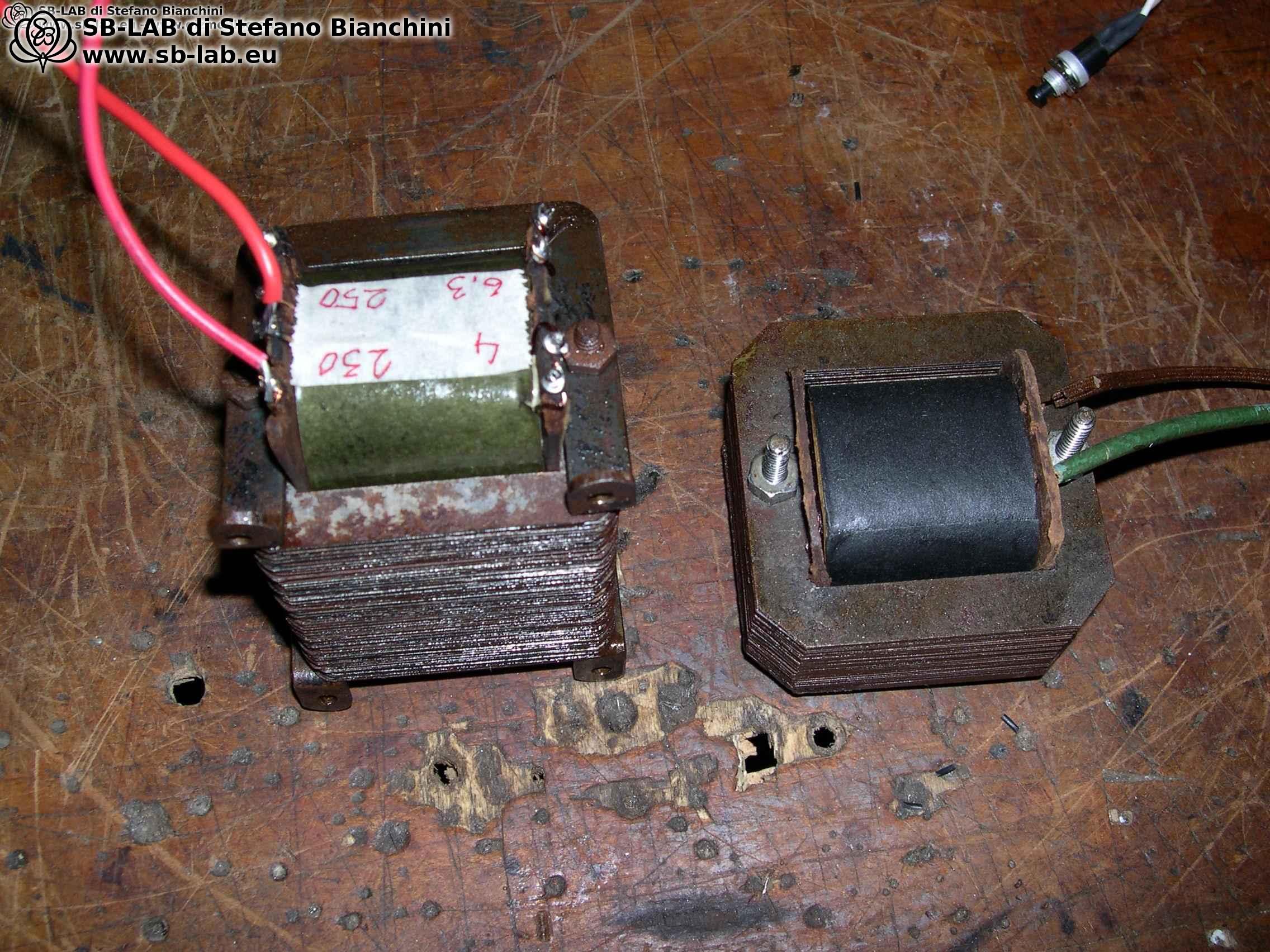
The power transformer of a Radiomarelli…
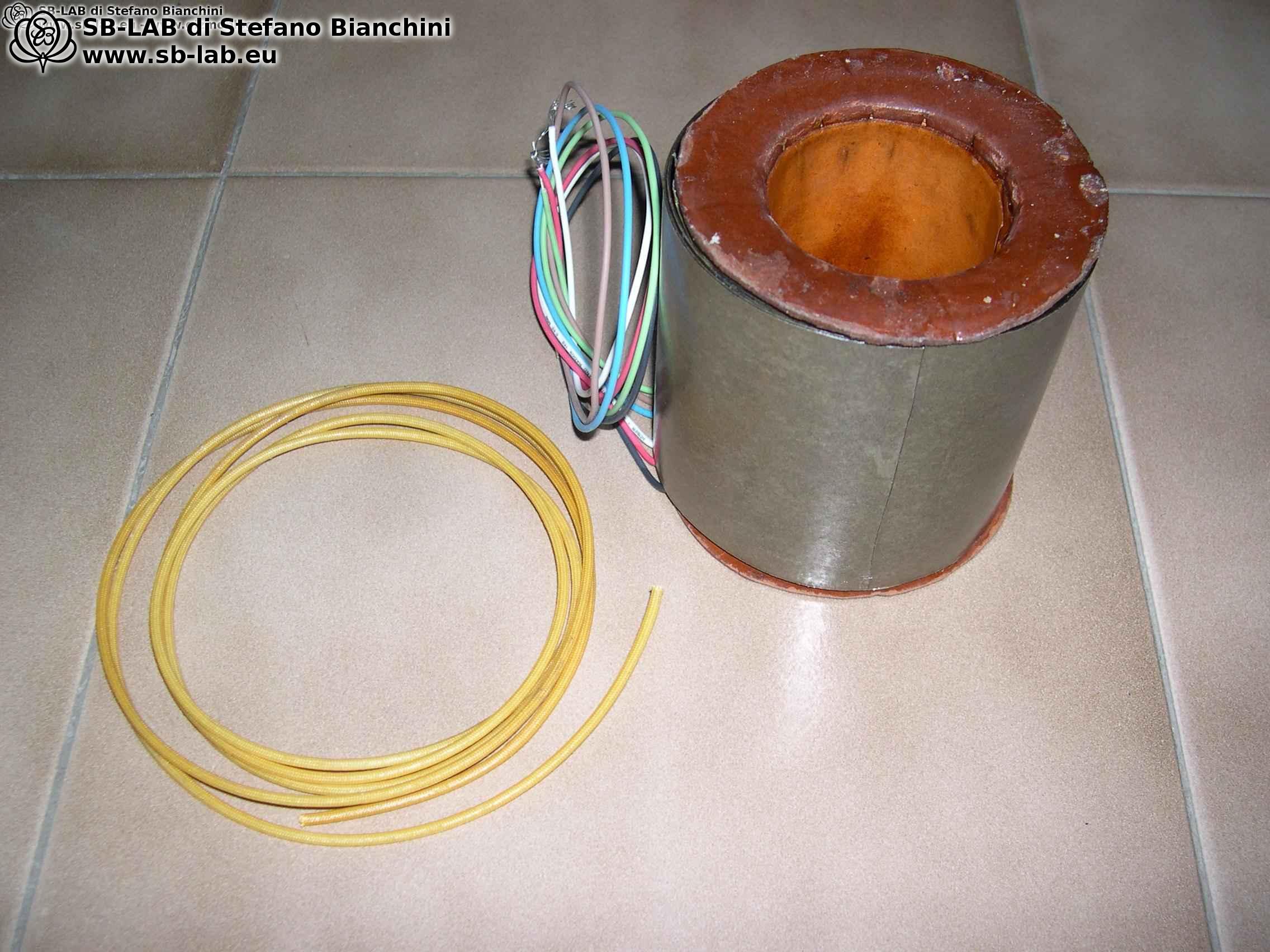
A rewound field coil…
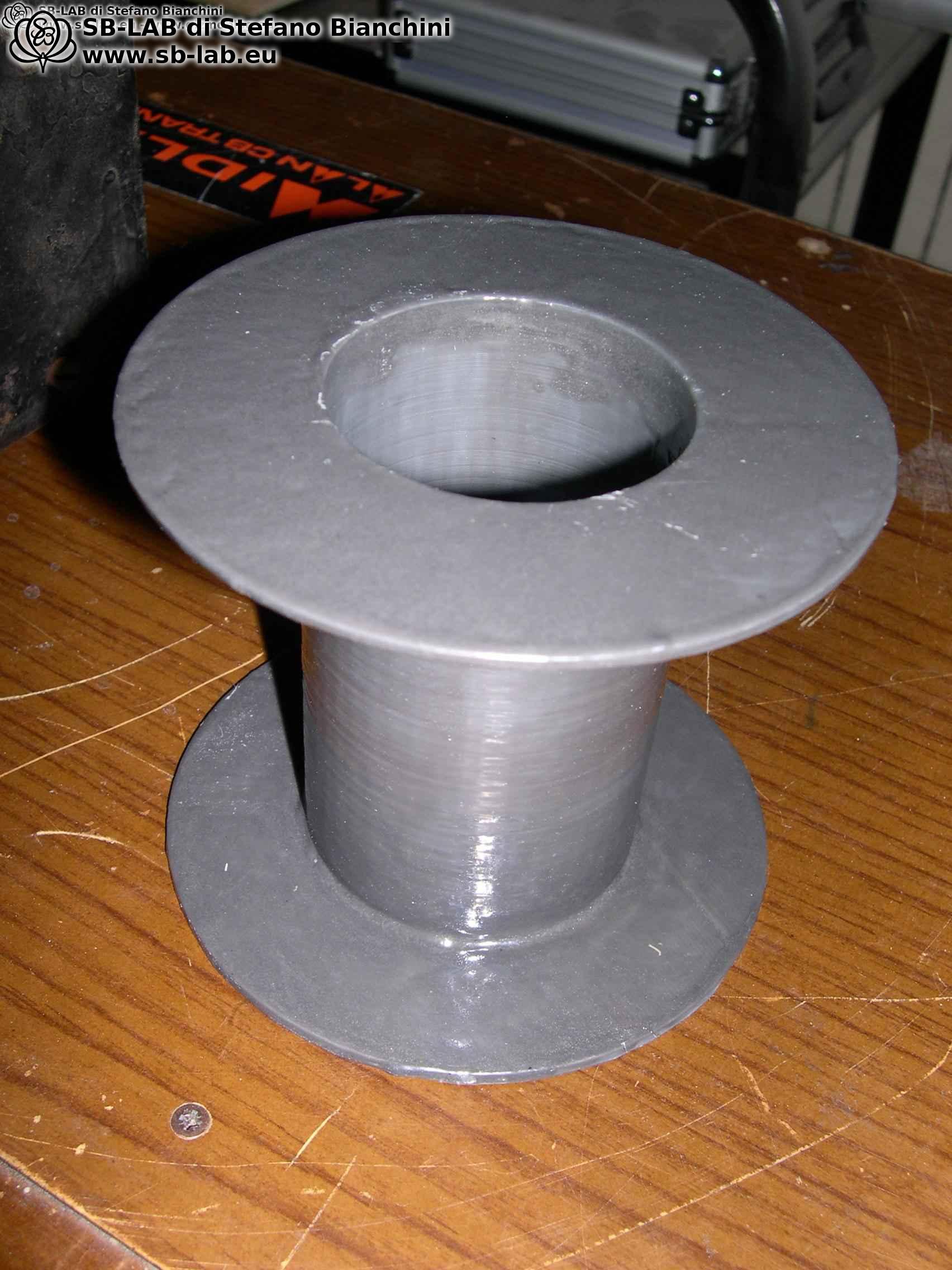
Another field coil was rewound on a new bobbin made with 3D printing, because its original bobbin would have crumbled like a cookie…
Restoring the Transformer of a Mignonette Baby
In this section, I want to share with you a fascinating journey through the restoration of a small but crucial component of vintage electronics: the little transformer of a vintage radio. The images below tell the story of a bespoke job that required craftsmanship and the use of the most modern technologies.
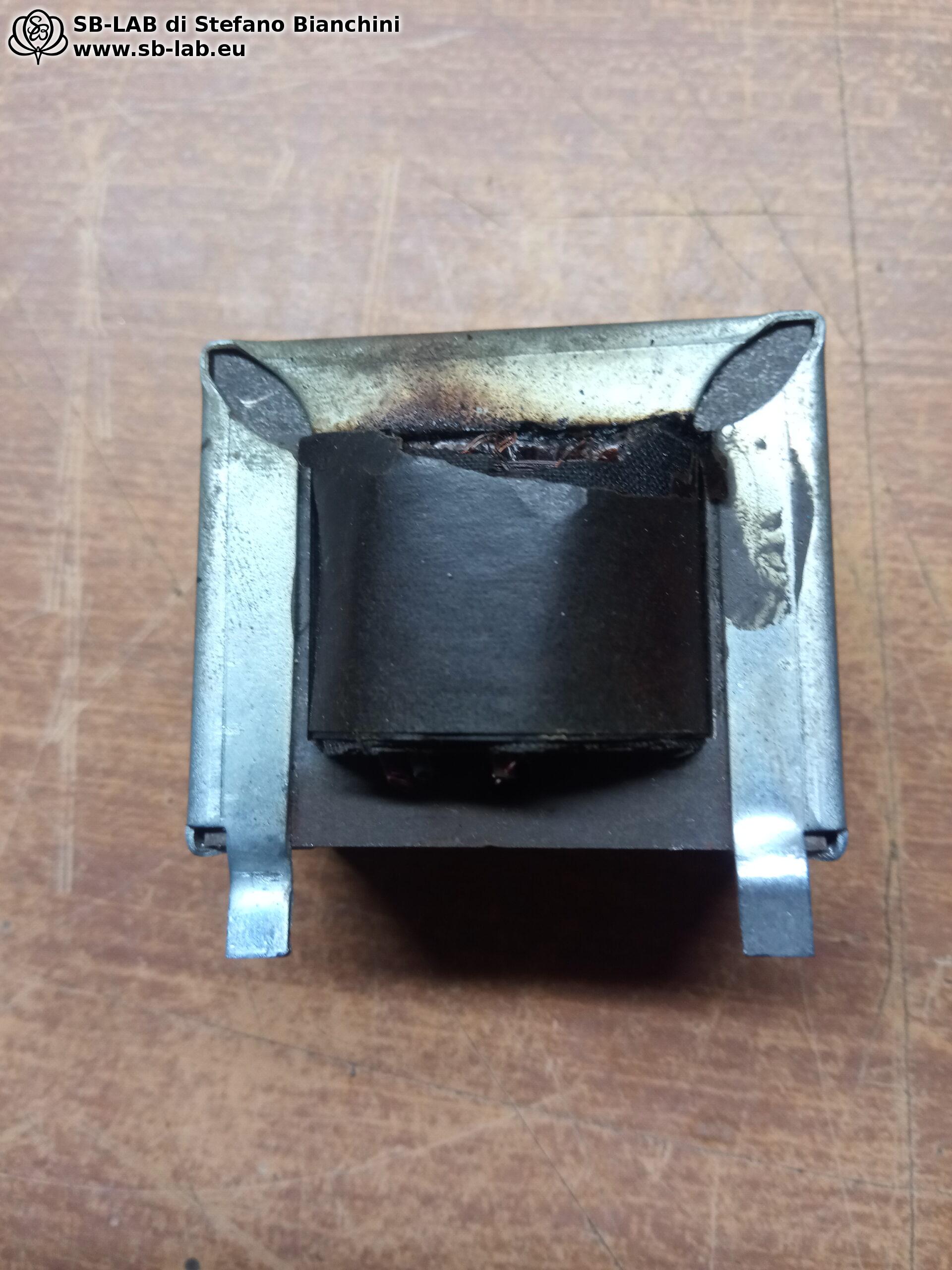
We start with a look at the past: a small transformer with non-standard contours, wound on an original cardboard bobbin. Time had taken its toll, and the component required an intervention to restore its functionality.
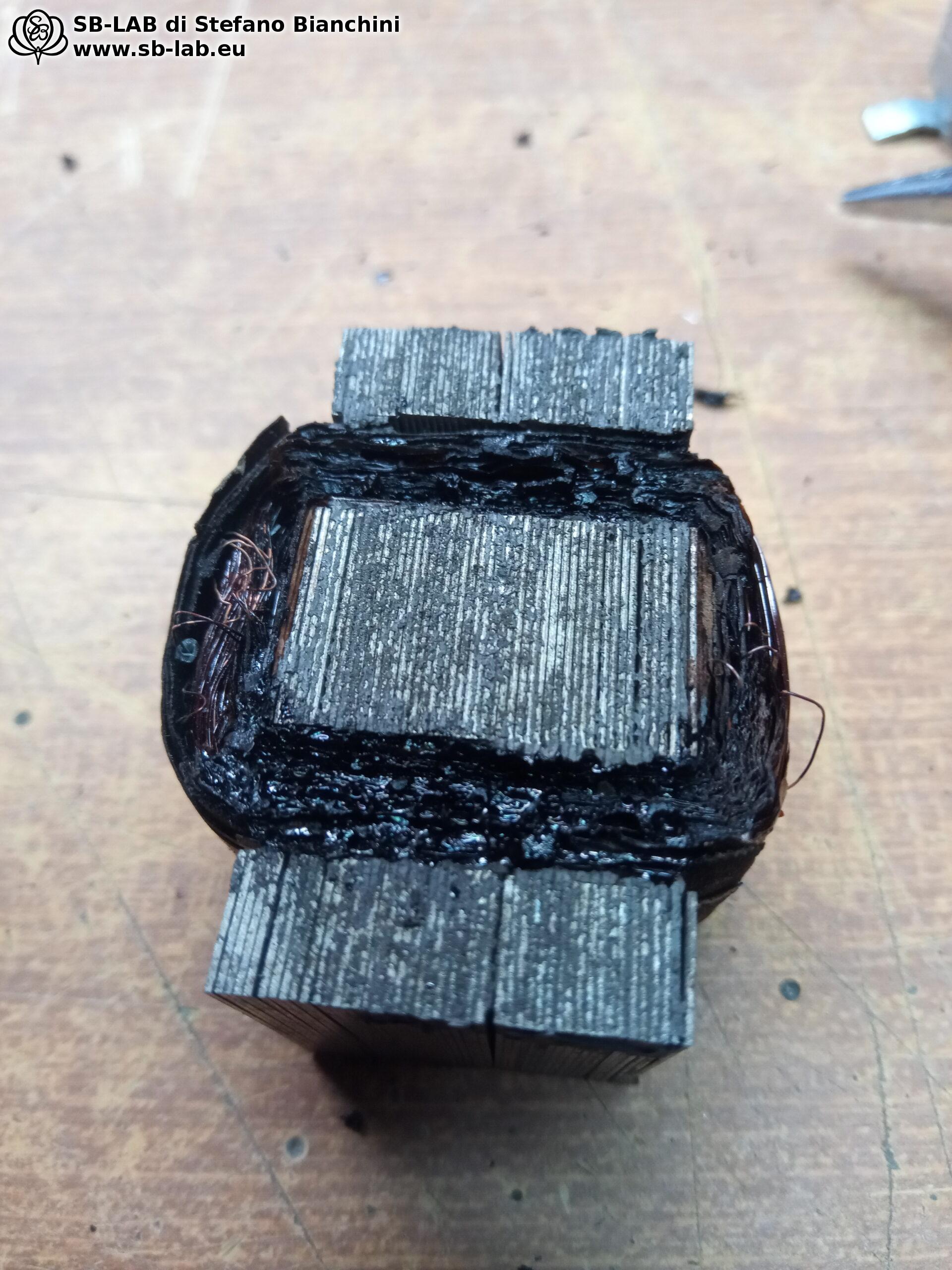
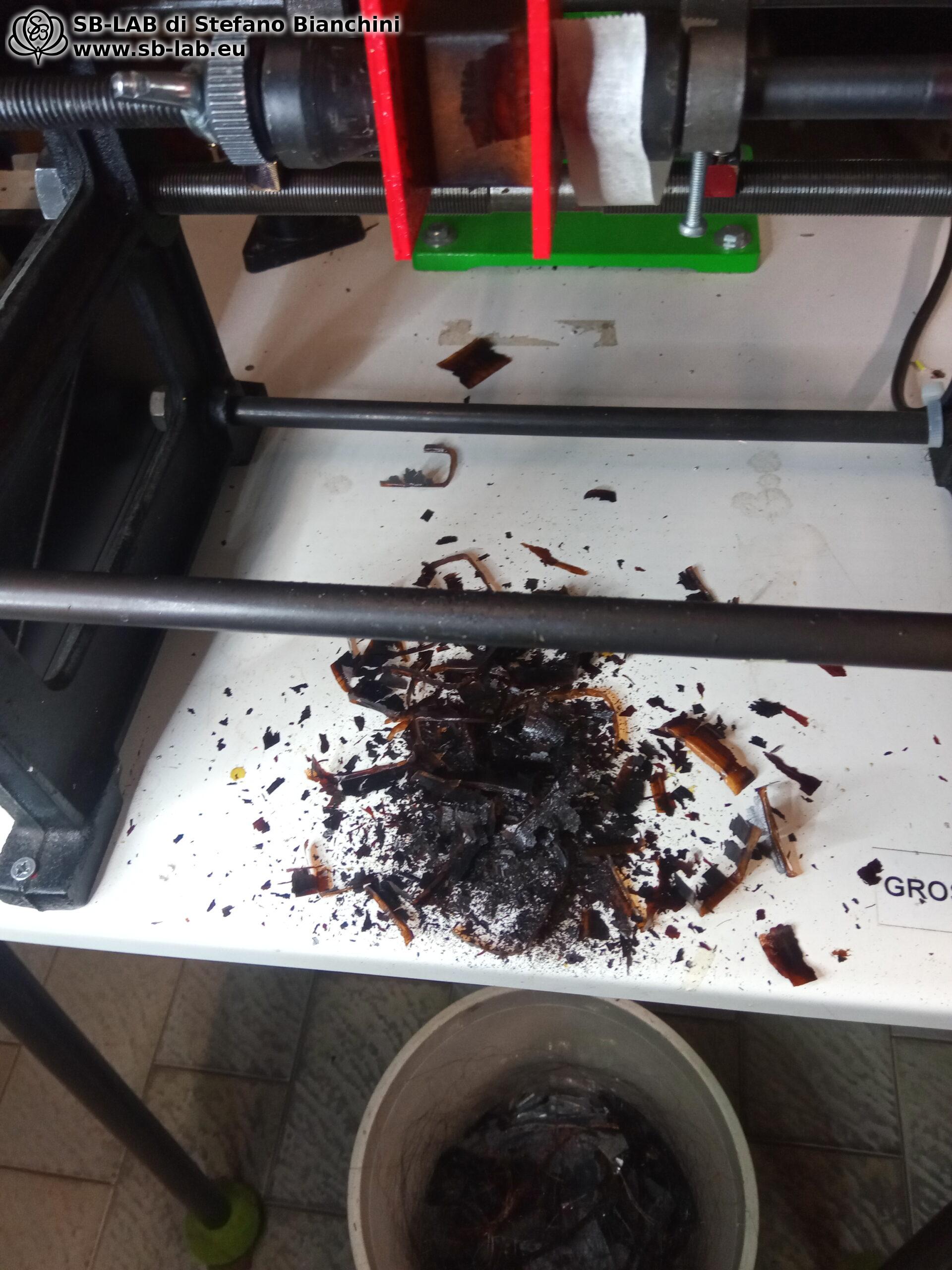
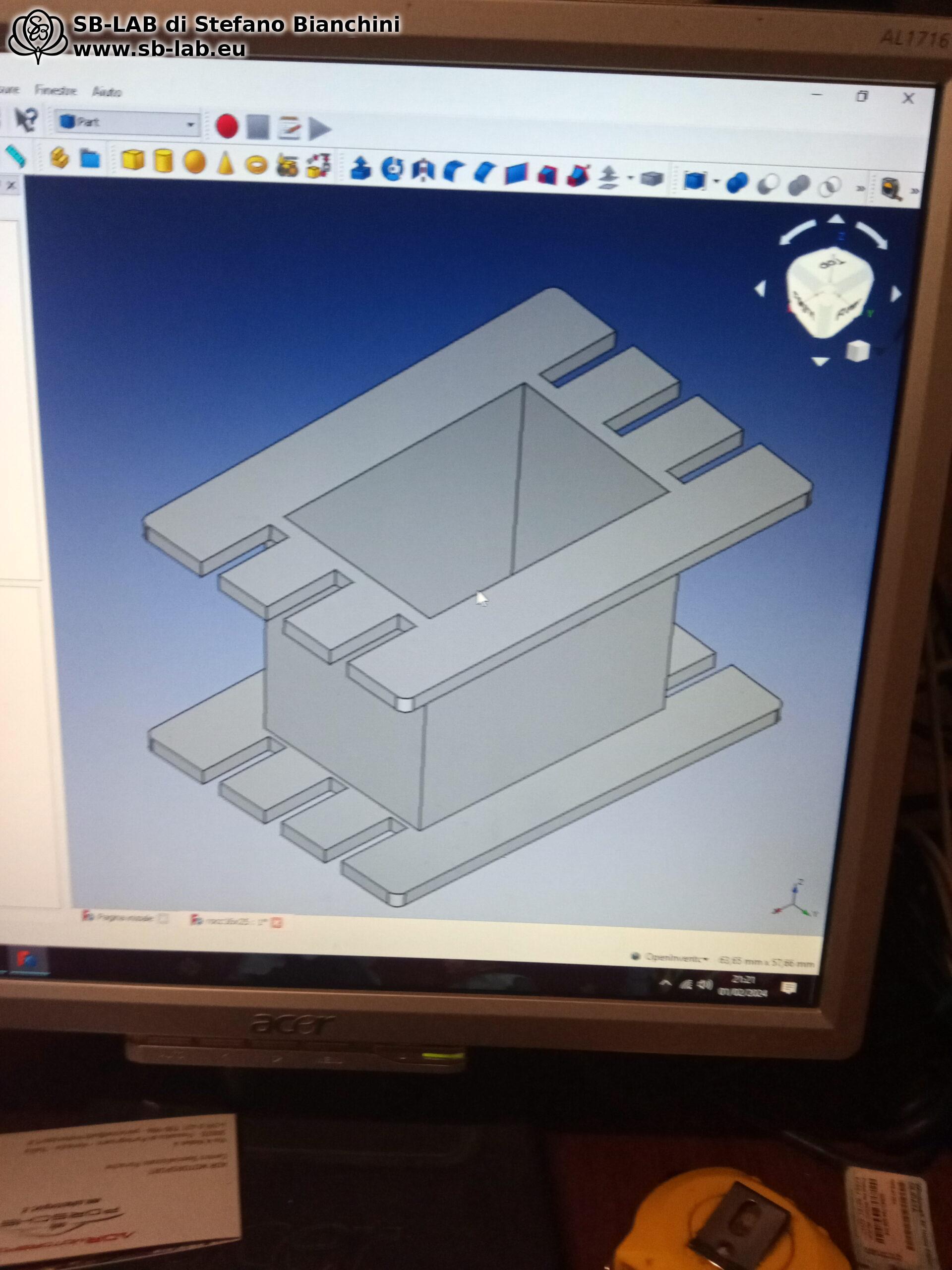
In the restoration process, I opted for an innovative approach: creating a new custom bobbin through 3D printing. The CAD images show the design that gave life to this custom bobbin, perfectly adapted to the dimensions and specifications of the small transformer.
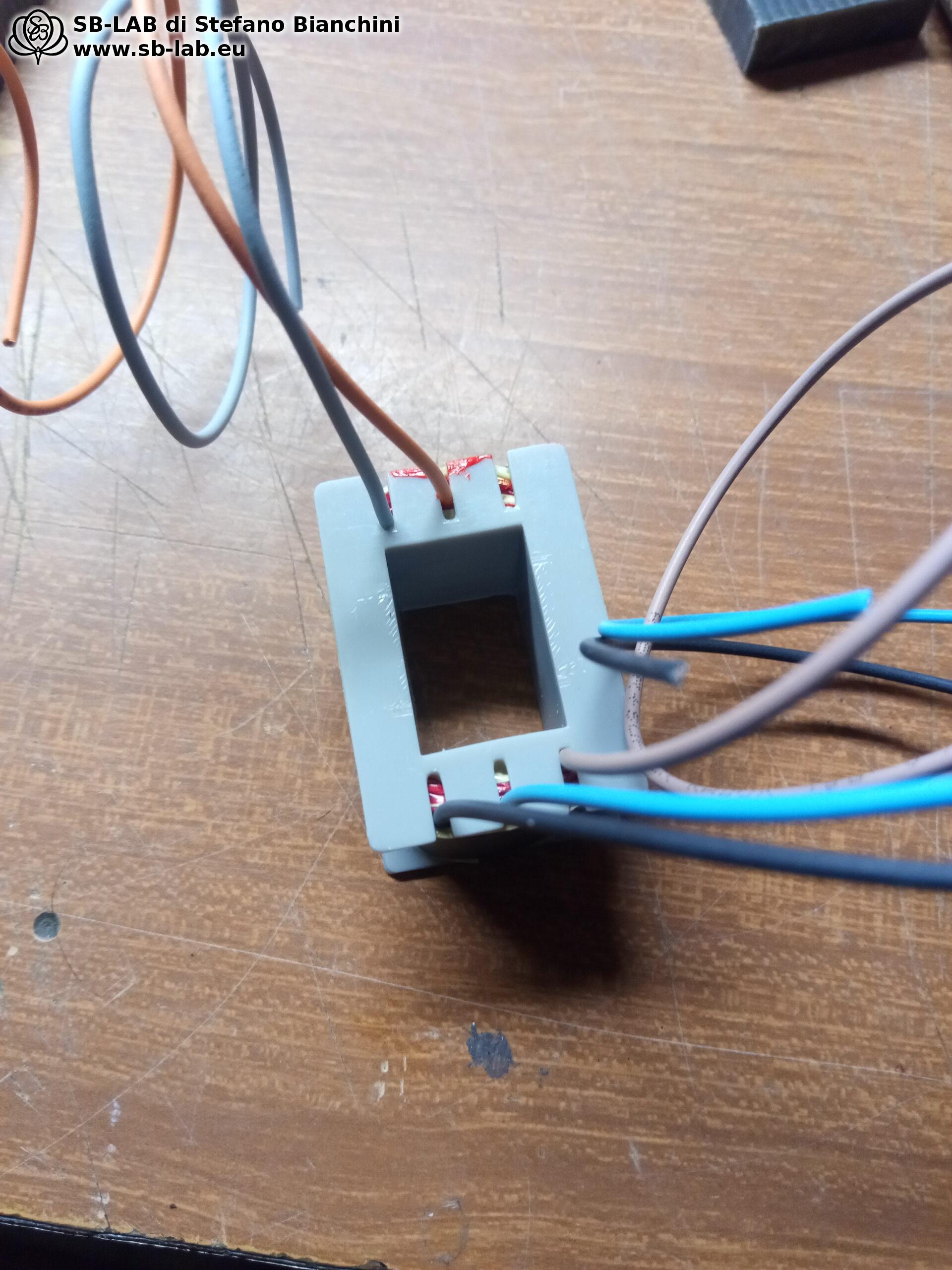
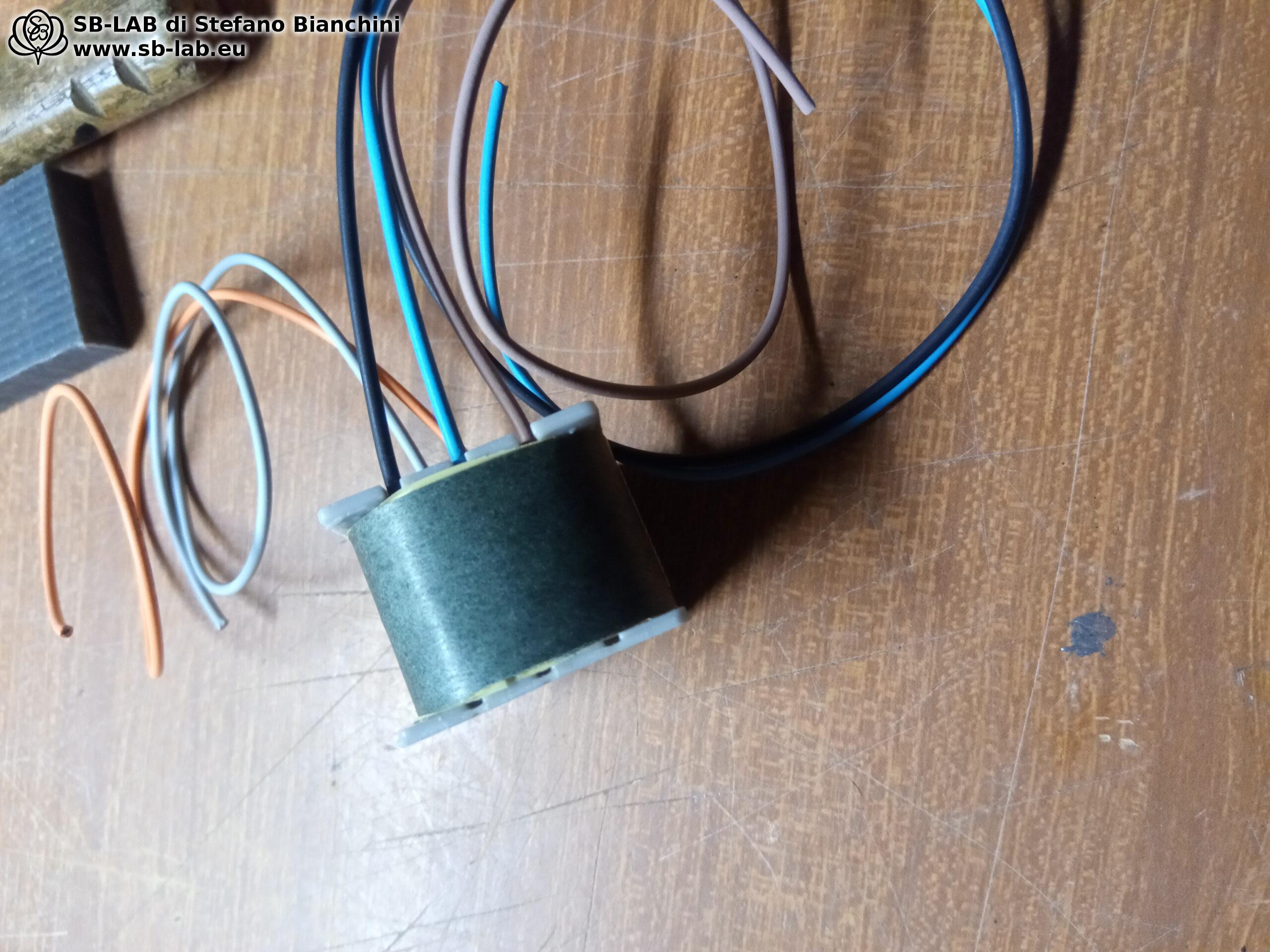
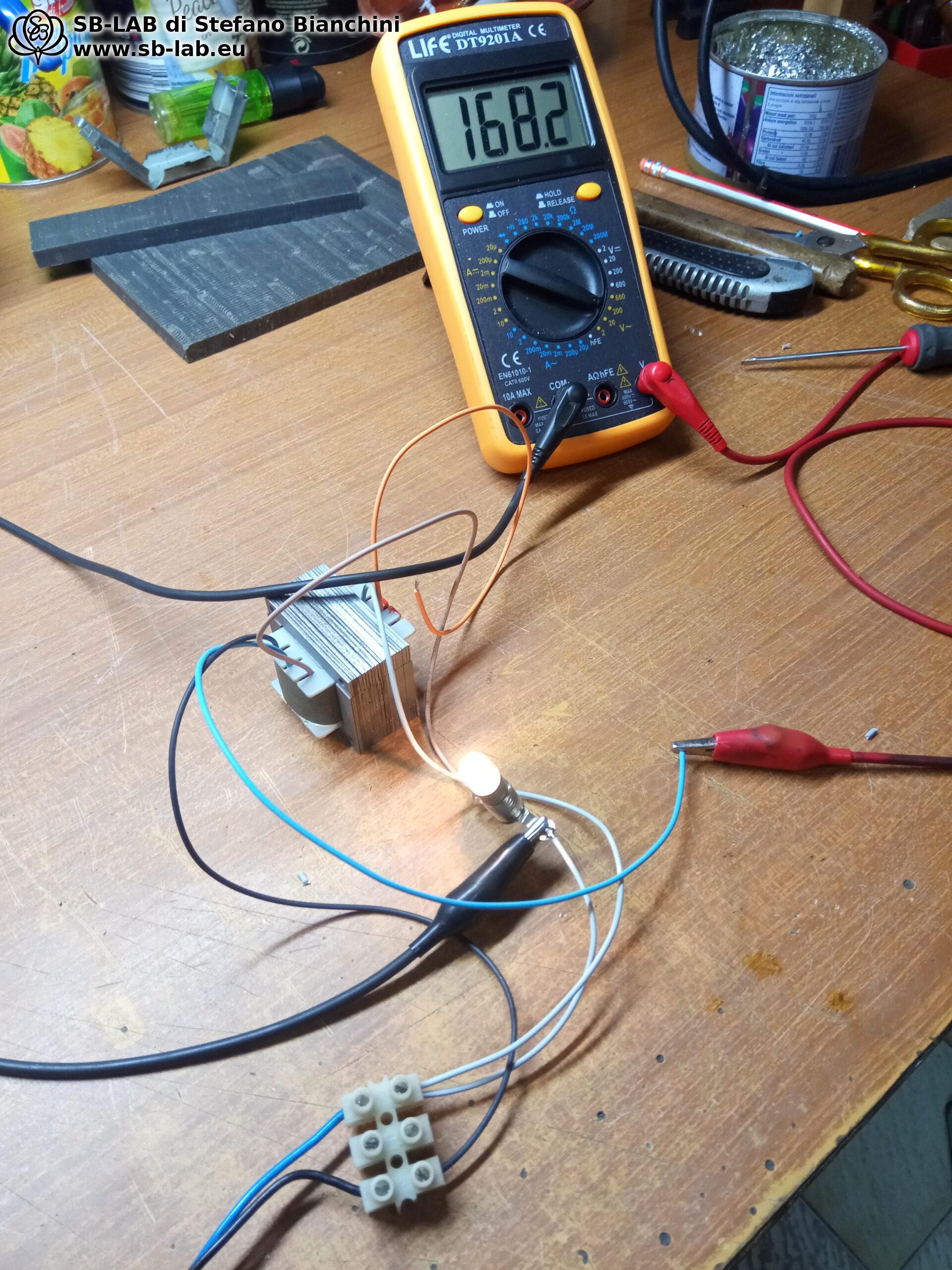
The next stage of the photos takes us into the workshop, where the bobbin comes to life with the winding, maintaining attention to detail and quality. A series of images showcases the small transformer with its laminations, under bench test, ensuring the full restoration of its functions and performance.
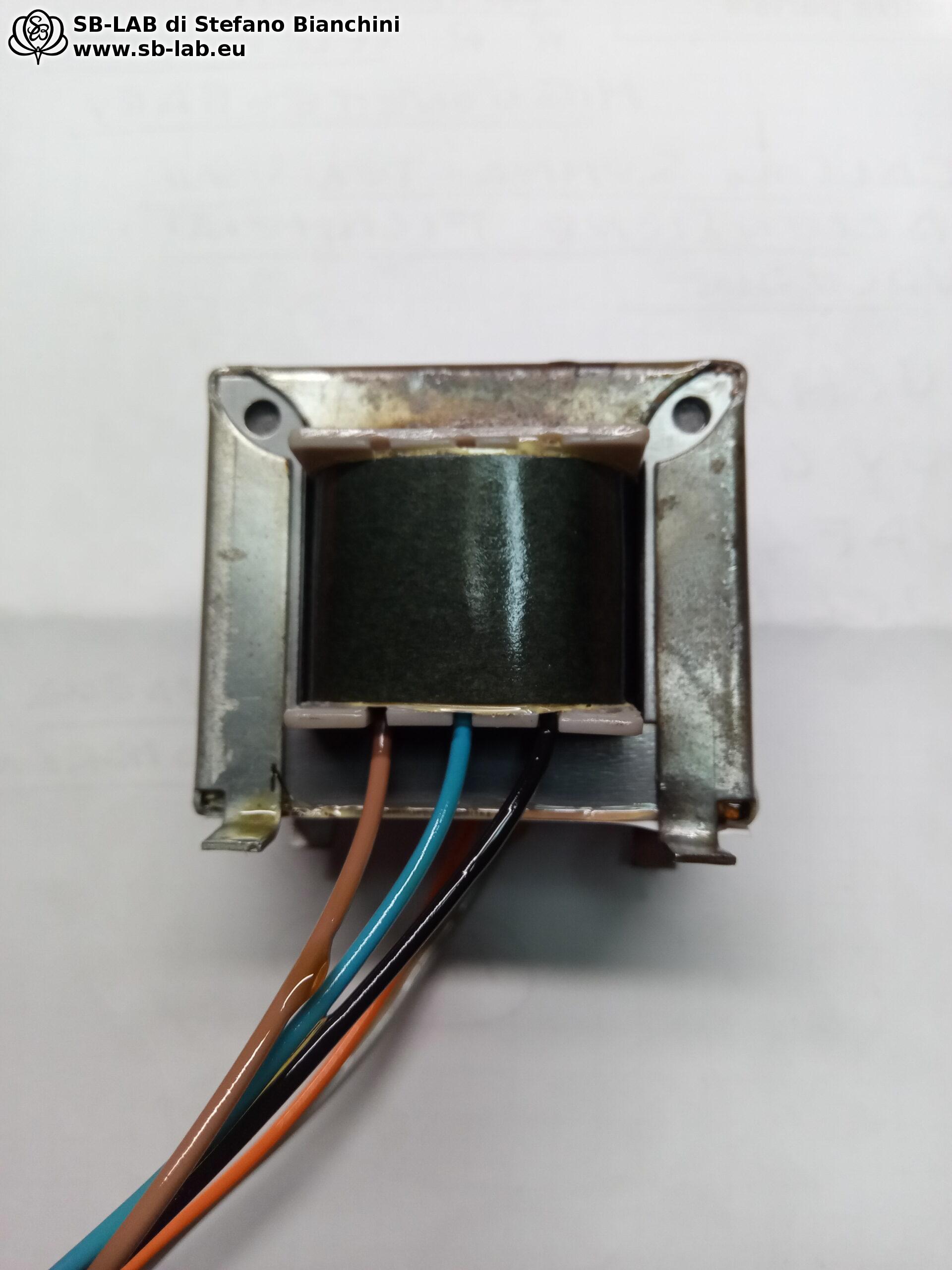
Finally, the photo of the finished transformer, elegantly finished with a metal strap, is the portrait of work that combines artisanal mastery and modern technologies. This restored small transformer is now ready to bring its vintage radio back to life, keeping the magic of vintage electronics alive.
Every component tells its story, and every restoration is a chapter that preserves the heritage of vintage electronics. Welcome to the art of restoration, where past and present blend to preserve the beauty of vintage electronics.