The Milbert BaM-230 is one of the rarest and most fascinating tube amplifiers ever made for car audio. Born in the late 1980s in the United States, it was directly derived from the Berning EA-230 project, adapted by Milbert to operate from a 12 V automotive supply. It was an audacious and complex concept: a vacuum tube amplifier for cars, powered by a high-voltage switching converter capable of generating over 400 V DC.
The circuit combines tube topology with solid-state techniques, featuring multiple feedback loops and a class B output stage driven by a 6SN7. Although it offers a surprisingly musical sound, it leaves little room for mistakes or improvisation. After decades of use and clumsy repairs, many surviving units arrive in workshops in critical condition, with damaged power supplies, burnt transformers, and out-of-tolerance components.
This particular unit was a perfect example. It arrived in disastrous condition—tampered with, oxidized, and full of wrong modifications. The restoration required a complete overhaul: rebuilding the output transformer, replacing deteriorated parts, repairing damaged PCB traces, and re-aligning the bias and feedback parameters. A complex but highly rewarding task that brought back to life a truly unique piece in the car-audio landscape.
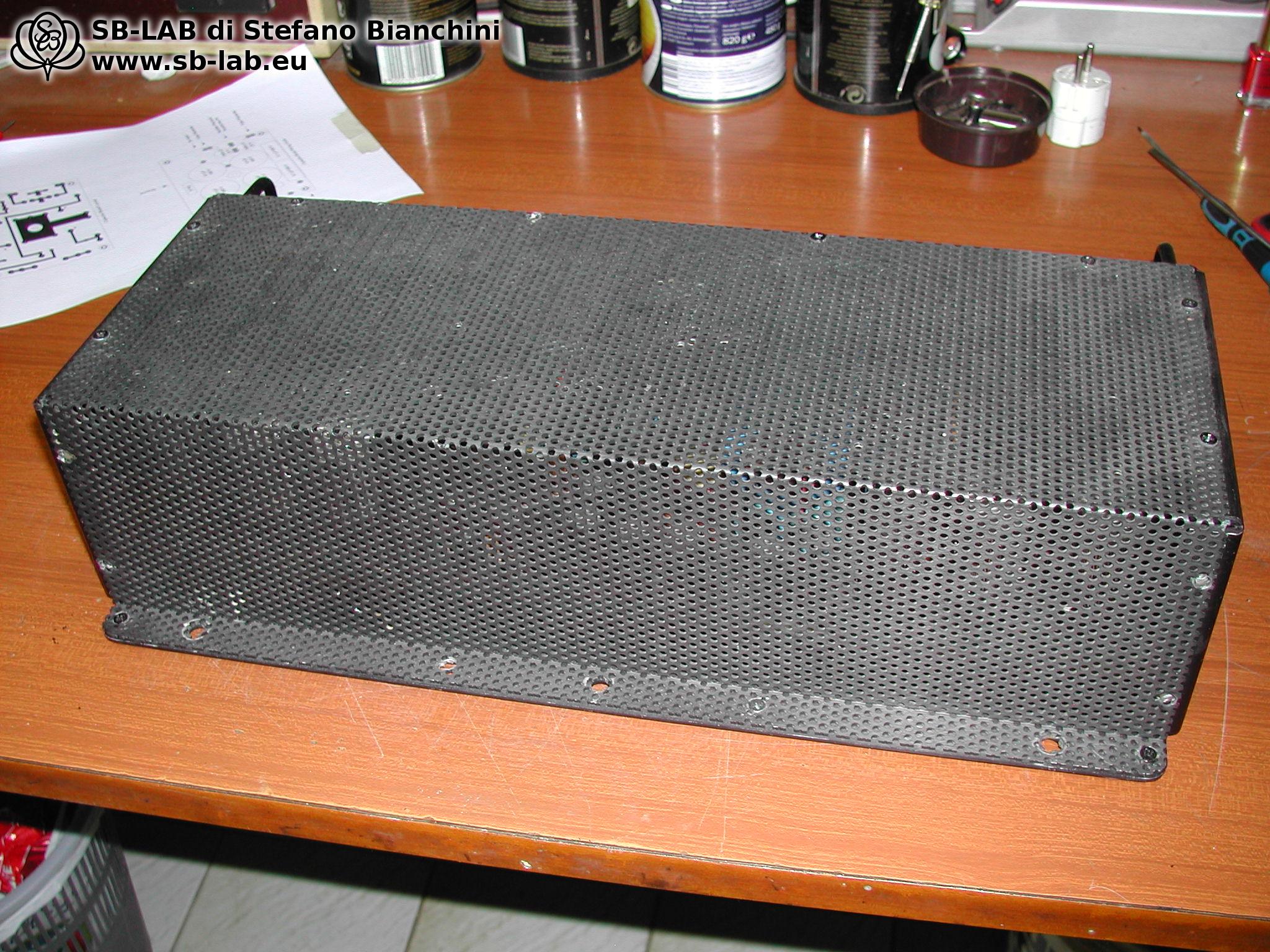
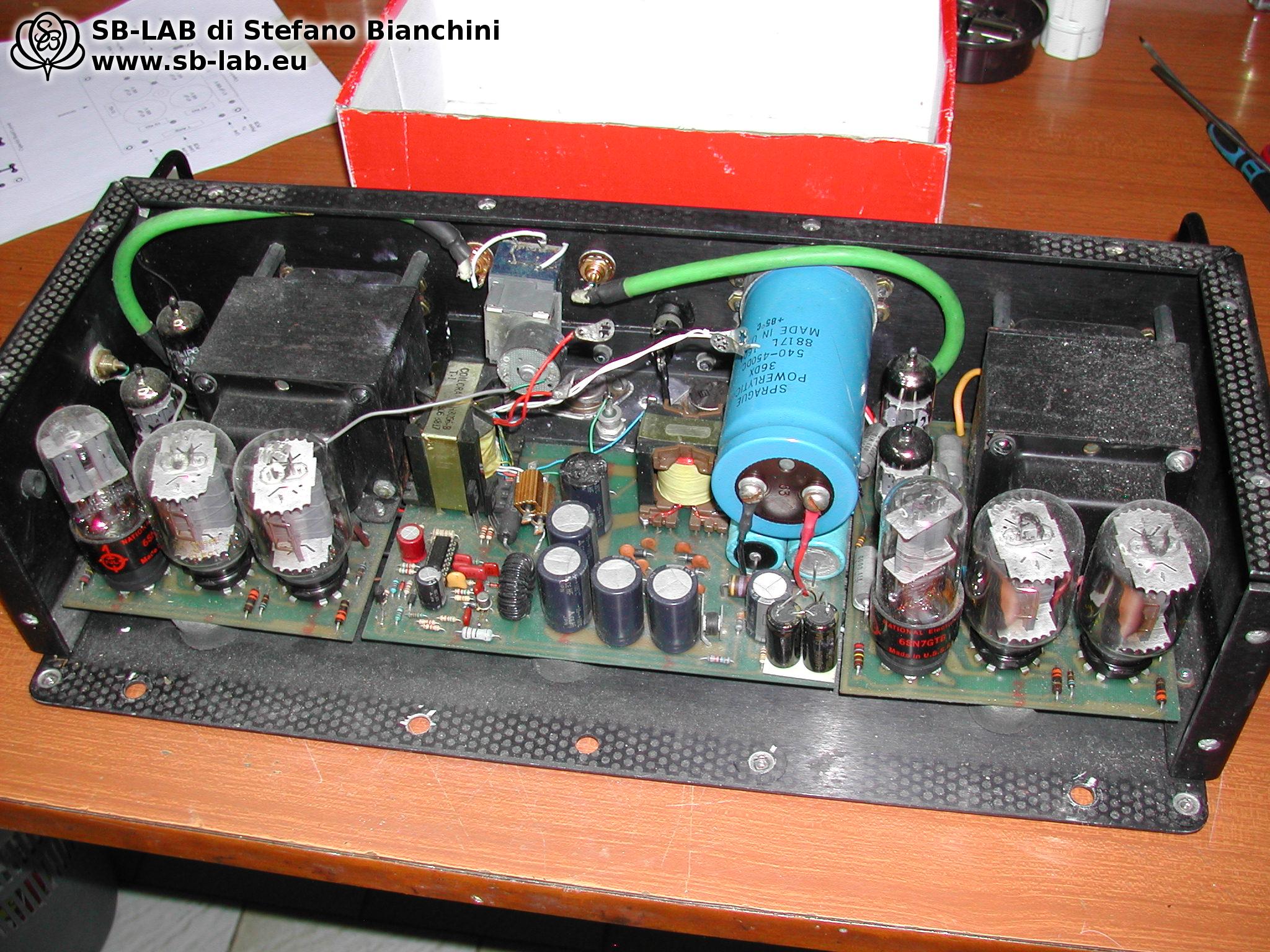
The PCBs were extremely dirty, and one output transformer was burnt. The amplifier had undergone several crude modifications: holes drilled in the chassis, a poorly installed motorized potentiometer meant for remote control, non-original signal wires, ECC81 input tubes replaced with ECC83s, and altered bias resistors with oversized replacements that forced new holes into the board. The phase inverter section had not been properly adjusted to compensate for these changes, nor was the NFB network corrected. It had been assembled and disassembled countless times, with broken traces and components even mounted on the wrong side of the board…
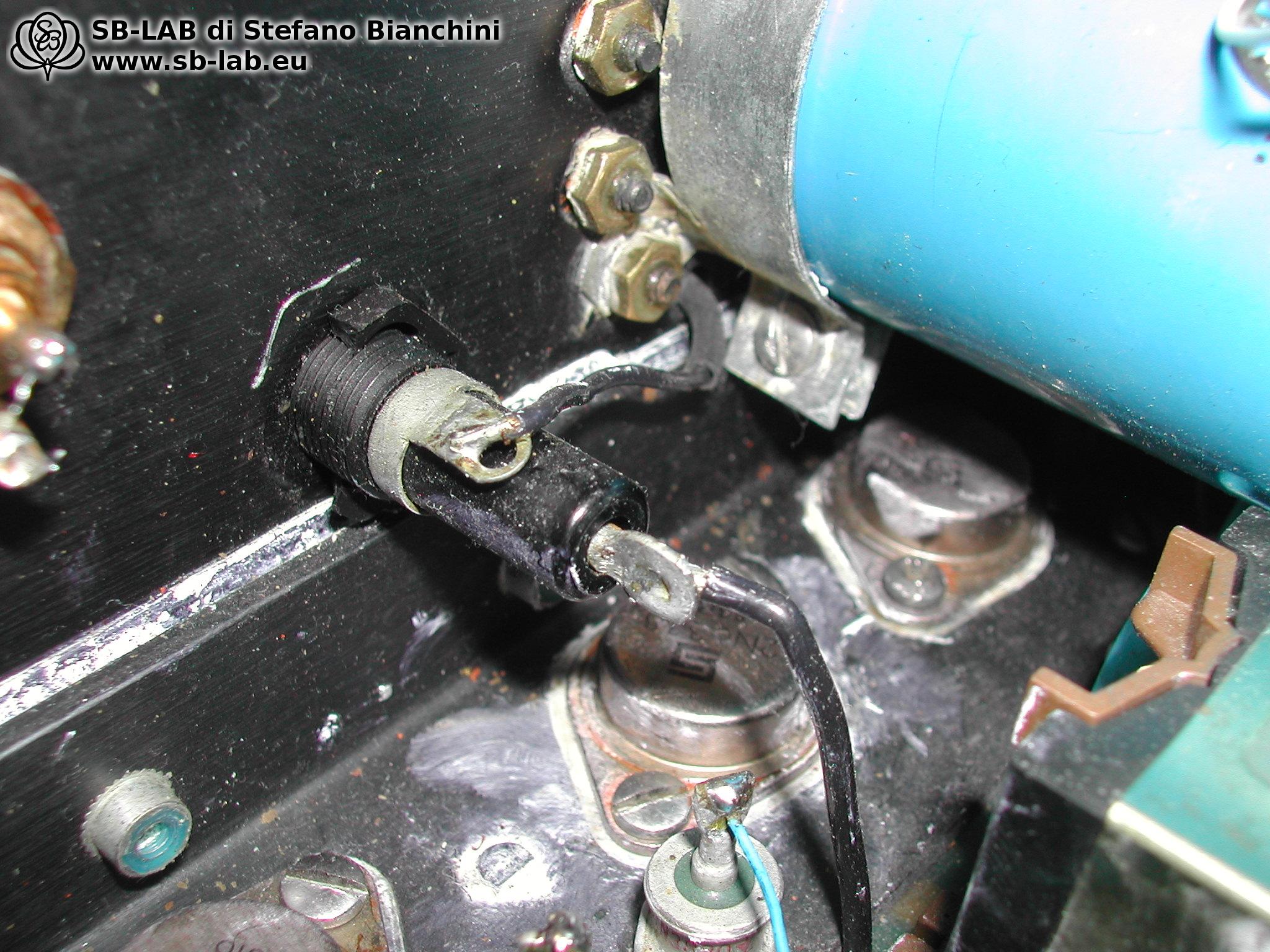
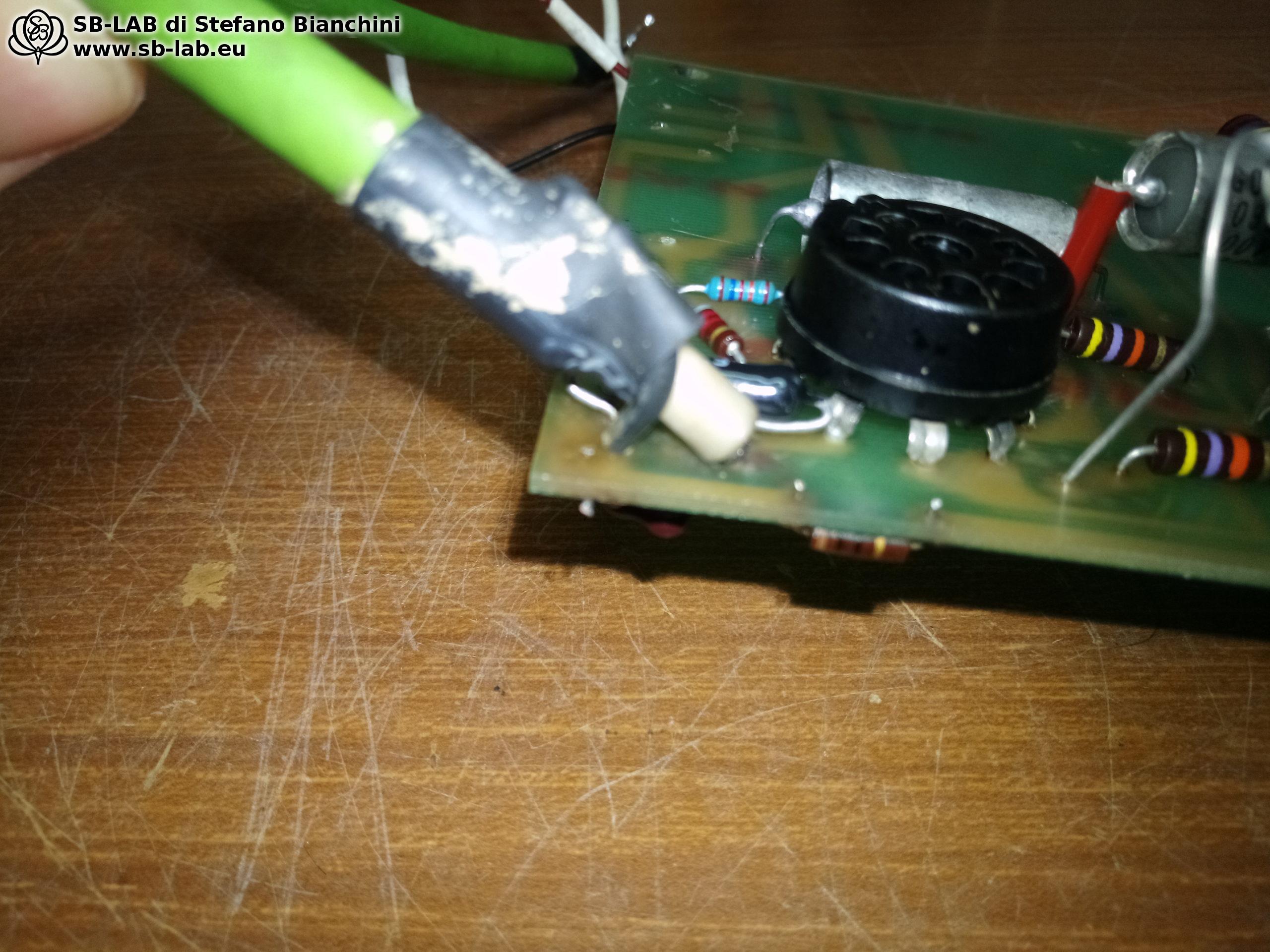
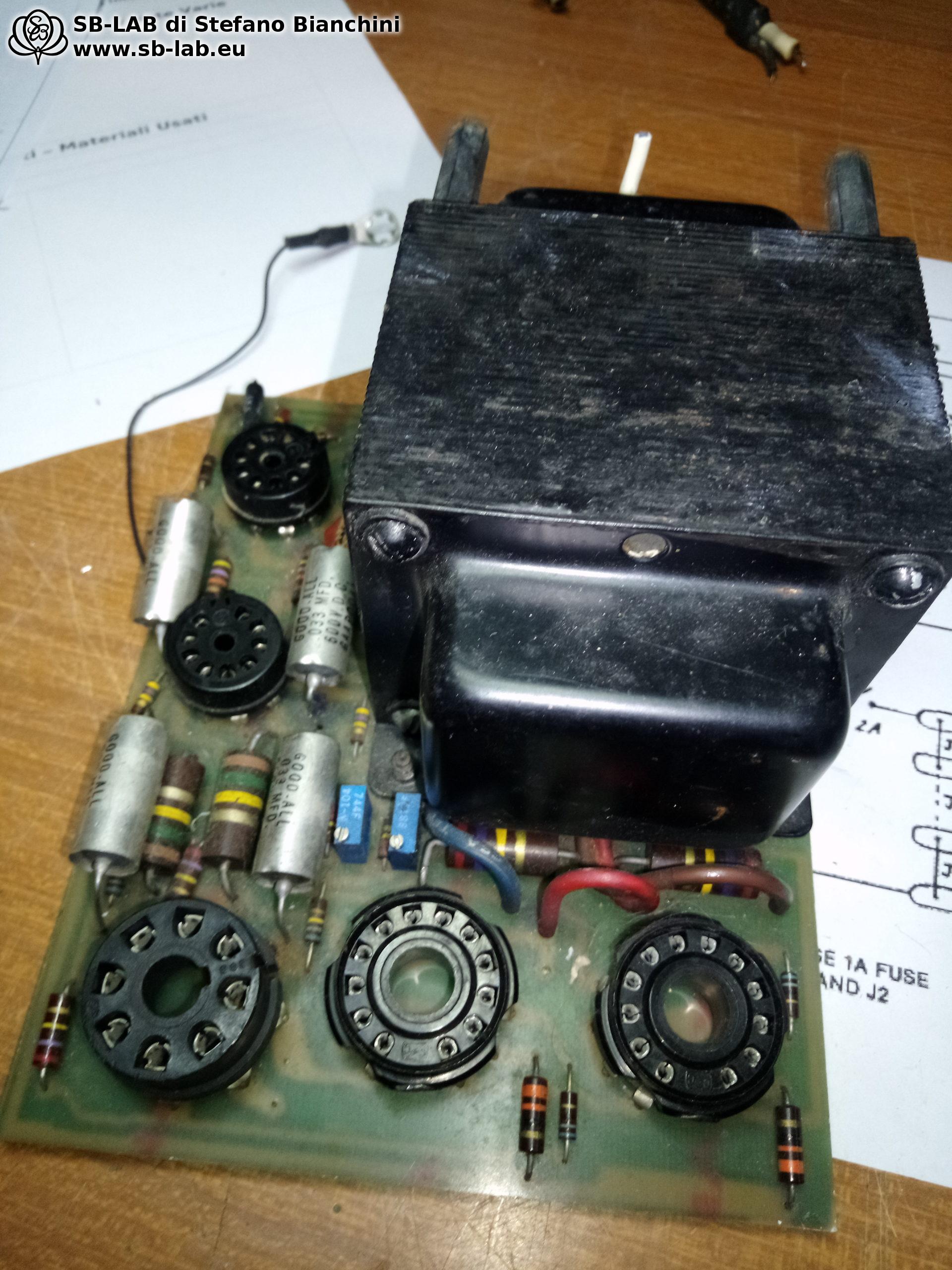
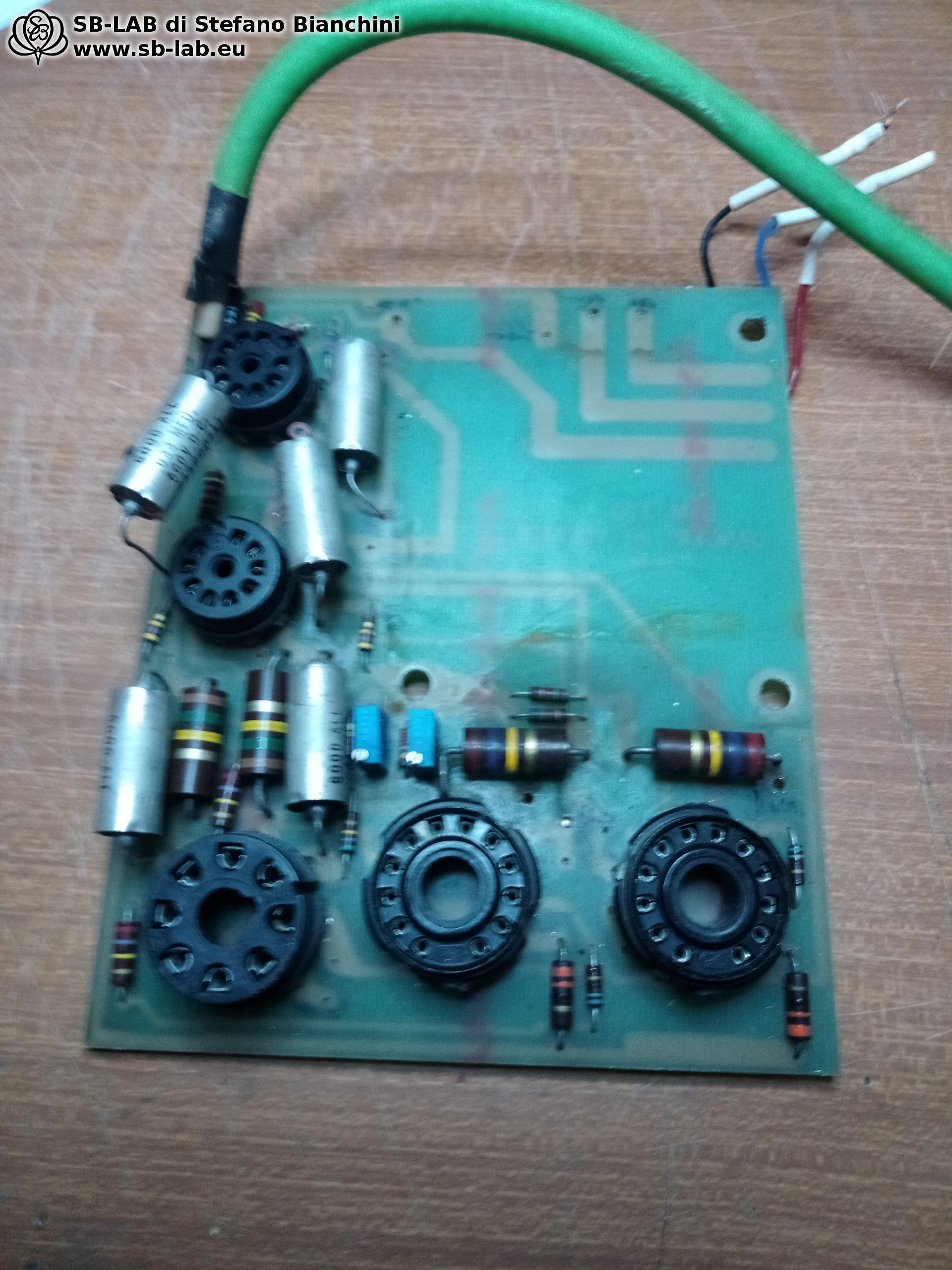
To make matters worse, the manufacturer’s choice of carbon-composition resistors proved disastrous. Every single one had drifted out of tolerance: 150k measured 238k, 68k measured 92k, and even the 33 ohm test points for bias adjustment read only 15–16 ohm, doubling the real bias current! I had to thoroughly wash the boards, reflow all solder joints, and replace almost every component except the tube sockets.
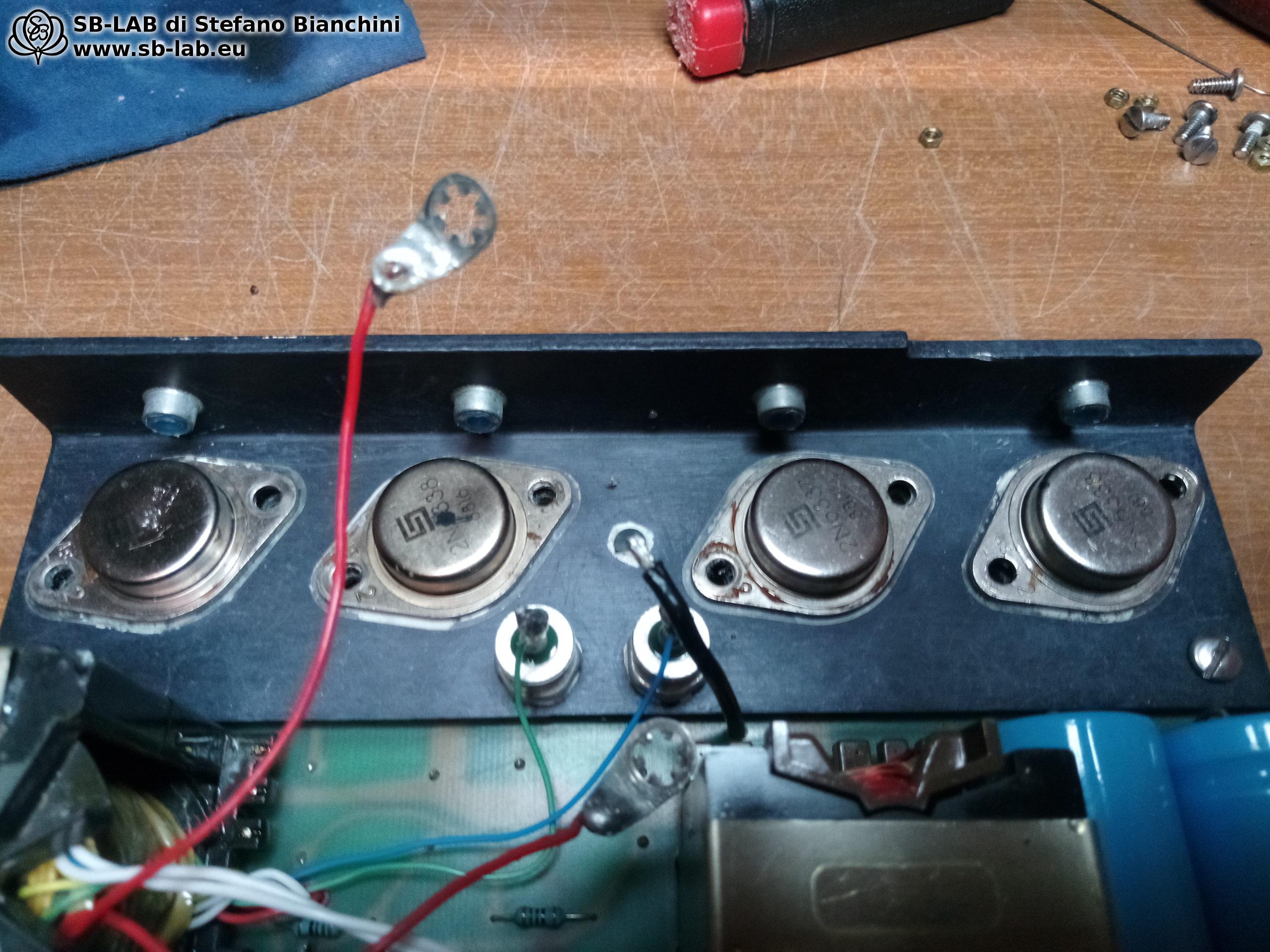
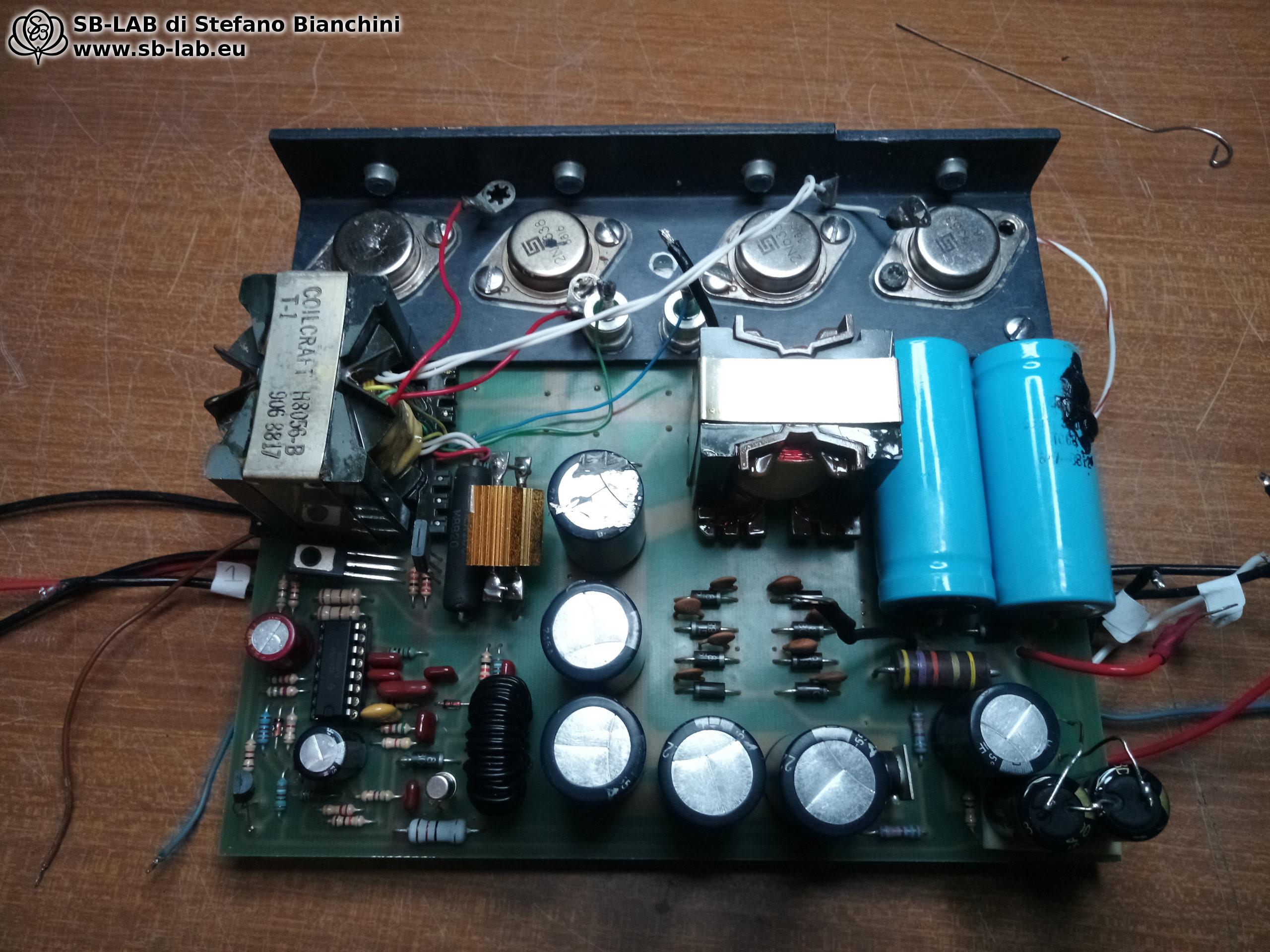
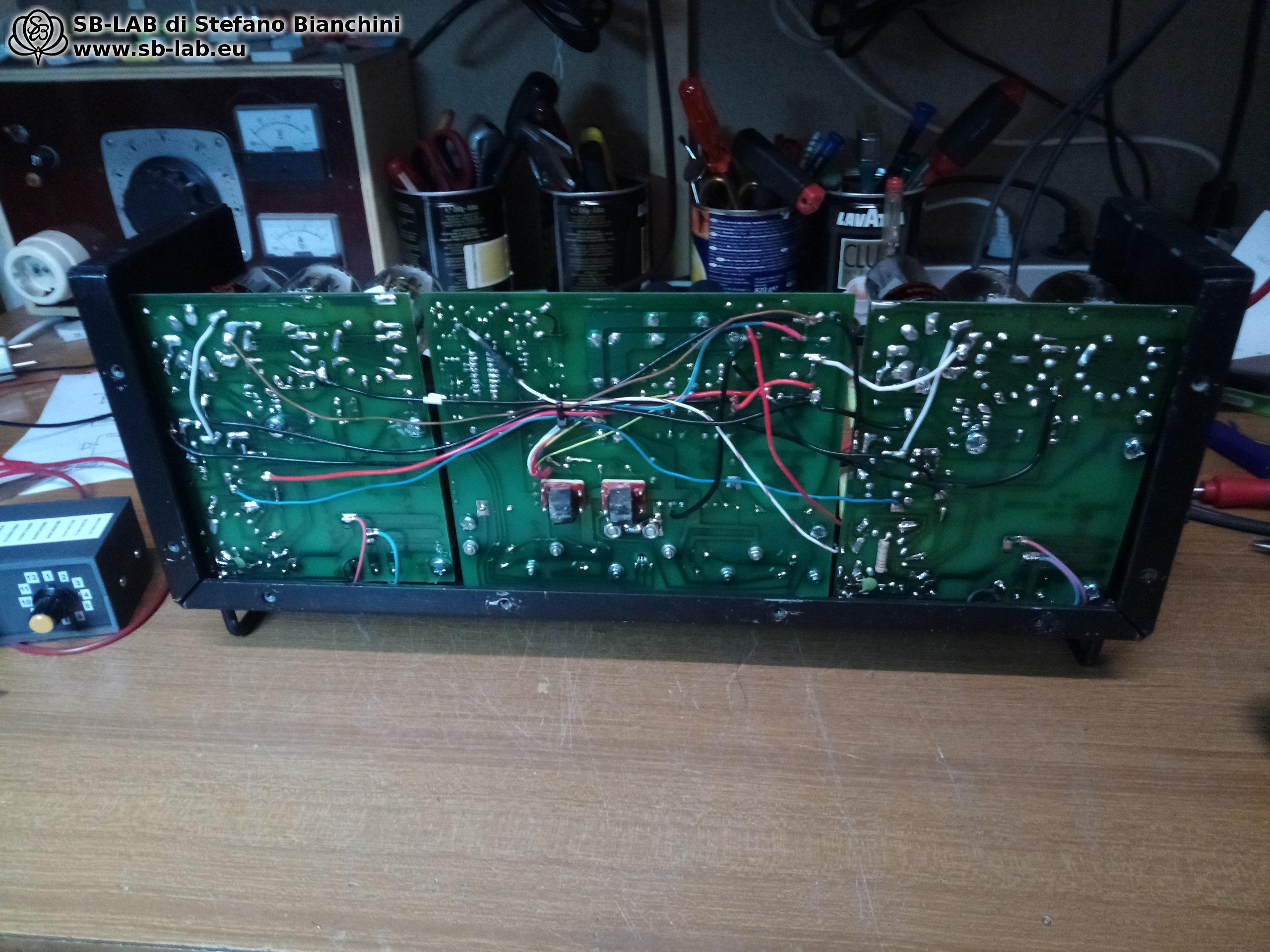
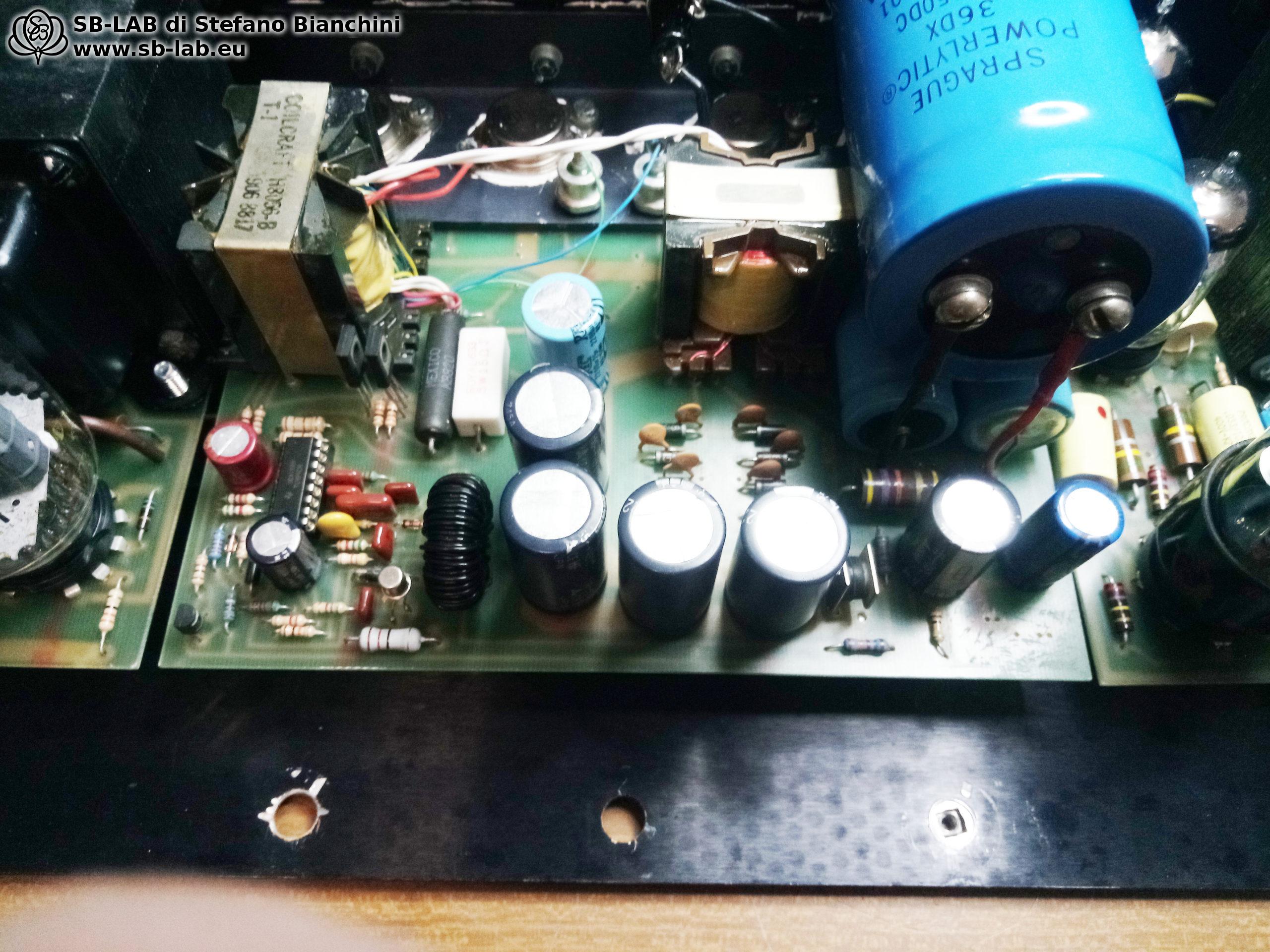
The switching power supply section was also a mess—capacitors glued with double-sided tape, resistors of random values dangling in mid-air, and lifted PCB traces. All four transistor collectors were disconnected, and under the heatsink I found dried mud, even beneath the blue capacitors and the two transformers. Was this amp from a car that ended up in a lake? Restoring this section was no easy task without a schematic, especially when I discovered at power-up that the –200 V rail feeding the 6SN7 was missing. After extensive work, including rewinding the output transformer, the unit was finally brought back to life.
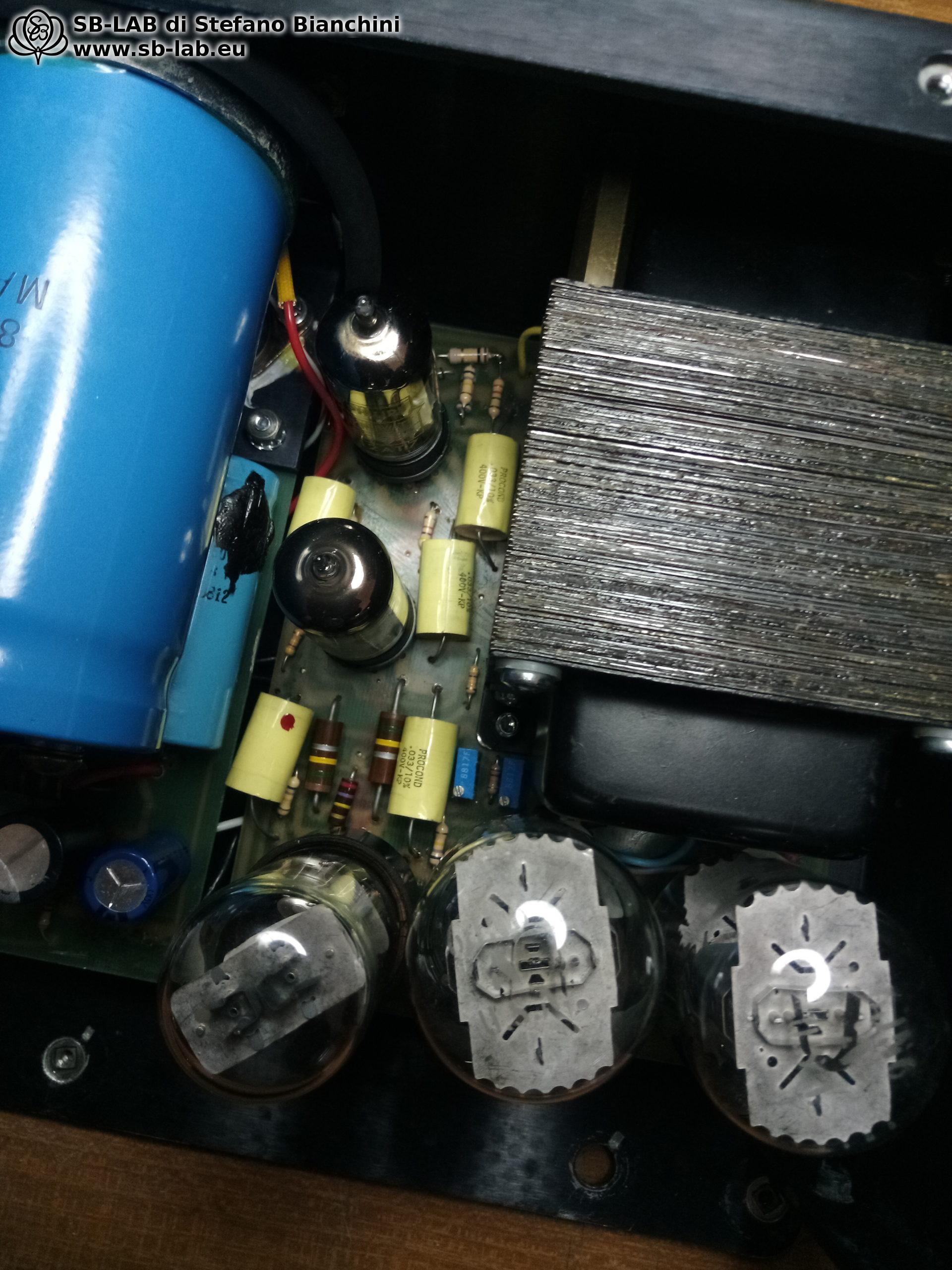
The circuit clearly reflects 1980s audio design philosophy—essentially a hybrid of tube and transistor concepts. The output tubes have their control grids grounded together with the cathodes and are driven via their screen grids, which are DC-coupled to the cathode of a 6SN7 configured as a cathode follower. The output stage operates in class B, with bias current set to 3 mA (100 mV across the 33 ohm resistor as per the factory schematic). A local balanced feedback loop between the output stage and the phase inverter improves the 6SN7’s linearity, while a second global unbalanced feedback loop runs from the transformer’s secondary back to the input stage.
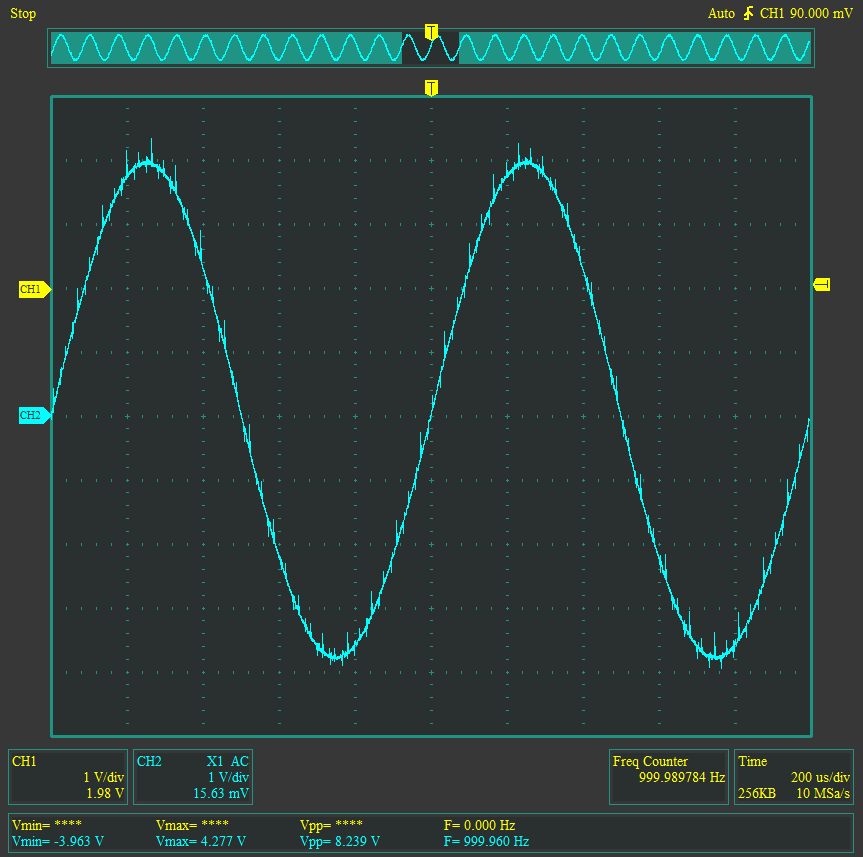
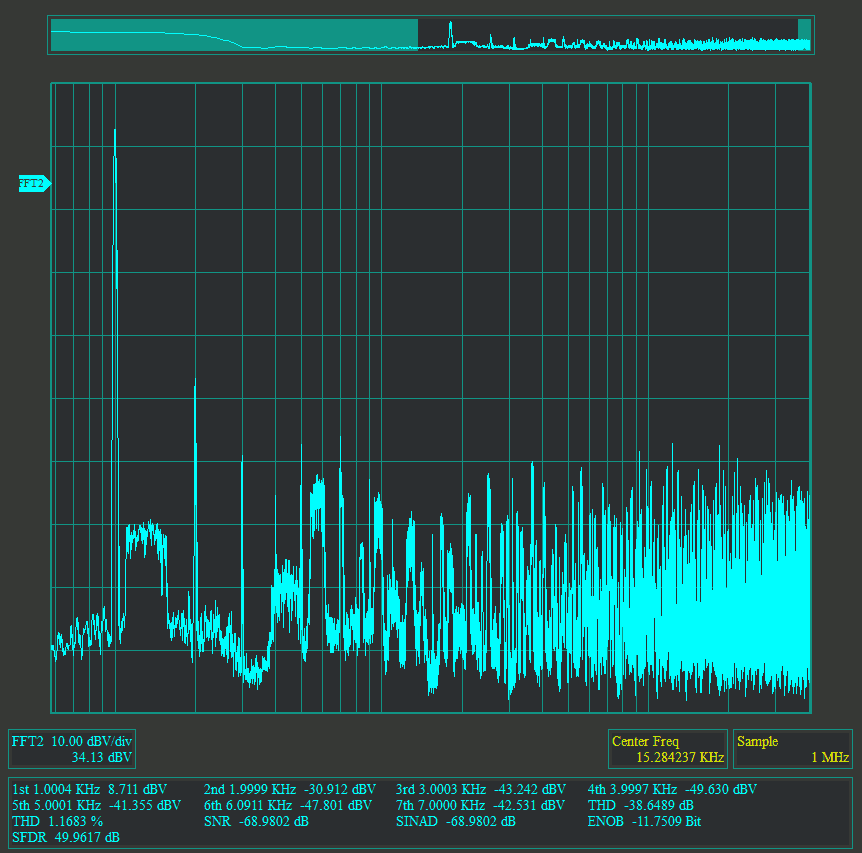
Peak output power is around 30 W RMS per channel, limited mainly by the four transistors in the switching supply or by thermal protection. Below are the only two measurements I recorded: the harmonic spectrum and the sine-wave response, which shows minor switching noise visible only on the digital analyzer, not on the analog one—inaudible to the speakers.
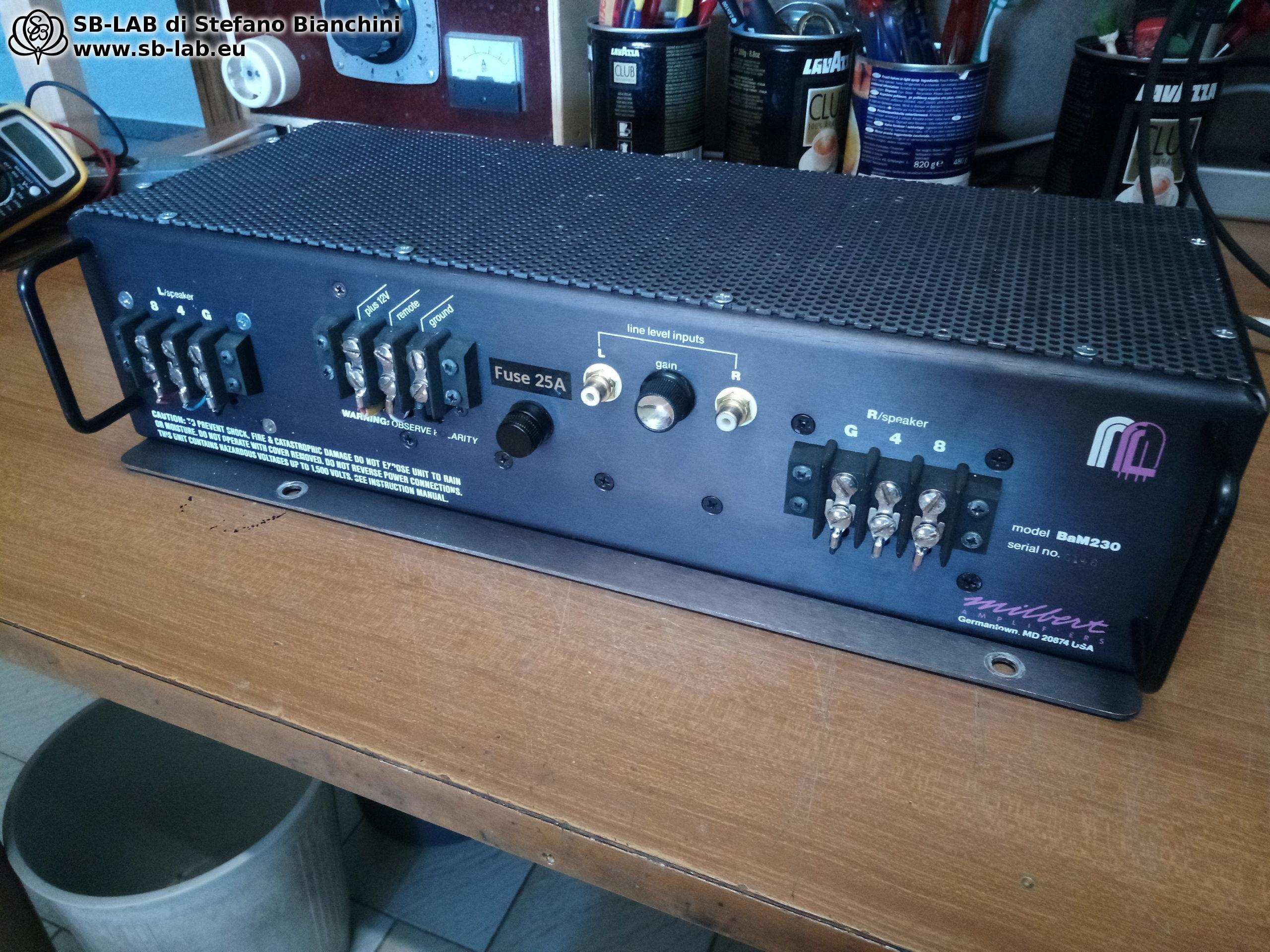
To complete the reassembly, I had to redo nearly all the threads, which were stripped or filled with glue, and replace every screw. Once finished, the amplifier looked and performed like new.
If you own a tube amplifier—or a complex “hybrid” model like this one—and don’t feel like gambling with random forum mods, bring it to my workshop. I perform in-depth diagnostics, replace aged or out-of-spec components, rebuild high-voltage switch-mode power supplies, and restore the mechanical and aesthetic condition professionally. Contact me for an estimate and bring back the sound your system deserves.