The name Radford immediately evokes images of excellence in high fidelity and vacuum tube amplifier design. Founded in the United Kingdom by Arthur Radford, the company stood out from the 1960s onward for its innovative approach and uncompromising sound quality. Radford output transformers, in particular, are legendary for their linear performance and their ability to handle extreme frequencies with minimal distortion.
Radford was one of the few companies able to combine a sober, elegant design with advanced acoustic engineering, earning a place of honor among high-fidelity enthusiasts. However, even such a respected brand was not immune to the challenges of the so-called atomic era of tube amplifiers, a period that was as fascinating as it was controversial in the history of audio electronics.

The Atomic Era of Tube Amplifiers: The Race for Power
Between the late 1970s and the early 1980s, the hi-fi world was undergoing a profound transformation. The Radford TT100, produced in 1981, perfectly represents this turbulent period. With the rise of transistor amplifiers, the market entered a frenzy of “pure power”, with marketing campaigns boasting watt after watt, making tube amplifiers seem decidedly obsolete in terms of brute force.
To compete with the wave of transistor amplifiers that promised high power at increasingly affordable prices, even tube amplifier manufacturers were forced to chase this trend, often at the expense of reliability and longevity. Tubes were pushed beyond every technical and common-sense limit, in a desperate race to keep up with the times.
Radford TT100: An Apocalyptic Tale from the Atomic Era
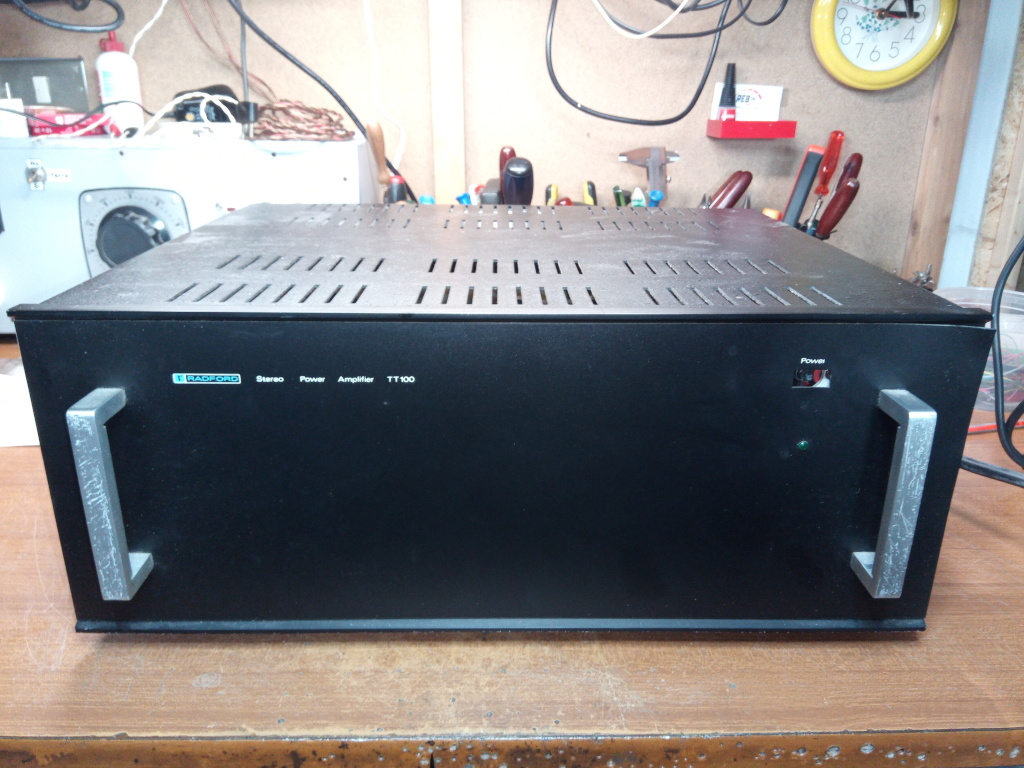
During the repair and modification work on the Radford TT100, I realized just how extreme the design choices adopted to meet the demands of that era really were. According to the data reported on the schematic, the KT88 tubes used in this amplifier were driven to dissipate a full 96 watts each. For those who may not know, a KT88 is designed to dissipate a maximum of 35 watts in pentode configuration or 40 watts in ultralinear or triode mode.
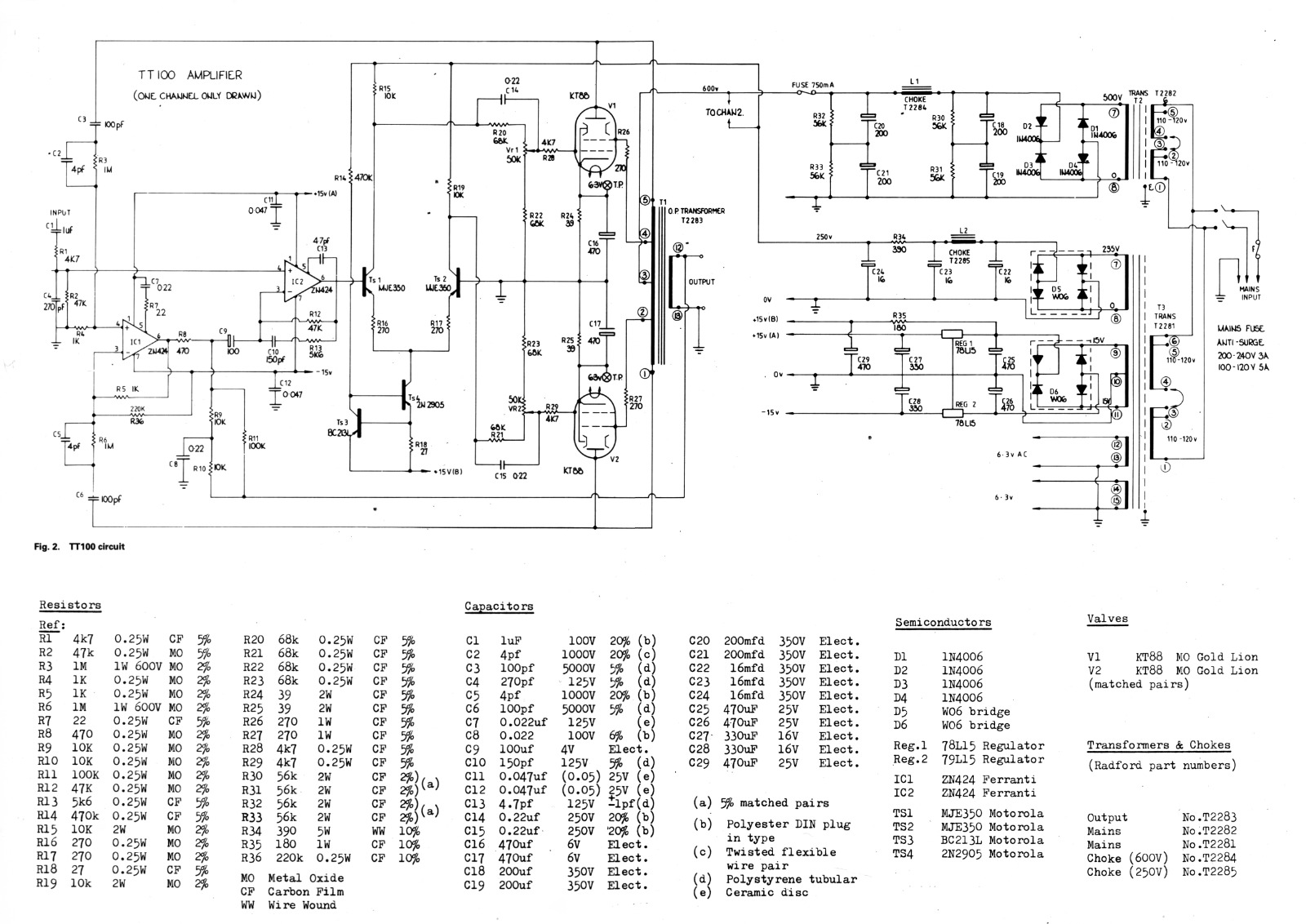
This alarming figure comes directly from the values shown in the schematic:
- 39 ohm cathode resistor used as a test point.
- 6.3 volts measured at the test points, which according to Ohm’s law corresponds to about 160 mA of current per tube.
- Multiplying this current by the 600 volt anode voltage results in a dissipation of well over 96 watts per tube.
At first, I thought it might be a printing error in the schematic, but the first power-up of the amplifier proved otherwise. Even with the bias adjustment trimmers set to maximum negative voltage, already at 188 volts on the variac the KT88 tubes were at the limit of their maximum allowable dissipation. In practice, tubes driven this hard have a life expectancy that ranges from Christmas to New Year’s Eve, inevitably leading to premature and irreversible degradation.

The reason for this design choice is obvious: being able to claim 100 watts on the catalog page. It hardly mattered if the tubes would turn into fireworks after a few months. Other amplifiers from the same era followed similarly reckless approaches, such as some Quicksilver models known for exploding under continuous load, EAR amplifiers that risk spectacular short circuits if the speaker terminals do not make perfect contact, and M&A units infamous for devouring tubes within just a few hours of use.
The End of the Atomic Era of Tube Amplifiers
This power race typical of the atomic era of tube amplifiers lasted only a relatively short time, roughly from the mid-1970s to the mid-1980s. Soon after, tube electronics were temporarily sidelined, giving way to the dark age of hi-fi, a period when the only parameter that seemed to matter was pure power, at the expense of any consideration for sound quality. During this phase, which lasted until the mid-1990s, the hi-fi market was dominated by transistor amplifiers designed to boast impressive numbers on paper, but often lacking musical grace and sonic depth. Eventually, listeners grew tired of these cold and aggressive sounds. Around the mid-1990s, a rediscovery of tube technology took place, this time with a more mature and conscious approach, free from the excesses and abuses of the atomic era, and focused instead on a refined, warm, and musical sound, exactly what tubes do best.
Restore or Modify? A Technician’s Dilemma
I can already imagine the comments from vintage purists: “How dare you modify a Radford TT100?!”

Well, let’s drop the hypocrisy. As a technician, I have the responsibility to deliver an amplifier that is reliable and manageable, not a museum piece destined to spark at the first power-up. An amplifier from 1981, with more than 40 years on its back, needs maintenance, period. Electrolytic capacitors that are dried out or have sky-high ESR must be replaced. There is no valid reason to cling to these nonsense ideas of originality at all costs. The amplifier does not lose value because it has been serviced, if anything, it gains value. Just take a look online: on all forums, amplifiers of this type are fully recapped, and nobody worries about the originality of the internal components.
Then there is the bias issue. Driving the tubes at those levels was excessive even back then, and today it is even more senseless. The KT88 tubes available in 2025 are not the same as those from 1981. Current production is of lower quality, with less robust structures and reduced dissipation capability. Even back then, pushing KT88s to 96 watts of dissipation was madness. Today it is simply suicide for the tubes. Lowering the bias to keep the KT88s within 40 watts of dissipation is not just a logical choice, it is a technical necessity. In fact, many people on various websites talk specifically about modifications to the bias resistor network.
Moreover, this TT100 had already been repaired in the past precisely because of an output tube explosion. It is no coincidence that the resistors I found replaced were those connected to the screen grid, the control grid, and the cathode. This is the unmistakable sign that all the KT88 tubes had blown up. So what originality are we talking about? If the original circuit has already led to the death of the output tubes once, blindly following the factory schematic again would have been incompetent. I am a technician, not a museum curator. ?
It Was Supposed to Be a Simple Tube Replacement…
This whole story began when the owner of the TT100 brought the amplifier to me for a simple tube replacement and bias adjustment. Under normal conditions, this would have been a routine half-hour job, but the situation turned out to be far more complex. In addition to the absurd biasing, I found other issues:
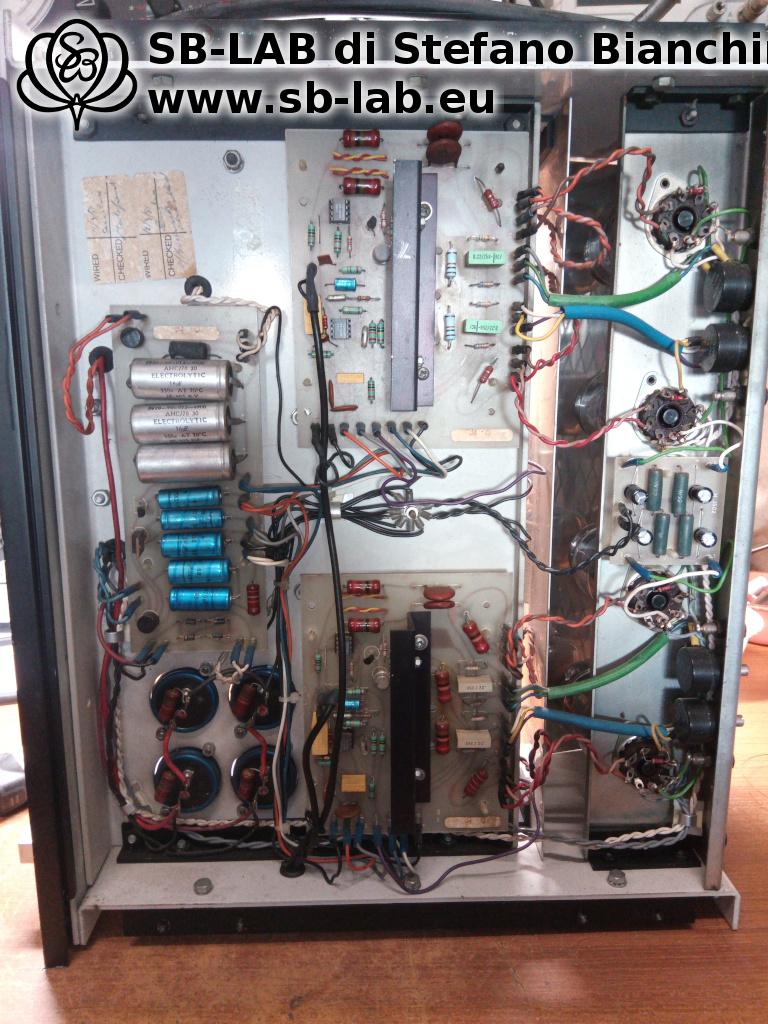
- A previous sloppy repair with terrible solder joints, lifted traces, and even an incorrect value on a 10k ohm grid stopper instead of 270 ohm on just one of the four KT88s.
- An oxidized 2N2905 causing early clipping on one channel.
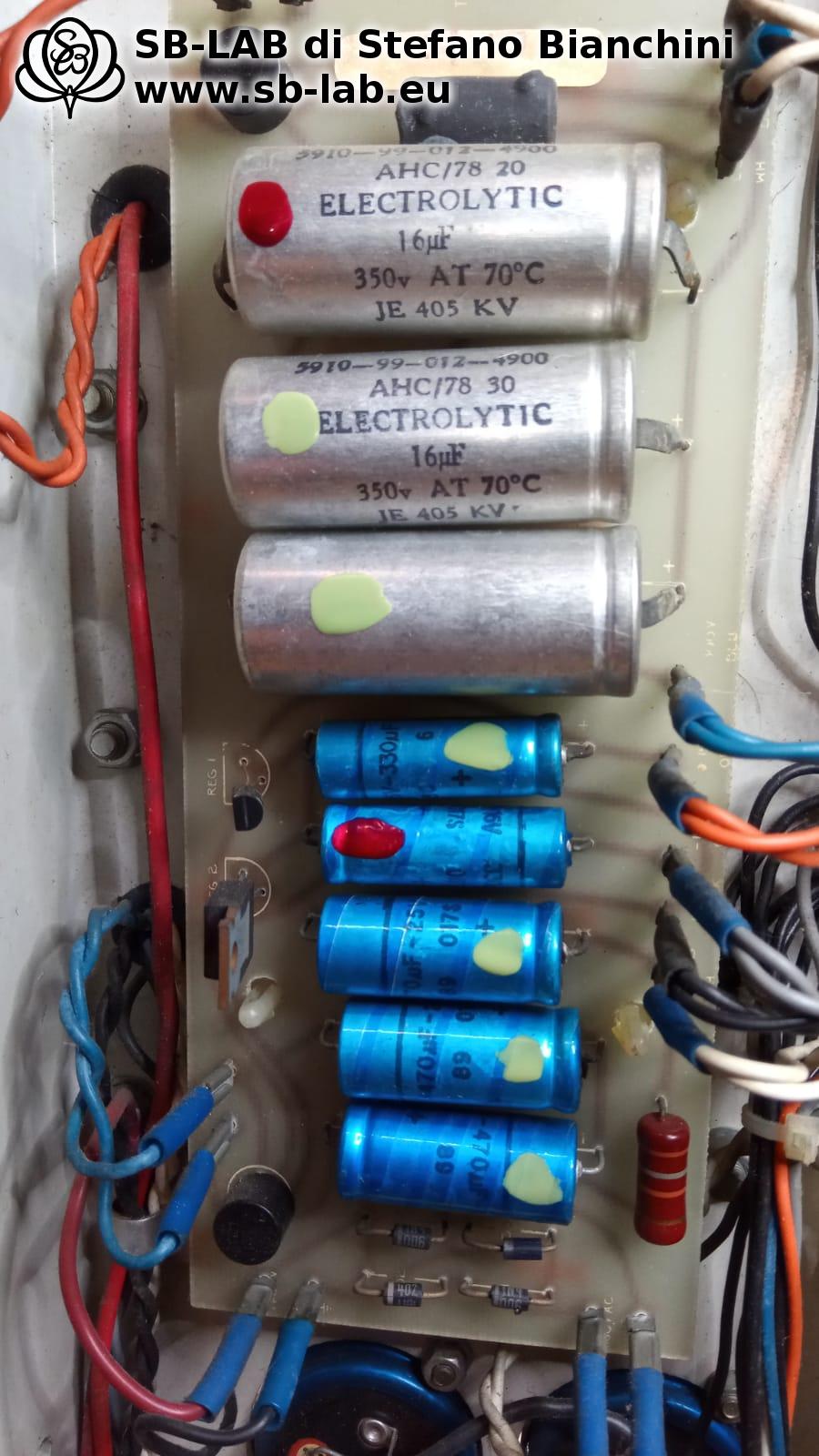
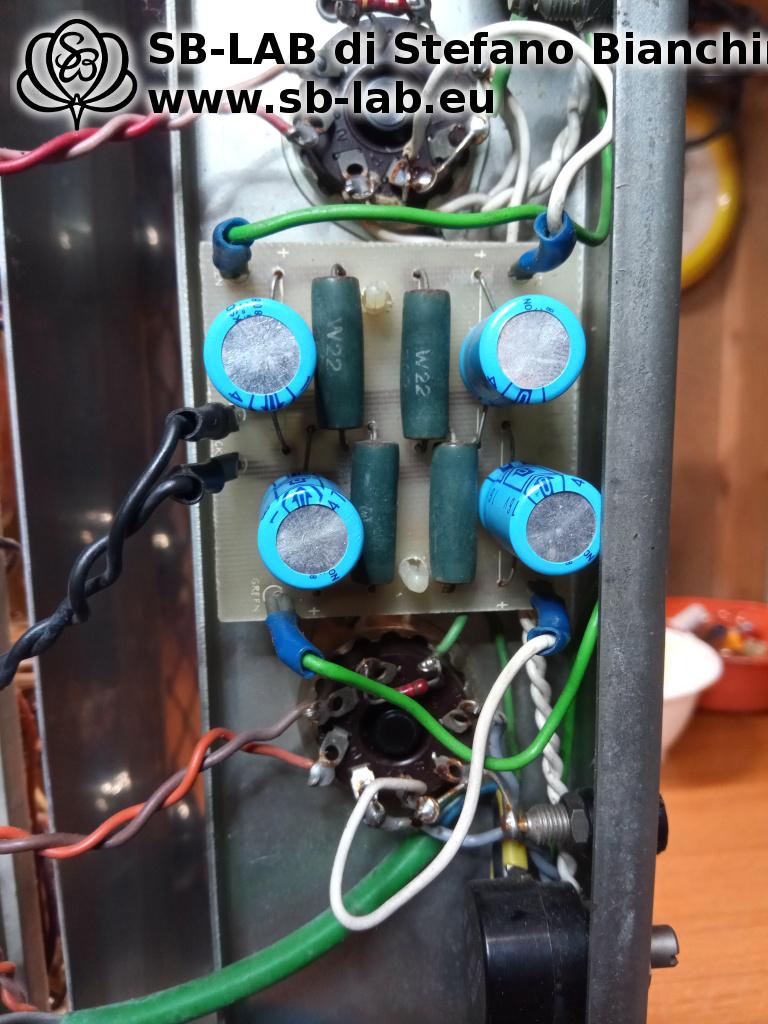
- Several electrolytic capacitors that were completely worn out.
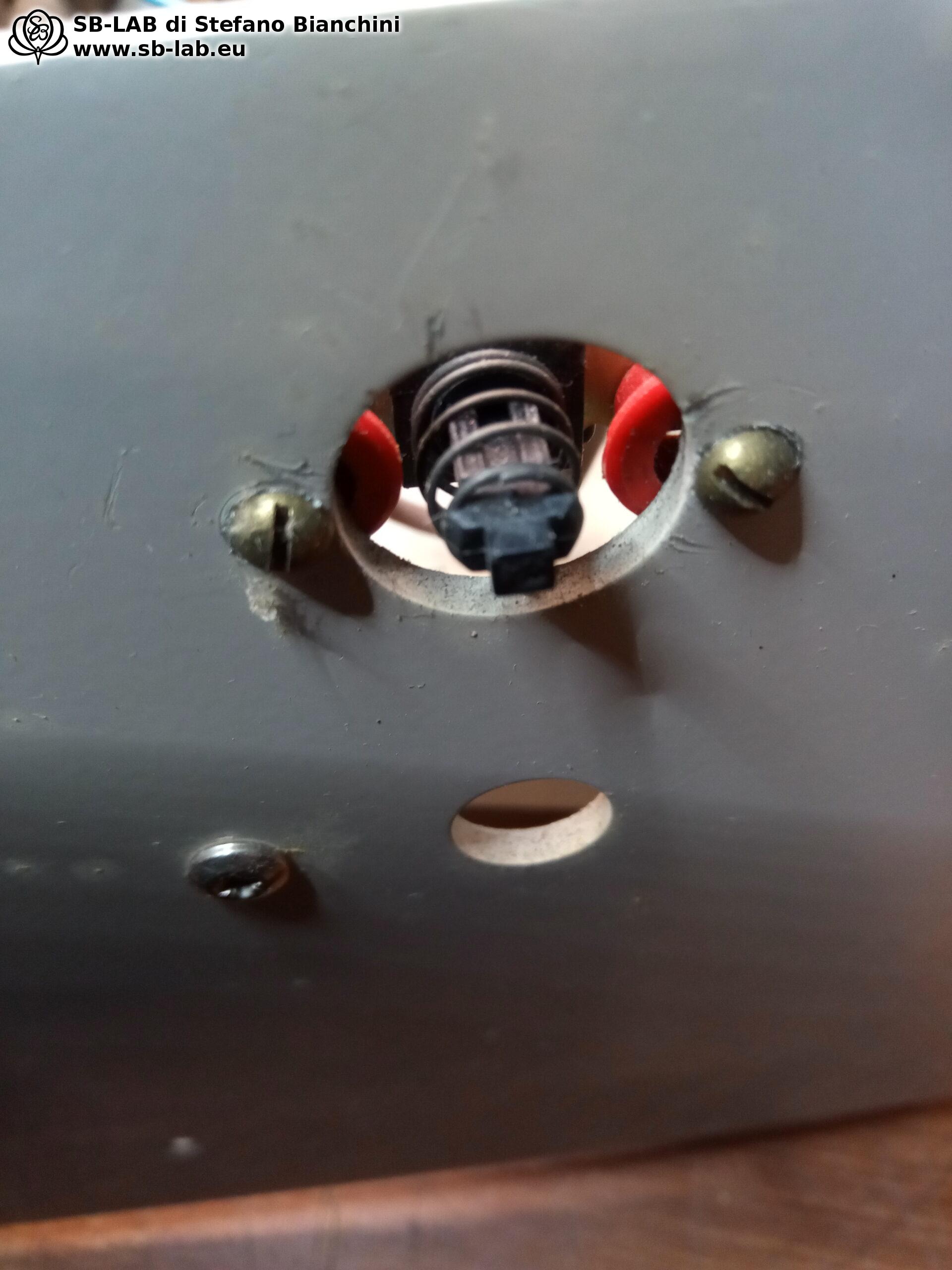
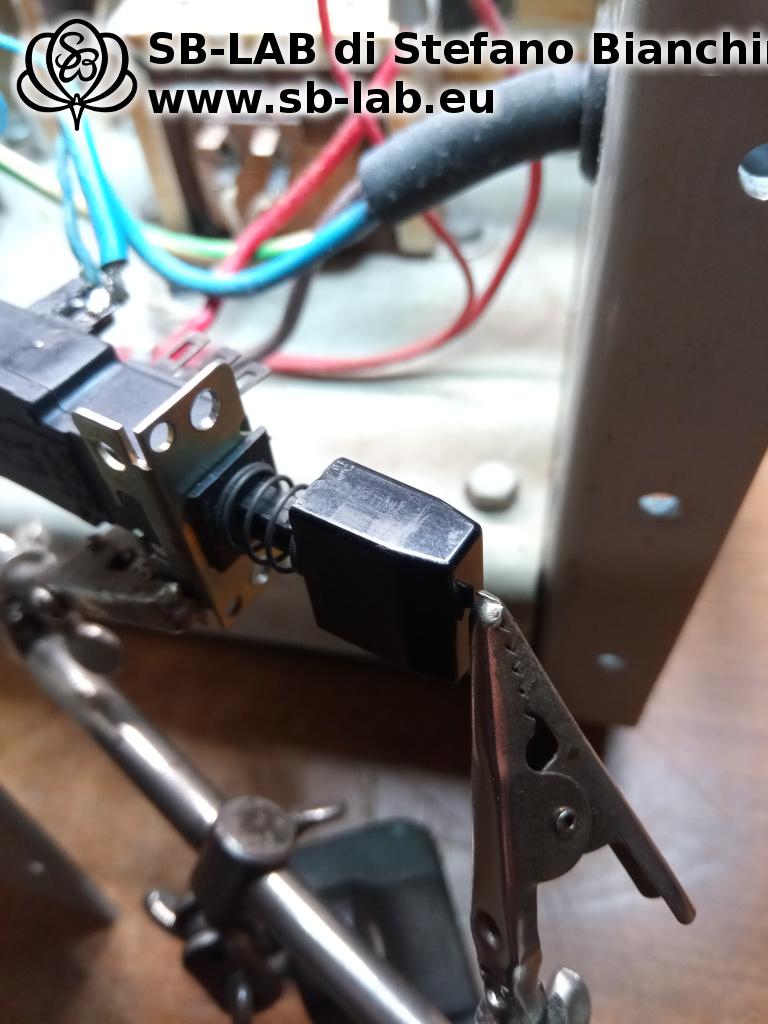
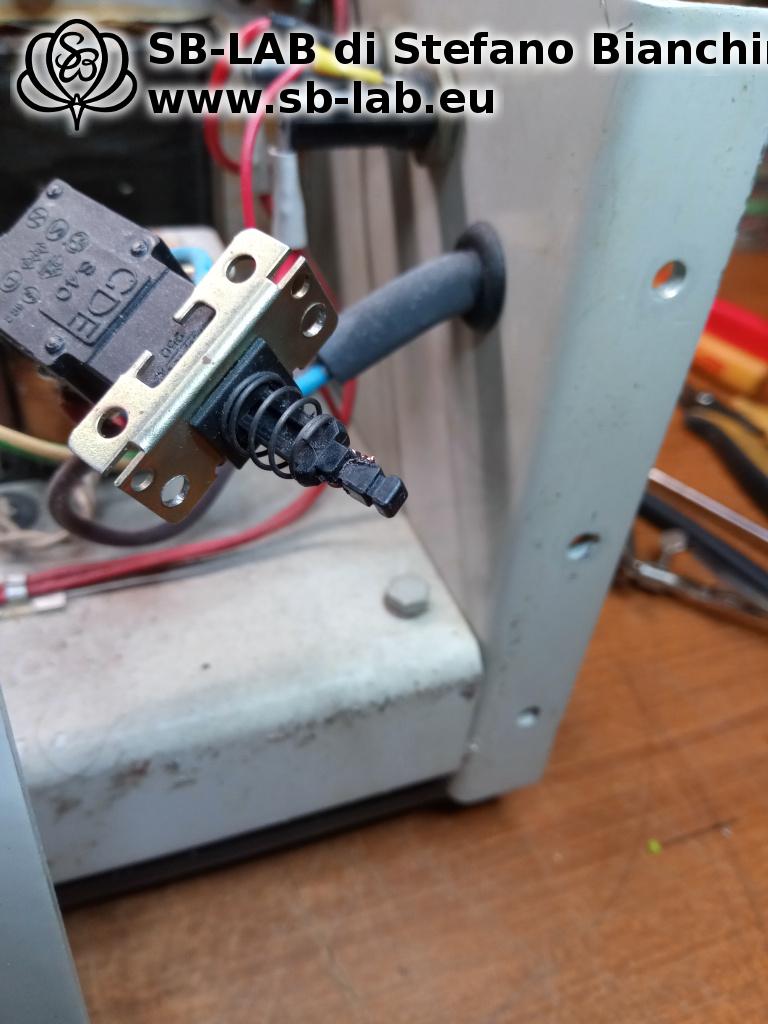
- A power switch with a broken shaft, repaired by joining the stub with solid copper wire and two-part epoxy glue.

The Modifications and the Rebirth of “Ivy Mike TT100”
To make the amplifier reliable and long-lasting, I carried out the following modifications:
- I replaced 8 resistors (2 for each KT88) in the bias voltage divider, limiting dissipation to 40 watts per tube, a safe value that respects the original KT88 specifications.
- I replaced the exhausted electrolytic capacitors to ensure power supply stability.
- I replaced a faulty 2N2905 and checked the proper operation of the MJE350 transistors, which were still in good condition.
- I repaired the power switch, restoring both functionality and cosmetic integrity to the amplifier.
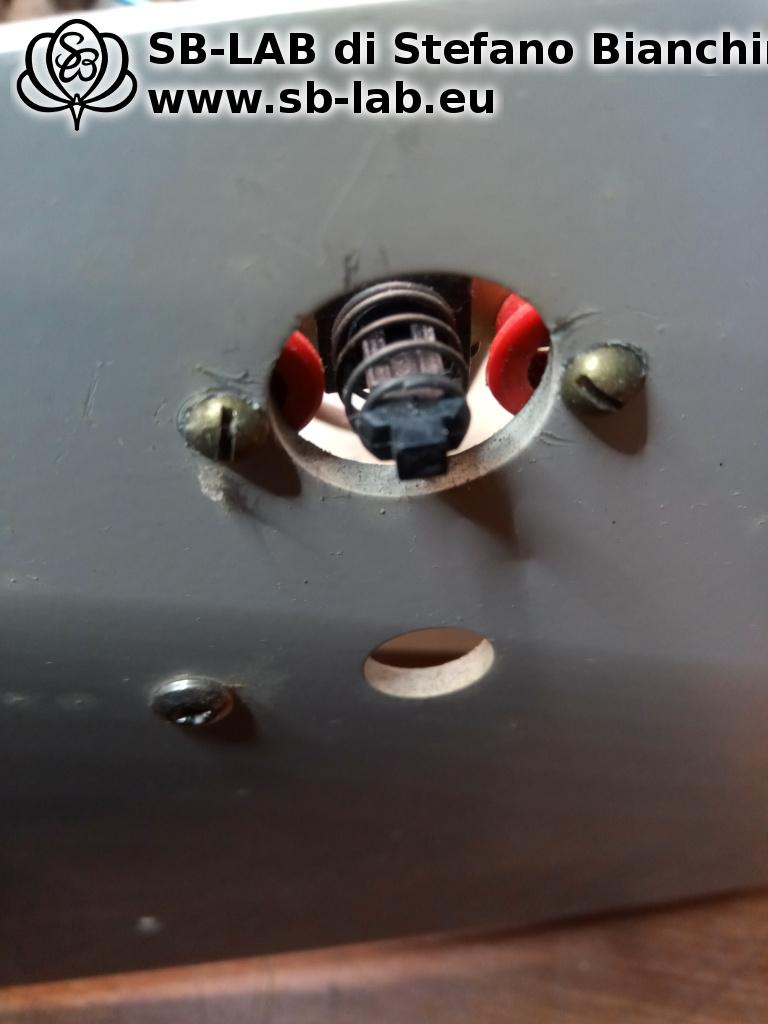
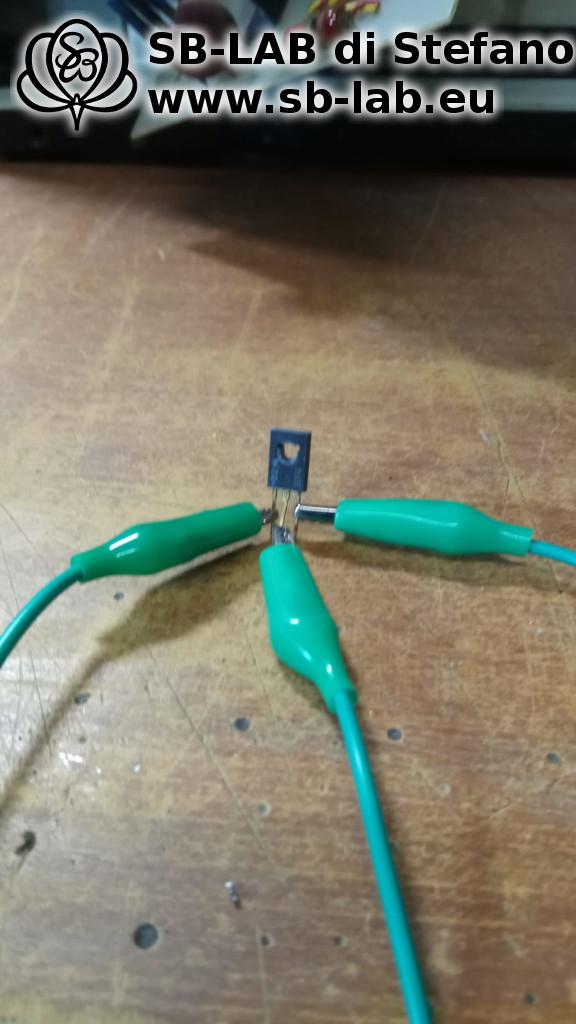

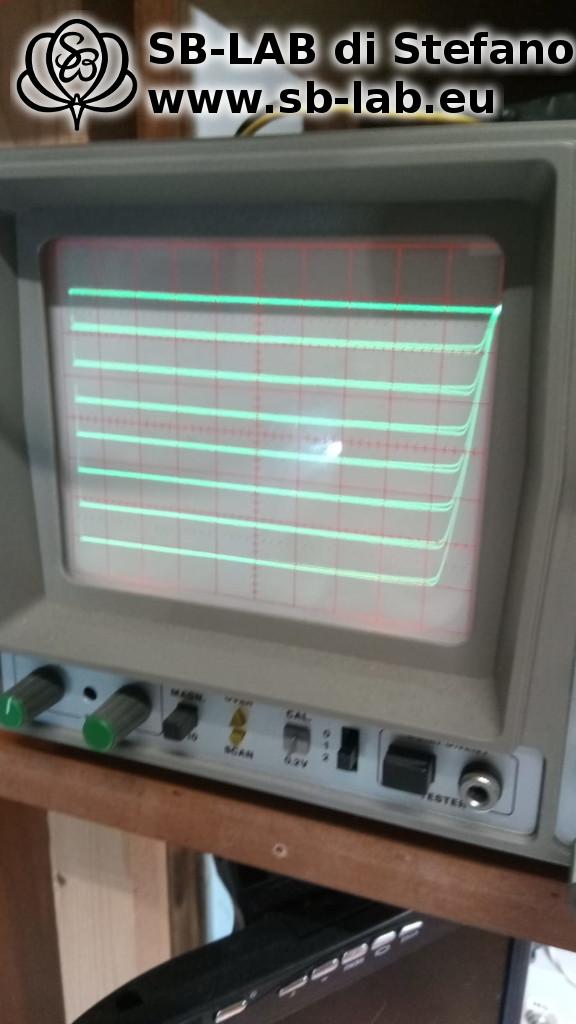
After all these modifications and repairs, the Radford TT100, nicknamed Ivy Mike, a name evocative of destructive power but now under control and reliable. The goal of this repair and modification was to respect the original spirit of the amplifier while ensuring reliability and long-term durability.
Instrument Measurements
After the modifications and recalibration, the Radford TT100 delivers 82 watts per channel, with a damping factor of 28, indicative of the very high level of global feedback used in its operation. This approach, typical of the era, aimed to maximize loudspeaker control, but inevitably influenced harmonic behavior and frequency response.
Instrument measurements show a total harmonic distortion of 0.14% at 1 watt, a remarkably low value for a tube amplifier of this power, confirming the effectiveness of the applied feedback. However, the frequency response graph revealed an interesting anomaly: a bump peaking at 1500 Hz. The cause of this behavior is not immediately clear. It could be related to the questionable quality of the output transformers or to some peculiarity in the feedback or internal equalization circuitry.
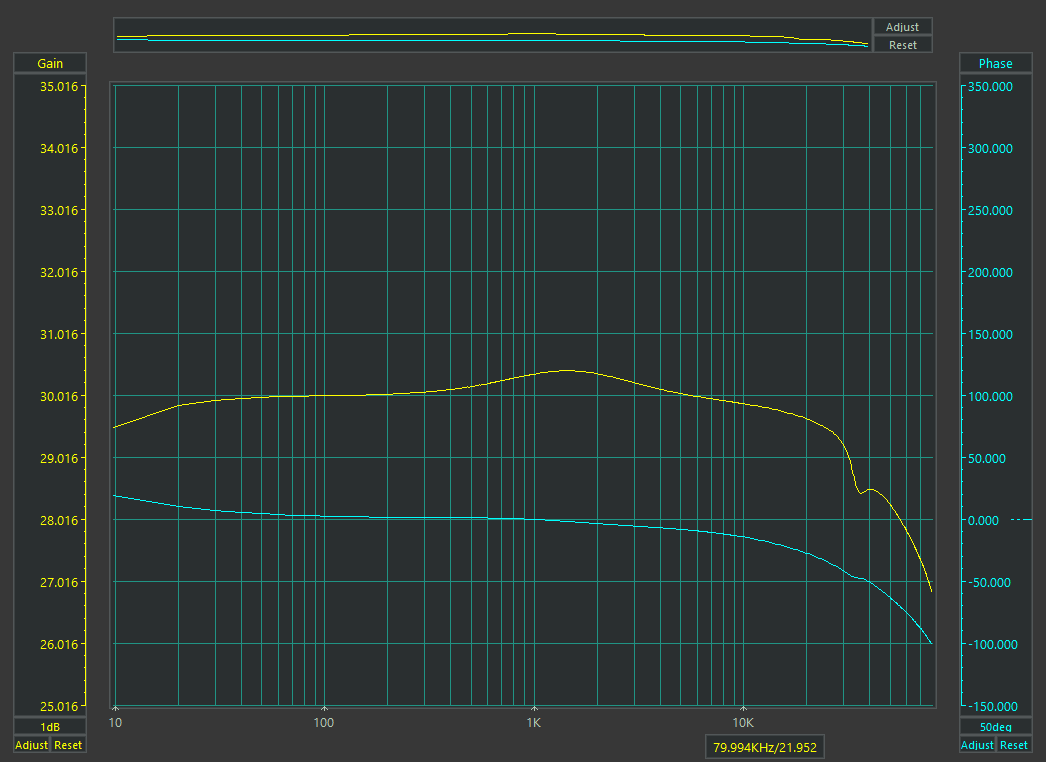
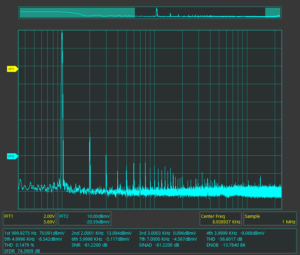
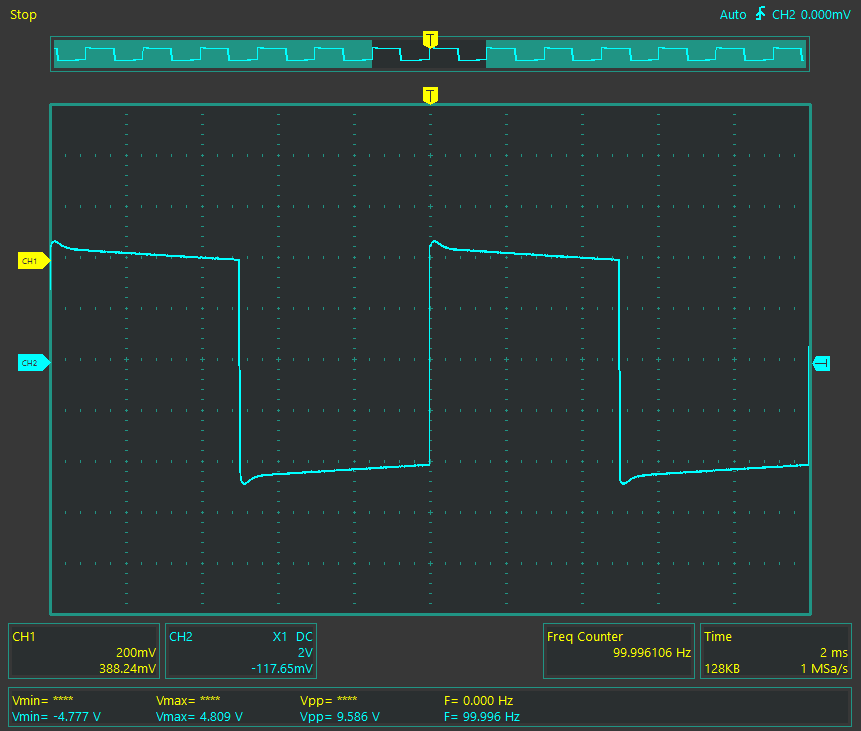
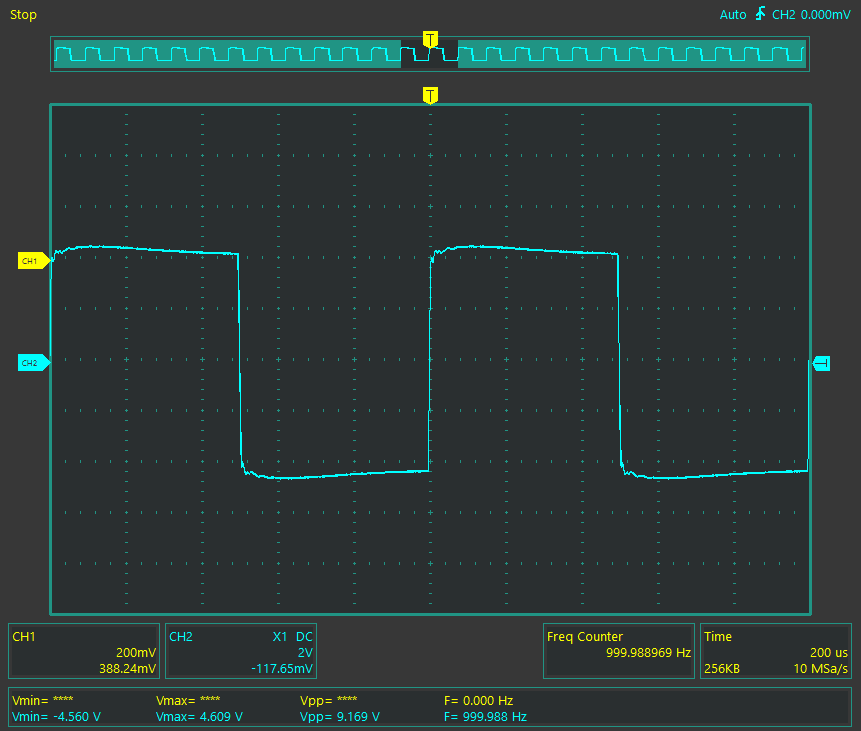
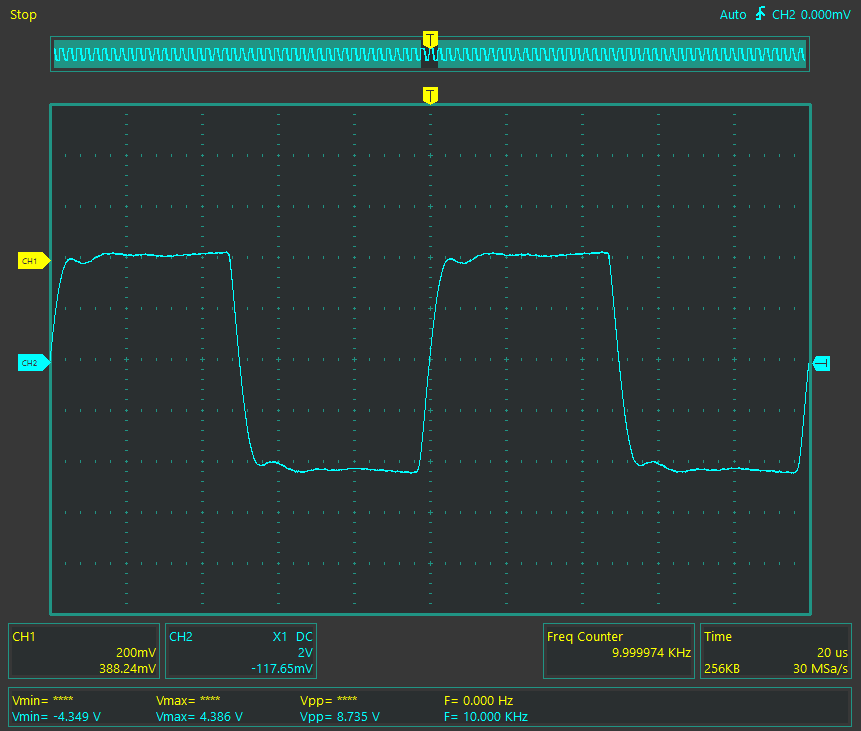
I lean toward the second hypothesis, since the square wave analysis shows fairly clean waveforms, an indication that suggests good transformer linearity. However, it cannot be completely ruled out that the high level of feedback is masking potential transformer imperfections, making a definitive judgment difficult without deeper analysis.
The Right Match: Amplifier and Loudspeakers
Now I want to get something off my chest, because when it comes to matching amplifiers and loudspeakers, stupidity often reaches epic levels. Certain people regularly make pairing choices devoid of any logic, leading to endless problems, and then, of course, they blame the technician who repaired the amplifier or replaced the tubes, as if the issue were his fault.
Take the classic case of someone who owns speakers with 86 dB sensitivity, hard as marble, and expects to drive them with a 5 watt single-ended amplifier. Then they complain that it sounds bad. What did you expect? The amplifier is basically in clipping all the time. It is like trying to tow a 20-ton trailer with a tiny city car and then wondering why the engine is smoking.
Equally absurd is someone who owns a 100 watt amplifier (in a class AB that is more B than A) and pairs it with speakers rated at 91 dB or higher. In that case, the poor amplifier is forced to operate almost always at extremely low power, where crossover distortion between the two output devices is at its maximum. The result? A cold, harsh, distorted sound, as tasty as sheet metal. And of course, who gets the blame? The technician who just repaired the amplifier, obviously.

To all these hi-fi geniuses, I suggest meeting up and swapping equipment. Those with 86 dB speakers should take a nice 100 watt push-pull amplifier, while those with 91 dB or higher speakers should pair them with a good 5 watt single-ended amplifier. I bet that suddenly everything will start sounding as it should. Physics is not an opinion, and a proper match between amplifier and speakers makes the difference between sublime sound and total disaster.
Bring Your Radford TT100 Back to Life
If you own a Radford TT100 and want to restore it to peak performance without risking burning through tubes in just a few hours, contact me today. With the targeted modifications I have developed, I can make your amplifier reliable, long-lasting, and safe, without compromising sound quality. Whether you are dealing with bias issues, excessive KT88 dissipation, or simply want a thorough check to ensure proper operation, SB-LAB is here to help.
Do not wait for your tubes to turn into fireworks!
Contact me now for a personalized consultation and let’s bring your Radford TT100 back to life together.