
If you’re the lucky owner of an Audio Innovations 500 and want to preserve its sonic splendor, I’m here to offer a specialized repair service. With years of experience restoring these iconic amplifiers, I guarantee care, expertise, and passion in returning your Audio Innovations 500 to its original glory. Rely on an expert passionate about vintage audio and bring your amplifier back to life. Contact me today for a personalized consultation and rekindle the magic of your listening experience.
In the vast landscape of hi-fi audio, few names can evoke a blend of elegance, prestige, and sound quality like Audio Innovations. Founded in 1984 by visionary Peter Qvortrup, the British company earned a distinct reputation for producing high-quality amplifiers, among which the timeless Audio Innovations Series 500 stands out.
This integrated amplifier with phono stage is a testament to the engineering mastery and attention to detail that have made Audio Innovations a respected brand in the industry. With an ability to deliver 25W in Class A.
At the heart of this audio masterpiece is its integrated tube phono stage, designed to delight vinyl lovers. It enhances analog sources with a sweet and musical sound that is at the same time rigorous and satisfying. Equipped with precise volume control, balance, and input selector, the Audio Innovations 500 offers a tailor-made listening experience for the most demanding enthusiasts.
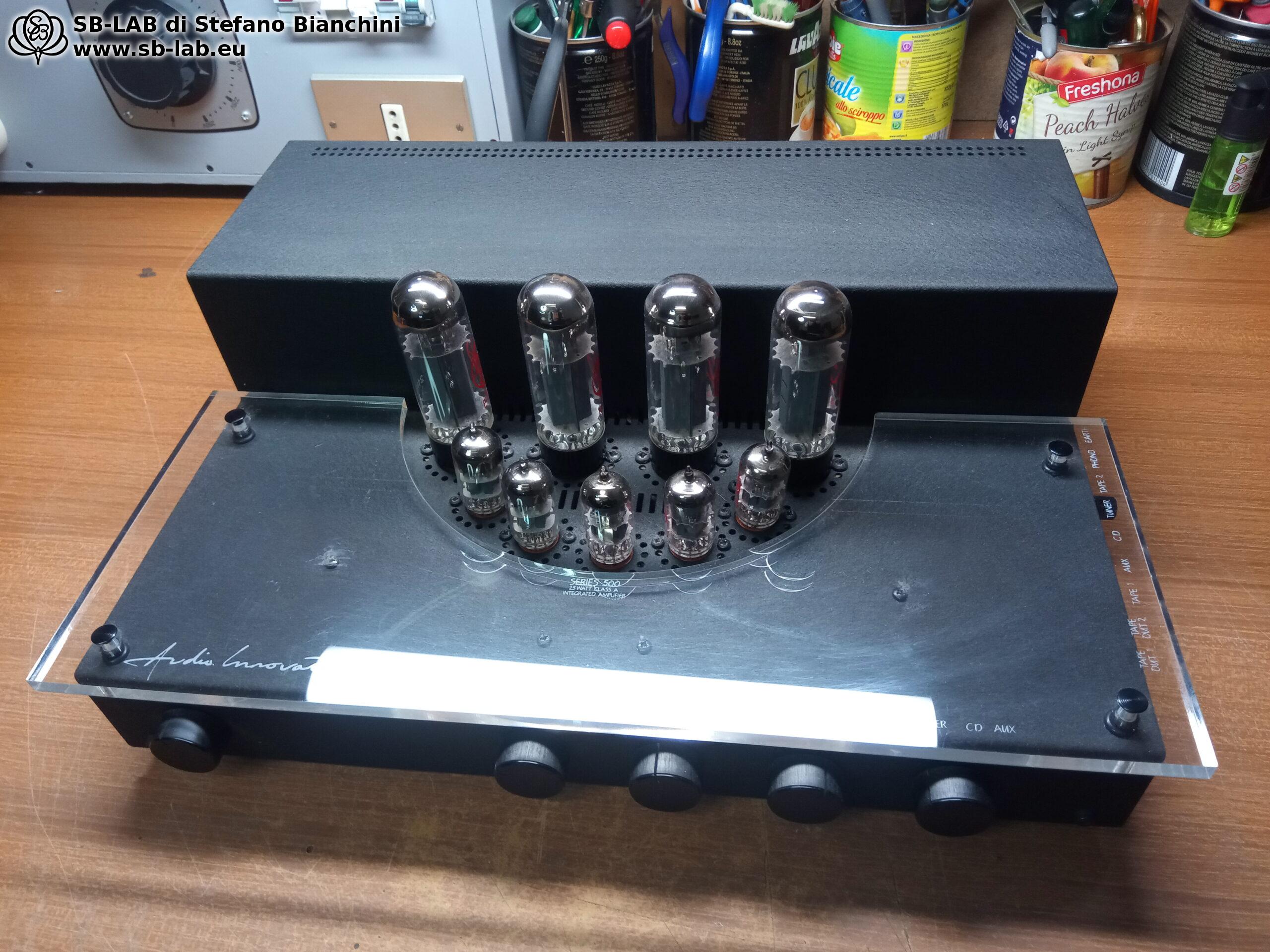
Over the years, this gem has spanned generations, maintaining its timeless charm. In this article, we’ll take you through the repair process of two variants of the Audio Innovations 500: an older one and a more modern one.
A Comparison Between Generations
Accompanying the journey through the eras of the Audio Innovations 500, let’s take a close look at the images that capture the crucial visual differences between the first version of this extraordinary amplifier and its later iterations. The two photos below highlight the transformations in circuit design, showcasing the updates and modifications made over the years.
| First Version | Second Version |
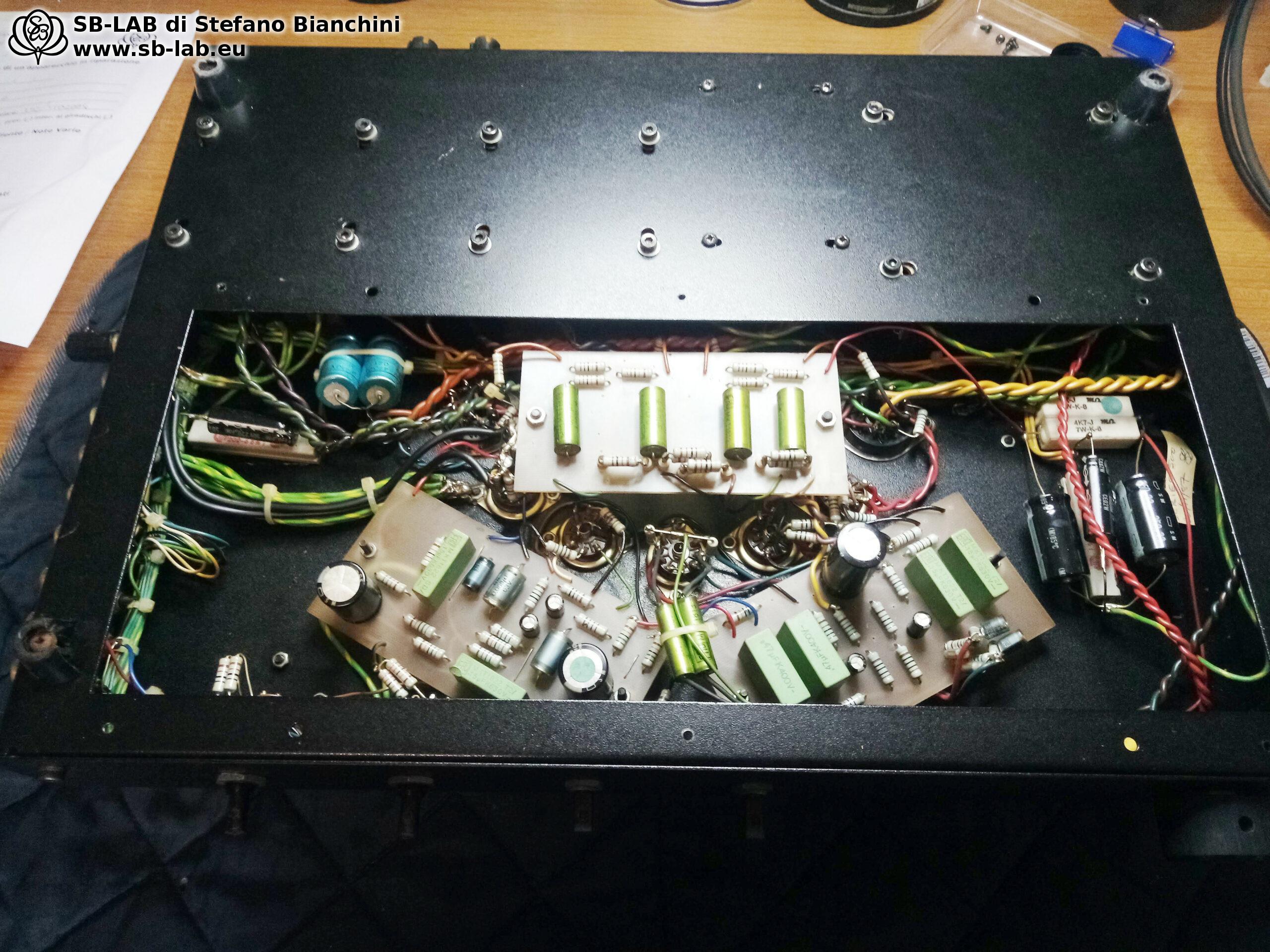 |
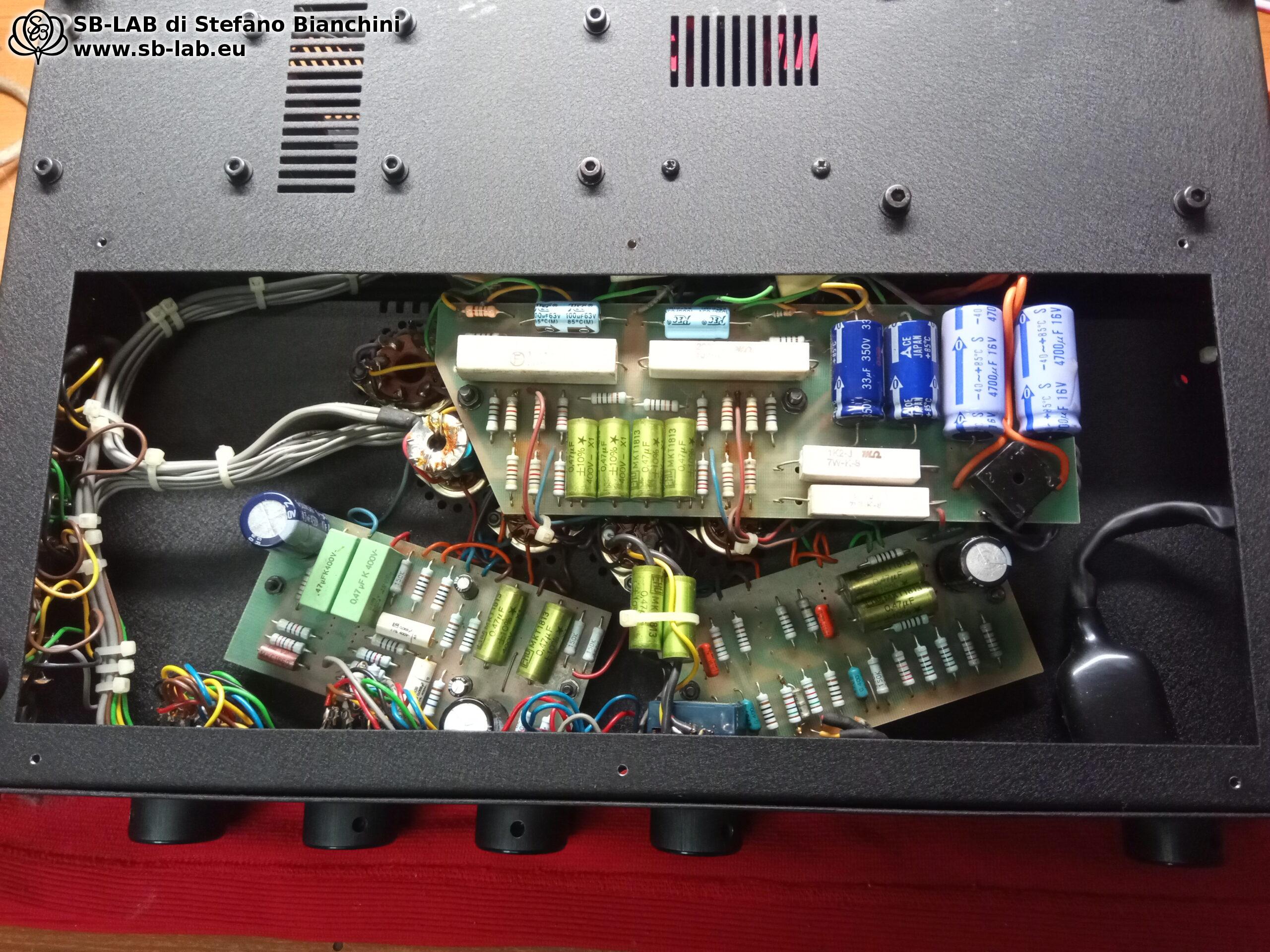 |
Repair of an Audio Innovations 500 Second Version
In our exclusive photo sequence, we’ll dive into the heart of the repair process of a more recent version of the Audio Innovations 500. This fascinating visual journey is a tribute to the dedication and craftsmanship that define the art of audio repair. Here is an Audio Innovation 500 with a good 28 years behind it, witness to a sudden mishap in its long history…
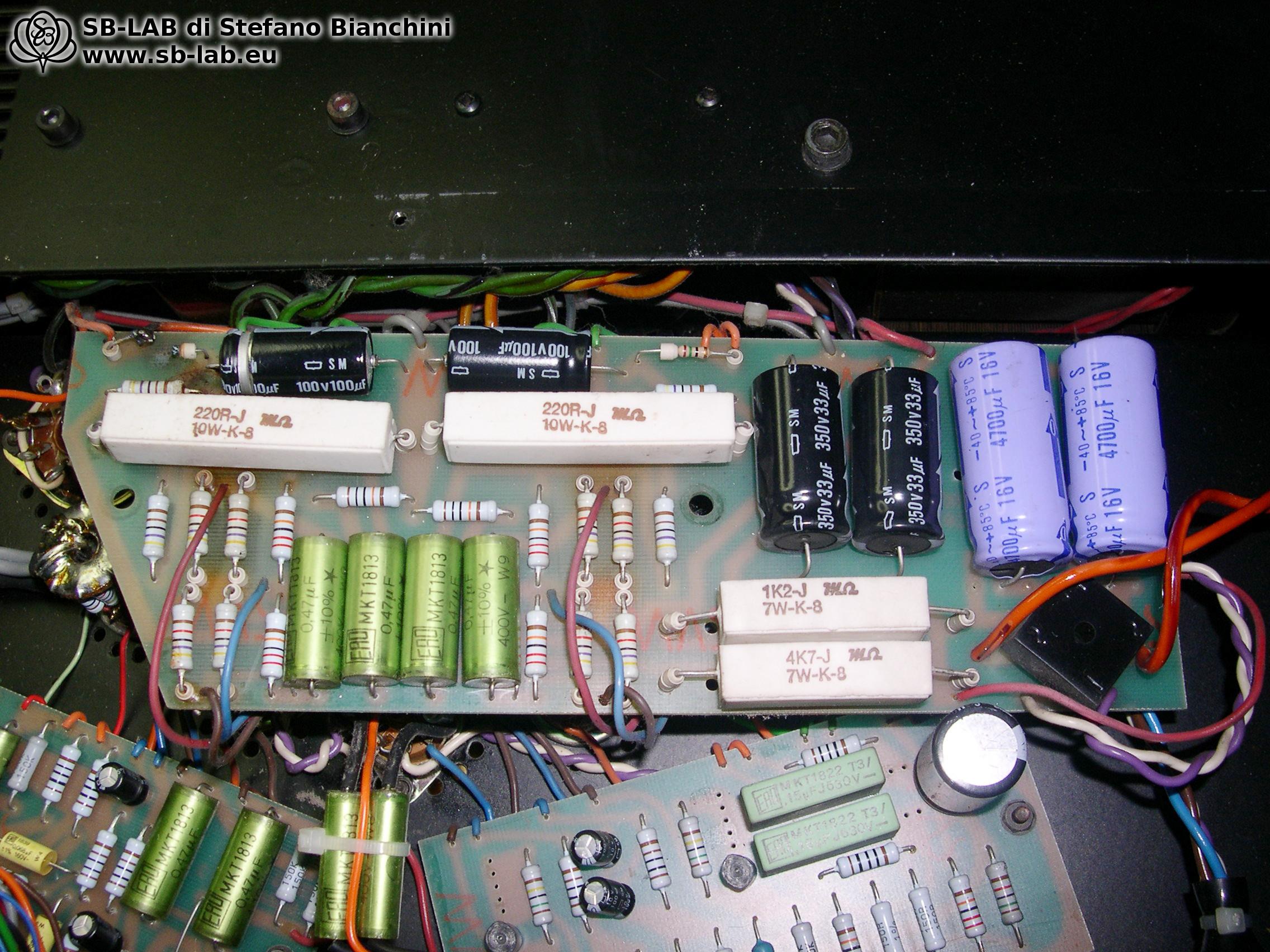
In this image, an exploded capacitor is clearly visible along with what remains of a resistor—practically vaporized. In addition, all high-voltage capacitors show bulging, the channel selectors have noticeable play, and the wires between the PCB and the output stages are visibly scorched by the passage of time.
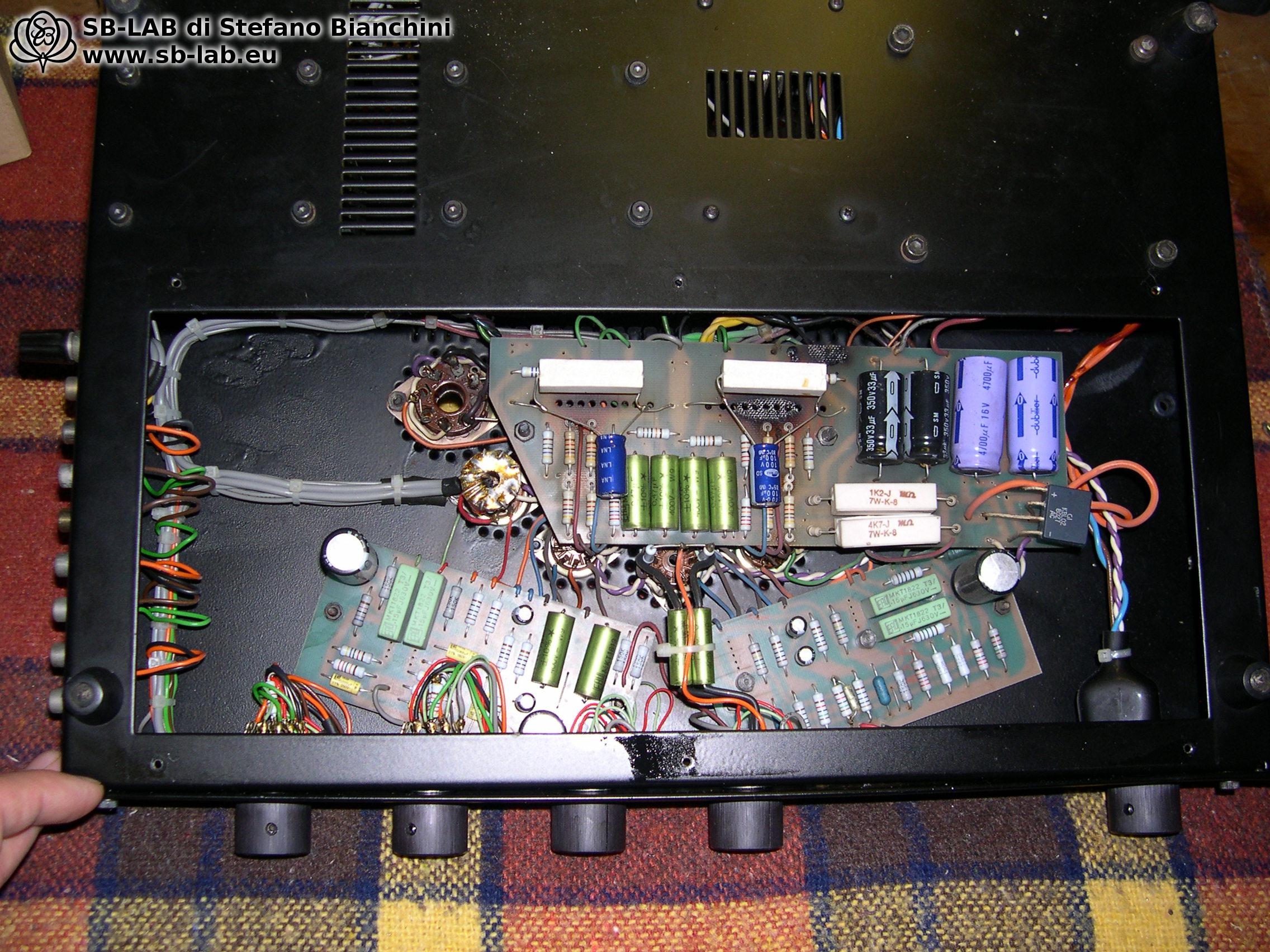
In the case of another Audio Innovations 500 unit, previous repairs are evident, but unfortunately the fault reappeared. In the following photo, I show the current defects found.
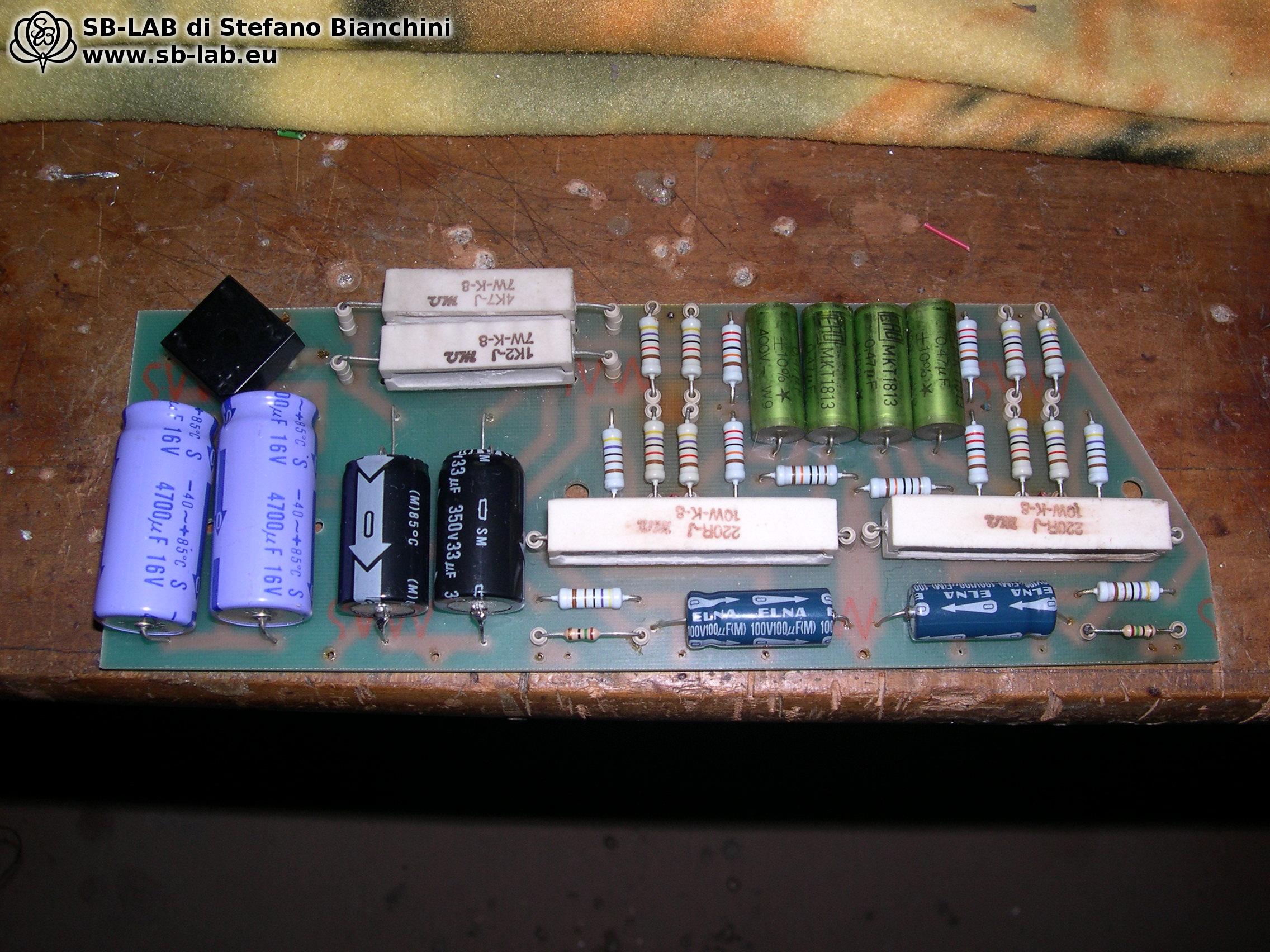
PCB now in perfect condition after the necessary repairs…
Damaged wires and selectors replaced with original ALPS parts (not visible in the photo)…
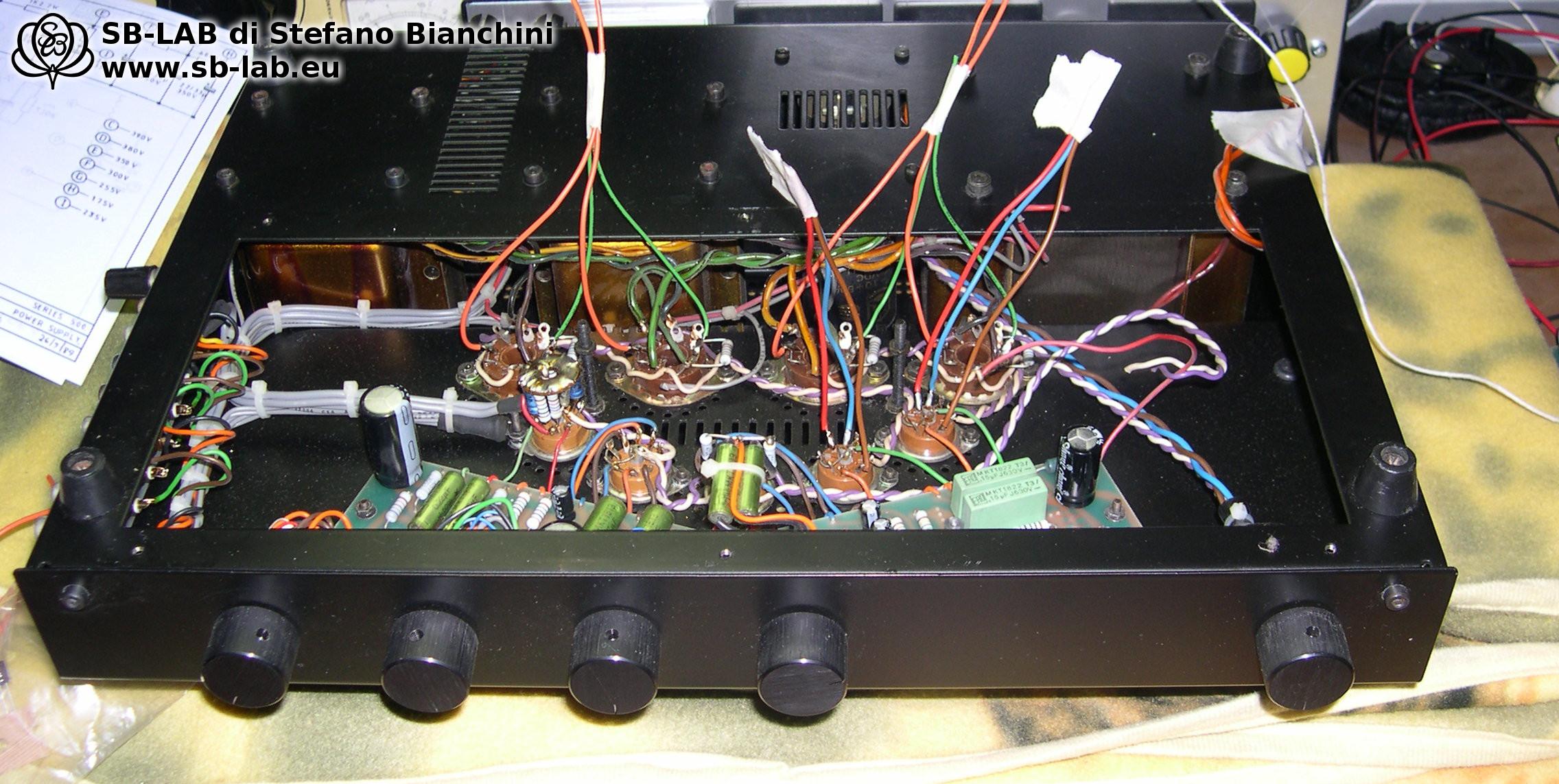
After reassembling the PCB, installing a new tube set, and running initial tests, the amplifier is working perfectly. The next two images portray the most recent Audio Innovations submitted to my careful overhaul, the latest to arrive in chronological order. Inside this amplifier, all components were in perfect condition except for two small electrolytic capacitors—rather awkwardly positioned—that had been overlooked and had completely dried up. This overhaul ensured that every part of the amplifier is now in optimal condition, confirming our commitment to a complete and meticulous restoration of every device entrusted to us.
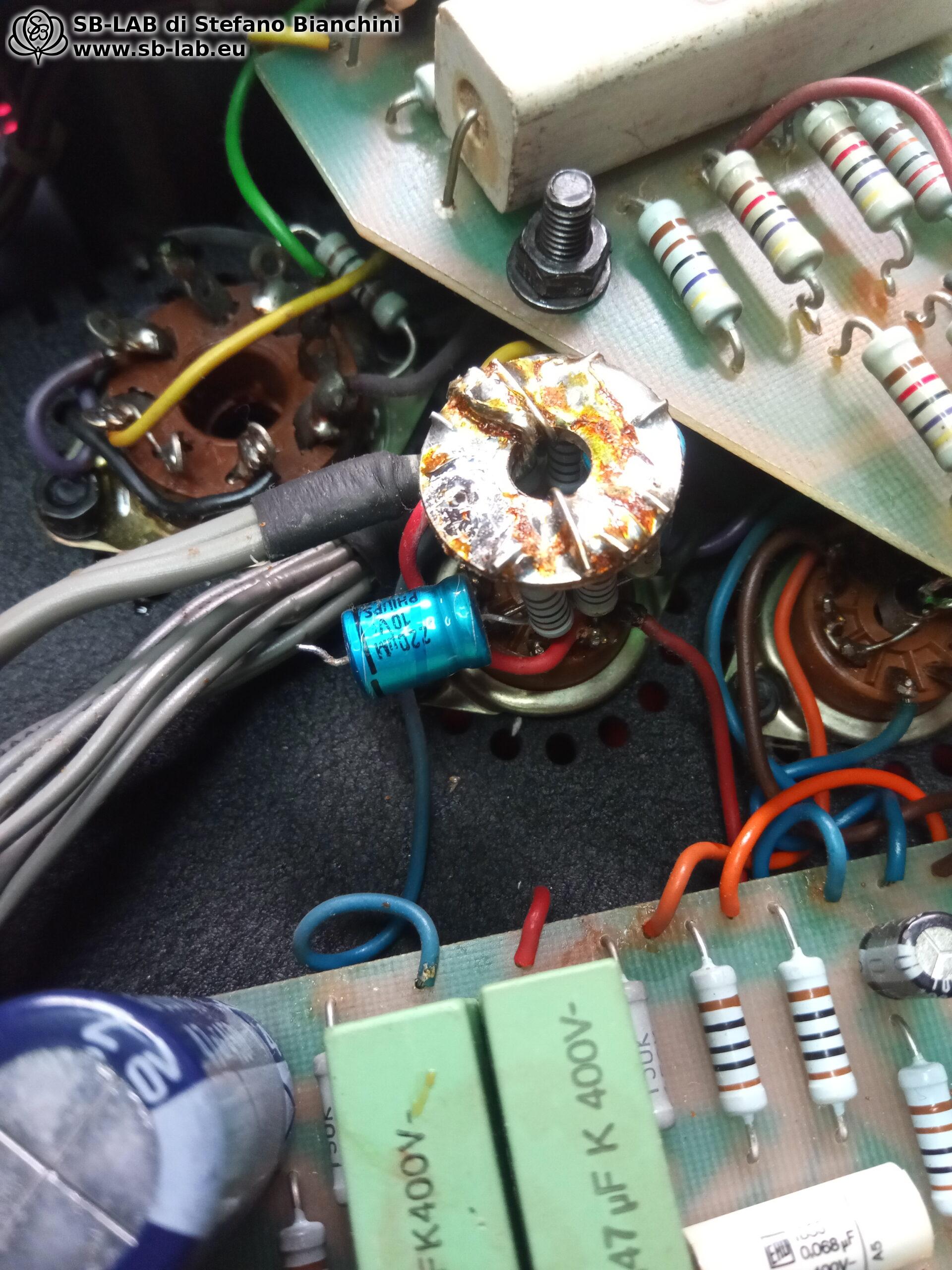
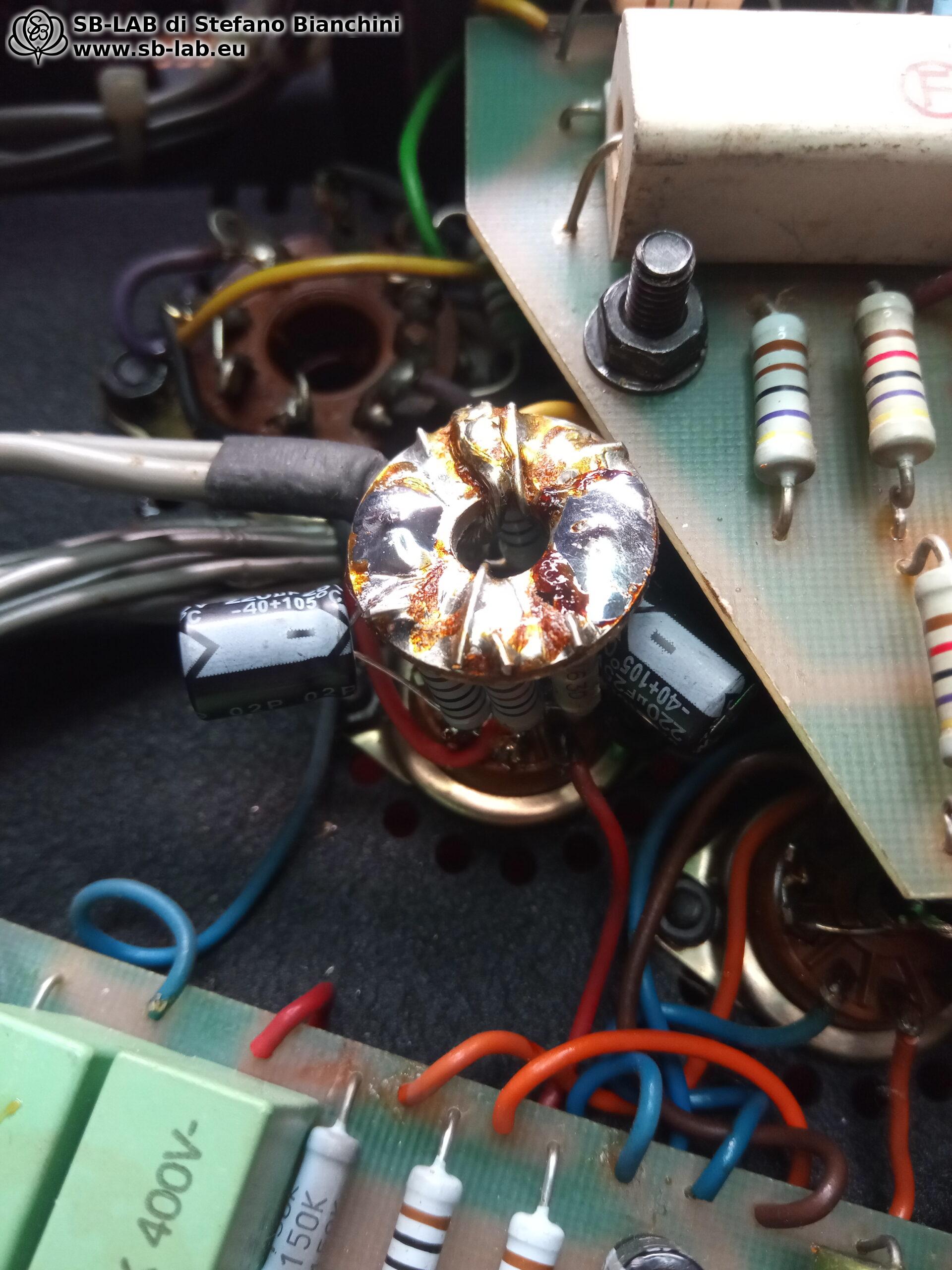
Below are the factory specifications of the Audio Innovations 500, offering an in-depth overview of its audio capabilities:
- Output power: 2 x 25 watts in Class A, ensuring superb sound across the entire spectrum from 30 to 20,000 Hz, with an accuracy of +/- 3 dB.
- Line input sensitivity: An impressive sensitivity at 0.4 V, with a maximum overload tolerance above 3 V to accommodate a wide range of audio sources.
- Crosstalk: Exceptional channel isolation at 78 dB, ensuring clear channel separation.
- Input impedance: 100 k?, guaranteeing versatile connectivity and impeccable audio response.
- Phono: Compliant with RIAA standards, offering a precise frequency response of +/- 0.1 dB from 20 to 20,000 Hz.
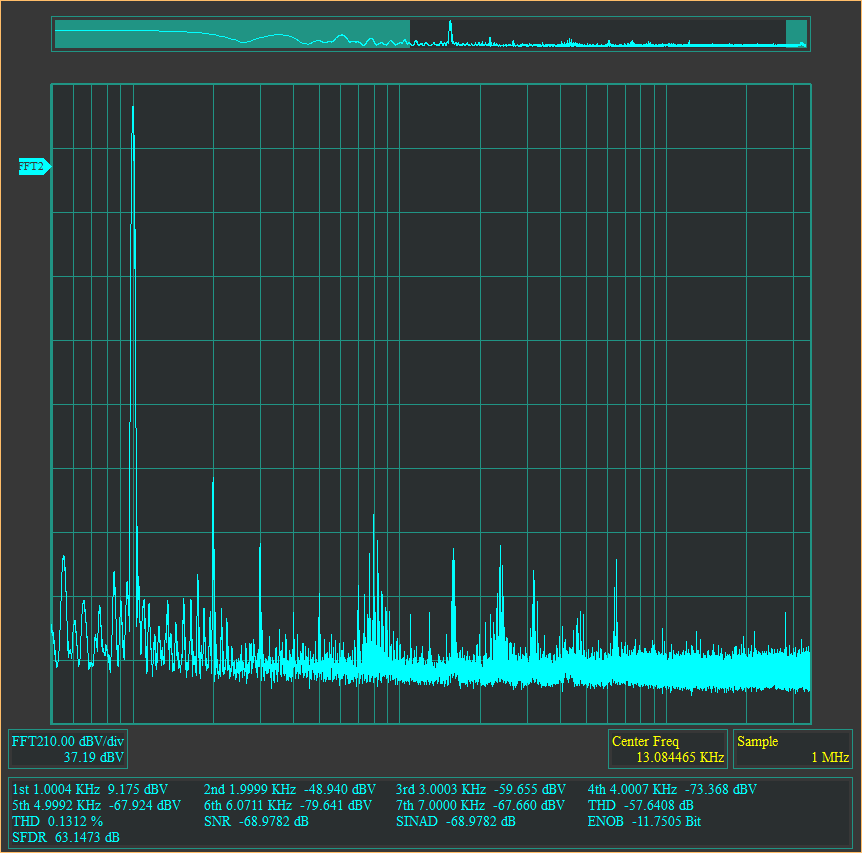
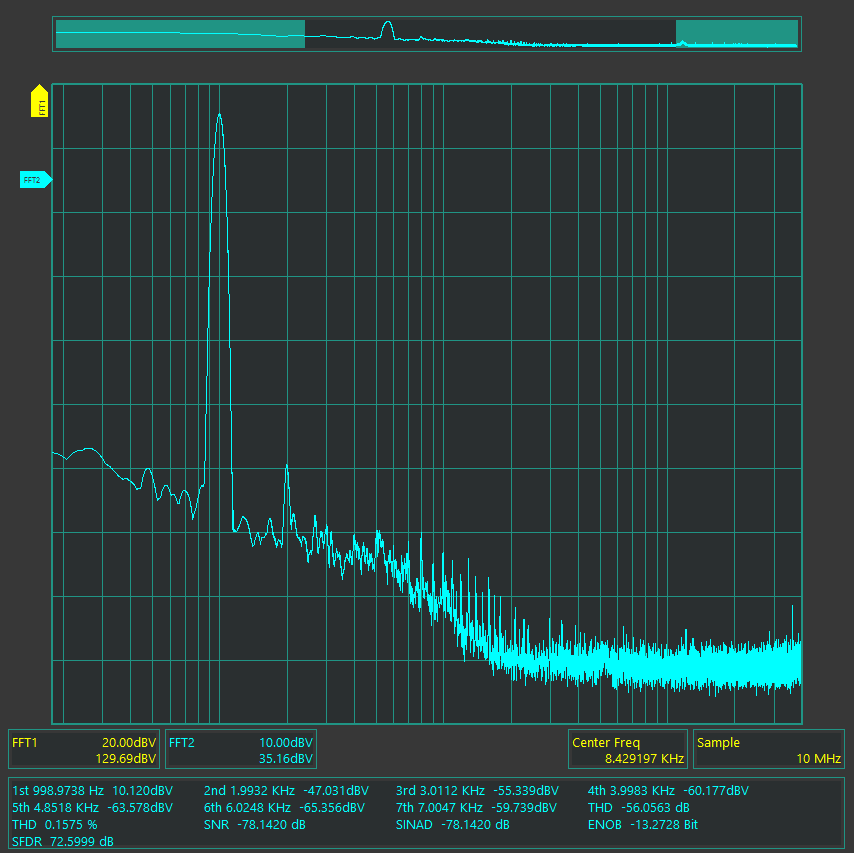
- THD (Total Harmonic Distortion): Below 0.15% at 1 W RMS from 80 to 15,000 Hz, ensuring faithful and clean reproduction.
- Inputs: Wide flexibility with ports for Phono, Tuner, CD, AUX, Tape1, Tape2 and Monitors, offering a broad range of connectivity options.
- Negative feedback: At 14 dB, optimizing amplifier stability and linearity.
- Weight: Solid and robust at 18 kg, reflecting build quality and attention to detail.
- Tubes: Equipped with 3x ECC83, 2x PCC88 and 4x EL34, to ensure high-quality audio performance.
- Output impedance: Flexible matching with options at 4, 8 and 16 ohms, allowing use with a variety of speakers.
Instrumental Comparison Between the First and Second Versions of the Audio Innovations 500
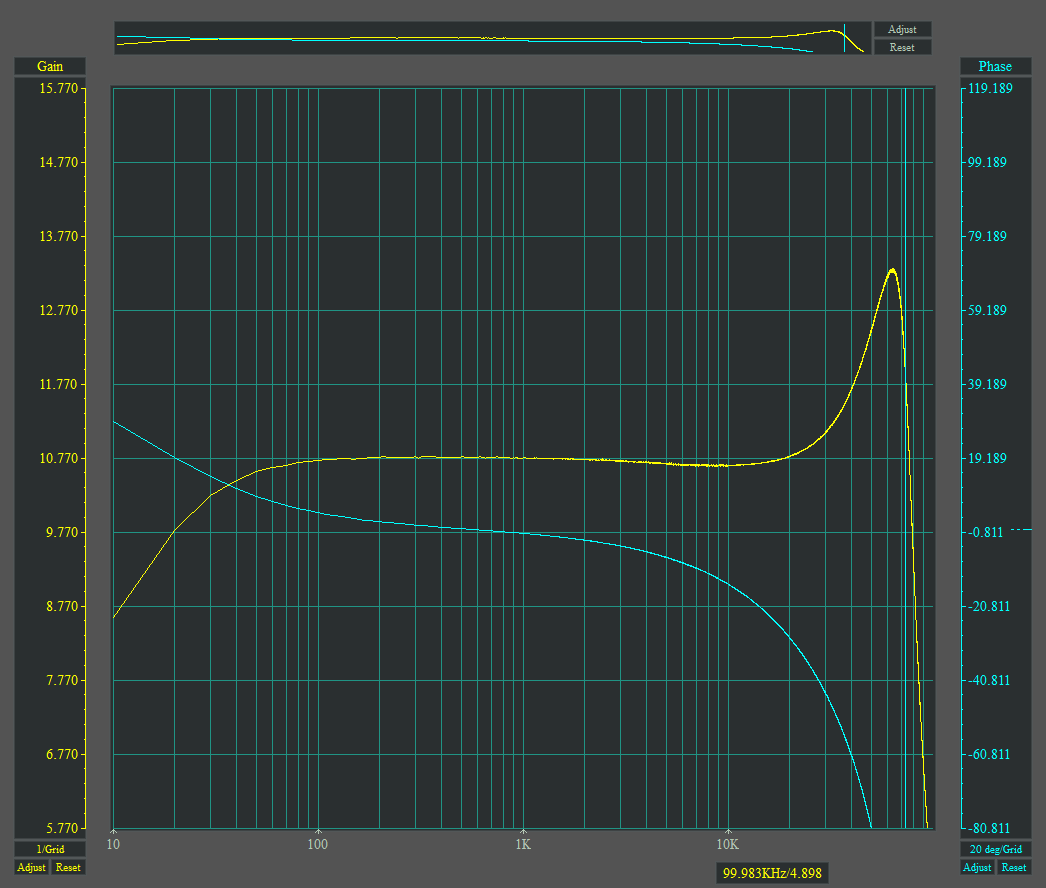
Let’s explore the performance differences of the Audio Innovations 500 through an in-depth instrumental comparison between its first and second versions. These charts will provide a detailed analysis of the distinctive characteristics and possible evolutions across the amplifier’s iterations over time.
Bandwidth at 1 watt
| First Version | Second Version |
 |
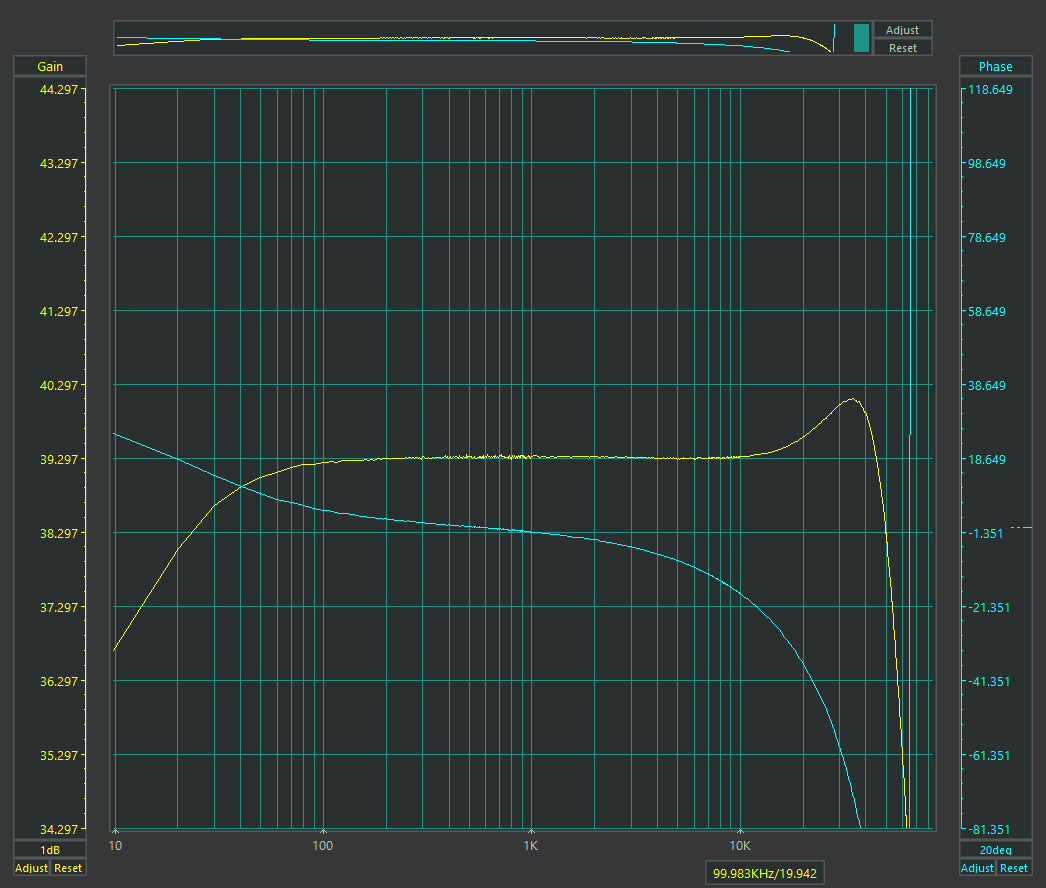 |
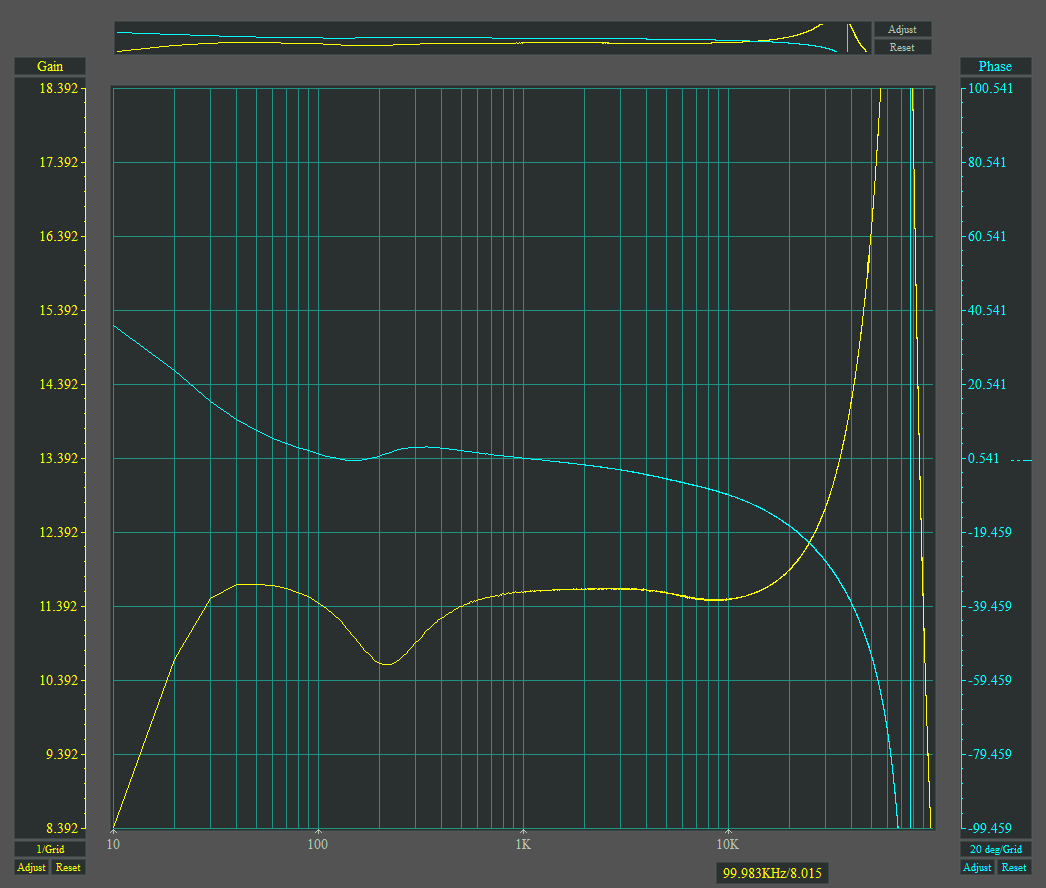
The analysis of the bandwidth on a resistive load shows a resonance that is not perfectly compensated in both versions of the amplifier (greater in the older version). However, it is in the bandwidth graphs on a reactive load that this characteristic becomes more marked and significant. This raises the hypothesis of a potential circuit criticality, with the risk of triggering oscillations at 60 kHz. It is known that in some cases certain units of the Audio Innovations 500 can self-oscillate, causing damage to the dielectric of the output transformers. This risk is particularly high when the two tubes of the push-pull show notably different wear. This issue is amplified by the very heavy rate of negative feedback that characterizes the Audio Innovations 500, classifying it as a strongly feedback-laden amplifier. Below the bandwidth graph on a reactive load…
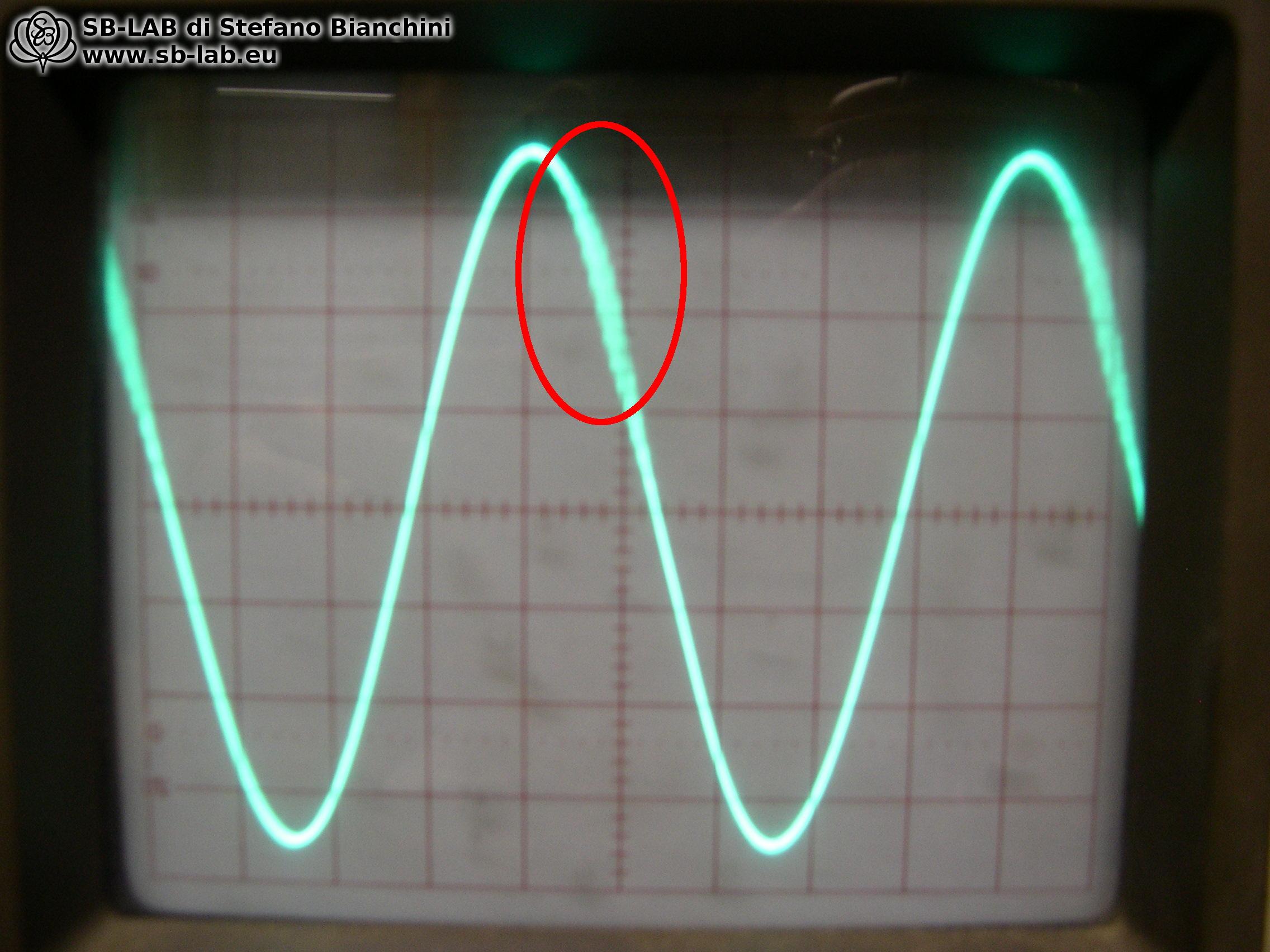
Another sign of potential instability was observed on the oscilloscope by setting the amplifier on a resistive load with a 20 Hz sine wave. I apologize for the less-than-perfect photo quality, but you can clearly see a sine wave with significant disturbances on the falling edge of the positive half-cycle, as highlighted in the area outlined by the red ellipse. It’s important to note that this anomaly may not always appear, and its occurrence also depends on the tube set installed and their degree of wear.
Total Harmonic Distortion (THD) at 1 watt
| First Version | Second Version |
 |
 |
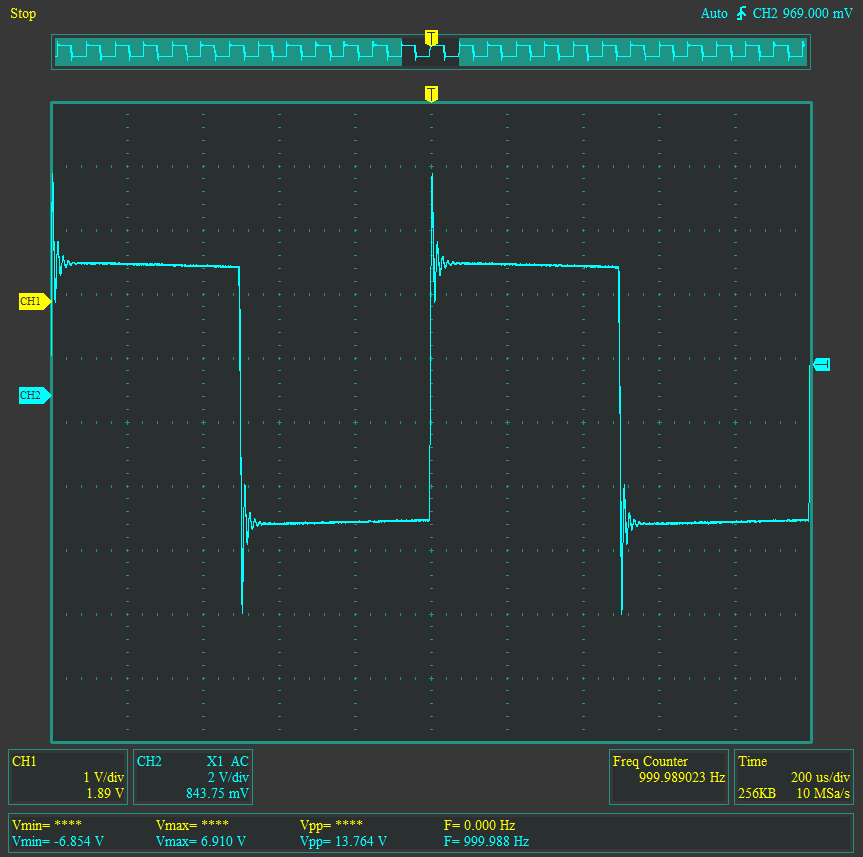
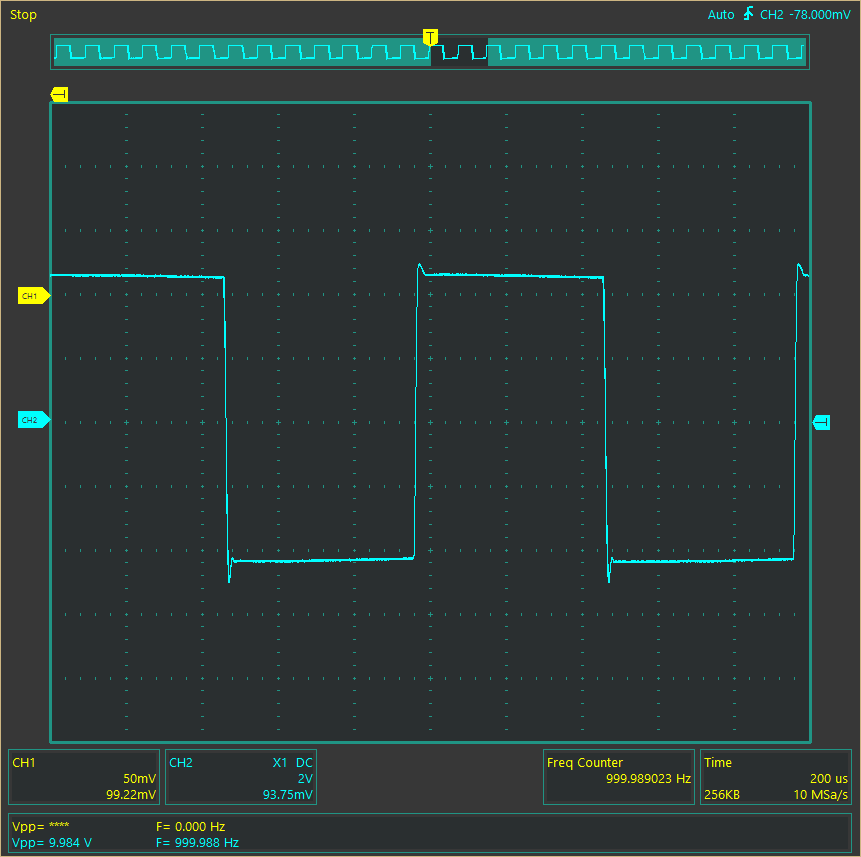
Square Wave at 1 watt 1 kHz
| First Version | Second Version |
 |
 |
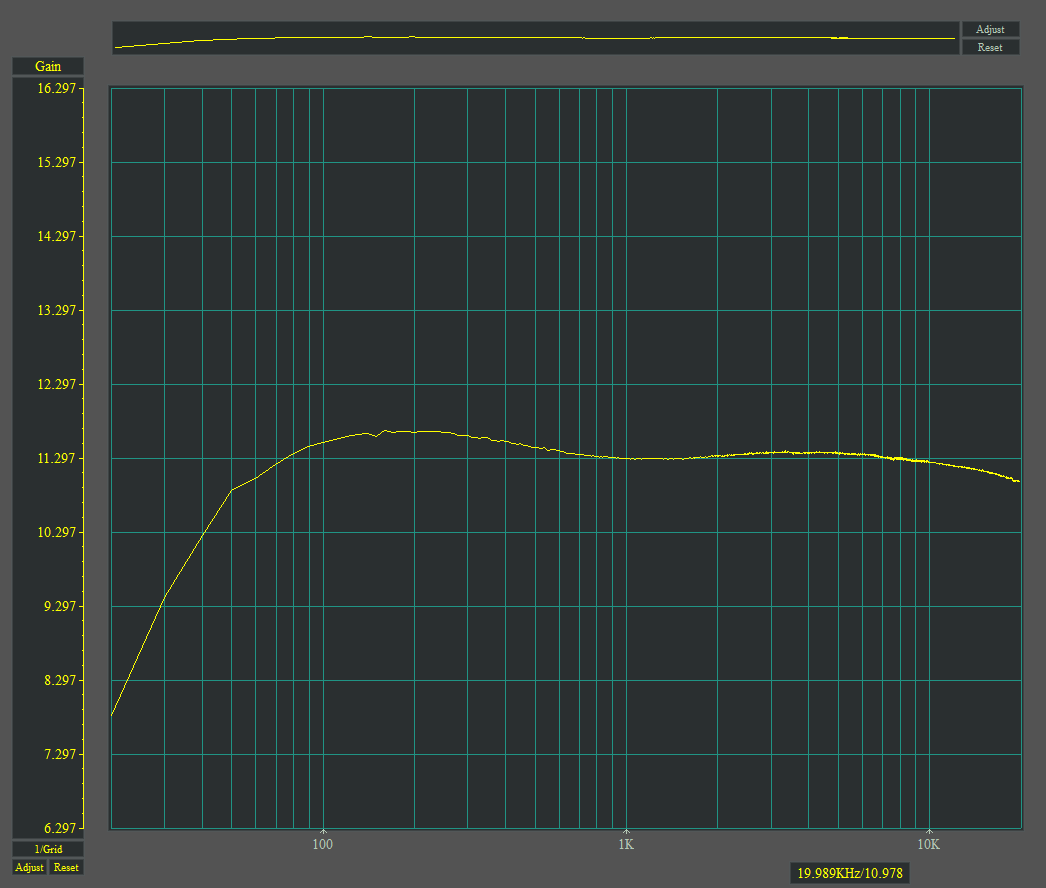
The frequency response of the RIAA section between the two versions is practically identical, so I’m publishing just one chart…
To conclude, I’d like to report some significant measurements regarding the amplifier’s performance. Powered at 220 volts, the undistorted RMS output power is 22 watts RMS per channel, rising to 26 watts under maximum clipping conditions. The damping factor, in the more recent version, reaches a value of 14. Unfortunately, I did not measure the DF (Damping Factor) on the first version at the time, but it is plausible that it was higher. I suspect that the first version of this amplifier featured a higher rate of negative feedback compared to the later model.
Plastic Spare Parts for Audio Innovation 500
During the restoration of an Audio Innovation 500 tube amplifier, I had the pleasure of bringing back to its original glory a piece of audio history that arrived in rather poor condition. The amplifier no longer had its original feet; in their place, makeshift rubber caps had been screwed on. In addition, the plexiglass top retainers were missing, replaced by awful wing screws that spoiled the refined aesthetics of the unit.
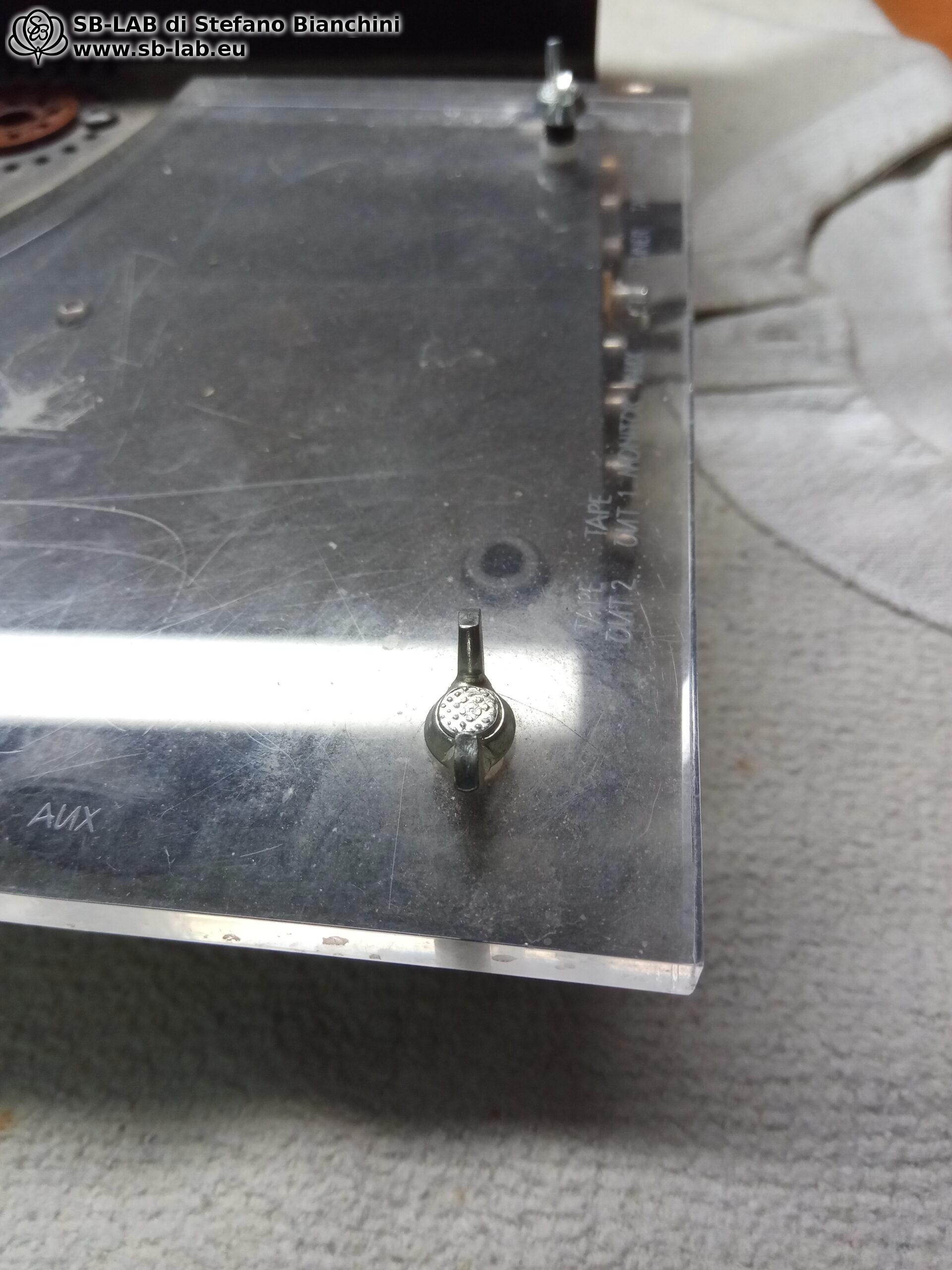
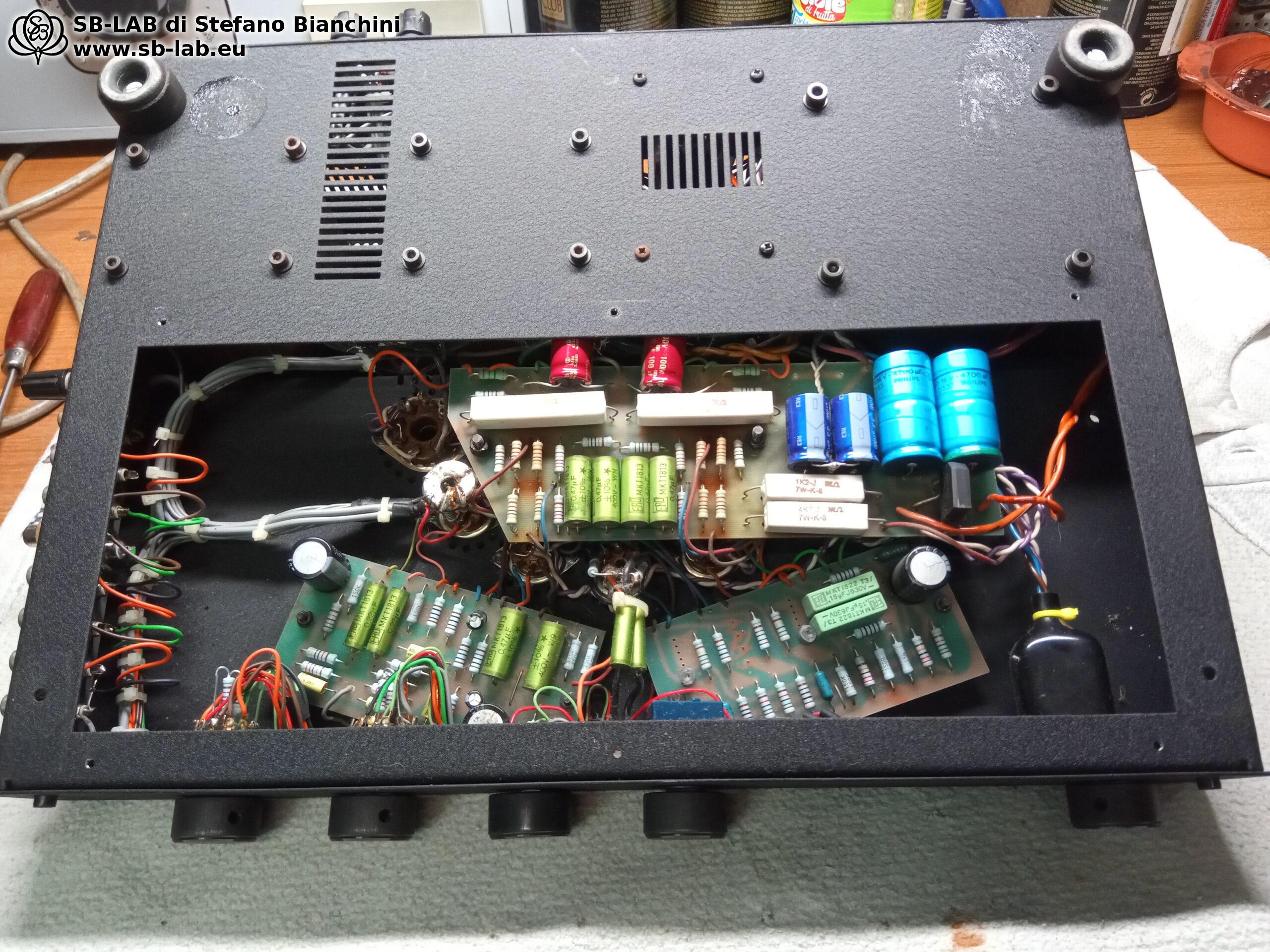
Thanks to 3D printing technology, I was able to faithfully recreate the plastic parts, identical to the originals.
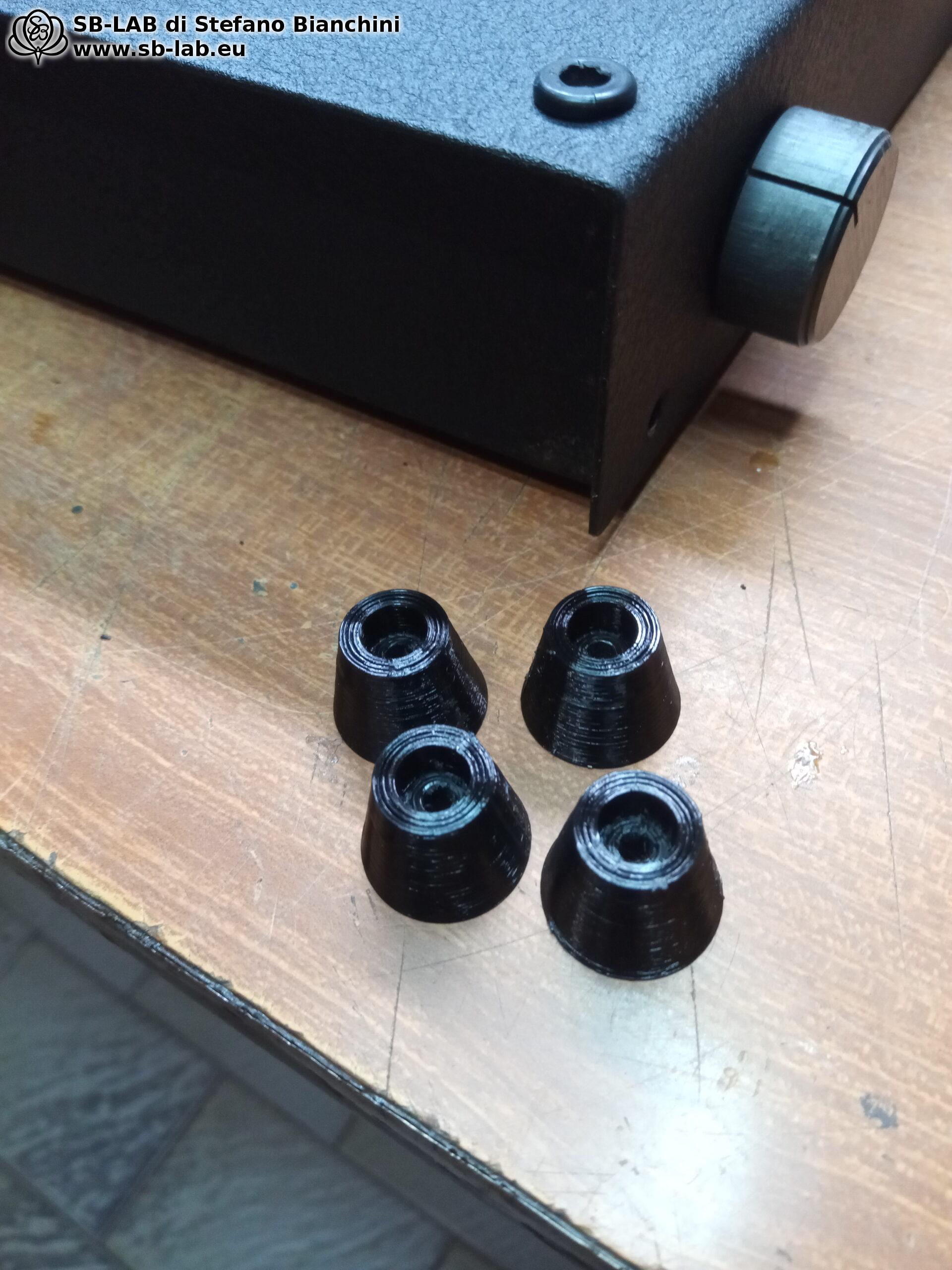
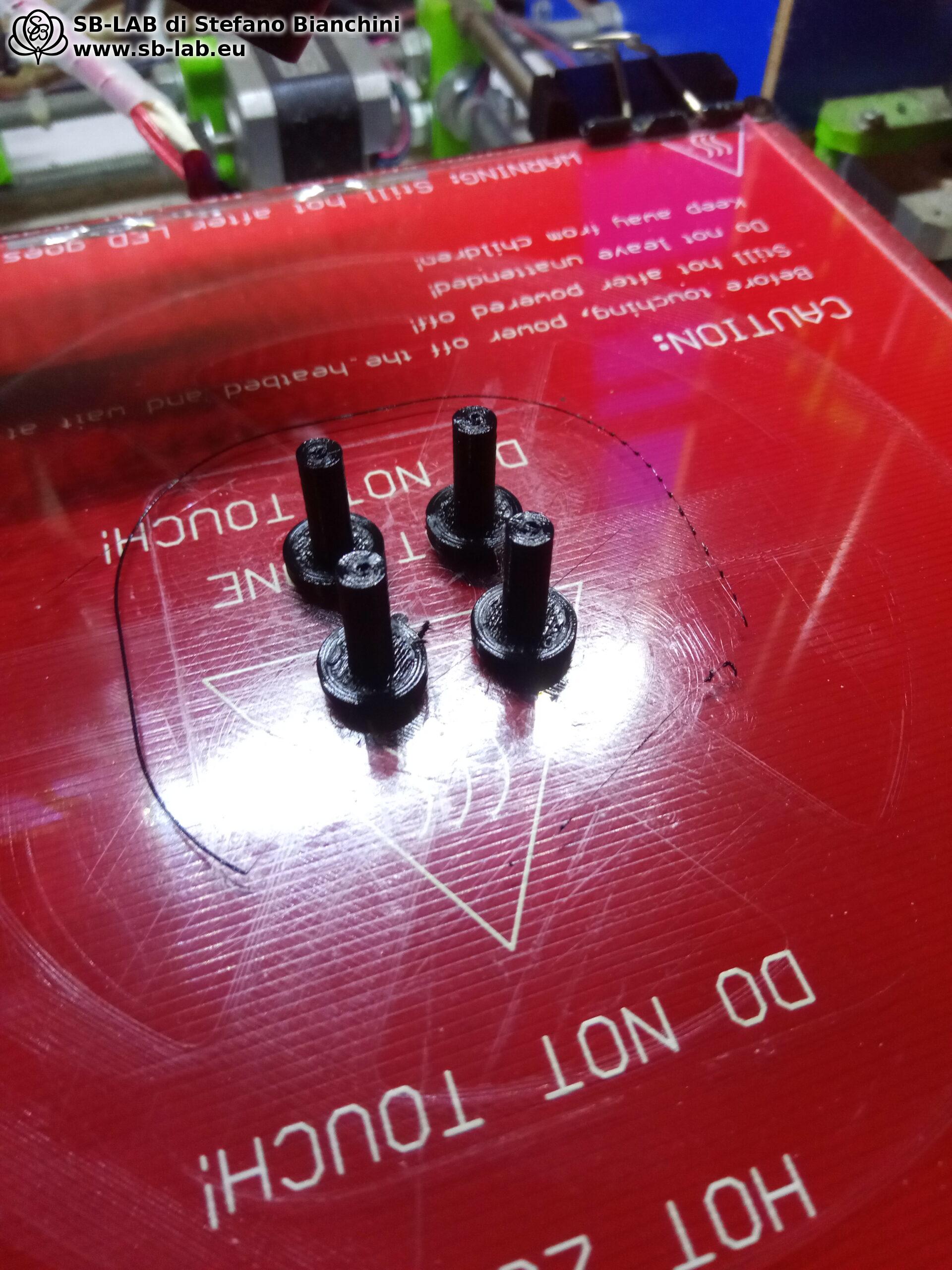
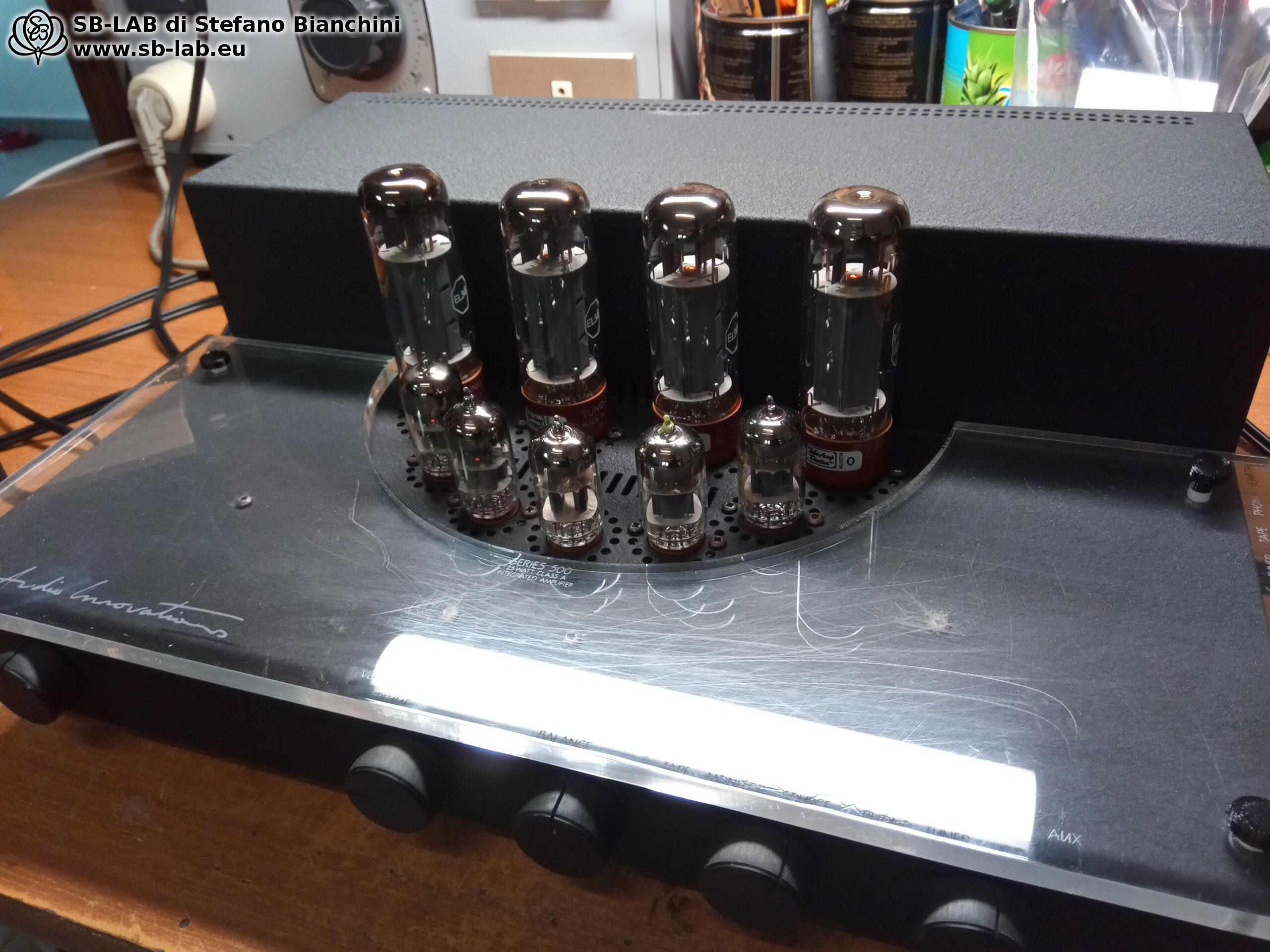
With patience and care, I restored the amplifier…
A Clear, Objective View
Over the years I’ve had the opportunity to explore and repair numerous examples of the Audio Innovations 500, an audio amplifier of considerable historical relevance. My intention has always been to highlight technical and instrumental aspects to provide objective information and contribute to the restoration of these devices.

It is not my intention to disparage or criticize the Audio Innovations 500, but rather to share objective and useful information that can improve the performance of these iconic amplifiers. The reported instabilities are technical aspects which, although they may arise in certain circumstances, are addressed and resolved during the repair process. My goal has always been to offer restoration services that improve and extend the life of these devices, helping preserve their historical and sonic value.
I value constructive dialogue and I’m open to answering any questions or concerns. My passion for vintage audio is reflected in my commitment to providing high-quality, honest services, ensuring that every unit repaired leaves my workshop in optimal condition.
Tube Guide: Correct Placement in the Audio Innovations 500
I’m publishing this diagram to provide a visual guide to the tube layout on the Audio Innovations 500 amplifier. This diagram is particularly useful since there are no markings near the sockets, making it easy to make mistakes during replacement. A common error is confusing ECC83 with ECC88. You can use this visual guide to ensure correct identification and placement of the tubes in your amplifier. The ECC88s are on the left side…

For Experienced Audiophiles: An Interesting Option for NOS Lovers
For those who appreciate sonic nuances and like to experiment, it’s possible to consider using PCC88 tubes instead of ECC88. For the more seasoned, this choice offers the opportunity to explore NOS (New Old Stock) tubes at an affordable cost. It’s important to note that the filament supply voltage of the PCC88 is 7 volts, slightly higher than the 6.3 volts of the ECC88. However, the difference is so small that both tubes operate reliably. It could be an interesting solution, allowing you to benefit from the vintage characteristics of PCC88 NOS compared to the more common ECC88 made in China.
Continued Exploration: Also Discover the Audio Innovations 700 and 800!
For those who wish to delve further into the world of Audio Innovations, I invite you to explore a similar article where I share details and steps related to the repair of an Audio Innovations 700 and 800. You’ll find insights on the maintenance and restoration of these iconic amplifiers, further enriching your understanding of the vintage audio landscape. Follow this link to access the article. Enjoy your reading and keep exploring with us the wonderful world of high-fidelity sound!
I’m glad to hear that you experimented with different valves and eventually found that the original combination still gives you the best results in your system.
However, I would be much more concerned about the age of the electrolytic capacitors. Thirty years is a very long time for electrolytics, and there are several of them in the AI 500 that suffer considerably from ageing. For this reason, it is quite likely that the amplifier is no longer performing and sounding at its best, even if it still appears to work correctly.
As the many dozens of AI 500 repairs I have carried out over the years have shown, postponing a proper overhaul can unfortunately have much more serious consequences. Quite often, an amplifier that seems to be working normally eventually develops a catastrophic failure, and in the worst cases this can result in one or both output transformers being damaged or burnt out.
For this reason, with an amplifier of this age I would strongly recommend a proper preventive inspection and overhaul rather than waiting for something to fail.
Thanks for the informative article. My AI 500 came in 1987 with valves branded Precision Audio which were sourced from various Eastern European manufacturers. On the front row the left two valves are PCC88s , the other three are ECC83s. By visual comparison with other valves I have deduced that the EL34s were RFT (East Germany), as were the PCC88s. The ECC83s are EI Yugoslavia. After trying other valves (e.g. Svetlana Winged C EL34, Harma etc ) I have come back to the original set up which is clearly superior in my system. The front row valves are the original ones ,still working great although the amp was left unused for 30 years! Ciao.
sono incuriositò sul come mai sei arrivato sulla versione in inglese dell’articolo invece che quella in italiano ?! … i motori di ricerca son strani … cmq non ricordo le valvole che erano montate, negli anni ne ho riparati a decine e ci ho trovato sopra di tutto. Però quando li rivalvolo faccio montare al cliente sempre valvole thung-sol, che tra tutte le marche mi sembrano quelle con un rapporto qualità prezzo migliore.
Interessante articolo che mi tocca personalmente, che marca di valvole montava audio innovation 500?e quale tipo usare per avere le stesse prestazioni? Grazie Bruno Grottolo.