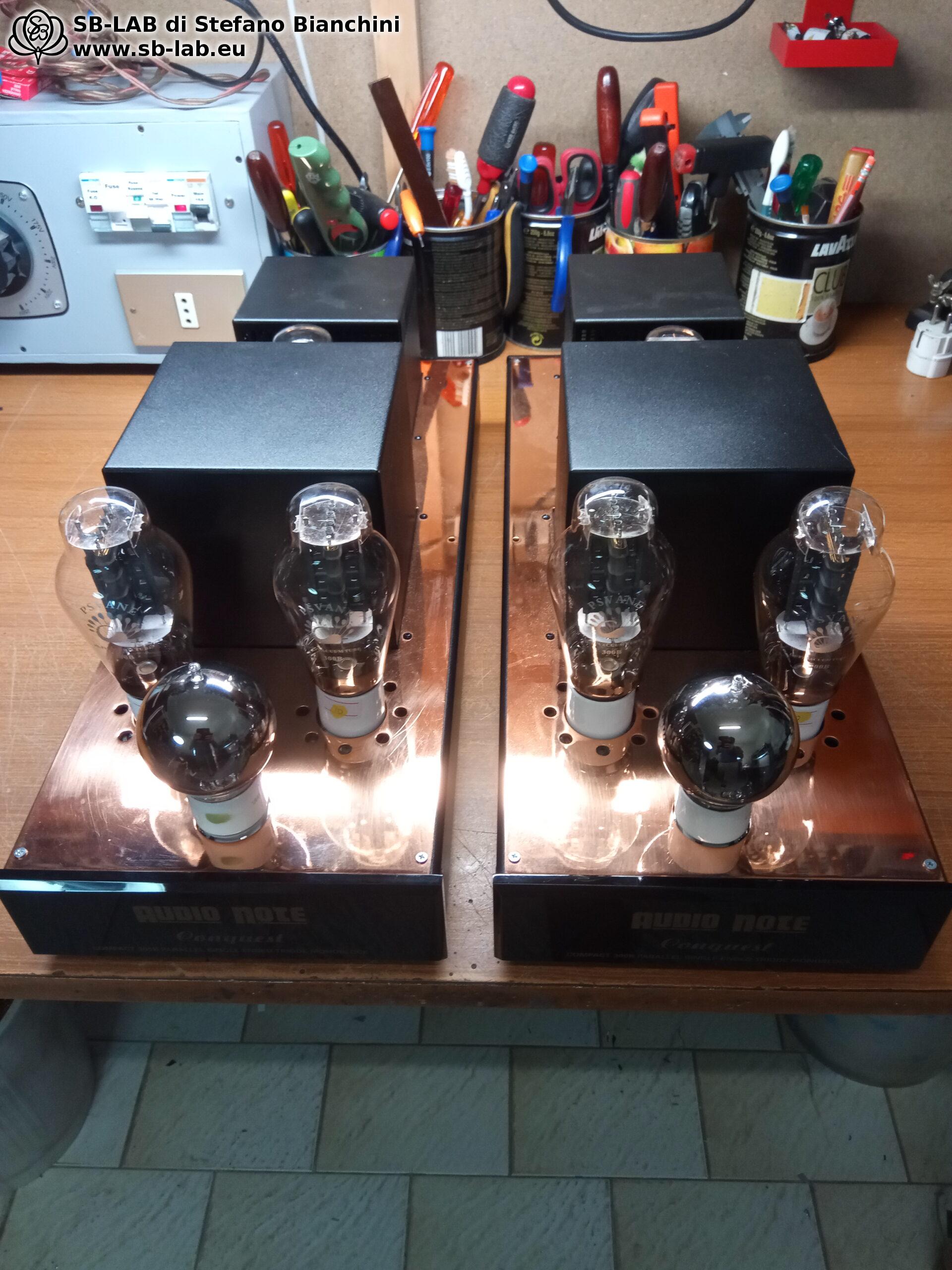
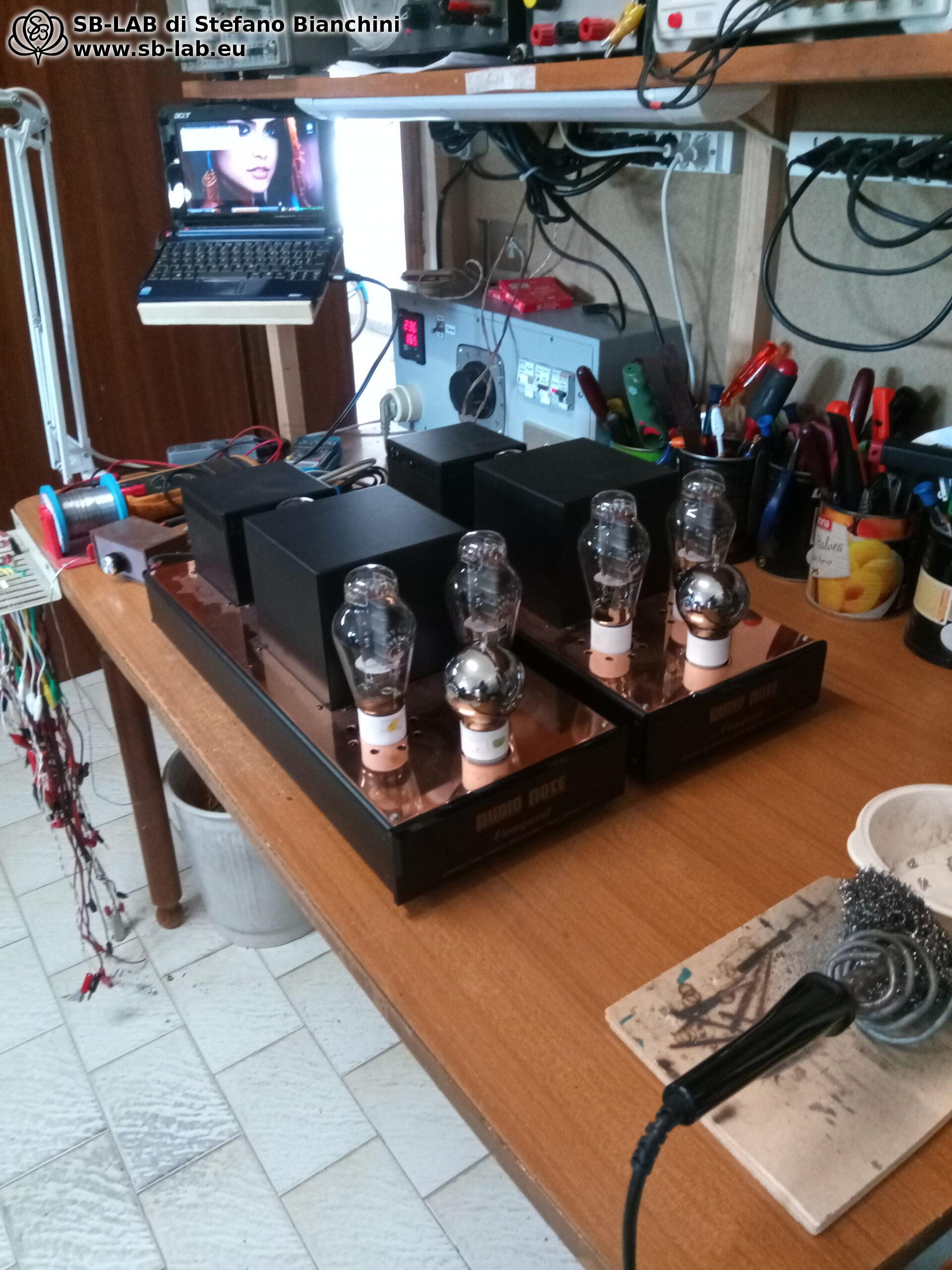
In this article we will explore the repair and upgrade journey of a pair of Audio Note Conquest amplifiers. I was entrusted with the task of restoring two of these units. Unfortunately, they had been subject to tampering that led to unwanted consequences, culminating in the failure of the coupling capacitors between the driver and the output stages and, subsequently, the burnout of one of the two power transformers. However, as often happens, every challenge offers an opportunity for growth, and that is exactly what happened in this case.
Warning! Would you like to fit KR 300B tubes in your Audio Note Conquest??? Do not do it, you could damage your amplifier! A modification to the unit is required to support these tubes. Read this article to learn more.
In addition to repairing the damage, we will explore an intriguing aspect, a small design flaw hidden in the driver stage, which affected both output power and sonic purity. Through a detailed analysis we will show how a careful revision of this section can lead to significant improvements in terms of sound performance. The goal of this article is to share a journey of repair, innovation, and optimization. By following a series of events that included replacing the power transformers, correcting past tampering, and introducing targeted circuit changes, we will lead you through a process that brought these amplifiers back to an optimal level of operation.
Let us start by looking at the original amplifier schematic…
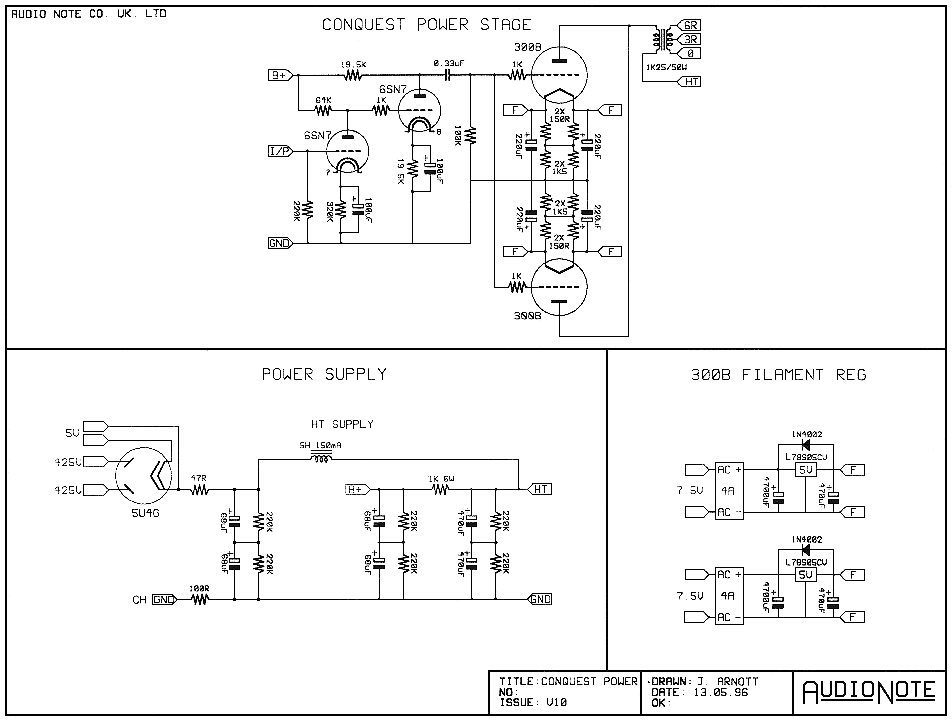
The architecture is remarkably similar to that of the Sun Audio 300BE, with the variant of the output tubes in parallel configuration and a few small differences in component values. Just like in the Sun Audio, here the driver seems to almost want to “outdo” itself, pushing the second triode stage to operate on the edge of saturation. This happens because of a somewhat unusual choice, the removal of a simple capacitor in the signal path. This approach pushes the driver beyond its limits, to the point that it starts to distort even before it can bring the output tubes to maximum power.
It is true that putting a 300B tube on a chassis has a certain charm that attracts enthusiasts, and it is possible that this influenced the design decision. However, it seems that in some cases they chose to follow well known circuits without making the necessary changes. It is as if they opted for the easiest route. A driver like this would have required a much higher supply voltage for the second triode than for the first one, to compensate for the voltage loss under its cathode and allow capacitorless coupling. Some small changes to the power supply stage would have been necessary to implement this solution.
Modifying the driver circuit of this amplifier turned out to be surprisingly simple, it was enough to avoid excessive complications regarding capacitorless coupling between the two triode stages and add the capacitor where it was needed. This allowed the second triode stage to operate in a more normal way. With an adequate amount of plate voltage, it is now able to drive the 300B tubes steadily up to full power without generating significant distortion. In the following images I will show you how the distortion visible in the original driver is surprisingly evident compared to the hypothetical drawback introduced by an added capacitor. We will use LTspice.
In the first image we observe the cathode potential of the second triode of the 6SN7 (in green) compared with its grid in blue. As you can clearly see, the grid reaches positive values (higher than the cathode voltage), causing obvious distortion (click to enlarge).
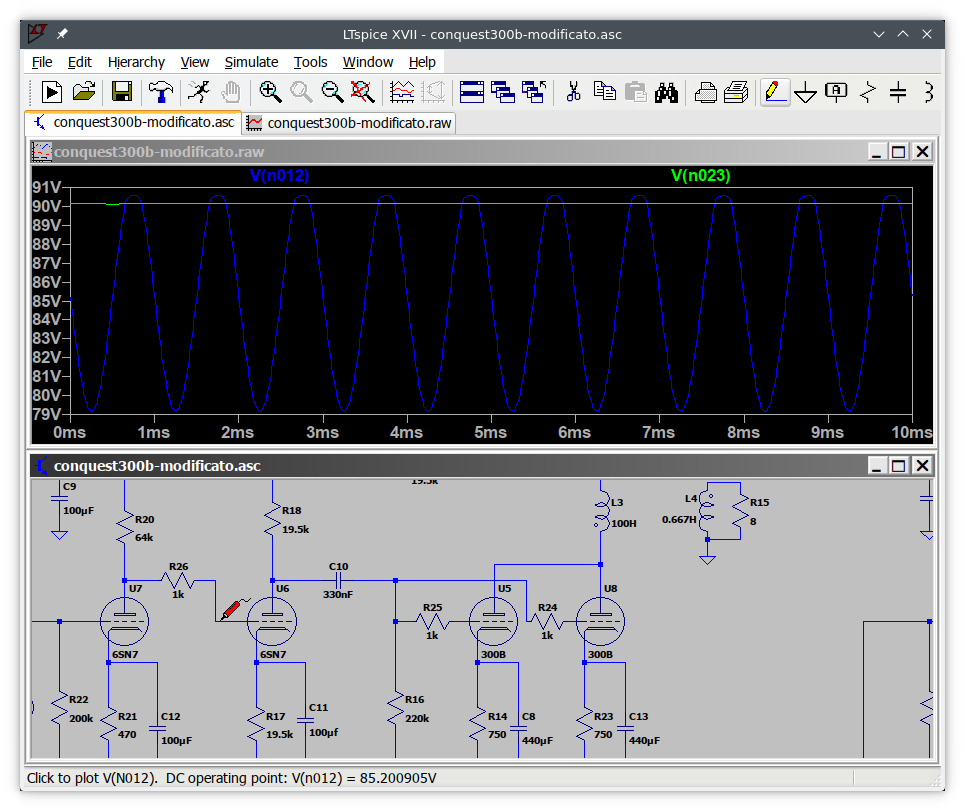
In the same simulation, we examine the 300B grid signal and compare it with the cathode potential…
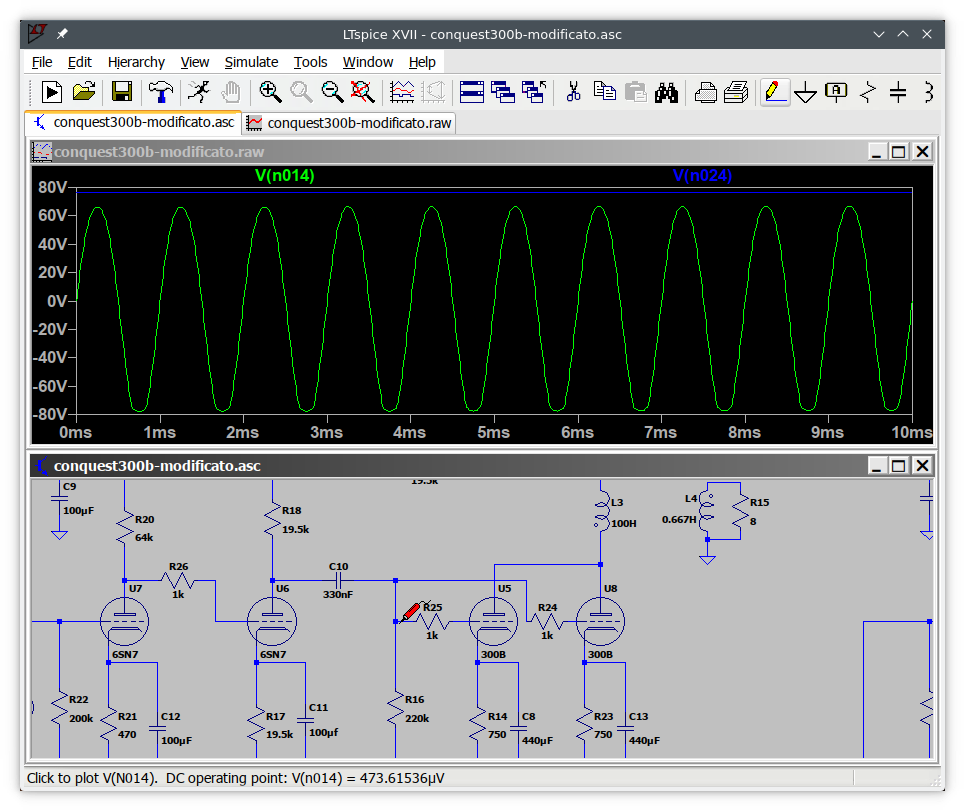
The observation shows that the signal reaching the 300B grid, besides being already distorted due to clipping in the driver triode, is still not sufficient to bring the 300Bs into saturation. As a result, these tubes are not delivering the maximum power they could potentially reach.
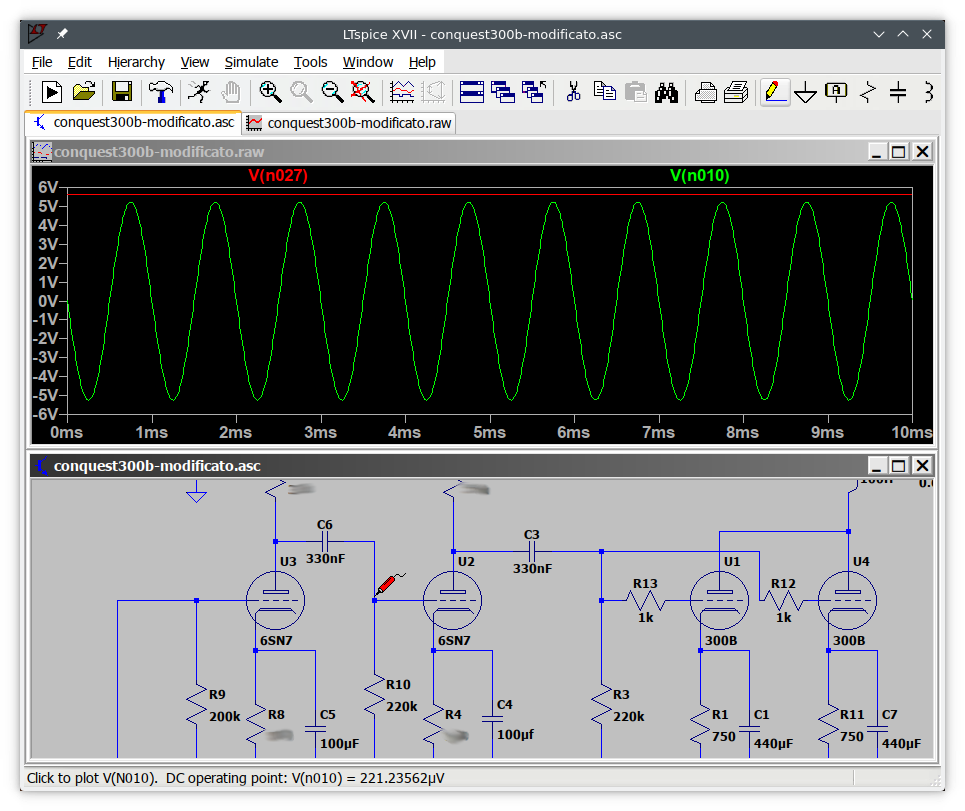
We will now examine the results of some slight modifications made to the circuit around the 6SN7 and what I was able to achieve. With the same input signal as in the first simulation, now, looking carefully, we can see that the signal reaching the grid of the second 6SN7 triode is still well away from saturation and does not distort…
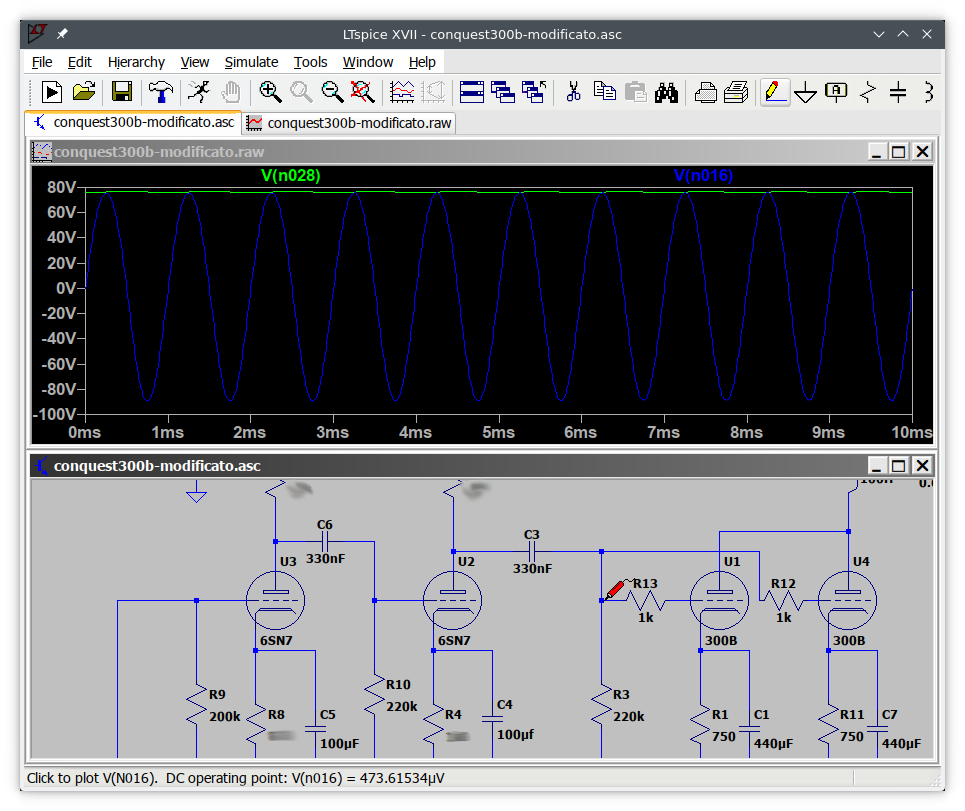
And while the 6SN7 is still not in saturation, the 300Bs are right at the edge of their maximum deliverable power, with the rising crest of the sinewave almost touching the same cathode potential…
Now let us look, in this last image captured from the simulator, at the discrepancy between what reaches the loudspeaker through the two different circuits (the original circuit and the modified one), even though both have the exact same input signal level (original circuit in green, modified circuit in blue).
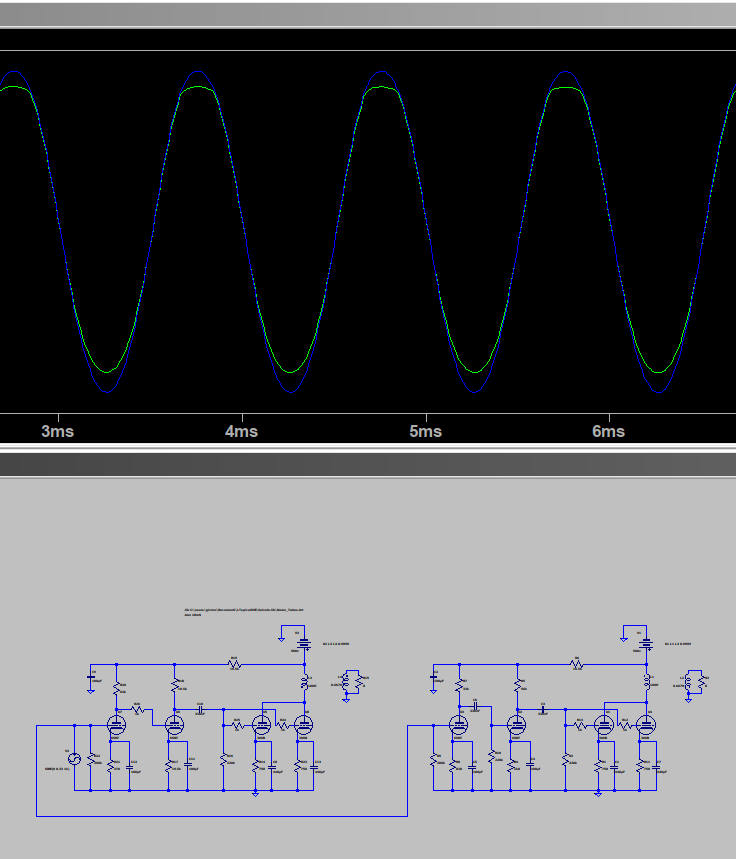
The discrepancy between the two is very evident, and anyone who still believes that such a large distortion compromise, aimed solely at eliminating one capacitor in the signal path, is acceptable, I am sorry, but they do not seem to fully understand the situation. In this simulation it should be noted that the original version, despite the considerable distortion, produced 15.44 watts RMS, while the modified version reached 19.55 watts. It is important to stress that these figures are theoretical values derived from the simulator, not taking into account any losses in the output transformer. In the concluding chapter of the article we will examine how the modified version, with the original output transformer, is able to deliver 12 to 14 watts before clipping related distortion becomes significant, and up to 17 watts under full clipping conditions. Theoretically, the original version should manage around 8 watts before significant distortion occurs, although this was not verified directly due to the unavailability of working units. However, it is likely to be the case. It is interesting to note that the Sun Audio (from which this schematic derives) was able to deliver 4 watts with a single output tube.
But now let us look at the work on the amplifiers…
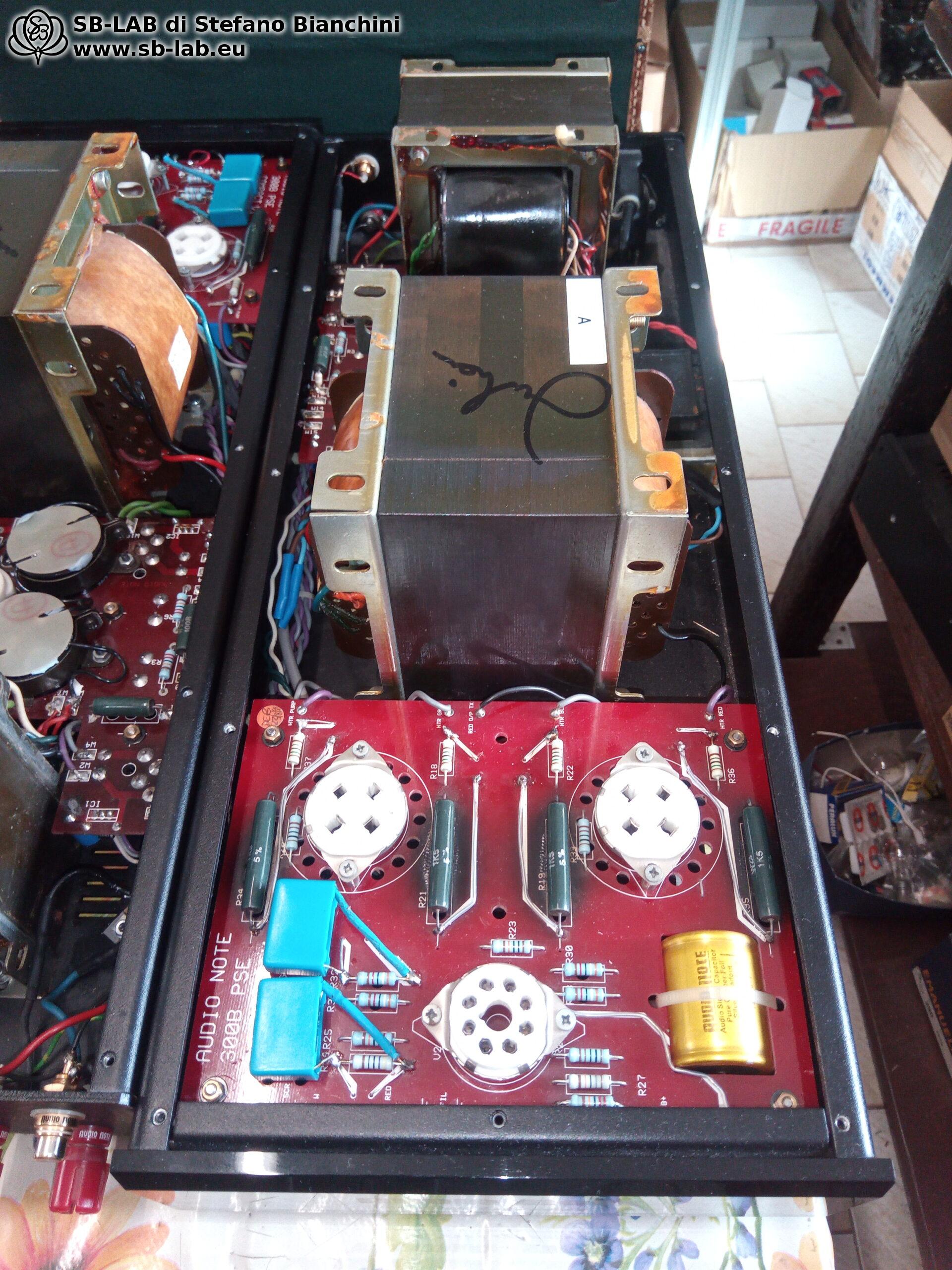
Both units had undergone modifications of various extent. The output stage boards had been removed from their supports and mounted on springs, and in both cases there were clear signs of overheating under the cathode resistors of the output tubes. One of the two units, in particular (the one with the burnt transformer), showed much more evident signs of overheating than the other. I started the process by disassembling the circuit boards and the power transformers.
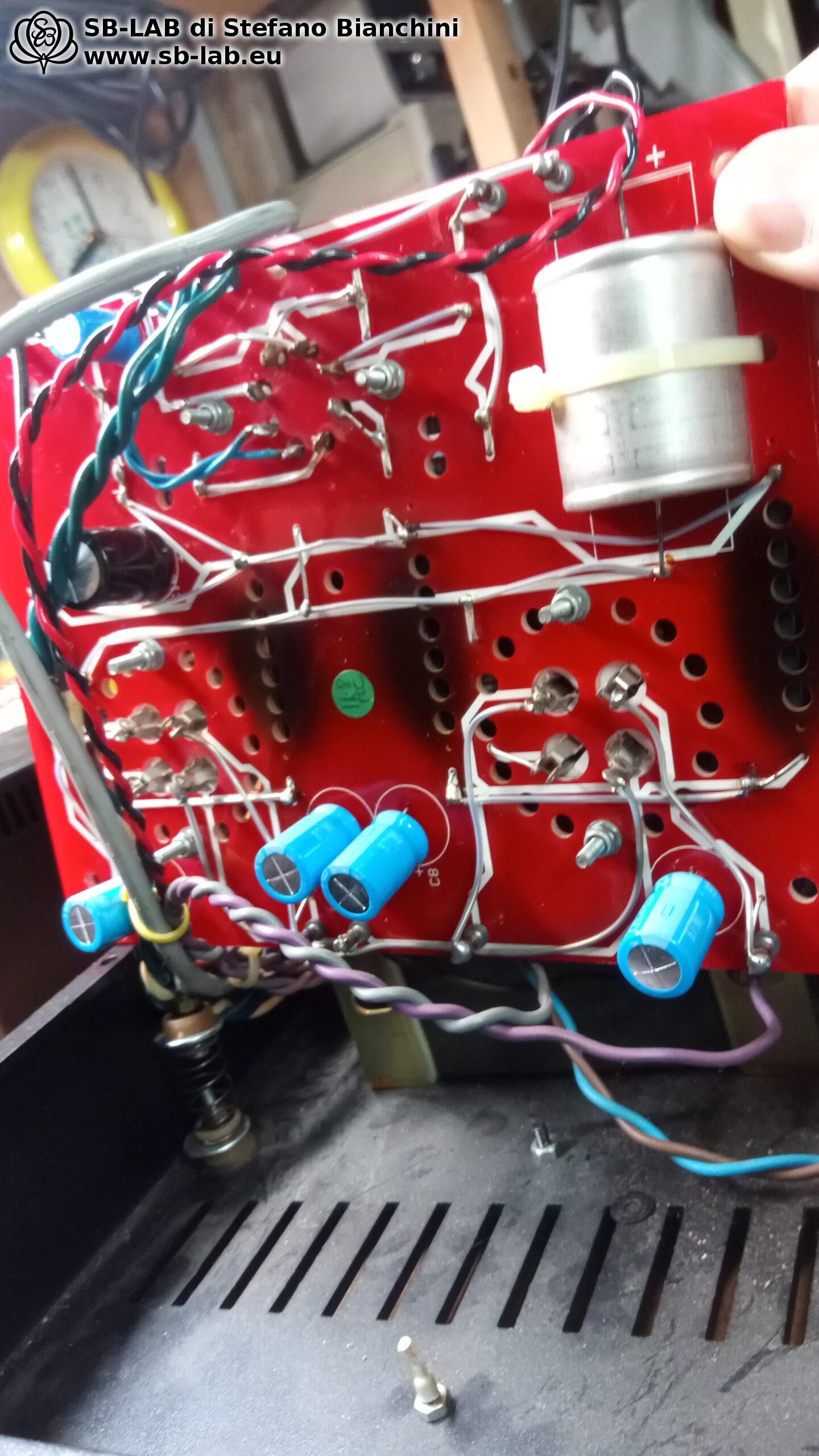
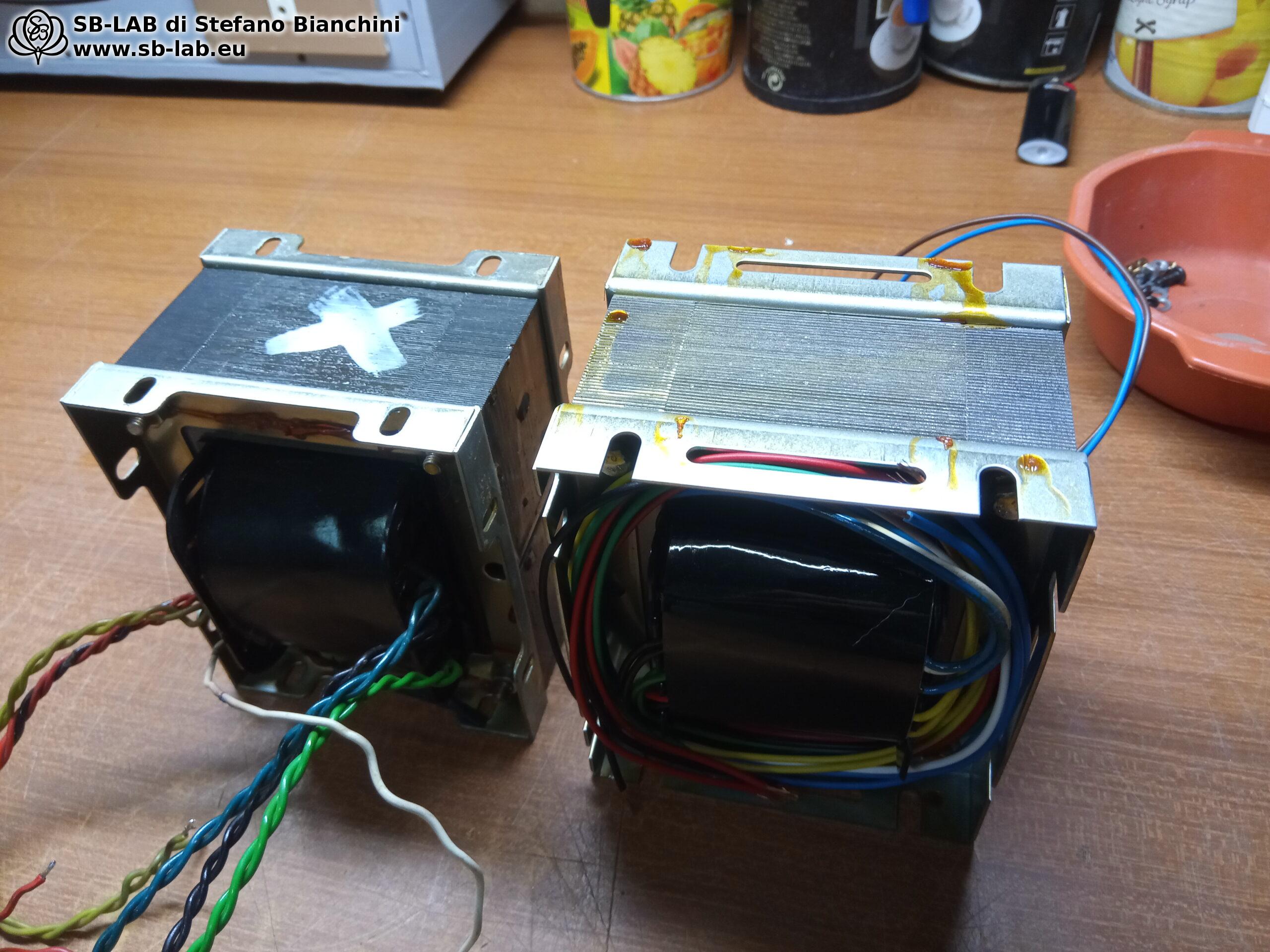
Unfortunately, the first obstacle I ran into was related to the British origin of the units, the power transformer had a construction specification in “38 column” format, a lamination stack configuration that is not common in Europe and is practically impossible to find. However, I was lucky that the transformer housing box was spacious enough to accommodate a “40 column” transformer. So I rewound two new transformers from scratch, on 40 column cores. In the photo below the old burnt transformer is next to the slightly larger replacement.
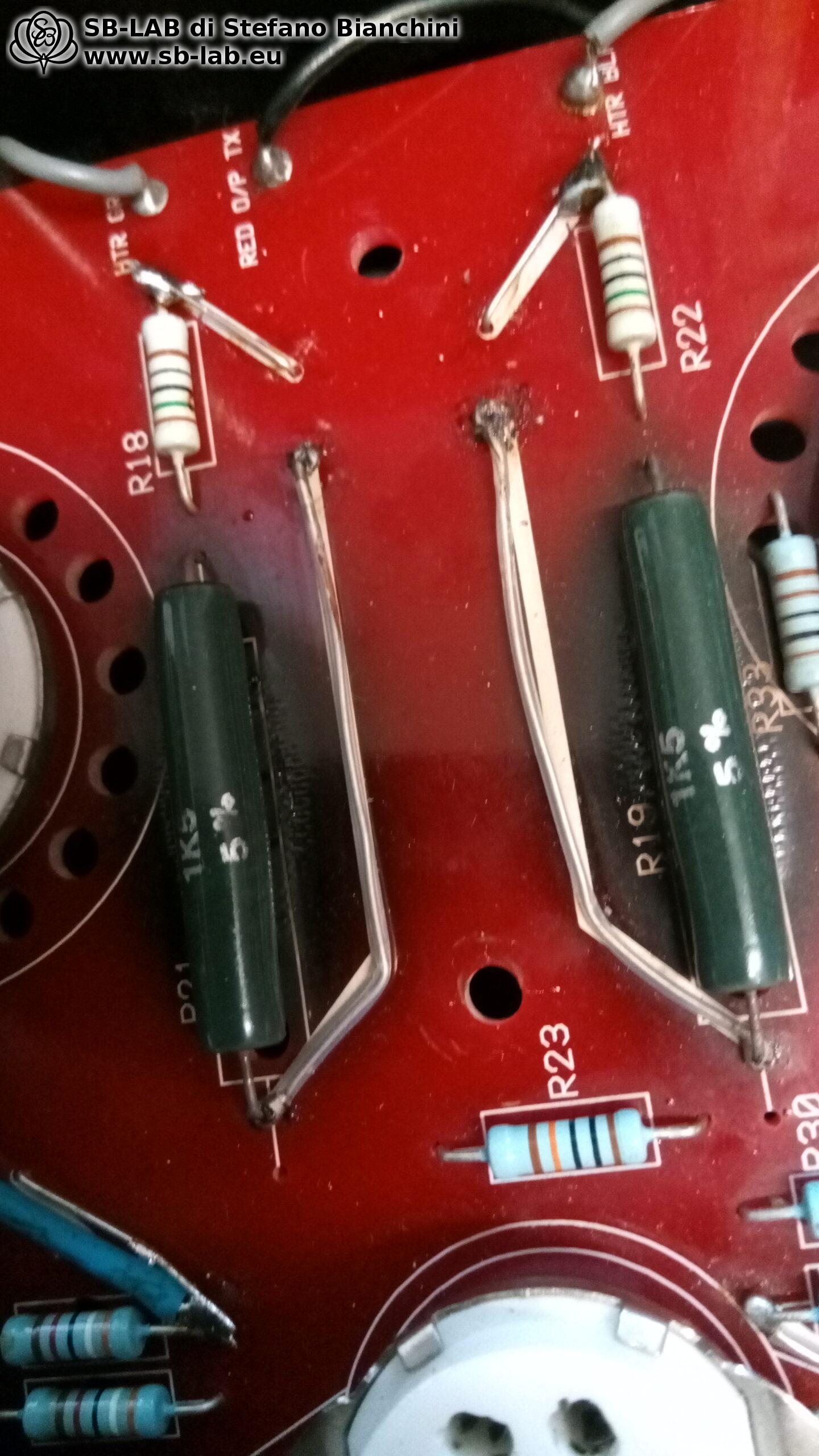
Continuing the circuit analysis, I was able to pinpoint the reason behind the overheating of the cathode resistors under the output tubes:
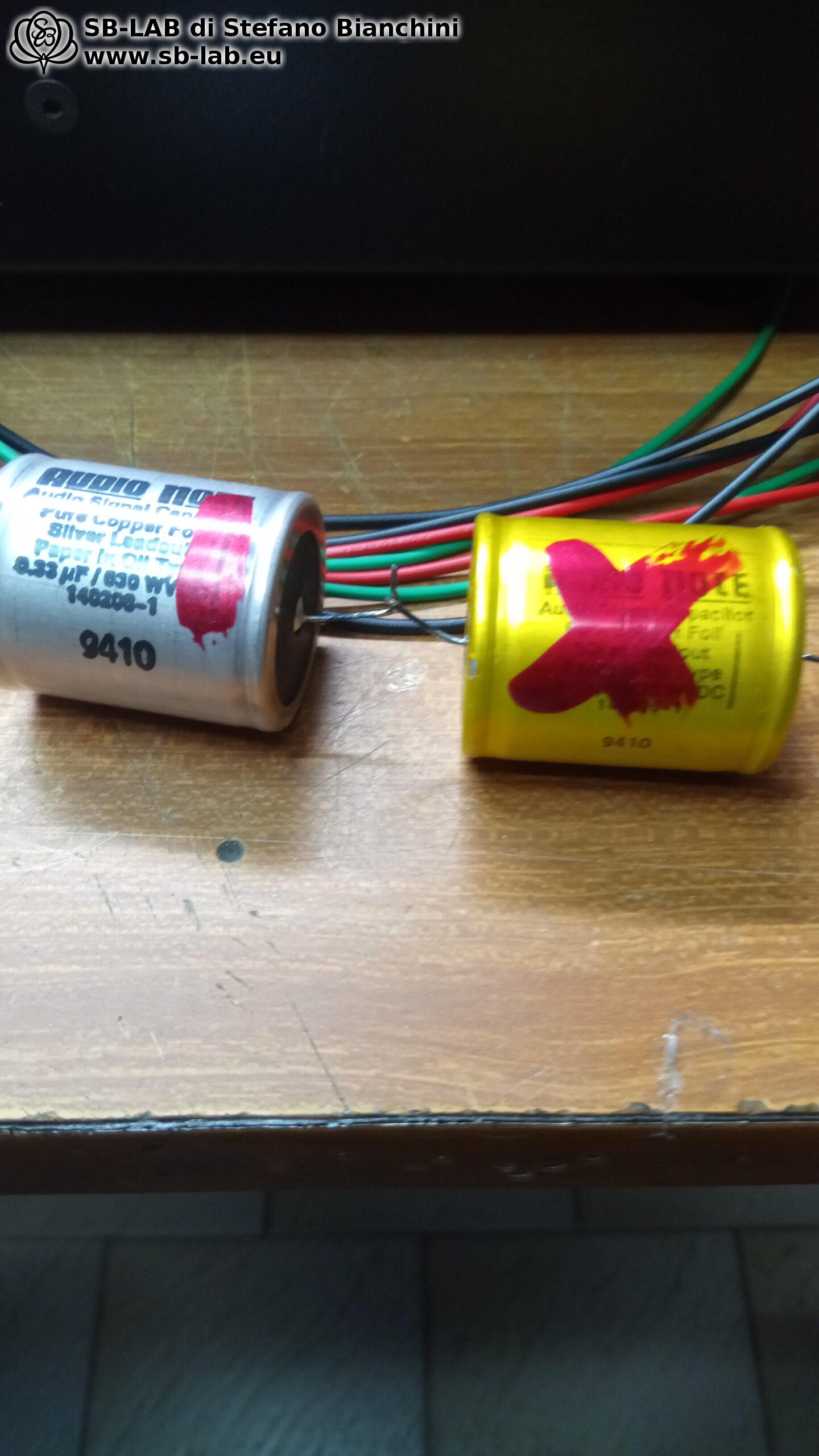
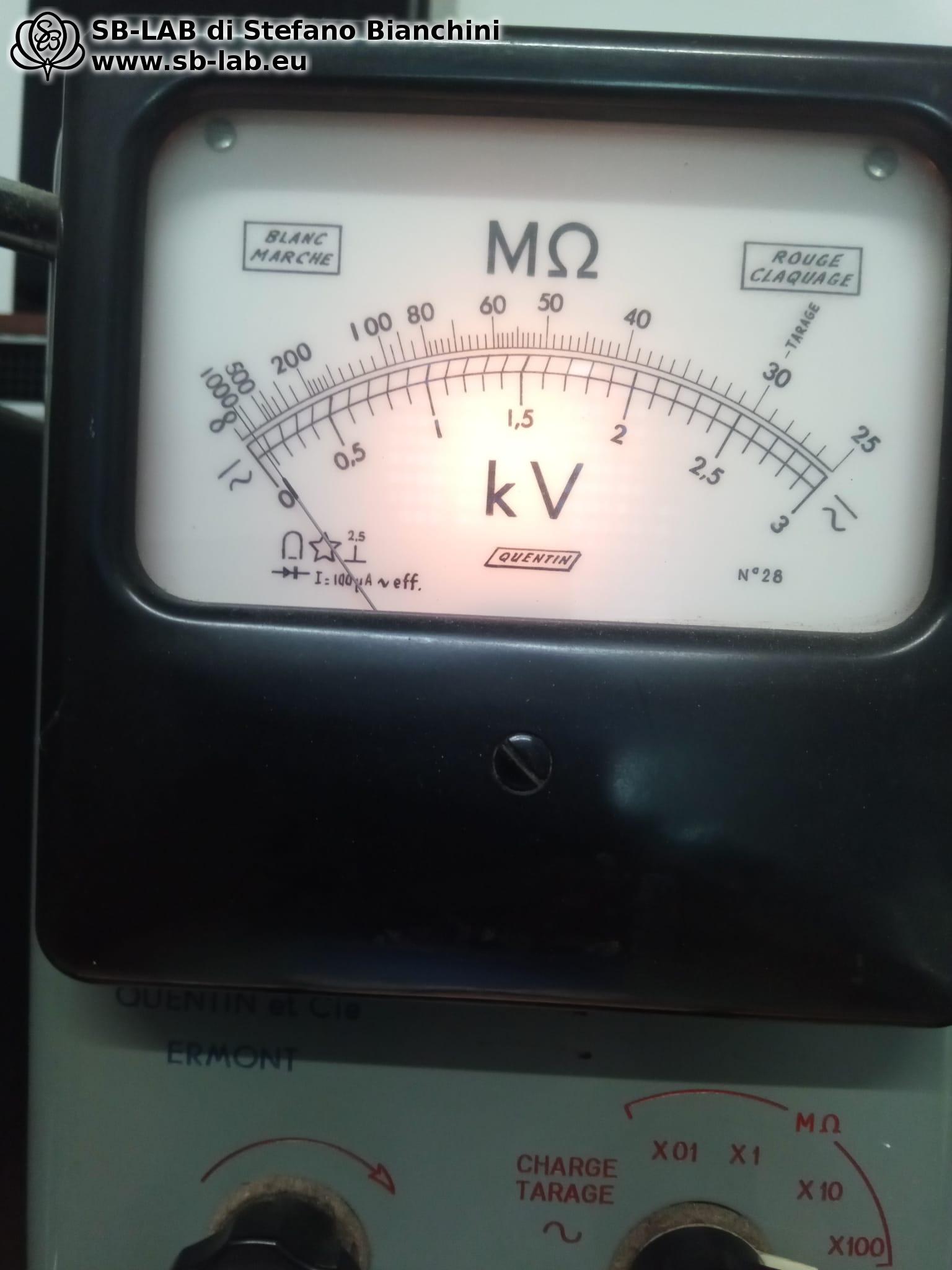
Both capacitors, made in “paper under oil” as some people call them :lol:, made of pure oxygen free copper, wound in an anti inductive way and rated as “audio grade”, both had leakage problems. One was in a dead short, while the other, although not shorted, had such significant leakage that it drove my insulation tester into saturation, even when set to the “charge” mode used to charge the capacitor before testing its leakage resistance.


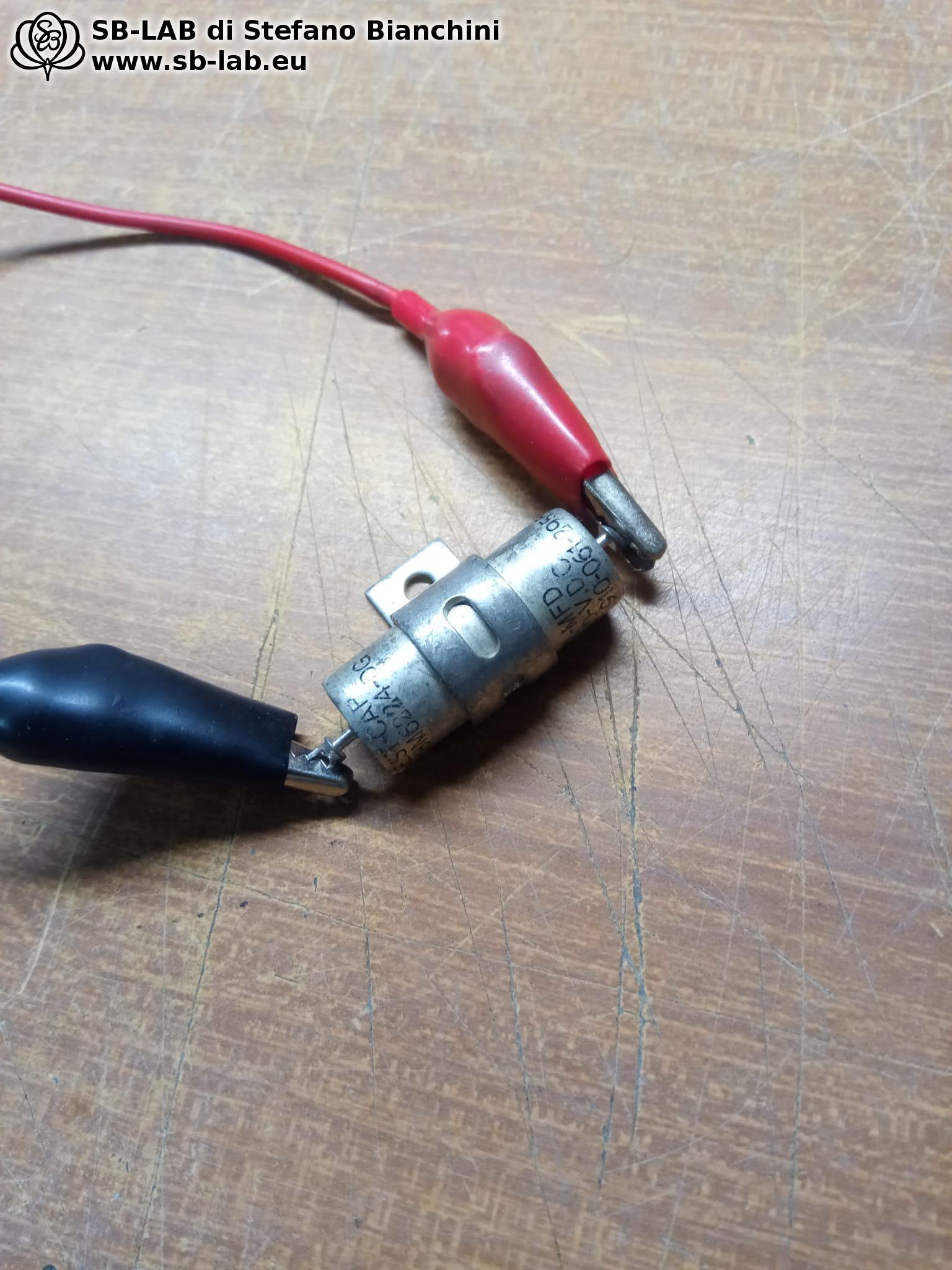
The cause of this issue lies in the type of oil. In true “paper in oil” capacitors there used to be an oil that can no longer be used in the production of new capacitors due to current restrictions. The oil used in the past was specifically suitable for building these capacitors, but what is used today is decidedly different. Some esoteric brands even rely on vegetable oil, while other, more careful ones choose polypropylene in oil capacitors, because they recognize that oil alone does not offer the necessary reliability. Even if these capacitors sound like polypropylene, the main point is the idea of having oil in them. The fact is that modern ones, sometimes, may not be reliable, especially if they have aged 25 years like these. In the photo below, instead, we see a NOS “West Cap” paper in oil capacitor of avionics type (you can tell by the mounting flange) which should be between 60 and 70 years old and still shows insulation around 100Gohm (100,000 megaohm).
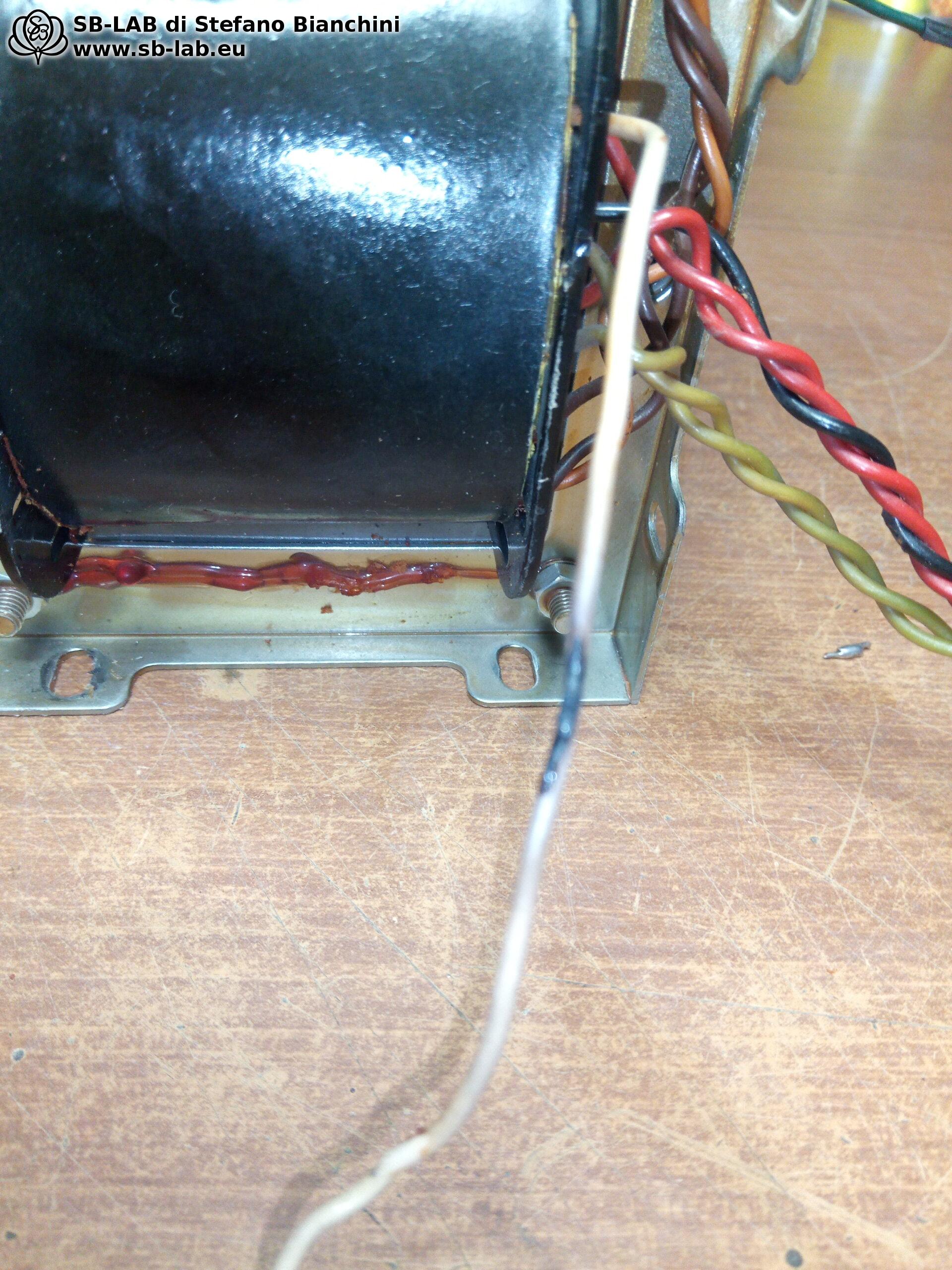
During disassembly, I also found a wire without insulation and with burn marks among those coming out of the damaged power transformer. The white wire is the center tap of the 3.15/3.15V winding that supplies the 6SN7 filament. It is likely that the wire was damaged due to friction caused by the springs, constant movement may have worn it down and brought it into contact with other live parts, eventually causing the short circuit. However, I consider it unlikely that this insulated wire was responsible for the capacitor failures. It is more likely that they were two separate problems that occurred at the same time.
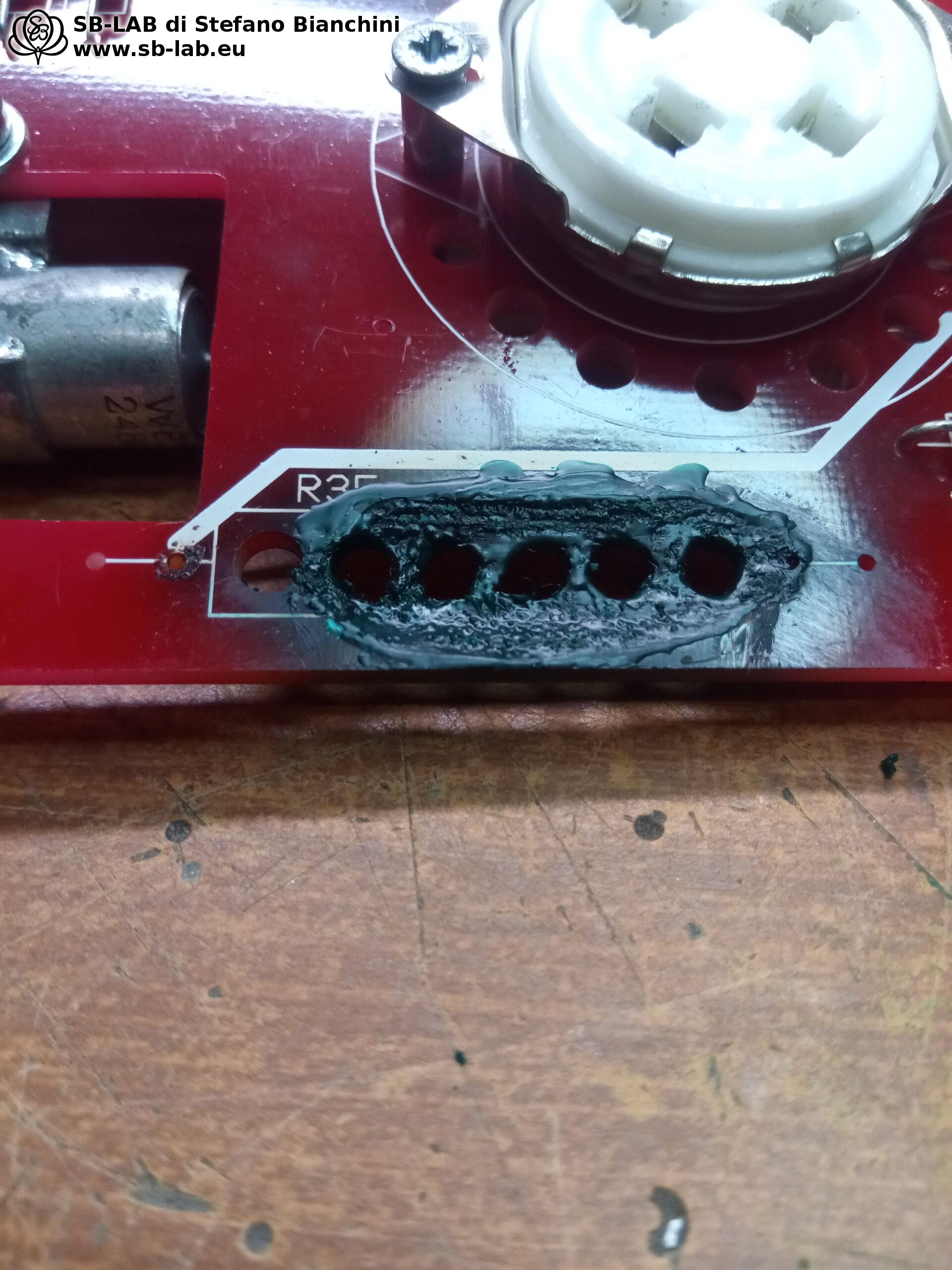
The first step was to scrape away the burnt part of the fiberglass board and then secure what was left with a dedicated UV resin.
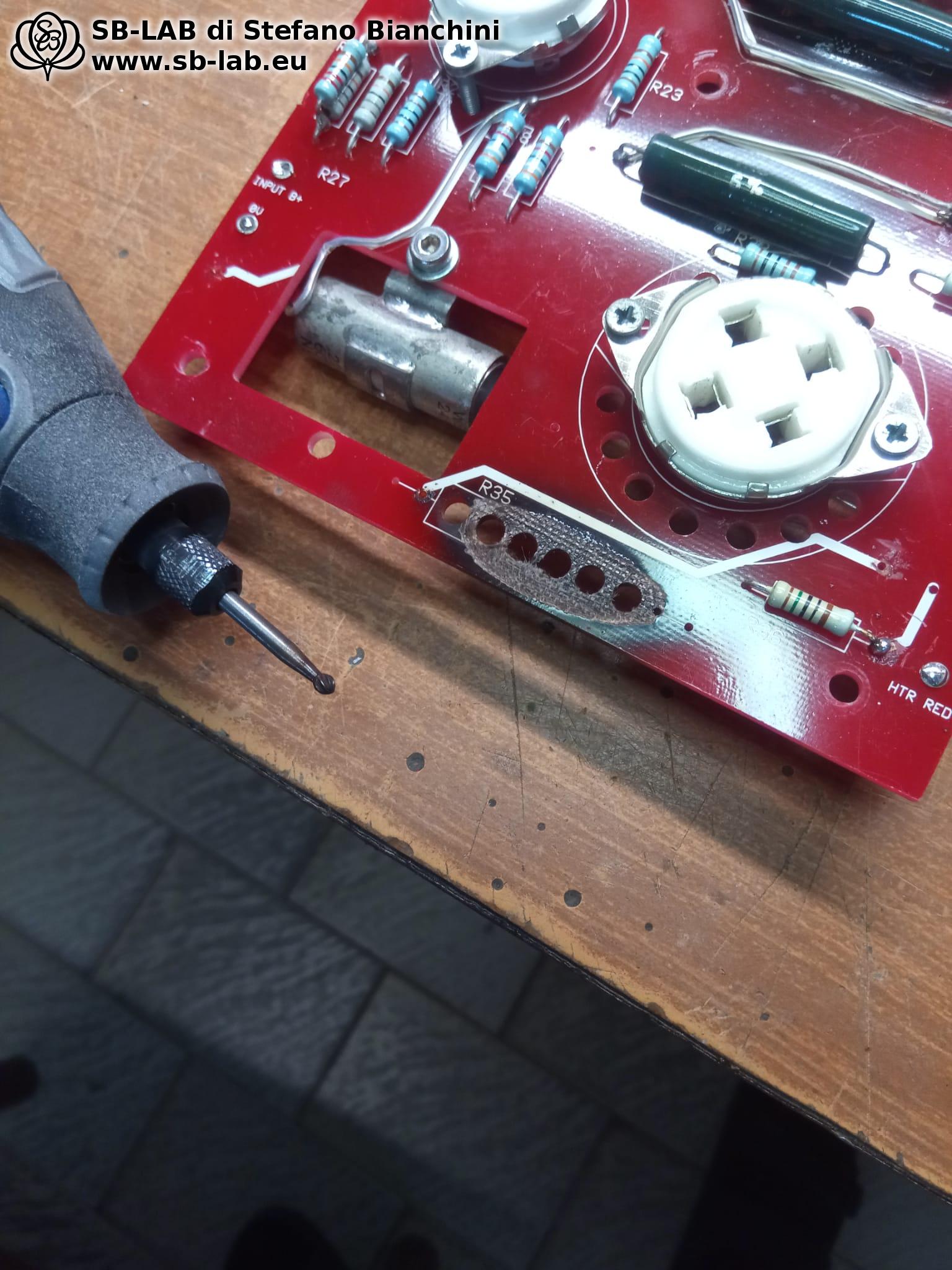
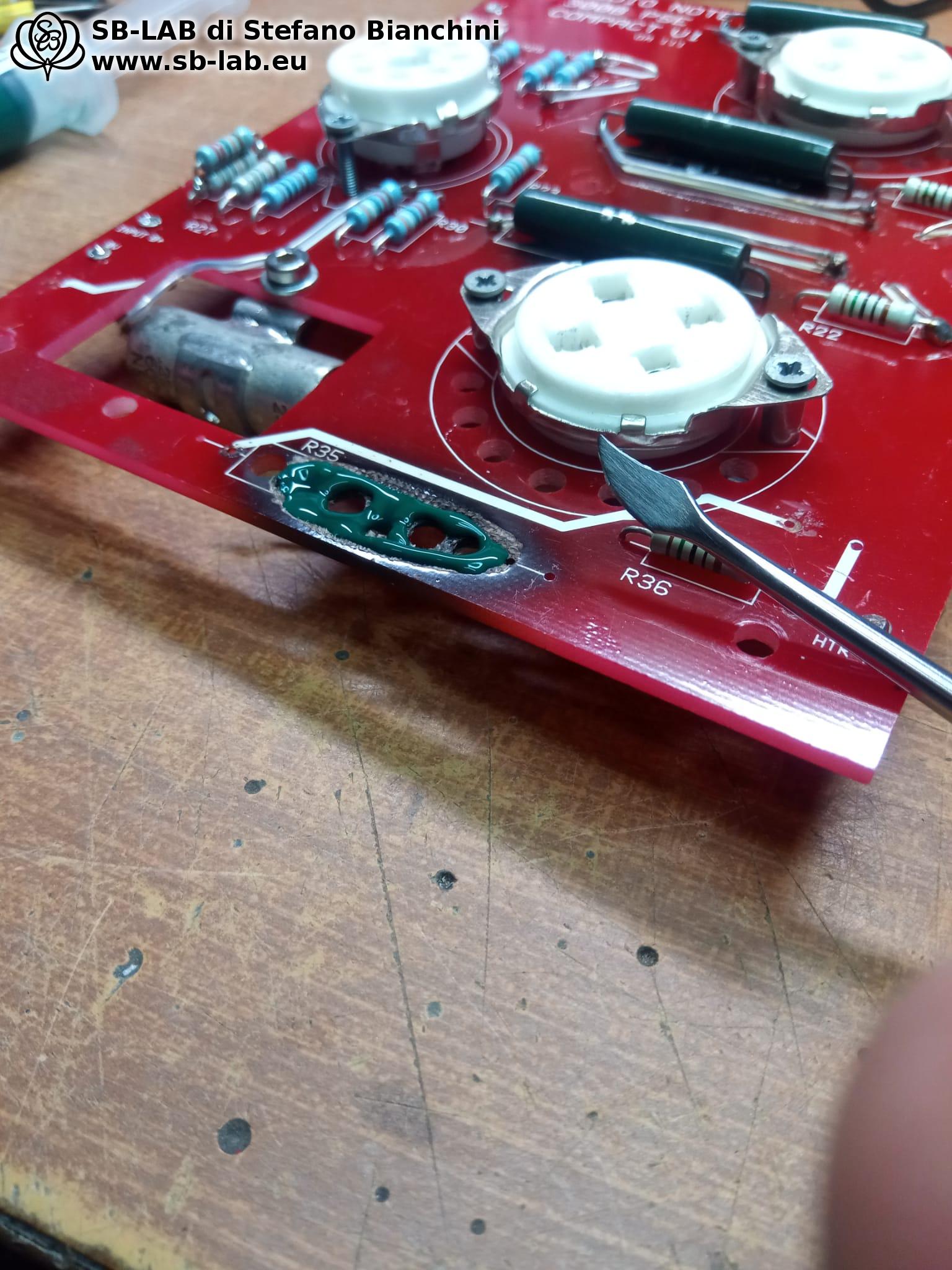
The visible result is rather unpleasant, also because the resin is green and the board is red, but at least the crumbling problem has been solved.
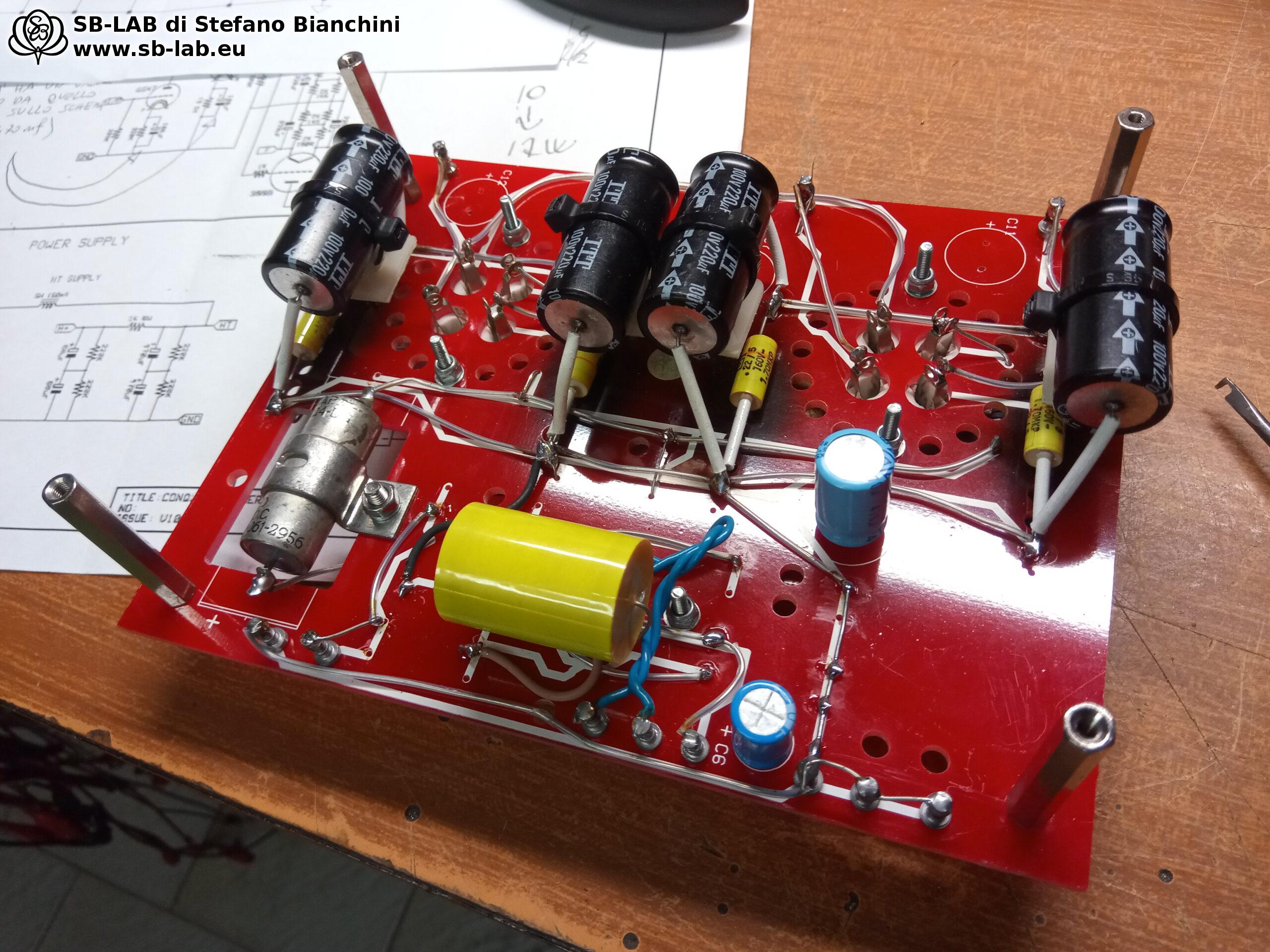
Another issue I found concerned the cathode bypass capacitors of the output tubes, which were rated for 35 volts and were of mediocre quality. Considering that in the circuit I expected a voltage above 40 volts, I decided to replace them with high quality capacitors rated for 100 volts, further bypassed with small, very well made polypropylene capacitors. The resistors, on the other hand, were perfect, these green ceramic glass types are very hard to burn.
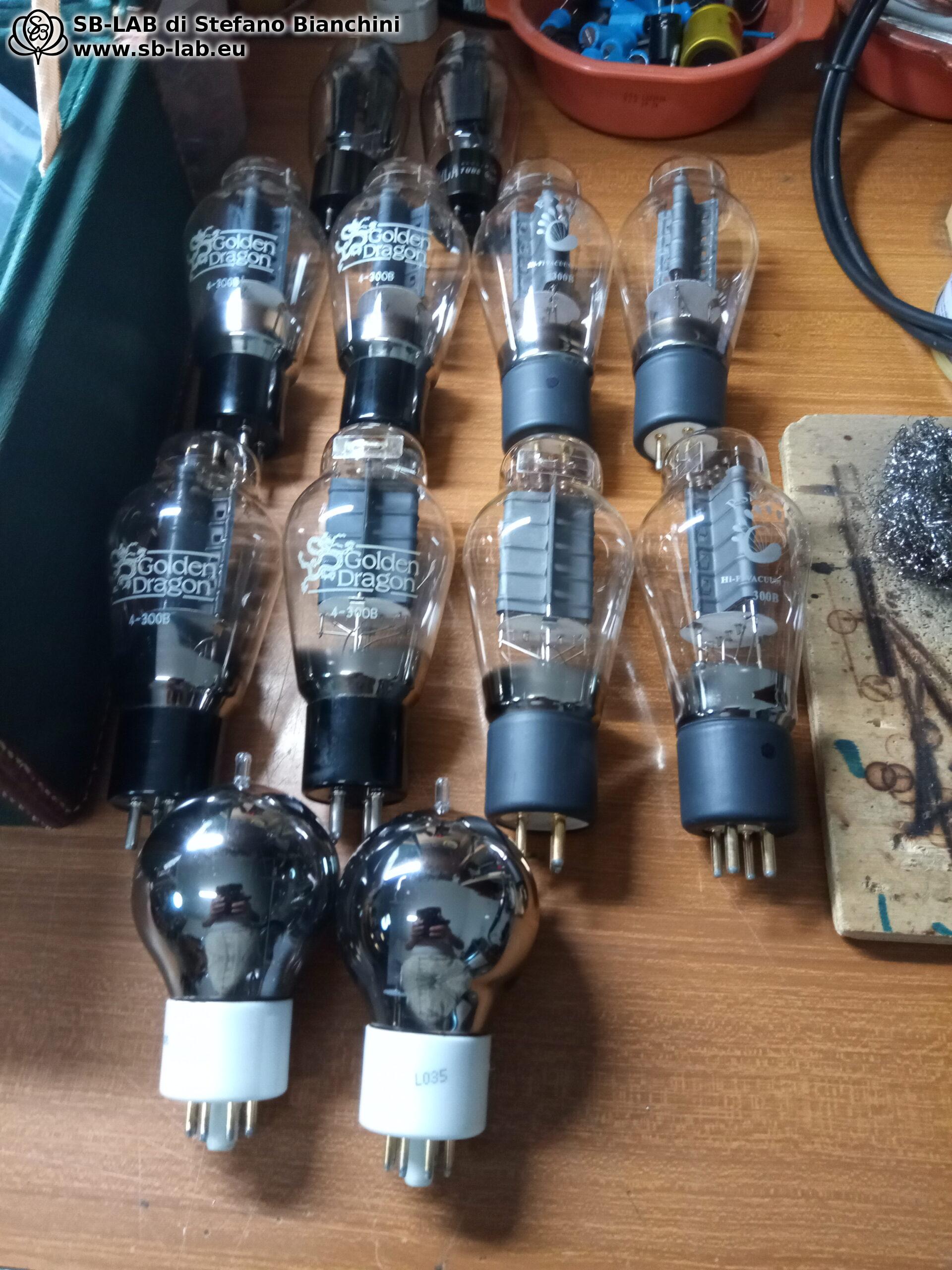
Then I tested all the tubes…
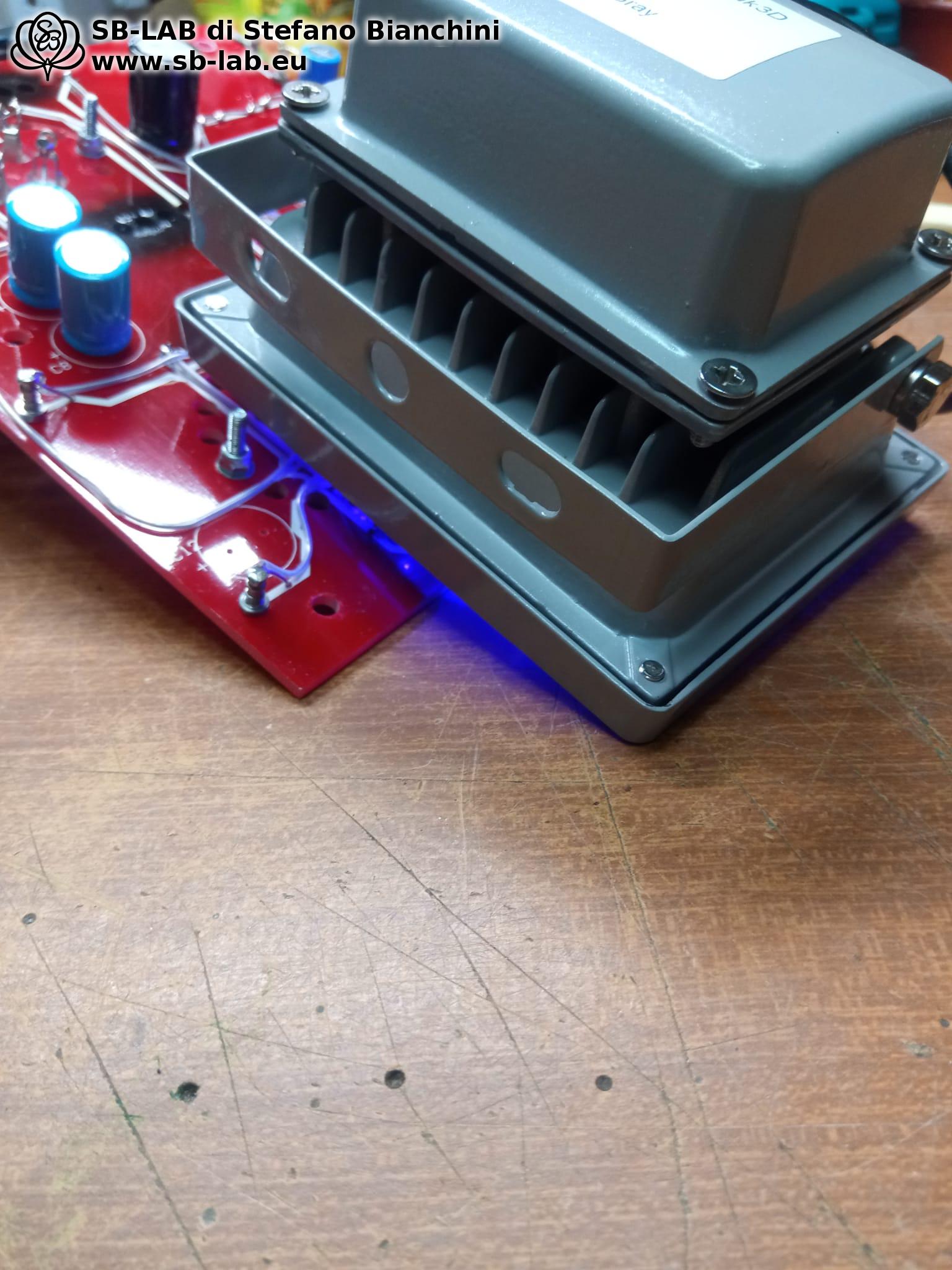
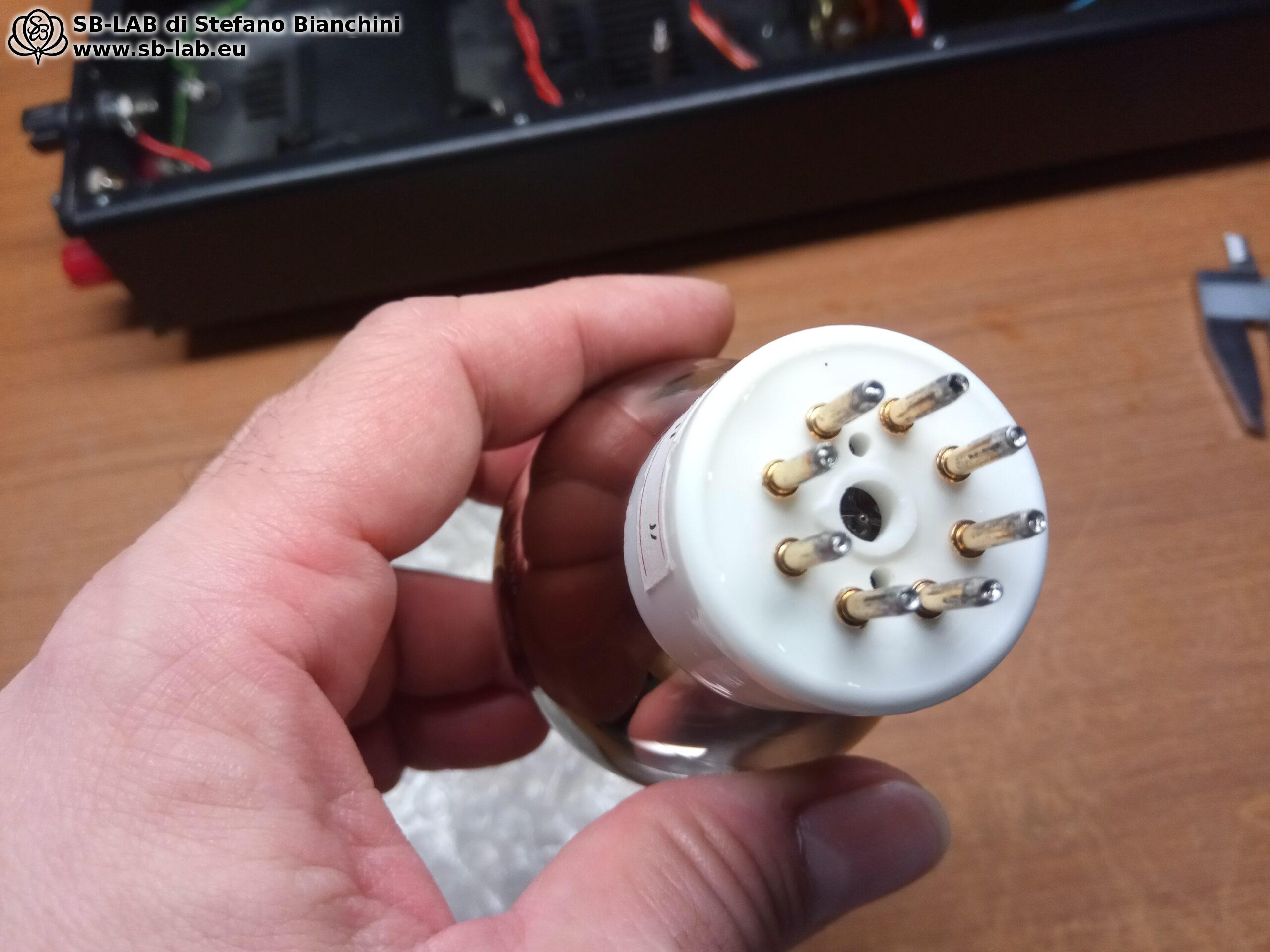
Minor damage occurred during measurement on the curve tracer, promptly fixed with 3D resin printing…

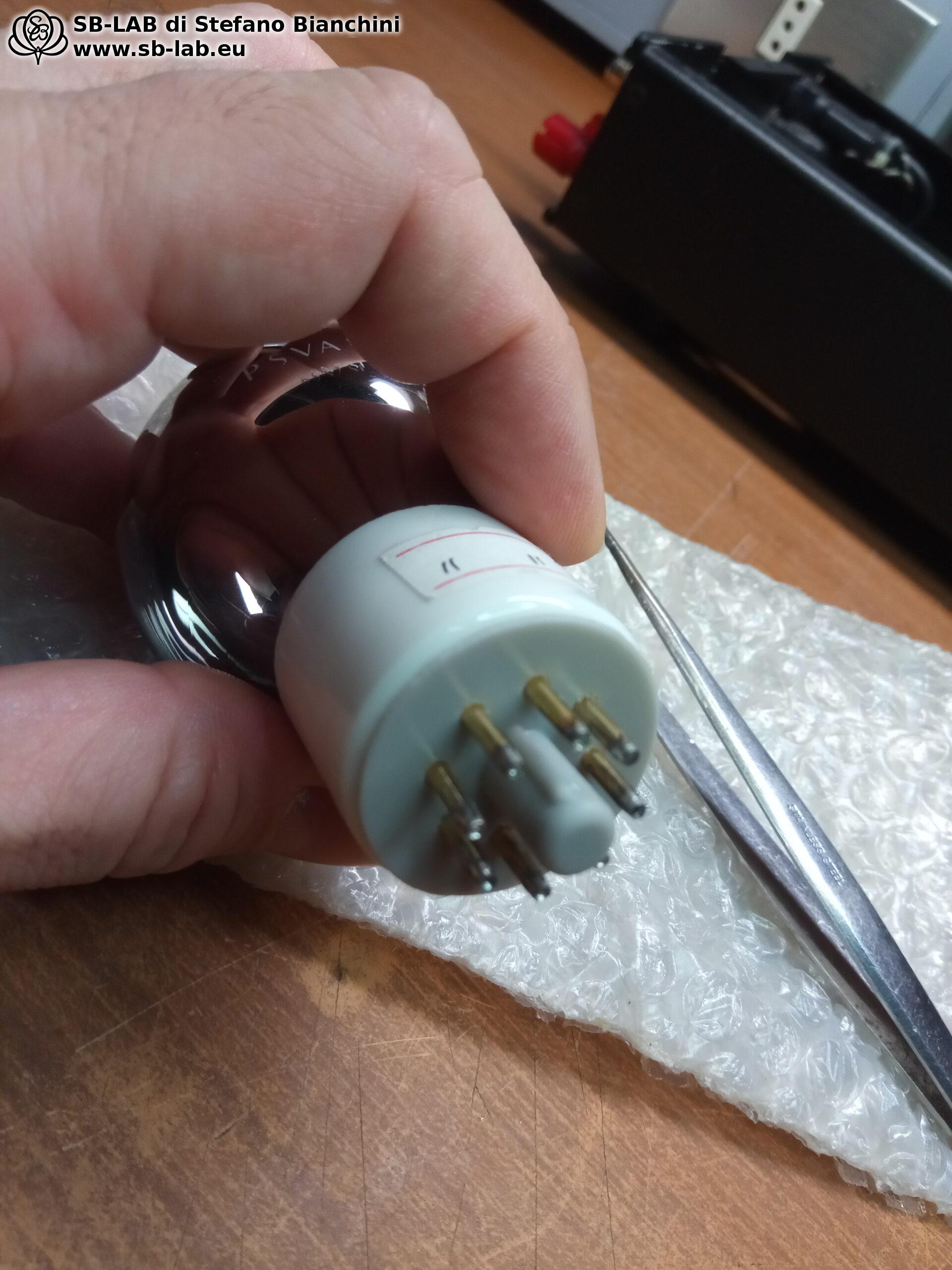
First bench test of the new driver, powering the board with the stabilized anode supply described in this article…

Amplifiers rewired:
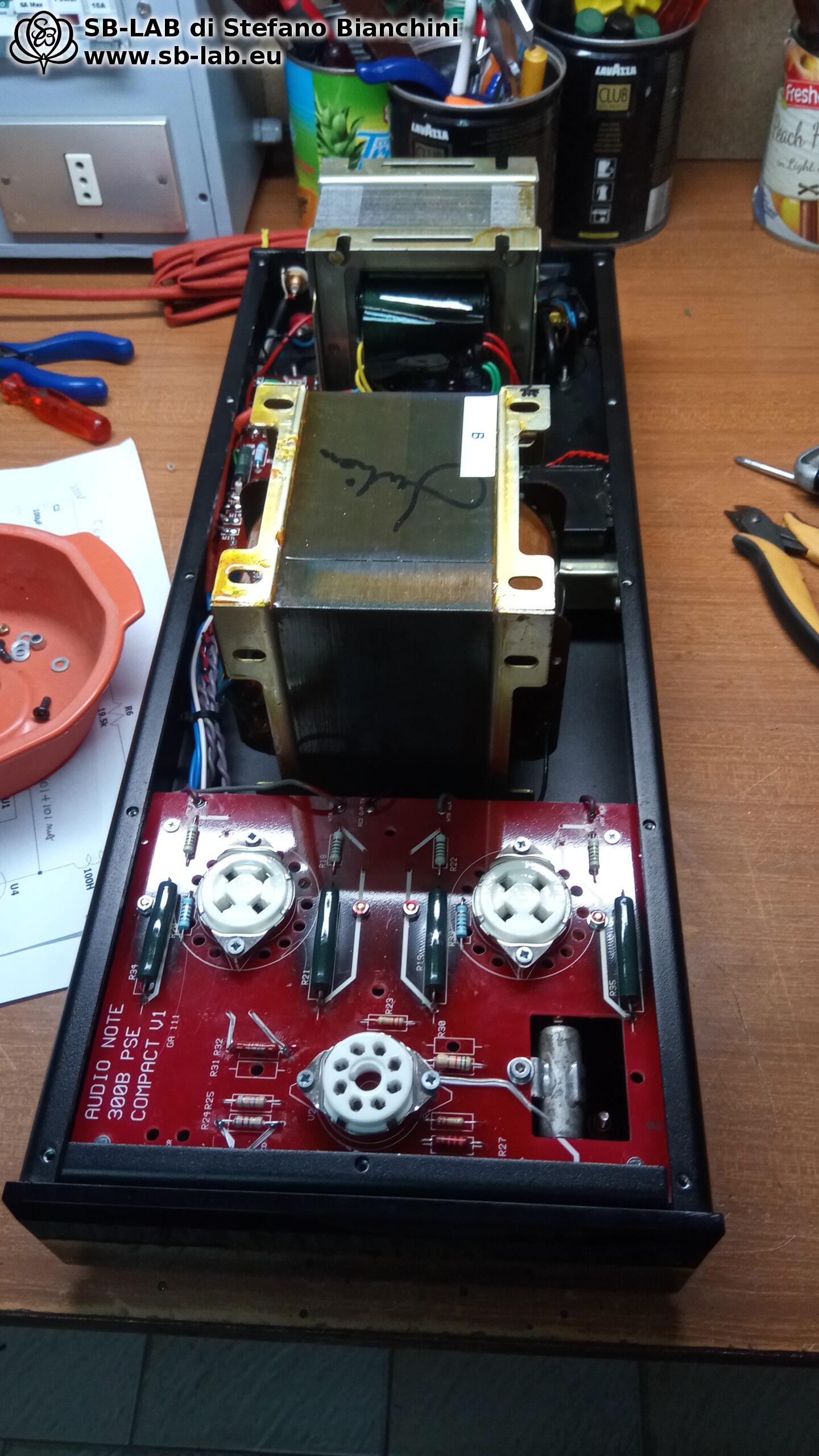
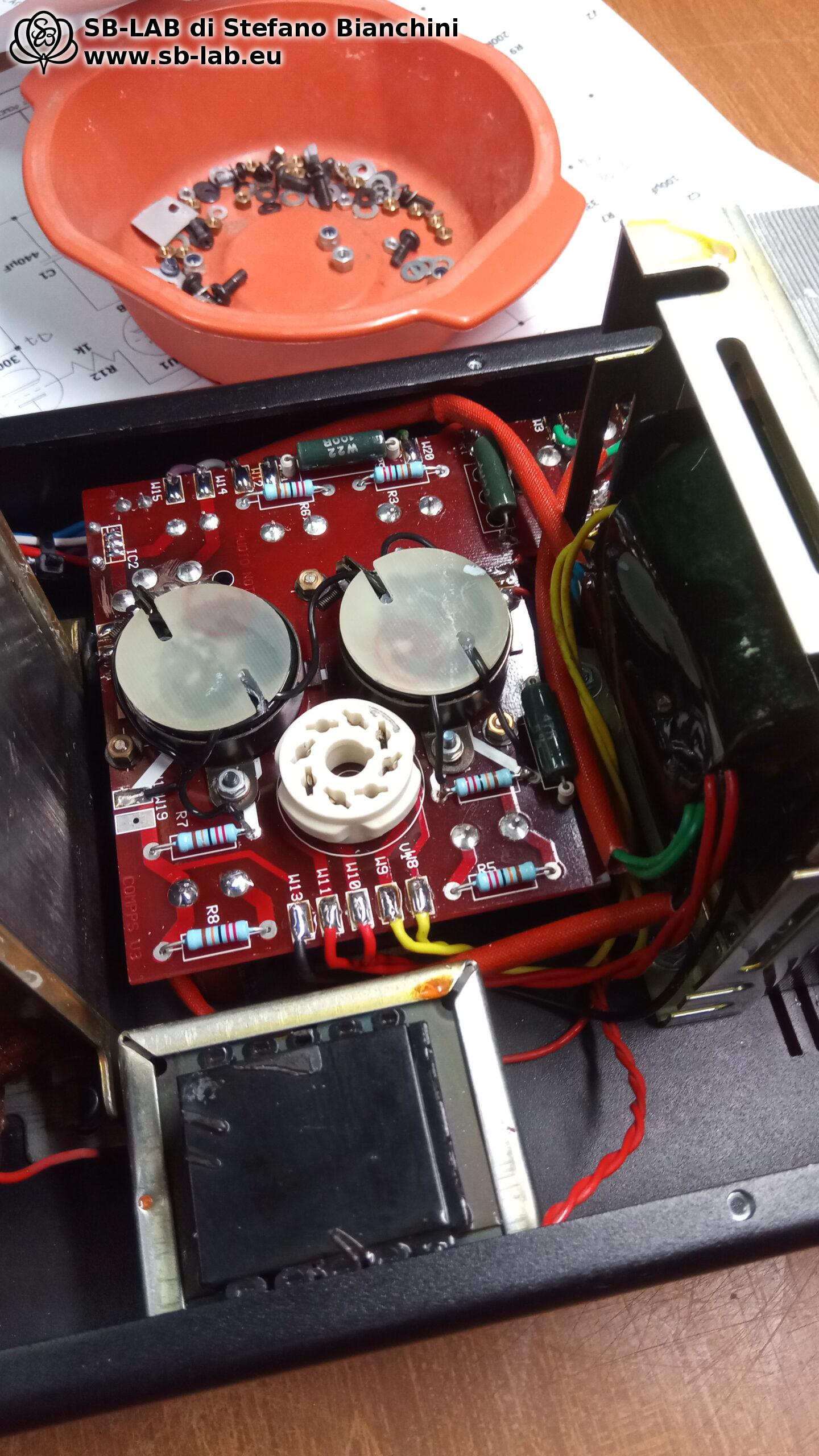
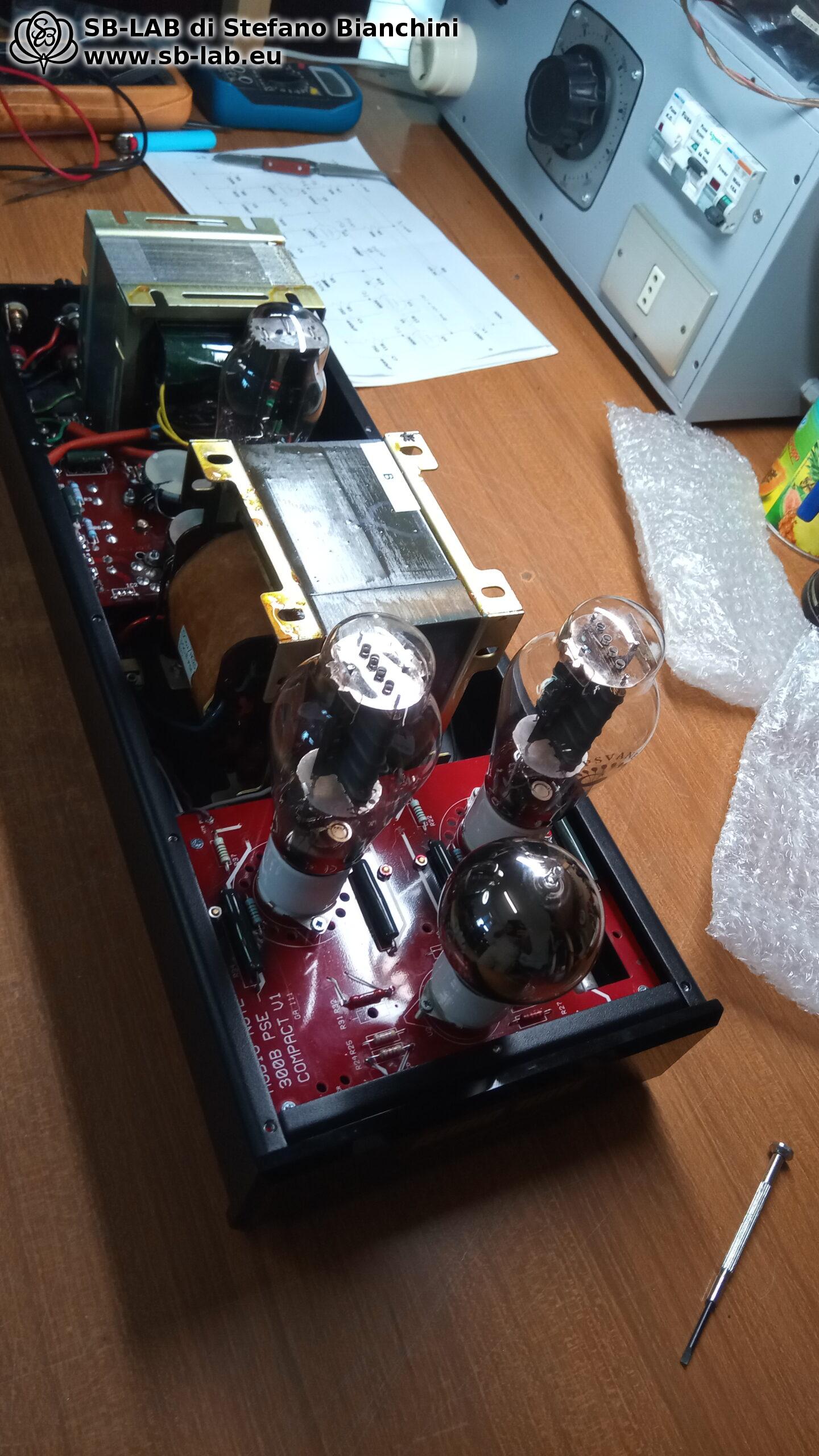
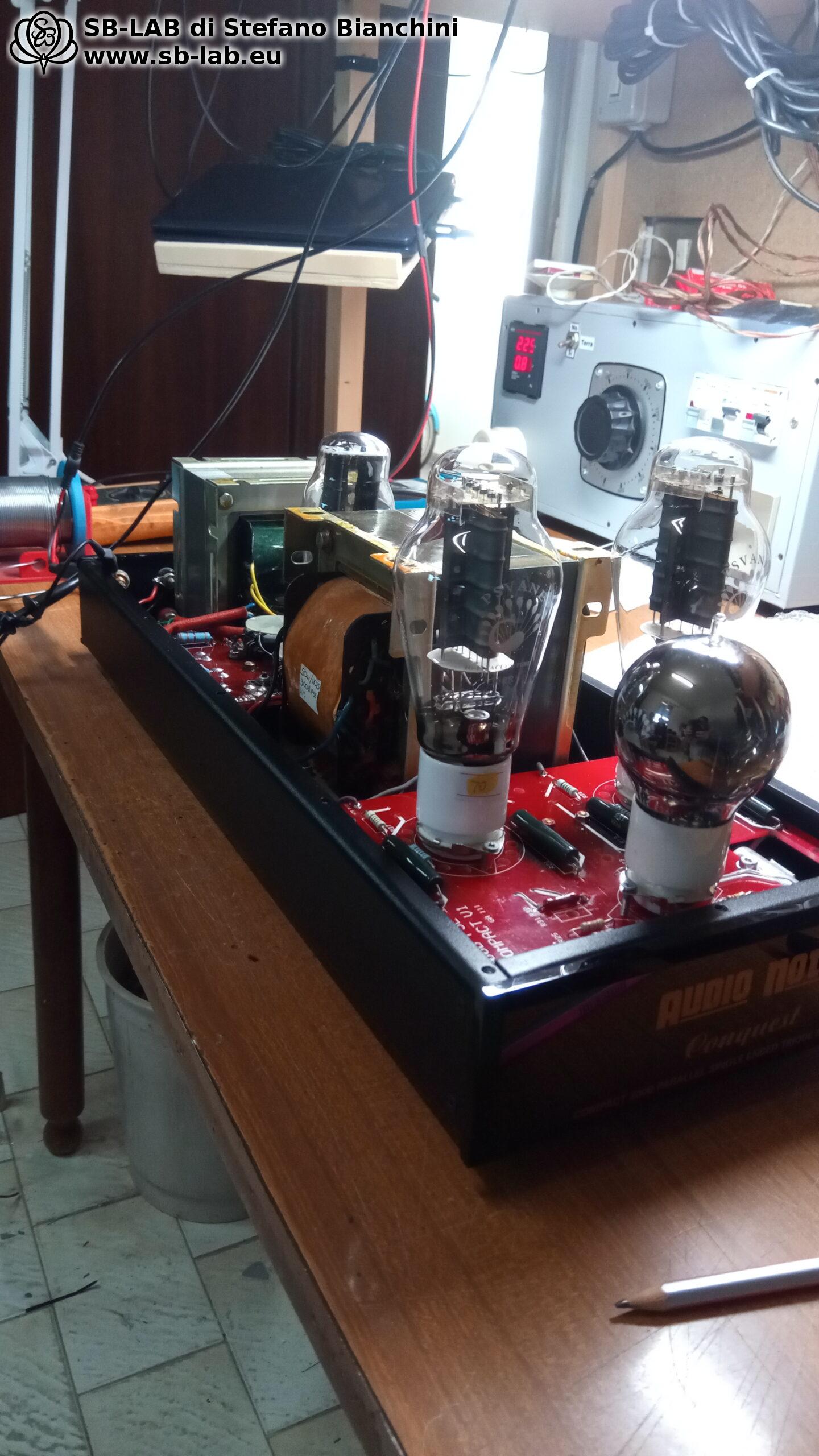
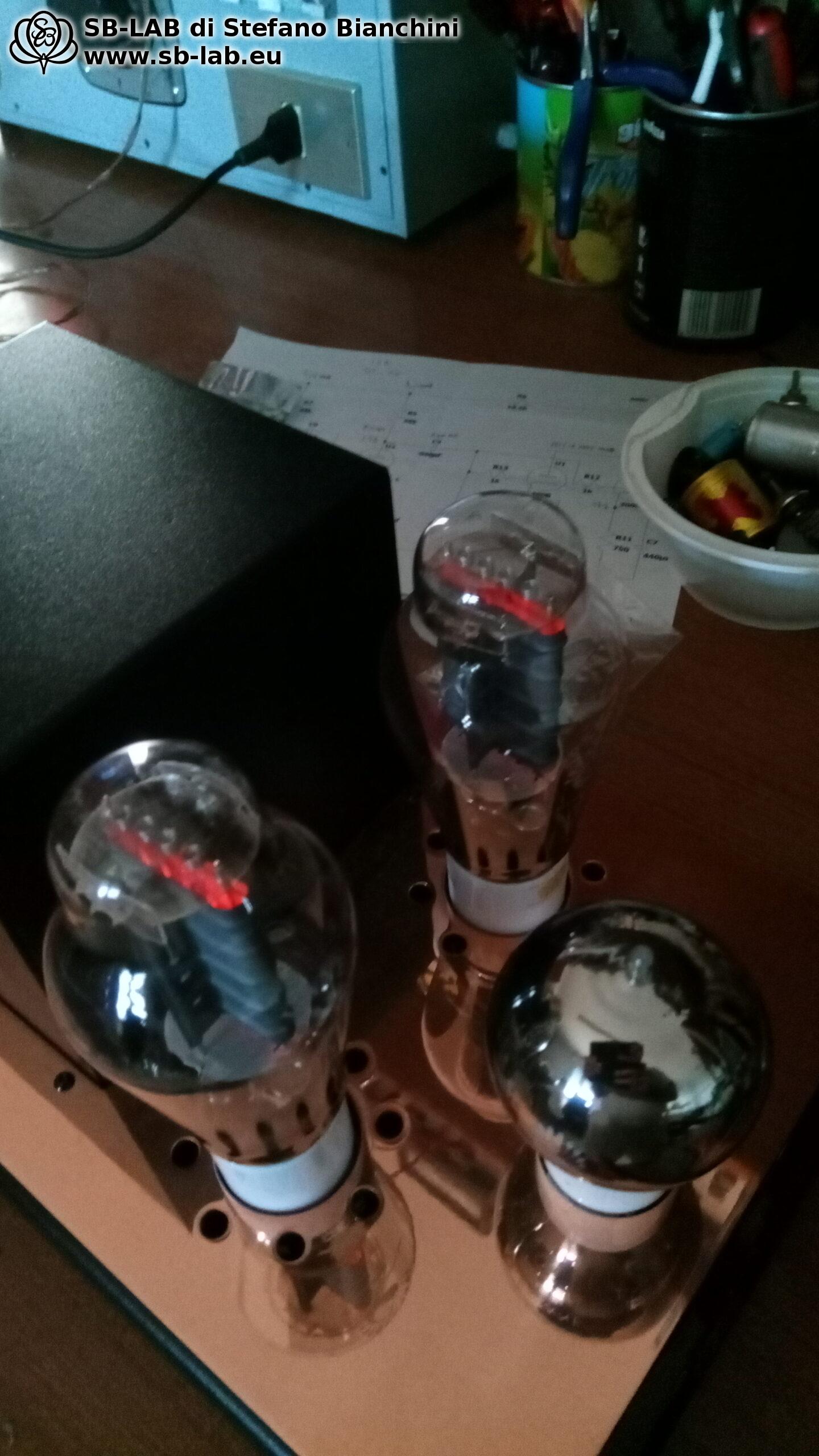
Instrument data: Genuine power delivery reaches 14 watts before the onset of significant clipping related distortion. The damping factor (DF) sits at 3, exceeding my expectations, also considering that this is a “zero feedback” amplifier.
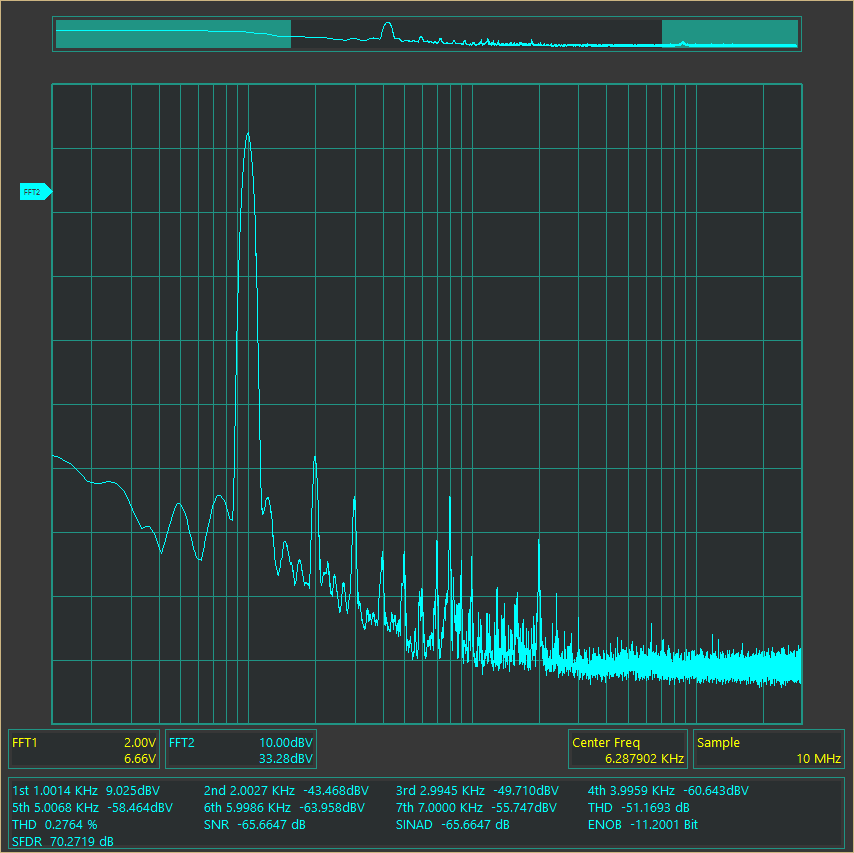
Harmonic distortion 0.27% at 1 watt
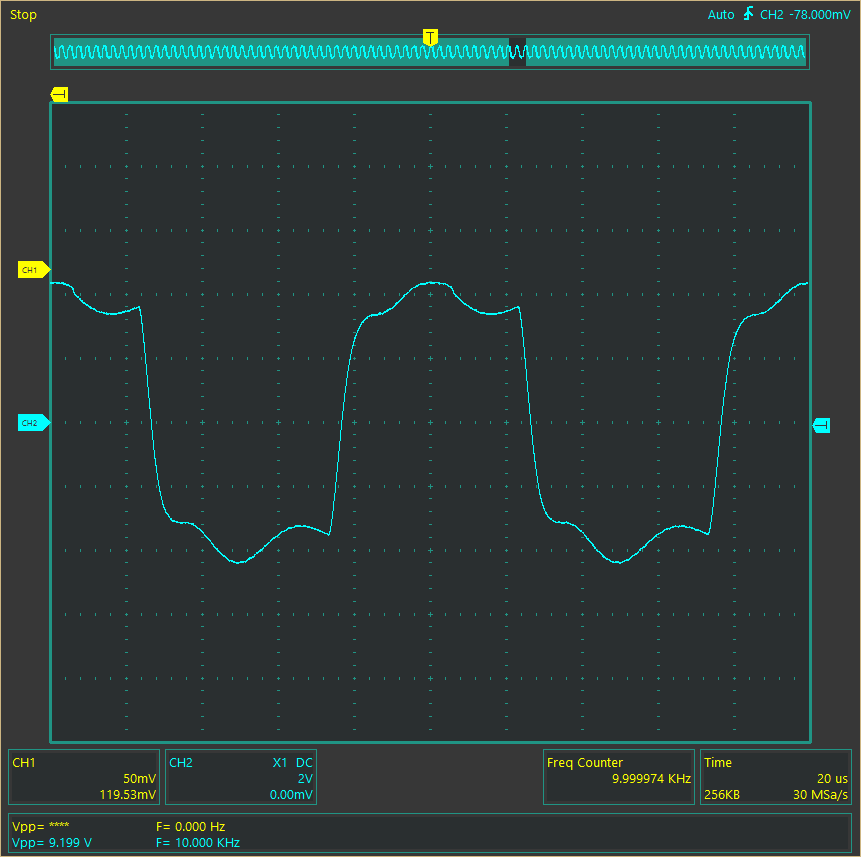
Unfortunately, the output transformer shows unpleasant resonances that appear starting at 10 kHz. In addition, a trick was adopted to try to mask these resonances, namely connecting the primary in reverse, the start of the winding was connected to the tube plate, while the end of the winding was connected to the anode supply. This configuration was chosen to create a hidden capacitance between the output tube anode and the reference point to ground. In any case, the measured response is -0.5 dB at 20 Hz and -1 dB at 25 kHz.

It is almost amusing to see how on the internet you can find adventurous individuals who, in an attempt to improve output transformers, have chosen to replace the laminated core with a double C core. This, evidently, because the double C core is considered “prettier”. However, in light of the fact that there is a 0.5 dB drop at 20 Hz, one has to wonder what real benefit is obtained by changing the core.

The problems of this transformer, if we really want to “nitpick”, are present in the highest region of the frequency response, not in the lowest one.
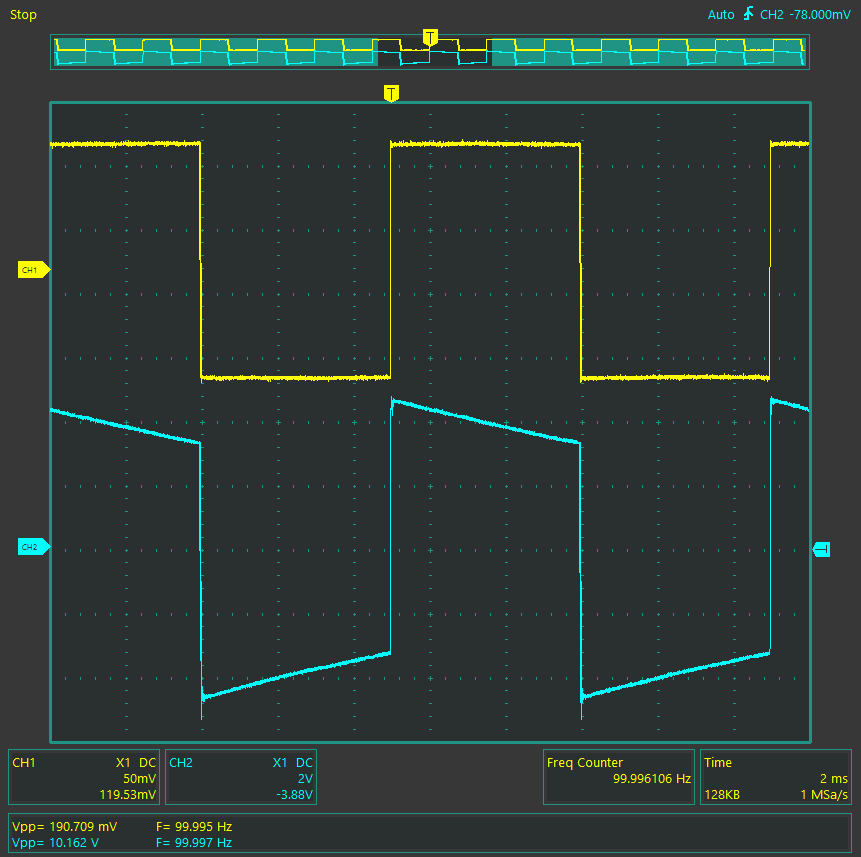
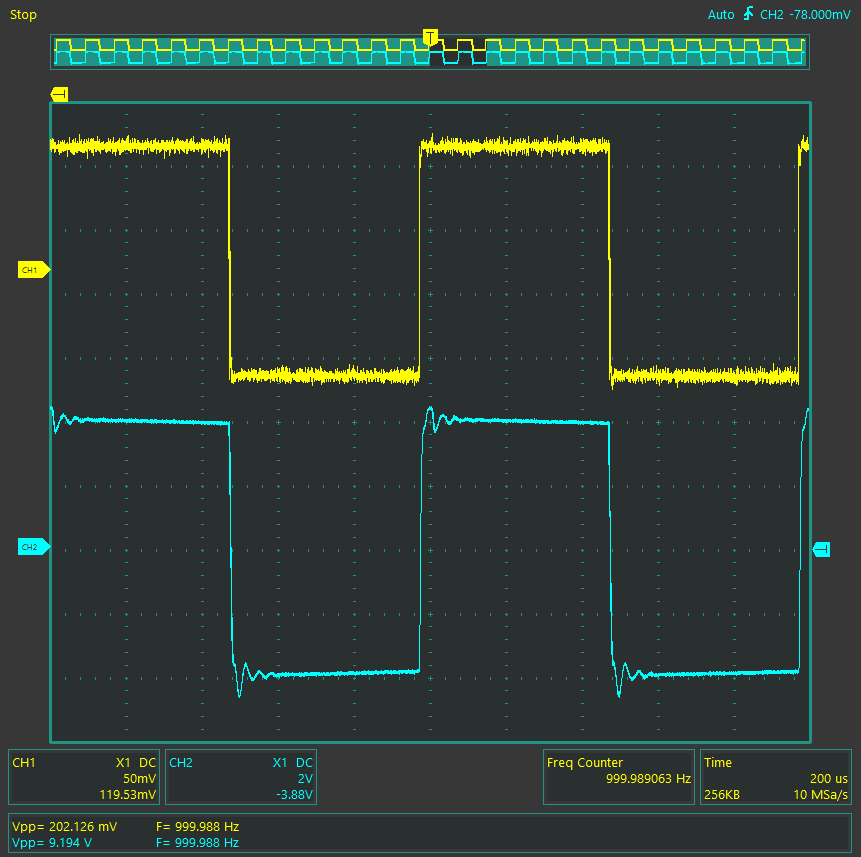
Let us look at the square waves at 100 Hz – 1 kHz – 10 kHz
Here they are finished and ready to go back home!