The Audio Note M1 is one of the most well-known and widely used tube preamplifiers from the British brand. It was designed as an entry-level product to the Audio Note philosophy, yet built according to very precise criteria: simple circuitry, a minimal signal path, and the use of ECC82 double triodes in an SRPP configuration. It is a line-only preamplifier, free from unnecessary controls, with a deliberately essential approach. Over the years it has been produced in several revisions and variants, including a version equipped with a separate phono section.
As often happens with equipment of this type, after many years of continuous operation problems begin to appear, mainly related to the power supply section and to the ageing of insulating materials. This is exactly the case with the Audio Note M1 described in this article, which arrived in the lab with a completely failed power transformer and a request for a general overhaul. The goal was not only to repair the unit, but also to restore reliable long-term operating conditions.
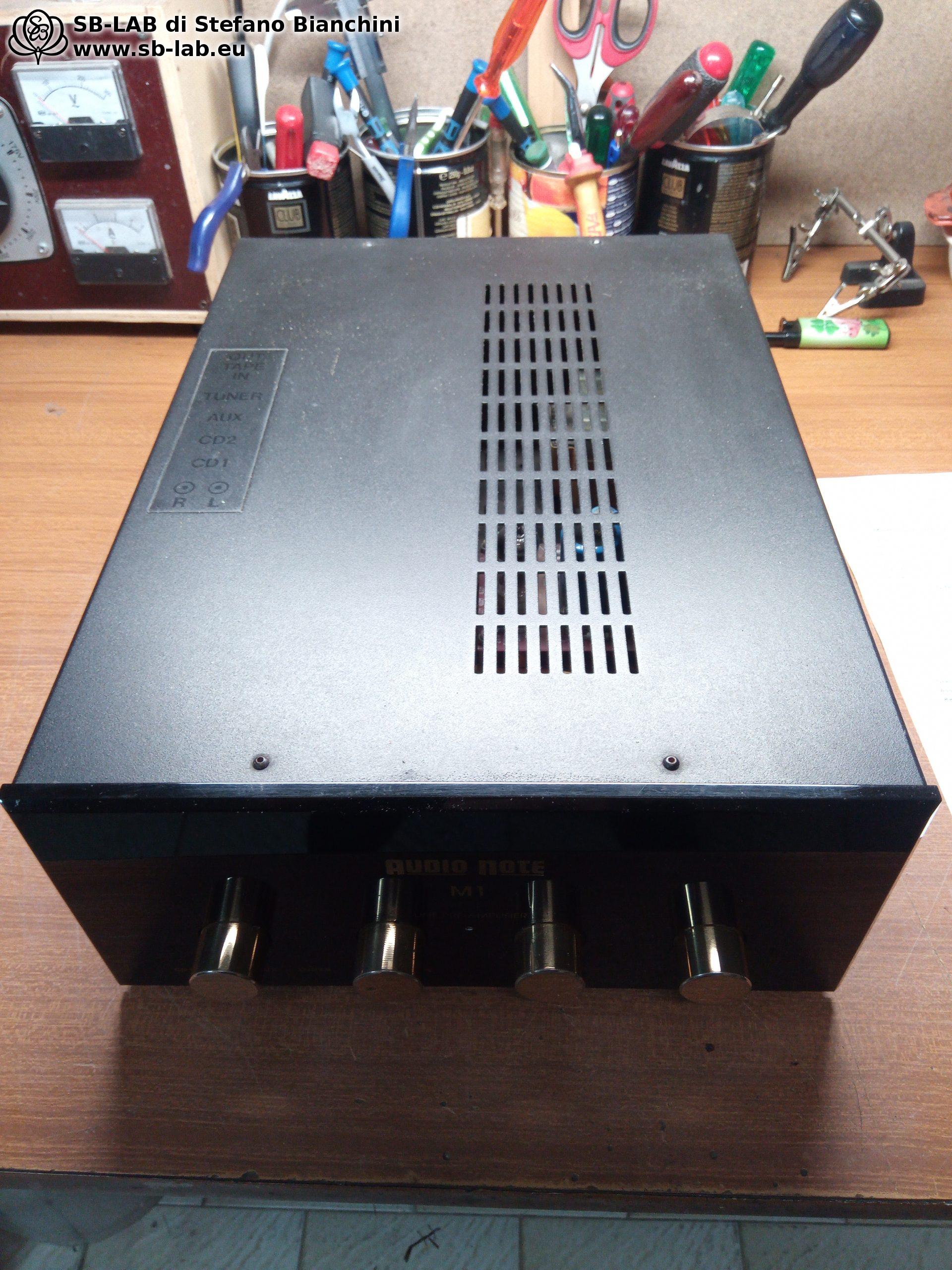
This Audio Note M1 was shipped to me because it had a burned power transformer, which made the unit completely inoperative, and for a general revision of its overall condition. Before carrying out any work, I performed a complete check to rule out collateral damage to the circuitry, which fortunately was not present.
I then removed the original power transformer for a more in-depth inspection. From the very first measurements, an internal short circuit condition was clearly evident. At that point, the only sensible approach was to completely unwind the transformer in order to later build a compatible replacement.
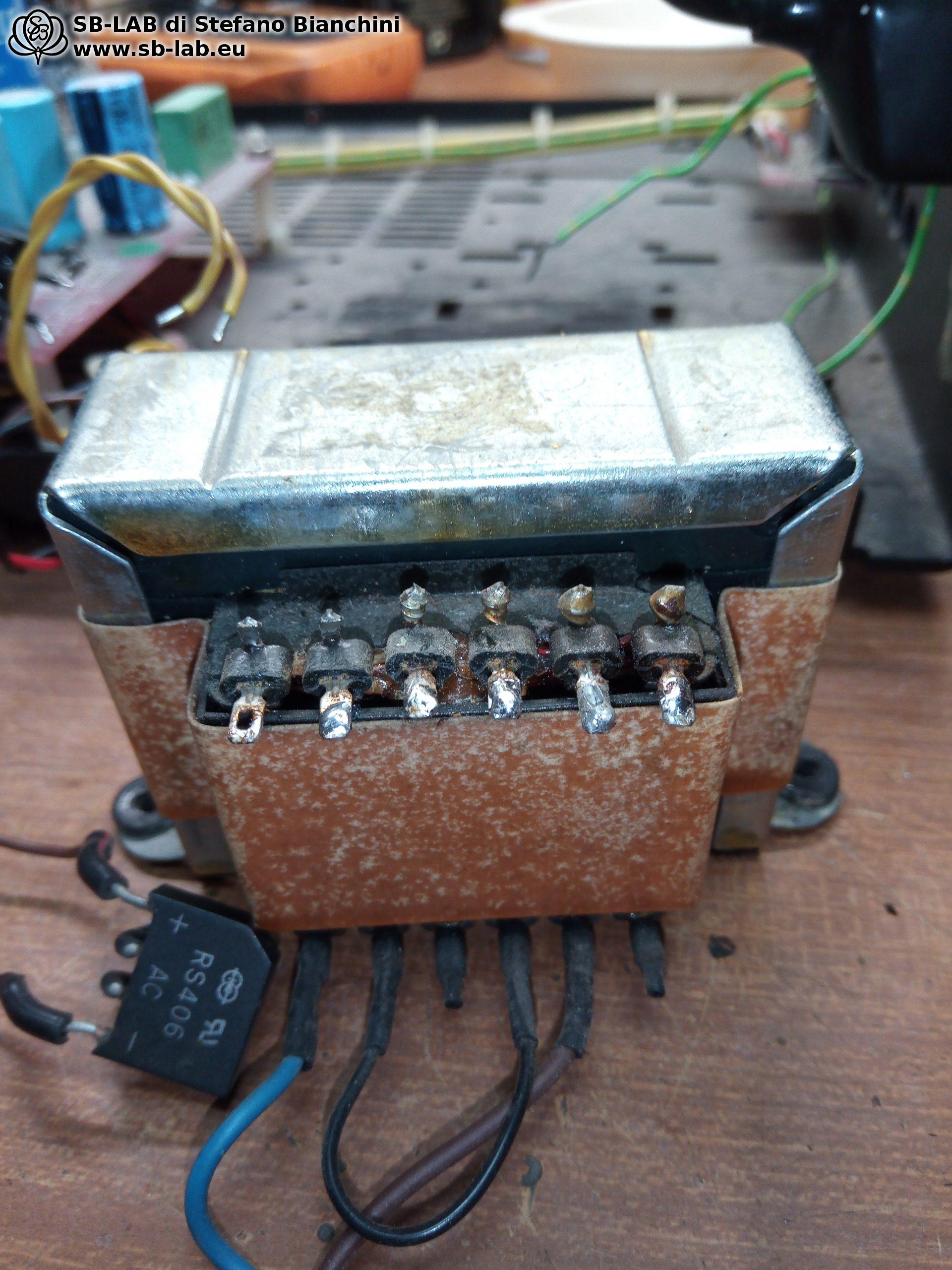
By unwinding it, I was able to identify the cause of the internal short circuit. All windings had been wound one directly on top of the other, without any additional insulation between layers or between the different windings. In practice, the only thing preventing direct contact between turns was the enamel coating of the copper wire itself. The bobbin was also completely filled, packed so tightly that there was not even room for the thinnest additional insulating layer.
A solution like this might work for some time, but in the long run it inevitably exposes the transformer to failures caused by thermal stress, vibration, and ageing of the materials. Once all the internal electrical data had been collected, I therefore decided to redesign a new transformer with the same electrical characteristics, but wound on a core just one size larger than the original. This provided the necessary space to correctly insert insulation layers between the copper windings.
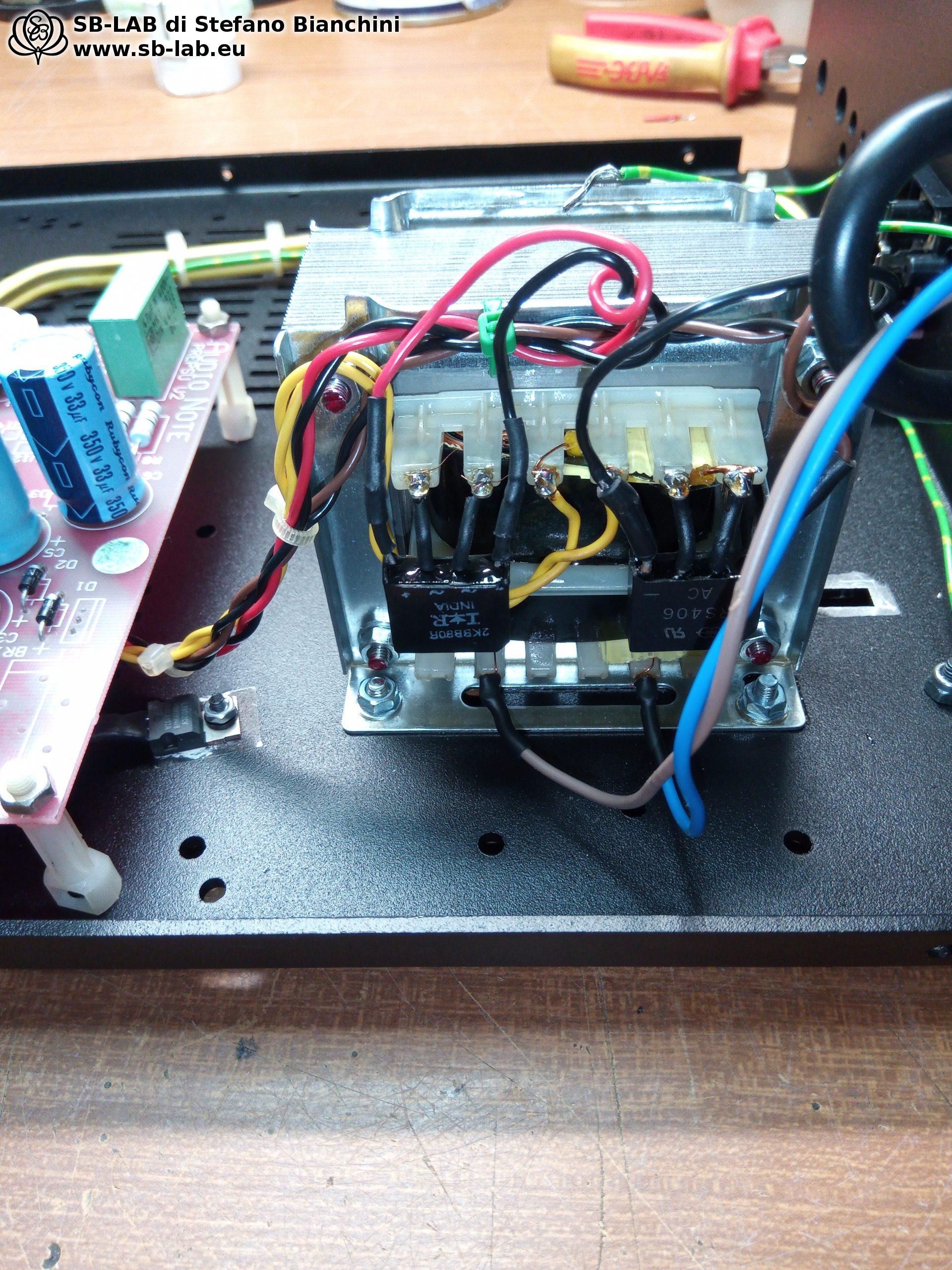
Another significant issue with the original transformer concerned the mechanical arrangement of the windings. The low-voltage secondary, made with a very thick 0.95 mm wire, had been wound on top of the high-voltage winding, which used much thinner 0.12 mm wire. This is a practice that should always be avoided, because during thermal expansion the thicker wire winding inevitably tends to compress the one underneath, with a real risk of mechanical damage over time.
This choice was probably made for practical reasons related to the type of bobbin used, which was fitted with terminals rather than flying leads, but it remains a poor solution. In the new transformer I therefore placed the thick-wire winding more internally, carefully insulated the two conductors going to the terminals, and devoted extra care to winding the high-voltage secondary slowly, to avoid any mechanical stress.
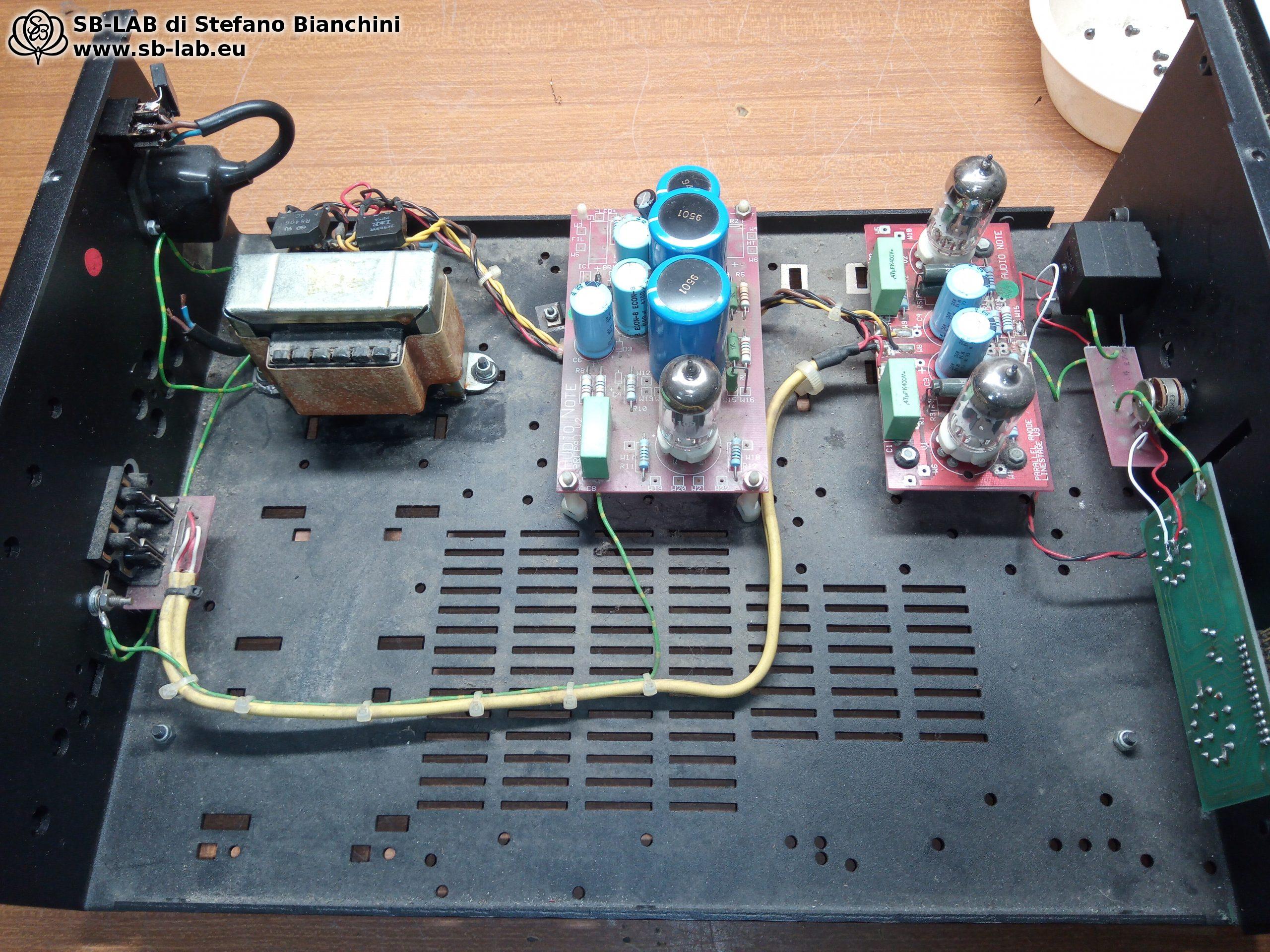
Both the primary winding and the three secondary windings were separated by appropriate insulating layers, minimizing the likelihood that a similar failure could occur again in the future. As shown in the photo, I also thoroughly cleaned the chassis and circuitry, which had accumulated decades of dust.
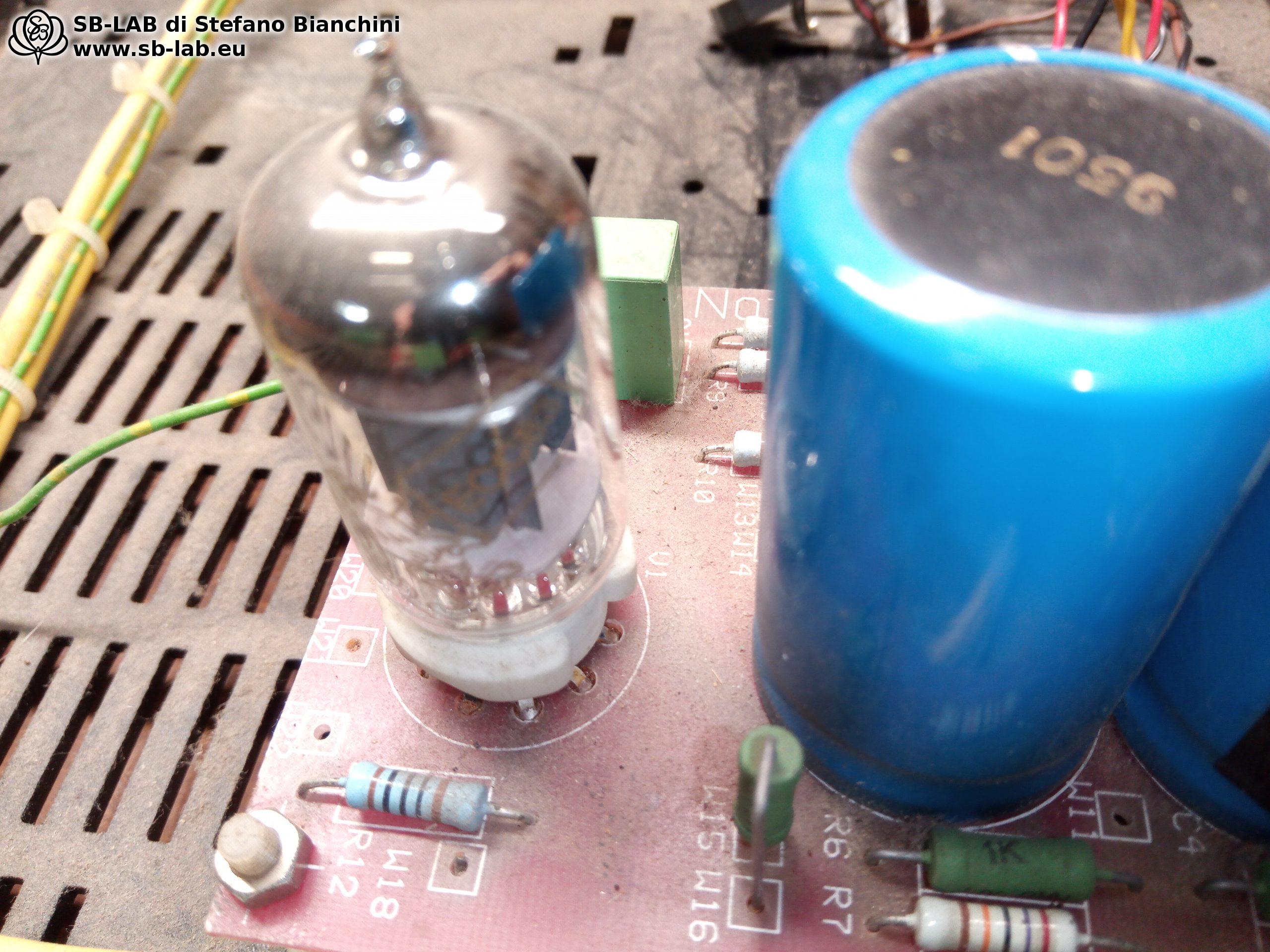
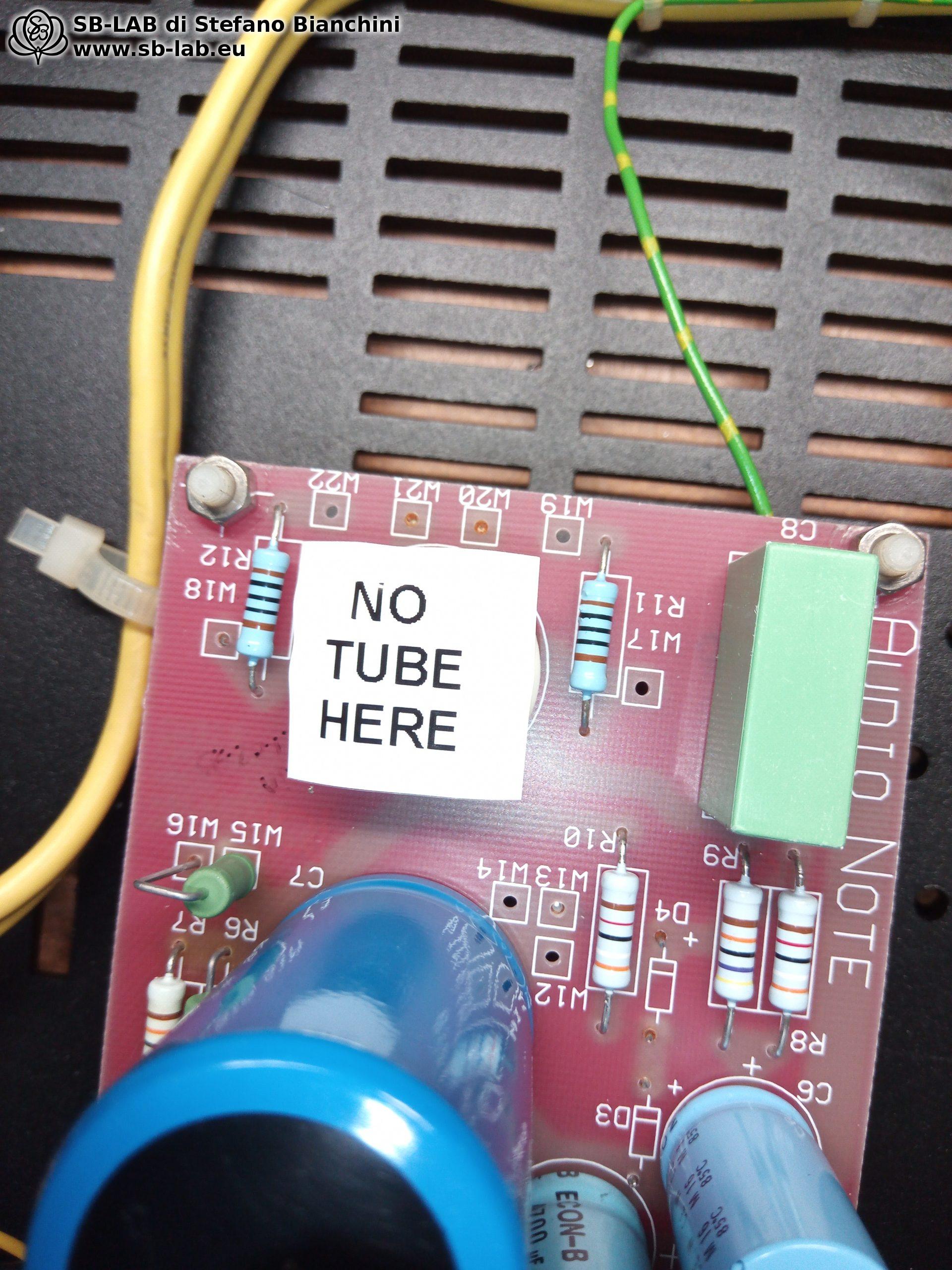
It is precisely by observing the circuitry that one of the most curious aspects of this Audio Note M1 emerges. The very limited information available online states that the unit should use two ECC82 valves, yet there is a third tube socket on the chassis. Some claim that another ECC82 should be installed there, others suggest a 6189, while in this particular unit I actually found an ECC83.
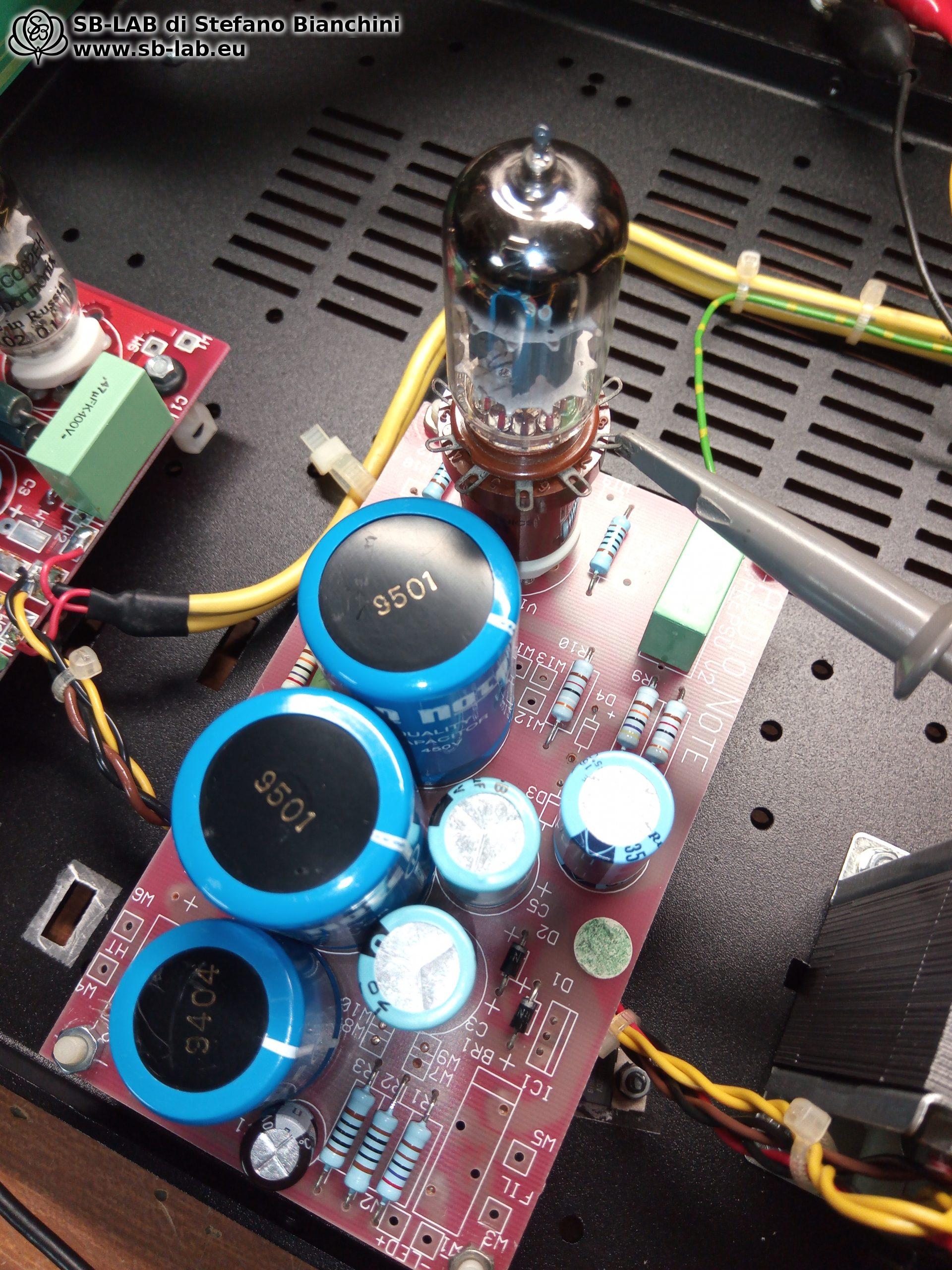
By carefully analyzing the actual PCB layout, however, I could not understand the function of this additional valve. I therefore inserted a test socket and injected signal into both channels, without observing any activity. No oscillation, no significant voltage variation.
Measuring with a multimeter, I found anode voltage present on anodes, grids, and cathodes, but a closer inspection revealed that the grids of the two triodes were connected to resistors R11 and R12, which in turn led to an unconnected pad on the PCB.
The conclusion is quite simple. This unit exists both as a line-only version and as a version with a phono section. In the phono version there is an additional board carrying the RIAA preamplifier, and this double triode most likely functions as an anode voltage stabilizer for the phono section. In the line-only version, the socket is present but electrically inactive, and therefore no valve should be installed.
I therefore removed the useless valve and applied an explanatory label to prevent future misunderstandings. At this point it is hard not to think about how many NOS valves have been wasted over the years by users and technicians who were inattentive or poorly informed. And probably also about how many people have sincerely sworn that they perceived subtle sonic changes when swapping that valve, a valve that, in reality, is not even connected to the circuit.
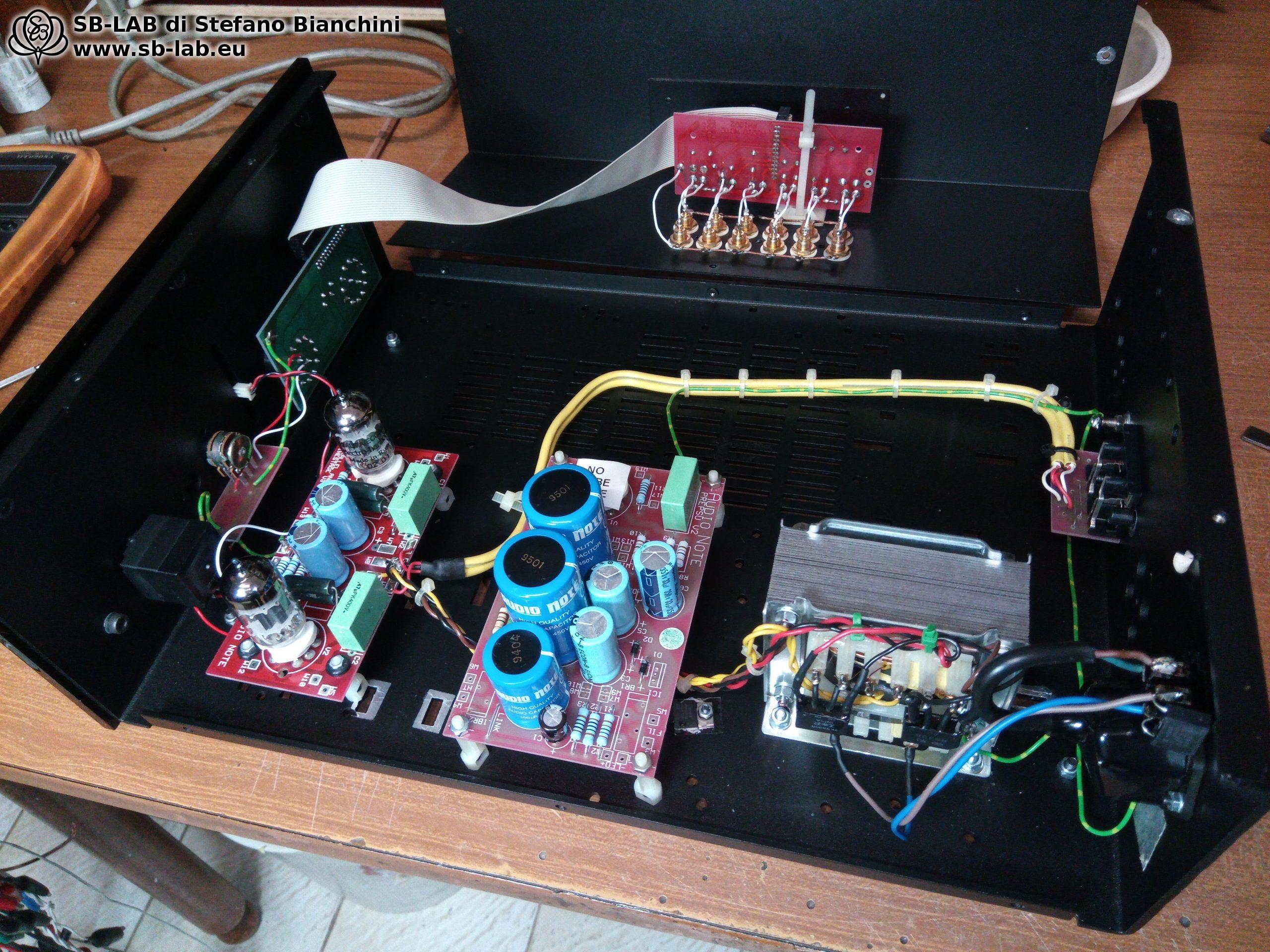
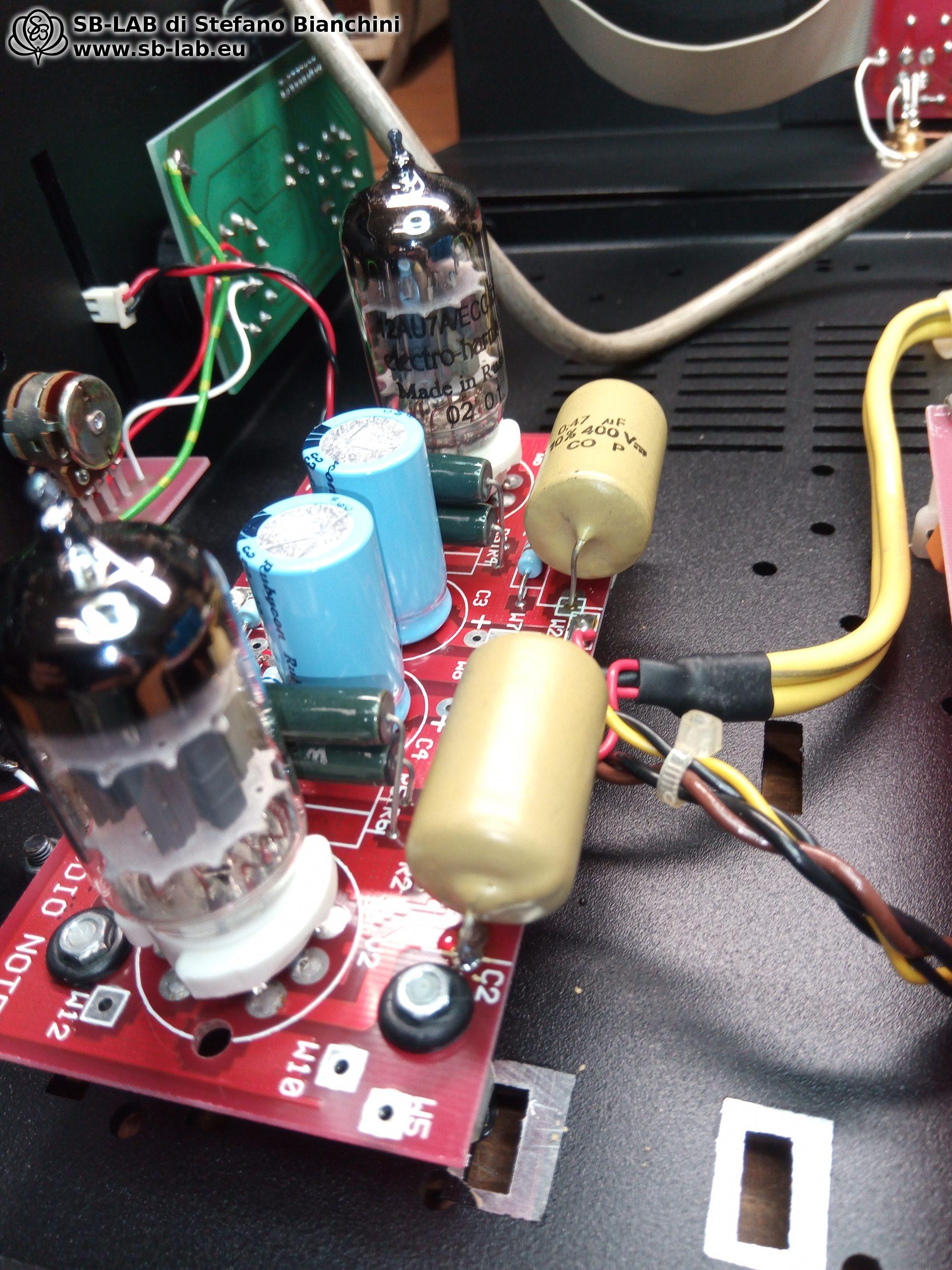
As for the passive components, I measured each electrolytic capacitor individually, because I do not like replacing parts blindly. All of them were still in good condition. I did decide to upgrade the two output capacitors, since the original small polyester capacitors were clearly undersized from a qualitative point of view. I also replaced the pair of ECC82 valves with new ones, restoring the unit to correct and reliable operating conditions.
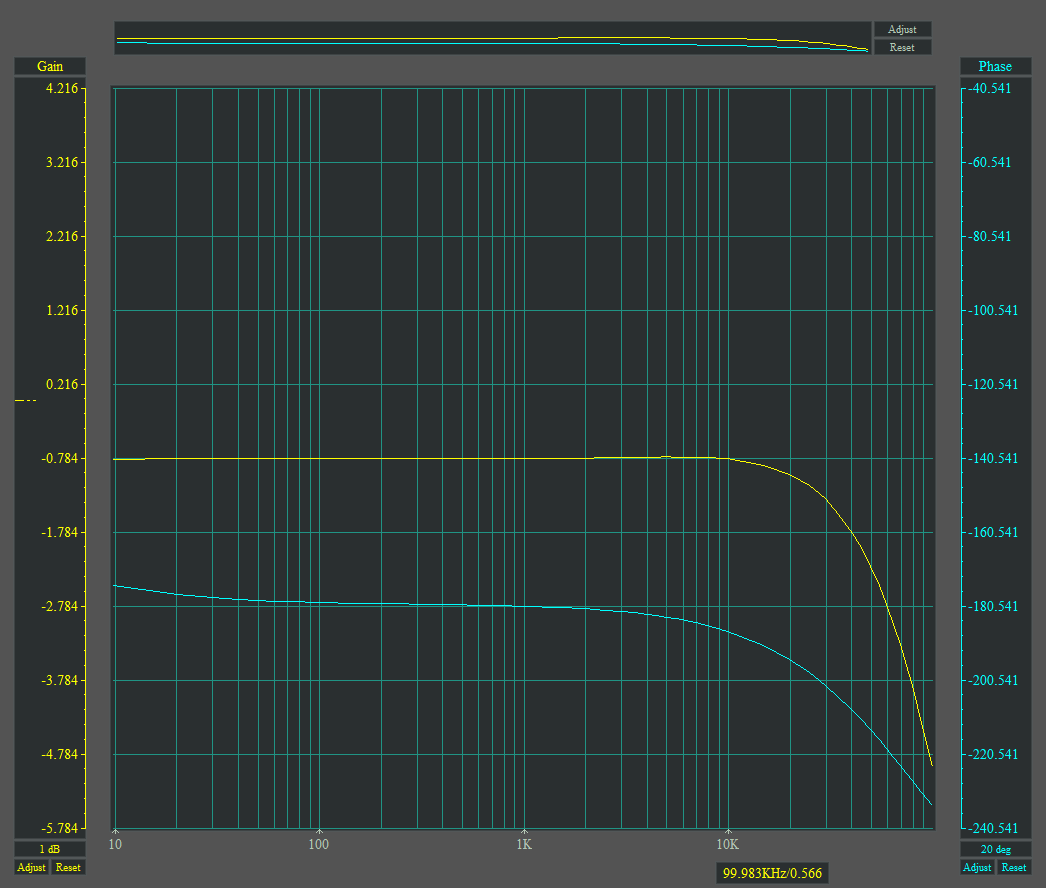
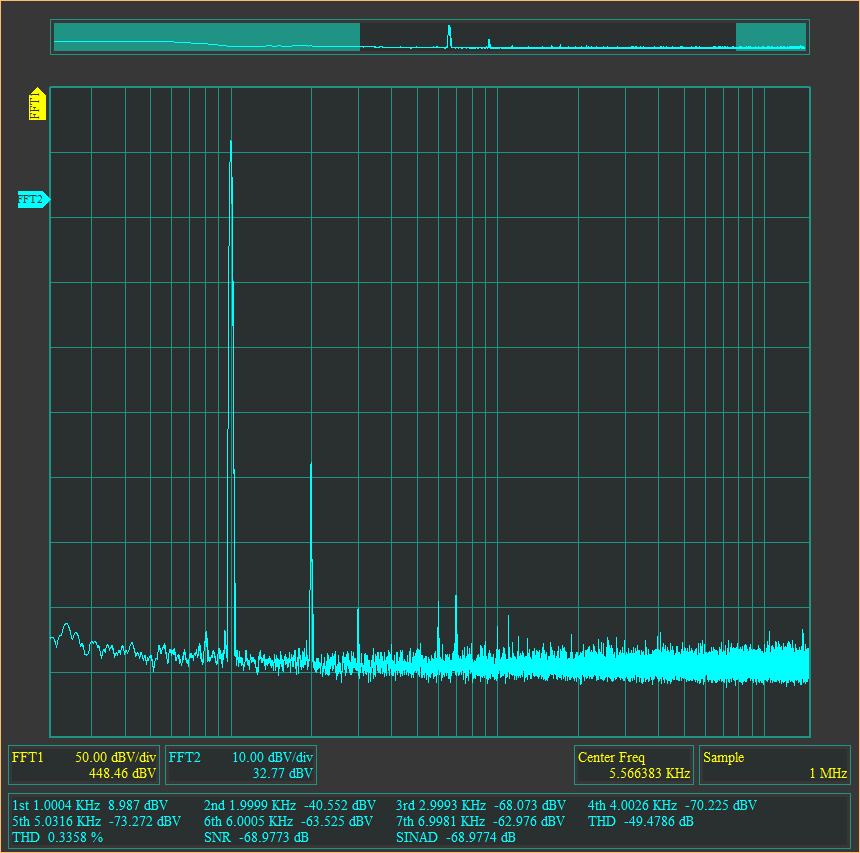
To complete the work, I also carried out a few instrumental measurements, even though this is a simple SRPP stage. The results confirm correct behavior and full consistency with the original design.