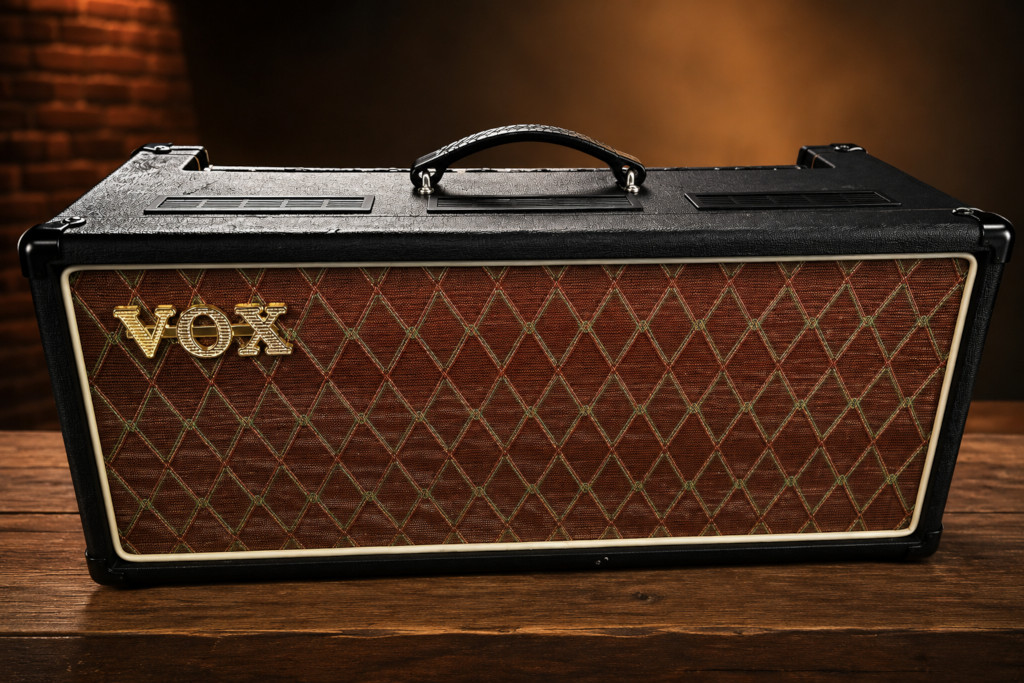
The Vox AC30 is one of the most iconic guitar amplifiers in history. Born in the late 1950s at the British company JMI (Jennings Musical Industries), it helped define what we now immediately recognize as the classic British sound. The original design, based on an output stage using four EL84 tubes, has gone through more than half a century of evolution and numerous modern versions that retain its general concept while adopting different circuits and construction techniques.
In this article I cover two repairs carried out on modern-production Vox AC30 amplifiers, differing both in version and construction. The first concerns an AC30CCH, the head version, which arrived at my workshop because of an intermittent fault that caused the mains fuse to blow apparently at random. Later on, we will look at another version of the AC30, this time in combo configuration with built-in speakers.
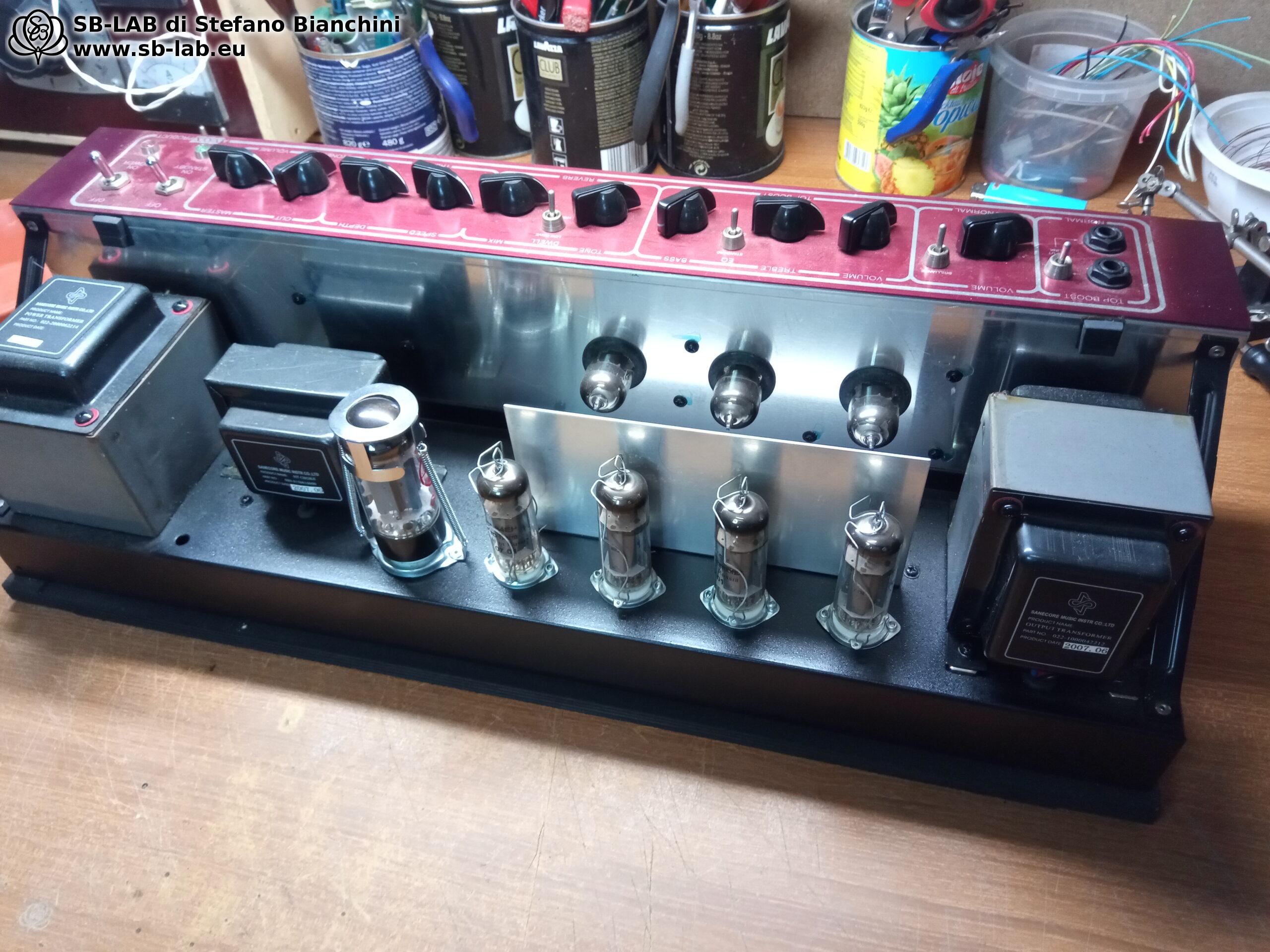
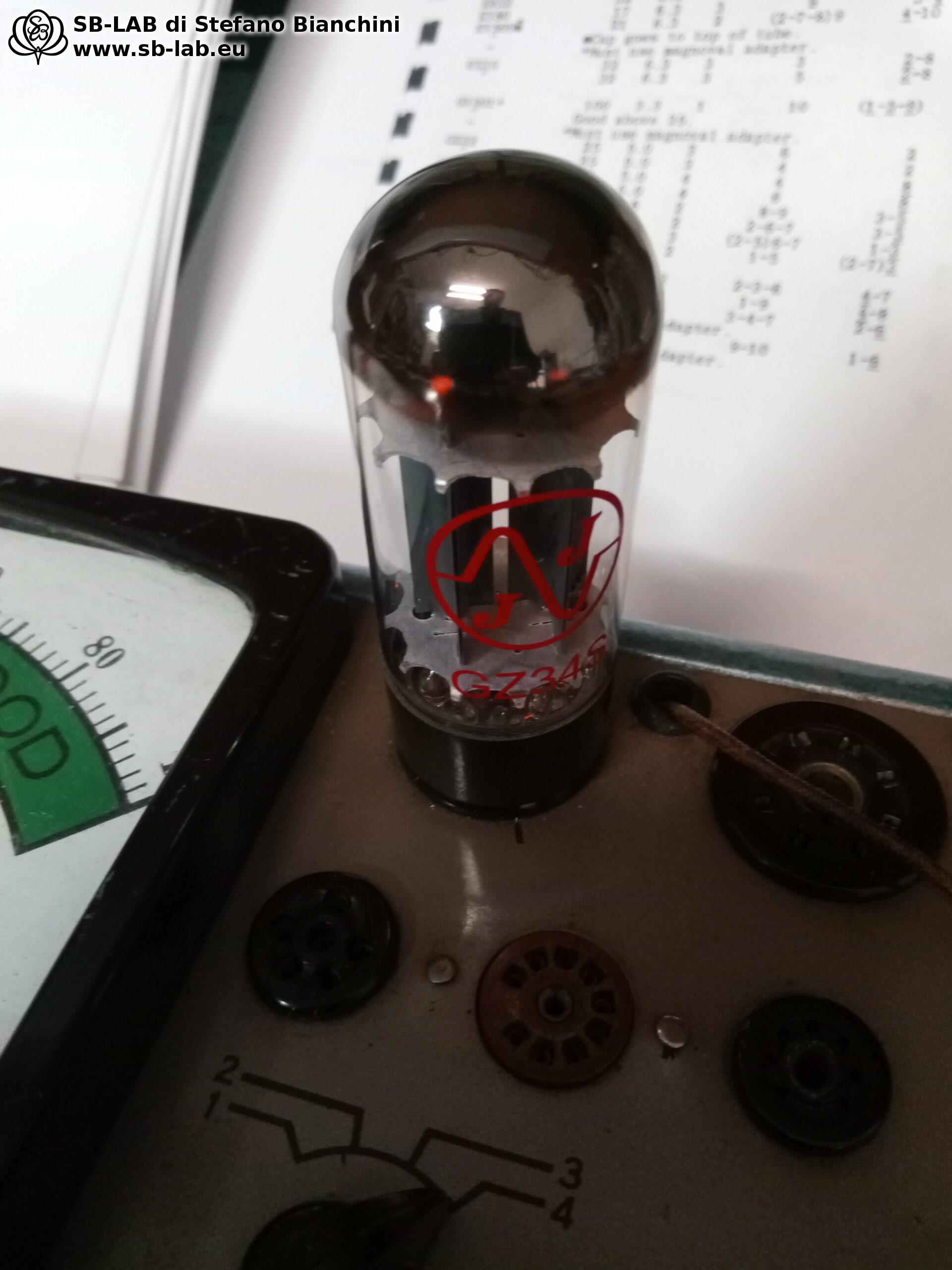
The unit shown in the photographs is therefore a Vox AC30CCH. While checking the tubes, I quickly found something suspicious in the GZ34 used as the rectifier. When testing it on the tube tester, occasional internal sparks could be triggered simply by lightly tapping the glass with a finger. It was therefore an intermittent fault, perfectly consistent with the behavior reported by the owner.
The faulty GZ34 was therefore the main suspect behind the random fuse failures. This type of fault is also a good example of how important tube quality and reliability can be: a rectifier operates under far from gentle conditions, and an internal defect can easily cause overcurrent conditions and apparently inexplicable malfunctions.
I therefore replaced the faulty GZ34 with a new Tung-Sol. Among currently manufactured tubes, it is a brand I am happy to use when I am looking for a reliable and well-made component. In this case, the cost of the new tube was significantly higher than that of the previous one, but for such an important part of the power supply I prefer not to make a choice based solely on price. A reliable rectifier is essential both for the proper operation of the amplifier and to prevent its failure from unnecessarily stressing other components.
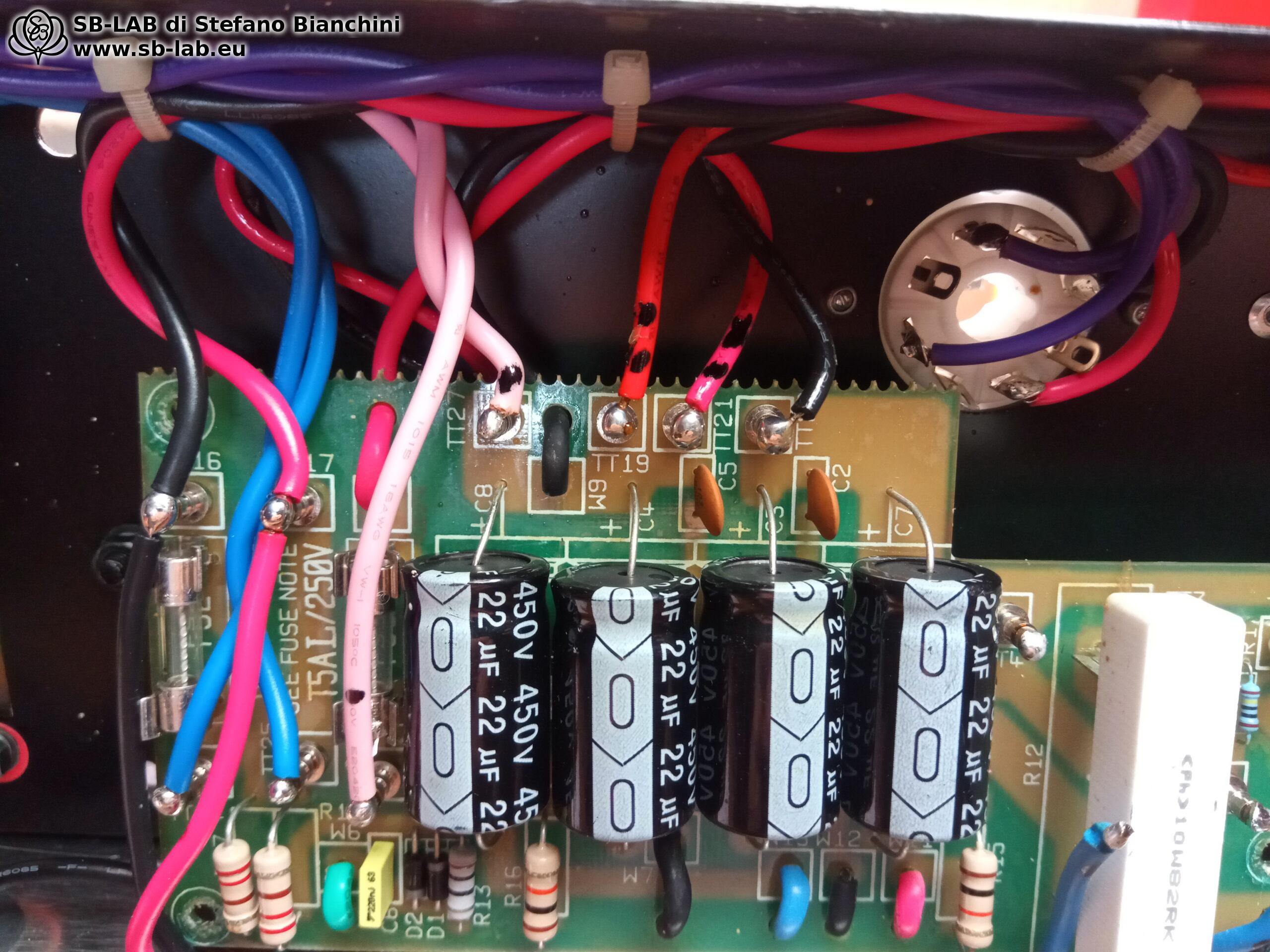
Considering the age of the amplifier, approximately 16 years at the time of the repair, I took the opportunity to check the condition of the electrolytic capacitors as well. Four 22uF capacitors used in the main power supply filtering showed a rather high ESR (Equivalent Series Resistance) value.
These components operate under high voltages and, over the years and after countless thermal cycles, they can inevitably deteriorate. The way the amplifier is used can also contribute to stress on the power supply: for example, switching the standby off immediately after power-up subjects the circuit to different conditions compared with allowing a short warm-up period first. In this case, however, the measurements were quite clear, and I preferred to replace the capacitors before further deterioration could lead to more noticeable problems.
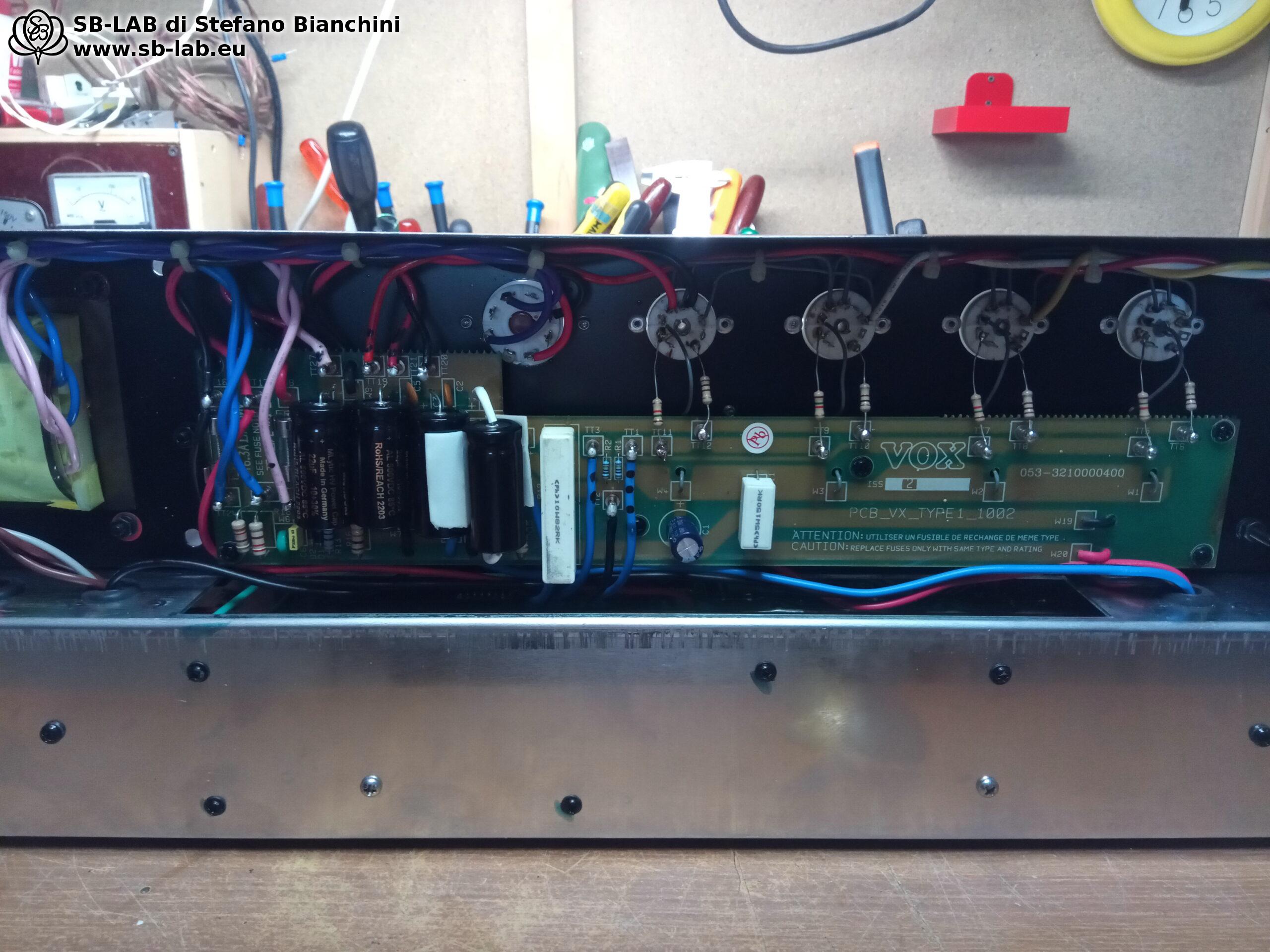
For the replacement I chose Mundorf M-Lytic capacitors. These are capacitors commonly associated with the Hi-Fi sector as well, but that does not mean they are out of place inside a guitar amplifier. In older tube equipment it was normal to find robust and generously rated power supply components, whereas in many modern products cost and physical size inevitably become important factors when selecting components.
Of course, the “vintage sound” of an amplifier should not be attributed to a single capacitor: many other aspects of the circuit, construction and components differ between a vintage AC30 and a modern one. Some modern versions also include circuit solutions and active components that simply did not exist in the original models. My goal in this case was therefore not to turn a modern AC30 into a vintage AC30, but to restore the amplifier using reliable components suitable for the job they are required to perform.
The Mundorf M-Lytic capacitors chosen as replacements are slightly larger than the original electrolytics. It was therefore necessary to install them with a slight overlap, making use of the available space inside the chassis. From an aesthetic point of view this may not be the most elegant arrangement possible, but electrically and mechanically the capacitors fitted without any particular difficulty and without interfering with the rest of the amplifier. In a repair of this kind, I consider it far more important to use a suitable component and install it correctly than to choose an inferior replacement simply because it has exactly the same dimensions as the original. Once the repair was completed, the amplifier was of course subjected to the usual functional tests.
Vox AC30 combo
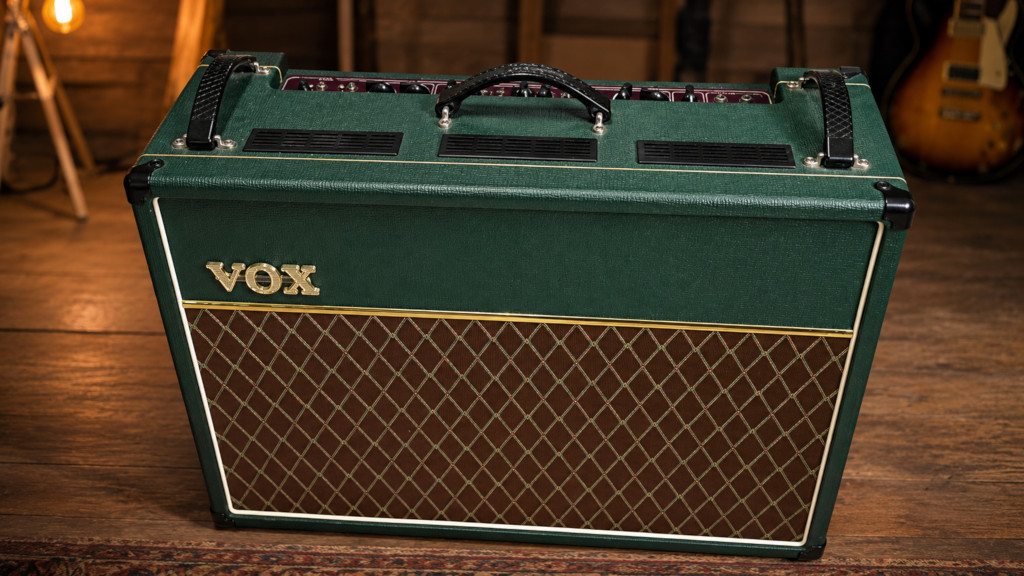
The second Vox AC30 covered in this article is a combo version, with the speakers built into the cabinet. In this case, the fault reported by the customer was that the clean channel was not working, while the rest of the amplifier appeared to be operational.
As always, before concentrating exclusively on the reported symptom, I carried out a general inspection of the amplifier and its tubes. It immediately became apparent that one of the ECC83 tubes had an open heater and was therefore completely dead. A fault of this kind can naturally cause the complete loss of part of the preamplifier and explained why the channel was not working.
During the inspection, however, I also found a second problem, less obvious but equally important. Under one of the output tube sockets there was a typical cold solder joint, recognizable by the characteristic small ball of solder that had failed to bond properly to the terminal. The electrical contact was therefore unreliable, and this condition had eventually compromised the operation of one of the EL84 tubes in the output stage, which was by then worn out.
This type of fault is a good example of why it is important not to simply replace the tube that appears to be defective. If the cause of the problem is not identified, there is a risk of installing new components while leaving the fault that damaged them completely unresolved.
I therefore properly resoldered the defective joint, checking the socket connection and making sure there were no other intermittent contacts in the affected area. I then replaced the ECC83 with the open heater and installed a new set of EL84 tubes, restoring the output stage correctly without leaving tubes with excessively different characteristics operating together.
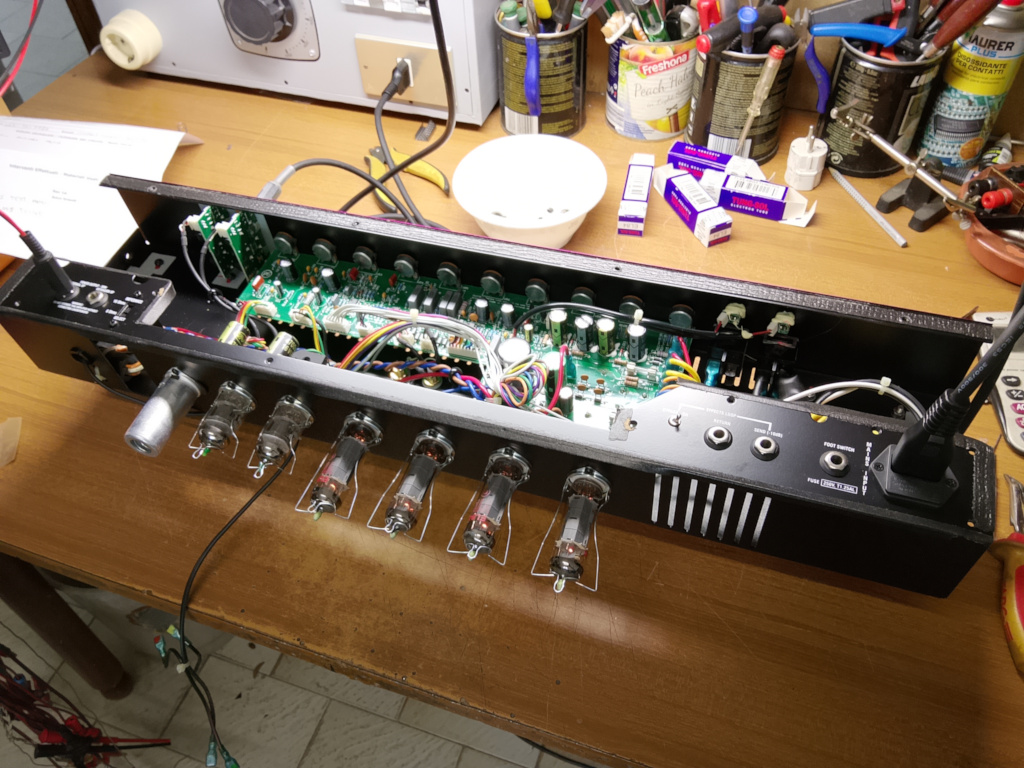
After the repair, I carried out the usual electrical and functional checks: both channels were once again working correctly and the output stage was operating normally. The amplifier was then left running and tested to make sure that the fault did not reappear and that operation remained stable even after reaching its normal operating temperature.
For the final test I also wanted to do something a little different from the usual instrument-based checks on the workbench. Since I am not a guitarist, I can easily check voltages, signals, power output, distortion and the electrical behavior of the amplifier, but when it comes to judging how it actually responds in the hands of someone who really knows how to play the instrument, it is certainly better to rely on someone more qualified than I am in that field.
I therefore took the Vox AC30 to Erede del Sound, a musical instrument and gear shop in Sassuolo, where it could be tested with a real guitar and I could also get practical and acoustic feedback on the result of the repair. The shop deals in guitars, amplifiers, effects and other musical equipment, both new and used, with options to buy, sell, trade and part-exchange gear.
For anyone in the area who would like to take a look at guitars, amplifiers or pedals, Erede del Sound is located at Via Refice 62 in Sassuolo (MO). In my case, it was above all the ideal place to do what I cannot fully simulate on the workbench: put the amplifier in the hands of someone who really knows how to play it and verify that, in addition to showing the right numbers on the test equipment, it also had the behavior and sonic response expected from an AC30. In the two videos below you can see and hear the amplifier during this final test.