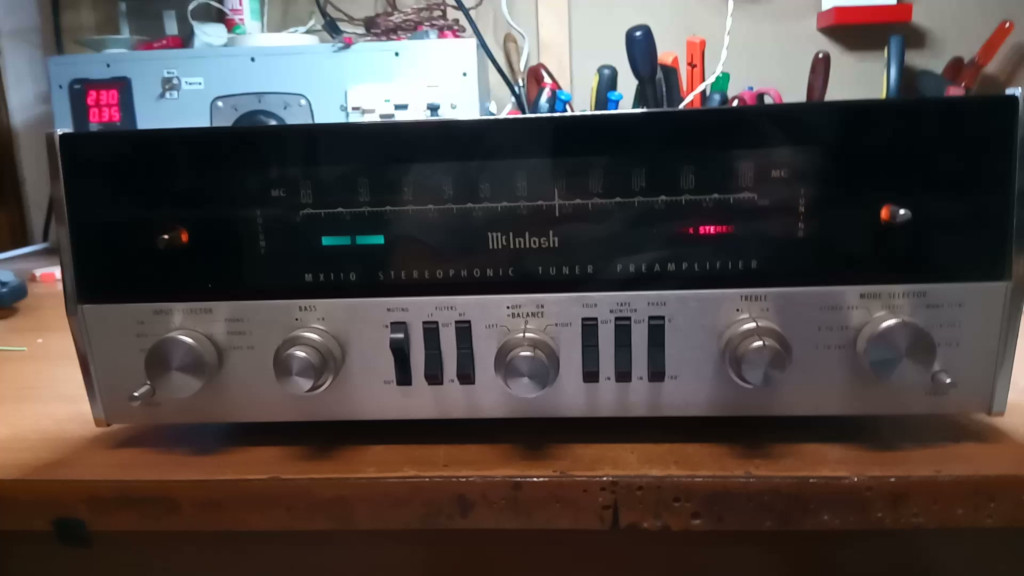
The McIntosh MX110 is a tube preamplifier and FM tuner produced in the 1960s, considered one of the most iconic and sought-after pieces by collectors and hi-fi enthusiasts. Renowned for its build quality and excellent sound performance, the MX110 combines a highly sensitive FM tuner with a warm-sounding, refined tube preamplifier — one of the finest examples of McIntosh engineering from that era.
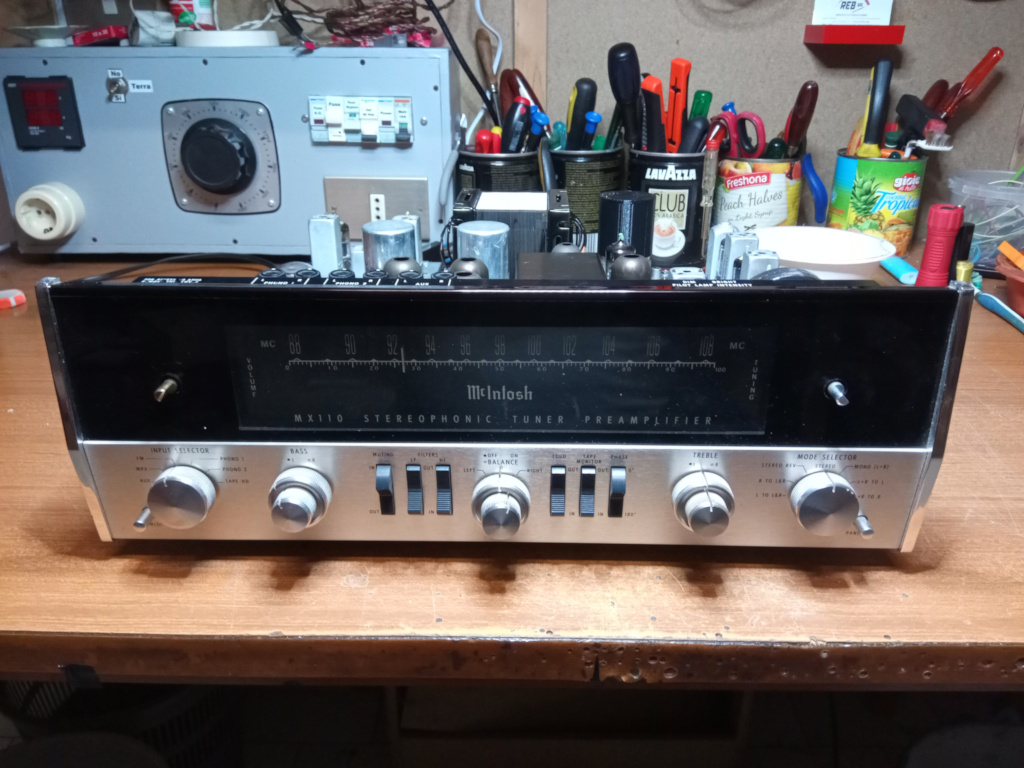
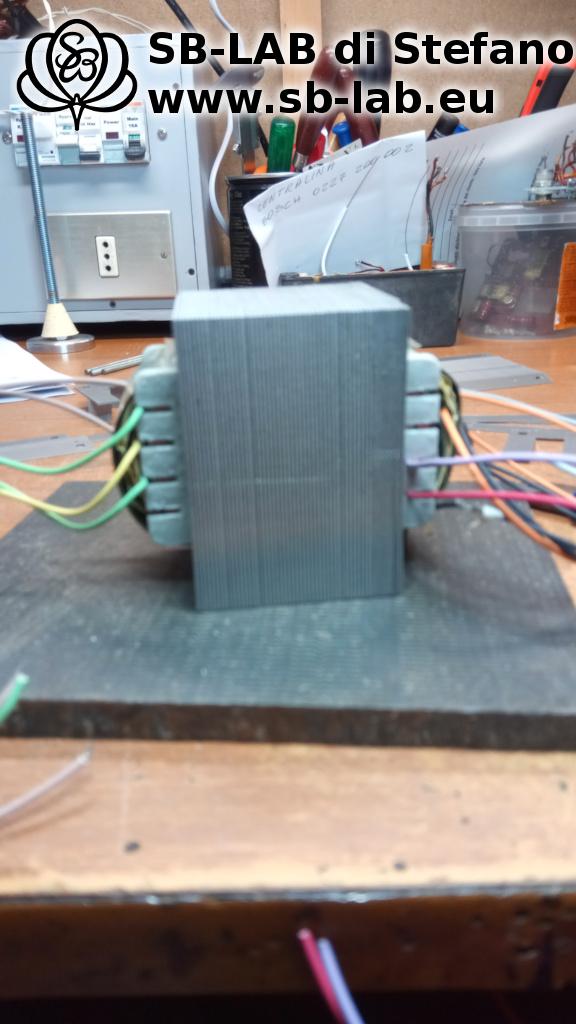
Recently, one of these tuners was brought to me with a serious problem: the power transformer was completely burned out. The original transformer was encased in a small metal can and potted in tar. Fortunately, the client had already removed the transformer from the tar, which made my job a bit easier. My work began by disassembling the transformer, lamination by lamination, and then counting the windings.

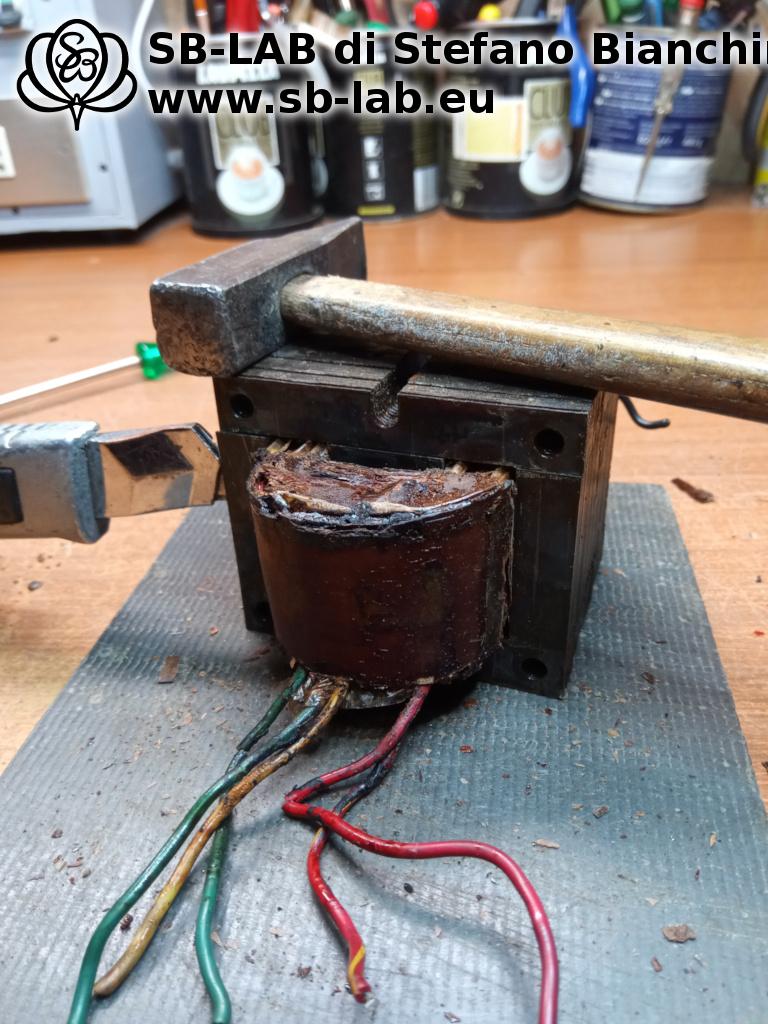
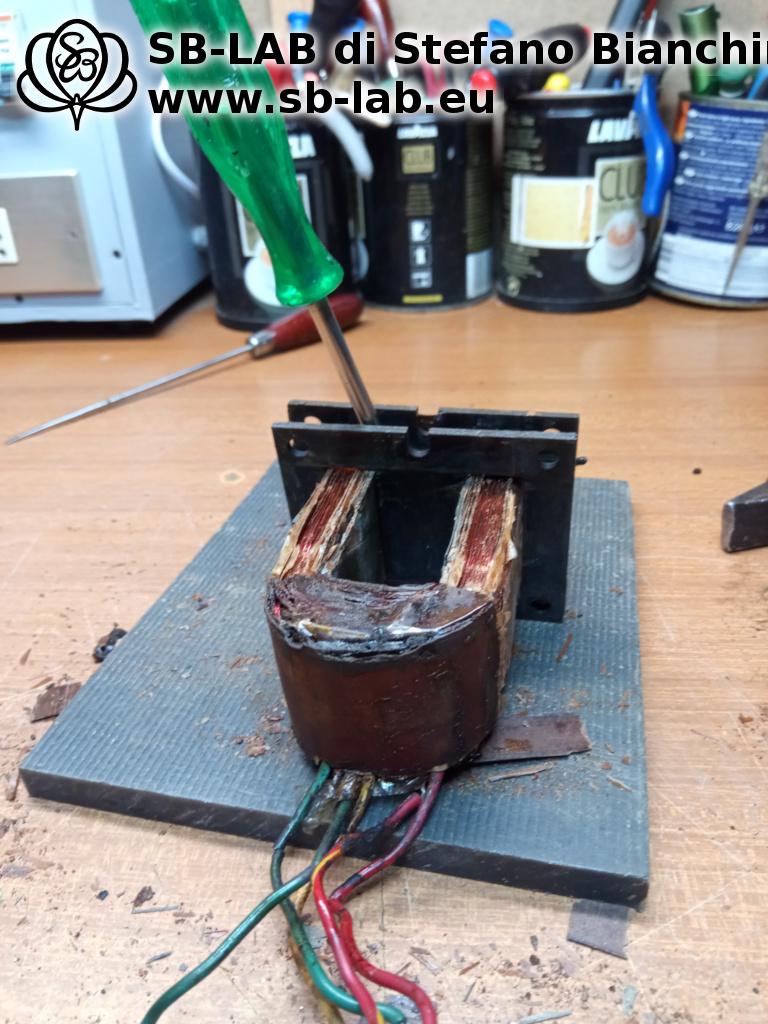
The magnetic core was a non-standard type, so I had to make a custom resin bobbin. I then recalculated the transformer, adapting the primary winding to operate at 230 V instead of the original 115 V, as requested by the owner. The very rectangular form factor made the job challenging — all the copper had to fit inside the lamination window — but with patience and precision I successfully completed the winding.

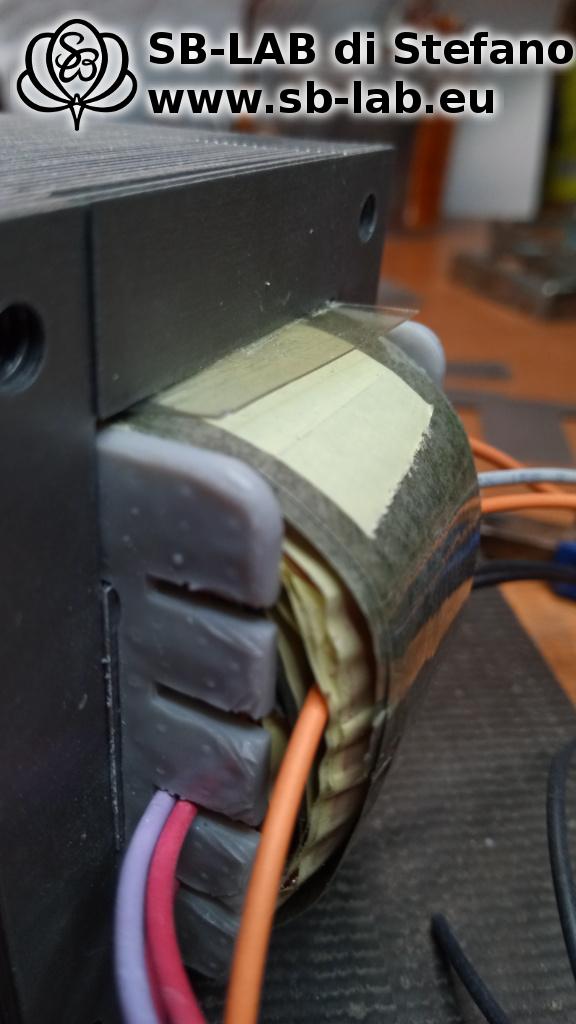
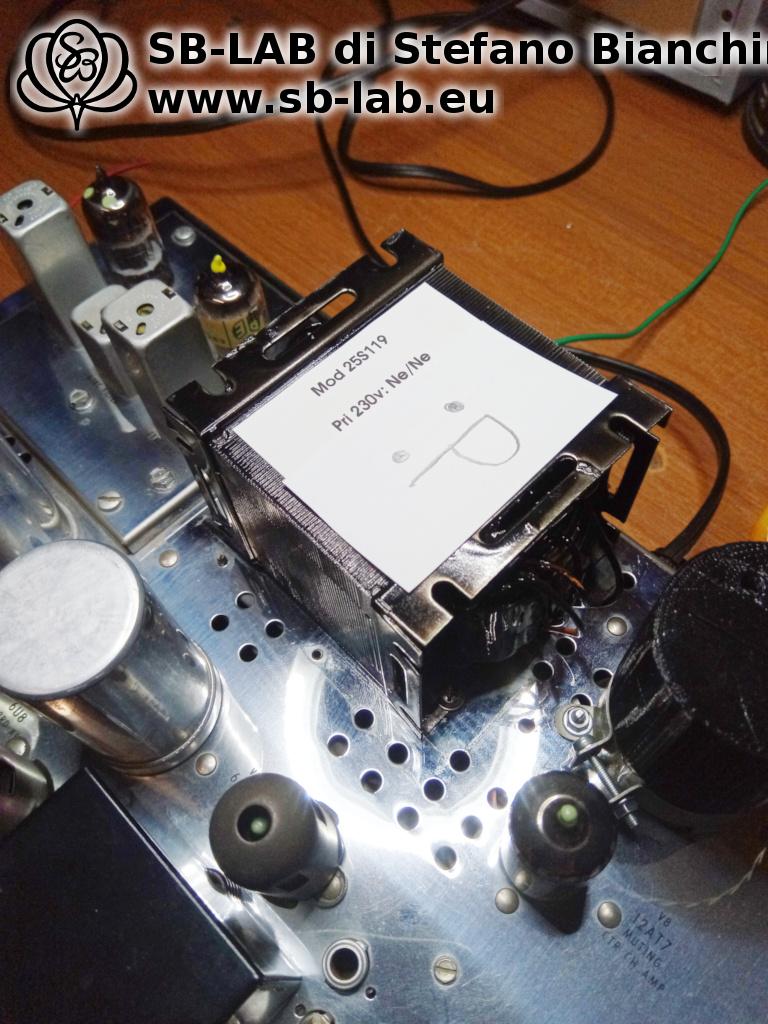
After rebuilding the transformer, I installed it in the unit and reconnected all secondary windings. I then carried out a detailed inspection of the circuit to look for possible causes of the original failure. I replaced nearly all the electrolytic capacitors and removed the old selenium rectifier, which was likely responsible (or partly responsible) for the transformer failure.
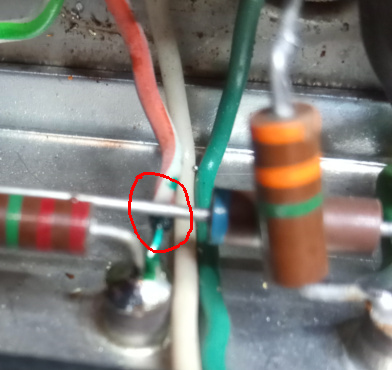
Before powering up the tuner, I supplied the B+ circuit from my bench power supply with the tubes off, to check for abnormal current draw. Indeed, I detected excessive current and a resistor started to smoke. Using a thermal camera, I located a hot spot and discovered that the lead of one resistor was touching another line, causing a short. I corrected its position, which solved the problem.
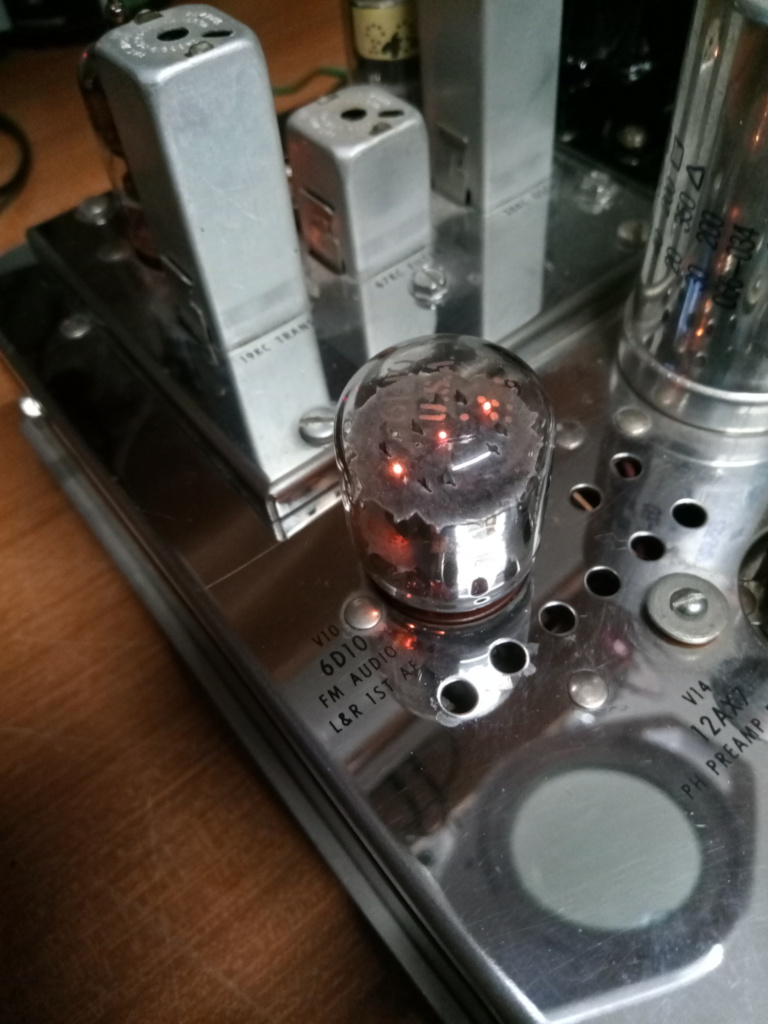
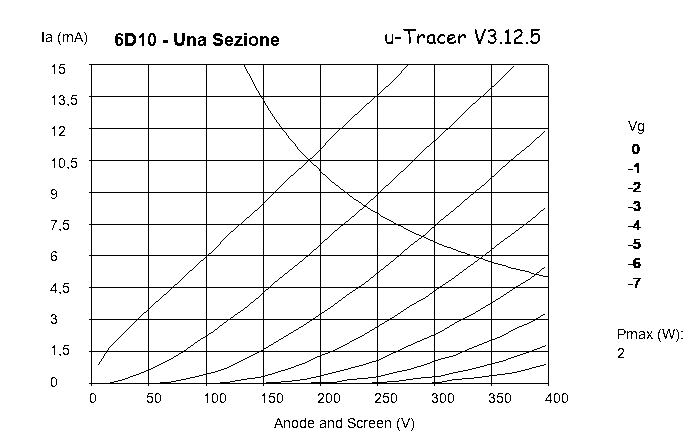
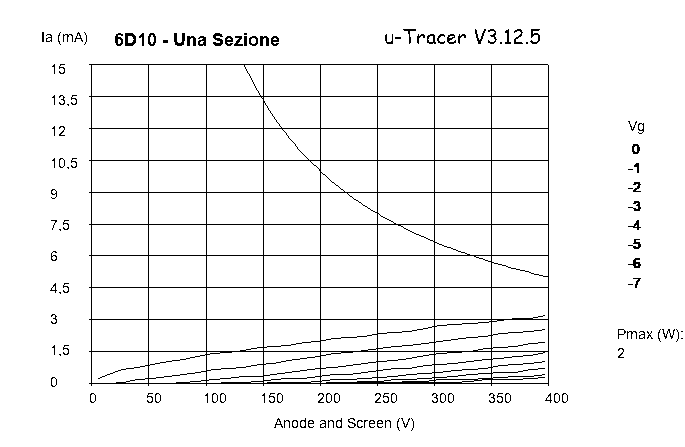
Next, I tested all the tubes using my uTracer and found several completely worn out — including one 6D10 that was totally dead. I also found an ECC82 incorrectly installed in a socket meant for an ECC83.
Here are the two uTracer plots: on the left a brand-new 6D10, and on the right the worn-out one…
Finally, I solved an issue with the stereo indicator lamp, which was not working. Contrary to what is often stated online, it wasn’t a 6.3 V / 2 W bulb — with those, the light was too dim even when manually biasing the driver transistor. I believe the original lamp was 3 V. Since I didn’t have a suitable bayonet 3 V bulb, I replaced it with a white LED and made a small circuit modification, achieving an excellent result right away.
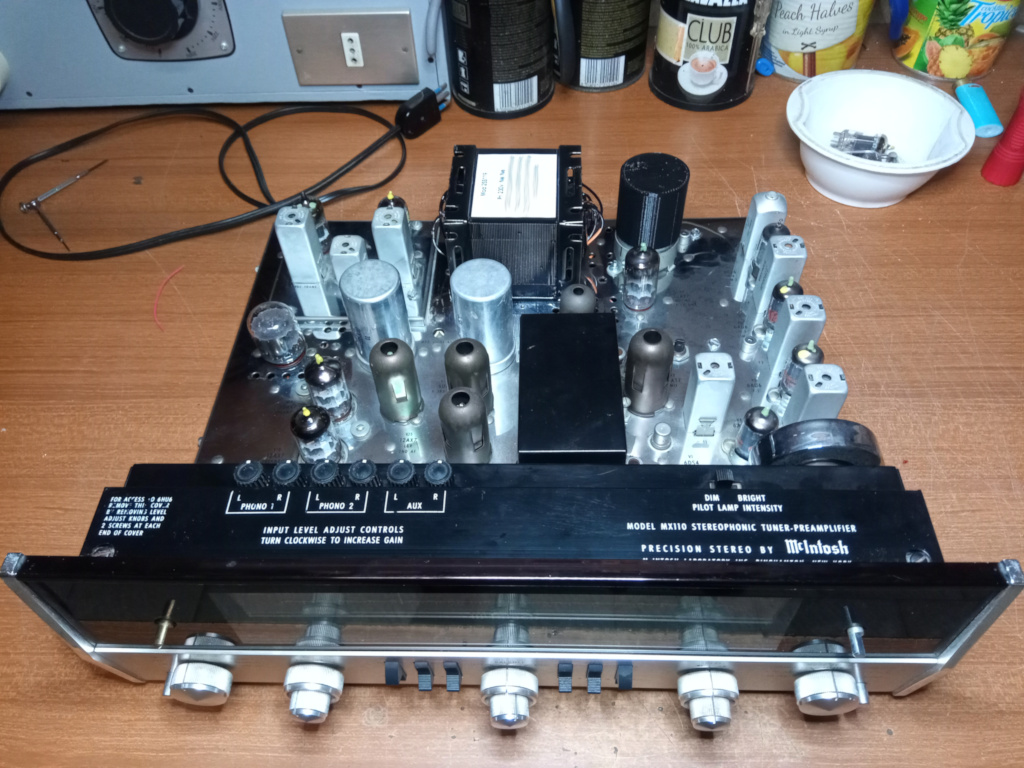
I also designed and 3D-printed a protective cover for a capacitor can I replaced: the original (faulty) one was wrapped in a cardboard sleeve, necessary because the case sits at 83 V. After the restoration was complete, the McIntosh MX110 was back to perfect working order — ready to deliver many more years of music.
If you also own a McIntosh MX110 or another vintage unit that needs servicing or restoration, don’t hesitate to get in touch — I’ll be happy to bring it back to life with the utmost care and expertise.