Conrad-Johnson is one of the historic names in American tube Hi-Fi and, over the years, has produced numerous amplifiers that have become true classics among high-fidelity enthusiasts. Among these are the Conrad-Johnson MV50 and the later MV55, two stereo tube power amplifiers belonging to the same design family and sharing a relatively simple circuit philosophy, the use of EL34 output tubes, and a power output of approximately 45 watts per channel.
The Conrad-Johnson MV50 was introduced in 1985 as an evolution of the earlier MV45. The circuit used two 5751 tubes in the input stage, two 6FQ7 tubes, and four EL34 tubes in the output stage, with dedicated regulated power supplies for the voltage amplification and phase inverter stages. Rated output power was 45 watts RMS per channel.
Over the years, the design continued to evolve through the MV52, eventually leading to the Conrad-Johnson MV55 in 1995. The latter retained the four EL34 tubes and 45 watts per channel in ultralinear configuration, but introduced several circuit changes and a new input section based on 12AX7 and 6SN7 tubes. The MV55 could also be configured for triode operation, reducing output power to approximately 22 watts per channel. Conrad-Johnson also retained the unusual choice, already introduced with the MV52, of using polypropylene capacitors in the power supply filter and main energy storage section instead of conventional electrolytic capacitors.
Although separated by approximately ten years of development, the MV50 and MV55 therefore retain a clear technical relationship and are good examples of Conrad-Johnson’s design philosophy during that period. These amplifiers were built according to principles very different from much of today’s electronics and, when properly maintained, can still deliver extremely interesting performance. In contemporary reviews and later retrospectives, the MV family is remembered above all for its musicality and particularly rich midrange.
Naturally, these amplifiers are now several decades old. Failures, deteriorated components, bias problems, worn-out tubes, noise, hum, loss of power, or malfunction of one of the two channels do not necessarily mean that the unit has reached the end of its useful life. Accurate instrumental diagnosis often makes it possible to identify the actual problem and carry out repairs while preserving as much of the original design as possible.
In this article, we will look at two real cases handled in the SB-LAB workshop: first the repair of a Conrad-Johnson MV50 and then that of a Conrad-Johnson MV55. Two amplifiers that are very similar in philosophy, yet different enough to make it interesting to see how the design evolved over the years.
If you own a Conrad-Johnson MV50, MV52, MV55, or another Conrad-Johnson tube amplifier that requires repair, servicing, or inspection, you can contact SB-LAB. Before replacing components indiscriminately, it is always preferable to carry out measurements and checks on the circuit, identify the real cause of the fault, and replace only what is actually necessary.
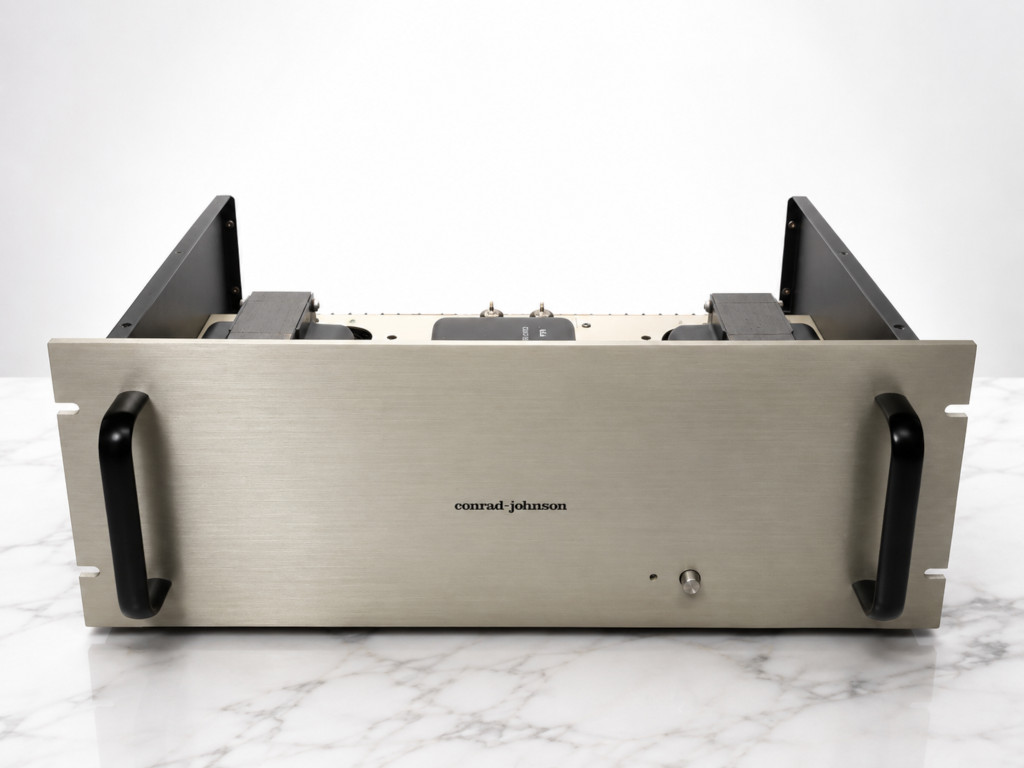
This Conrad-Johnson MV50 arrived at my workshop after a rather serious failure. The amplifier had suddenly stopped working and the owner had also noticed a distinct smell of burning. Once I opened the unit and began checking it, the main problem turned out to be one of the output transformers, which was damaged beyond repair.
In cases like this, it is difficult to determine with absolute certainty what initial event caused the damage. A failed EL34, excessive idle current, or a fault in the bias circuit can subject the output transformer to abnormal operating conditions and, in the worst cases, cause its destruction.
Diagnosis and disassembly
The first step was therefore to remove the failed output transformer and carefully check the rest of the power amplifier. The problem was not limited to the transformer: inside the amplifier there were also several resistors that had deteriorated due to heat and were no longer suitable to remain in place.
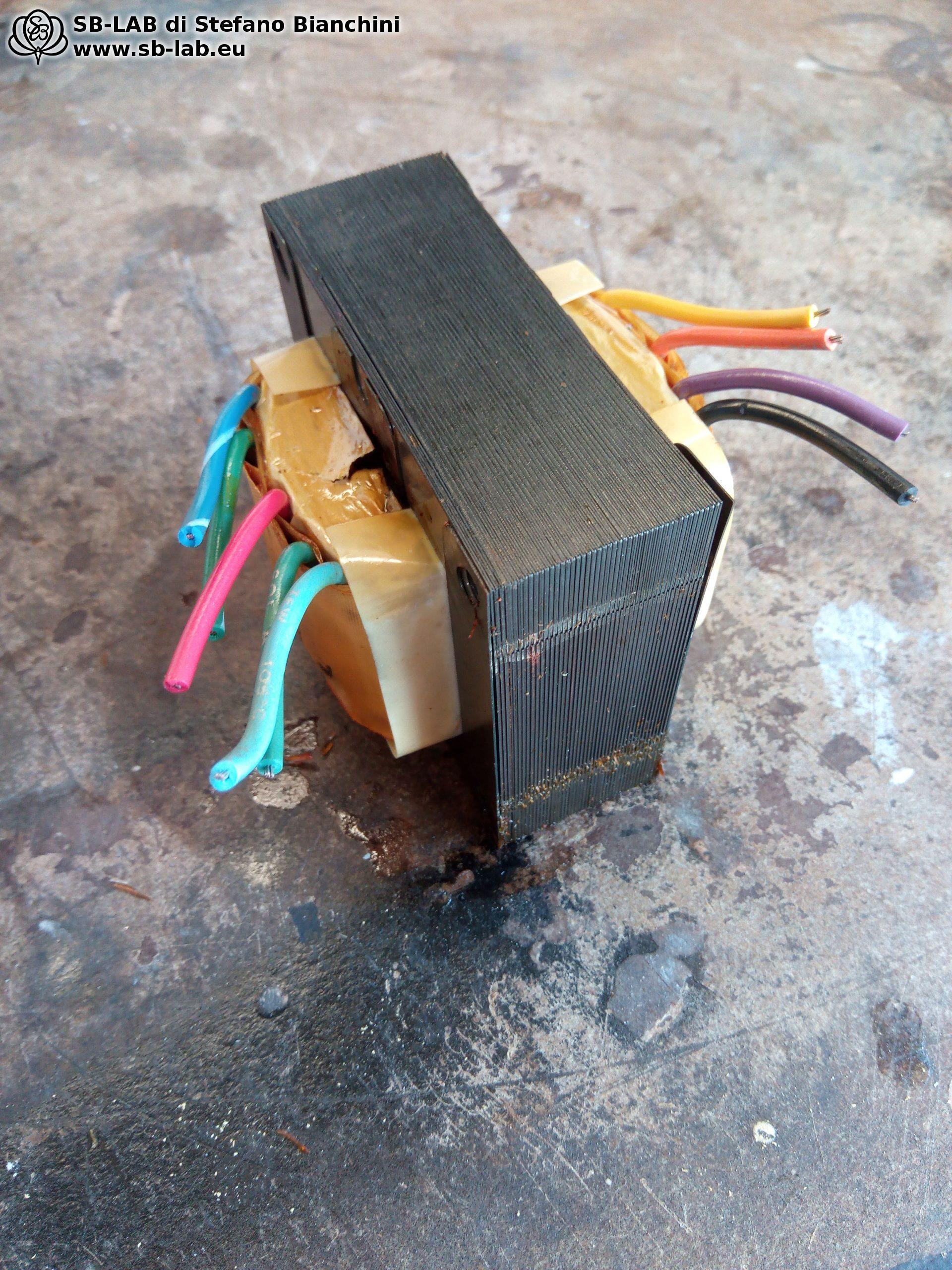
At this point, since a new output transformer had to be built anyway, I decided to replace the complete pair. This way, both channels would operate with transformers having the same electrical and construction characteristics, avoiding the combination of a newly manufactured transformer with an original unit that was already several decades old.
Two new output transformers
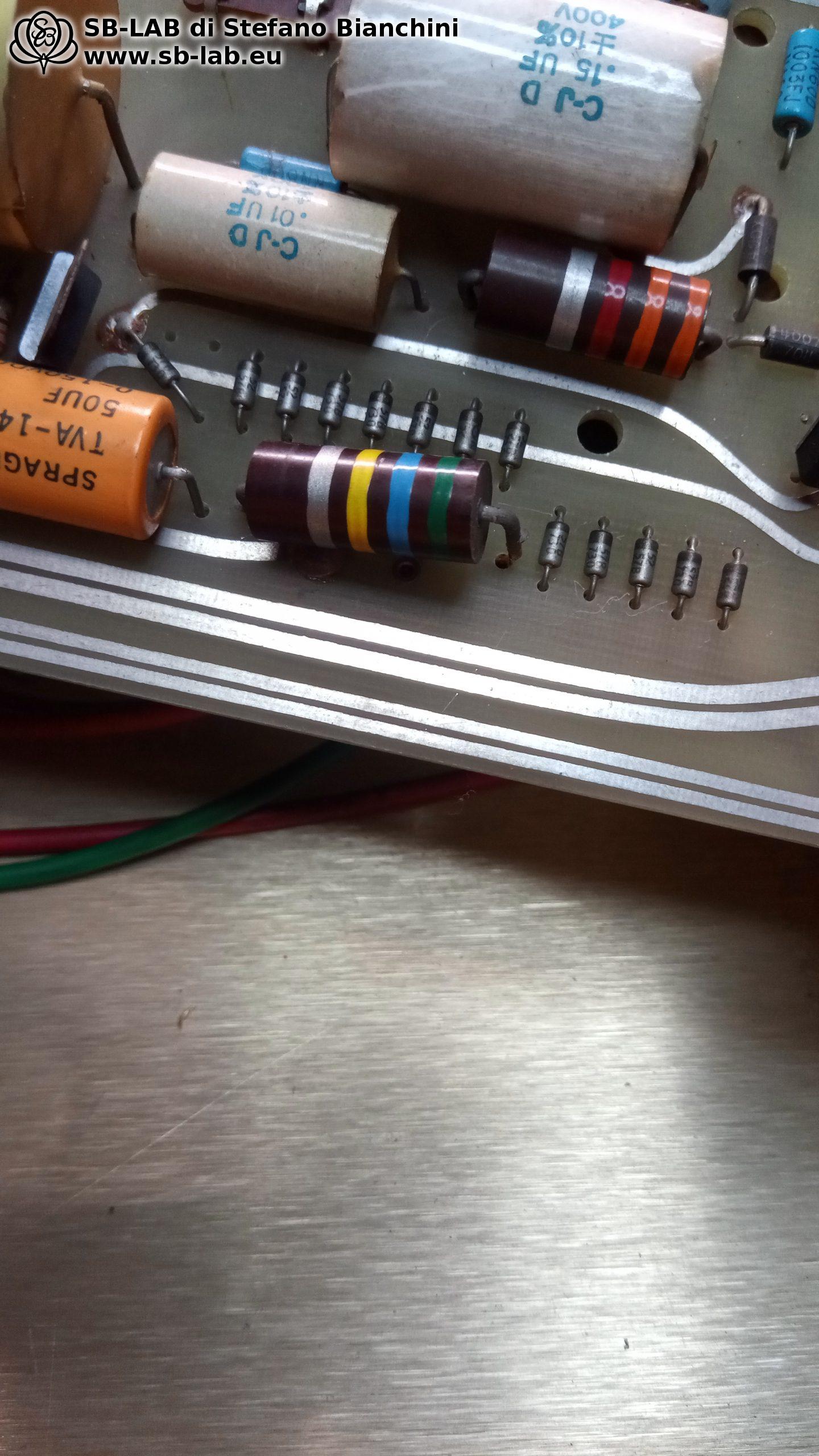
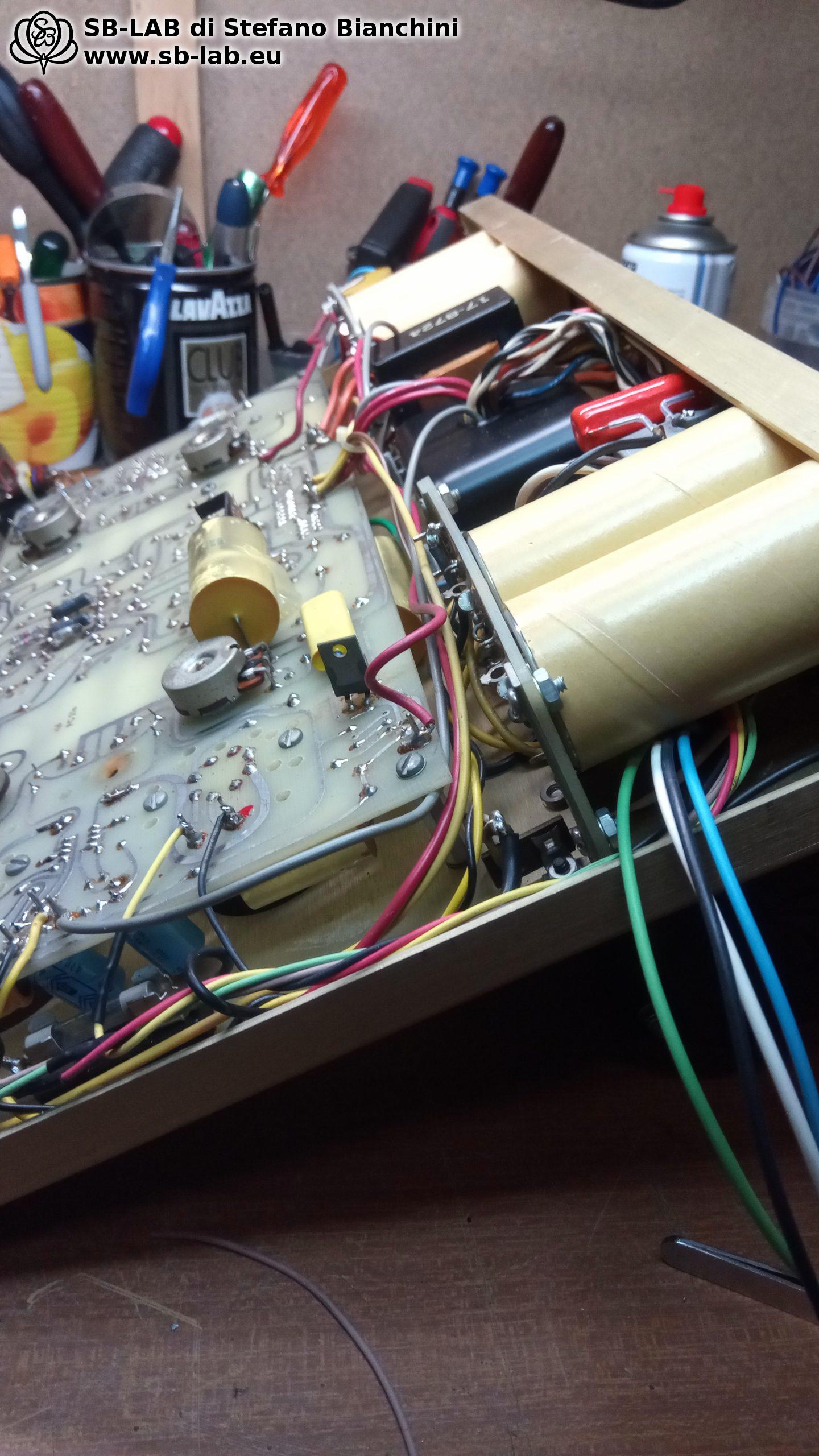
I therefore designed and wound two new output transformers specifically for this Conrad-Johnson MV50. This was not simply a matter of finding two commercially available transformers with a compatible impedance: when working on equipment of this level, it is important to take into account the characteristics of the circuit, the required power, bandwidth, and transformer behavior at different frequencies. Once the new transformers were completed, I also replaced the deteriorated resistors and reassembled everything in the amplifier.

Above you can see some stages of the work with the new transformers installed.
 |
 |
Power-up, adjustment and fine-tuning
Once assembly was completed, it was time for the first power-up, naturally carried out while progressively monitoring voltages and currents to avoid unpleasant surprises. The amplifier started up normally.
I then adjusted the EL34 bias and checked the behavior of both channels on the test bench. A small amount of circuit fine-tuning was also required to achieve the best possible performance with the new output transformers.
Instrumental measurements
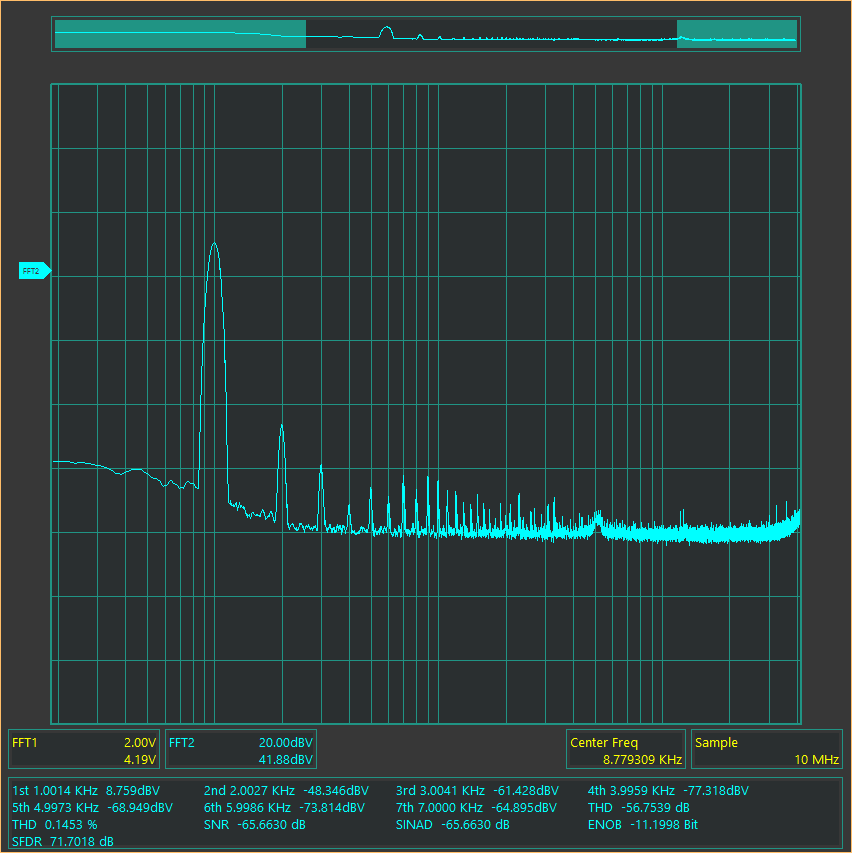
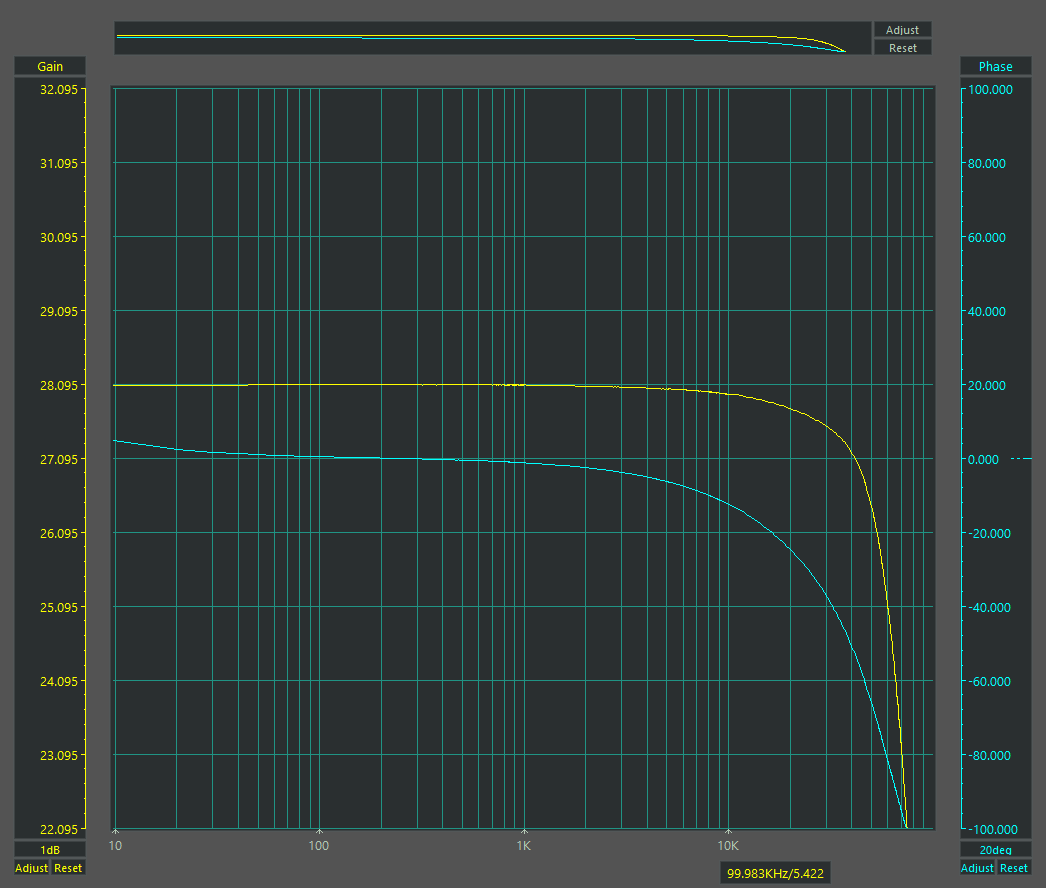
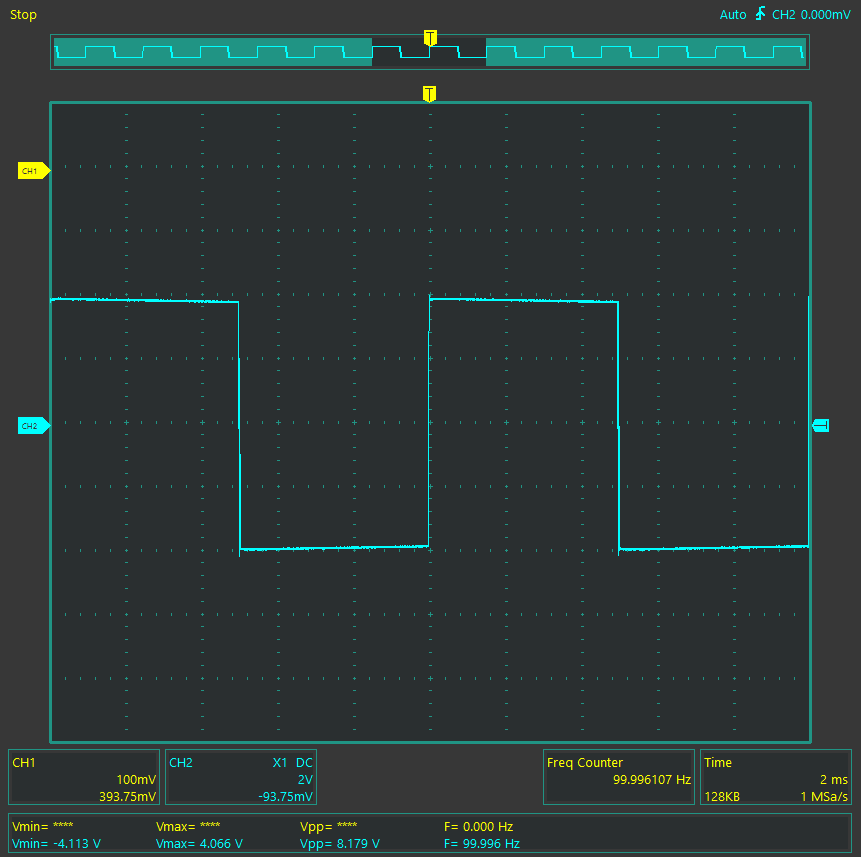
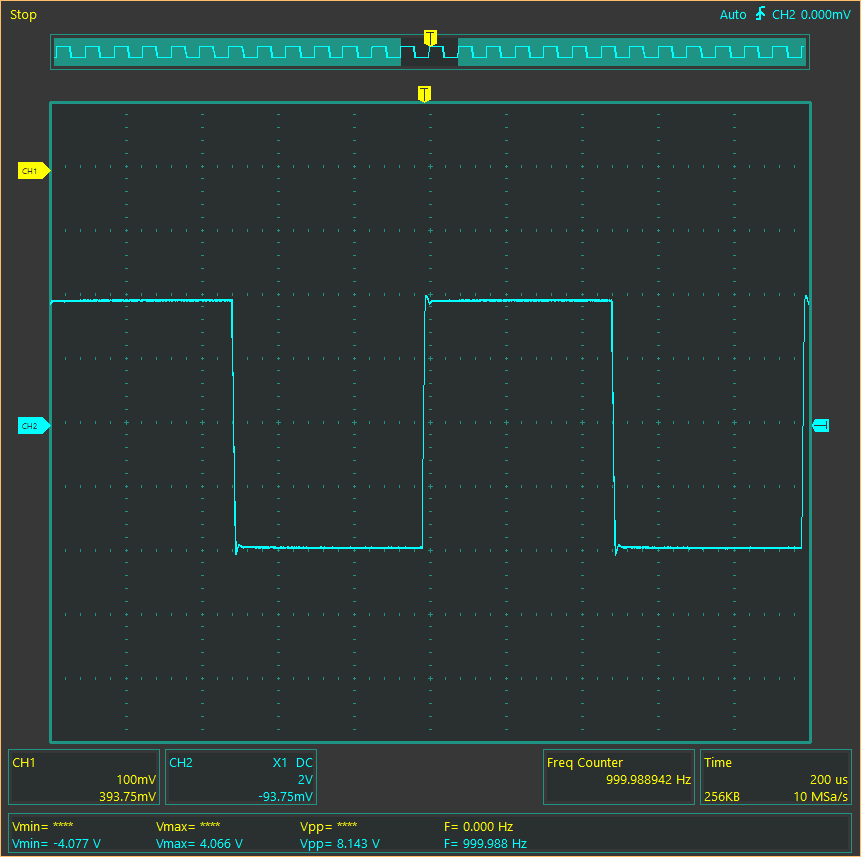
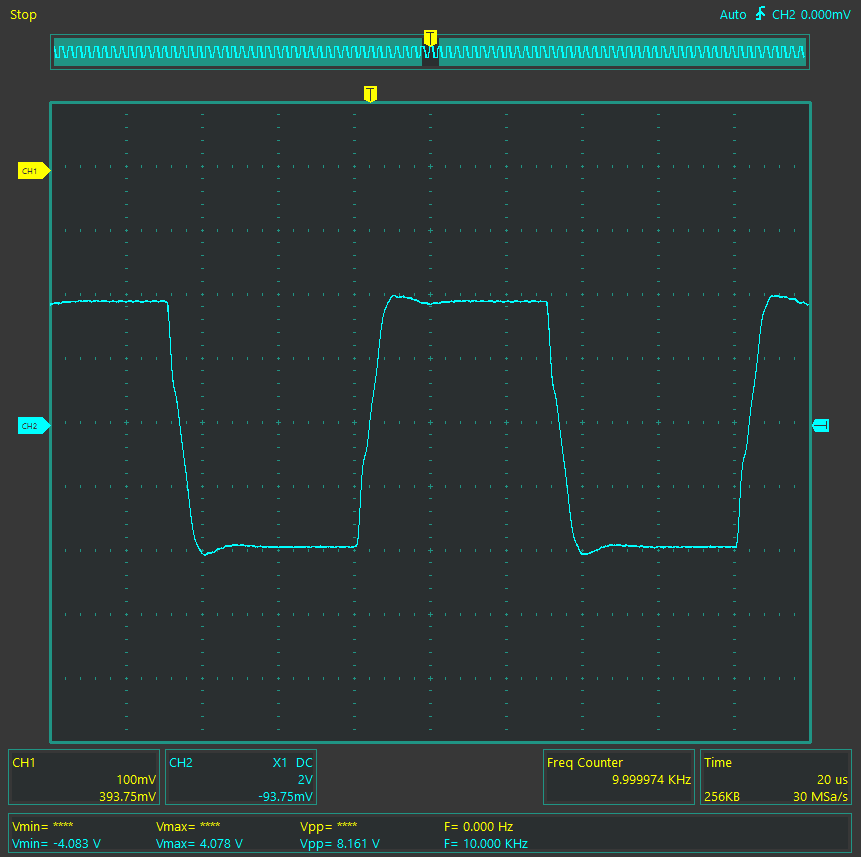
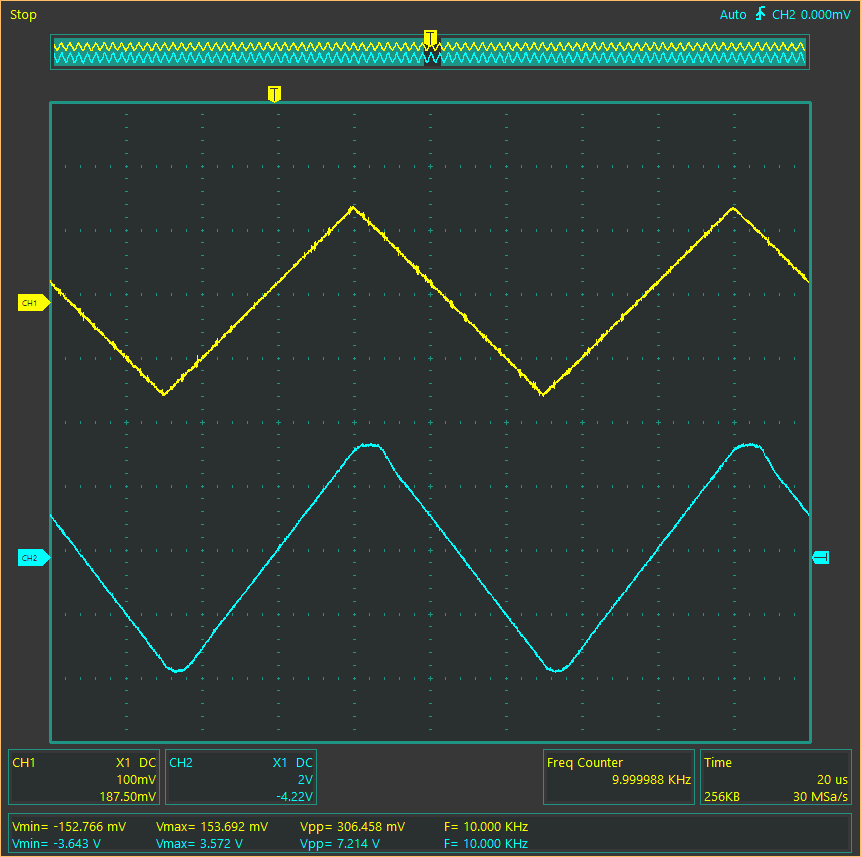
As I normally do after a repair of this kind, the work did not end simply by confirming that music was once again coming from the amplifier. I carried out a series of instrumental measurements to check output power, distortion, frequency response, and amplifier behavior with different test signals.
- Maximum measured output power: 56 watts RMS per channel
- Damping factor (DF): 14
The final result was therefore very good: the Conrad-Johnson MV50 returned to full working order, and the new transformers made it possible to completely recover an amplifier that, with its original output transformer burned out, would otherwise have been very difficult to put back into service.
THD at 1 watt
Frequency response at 1 watt (intentionally limited within the circuit)
Square waves at 100 Hz, 1 kHz and 10 kHz
10 kHz triangular wave
Conrad-Johnson MV55: a considerably more complicated repair
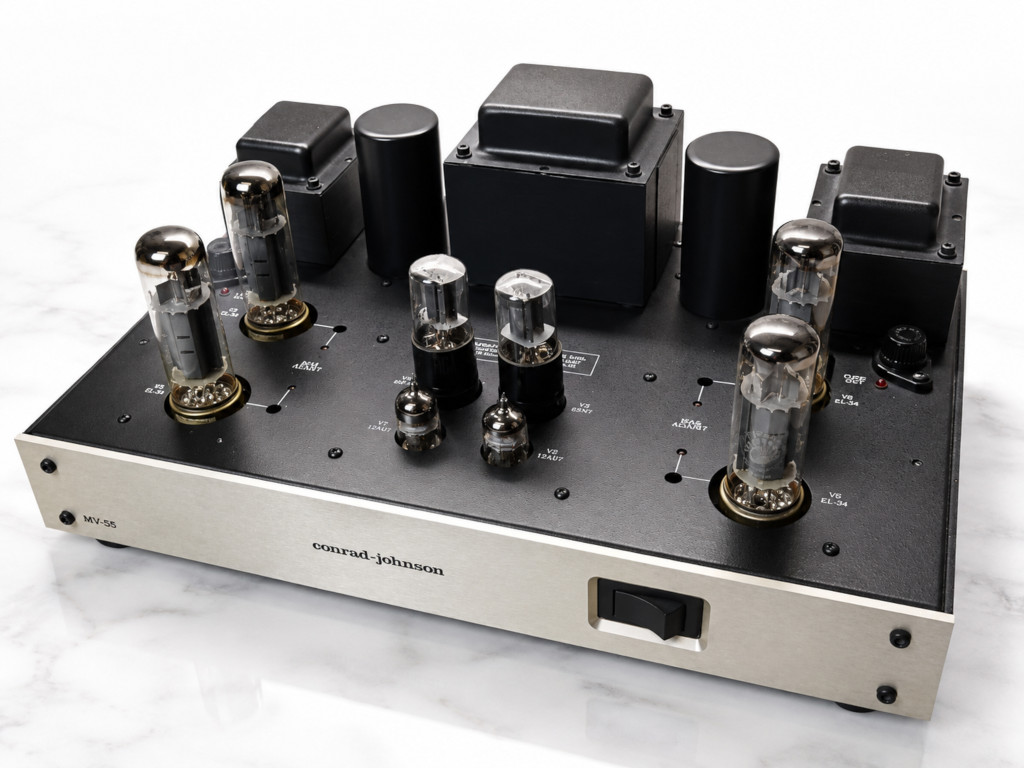
The Conrad-Johnson MV55 featured in this second repair arrived at my workshop completely non-functional. From the very first internal inspection, it was immediately clear that this time the problem would be much more complicated than with the previous MV50.
In one densely populated area of the printed circuit board, there was a large section that had been completely carbonized. The damage mainly affected a series of Zener diodes and the surrounding components. Further measurements also revealed several transistors that were completely shorted, together with a number of failed resistors and capacitors.
Fortunately, the output transformers were intact. Considering the extent of the damage to the circuit board, this was certainly good news, as it allowed me to concentrate on rebuilding the damaged electronic section without also having to deal with the transformers.
First difficulty: finding and interpreting the schematic
Before I could even begin the actual repair, it was necessary to find the schematic diagram for the Conrad-Johnson MV55, which proved less straightforward than one might expect. The copy I was able to obtain was of very poor quality, and several component designations and values were almost completely illegible.
This became a particular problem because the most heavily damaged area no longer allowed all the necessary information to be obtained directly from the board. Some components were carbonized, while in other cases the heat had made it impossible to identify their original values.
The schematic of the earlier MV50 proved extremely useful. The two amplifiers are not identical, but several sections of the circuit are very similar and, fortunately, the area affected by the most severe damage largely followed the same design approach. By comparing the two schematics, tracing the still-recognizable PCB tracks, and checking the components that had remained intact, I was gradually able to reconstruct the circuit.
The most delicate part: rebuilding the carbonized PCB
Once the diodes, transistors, and other required components had been identified, the most difficult problem still remained: the printed circuit board itself. A carbonized section of PCB cannot simply be cleaned superficially and then reused. Burned material loses its insulating properties and, especially in a circuit operating at high voltages like this one, can become conductive and cause leakage currents, arcing, or further failures.
I therefore had to completely remove all the carbonized material using a Dremel, working in a very precise and surgical manner. The difficulty was that the area was densely populated with components and crossed by numerous tracks and pads. I had to remove all compromised material while at the same time preserving the minimum amount necessary to keep the tracks and pads that could still be recovered in position.
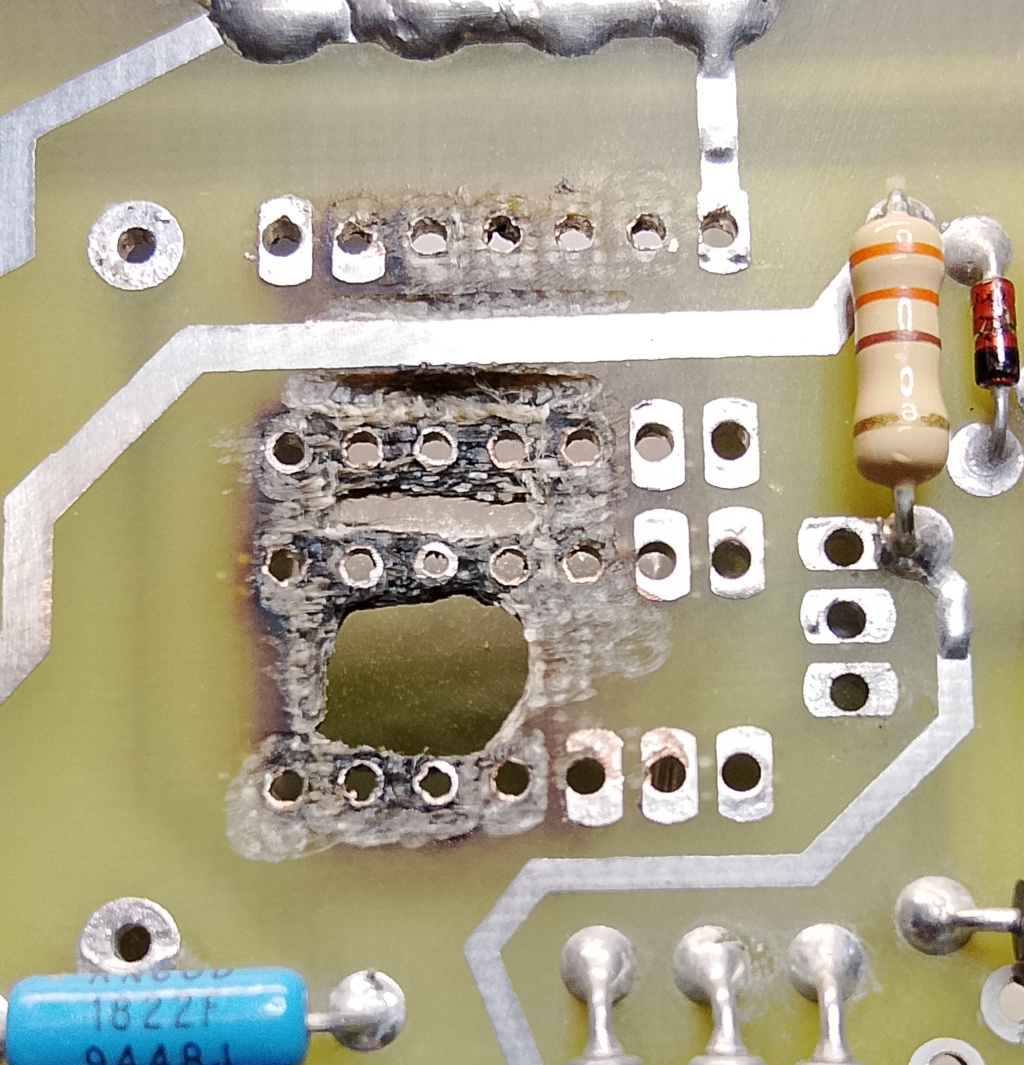
Once all the burned material had been removed, a real void was inevitably left in the printed circuit board. I then began rebuilding the missing section using UV resin, applying it little by little under a magnifying lens and progressively curing it with a UV lamp.
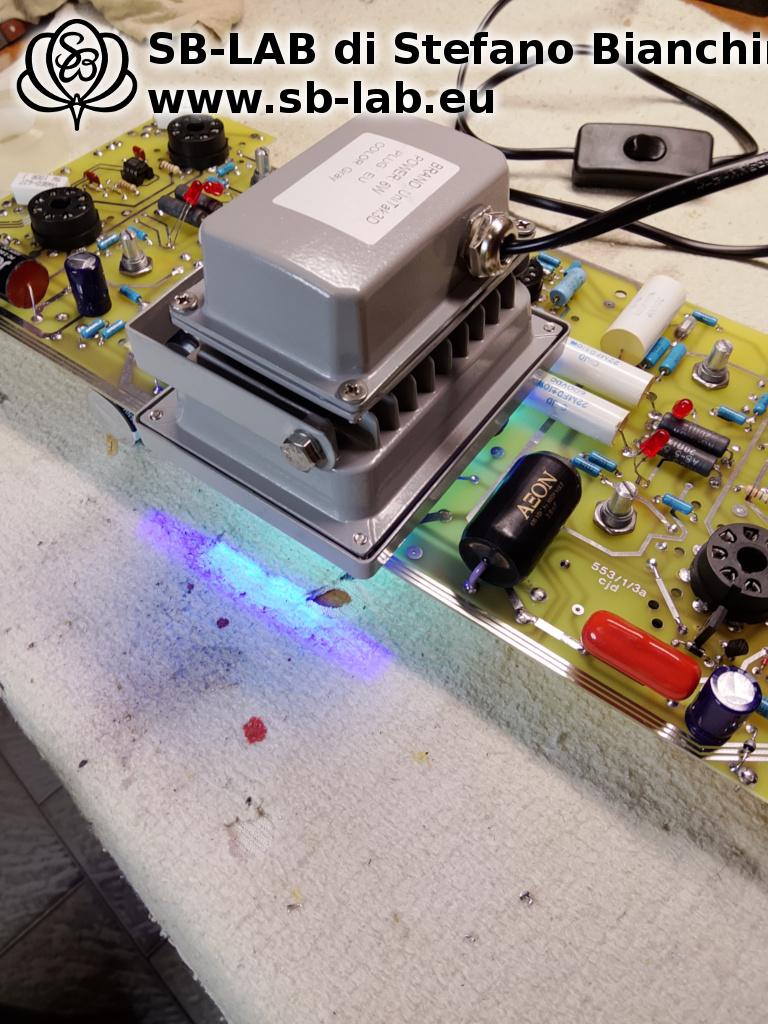
It was not possible to fill the entire area in a single application. The work was carried out through numerous small successive applications, progressively rebuilding the mechanical support of the PCB until the section I had been forced to remove was completely filled.
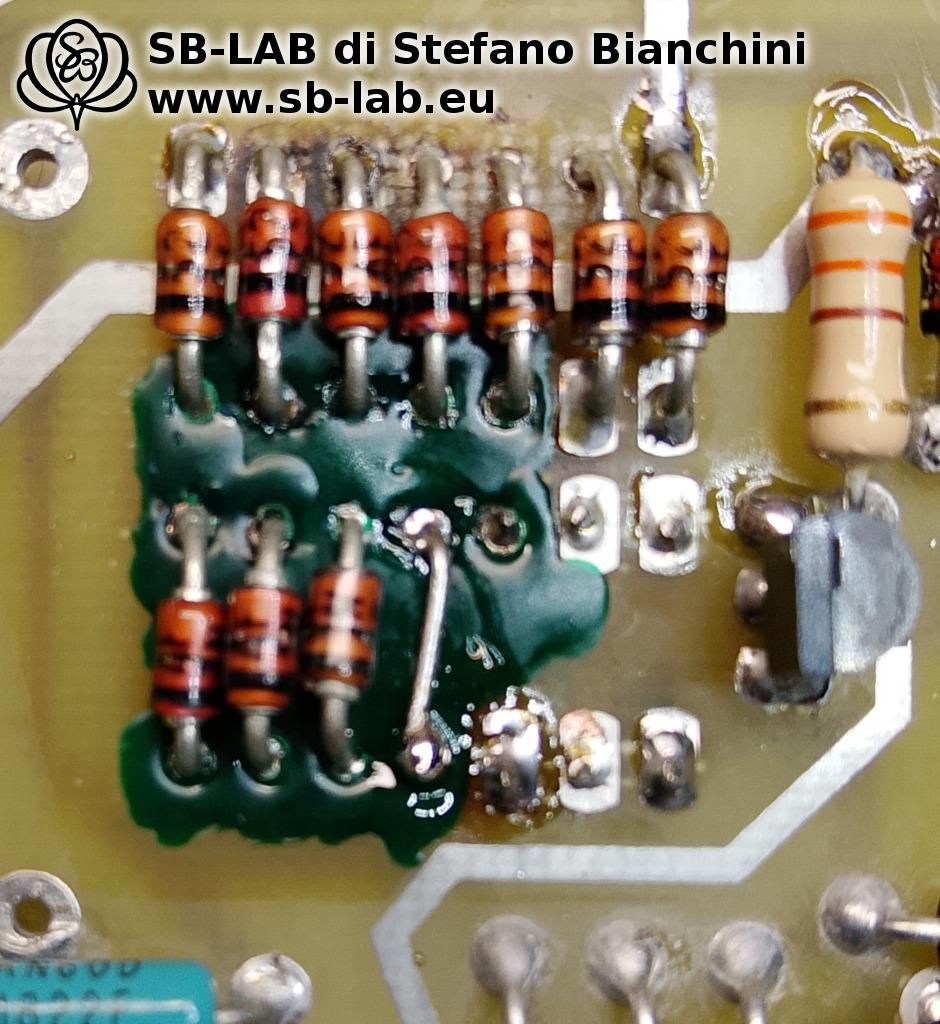
This was one of the longest and most delicate parts of the repair because, in addition to mechanical strength, it was essential to maintain good electrical insulation between the various sections of the circuit, considering the voltages present in that area.
Hard-to-find components and a resistor with no colors left
Once the printed circuit board had been rebuilt, I could begin reinstalling all the Zener diodes and other damaged components. Even then, however, the work was far from straightforward. Some of the original transistors had no readily available direct equivalents, so I had to carry out extensive research to find suitable replacements, checking their electrical characteristics, voltage and current ratings, and pinouts before using them in the circuit.
The thing that probably cost me more time than anything else, however, was a simple resistor. The component had been so badly damaged by heat that its color bands had completely disappeared. I could not read its value from the schematic I had, and nothing remained on the board that could be used to identify it.
At that point, a long search on the internet began. I spent hours looking for photographs of the inside of the MV55 on foreign forums and websites, comparing images of different units, until I finally found a photograph clear enough to show the same area of the board. By enlarging the image, I was able to distinguish the color bands of the original resistor and finally determine its value.
Paradoxically, I probably spent more time reconstructing this information, searching for documentation, and correctly identifying certain components than I did physically repairing the large hole in the PCB. This is also one of the realities of repairing equipment of a certain age: often the problem is not simply replacing a failed component, but first understanding exactly what had originally been installed there.
Reassembly, first power-up and testing
Once the PCB had been rebuilt and all damaged components replaced, I reassembled the amplifier and proceeded with the first power-up. As always after a repair of this magnitude, I did not simply connect the unit to the mains and hope that everything would work. I powered it up gradually while monitoring voltages, current consumption, and circuit behavior so that I could stop immediately if any problem remained.
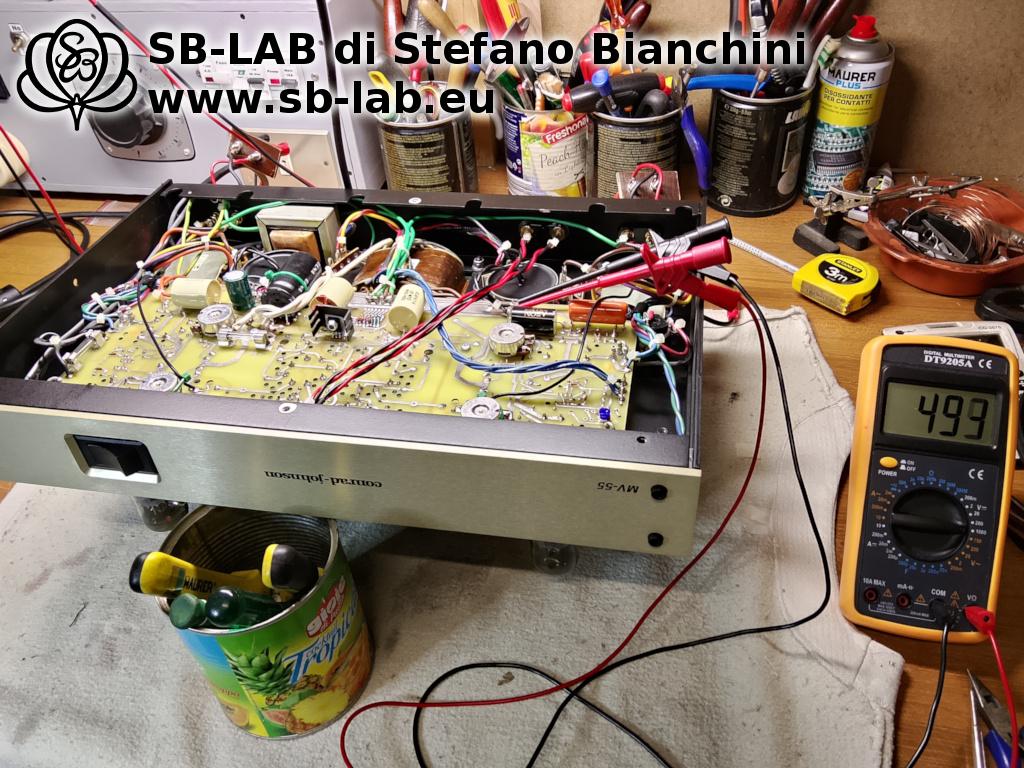
The voltages were correct and the MV55 returned to normal operation. I then adjusted the bias of the EL34 tubes and carried out all the necessary checks on both channels. To make sure the repair was reliable, I finally left the amplifier running on the test bench for approximately 8 consecutive hours while playing music and periodically checking its operation. After damage of this magnitude, I would not have been satisfied with a simple test lasting only a few minutes: it was important to verify that the rebuilt area, the new components, and the entire circuit remained stable even after several hours of operation and with the amplifier fully warmed up.
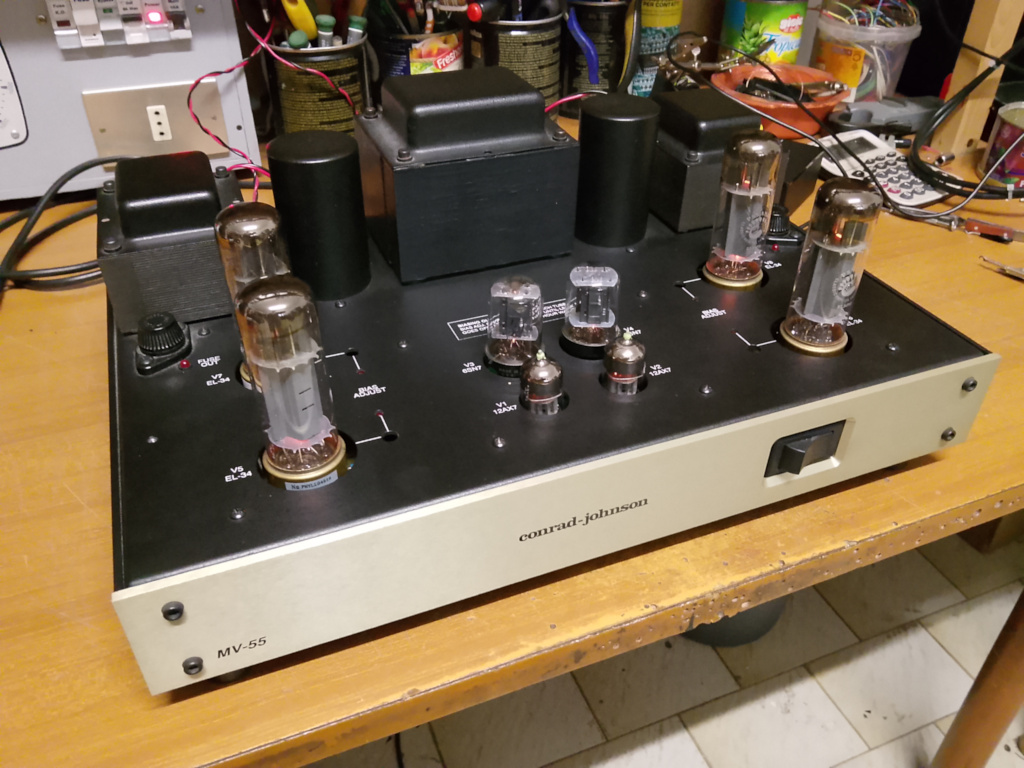
The Conrad-Johnson MV55 passed the final test without any further problems and was therefore able to return to its owner in perfect working order. It was a particularly demanding repair, in which the time required to find documentation, reconstruct missing information, and identify compatible components was at least as important as the manual work carried out on the circuit board.
I am not publishing the final instrumental measurements again because the results obtained were practically identical to those already shown for the previous MV50 repair. Given the strong similarity between the two amplifiers, repeating the same graphs would have added very little to the article.