These two monoblock tube amplifiers, identified as Emporium DM91, arrived at the workshop for repair. The name and model are shown on the small instruction manual supplied with the units, while the amplifiers themselves carry no label, brand name, serial number, or other official identification that would allow their origin to be established with certainty.
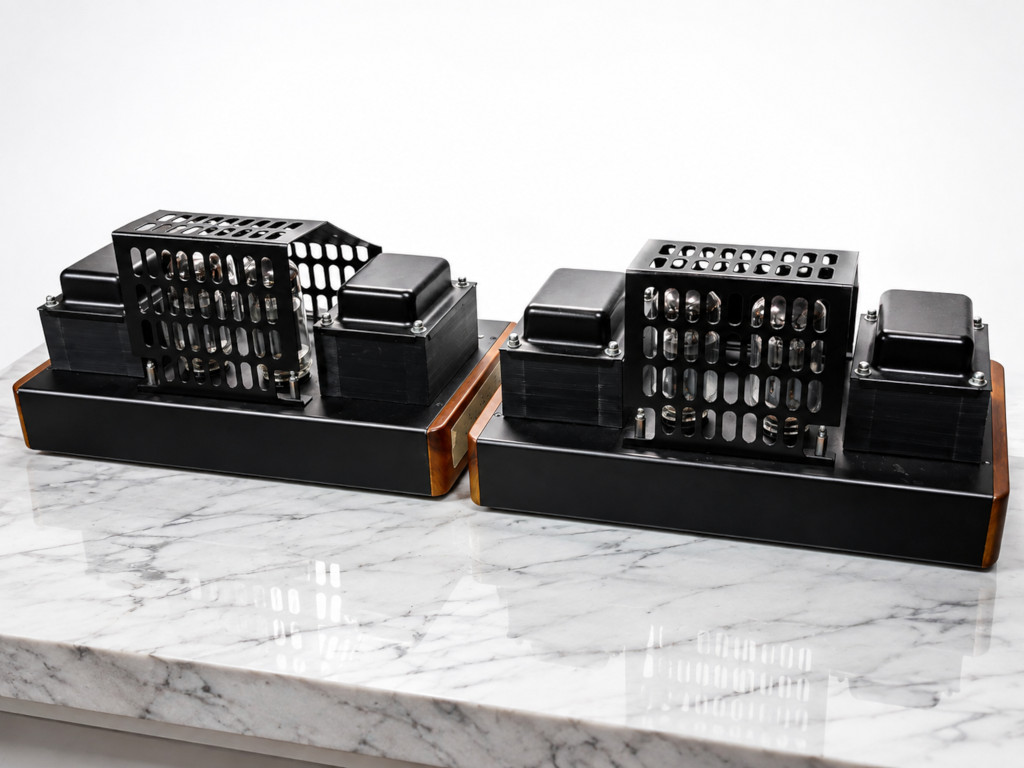
It is therefore possible that these units were handmade or home-built by someone, perhaps based on a project sold together with the corresponding manual. Since there is no reliable information about their actual origin, however, I prefer to limit myself to describing what I actually had on the bench.
Handmade, but Well Built
Before discussing the fault, I want to spend a few words on the construction, also because over the years I have had many handmade and home-built devices made by basement tinkerers pass through my hands.
Anyone who follows this website knows very well that when I find badly built equipment, I have no problem saying so. On several occasions I have published photographs of genuine messes: improvised wiring, components fitted any old way, inadequate insulation, dangerous connections, and solutions which, considering the voltages present inside a tube amplifier, can turn into a very real risk of fire or electric shock.
Every now and then, someone interprets my criticism as a kind of hostility toward other people’s work, almost as if the problem were some supposed jealousy on my part toward anyone building amplifiers. This pair of Emporium DM91s is a good example to settle the matter once and for all: when a device is well built, I have absolutely no difficulty acknowledging it. These amplifiers are, in fact, very well made.
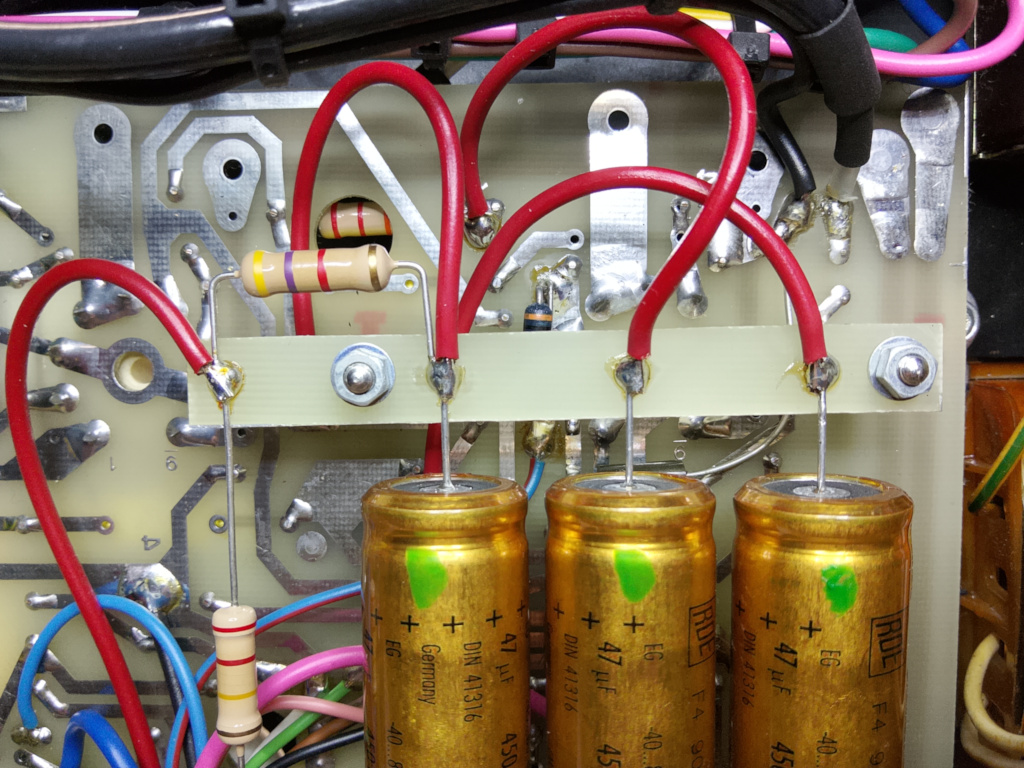
The construction is neat, rational, and carefully executed and, at least from what could be observed during the repair, solutions have been adopted that are consistent with what one would expect from a product designed with electrical safety in mind. While it is obviously impossible to retrospectively assign any certification to a device of uncertain origin, the construction is of a level that makes it reasonable to assume that the design was developed with attention to regulatory aspects as well.
In short, criticizing a piece of junk when it has been built badly does not mean criticizing everything made by other people. It simply means judging what is on the bench for what it actually is. And from this point of view, these Emporium DM91s deserve a positive assessment.
The Fault: One of the Two Power Amplifiers Completely Silent
The pair arrived at the workshop because one of the two amplifiers was completely silent. Once the unit was opened and troubleshooting began, the problem fortunately turned out to be fairly straightforward. I found several open-circuit resistors that were preventing the circuit from operating correctly.
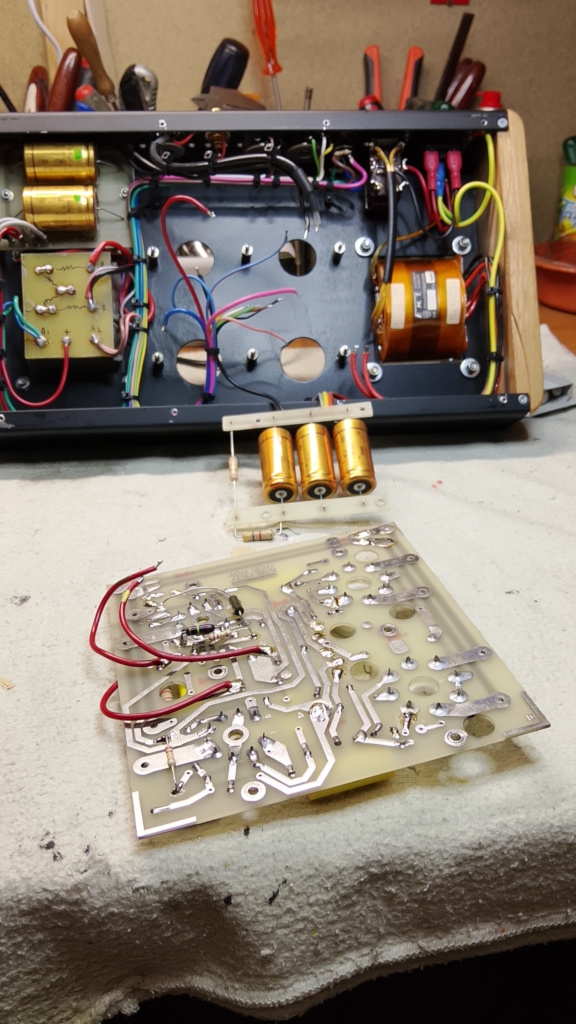
During testing, a second and much more subtle fault also emerged: one of the PCB vias had lost electrical continuity. Vias are the small plated-through connections used to electrically connect traces located on the two sides of a printed circuit board. When one of these connections fails, the circuit may look perfectly intact visually, but the signal or supply voltage can no longer pass from one side of the board to the other.
In this case, no invasive repair was required: restoring continuity with a simple solder joint was enough to make the connection fully functional again. After replacing the faulty resistors and repairing the via, the amplifier returned to normal operation.
General Inspection and Tube Testing
Since this was a pair of monoblock power amplifiers and one of them had developed a fault, I naturally did not limit the work to replacing only the components that were obviously defective. I therefore checked the condition of the capacitors and tested the tubes. No other noteworthy problems emerged: the capacitors were still in suitable condition and the tubes were also efficient, so there was no need for indiscriminate replacement.
This is something always worth remembering: during a repair, there is no point replacing components simply because they are old or because “while we’re at it, we might as well.” You measure, you test, and you replace only what actually needs to be replaced.
Bias Adjustment and Final Testing
Once the repair was completed, both amplifiers were powered up, checked, and left running in order to verify their stability. I then adjusted the bias of the output tubes. This is perhaps the only aspect of the Emporium DM91 on which I feel like making a minor criticism: the adjustment procedure is somewhat cumbersome and could have been made simpler and more immediate.
It is not a functional problem, however, but rather a practical issue that makes calibration less convenient than necessary. Once correctly adjusted, the two monoblocks operated without any further problems and overall performed reasonably well.
Conclusions
The repair of this pair of Emporium DM91s therefore turned out to be relatively simple: a few open-circuit resistors and a PCB via that had lost continuity were enough to render one of the two units completely silent.
Once these faults had been corrected and the rest of the circuit checked, no problems were found with either the capacitors or the tubes. After the bias adjustment, both amplifiers returned to normal operation.
Beyond the repair itself, however, these devices deserved to be shown for another reason. Despite their unclear origin and the lack of any official identification on the chassis, they are an example of handmade construction carried out with proper care and judgment.
I have seen plenty of dangerous, improvised, or simply badly assembled home-built equipment, and I will continue to criticize it whenever it turns up on my bench. In exactly the same way, when I come across a device that has been built well, I am equally happy to say so. The Emporium DM91s definitely belong to this second category.