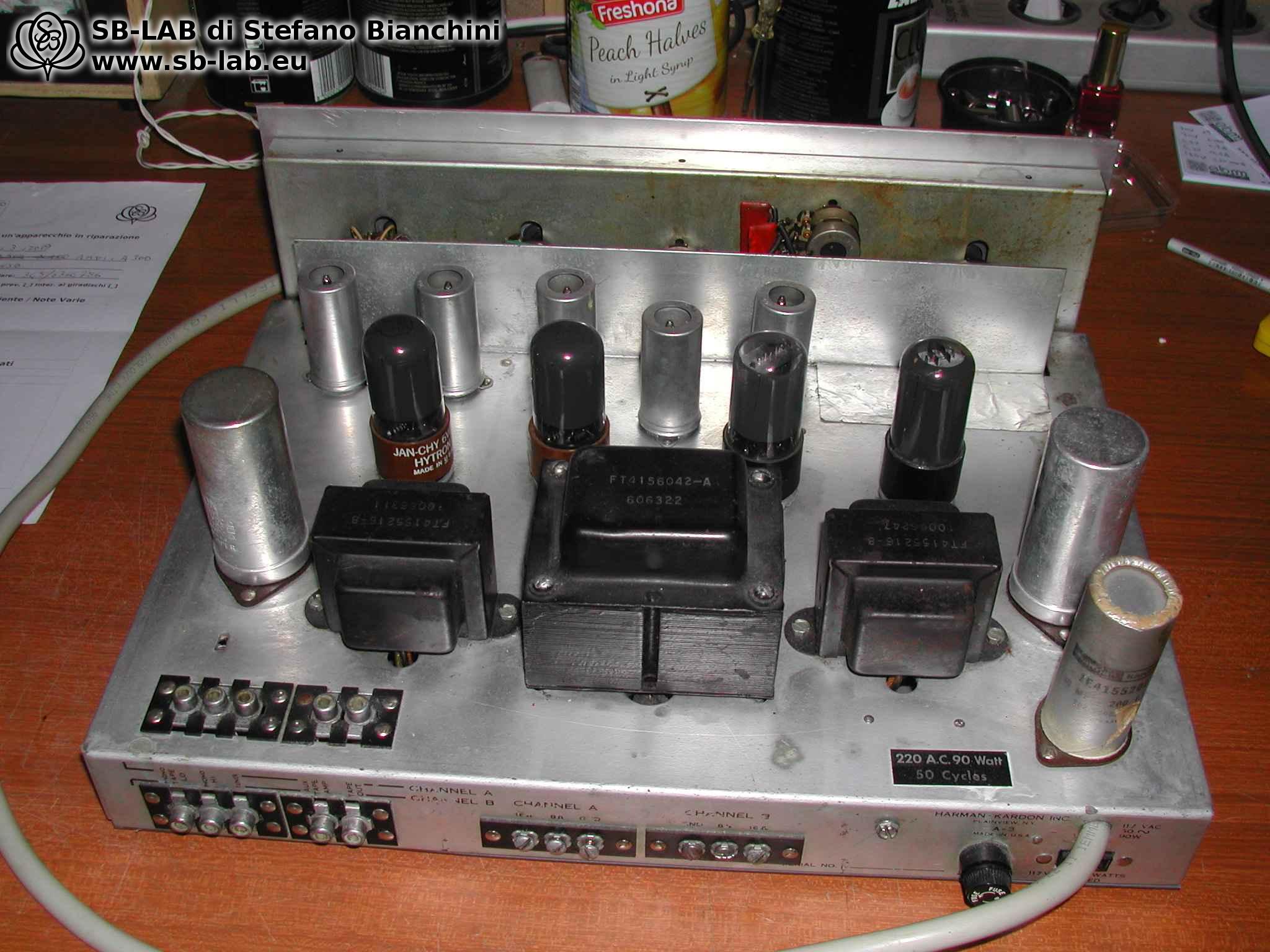
This vintage amplifier arrived at my workshop shortly after being purchased online. The seller had described it as “perfectly working,” but reality told a different story. The unit was far from reliable and showed several issues at first glance. The power cord, excessively thick and stiff, ended with a 16A plug more suitable for a washing machine and dangerously pulled on the internal wiring of the cabinet. A crude and improvised fix, unfortunately common among vintage devices sold on the web.
Aside from this unsightly detail, the circuit appeared semi-original: two modern electrolytic capacitors had simply been connected in parallel with the worn-out originals, in an attempt to “resurrect” the amplifier with minimal effort and expense. The result? It powered up and seemed to play, but the electrical conditions were far from safe.
All the electrolytics were below their nominal values, with reduced capacitance and high ESR, clear signs of drying out and degradation. In this state, capacitors not only lose efficiency but also become potentially dangerous due to the risk of short circuit. I replaced them all with Philips NOS components, reconditioned and individually tested. I then checked all resistors and non-polarized capacitors: the latter, being paper-in-oil types, were mostly still functional, except for one…
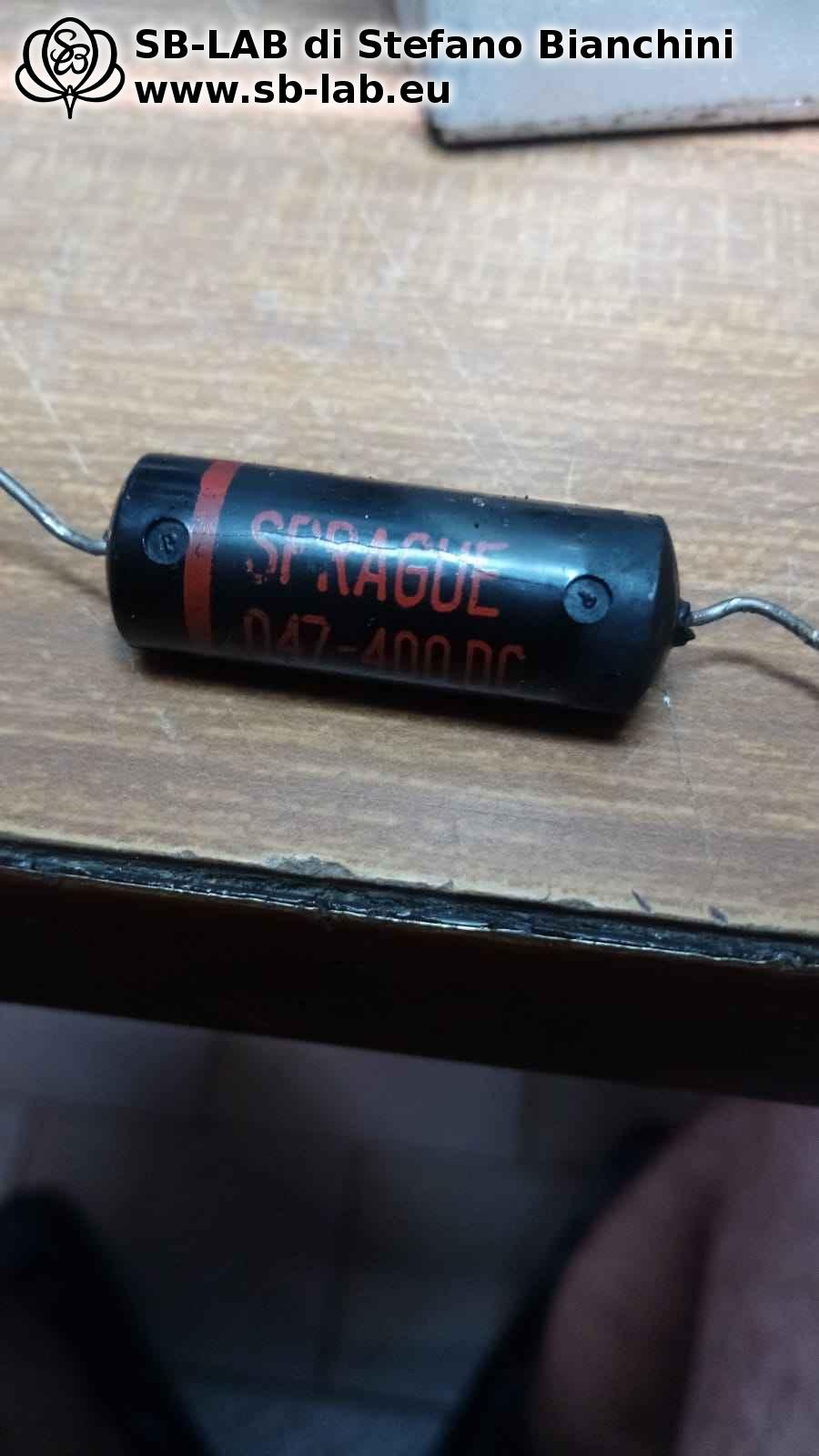
One of these capacitors showed a visible crack (you can spot it by zooming in on the photo) and was leaking. It was one of the two coupling capacitors between the output valve and the phase-splitter section. The phase-splitter triode (a cathodyne) in that channel was partially worn out, while the output valves were badly unbalanced. Everything suggested that one of the output tubes had been operating for hours with a positive grid, inevitably stressing the output transformer.
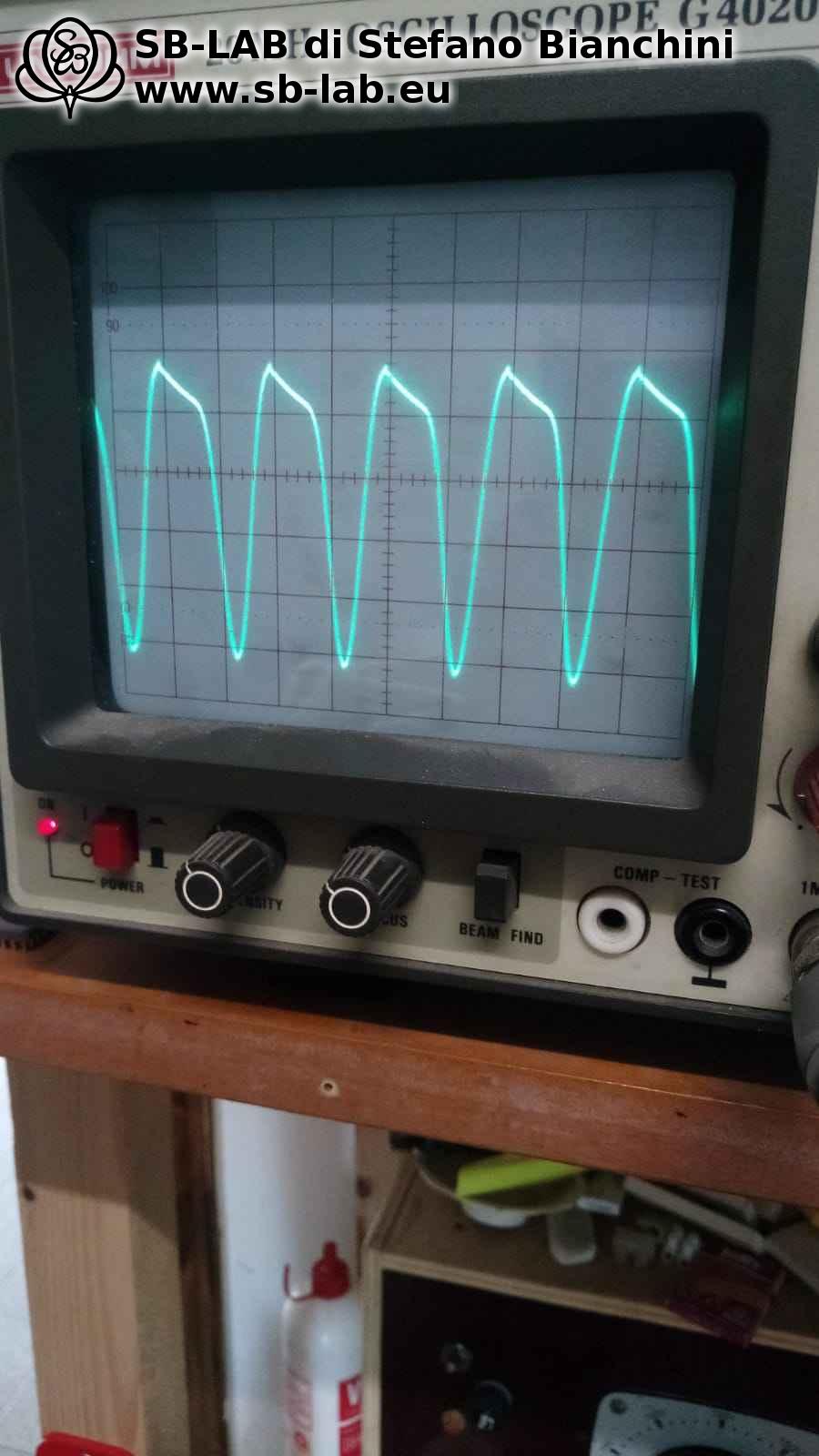
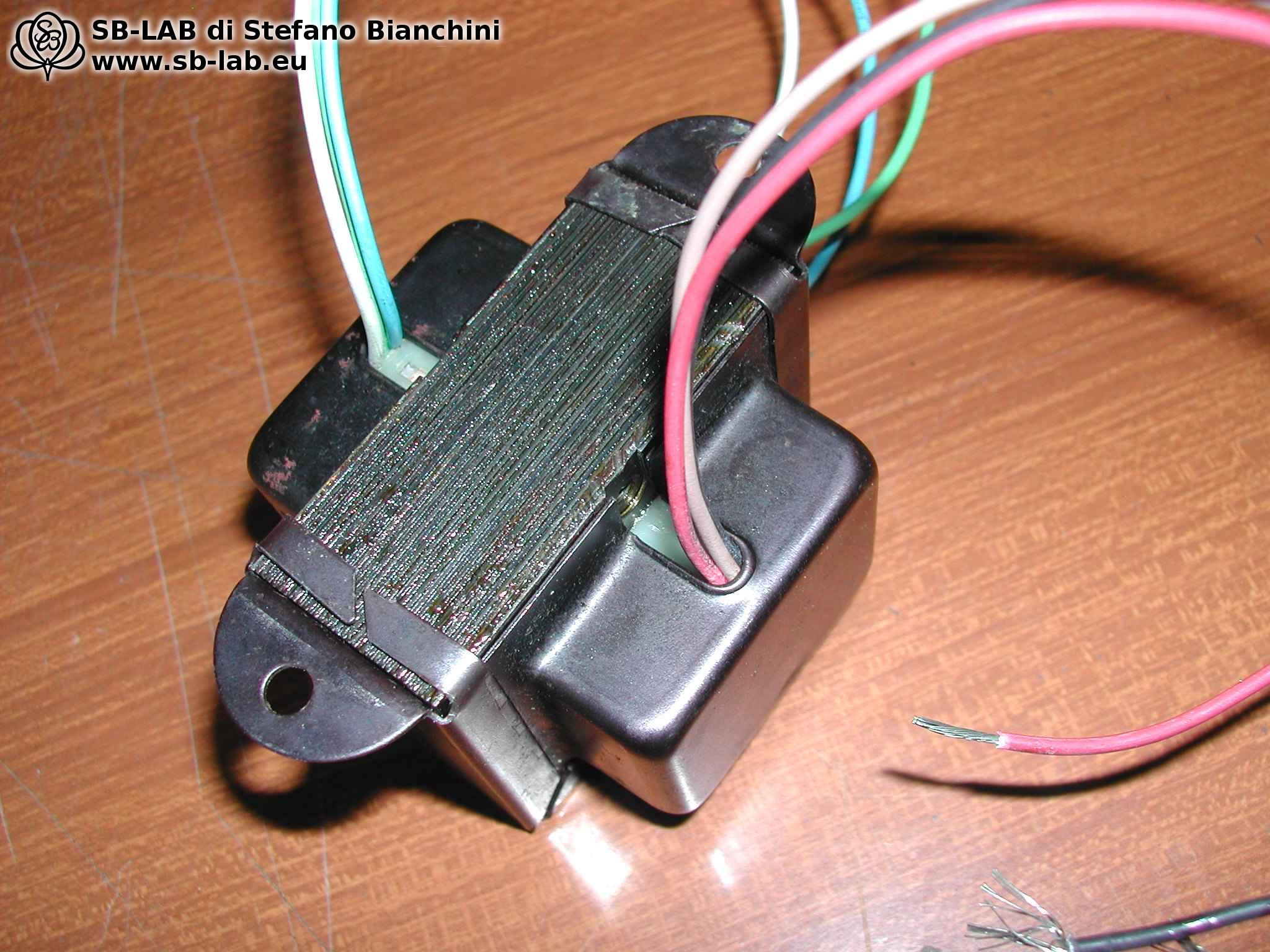
After replacing the faulty capacitor and the defective ECC82 tube, I powered up the amplifier again. Immediately I noticed heavy distortion on the repaired channel, especially around 100 Hz. After a few minutes, the channel began producing crackling noises, and a suspicious sizzling sound came from the output transformer. Shortly after, half of the winding opened, showing on the oscilloscope the typical waveform of a push-pull stage running with only one active tube.
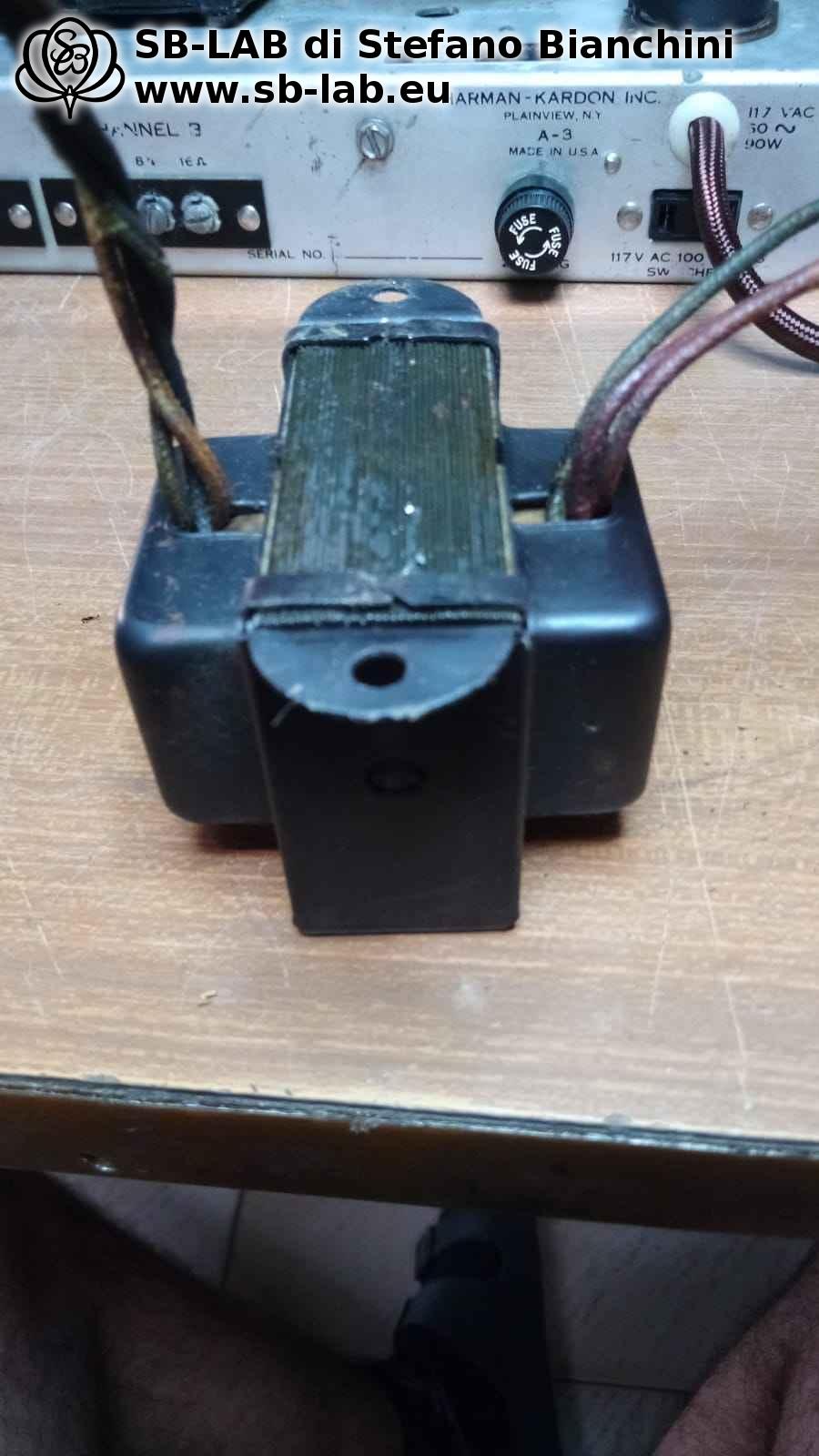
The broken winding belonged to the same channel with the failed capacitor: the short had gradually weakened the copper until it became brittle and discontinuous. There was no other option—I had to completely rewind the output transformer.
After rewinding the transformer and checking the electronics, the amplifier finally worked again. As usual, I performed a series of instrumental measurements to document the frequency response and signal quality, useful as reference for any future service.
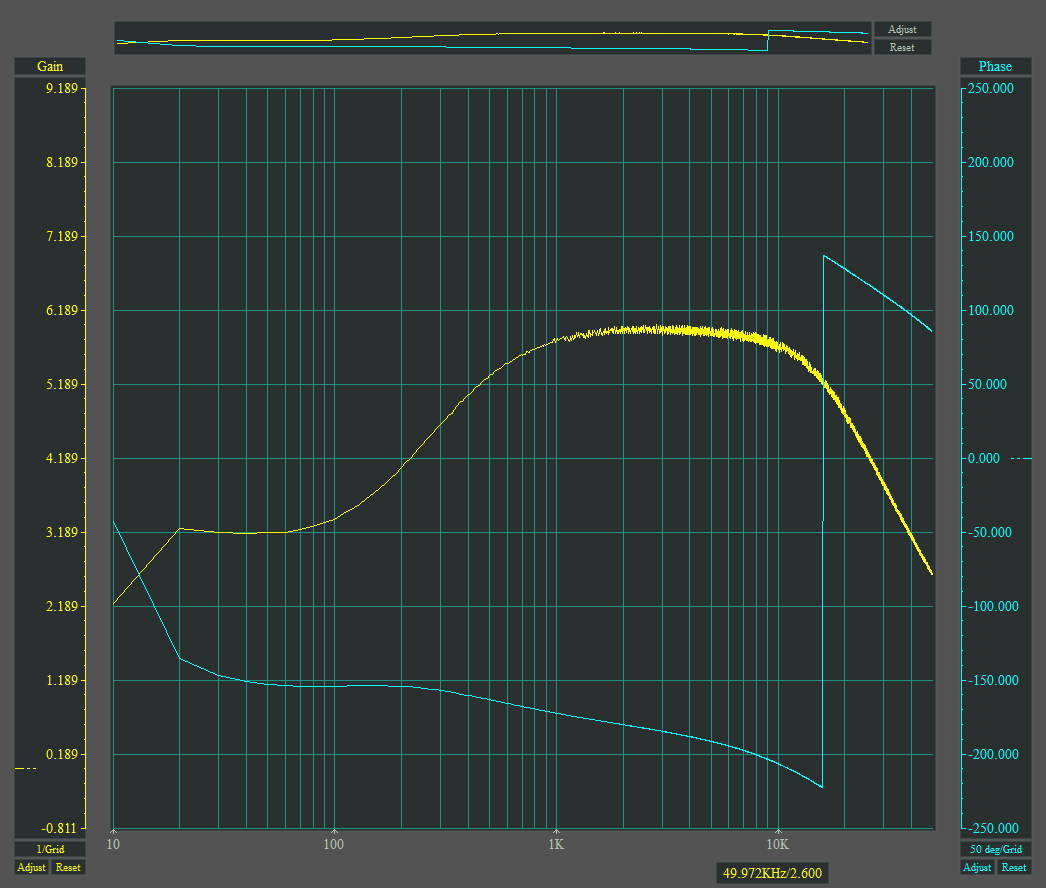
The frequency response graph with tone controls set to zero clearly reveals the limitations of the output transformers: small in size and unable to properly reproduce low frequencies. The response curve shows a clear drop below 100 Hz, as seen in the diagram below.
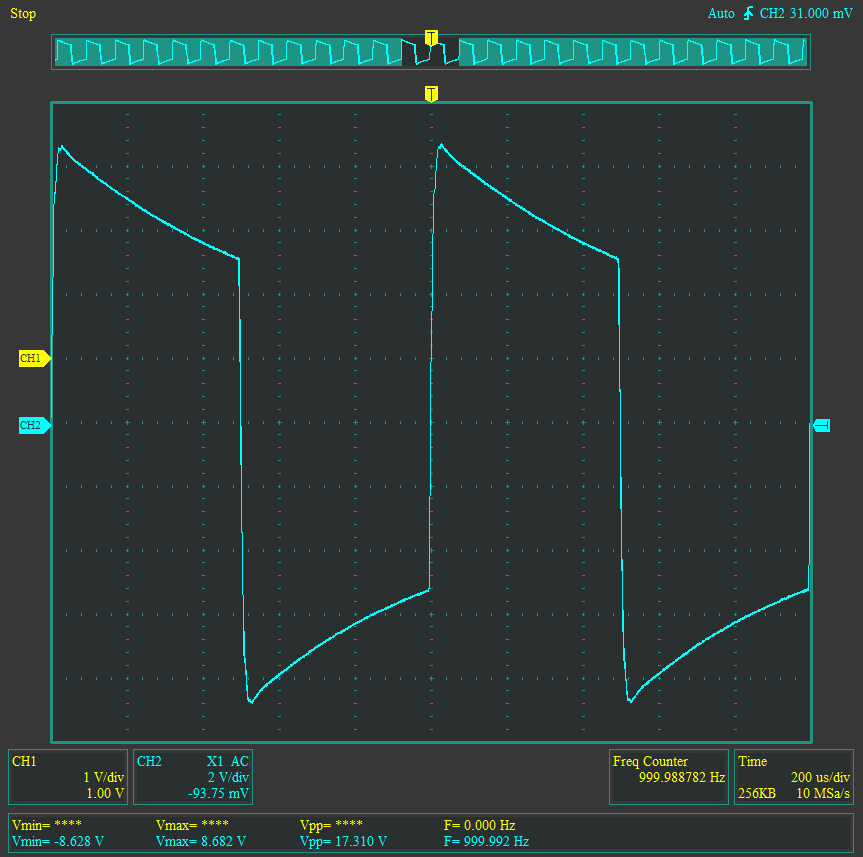
Even the 1 kHz waveform highlights the low primary inductance: such behavior should normally appear at 100 Hz, not at 1 kHz. Below that frequency, the response collapses and the sine waves become heavily distorted. The phase response is also irregular, showing that magnetic coupling in the original transformers is far from optimal.
These results confirm that, while this is a charming unit, it is still an entry-level amplifier with structural limitations in its design. Sure, the sound can be pleasant or “vintage,” but one must be aware that no component upgrade will ever turn it into a high-end amplifier. Spending large amounts on boutique capacitors or exotic tubes won’t bring real improvements—the limits are in the circuit and, above all, in the output transformers.
Another key point: never blindly trust online sellers who claim a vintage device is “working.” Such equipment must always be serviced by a competent technician before use. In this case, the customer had kept the amplifier running for hours, worsening the damage, and the cost of repair—including rewinding, testing, and cosmetic restoration—ended up exceeding the original purchase price. Had it been sold honestly as “non-working, to be serviced,” the serious faults could have been avoided.
To complete the restoration, I polished the mahogany-veneered wooden cabinet with a shellac finish, restoring its original elegant and refined appearance.
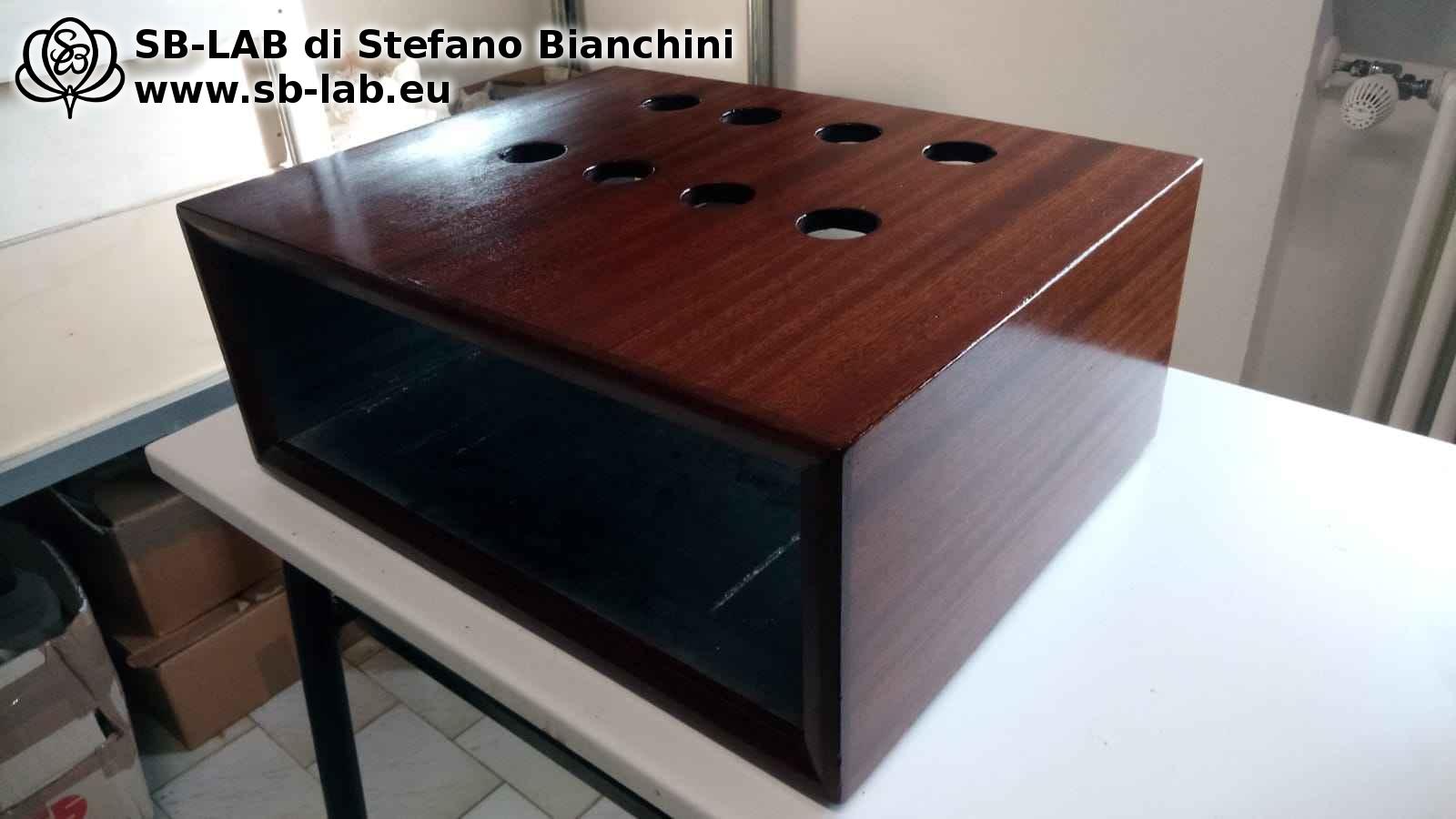
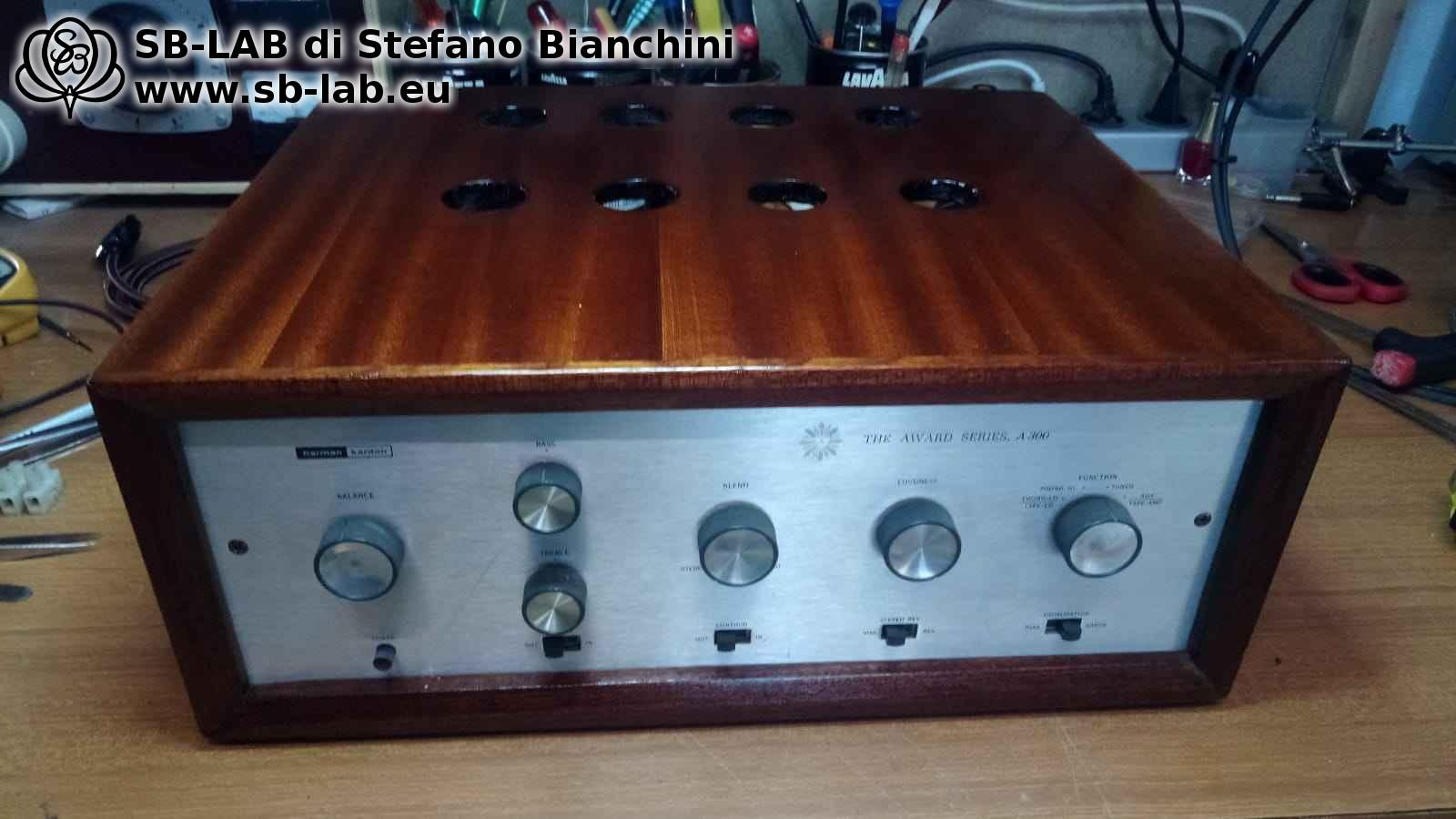
Today the amplifier is once again functional and safe, ready to play for many more years. It stands as a perfect example of how essential a proper technical restoration is to ensure reliability and safety in any vintage device, beyond appearances and sales claims.