The Luxman MQ70 is one of the most interesting but also most delicate tube amplifiers ever produced in Japan. In this article I show two real repair cases, explaining why the output transformers tend to fail, how to intervene correctly and what results can be achieved in terms of reliability, power and frequency response.
If you own an MQ70 and suspect problems with the transformers, the EL34 bias or insulation issues after years of humidity, here you will find practical examples of restoration, rewinding and transformer replacement, with measurements of frequency response, DF and some advice on how to operate the amplifier safely without unnecessarily stressing the output tubes.
A typical fault of the Luxman MQ70 is the output transformers going short circuit, especially if the amplifier is accidentally powered on and made to play with the loudspeaker disconnected, an issue made worse by the binding posts supplied which, if the cable insulation is inserted too deeply, sometimes fail to make contact. The second fault of the Luxman output transformers is that they are potted in tar. Tar is strongly hygroscopic (meaning it absorbs moisture over time and tends to retain it), and if the amplifier is stored for a long time in a humid place the transformers can deteriorate.

Another issue with the MQ70 is that the output tubes are pushed too hard: they manage to deliver 40 watt RMS from a single pair of EL34 because the plate voltage reaches almost 500 volt, and sometimes the plates glow red because the bias current cannot be lowered below 50mA (or even higher). Bias adjustment has a small margin if the mains voltage is 220 volt (tested with the variac, the MQ70 power transformer is designed to receive 220 volt on the primary). The problem is that nowadays the distribution grid often reaches 230 or 240 volt, and the increase in plate voltage causes the bias current to shoot beyond the minimum limit adjustable by the circuit. This second fault is easily solved by changing a single resistor in the circuit: in this way the available negative voltage on the bias trimmers increases and you can regain a good adjustment margin. I recommend a resting current of 30 or 35mA maximum, to keep the output tubes slightly below maximum dissipation. There is no loss of power or sound quality, the tubes live longer and are less likely to fail catastrophically. PS: in many units Luxman seems not to have installed the testpoint resistors shown in the schematic under the output tube sockets. For convenience, so as not to use four bias probes, I install them.
First Case: Repair of a unit with rewinding of the original transformers.
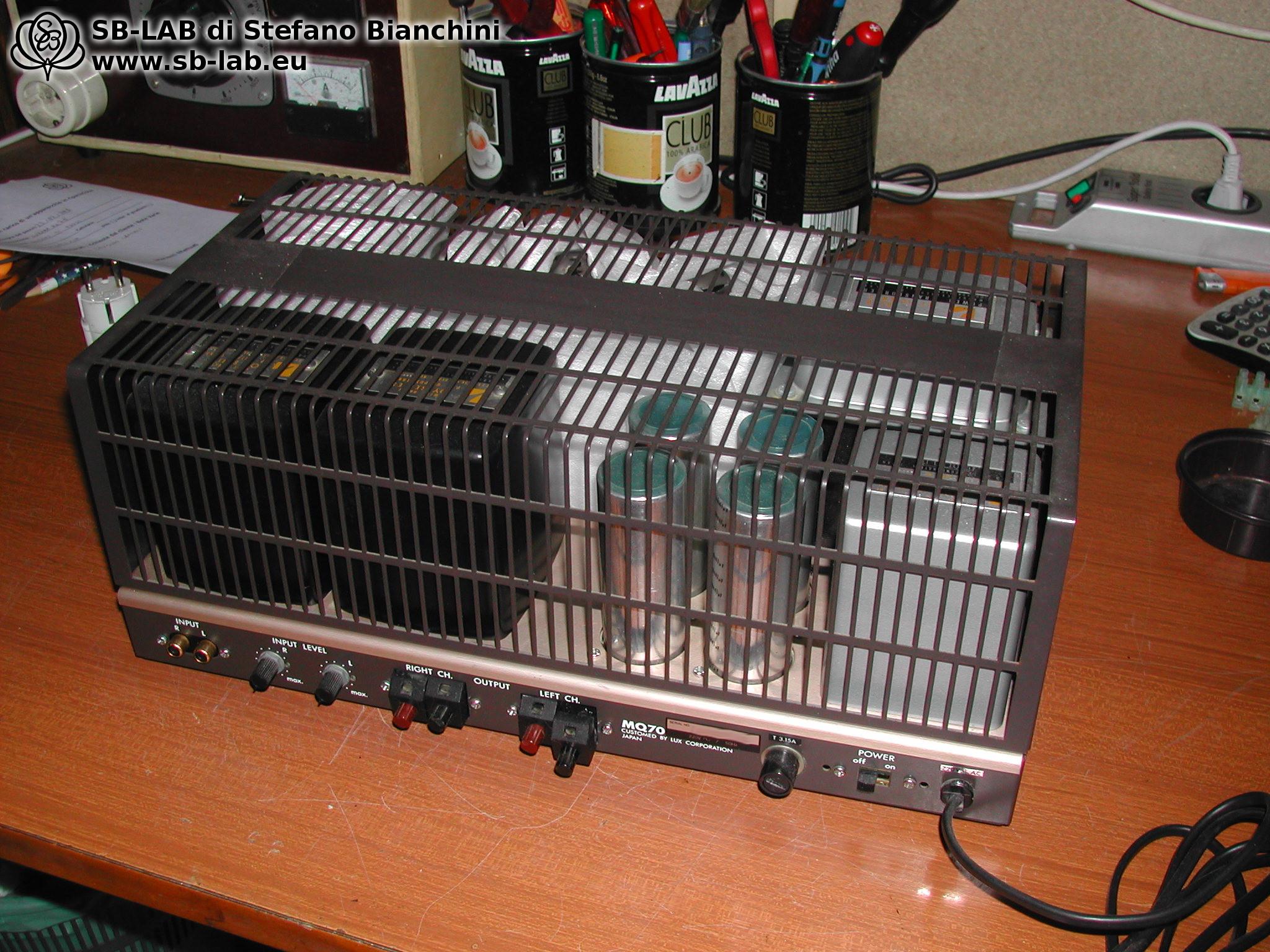
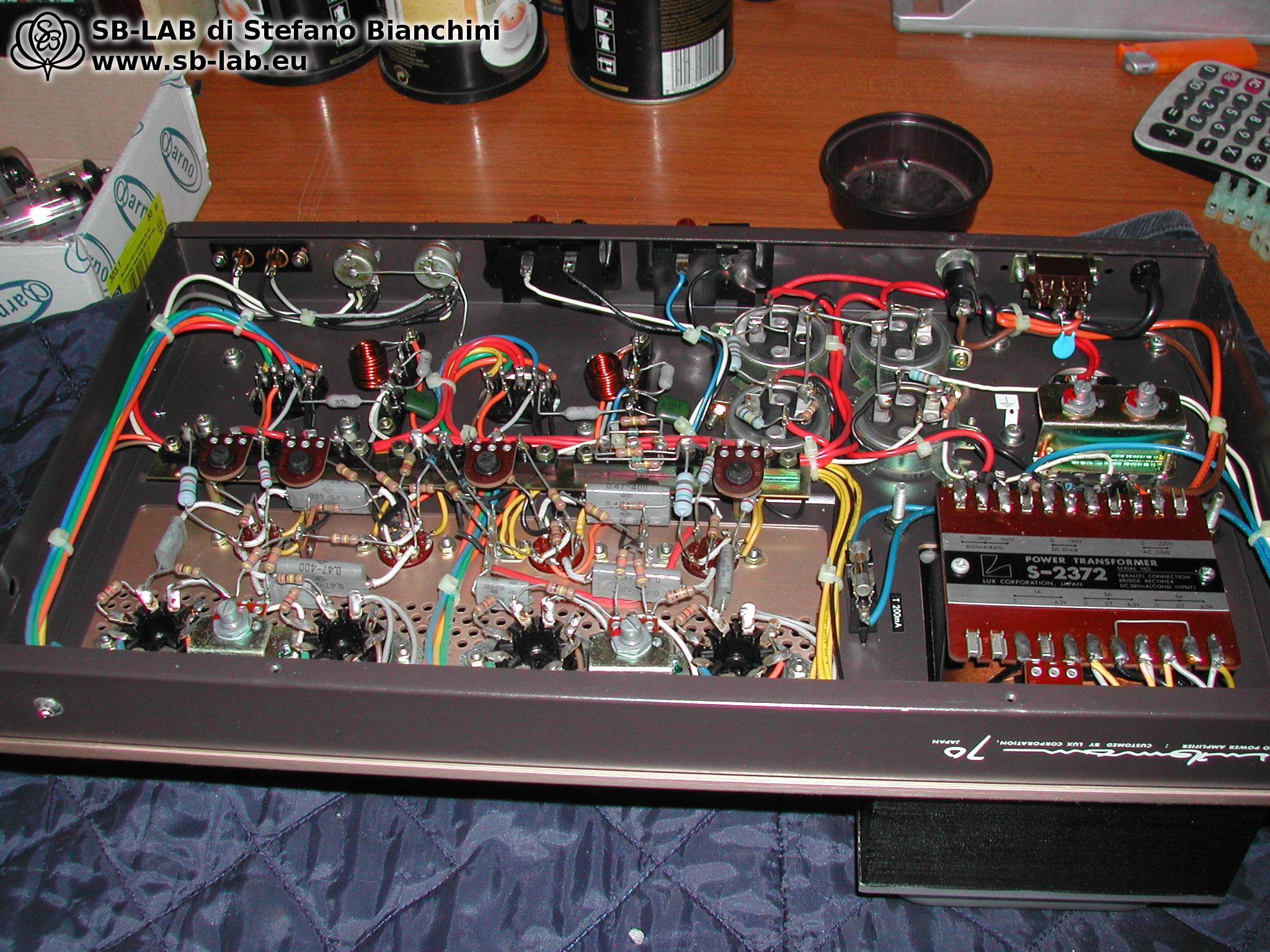
Meanwhile the first defect, that is the output transformers burning out, is more troublesome. The disconnection of the speaker happens mainly due to the screw binding posts where the stripped wire to the speaker is inserted; these plastic posts are often broken, so they loosen the cable. The transformer failure occurs due to self oscillation because the circuit has an extremely high feedback ratio.
Why I no longer restore the original MQ70 transformers
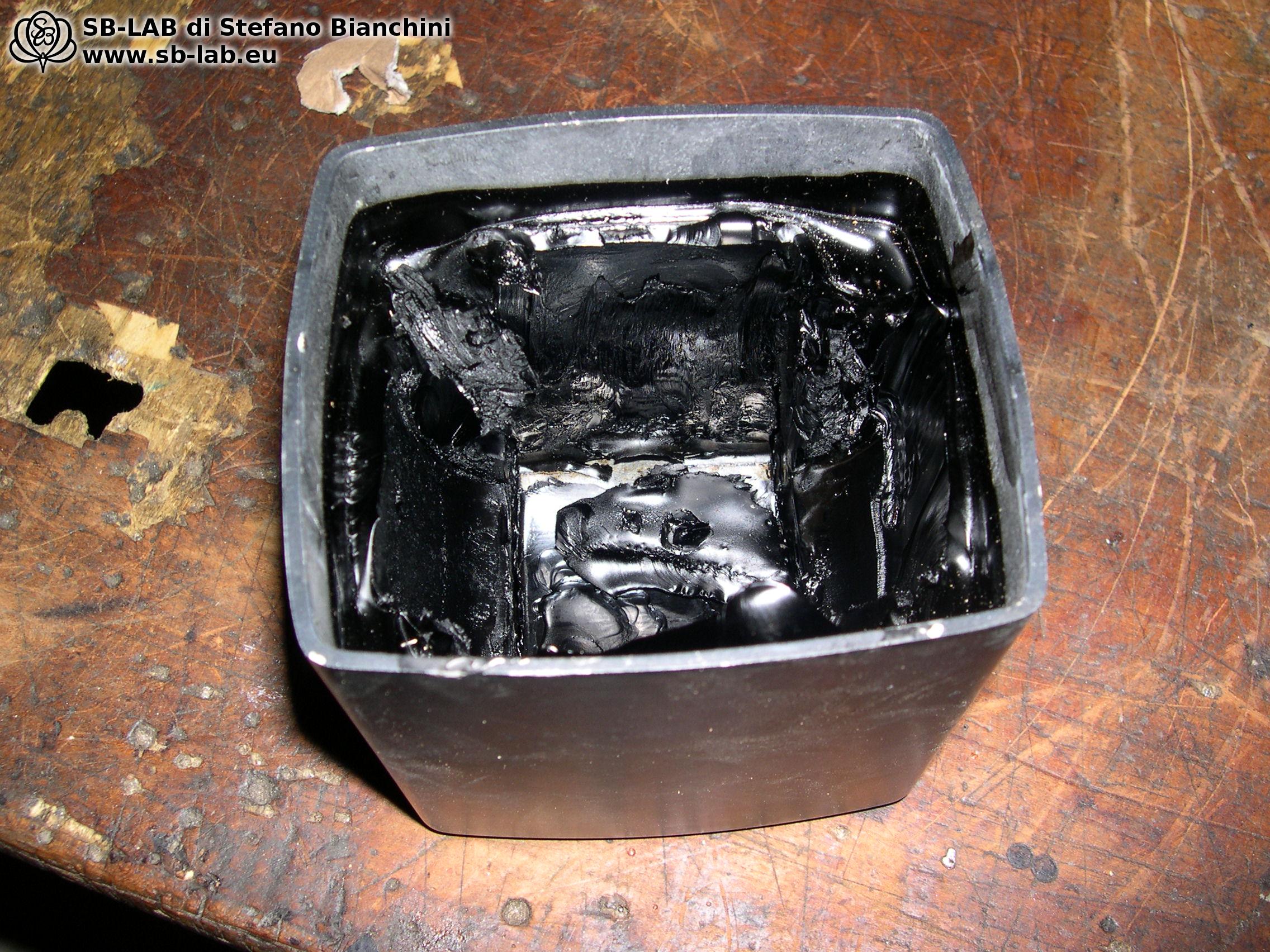
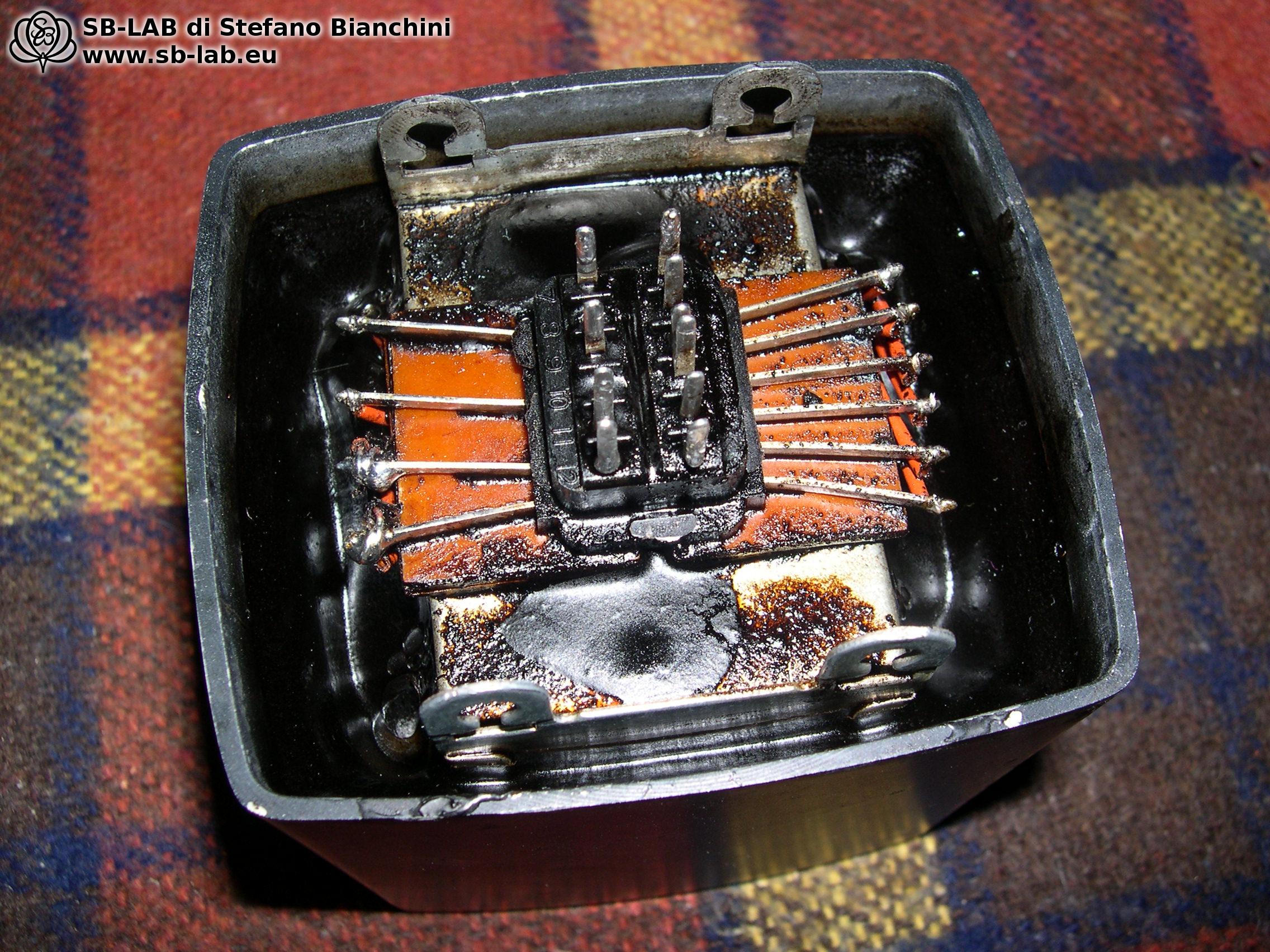
In the past I used to restore the original transformers of the Luxman MQ70, an extremely long and inconvenient job. The transformer is in fact enclosed in a metal box, completely submerged in tar and made with laminations of non standard dimensions. To recover one I had to extract the entire block from the tar, clean it thoroughly and save the laminations and clamp in order to rewind it. Besides the time involved, the operation produced irritating and unhealthy tar fumes, and in some units the melted and reinserted tar ended up leaking once the amplifier warmed up. For all these reasons I decided not to offer this type of repair anymore: today I only produce new transformers, as shown in the second part of the article. It is important to note that these transformers are no longer in production, so an “original” spare part can only be obtained by sacrificing another Luxman. I have also seen more than once cheap transformers stuffed inside emptied original cases and sold as authentic, unfortunately a rather common scam.
Extraction…
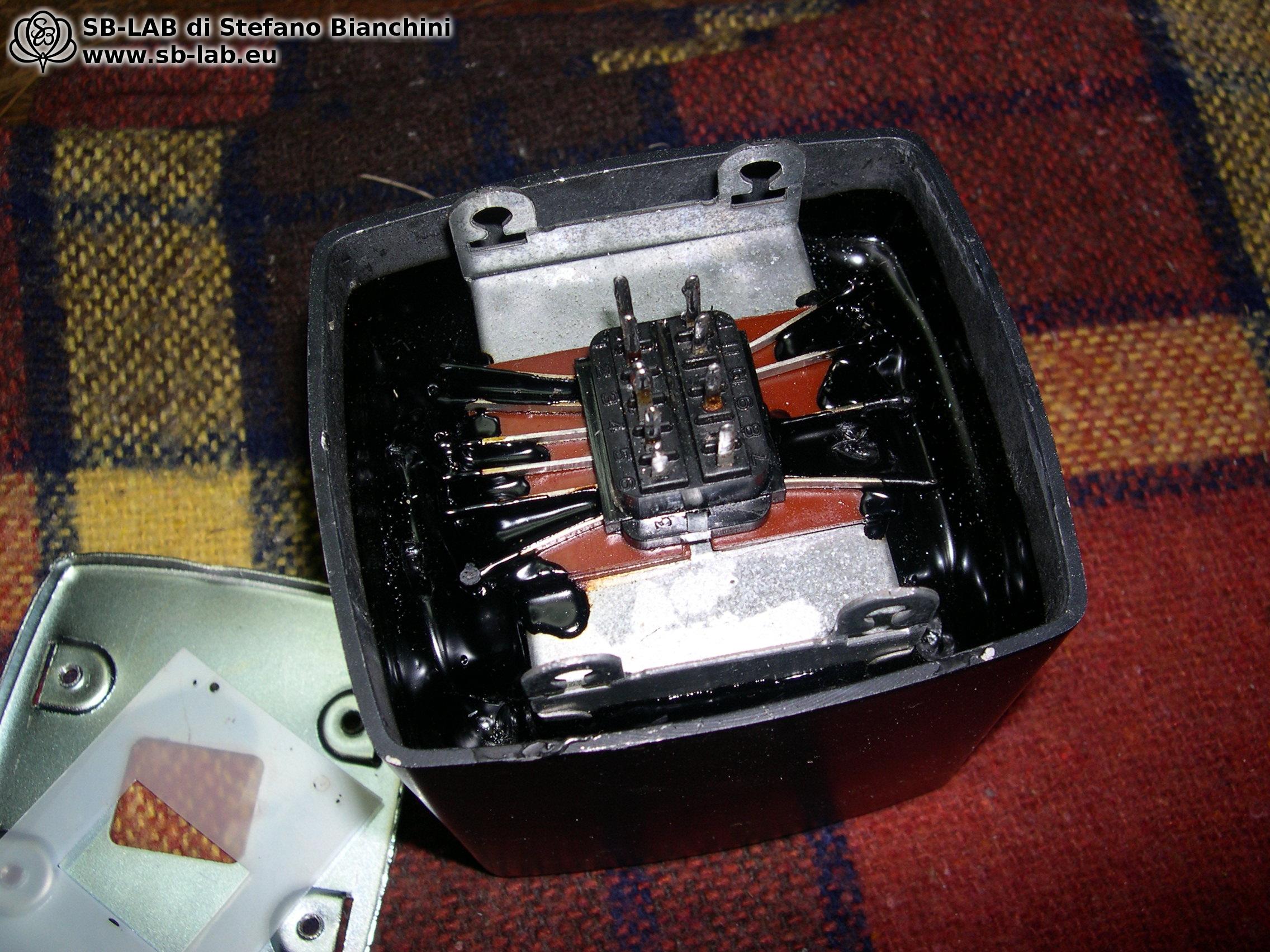

Transformer cleaned
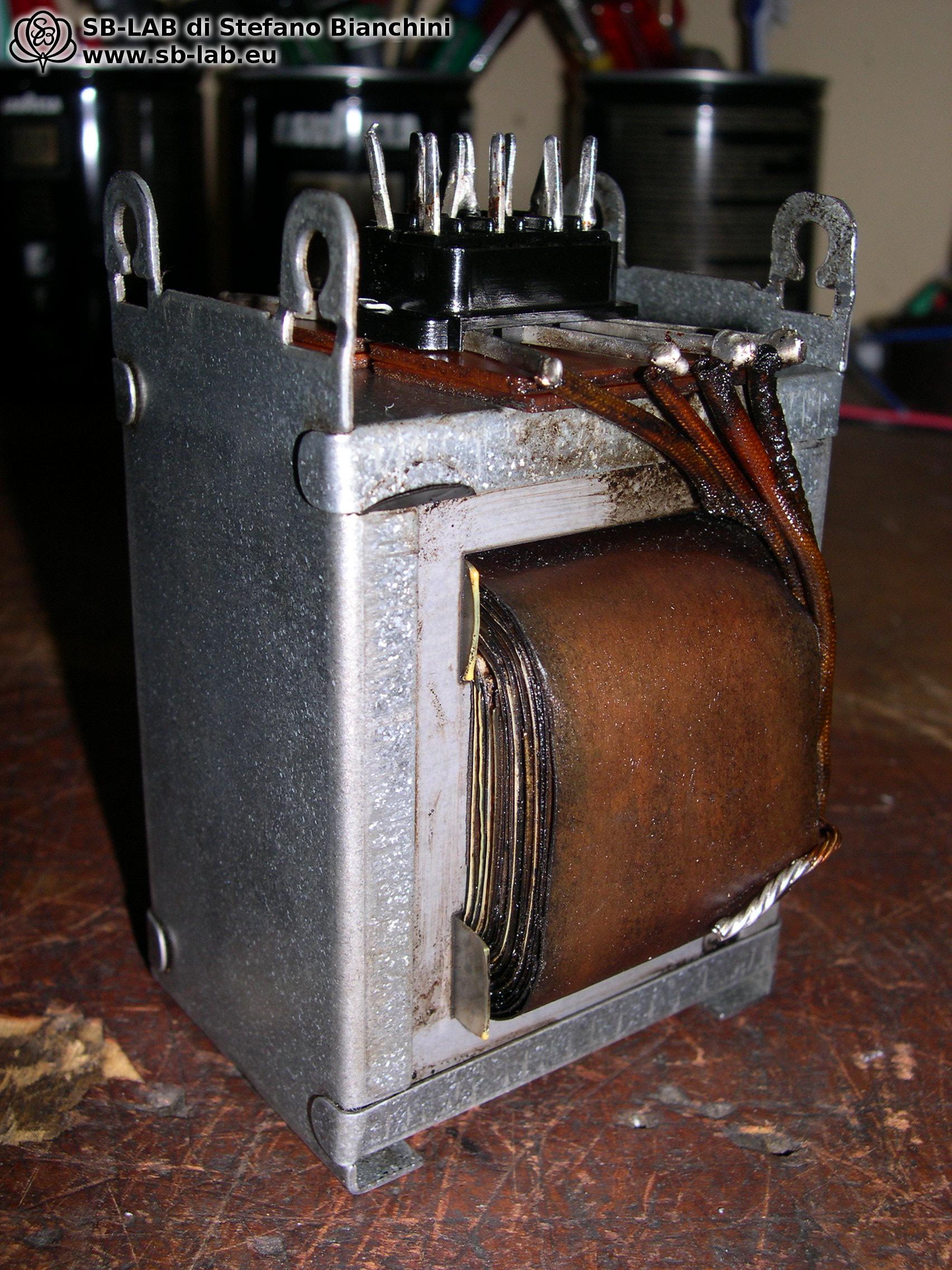
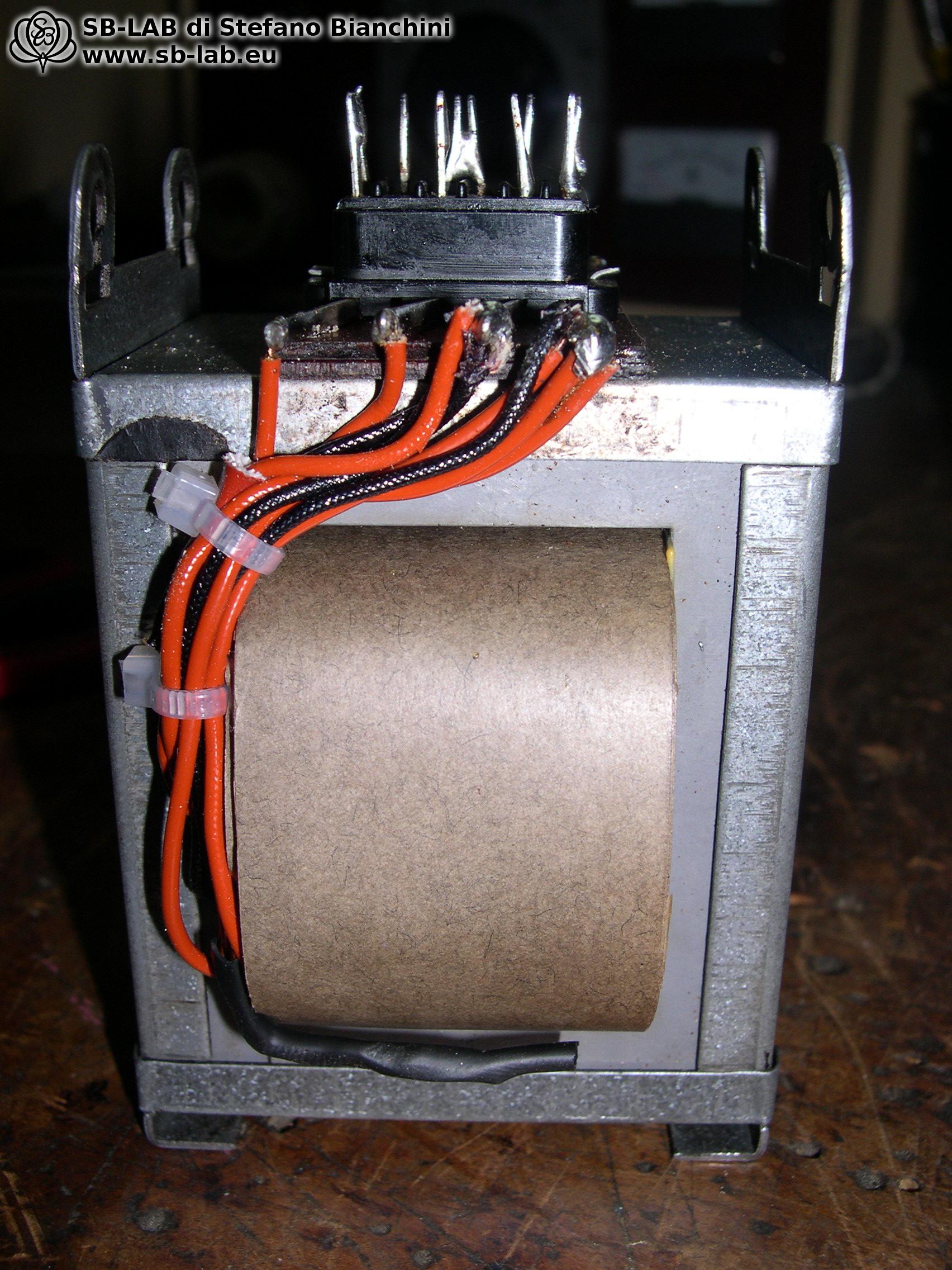
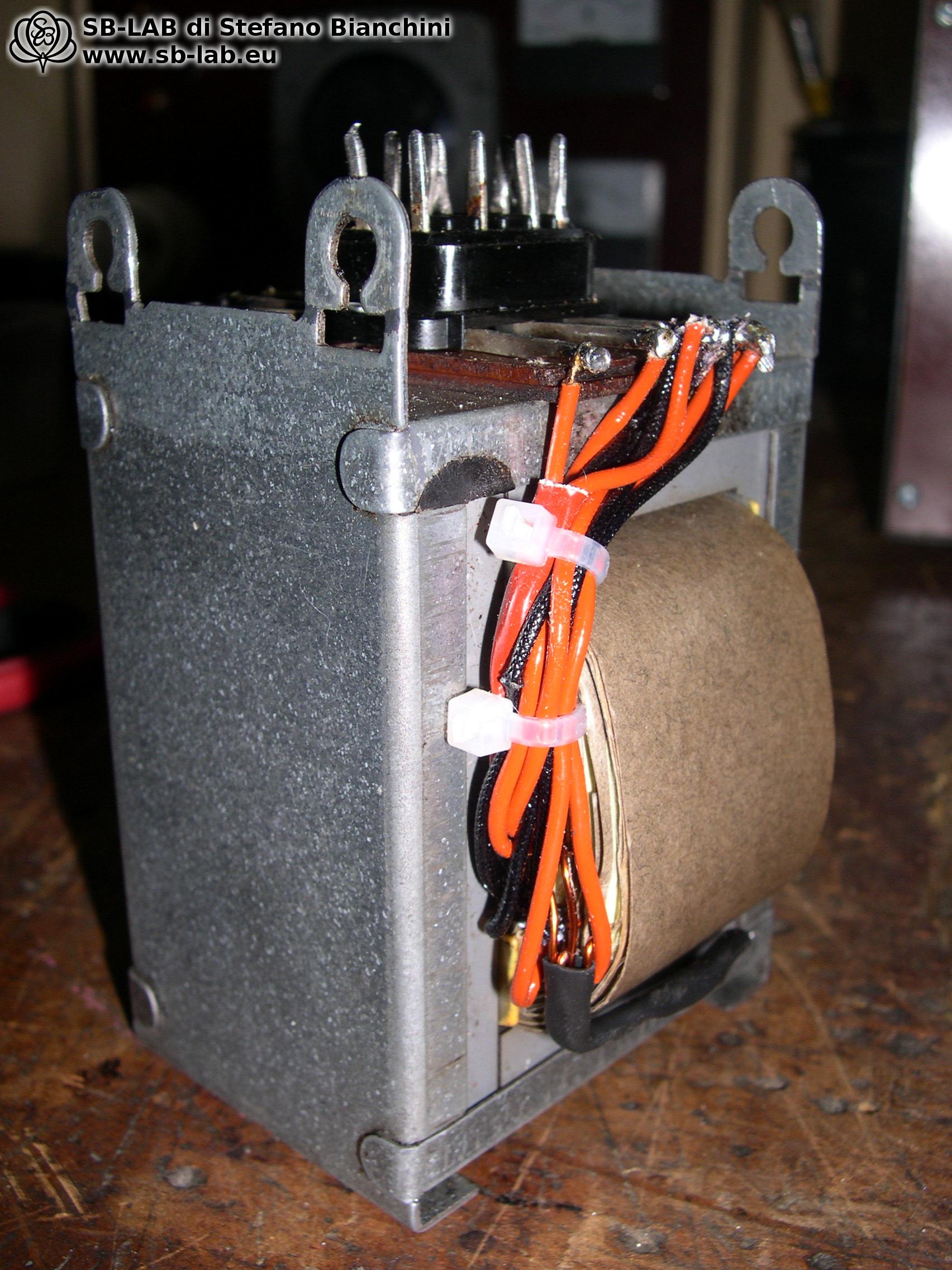
Reinserted into the original case and repotted.
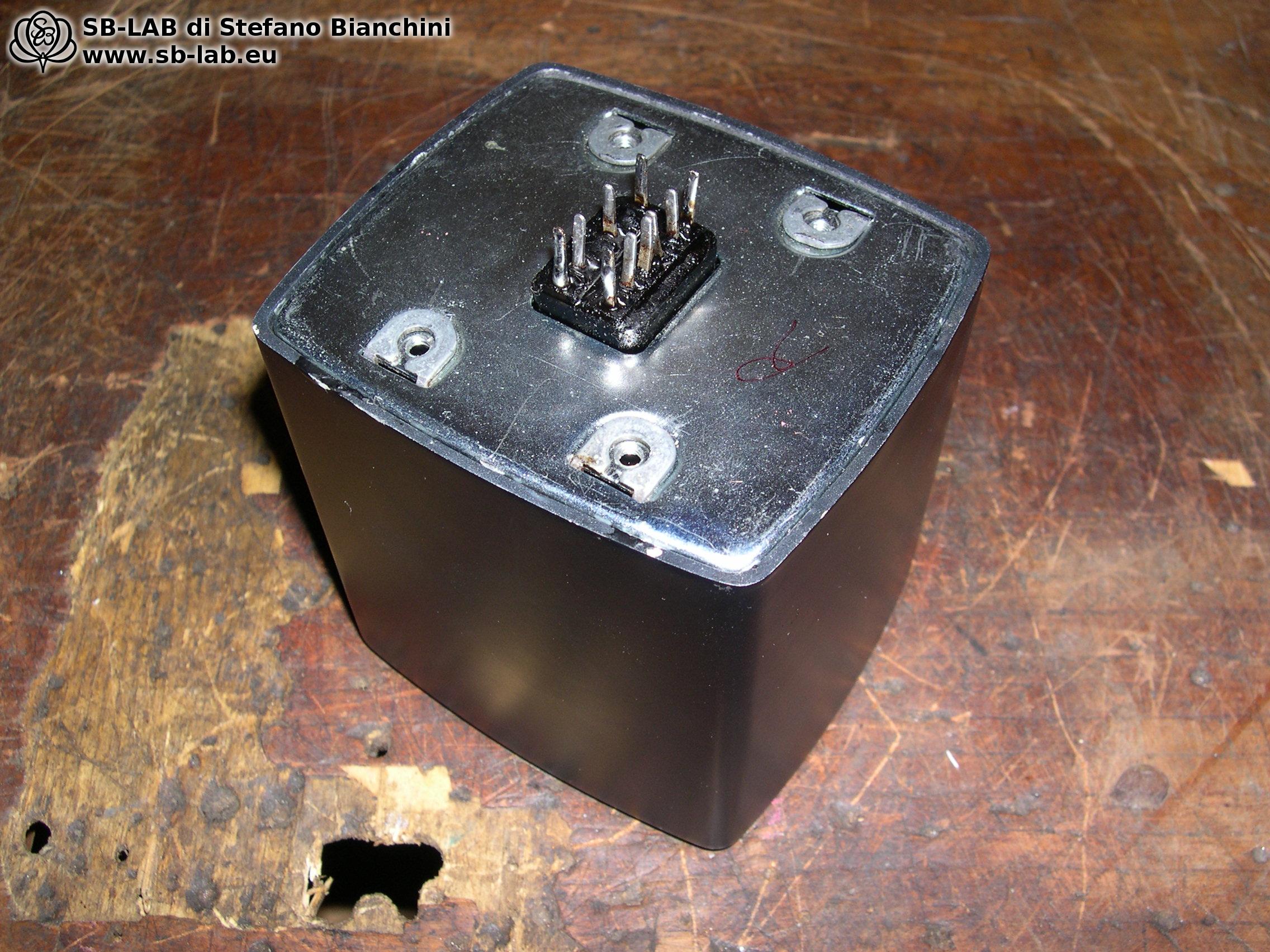
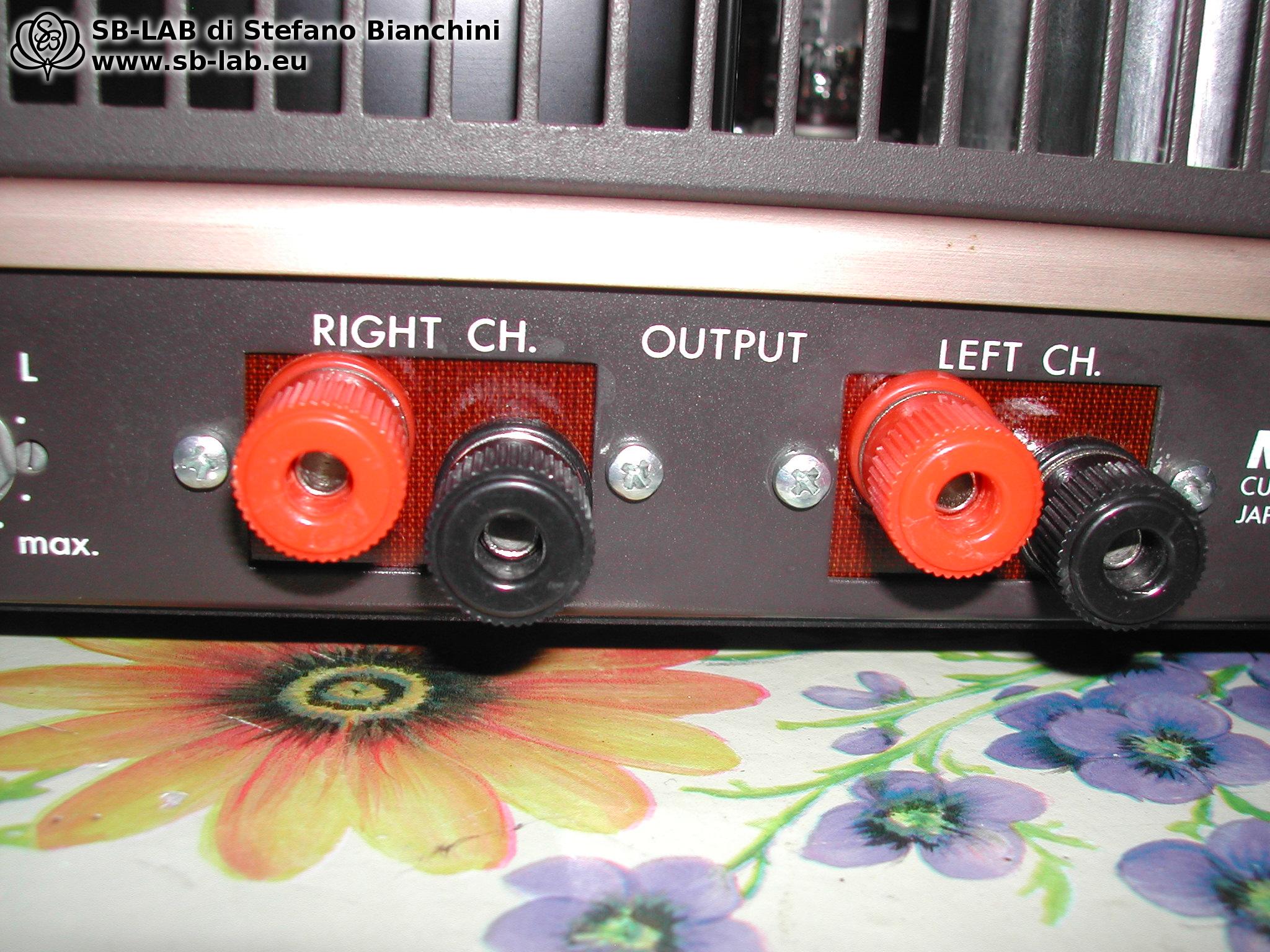
Once the repaired transformer was reinstalled, I replaced the broken screw terminals with proper binding posts suitable for crimp lugs, the only connectors that give a neat result.
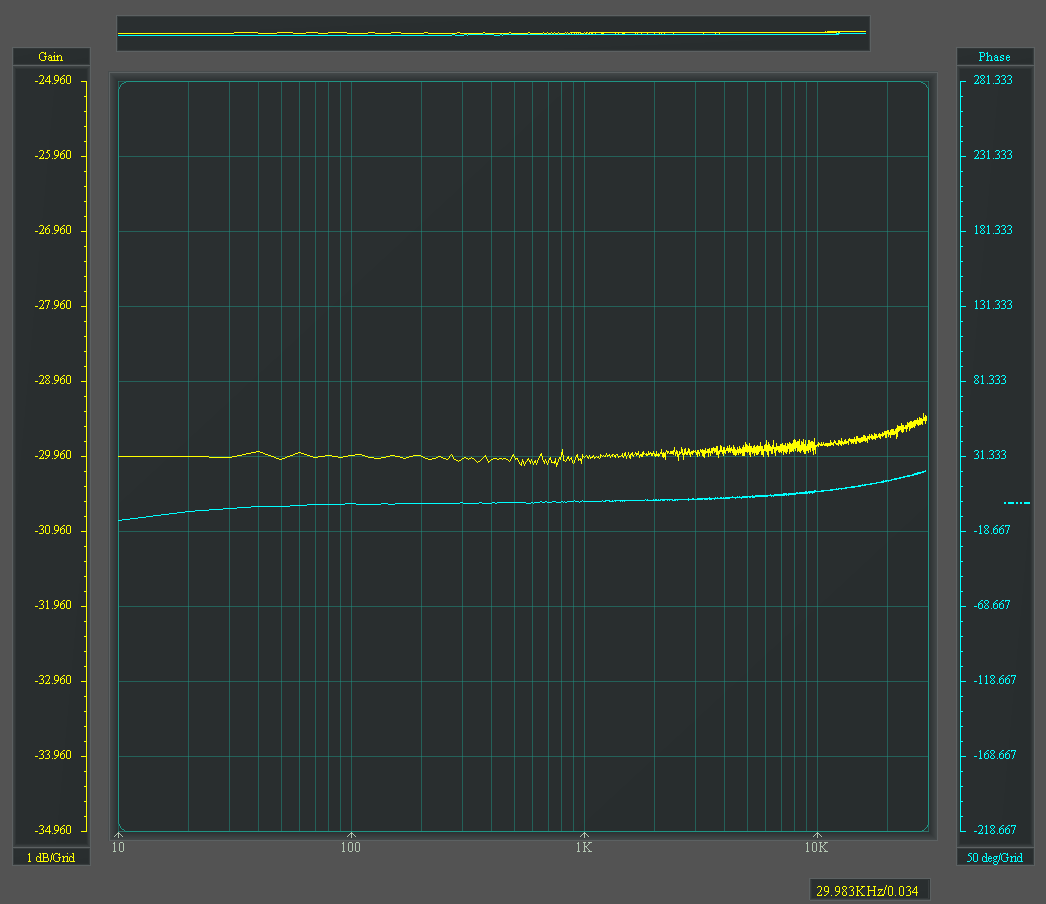
After fixing the bias issue and replacing the set of EL34 (tubes that I usually find completely worn out), the amplifier returned to working like new. For the skeptics I publish the two frequency and phase response traces acquired from the channel with the original output transformer and the rewound one. I point out that the transformer is rewound on the same original laminations, with the same materials and with exactly the same winding scheme obtained by reverse engineering, unwinding the first one I rebuilt. Therefore the copy is identical to the original. The minimal differences can also be found between pairs of original transformers, the clone is perfect.
| Original Transformer | Rewound Transformer |
 |
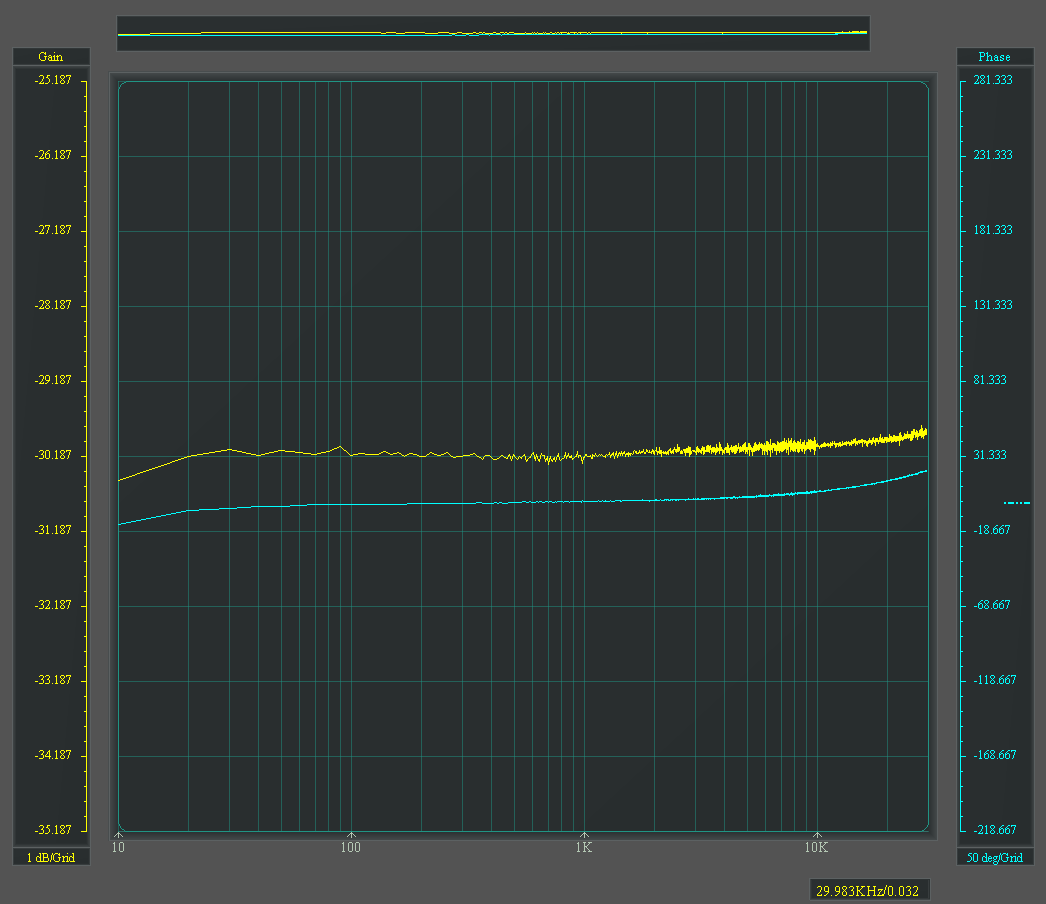 |
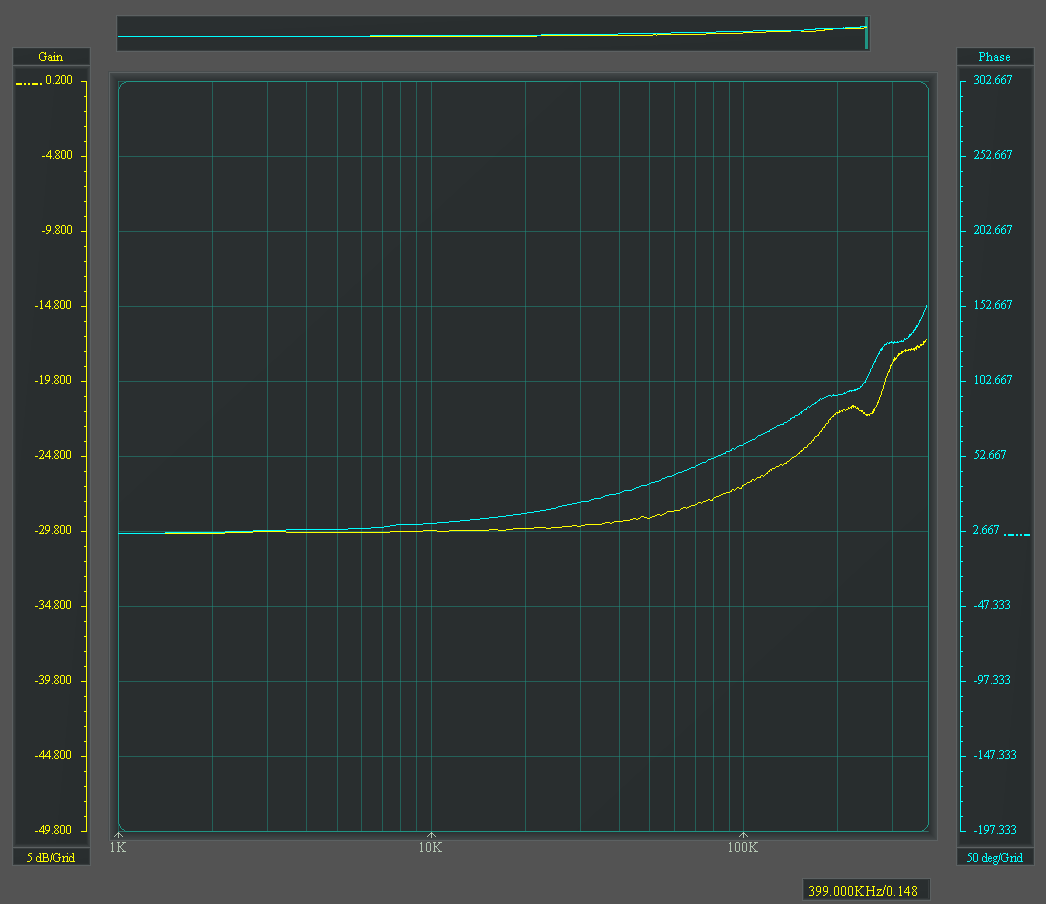
By analysing the Luxman original transformers more in depth, taking the frequency response graph up to 400kHz, you can see the onset of a very strong resonance which is probably accentuated by the huge amount of negative feedback applied to this circuit and which is certainly the cause of the destruction of the transformers themselves, with tube failure, when the amplifier has no load connected. Obviously the rewound transformer has the same issue. I did not acquire the graph beyond 400kHz for safety reasons, I did not want to damage the transformer under test since at 400kHz the response was already at plus 15dB. I also point out to the usual prejudiced characters that by ear you cannot hear any sonic difference between the two transformers even if one is original and the other has been rewound. The differences in the graphs are insignificant and you cannot hear a 0.4dB difference at 10Hz because it is in the infrasonic range. The phase response is the same and small differences like these would also be found between two original transformers, regardless of having good speakers, by ear you do not hear it. And I also have Tannoy speakers. So those who have prejudices and claim that my work is qualitatively inferior to the originals should listen before speaking, because I bet that if they did not know that there is a repaired transformer they would not hear anything unusual.
Second Case: More economical repair (but improved)
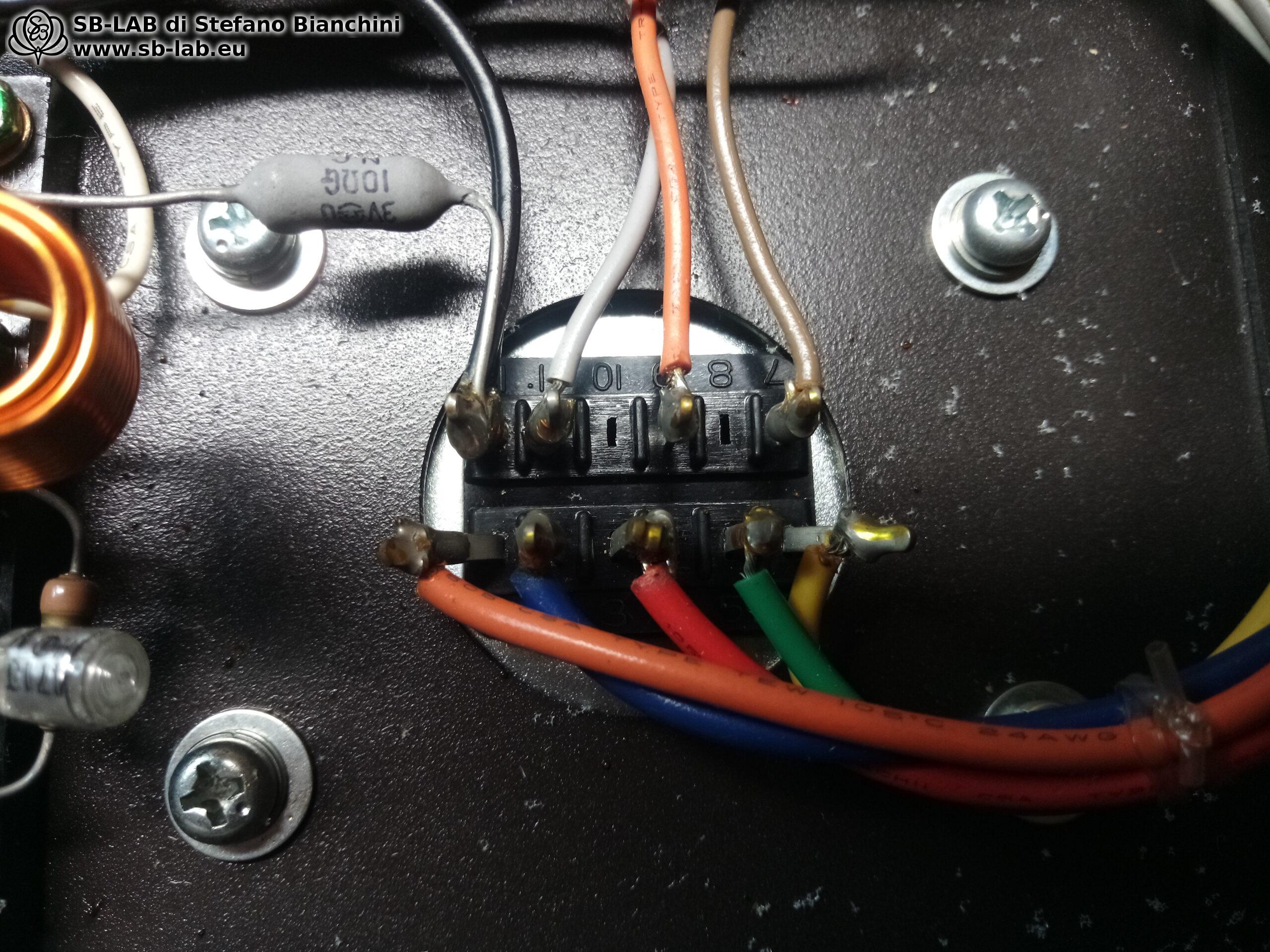
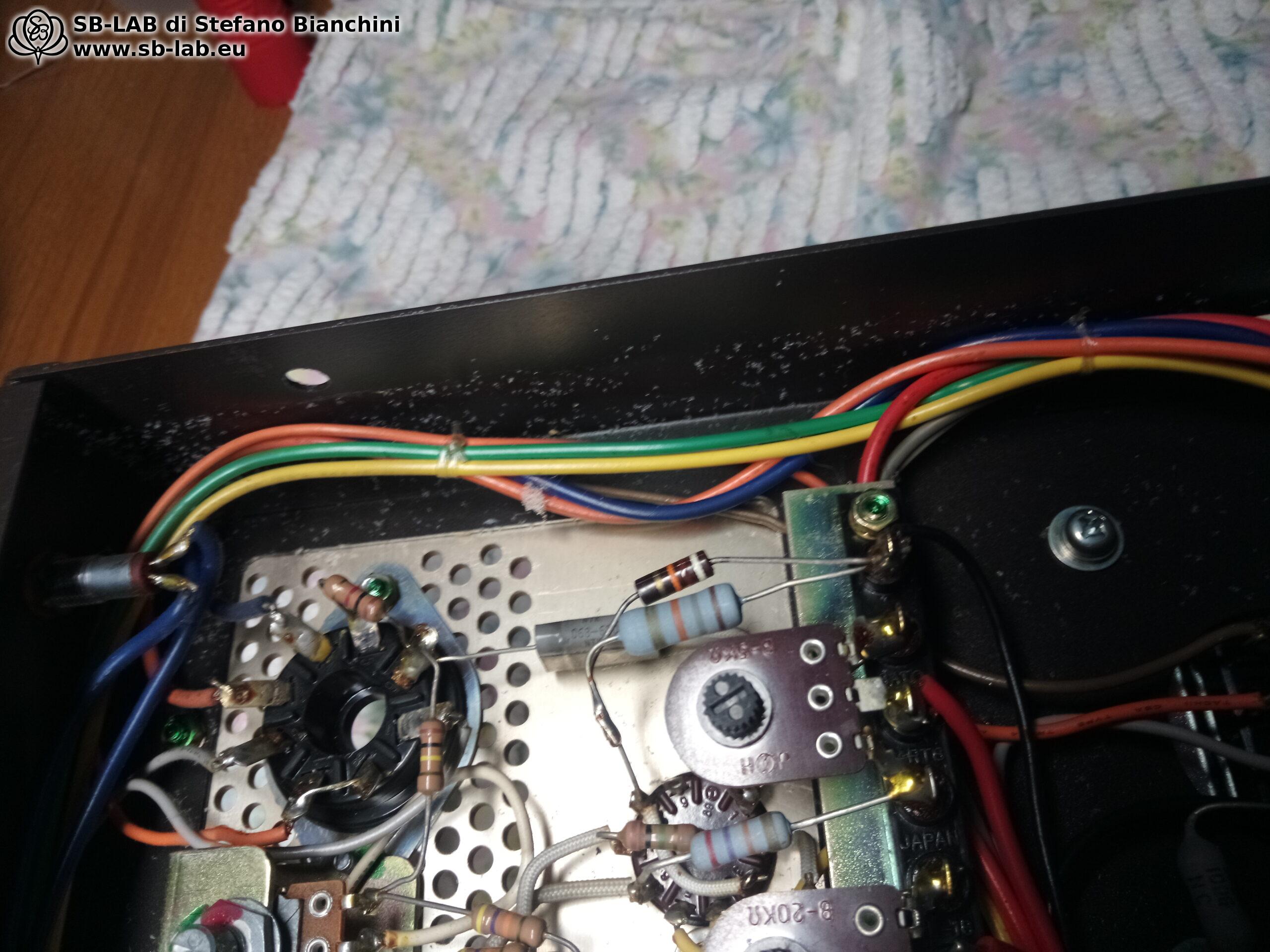
This is the case of an MQ70 sent to me by a shop. The amplifier, when the package was opened, emitted a nauseating smell, a mix of urine and burnt electronics. On visual inspection it appeared covered everywhere with salt like crystals. I believe it was stored on the ground in a very damp basement or that the said basement had suffered flooding, and that they then tried to power it up. Another technician had already attempted to repair it without success, so they sent it to me. In the photos below you can see the humidity encrustations that covered it.
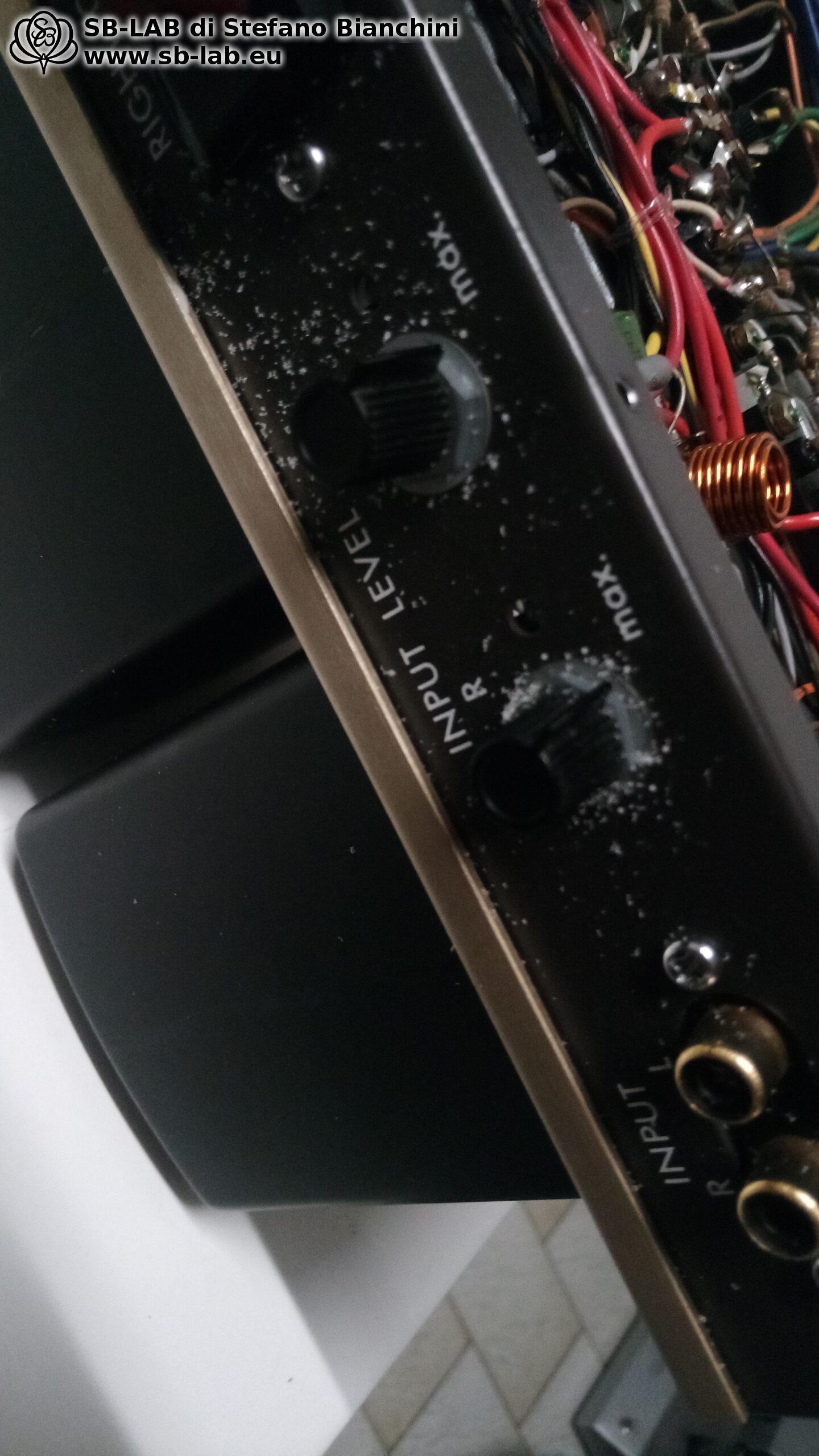
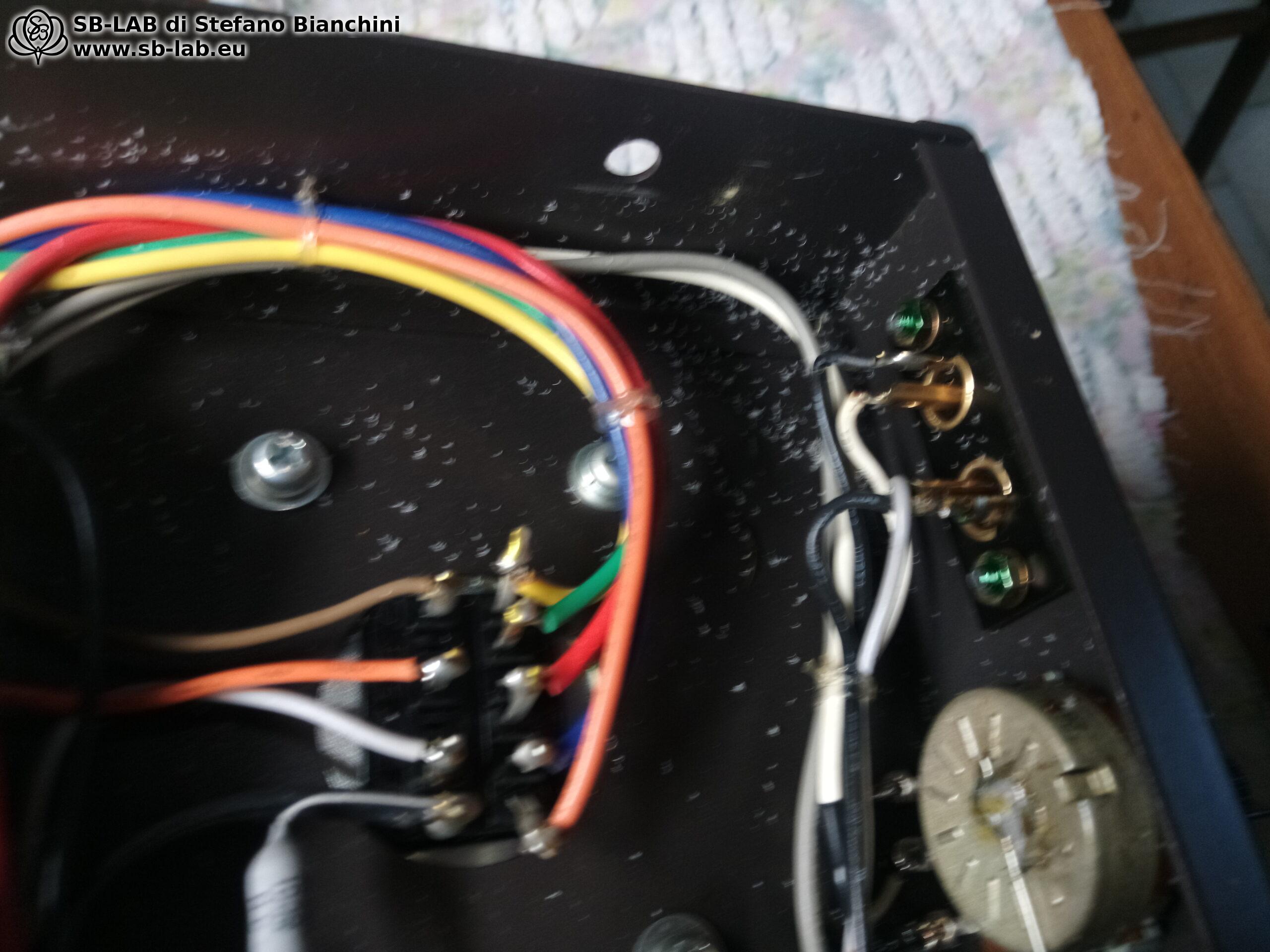
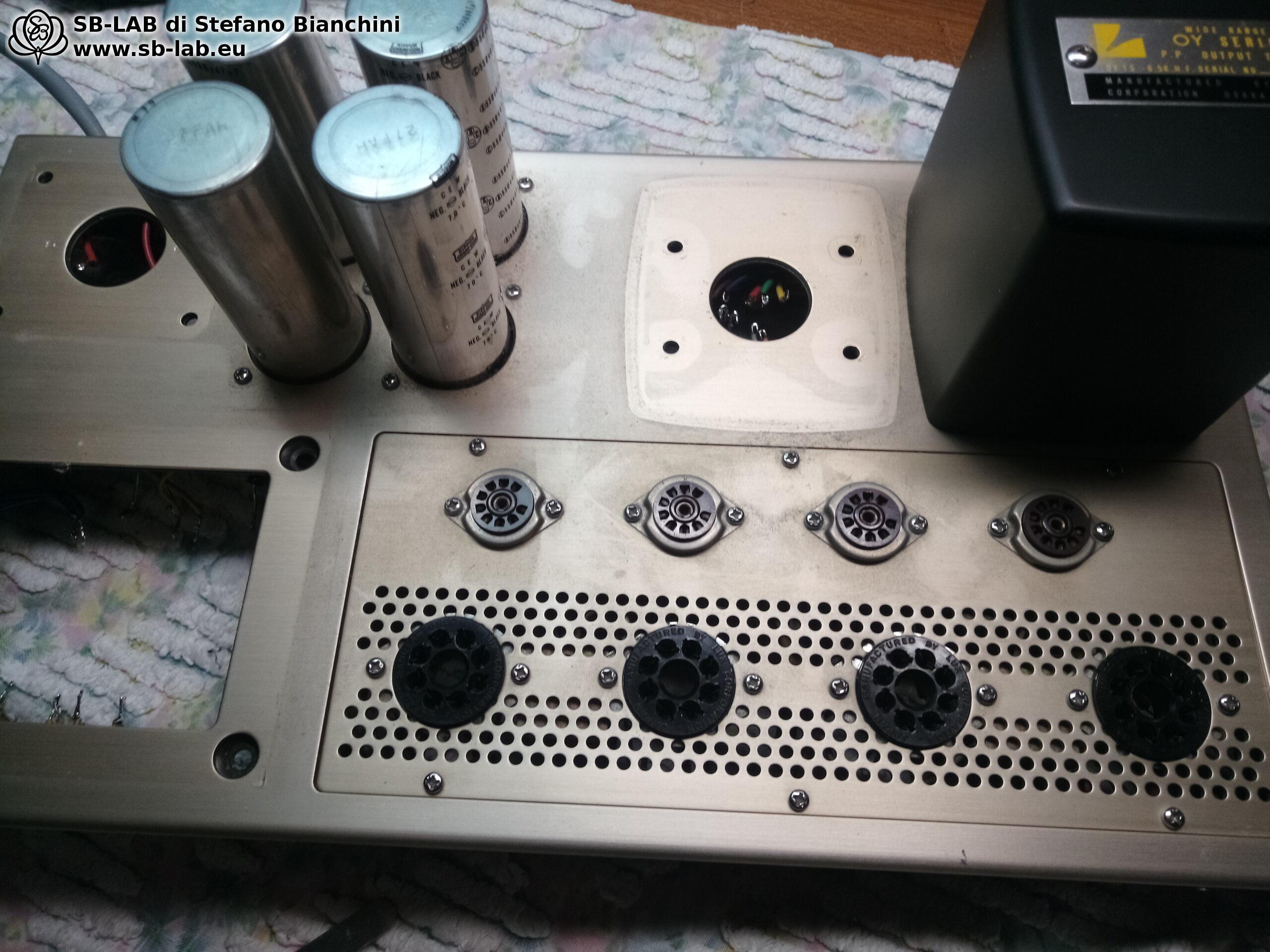
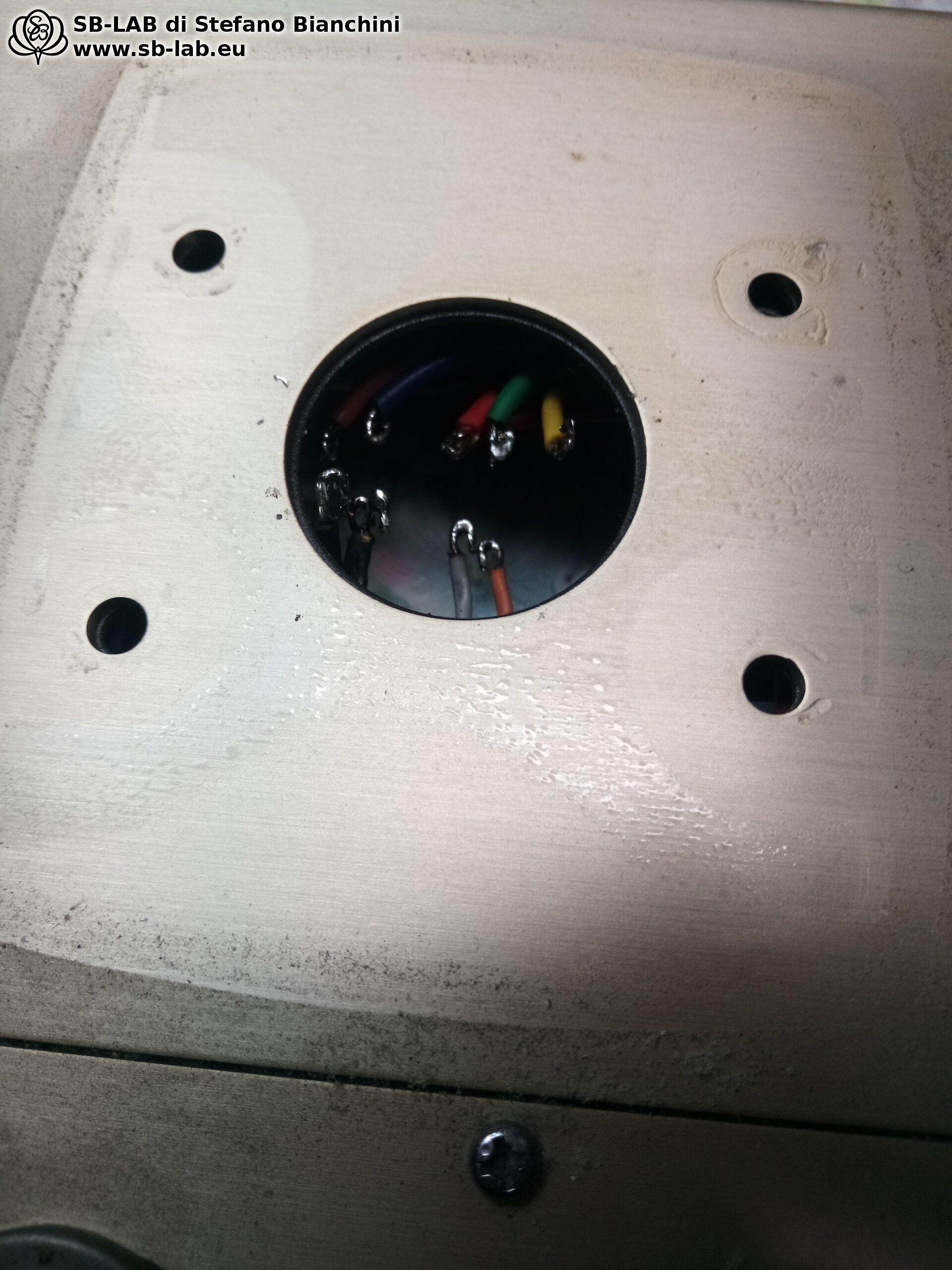
I then performed an insulation test on the output transformers and it turned out that they discharged between primary and secondary once 700 volt was exceeded, when in theory the insulation should reach at least 2kV, indicating that they had absorbed moisture. Initially I tried to keep them on the radiator for a week in the hope they would dry, but the situation did not improve. Furthermore there was a strong possibility that, given the amplifier had been powered, they already had an internal conductive burn through the insulation layers. There was no hope of recovering them, and since the rewinding of the originals, as shown in the first part of this article, is extremely laborious and costly, the shop that sent it asked me what plan B could be to avoid exceeding the budget. Plan B is to wind two replacement transformers ex novo, compatible with the circuit but obviously not aesthetically identical to the originals. Since the original transformer is wound on a core with non standard dimensions it is not possible to use the same winding pattern, so a completely new transformer must be calculated. I was confident that I could produce something even better than the original, and moreover, not having to enclose the transformers in a case, I would have at least 30 percent more core available. Plan B was approved, therefore I proceeded with the repair work. Below is the cleaned and fresh smelling chassis.
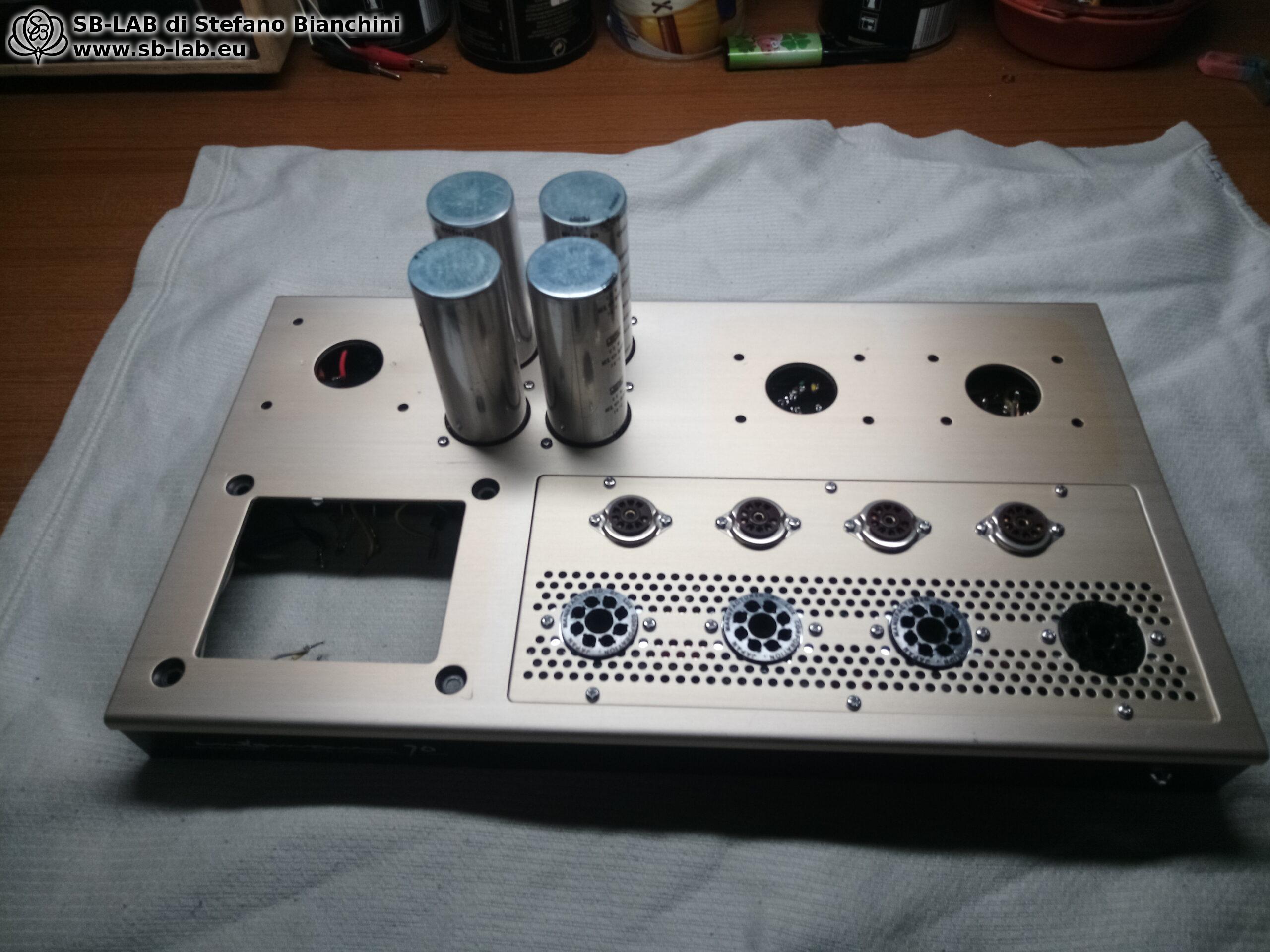
I had to drill some holes to accommodate the new output transformers…
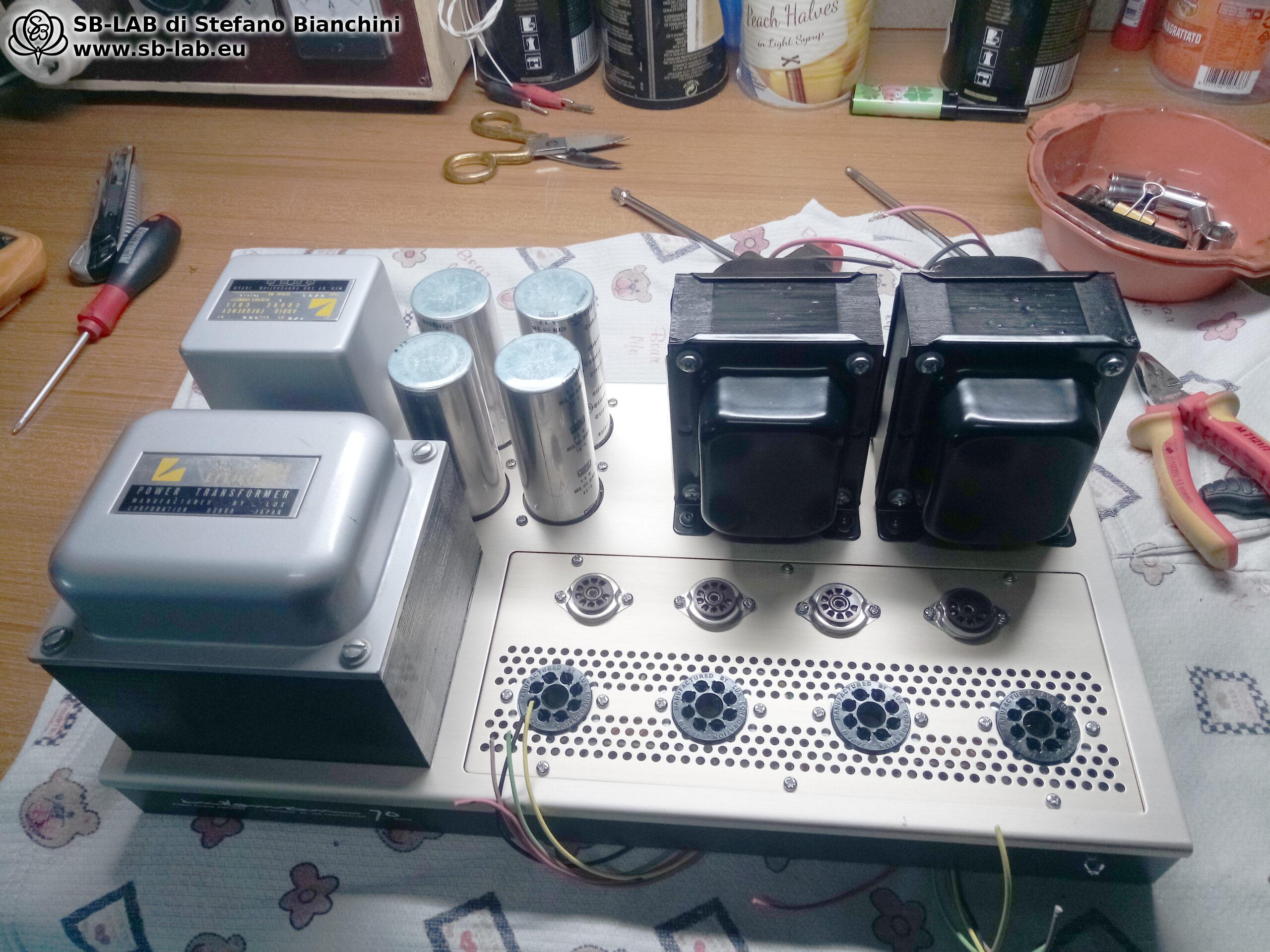
The assembly went well. In this unit too it is necessary to add the 10ohm resistors that appear in the official schematic in order to adjust the bias…
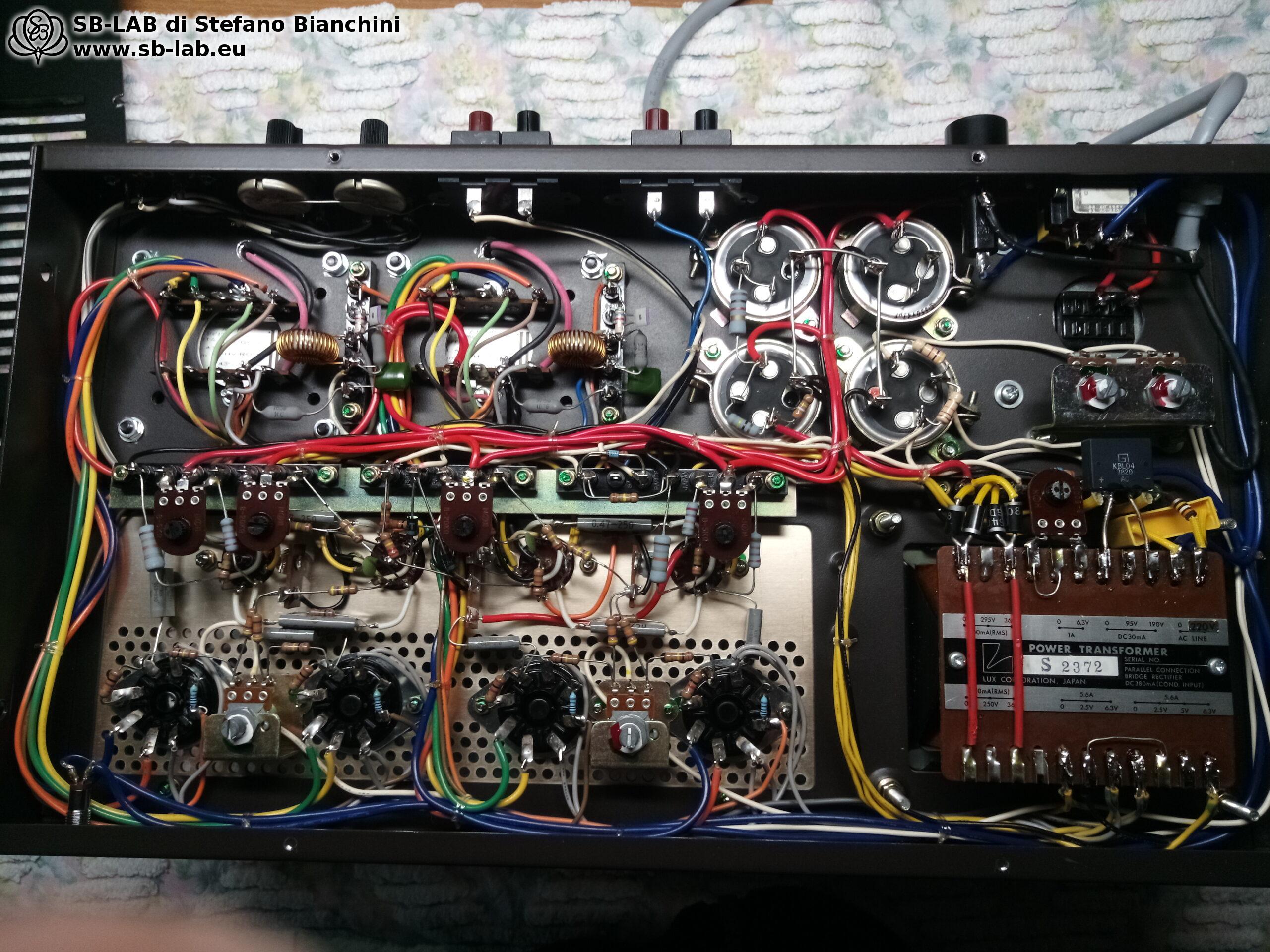
Assembly Finished…
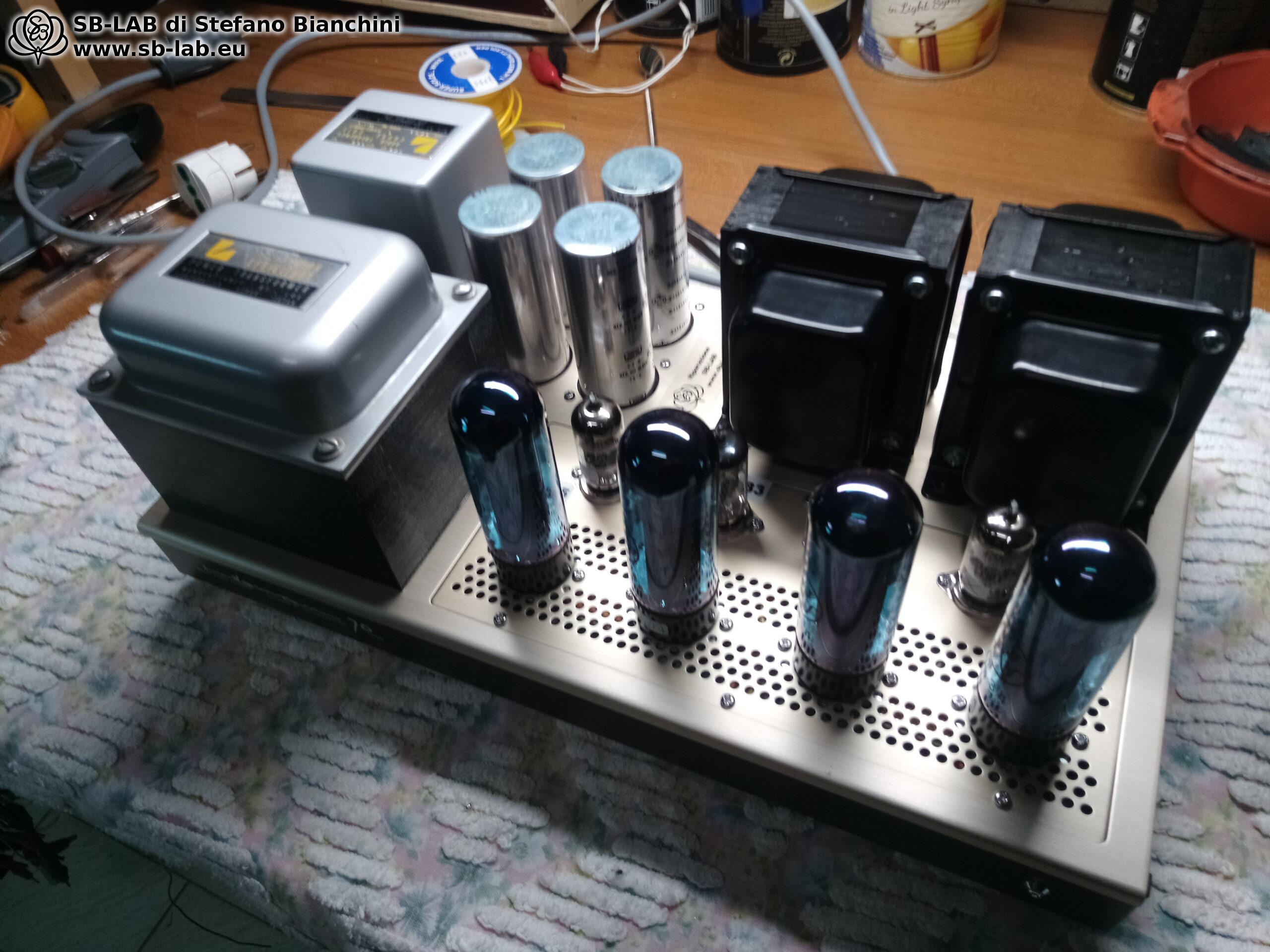
I set the bias to 35mA per tube and, surprisingly, the RMS power increased from the 40 watt per channel you get with the original transformers to 56 watt RMS. With my transformers the circuit appears stable and does not go into self oscillation with no load. The damping factor DF is 13. To be honest the circuit is too heavily feedbacked, so I adjusted the NFB resistor value to bring it down to a factor of 8.
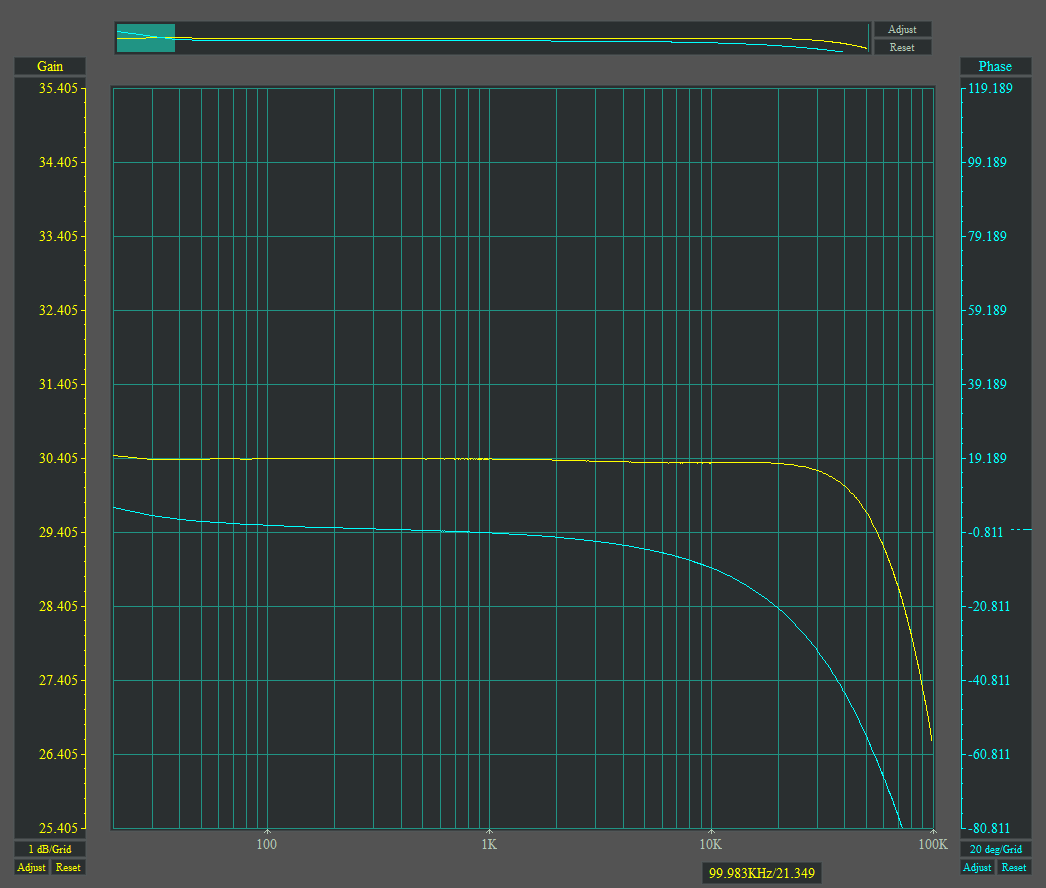
The frequency response at 6 watt is: 10Hz 0dB @ 0.4 degrees / 55kHz minus 1dB @ 60 degrees. The bandwidth and phase rotation are imposed mainly by the compensation network of the NFB, the transformer itself extends to almost 100kHz. The graph is also much cleaner compared to the original transformer’s response.
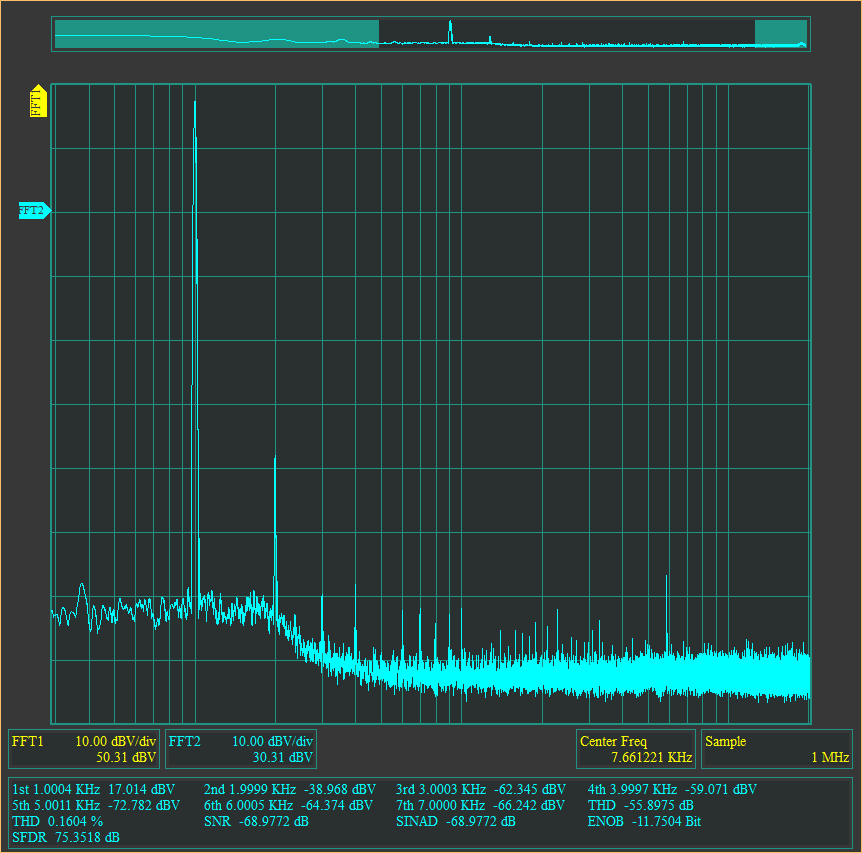
Harmonic distortion THD @ 1 watt on resistive load 0.17 percent
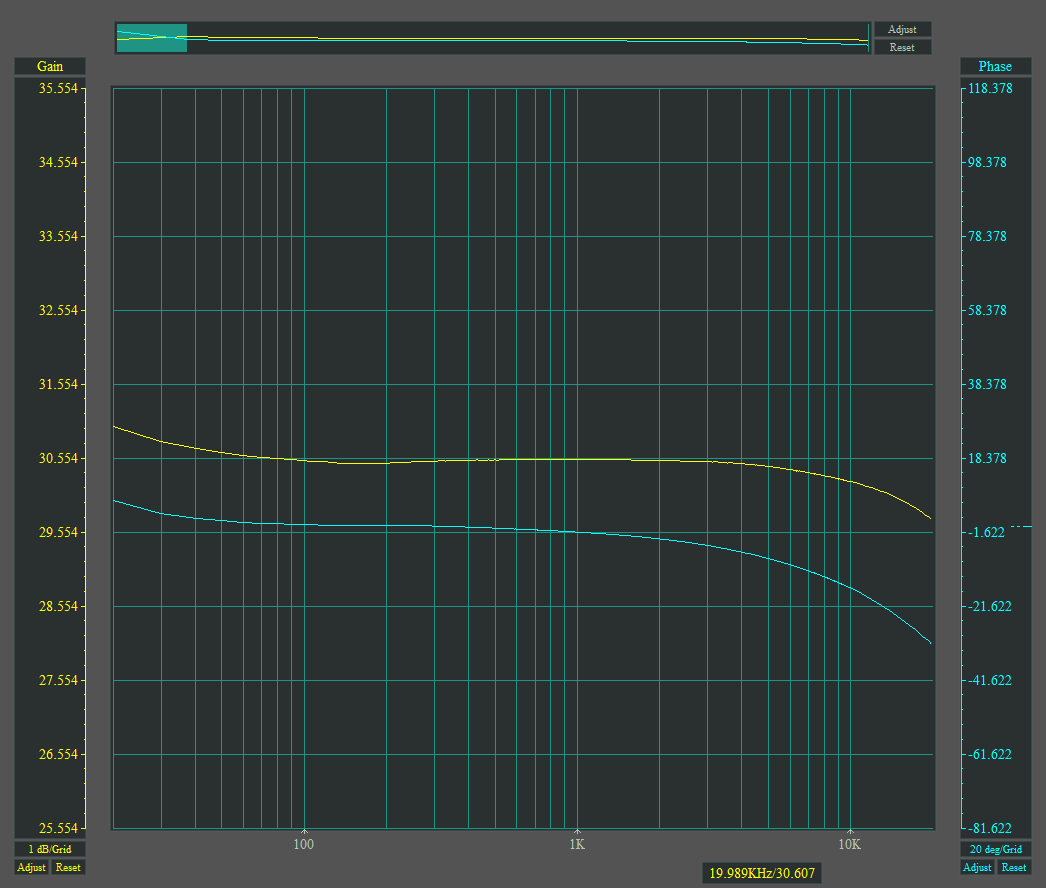
The reactive load graph is impressive, the result of great work from Luxman but also of the heavy negative feedback. It remains a tube amplifier designed in the 1980s, competing with the flourishing market of transistor amplifiers of that era which focused everything on measurements. Below is the reactive load response graph at 6 watt.
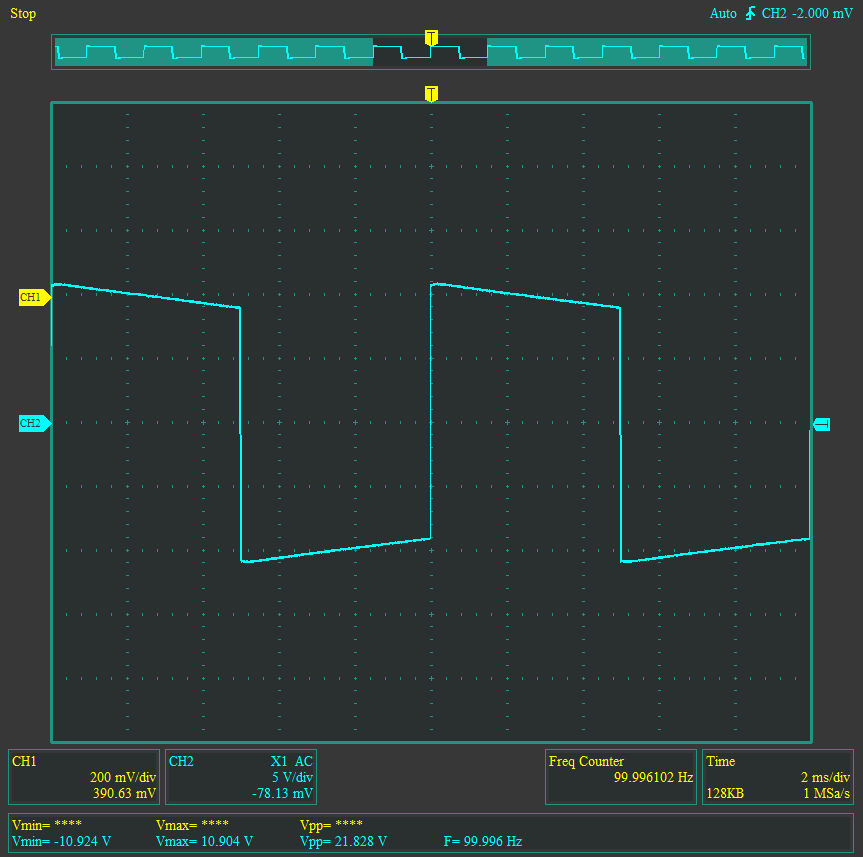
Square waves at 100Hz / 1kHz / 10kHz
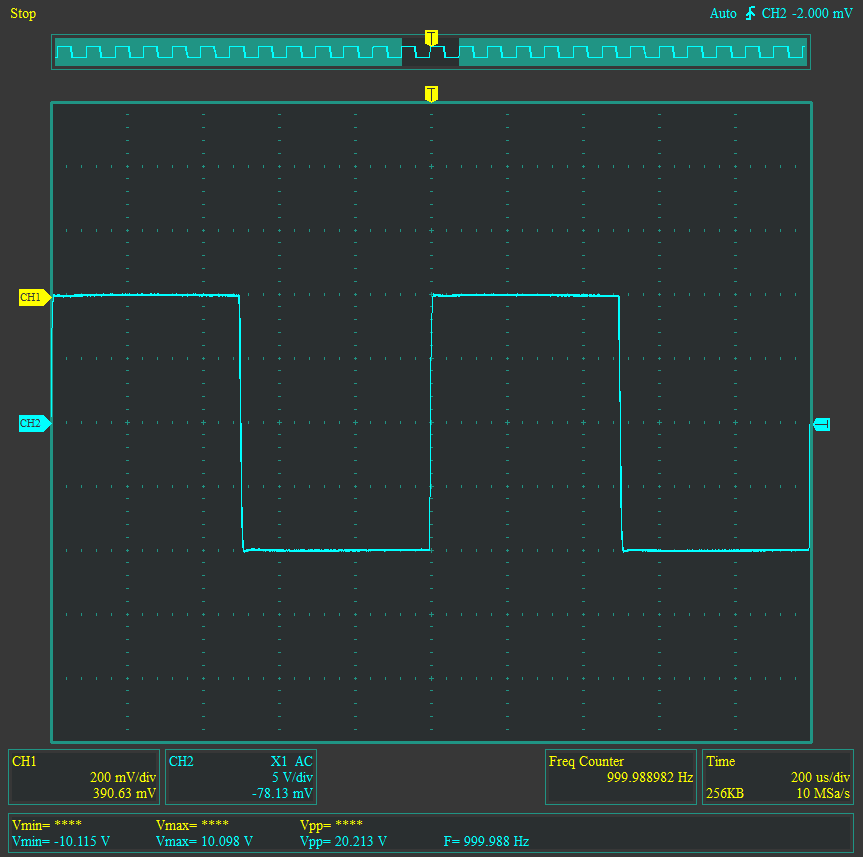
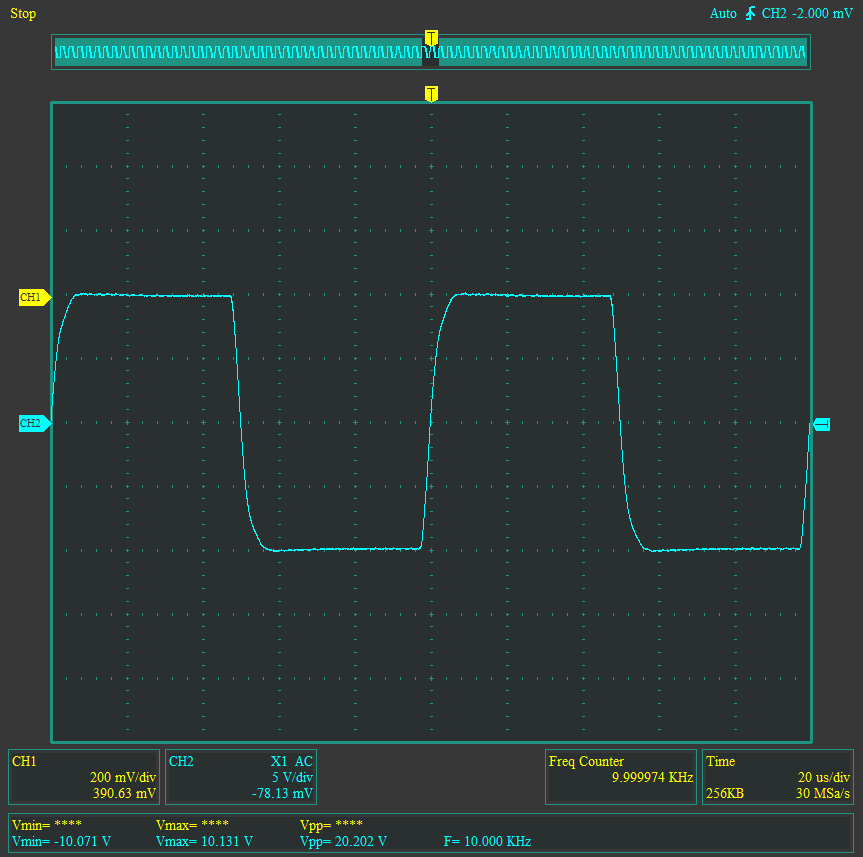
I listened to the amplifier and the sound remains that classic Luxman signature, I did not notice particular changes. Above all, in light of recent information received from people close to me, I point out to purists and collectors: yes, the transformers in this case are no longer the original ones, and if you are looking for a unit for collection purposes this is not the one for you. But you cannot claim that it sounds worse. In this case it is different, cleaner and brighter, so according to the person using it, better than with the originals. And those who have not heard it cannot pass judgment, the measurement results are clear. I repeat again, it was a faulty unit that now plays and makes someone happy; otherwise it would have been usable only as scrap to salvage spare parts.