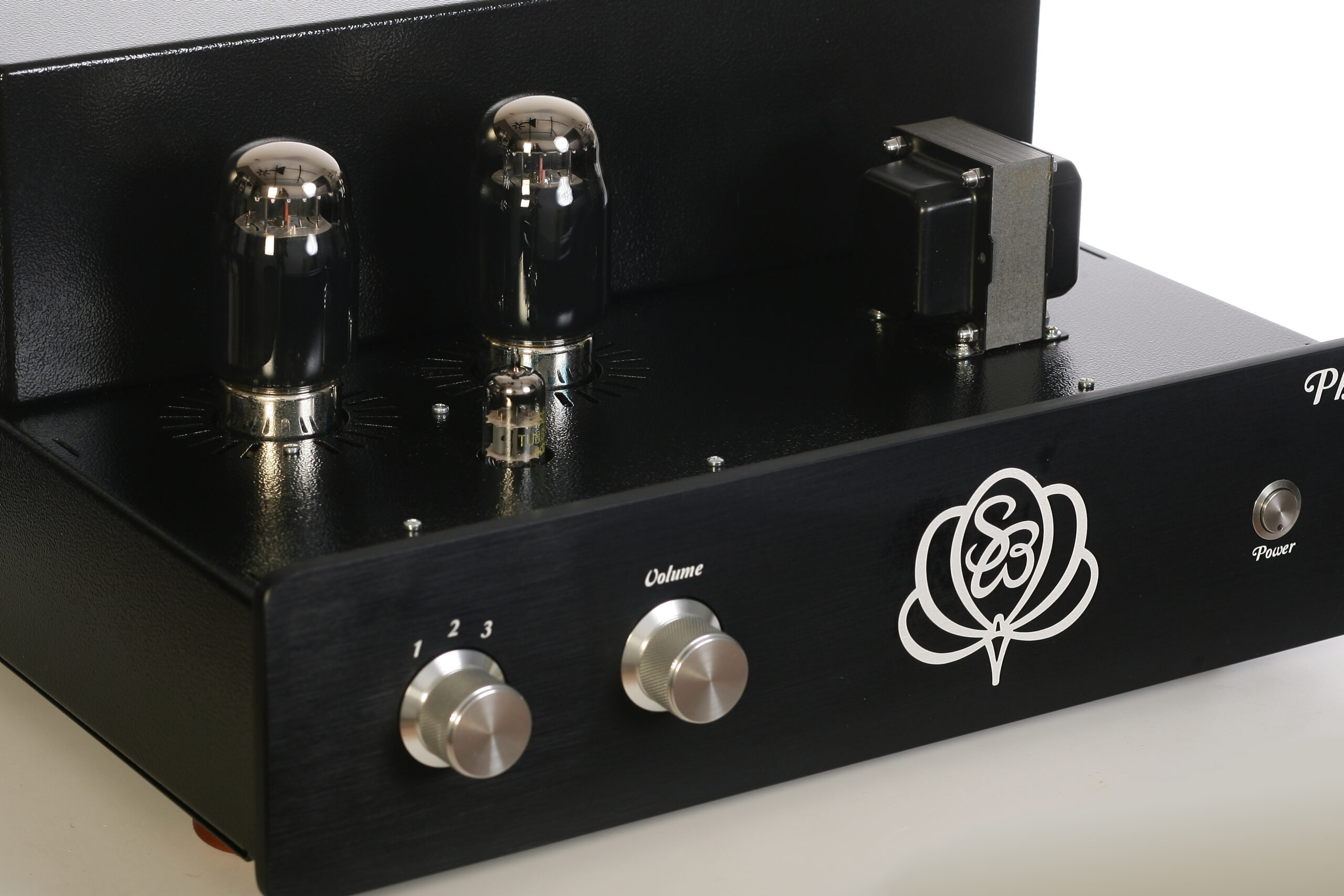
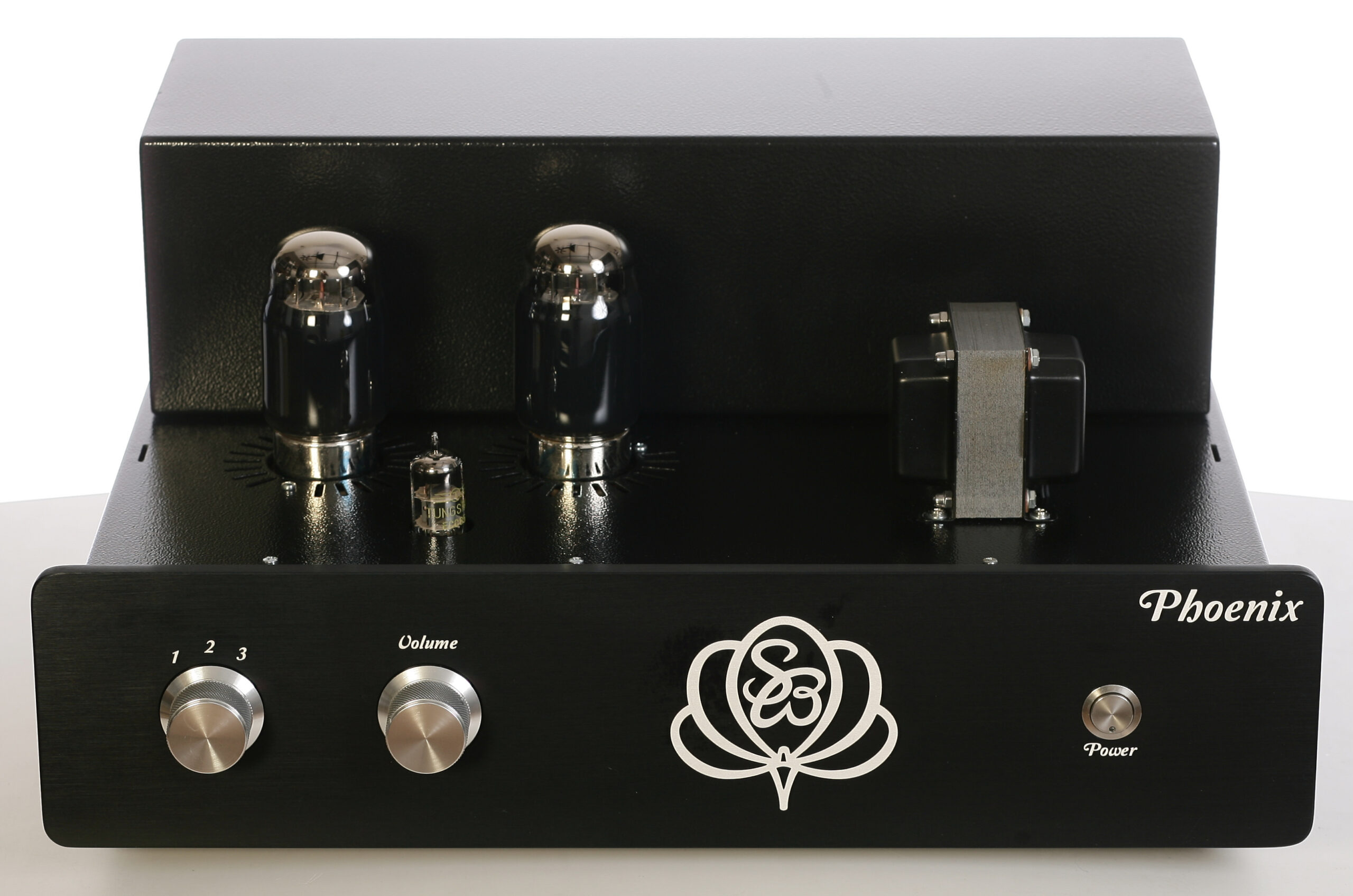
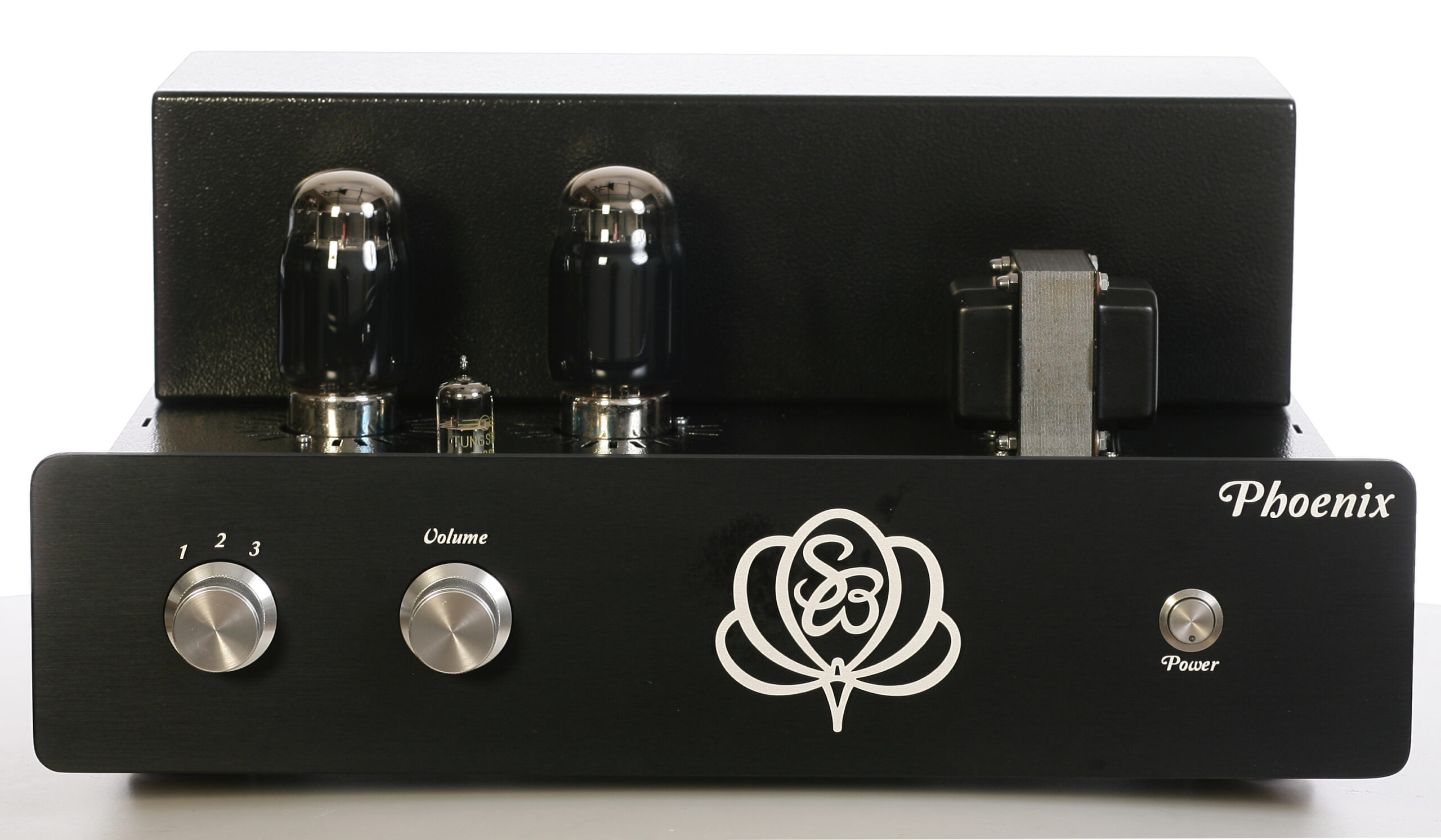
It is with great enthusiasm that I present the first official SB-LAB amplifier: the Phoenix. This extraordinary 3-input integrated amplifier delivers an unprecedented audio experience thanks to its Single Ended configuration with KT88/6550 tubes, driven by an ECC81 or optionally an ECC85 and equivalents. With a total power output of 24 watts RMS, the Phoenix provides superior performance.
The Phoenix’s electrical design is the result of three years of dedicated research aimed at perfecting a previous successful project. We further improved the circuit, achieving an optimized printed circuit board that ensures unmatched quality and repeatability compared to traditional point-to-point wiring. It is important to note that the PCB was personally designed by me, guaranteeing full control over the product’s quality and reliability.

The output transformers, after extensive testing, have been further improved compared to previous models. I have also developed a new power transformer that reduces the overall heat generated by the system, ensuring optimal operation and longer lifespan.
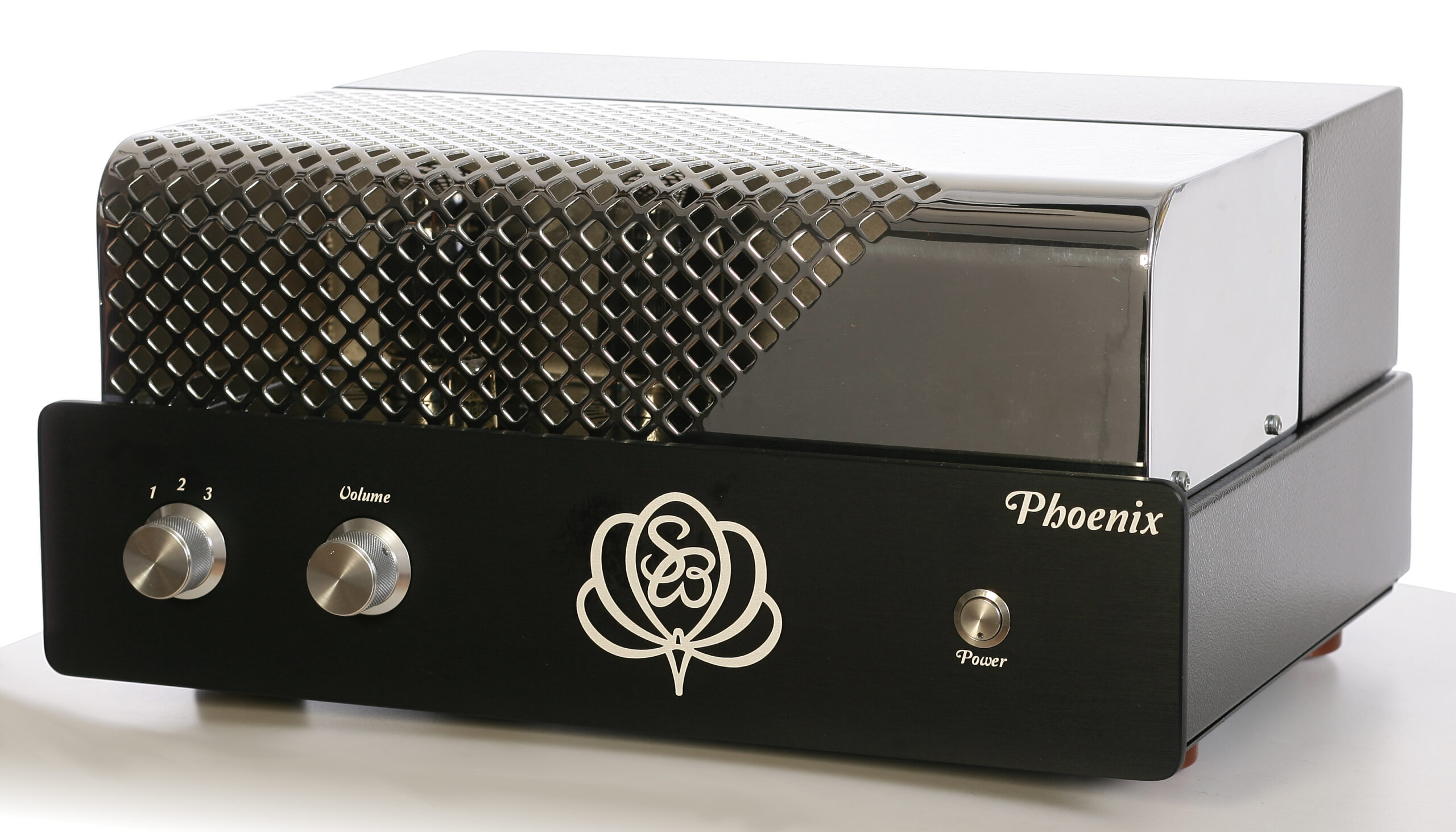
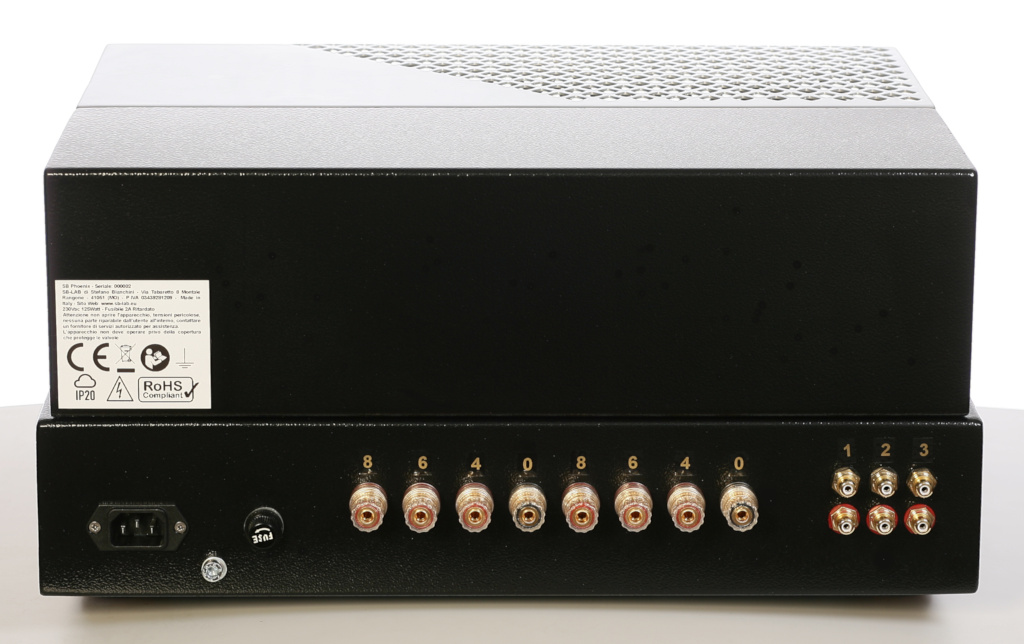
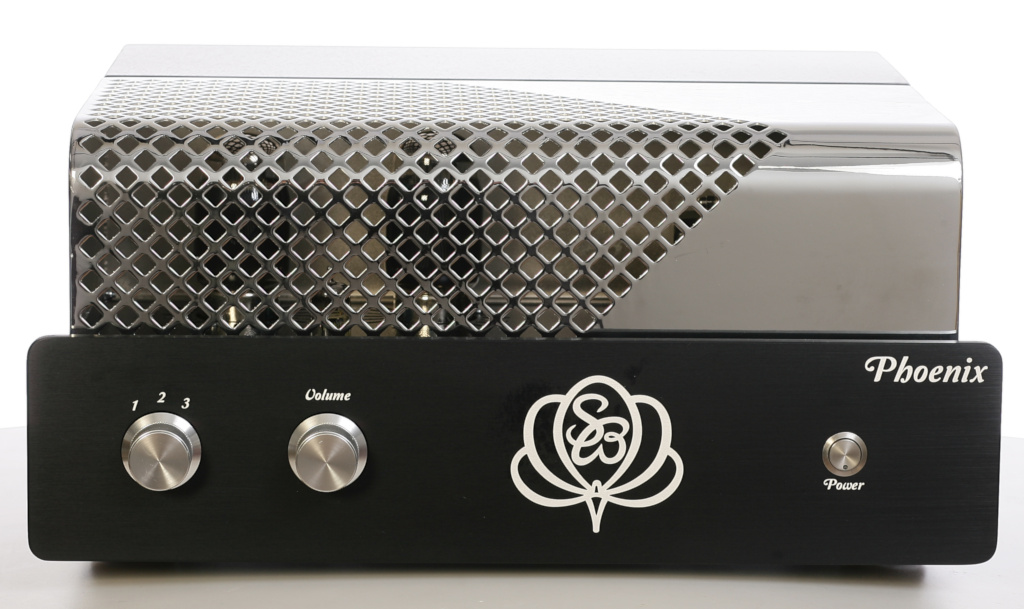
But the Phoenix stands out not only for its exceptional audio performance. Its chassis has been specially designed to enhance the amplifier’s aesthetics. Made from heavy 1.5 mm laser-cut steel, the Phoenix cabinet is synonymous with strength and durability. The powder coating is extremely resistant to scratches and impacts, while the chrome valve cover adds a touch of elegance. The brushed and anodized milled aluminum front panel completes the sophisticated design. It is worth emphasizing that every phase of production and processing was carried out exclusively by Italian workshops, ensuring the highest artisanal quality.
Every component used in the Phoenix has been hand-selected and matched individually. Each solder joint was hand-made and carefully inspected. The entire assembly was performed manually to ensure maximum care and attention to every detail.
The Phoenix is available at a list price of €4980.00 (price referring to prototype cost, subject to revision for future orders) – tubes not included. We chose to give customers the freedom to select their preferred tubes, NOS or non-NOS, according to personal taste. Furthermore, we offer the possibility to customize the default configuration for ECC81 or ECC85 tubes (which can always be modified later).
We are pleased to offer our customers the opportunity to customize their Phoenix amplifier according to their preferences. Within reasonable limits, we can discuss options such as input connectors, speaker terminals, and cabinet finish, whether chromed or not. Your Phoenix amplifier will thus be unique and perfectly suited to your needs. If you are interested in listening to a demo or wish to purchase a unit, click here to contact us. We will be happy to provide further information and assist you with your order.
 |
 |
 |
 |
 |
 |
Technical specifications:
Damping Factor DF: 6.0
Sensitivity: 2 Vpp @ clipping
Power before clipping: 12 W RMS per channel
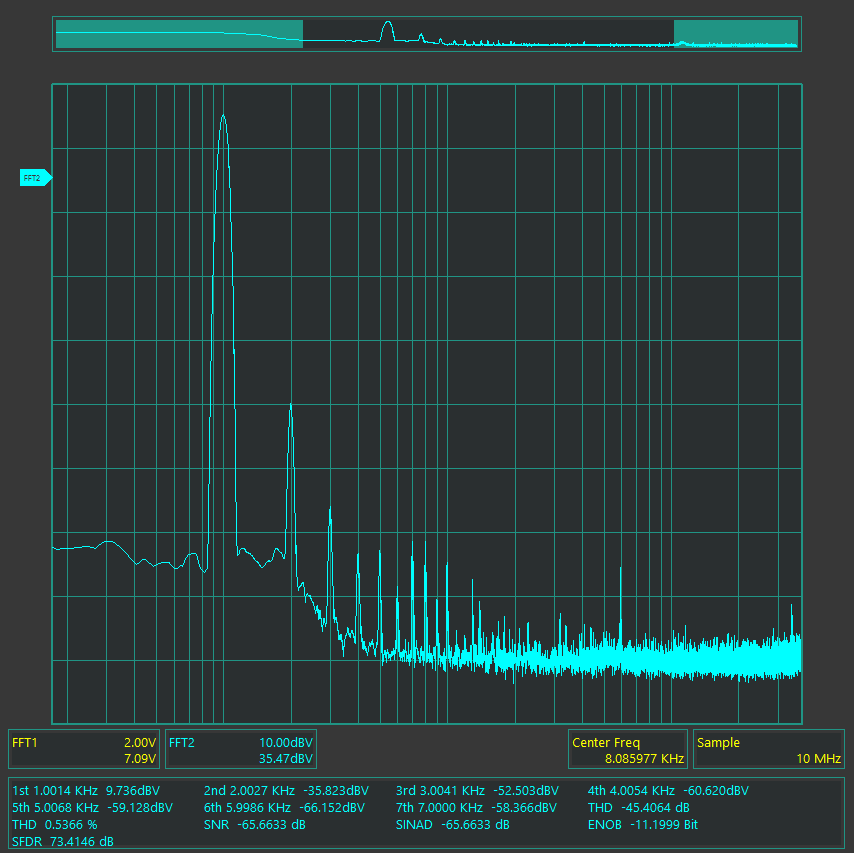
THD @ 1 W: 0.5%
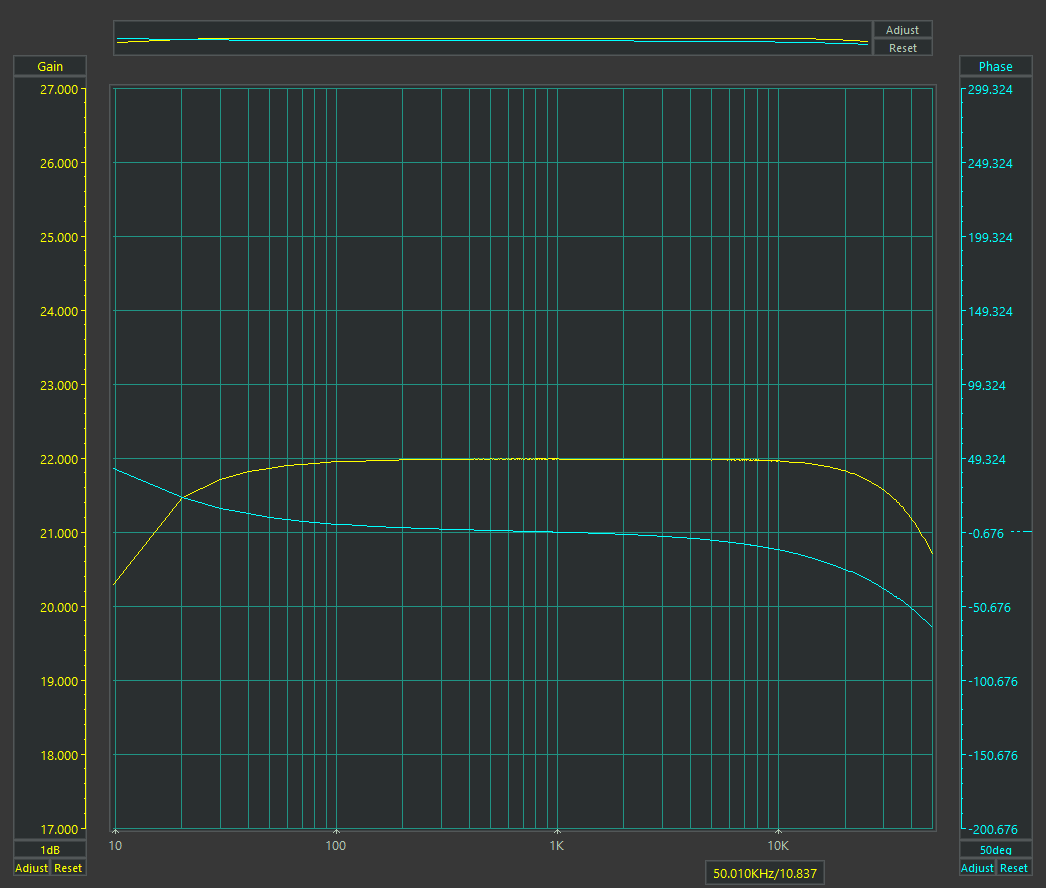
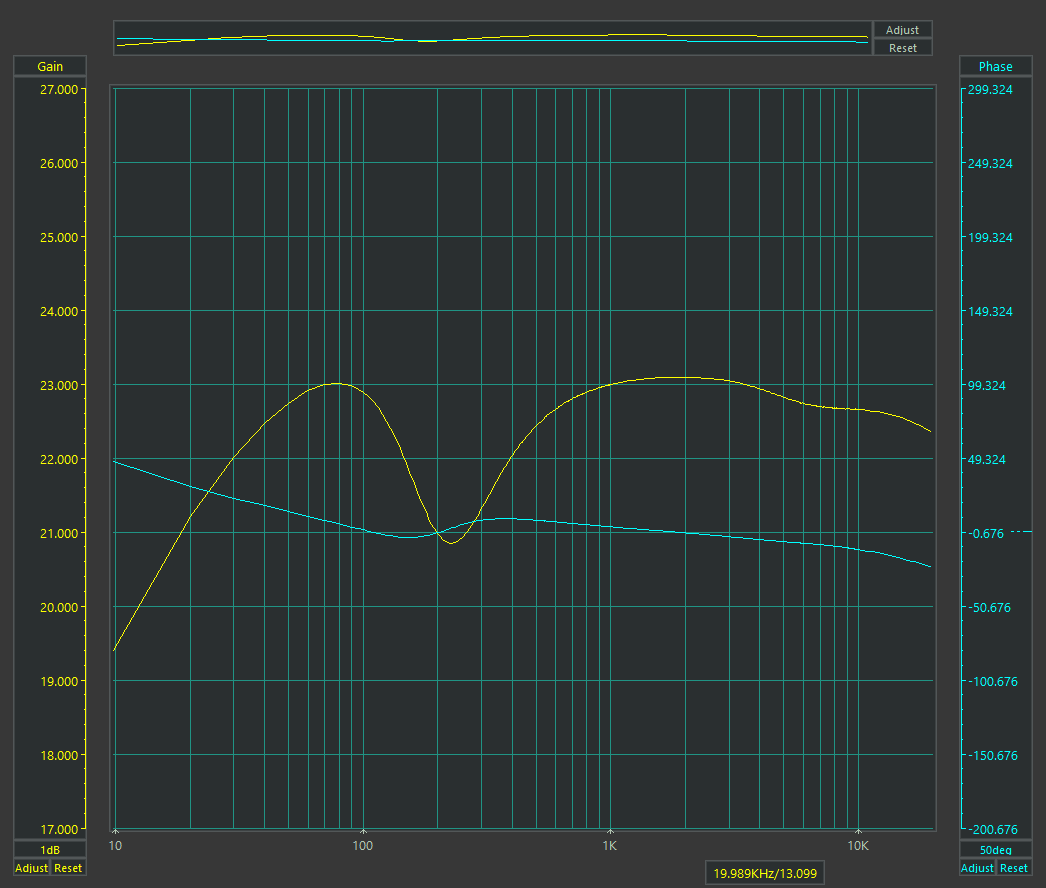
Frequency response: 15 Hz–45 kHz (–1 dB)
Power consumption: 125 W
3 inputs selectable from front switch
Speaker outputs for 4/6/8 ohm loads
Spectrum analysis
Frequency response on resistive and reactive load
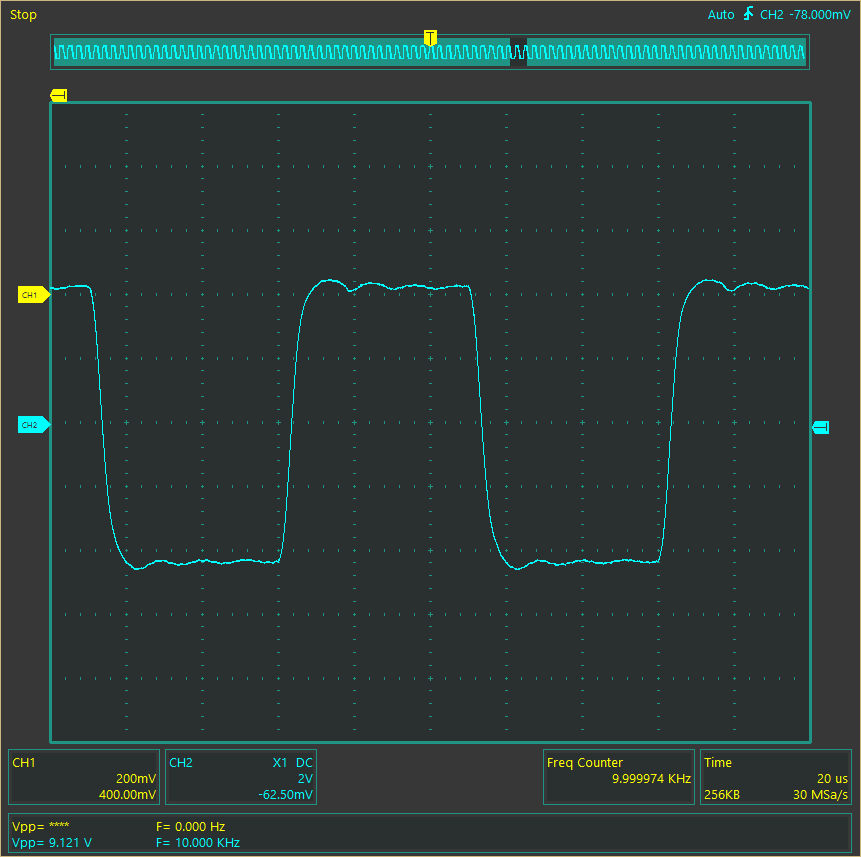
10 kHz square wave showing the improvement over the previous output transformer version, with very limited ringing
Which tubes does it use?
While exploring the vast online world of audio information and forum discussions, one often comes across a sea of misinformation. It’s not uncommon to read statements such as “The ECC81 is optimized for audio, while the ECC85 is just a basic VHF tube for radio receivers.” However, it’s important to separate fact from fiction. The true characteristics of the ECC81 and ECC85 tell a story quite different from what is often repeated superficially.
The ECC81, also known as 12AT7, was originally developed as an RF tube and used in the first American FM radios starting in 1951, specifically in the tuner section. However, its limitations in these applications soon became apparent. One of the most significant issues was the inter-anode capacitance between the two internal triodes, which caused serious problems at frequencies in the hundreds of MHz range. For example, early FM tuners required re-tuning every time the tube was replaced. Just two years later, in 1953, the ECC85 (also known as 6AQ8 in the US) was introduced as an evolution of the ECC81. The main improvement was the addition of a screen between the two triodes’ anodes, along with a more advanced internal structure. Moreover, its heater could only operate at 6.3 volts, unlike the ECC81 which could run at both 6.3 and 12.6 volts. Despite these changes, the electrical characteristics and curves of the triodes remained essentially identical to those of the ECC81.

The ECC81 was later adopted for audio applications as a medium-mu double triode because it was cheaper than the ECC85 and remains in production today, used in numerous amplifiers and preamps by various manufacturers. However, this doesn’t make the ECC85 any less effective as a valid alternative. In fact, the ECC85 is still produced by Electro-Harmonix and also available as NOS (New Old Stock) at affordable prices online and in specialized markets.
To give our customers more flexibility, I designed the Phoenix to accept both ECC81/12AT7 and ECC85/6AQ8 tubes. The pinout of the two tubes is almost entirely compatible, except for the heater and internal shield pins. On the PCB, near the ECC8x socket, I included a set of six contacts that can be configured to allow either tube type to be used, according to the customer’s preference. This configuration can easily be changed later if desired. In short, the Phoenix offers the flexibility to use either the ECC81 or ECC85. This innovative design allows customers to fully exploit their preferred sonic characteristics, tailoring the Phoenix’s sound to their taste for a truly personalized listening experience.
The output stage of the Phoenix amplifier is designed for unmatched versatility. It can accommodate power tubes such as KT88, 6550, and KT90, opening the door to an even more extraordinary sound experience. The KT88, 6550, and KT90 are well-known for their ability to deliver impressive power and extended dynamic range. These tubes are ideal for those seeking a sound that is powerful, detailed, and engaging. The Phoenix has been specifically engineered to support these premium tubes, ensuring a generous power reserve and impeccable control across all musical genres.
Forget the stereotypes about KT88 sound. Negative descriptions like “slow,” “boomy,” or “muddy” stem from misunderstanding. In reality, tubes don’t have an intrinsic sound; it’s the amplifier as a whole that defines the result. The Phoenix has been carefully designed to deliver outstanding sonic performance with KT88 tubes, fully capable of competing with the best triodes available.

The Phoenix amplifier has been rigorously optimized to ensure a clean, harmonious, and controlled sound. Bass is rendered with precision and authority, never overwhelming the soundstage, even when driving large or reflex-type speakers. The power and musicality of the KT88 tubes in the Phoenix combine to create an extraordinary listening experience.
So, when someone tells you that KT88 tubes sound slow or heavy, you can smile and proudly reply: “I own a Phoenix.” The Phoenix challenges these preconceptions, proving that with excellent design and attention to detail, it’s possible to achieve high-quality, engaging, and well-controlled sound with KT88 tubes. Your music will come alive with remarkable fidelity, dynamics, and naturalness, offering a superior listening experience.
The ability to use power tubes like KT88, 6550, and KT90 makes the Phoenix suitable for all musical tastes and the most demanding audiophiles. Whether you love classical music that requires precise dynamics or rock that demands power and impact, the Phoenix will exceed your expectations. With the Phoenix, you can customize your audio system to your preferences, creating a unique and immersive listening experience. Whether you are a musician, audiophile, or simply a music lover, the Phoenix amplifier with KT88, 6550, or KT90 tubes will let you enjoy extraordinary sound and unmatched emotion.
Dimensions and weight
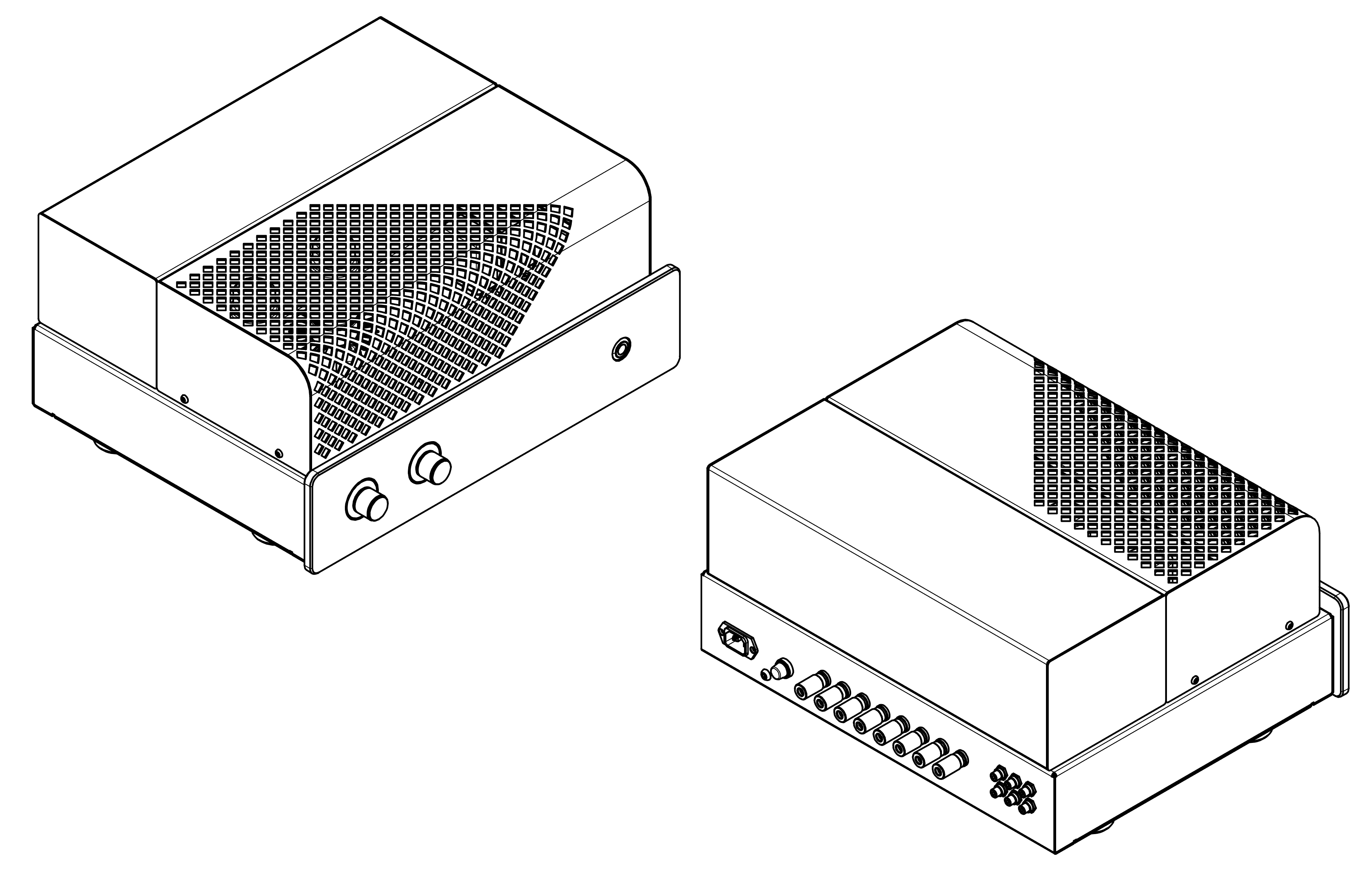
Width: 47 cm
Height: 22.5 cm
Depth: 36.5 cm
Weight: 18 kg
How it sounds
The pursuit of exceptional quality has been absolute throughout the fine-tuning process of the Phoenix amplifier. Months of testing and refinement were dedicated to achieving superior sound reproduction. Every detail has been carefully optimized to deliver an immersive and rewarding listening experience.
One of the most distinctive traits of the Phoenix’s sound is its exceptionally detailed and refined high-midrange response. Frequencies such as cymbals or female vocals are rendered with crystal clarity, never dark or fatiguing to the ear. There is an extraordinary sense of transparency and richness in the nuances, with a presentation that is smooth and delicate. Notes flow like intertwining silk threads, without any harshness or metallic character.

The low frequencies, on the other hand, are a fundamental part of the Phoenix’s sonic experience. They are full, warm, and enveloping, yet what truly sets the Phoenix apart is its impeccable control over these frequencies. Forget the bloated, intrusive bass often found in low-quality tube amplifiers. In the Phoenix, the bass is authoritative but never overbearing. It is perfectly balanced and harmoniously integrated with the rest of the spectrum, creating an immersive and engaging listening experience.
The result of this dedication is a tube amplifier that exceeds the expectations of even the most demanding audiophiles. The Phoenix delivers a truly extraordinary sonic experience, where every musical detail comes to life with realism and passion. Let yourself be carried away by the music, immersed in a sea of emotion and sensation, thanks to an amplifier that stands out for its fidelity and uncompromising control.