I am thrilled to present this article about a tube amplifier project I developed in 2019 with the intention of publishing it in a specialized audio magazine. Despite my efforts, the project never made it to print and the amplifier remained an unused prototype. However, the passion and dedication I invested in this work were far from wasted.
This design uses high-quality components, including the SE2K-EL34 output transformer, the 15S59 choke, and the 17S4150 power transformer. After some reflection, I decided to share the result of my work with other audio and DIY enthusiasts. The transformer set and schematic are now available so that anyone with the desire and skills can easily build a similar amplifier.
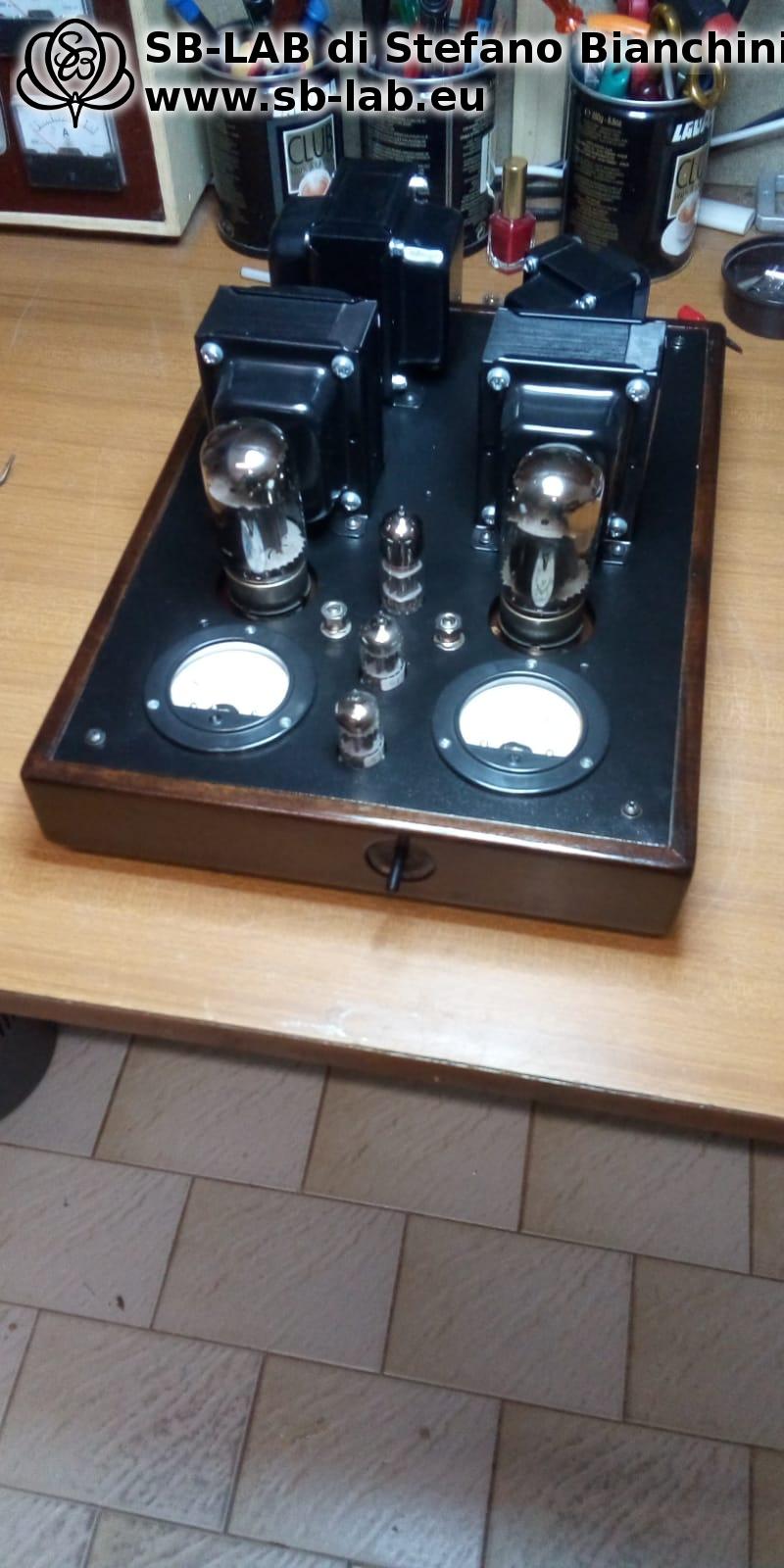
The original prototype was later given to a close friend, who appreciated both its sound quality and aesthetics. I hope this experience can inspire those who share my passion for high-quality audio and bring joy and satisfaction to anyone who decides to embark on this DIY adventure. Happy building and happy listening!
Hi Stefano,
Proxima, what an experience!!!I listened to this amp at your place when it was still “under testing,” and I already loved it. The amplifier looks great in a very pleasant vintage style—at least to me—and it’s extremely well built. Connected to your system, in a controlled environment, the surprise was immense. From the first minute after turning it on—a rare thing for a tube amp—what came out of the speakers was remarkable. The three-dimensionality is stunning, as is the stereo image, but most of all, this amp is highly revealing: it brings out details in recordings that you normally perceive only when paying close attention. Even while texting a friend, I’d lift my head and wonder where certain notes were coming from. Any musical genre is reproduced beautifully, and you never feel the urge to change the record because you get tired. The rated power is not high, but it’s satisfying—I couldn’t find the clipping point without making my ears bleed. Another thing I find interesting is the ability to change tube types; being able to play around always makes people happy. I won’t go on too long; I’ll just say Proxima is one of your finest creations.Cristian.
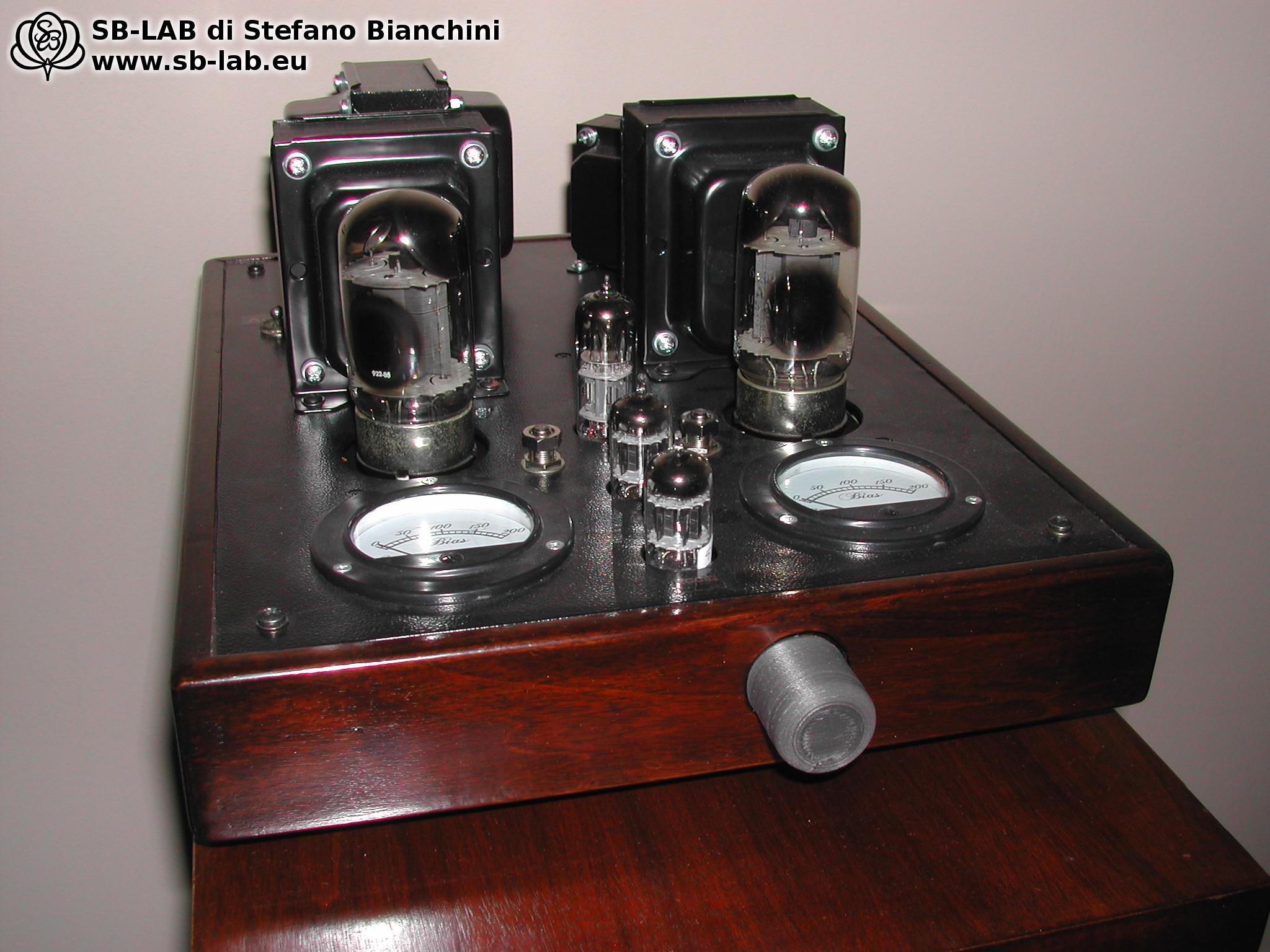
This amplifier was built by me in 2019, and the project was supposed to be published in a well-known hi-fi magazine. Unfortunately, I couldn’t reach an agreement with them; instead, we had a serious clash of views. That disagreement made me withdraw the project from publication, and they later commissioned a similar one from another person. That person claimed it was impossible to drive tubes in A2 using other tubes as drivers, insisting that transistors or MOSFETs were necessary. Clearly, he had never met the 6H30. Their loss—I’m enjoying the result, and their ears will never know what they missed.
Anyway, I wanted to design a circuit different from the usual and experiment with something new. So, derived from the “Tulipa” project, I created a single-ended amplifier that can, with minimal adjustments, use EL34 / 6CA7 / KT66 / KT77 / KT88 and 6550 tubes. The distinctive feature of this circuit is that the output tubes are triode-connected and DC-coupled (no capacitor) to their driver, a 6H30pi, allowing mixed A1 and A2 operation with fixed bias.
Driving the grid into positive region allows for higher power in triode mode compared to standard A1 operation. This approach lets me exploit the tube’s low internal resistance when triode-connected to reach a specific target damping factor while keeping the negative feedback minimal. The feedback used here is local: the secondary of the output transformer is placed under the cathode of the output tube, combined with a small local feedback between the output tube’s anode and the input stage cathode.
I’d like to emphasize that the circuit is optimized for EL34 and compatible tubes. While KT88s can be used, their full potential isn’t realized—just like in any amplifier that can use both EL34 and KT88 interchangeably. This design choice was made with magazine publication in mind; in a different context, I would have created a dedicated KT88-optimized variant.
The tubes used in this amplifier include a pair of NOS 5751s (special versions of ECC83), the aforementioned 6H30Pi, and a pair of precious NOS General Electric 6550s. All signal-path capacitors are hand-selected polypropylene types, while the electrolytics in the power supply are bypassed with additional polypropylene capacitors.
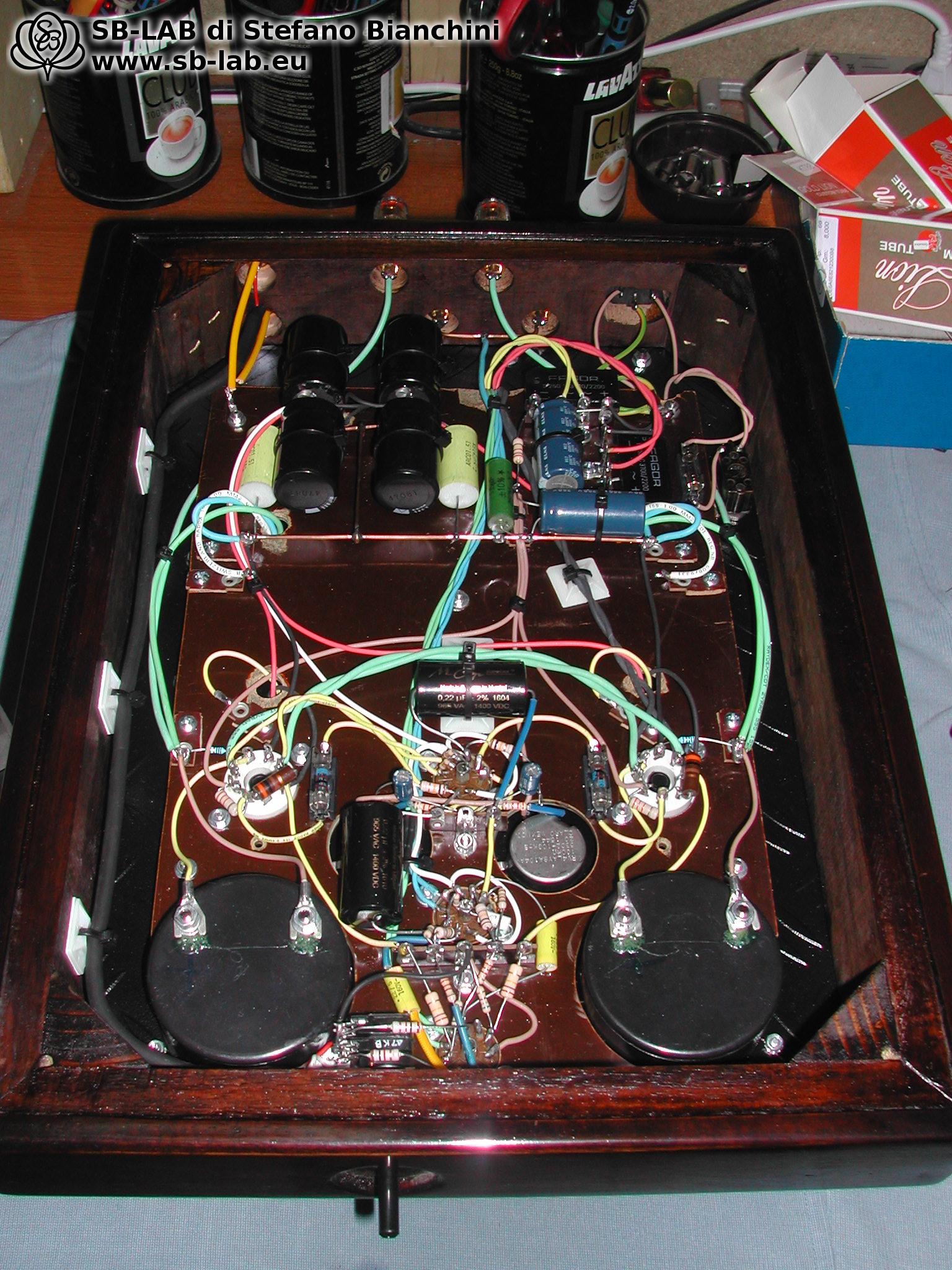
On the top panel there are two trimmers for bias adjustment and two vintage-style analog meters that display the bias settings. The photo below shows the circuit wiring. Like most of my prototypes, it’s built on a wooden chassis—in this case, walnut finished with shellac and aluminum panels.
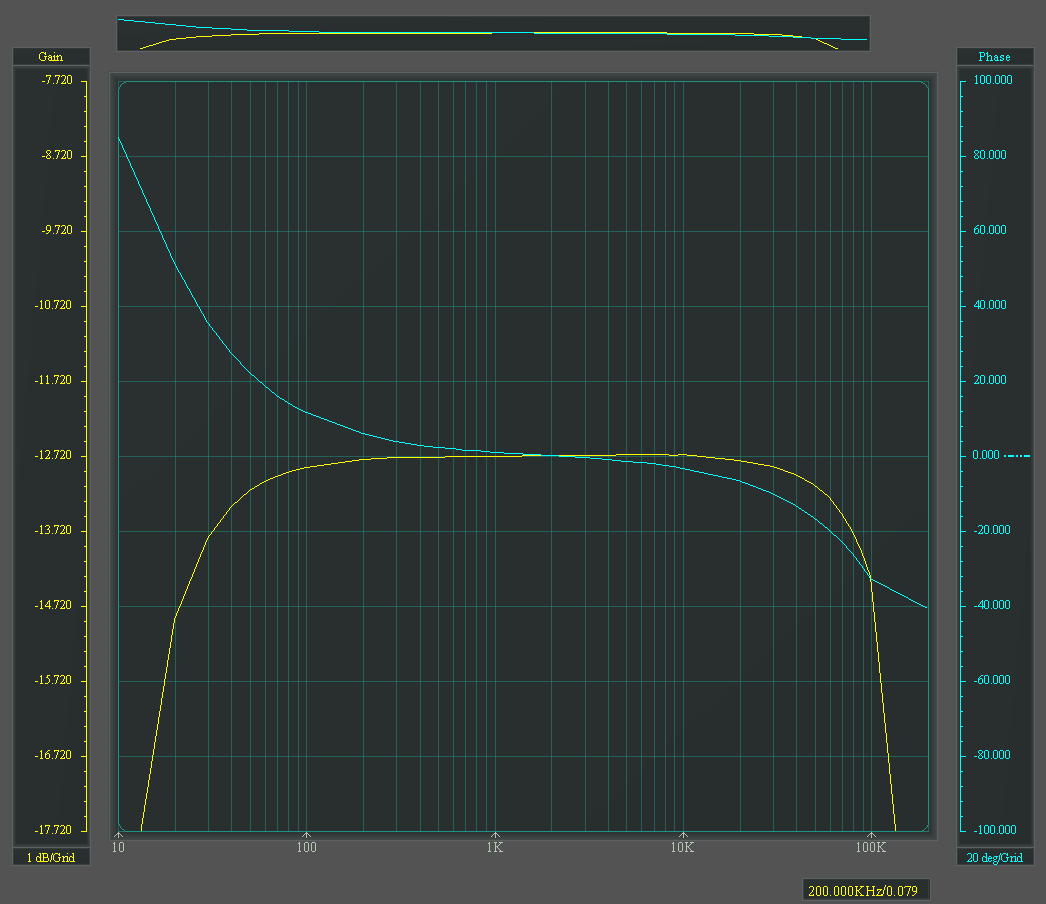
The amplifier delivers 7 watts RMS with any type of output tube used; a KT88-optimized version would likely reach around 9 watts. The damping factor is 5.5, while the frequency response is 30 Hz–80 kHz (?1 dB) and 20 Hz–110 kHz (?3 dB) up to full power. The following graph illustrates this:
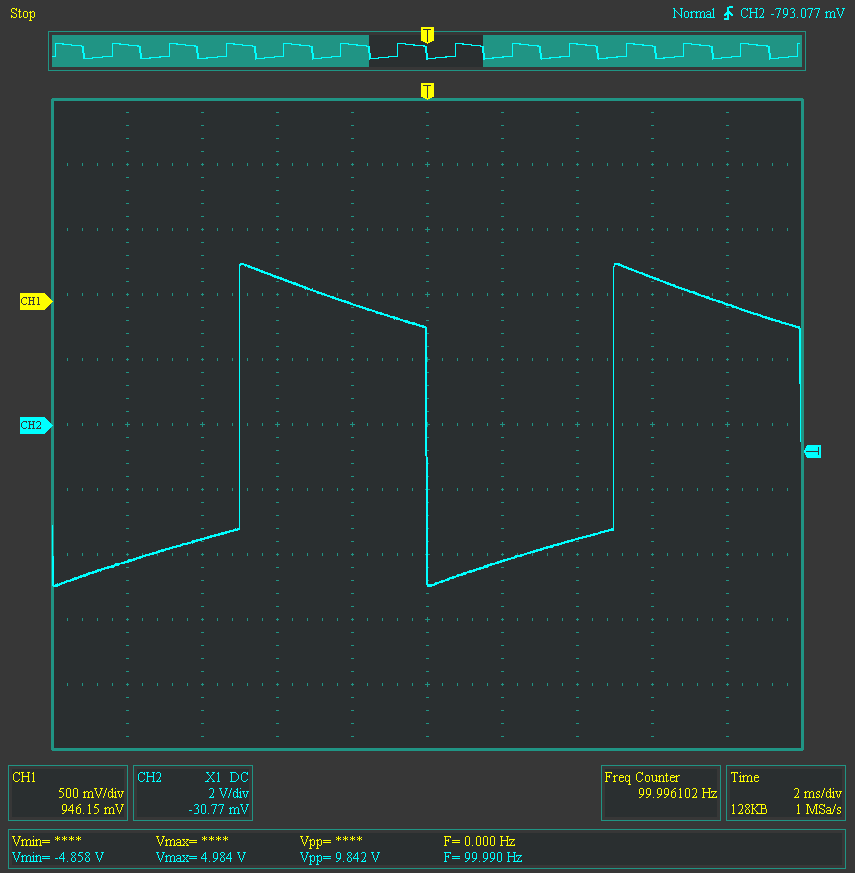
Below: square-wave response at 100 Hz
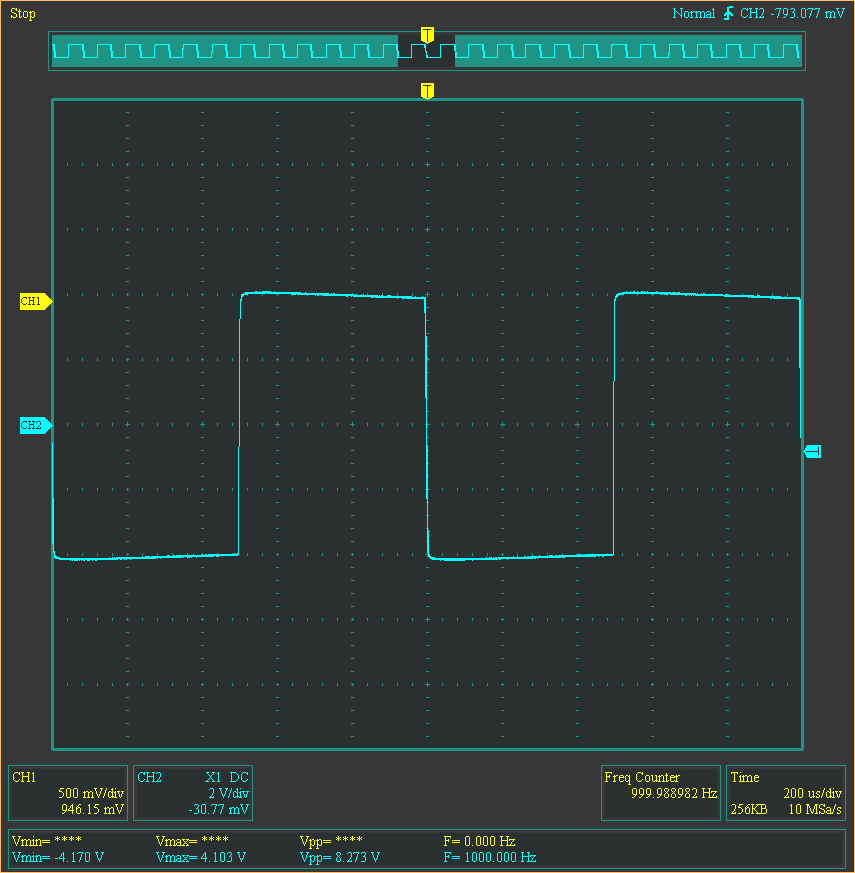
At 1 kHz
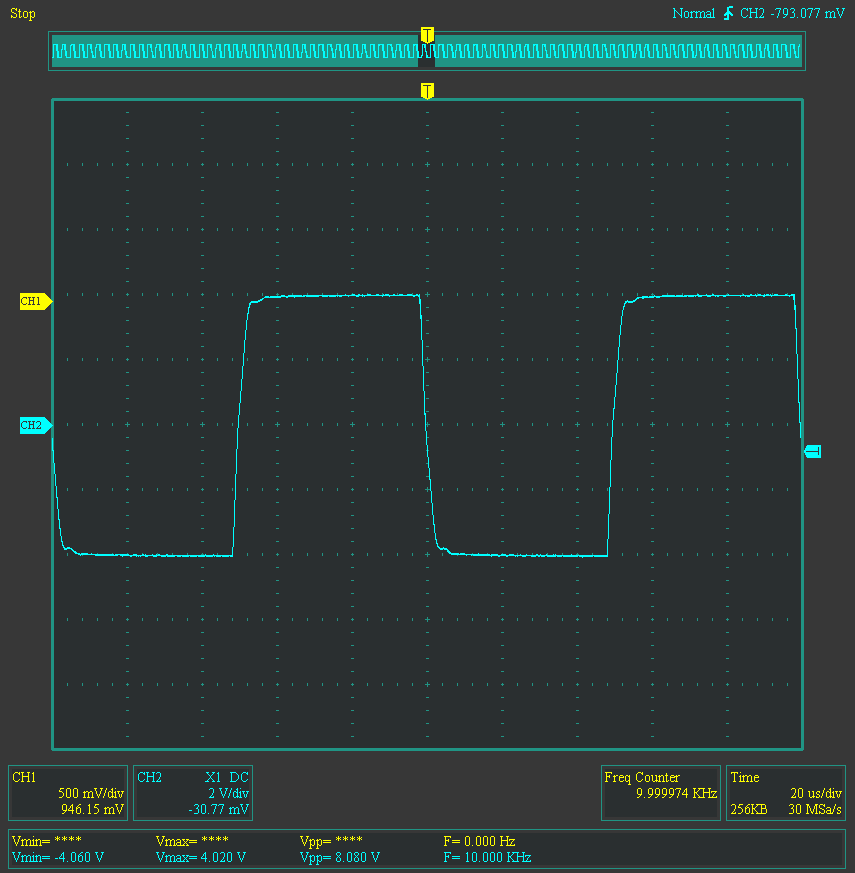
And 10 kHz
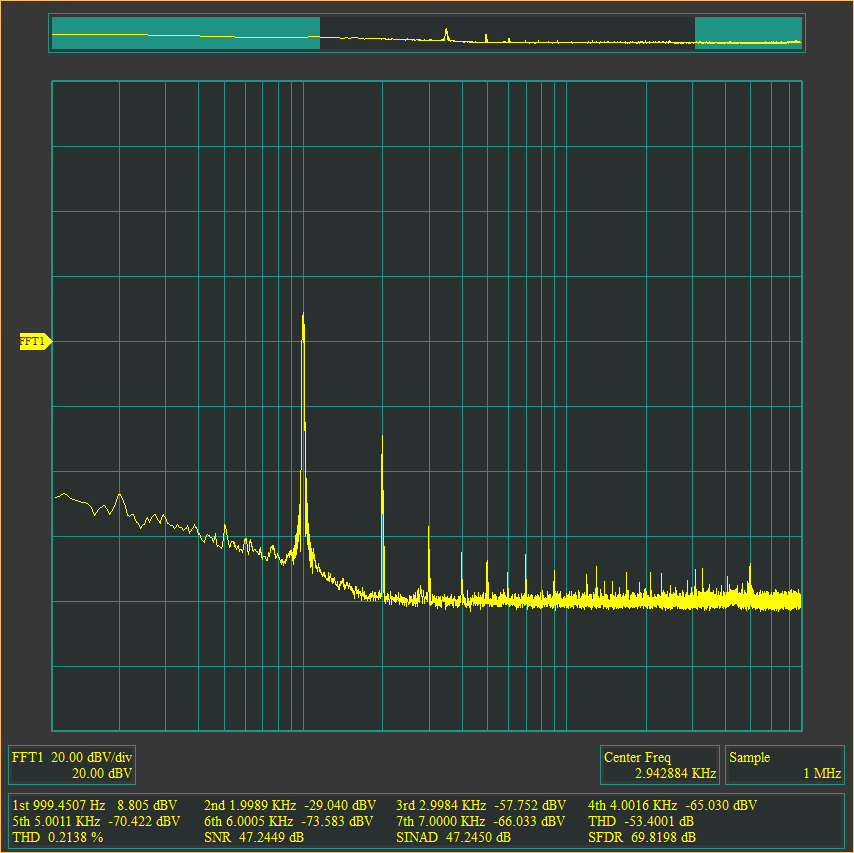
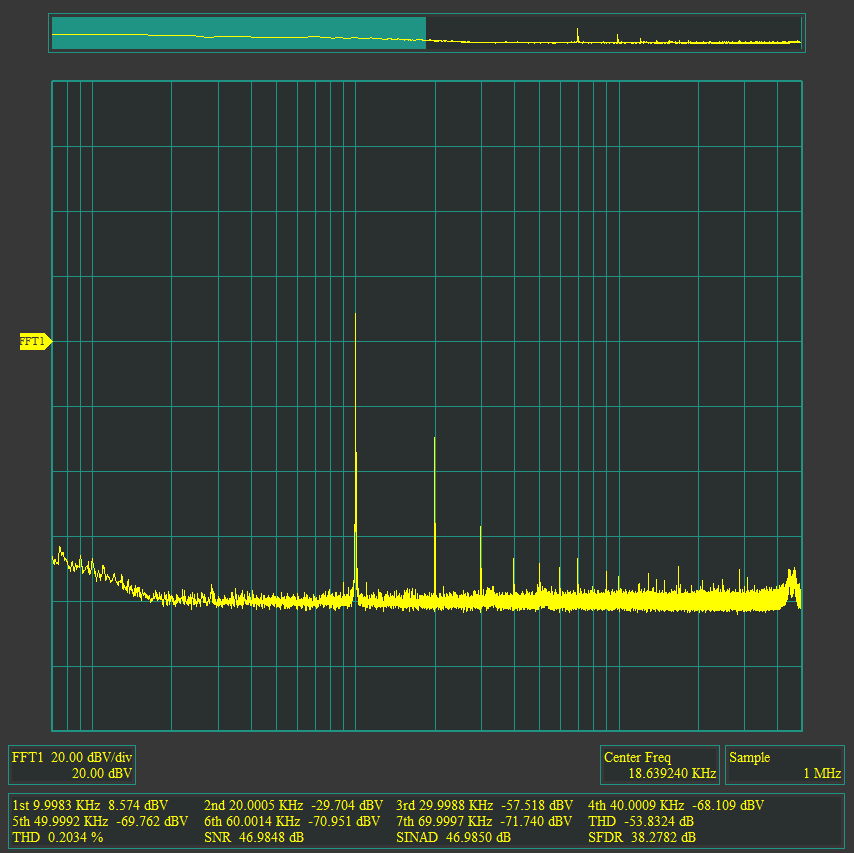
The total harmonic distortion is 0.2% at 1 watt, 1 kHz, and 0.21% at 10 kHz. Here are the graphs:
The listening experience is exhilarating: the low range is powerful and fast, with well-controlled speakers and a realistic, energetic impact on percussion. The mid and high ranges are crystal clear, bright, detailed, and textured, with an emotionally engaging stereo soundstage. The amplifier performs beautifully across all musical genres, from rock to choral music, adhering to the golden rule of what can truly be called high-end Hi-Fi.