This project holds a very special place in my personal and technical history, because it represents in fact the very first tube amplifier that I designed and built entirely on my own, sometime between 2010 and 2012 (I do not remember exactly), well before starting my professional path as a builder and repairer. Looking at it again today, years later, has a certain effect: many design choices are the result of the enthusiasm and experimentation of those years, yet surprisingly the project is still valid today, well balanced and musically convincing.

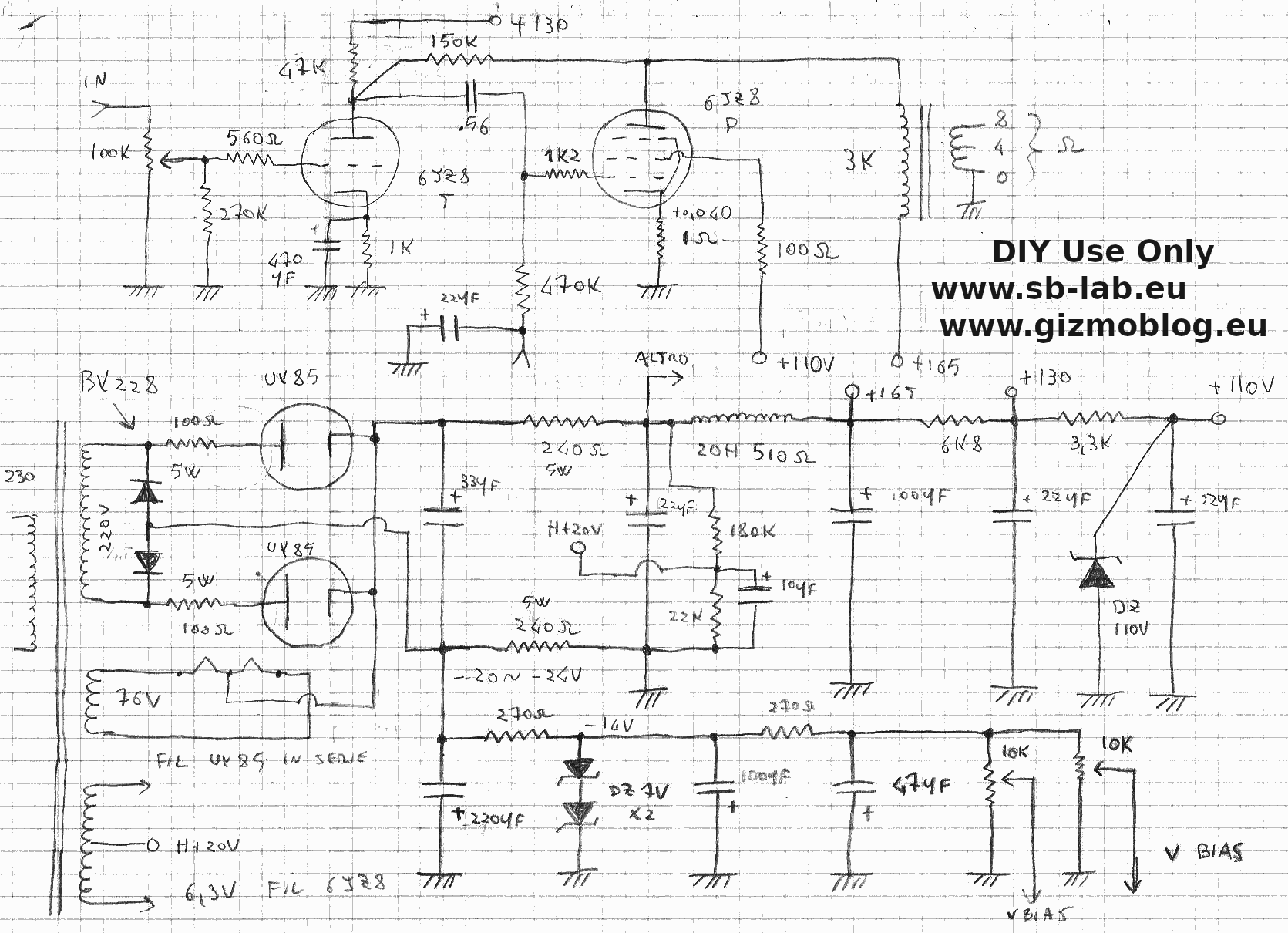
The basic idea came from the desire to build a simple, compact amplifier that would be accessible to many people, without giving up a properly thought-out tube circuit. In some respects the project recalls the “Scherzo” schematic, but it differs from it due to very specific choices, starting with the use of 6JZ8 compactron tubes instead of the more common ECL82. The choice of the 6JZ8 was not initially theoretical, but very concrete: I had a pair that I had kept for years in a box of tubes recovered when I was a kid, back when I used to spend afternoons scavenging electronic components from dumps to do experiments. I never threw that box away and, on a boring day many years later as an adult, I opened it again wondering what interesting things could still be built with that material. That is where the project was born. Compactrons were ignored for many years by the general public, often simply because of their format and availability, but in reality they hide excellent electrical characteristics and can deliver truly high-level sonic performance if used correctly.
The power supply section also reflects that spirit of conscious experimentation. I chose to use two UY85 rectifiers because I had them available, an unusual solution but extremely interesting from an educational point of view.
What I present here is therefore a very nice project that over time has been built by several people with complete success. Listening impressions have always been enthusiastic, often beyond expectations, especially considering the modest nominal power. Once again, it proves that rated watts tell only a small part of the story.
Comment from a person who built the amplifier:
The sound is simply fantastic! I would never have expected so much noise with so few watts. I live on the third floor and my wife assures me that at full volume it can be heard clearly from the garage! The detail is simply stunning. Full-bodied, bold, never predictable. I noticed some signs of clipping (ND GizMo: considering the nominal power, if you push hard with demanding music this is normal), but fortunately not with my favorite classical music. I watched movies with it and it is an immense pleasure, too bad for my wife who already asks me to turn it down well before half volume. It is simply astonishing!
I am extremely happy!
Angelo
Here is the schematic (click to enlarge)

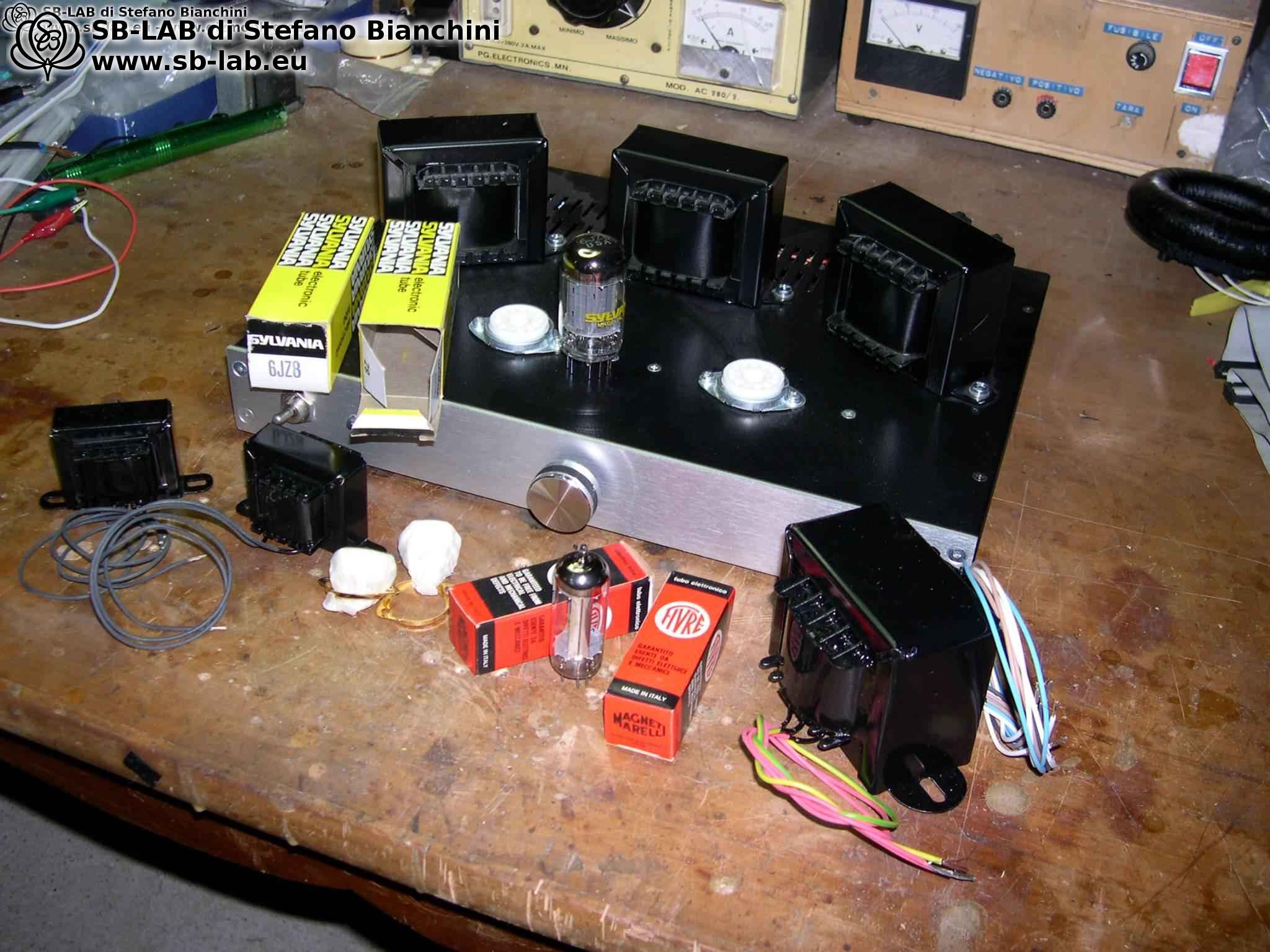
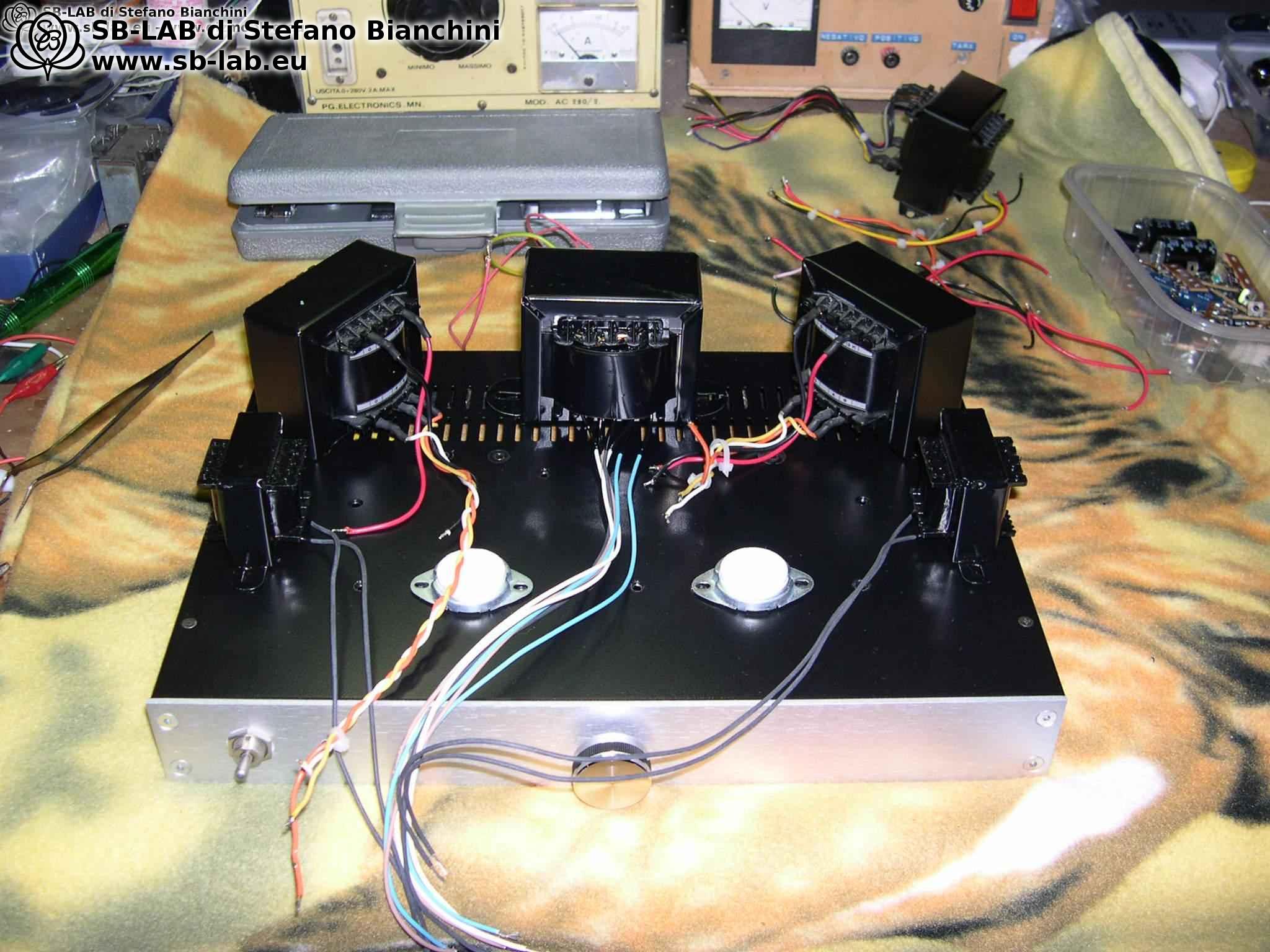
In reality, what is shown in the photographs is not the very first example. The project started with an initial build of which unfortunately no images remain, built in a more experimental way. After some time I decided to take the circuit back in hand and rebuild it from scratch, applying what I had learned in the meantime. This second version therefore represents a true evolution of the original project. At this stage I adopted a new power transformer, added two chokes, kept the output transformers unchanged and confirmed the use of vacuum rectifiers. The entire circuitry was revised to improve stability, quietness and long-term reliability. The layout was also completely rethought, with the decision to build it from scratch in black-painted bakelite, eliminating unnecessary holes and provisional solutions from the first version.
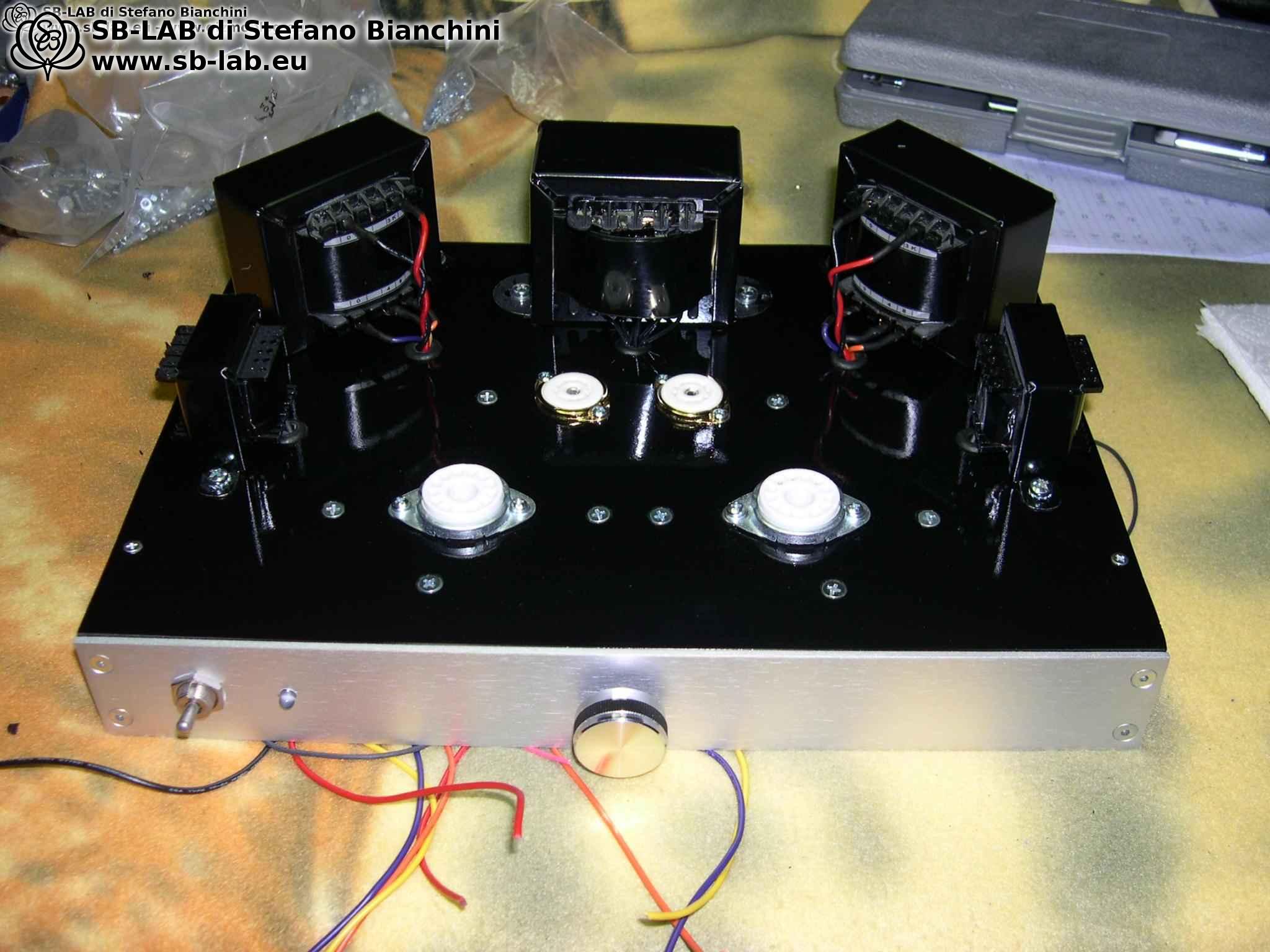
I then drilled the new bakelite plate, carefully sanded it and finished it with one coat of black followed by three coats of clear gloss. At that point it was necessary to wait for full curing before starting assembly, to avoid marks or surface imperfections. Of course the camera flash highlighted every grain of dust resting on the workbench.
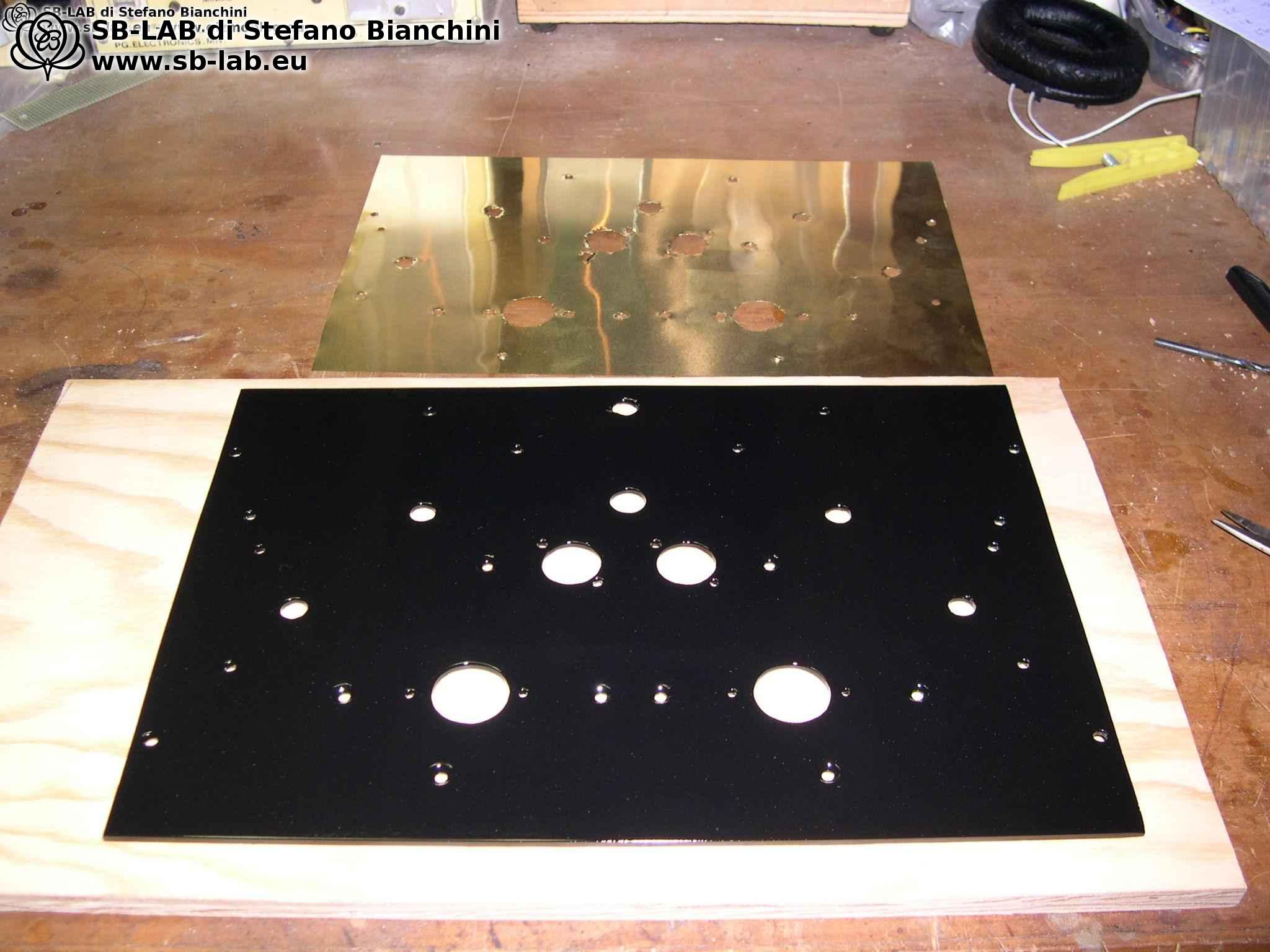
In the photo you can also glimpse the brass sheet intended for circuit shielding. At this point the sockets, transformers and chokes were installed, and all the necessary mechanical mountings were prepared. The component layout was carefully studied to minimize noise, interference and critical paths.
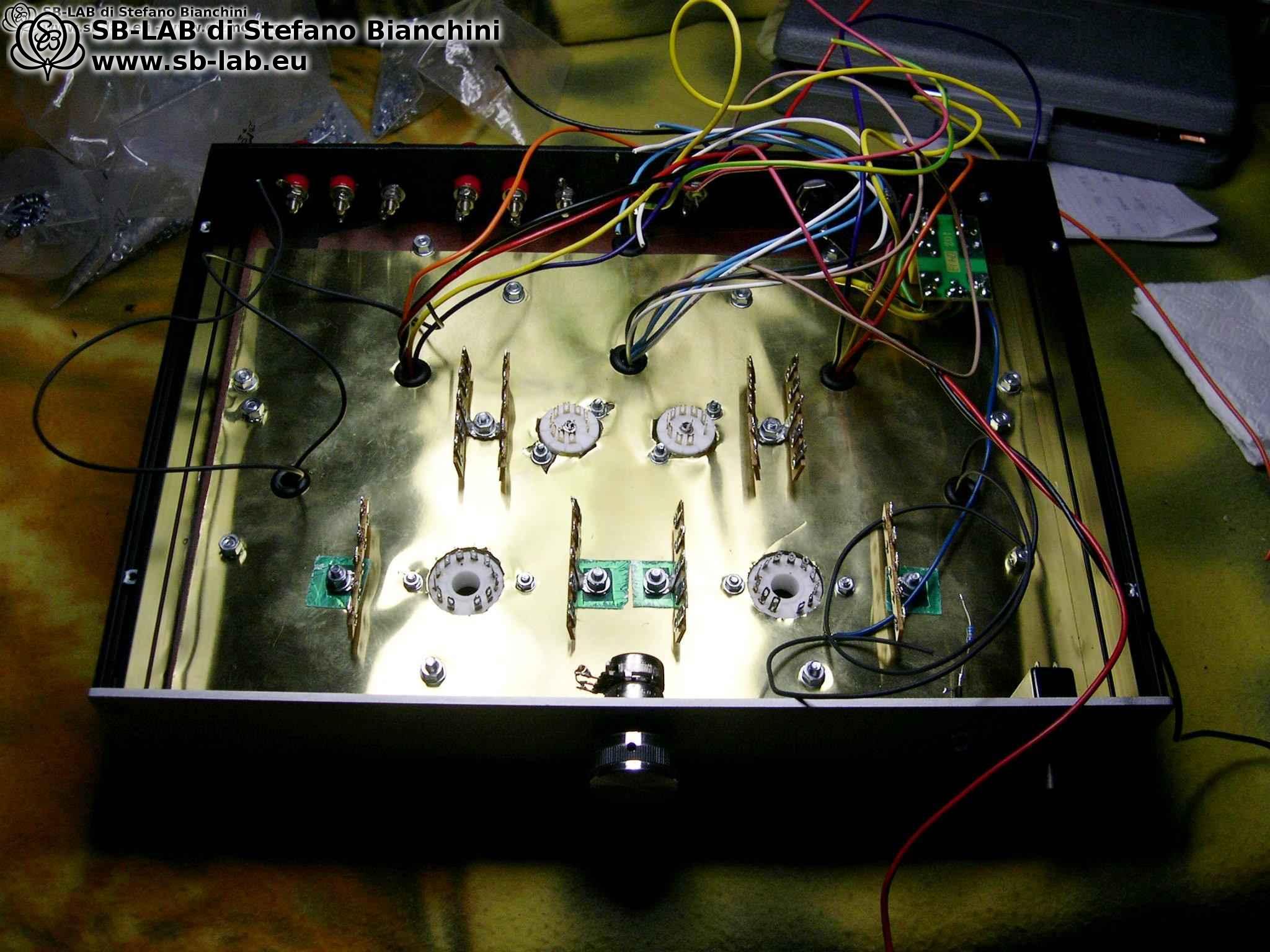
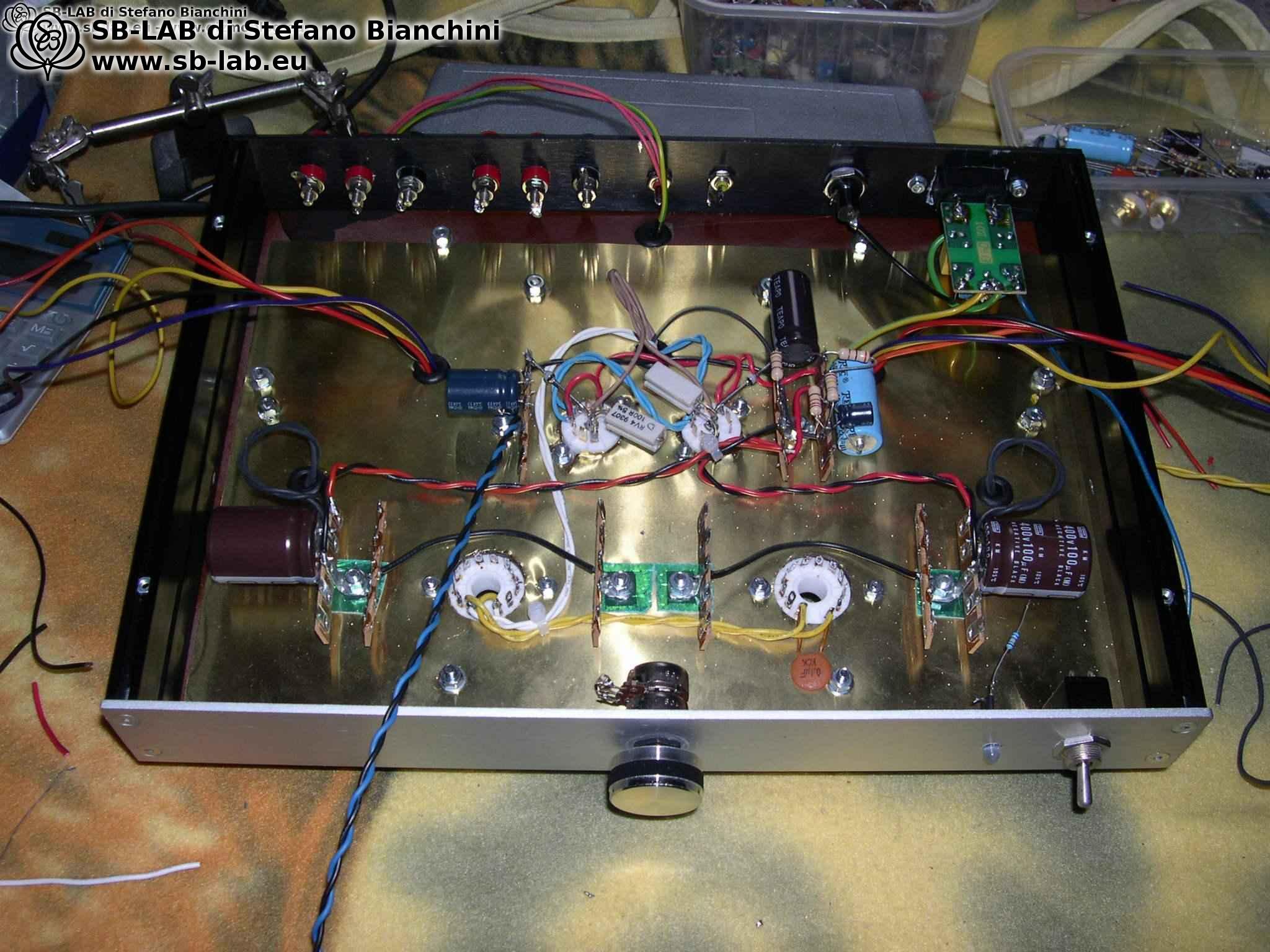
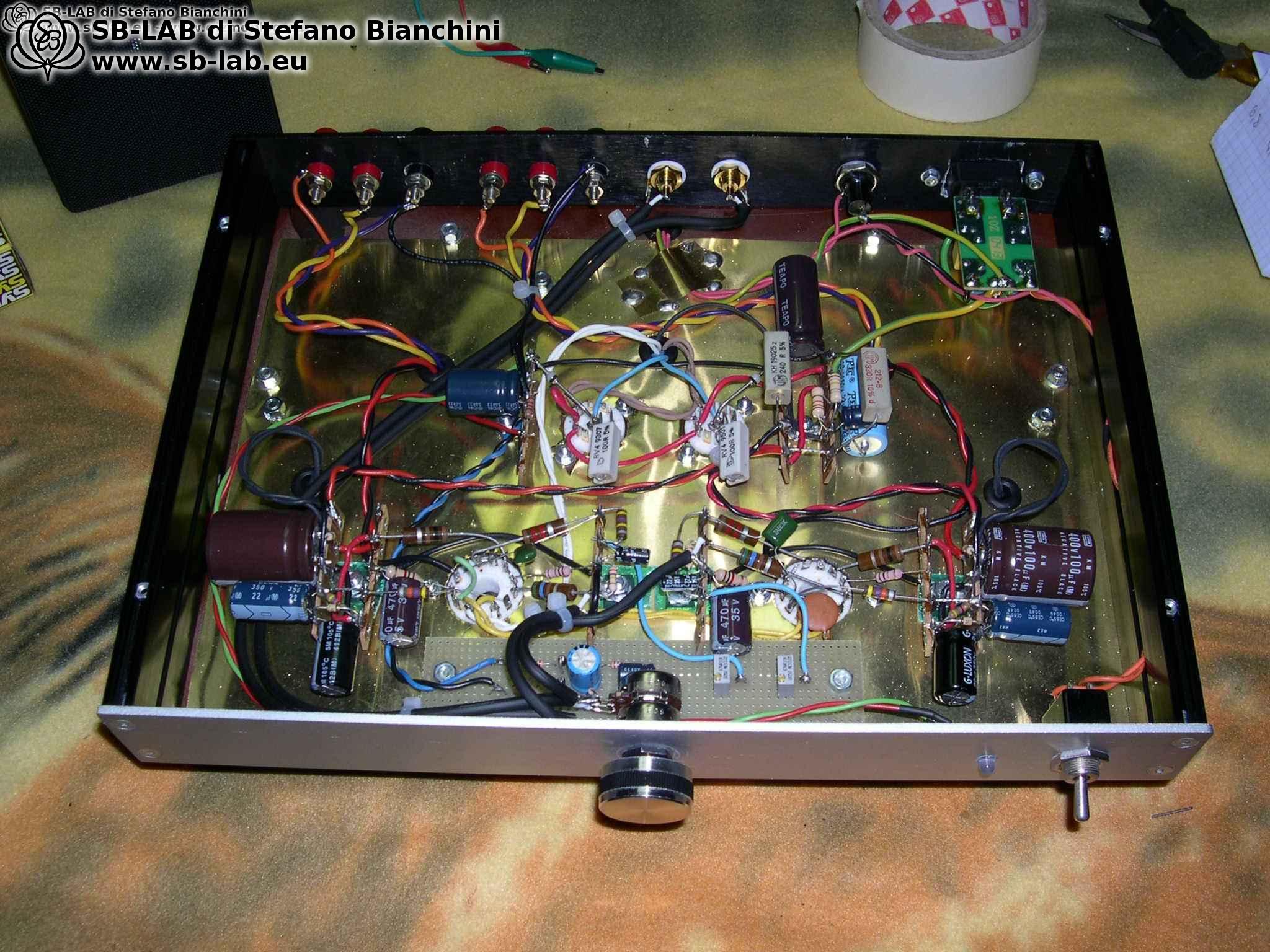
With the start of the wiring, the power supply section was practically completed. In this phase I paid particular attention to grounding, current returns and the routing of high-voltage wiring, all fundamental aspects for obtaining a quiet and stable amplifier.
The circuit is now complete. I started a series of measurements and tests to optimize the value of some components, with the goal of making voltages and currents at key points as accurate as possible. This tuning phase is always one of the most instructive, because it allows you to truly understand how the project comes to life.
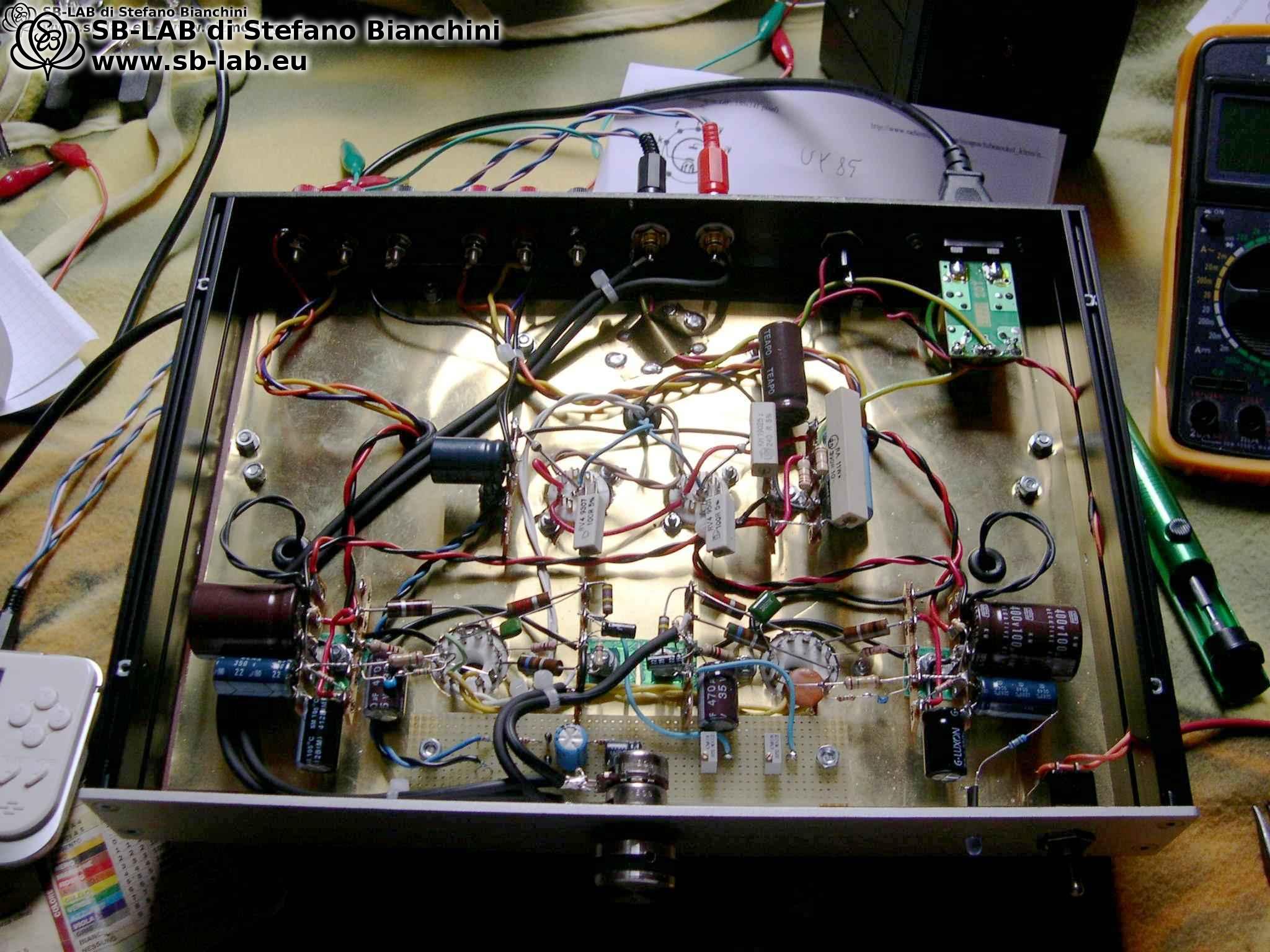
Finished. At this point a few days of tube burn-in followed, along with many listening tests, which were essential to evaluate the amplifier behavior over time and with different genres.
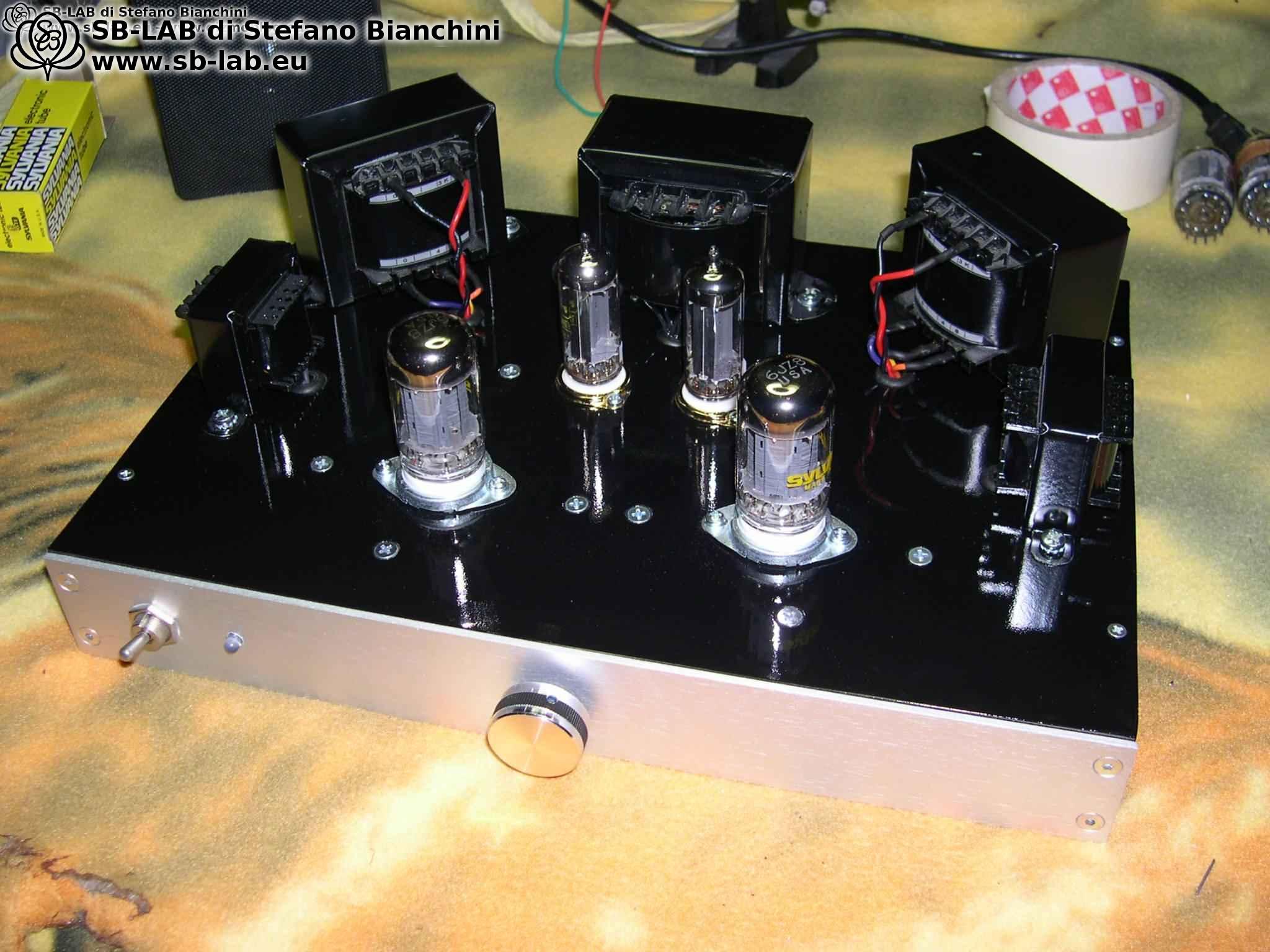
The test…
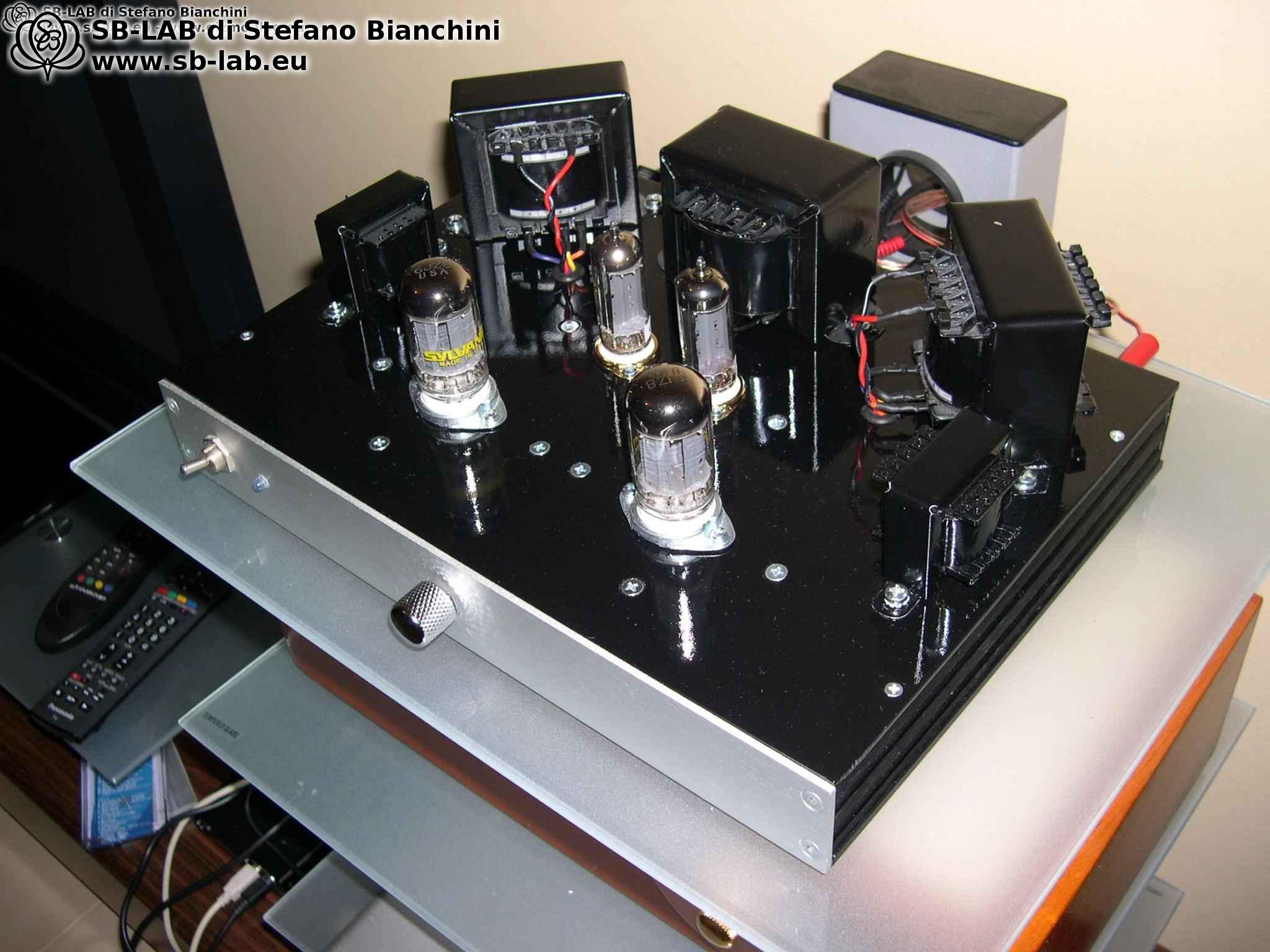
Connected to the system, the result was immediately evident. The sonic detail is excellent, as is the volume achievable without perceptible distortion. The first movie played was “The Exorcism of Emily Rose”, and it was surprisingly engaging. This amplifier manages to reproduce even finer details at low volume. Ambient noises, whispers, microdynamics, everything emerges with great naturalness.
It also performs very well with light music, while with more demanding tracks a bit of common sense with the volume is obviously required. The bass is present and controlled, the highs are crystal clear, and the dynamic behavior is remarkable, especially on sudden effects such as doors slamming, glass breaking or sharp impacts. In the dark, with a good movie, jump scares are guaranteed.
After these tests I added local feedback, inserting a 150k resistor between the anode of the final pentode and the anode of the triode. This modification brought a clear improvement. In more demanding passages the sound becomes more refined and, in the event of clipping, the perceived annoyance is drastically reduced. On some fast transients the clipping becomes almost imperceptible unless one pays extreme attention. Considering the roughly 2 watts available, the result is truly remarkable.
Note: this is an old article that has been re-edited. Therefore not all the instrumental measurements and in-depth analyses that I usually carry out on my more recent equipment are available, but it remains an important testimony of a project that marked the beginning of everything.