Neutrino is an open line preamplifier project that uses a single 6SN7 tube, one half per channel, to deliver a pure and detailed audio signal. The heart of the circuit includes two SB-LAB i10K-600B output transformers, ideal for ensuring excellent signal transmission performance.
The power supply is a key element in achieving the best sound quality, and for this reason Neutrino was designed with great care. The anode supply filter uses a 15S55 choke, while the power transformer is a dedicated 24S98. As a rectifier tube, a 6X5GT was chosen, a deliberate decision to ensure stability without excessive cost or complexity.
The original Neutrino project is based on a schematic developed by Audiofanatic (click here to access the original website). A customer asked me to build the transformers needed to assemble the preamplifier, and in this version I decided to introduce some changes to optimize both cost and performance, while preserving the quality of the original design.
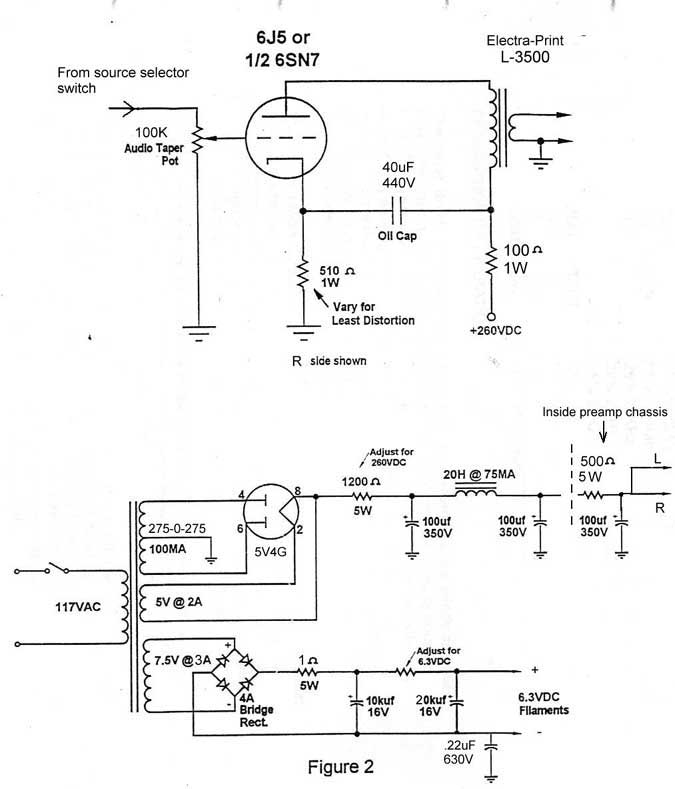
Original “Audiofanatic” schematic
Modified SB-LAB schematic
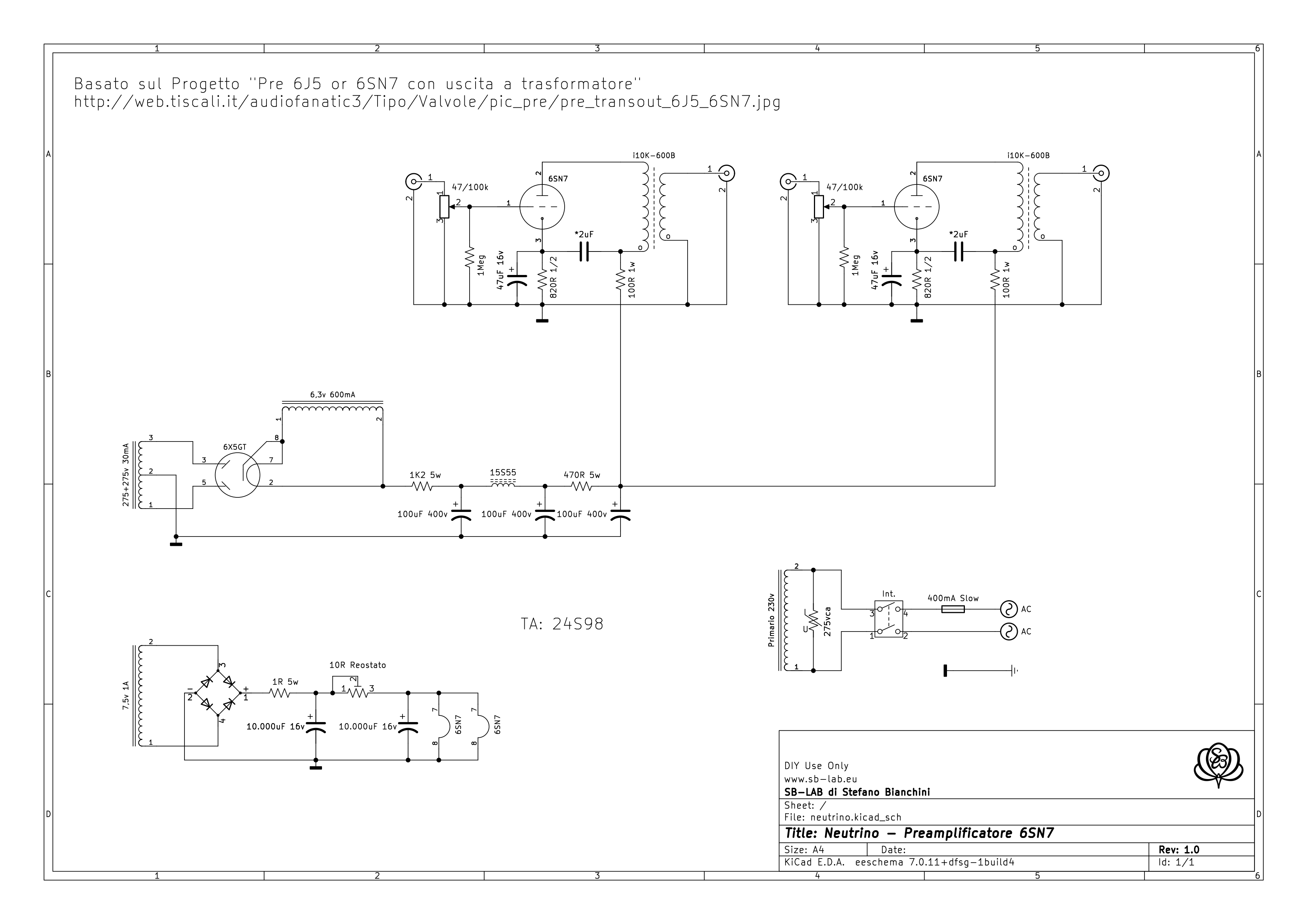
From this link you can download the schematic PDF… neutrino.pdf
Applied modifications
- Power transformer and rectifier tube: I decided to replace the 5V4G rectifier tube used in the original project with the more compact and accessible 6X5GT. This tube is fully capable of powering a single 6SN7, allowing the customer to save money without any sonic compromise. In addition, the power transformer was resized to match the real current requirements of the circuit, eliminating excessively oversized components.
- Ultrapath capacitor: Another modification concerns the 40µF ultrapath capacitor, which in the original project was specified as paper in oil. Since a capacitor of this type is very difficult to source in good condition and, if available, would likely be very large, I redesigned the circuit to use a more modest capacitor of about 2µF. I also added a standard electrolytic bypass capacitor in parallel with the cathode resistor, maintaining design flexibility. There is still full freedom to choose the most suitable ultrapath capacitor type, whether paper in oil, polypropylene, or another dielectric.
Below is a 10uF General Electric paper in oil capacitor
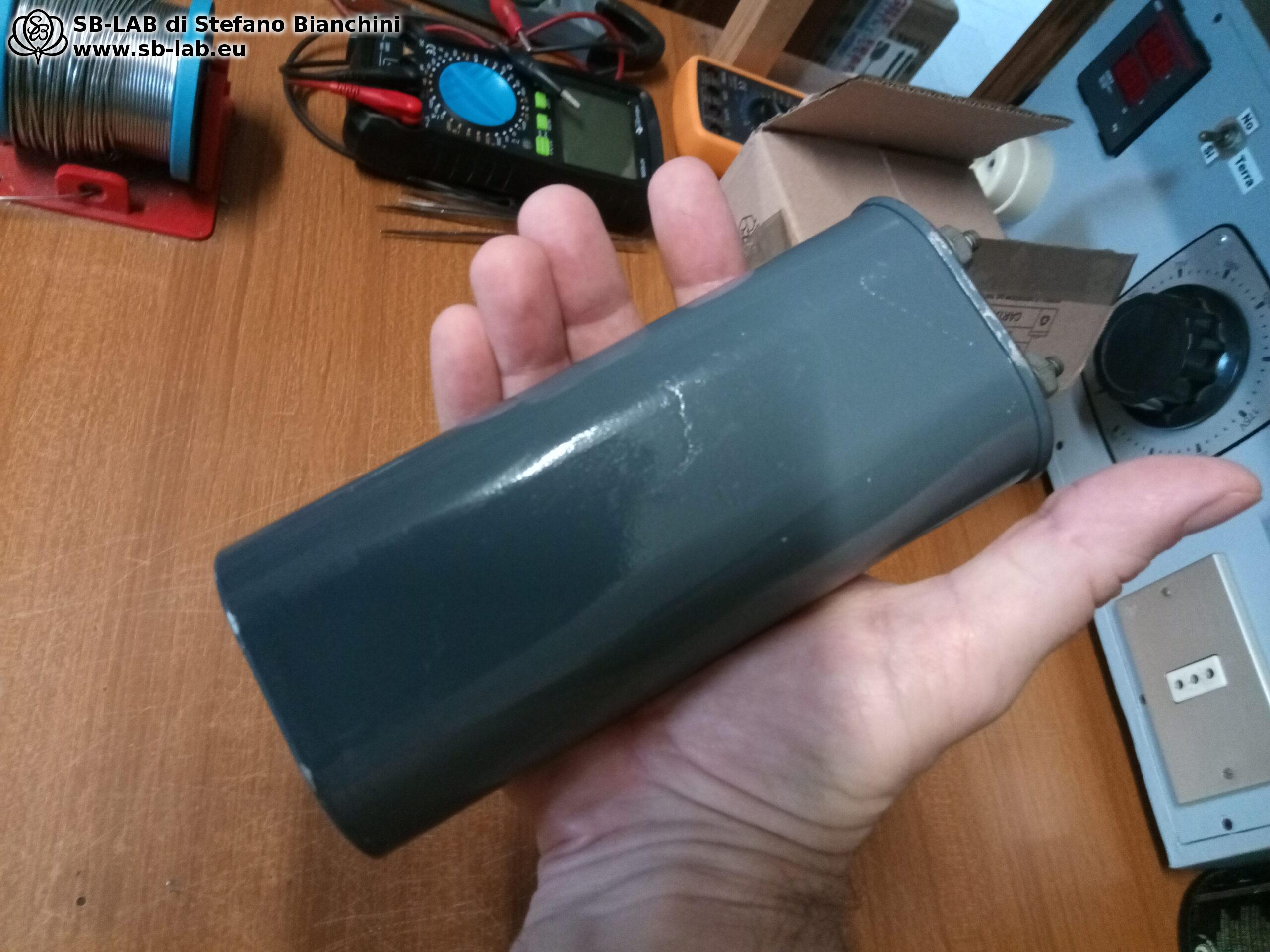
This one instead is a 2uF, significantly smaller, also U.S. made, probably a military or avionics component

Tube flexibility
In addition to the 6SN7, Neutrino is compatible with other tubes with equivalent electrical characteristics. This means that single triodes such as the 6J5 can also be used, or, as requested by the customer, the 7193 / 2C22 / VT-232 and similar types, offering considerable flexibility in the preamplifier configuration.
Neutrino 7193 “Alien”

At the request of a customer, I built a customized version of the Neutrino preamplifier, named Neutrino 7193 “Alien”. The main difference compared to the original model is the use of 7193 tubes instead of the classic 6SN7. These particular tubes, also known as 2C22, were chosen because they are electrically equivalent to the internal triodes of the 6SN7, allowing the circuit schematic to remain unchanged.
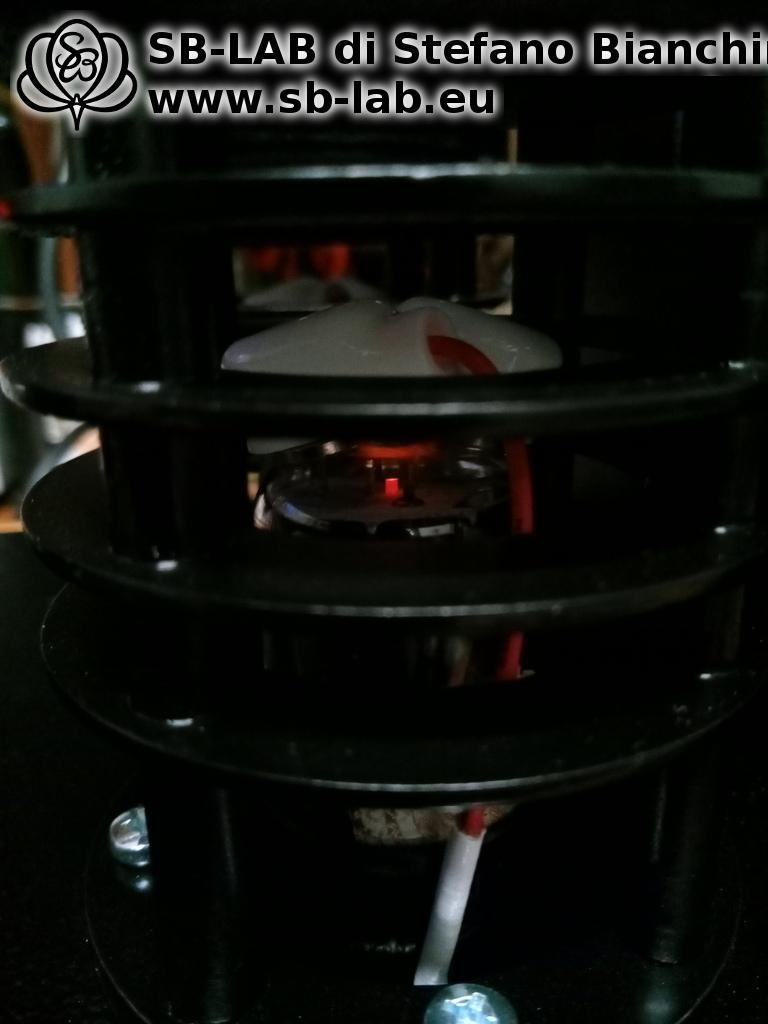
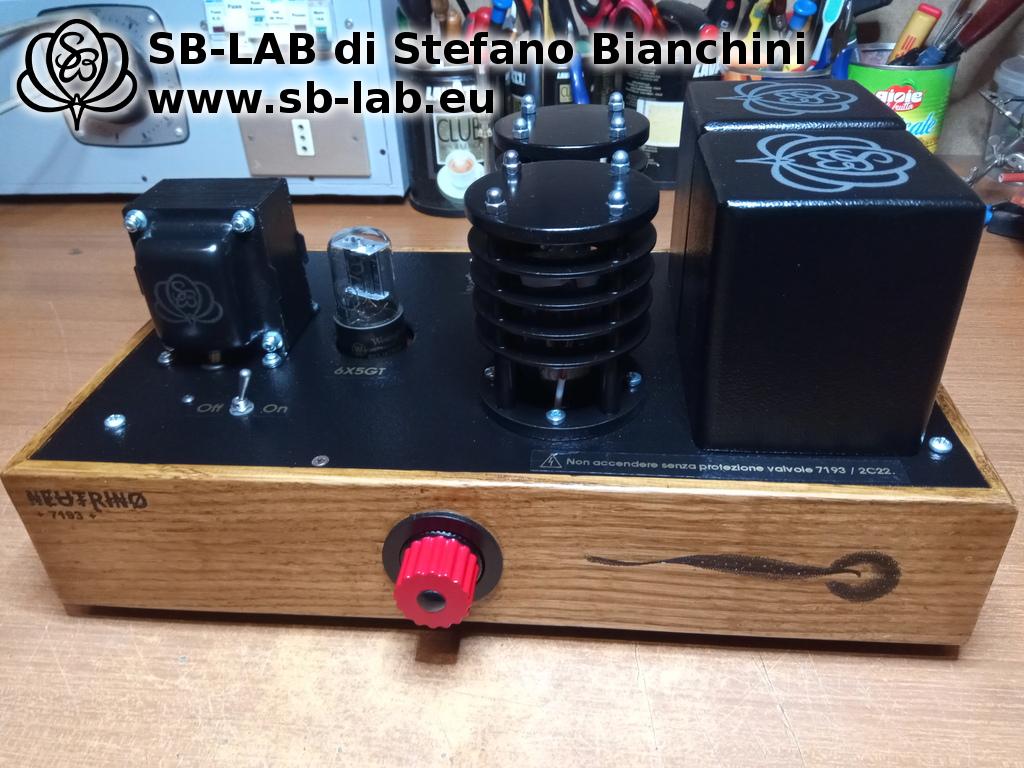
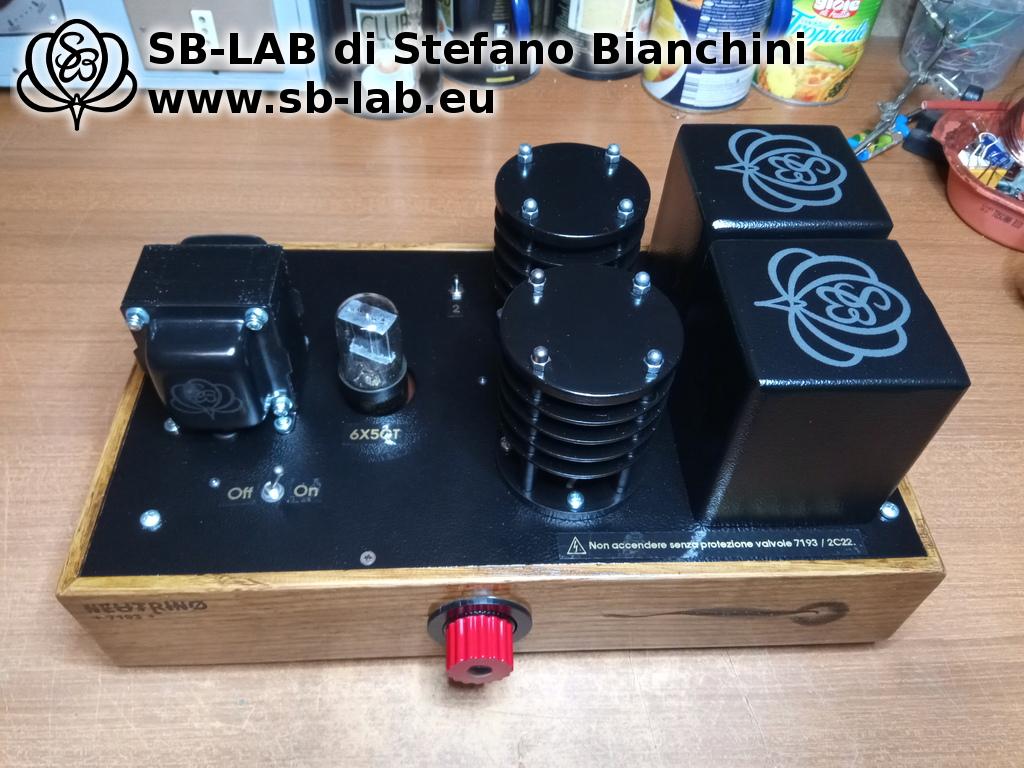
The 7193 tubes have an interesting history. They were developed as triodes for VHF and UHF amplifiers and oscillators during World War II, and are characterized by two separate top caps for plate and grid, a solution intended to reduce inductance and improve high frequency performance. While this feature is irrelevant for audio use, it required extra attention to electrical safety, since one of the top caps carries the 260V anode voltage. To protect the user from accidental contact, I designed and produced 3D printed resin covers, ensuring safe operation of the device.
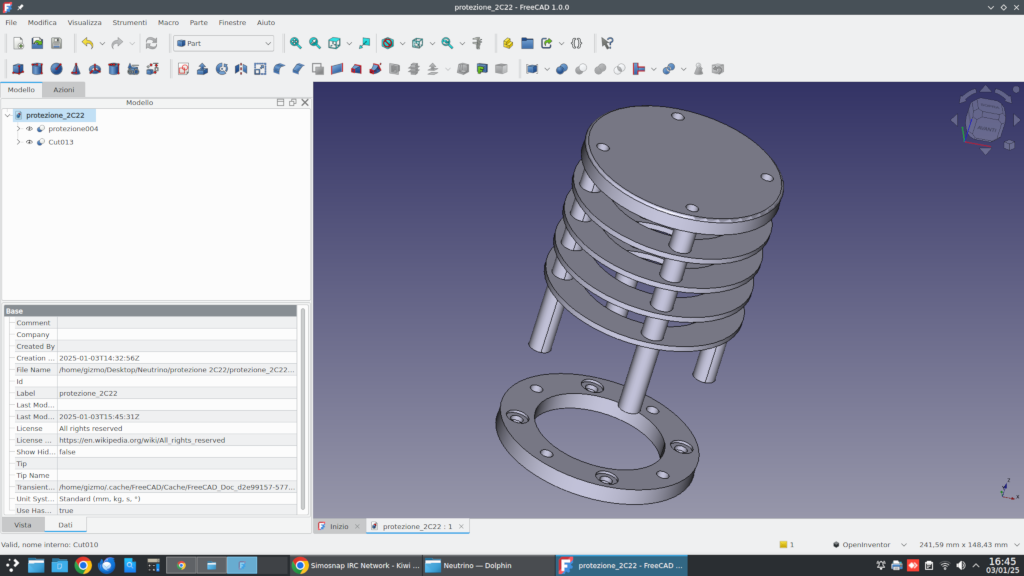
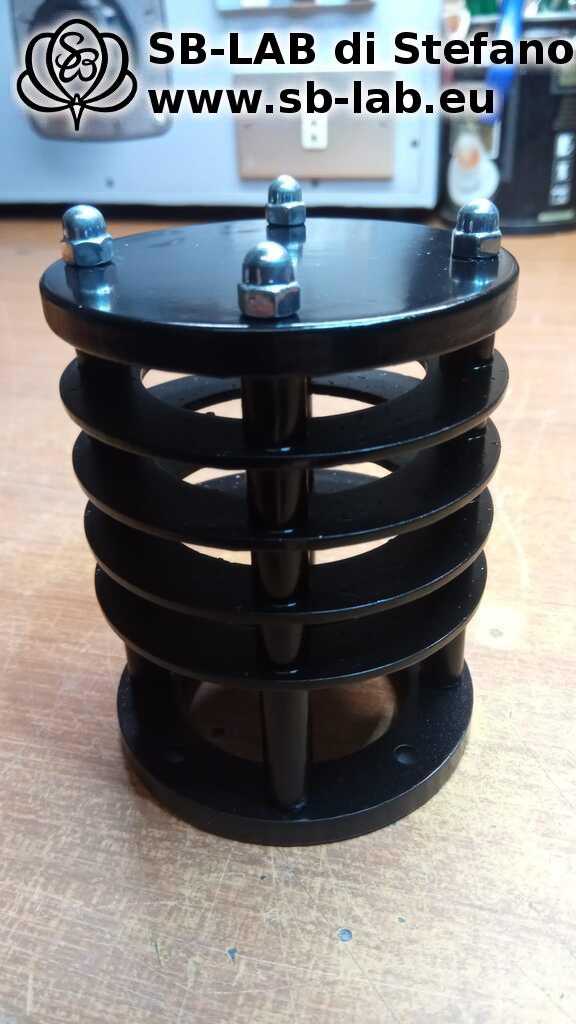
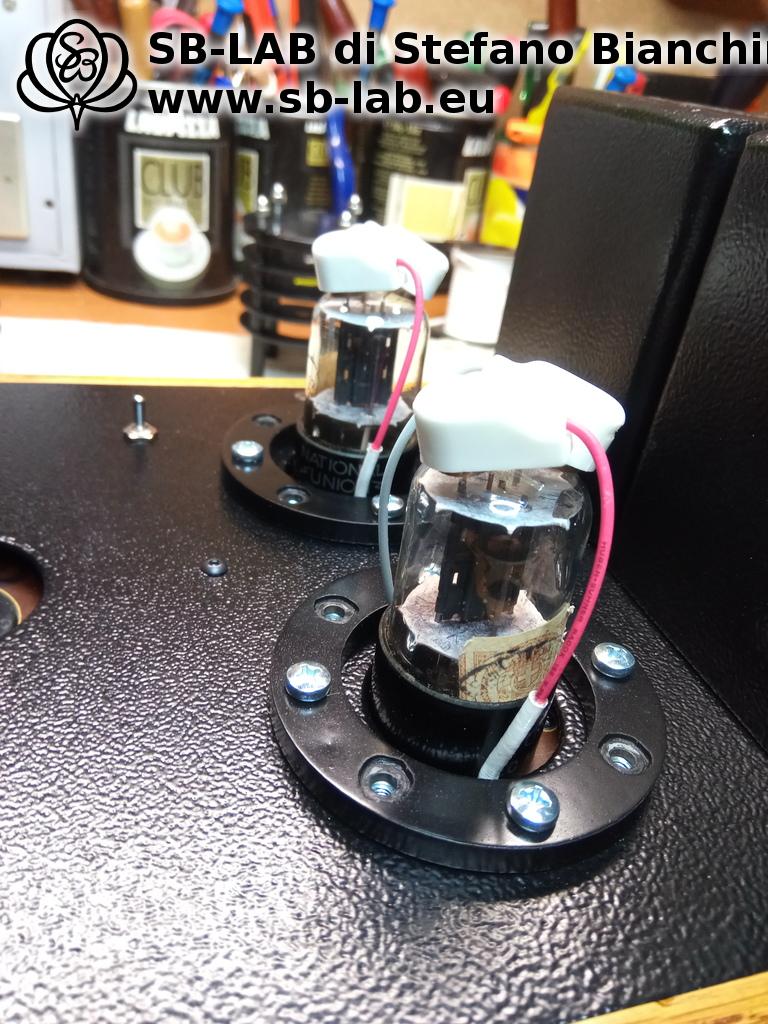
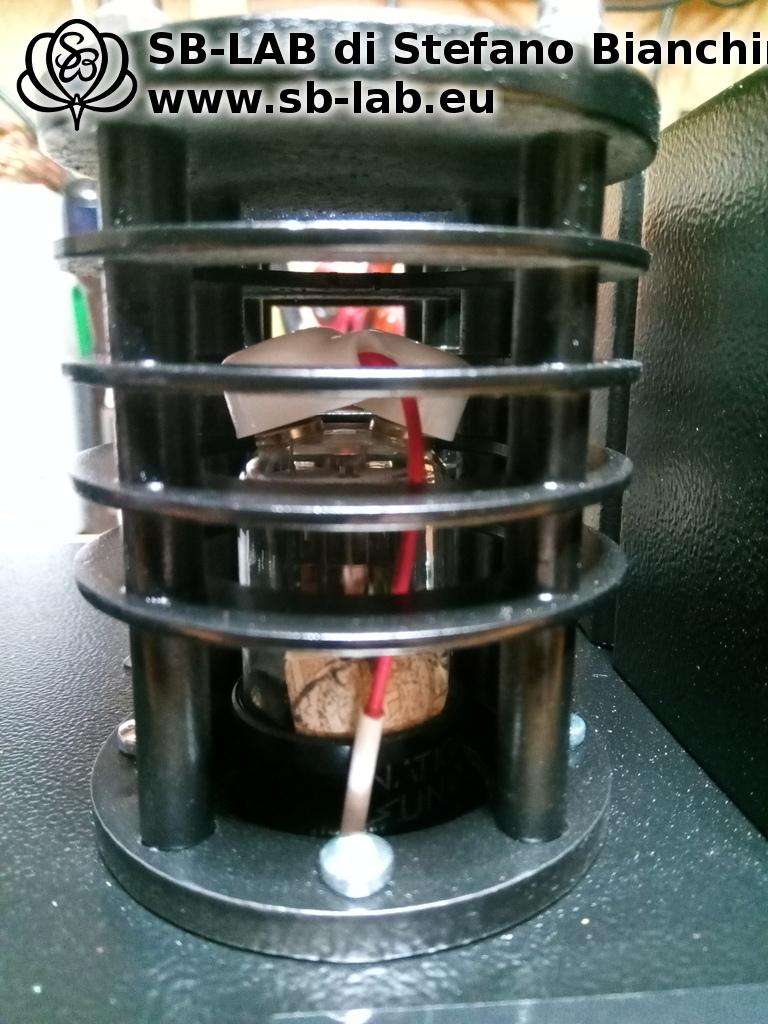
Structural customizations
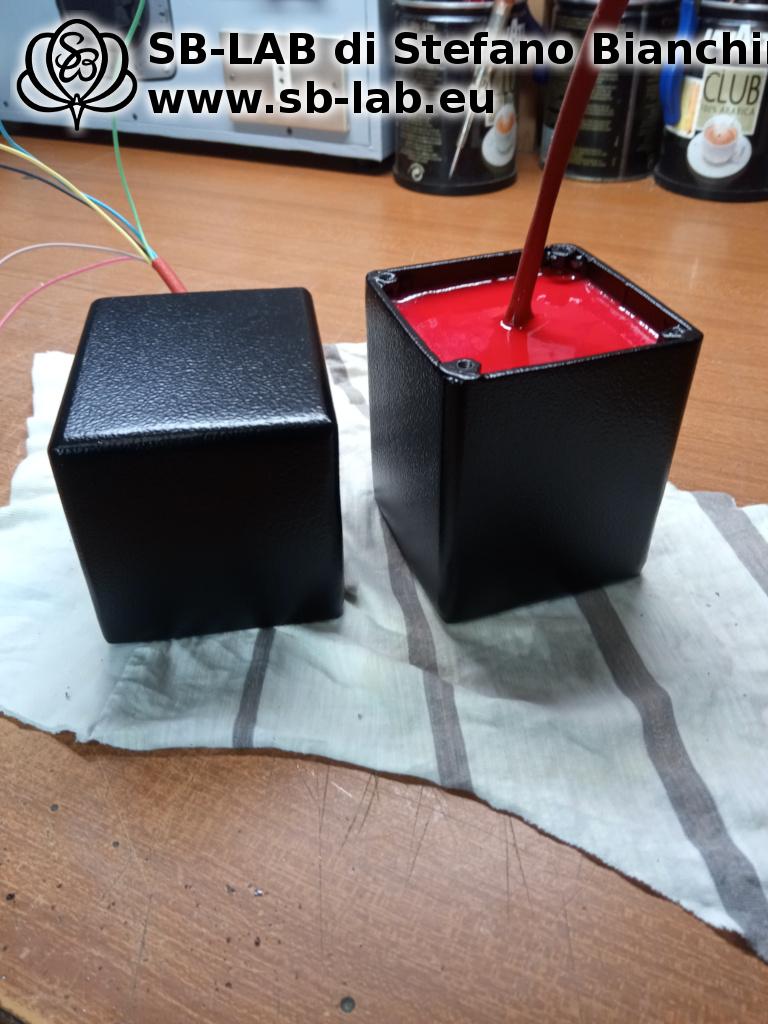
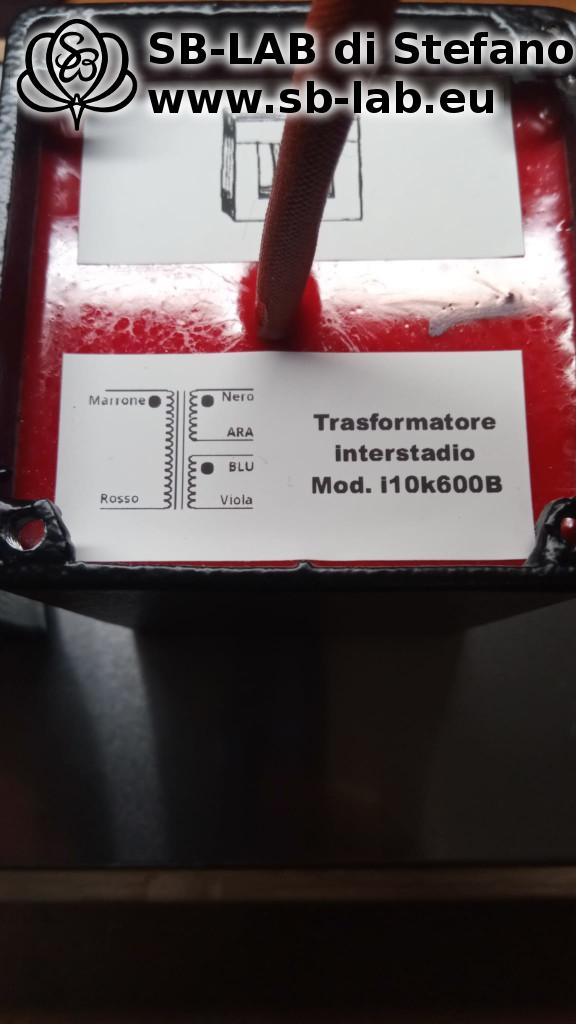
Another issue addressed was the protection of the i10K-600B output transformers. Commercial hi-fi covers that look good are difficult to find and, when available, they usually come from China and are made of thin sheet metal. I therefore had enclosures made from thick steel tubing by a local metalworker. The result was excellent both aesthetically and functionally, with a significant reduction in captured stray fields compared to commercial covers.

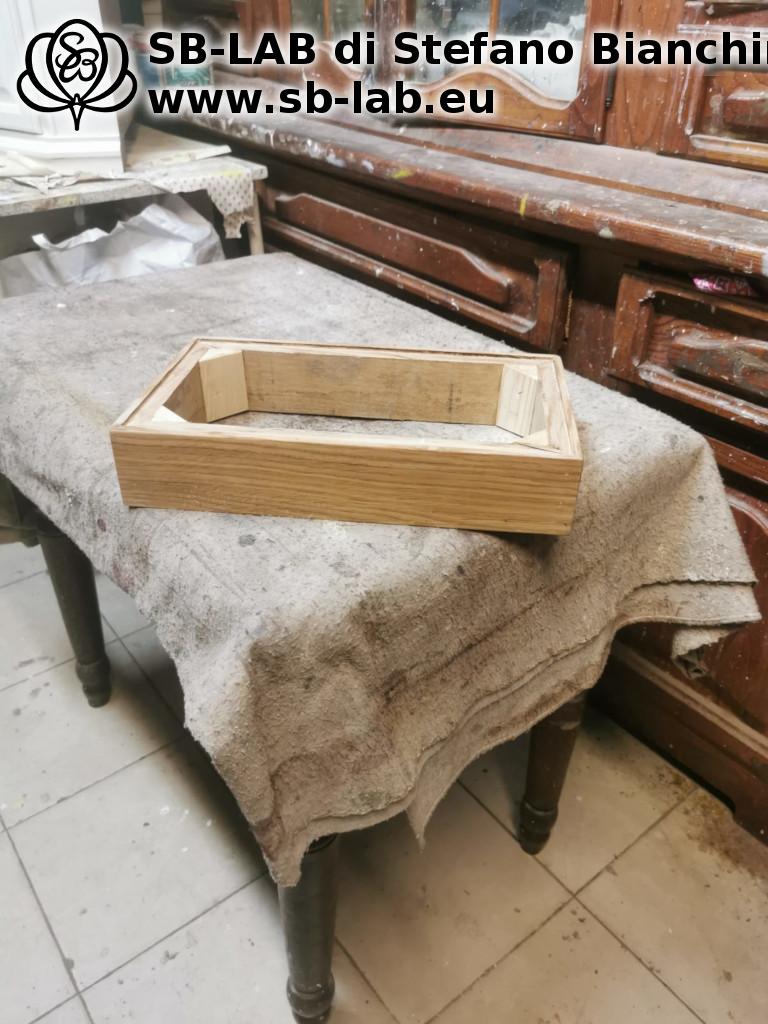
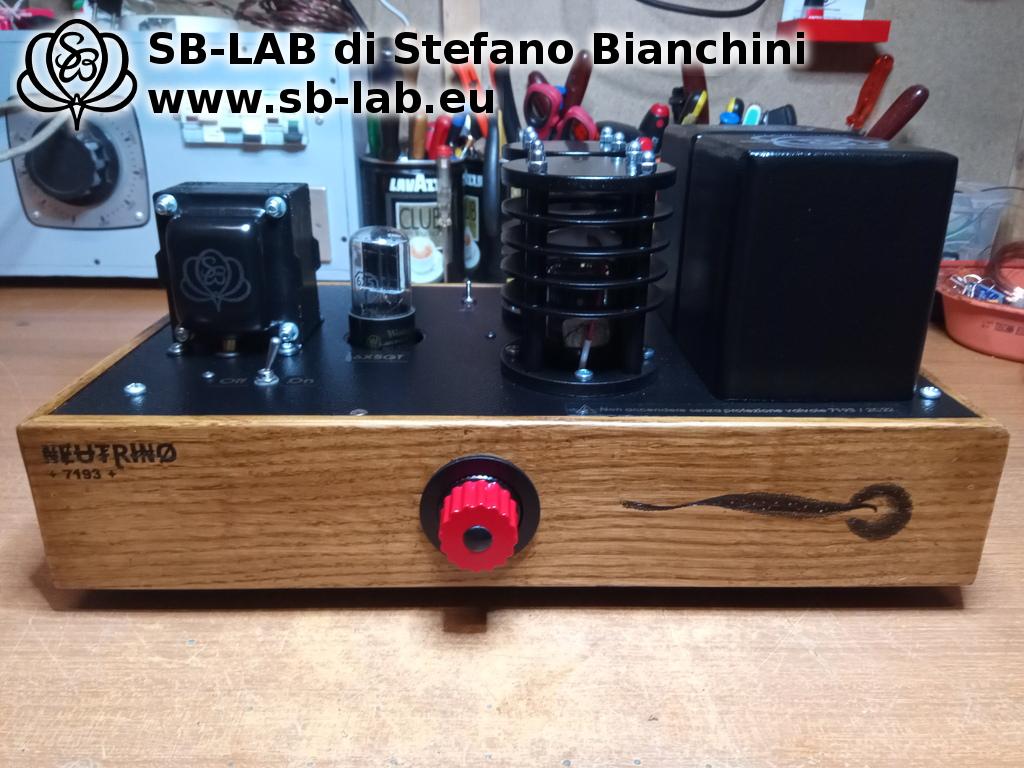
The preamplifier chassis was built in light-colored wood according to the customer’s specifications by RS-Restauro. To complete the design, I laser engraved the front panel and then polished everything to achieve a refined and durable finish.
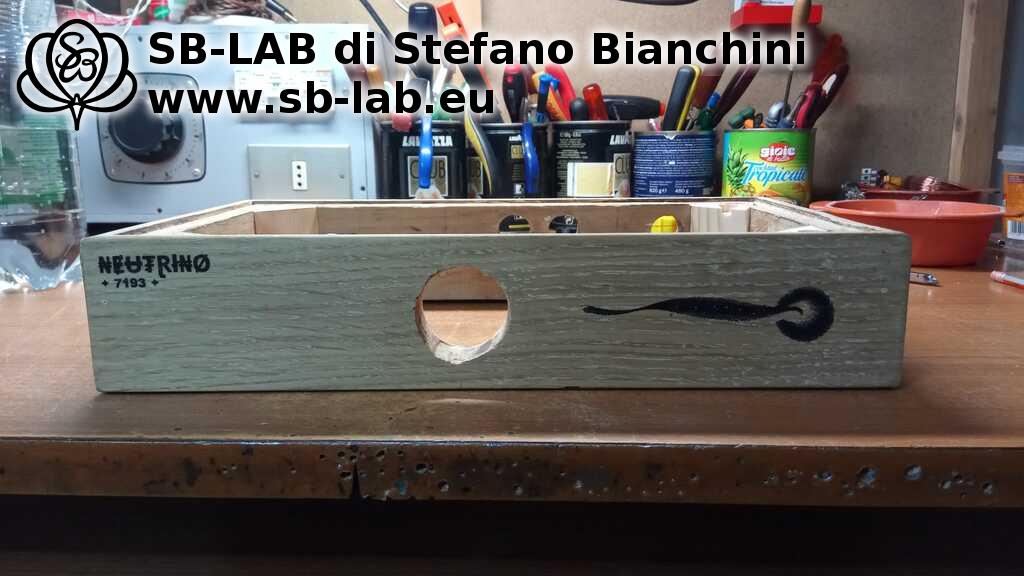
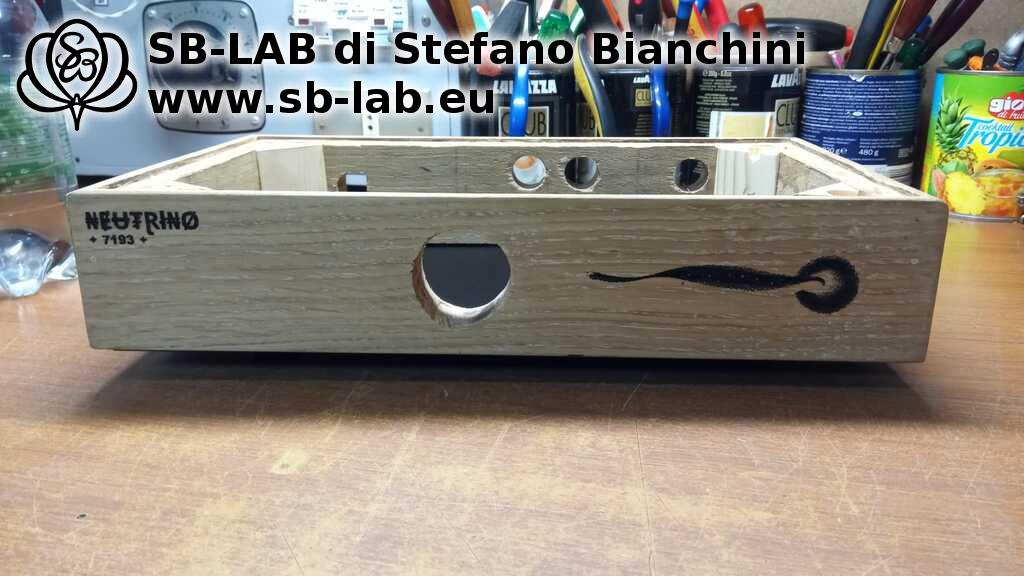
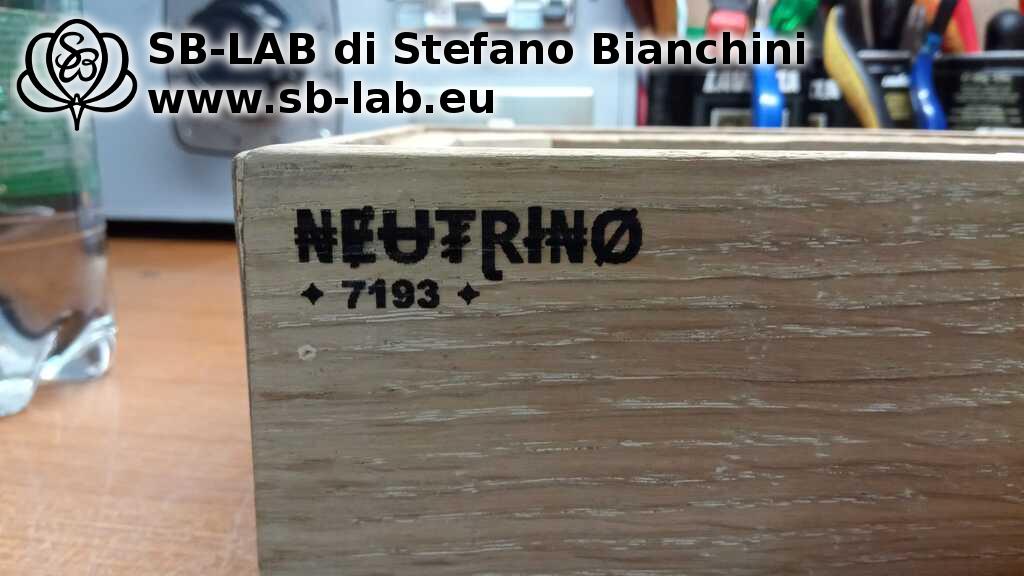
3D printed parts
The use of 3D printing was crucial for several components of the Neutrino 7193 “Alien”. In addition to the already mentioned resin tube covers, I printed:
- The preamplifier feet, in PLA, to ensure a stable and elegant support.
- The internal potentiometer support, also in PLA, which made it possible to integrate the volume control into the chassis without invasive structural modifications. The potentiometer was then bonded to the support with two-part resin.
- A resin cup to support a particular volume knob supplied by the customer, which had an unusual shape and required a custom support to be mounted correctly.


Wiring
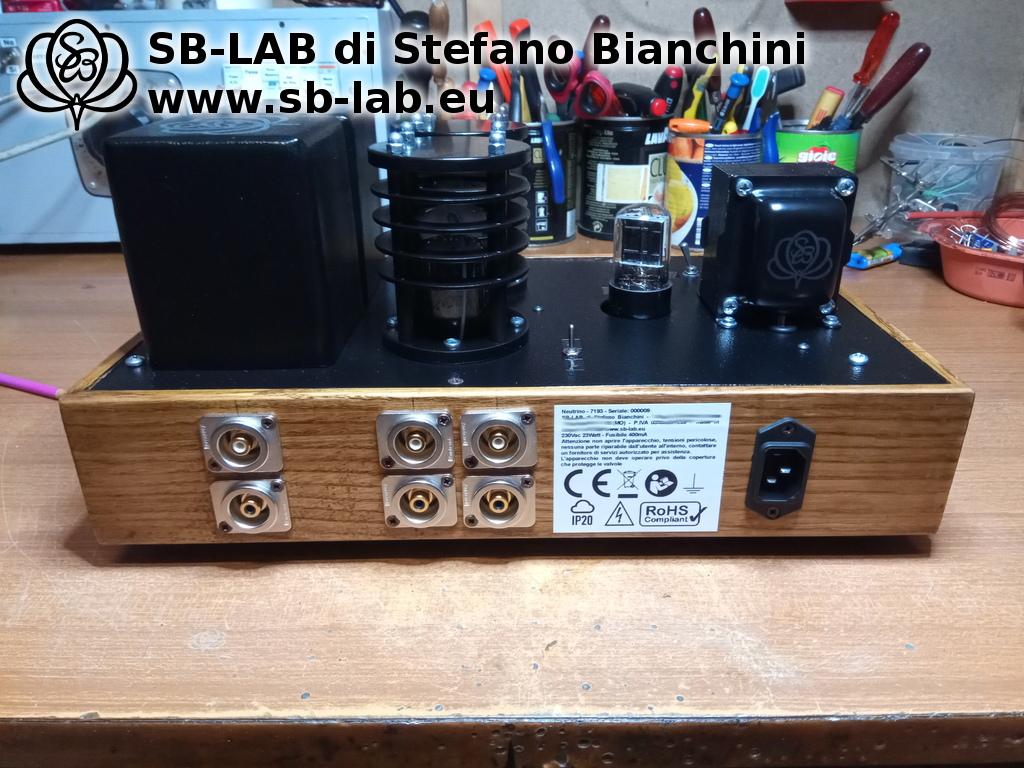
The wiring was entirely done point to point in free air, a mandatory choice for a one-off build.
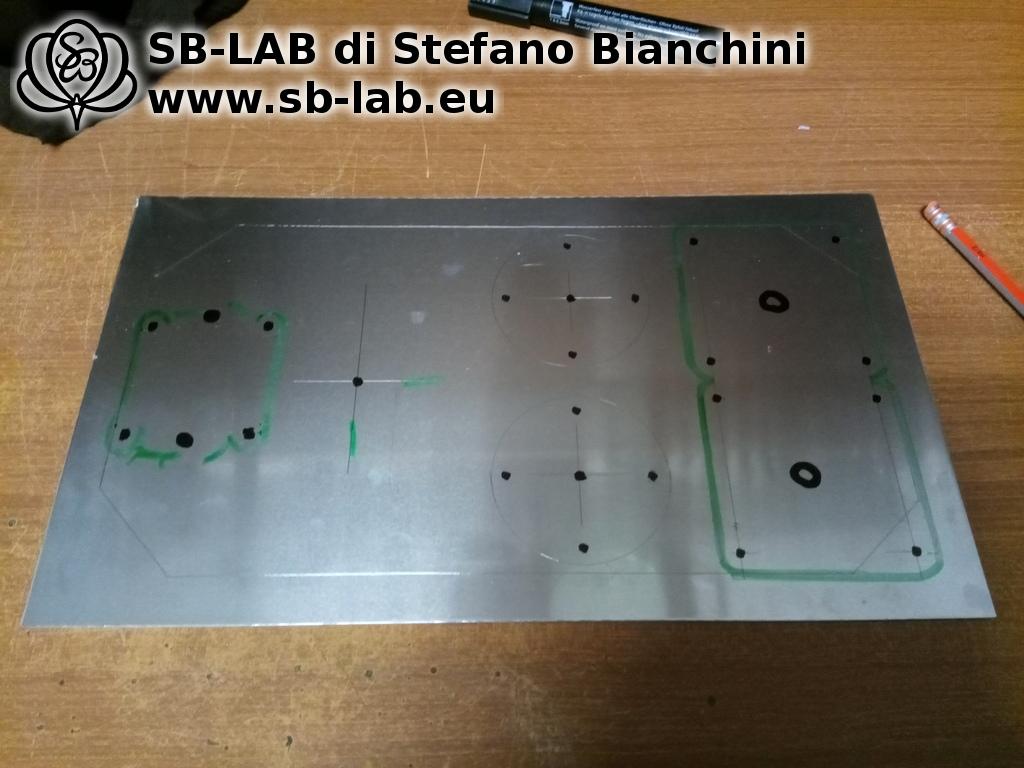
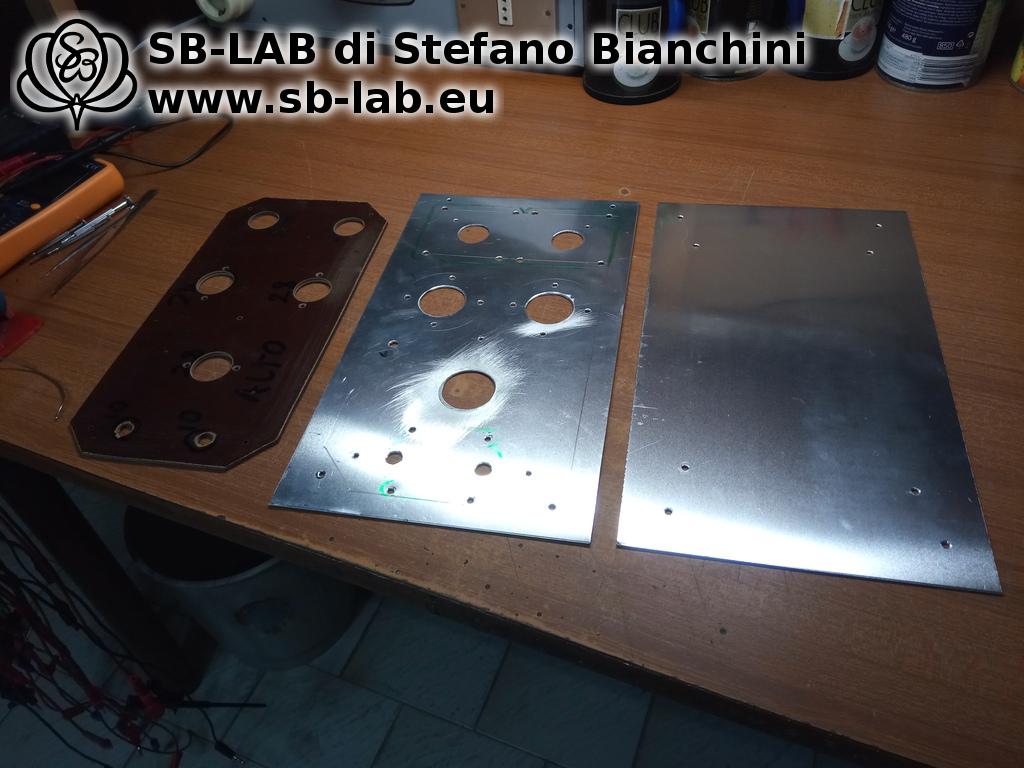
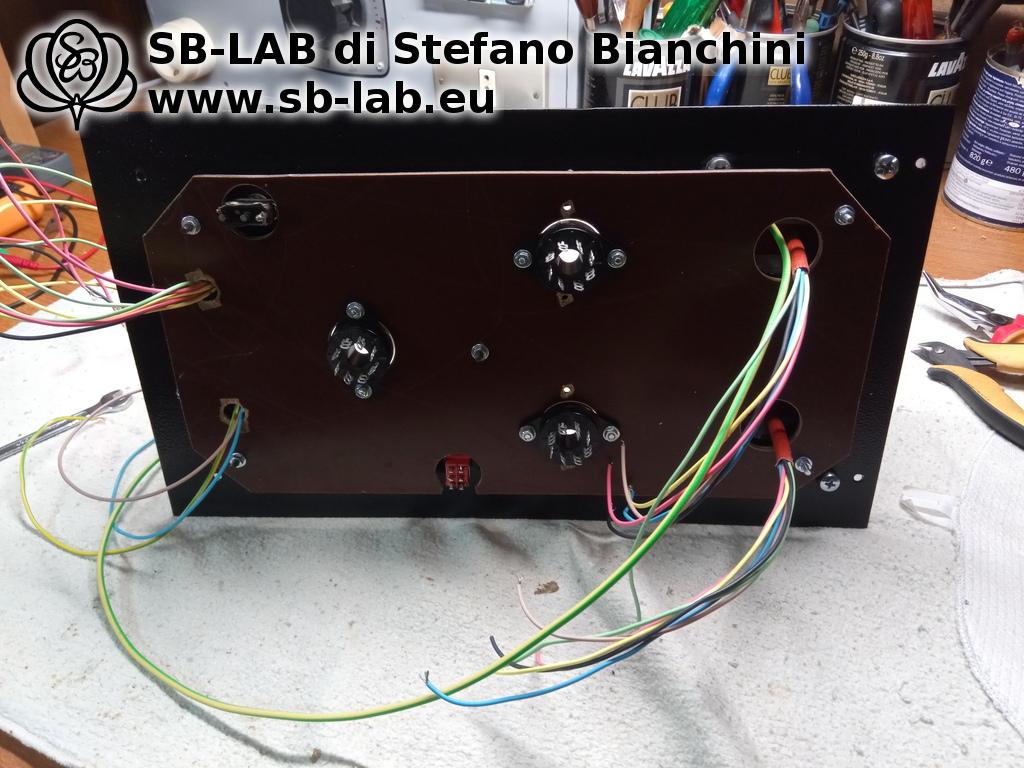
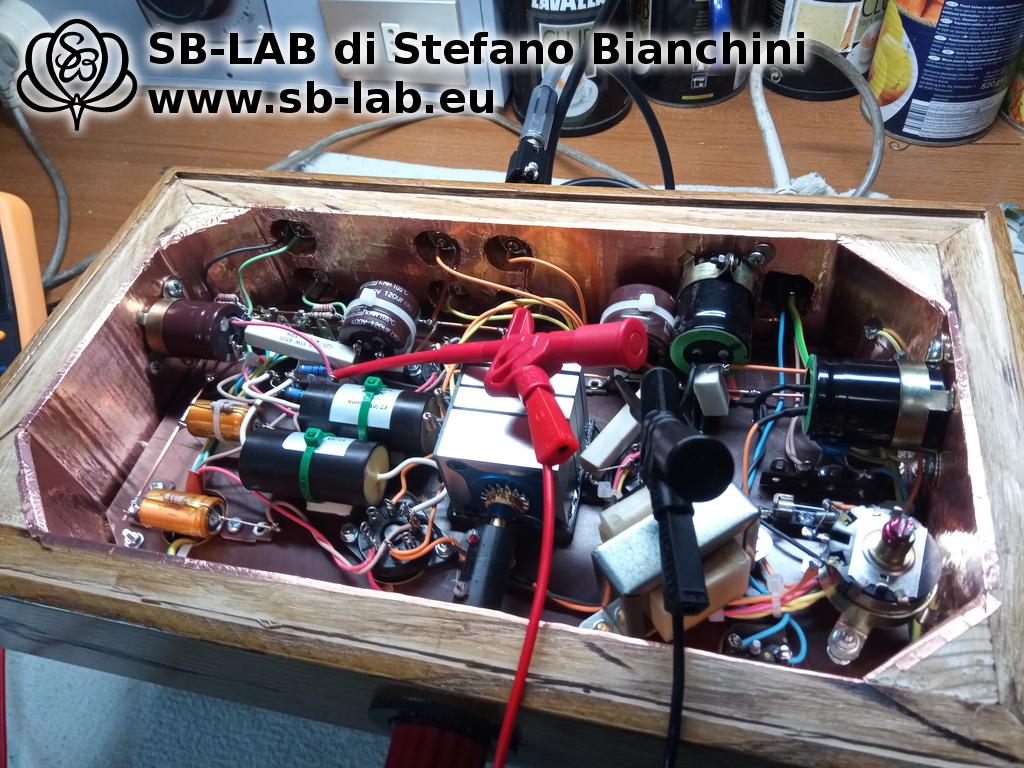
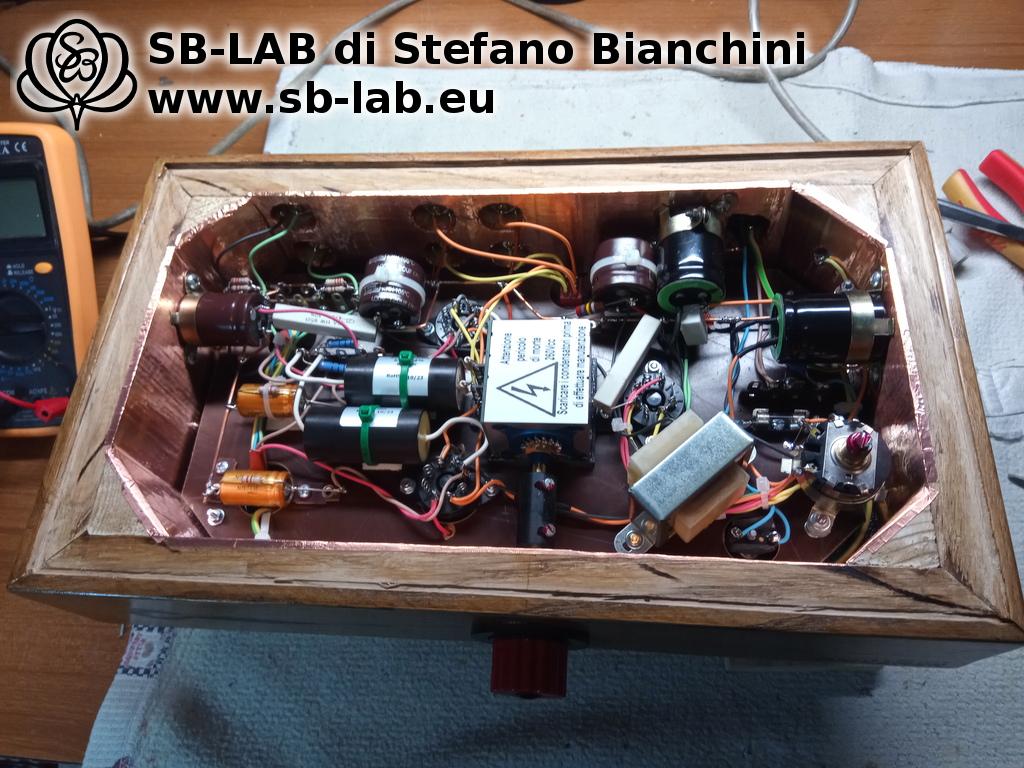
The completed Neutrino 7193 “Alien”
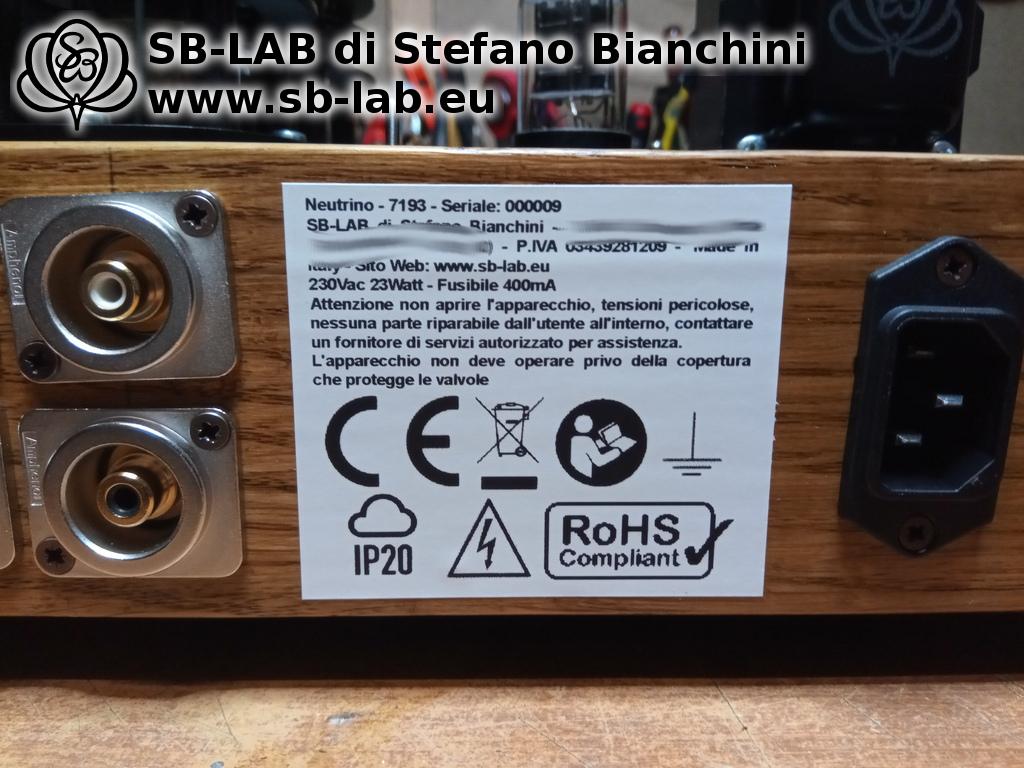
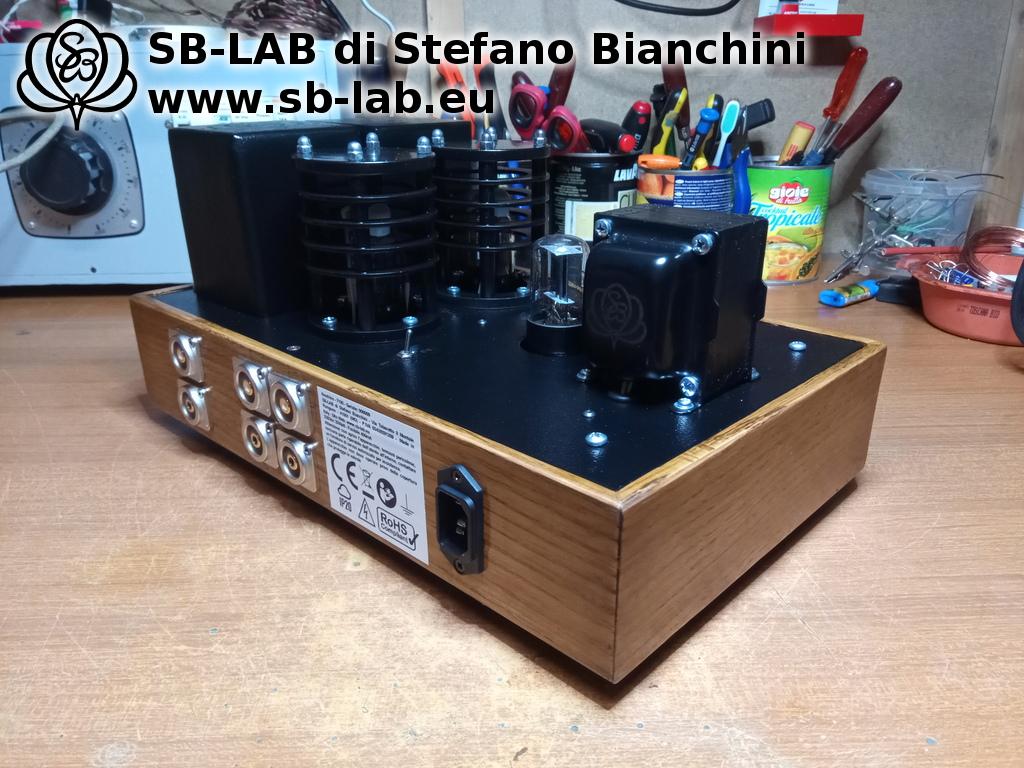
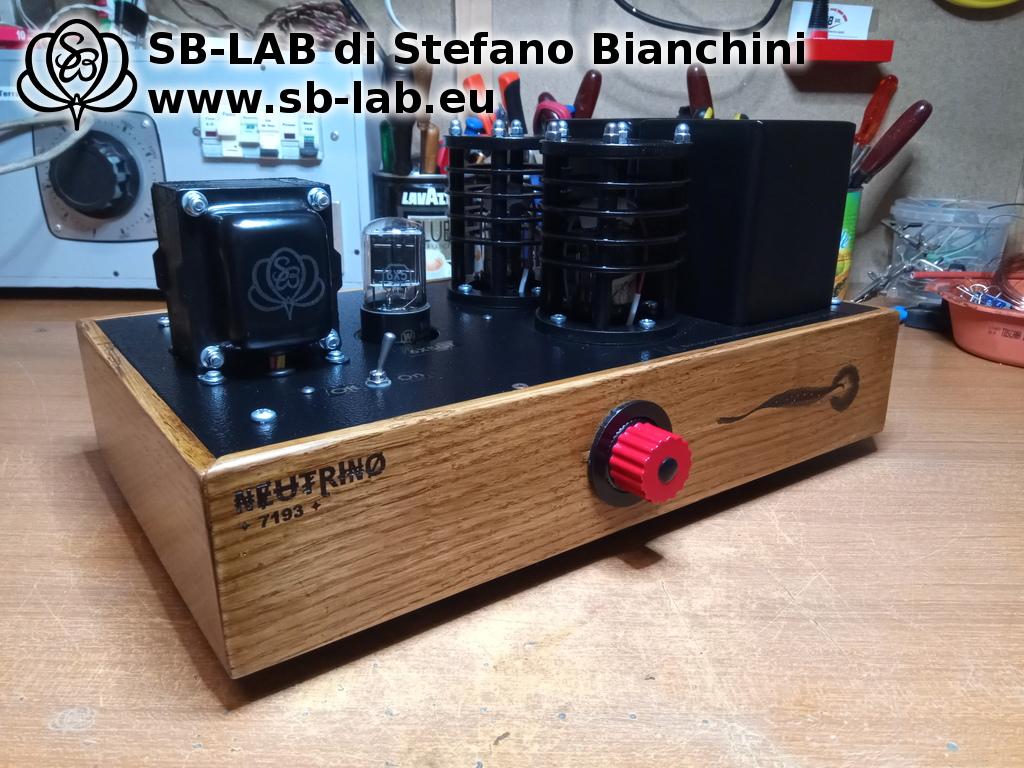
After careful design and construction work, here is the Neutrino 7193 “Alien” in its final form. Every detail, from the 3D printed protections to the robust transformer enclosures, was designed to combine aesthetics and functionality. The light wood chassis, laser engraved and polished, adds an elegant touch, while the point to point wiring ensures optimal performance. The distinctive volume knob, mounted on a resin printed support, adds a further unique element to this one-off build.
Instrument measurements
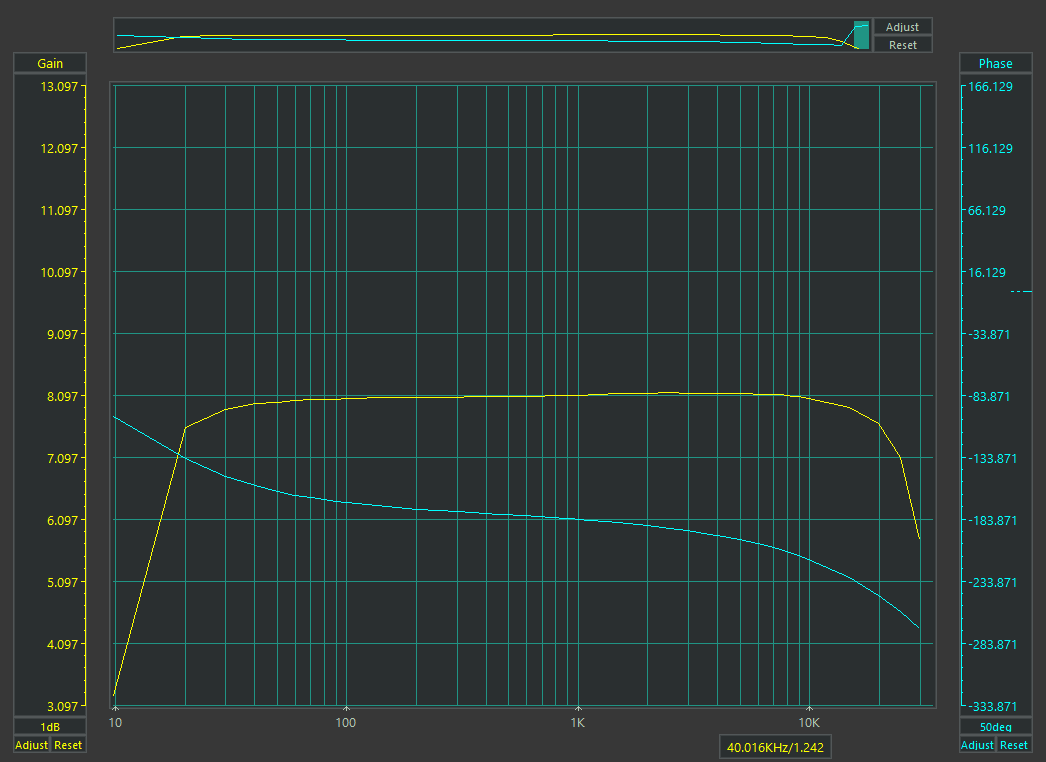
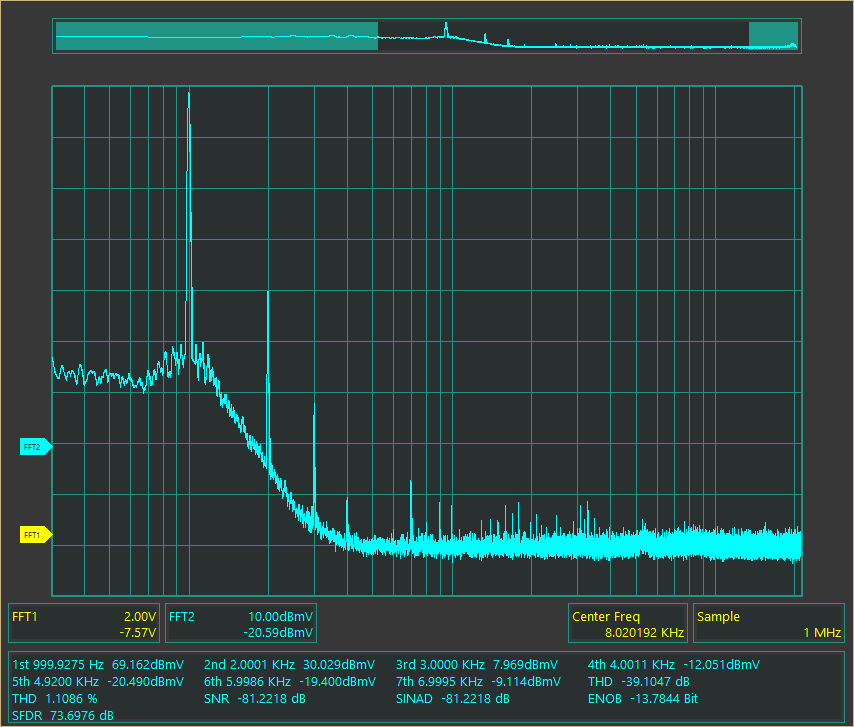
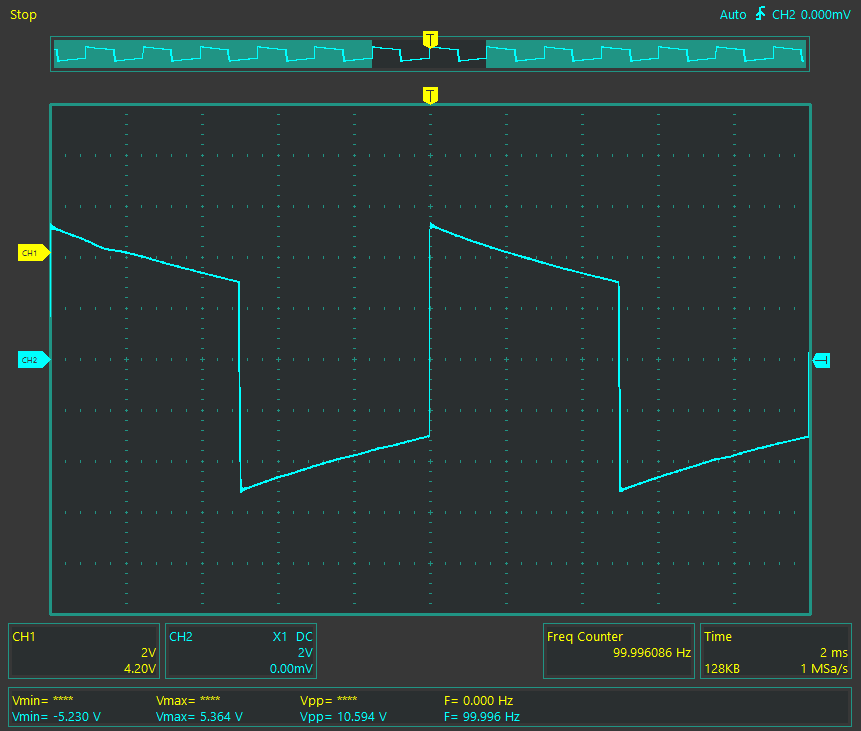
The Neutrino 7193 “Alien” is a completely zero feedback preamplifier, a design choice made possible by the fact that it is not connected to reactive loads, thus avoiding high distortion issues. Thanks to the SB-LAB i10K-600B output transformers, the measured bandwidth extends from 20 Hz to 25 kHz (-1 dB), with an output level of 8Vpp (2.8 Vrms) and a harmonic distortion of 1.1%. The effective gain of the circuit is 15 dB, the same value measured in the 6SN7 version, while the maximum achievable output reaches approximately 20Vpp (7.1 Vrms). The total power consumption of the unit is 23W, maintaining suitable efficiency for a preamplifier of this type.
Bandwidth
THD
100 Hz square wave
1 kHz

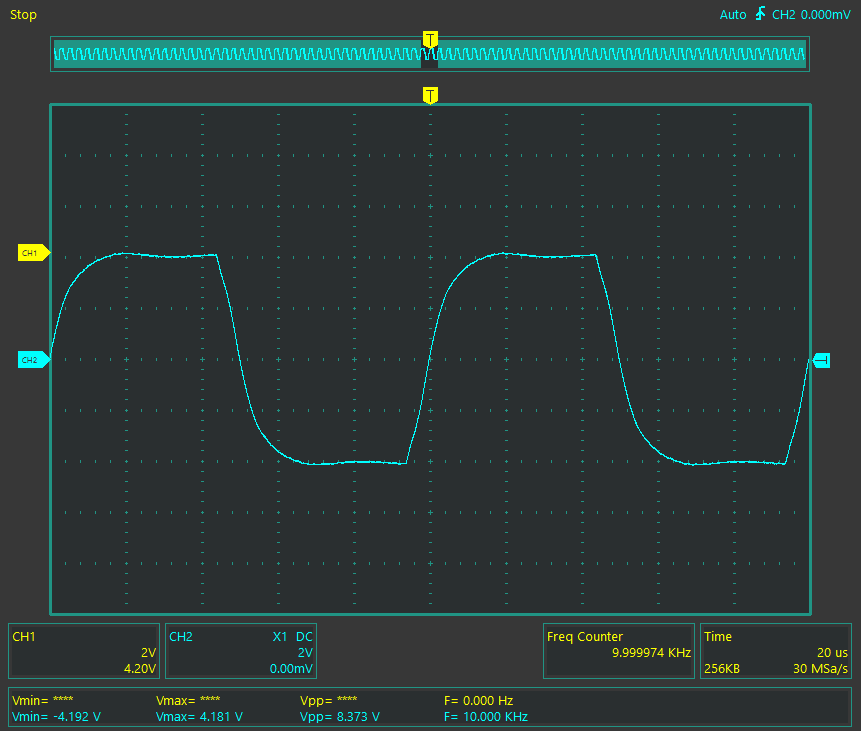
10 kHz