The Klimo Lar is an MM/MC phono preamplifier that is part of the Klimo product line, a brand well known for its excellence in the world of high-quality audio. The Lar was designed to complement the Merlino line preamplifier, offering a more accessible option for passionate audiophiles. However, despite its more affordable price compared to other products from the same manufacturer, the Lar delivers exceptional sonic performance and high-quality handcrafted construction.
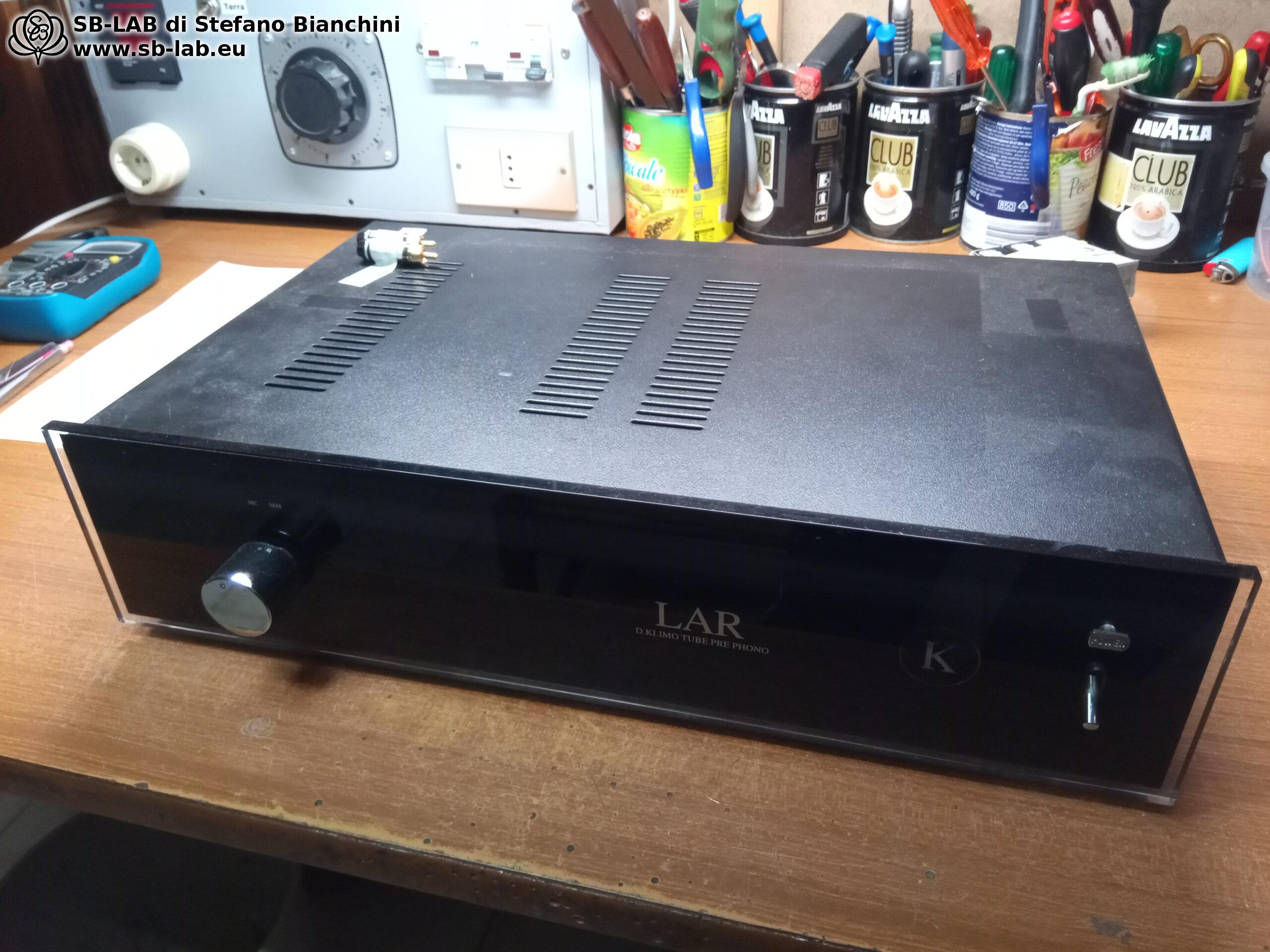
Design and Construction The Klimo Lar features an elegant and refined design, with compact dimensions (44 x 11.5 x 27 cm) and a black finish with a chrome knob for switching between MM and MC cartridges. The rear panel provides connections for the MM input, MC input, and output, along with a power socket. The preamplifier is supplied with a high-quality Klimo power cable, which helps improve dynamics and sound transparency.
The interior of the Lar is a testament to build quality. Two toroidal transformers are housed in a shielded compartment to reduce unwanted electromagnetic fields. The preamplifier features two separate boards, one for each channel, elastically suspended to reduce tube microphonics. The heart of the Lar consists of six tubes, all double triodes, with two ECC88 dedicated to the MC stage and two ECC88 plus two ECC81 for the MM-RIAA stage.
Sonic Performance The Klimo Lar delivers outstanding sonic performance. It is remarkable for its attention to detail and tonal accuracy. Instrument and vocal timbres are reproduced accurately and engagingly, without the typical colorations of old-school tube designs. The preamplifier offers exceptional high-frequency extension, rich in harmonics and detail, while the midrange is smooth and full-bodied, with extraordinary microdynamics. The low end is powerful, articulate, and authoritative.
The Klimo Lar is tonally neutral and succeeds in capturing the emotional essence of a recording, without sacrificing detail or dynamics. It is a preamplifier that pairs perfectly with high-class cartridges, ensuring superb sonic reproduction.
The repair
A client came to me with a Klimo Lar that was producing an annoying hiss on both channels, with one channel noisier than the other. After opening the unit, I discovered that it had been tampered with, and that this modification was directly related to the noise issues.
The modification involved the cartridge load resistor, which is normally soldered directly onto the PCB. However, someone had added two RCA connectors on the rear of the preamplifier to allow easier swapping of the load resistor. This modification introduced significant noise problems, since the circuit area affected by the RCA connectors is sensitive to very weak signals. The cable connecting these connectors picked up interference and noise, further compromising audio performance.

To solve the problem and restore the Klimo Lar to optimal performance, I removed the modification and reinstated the load resistor by soldering it directly onto the PCB. This operation eliminated the interference and unwanted noise that had entered the circuit due to the tampering.
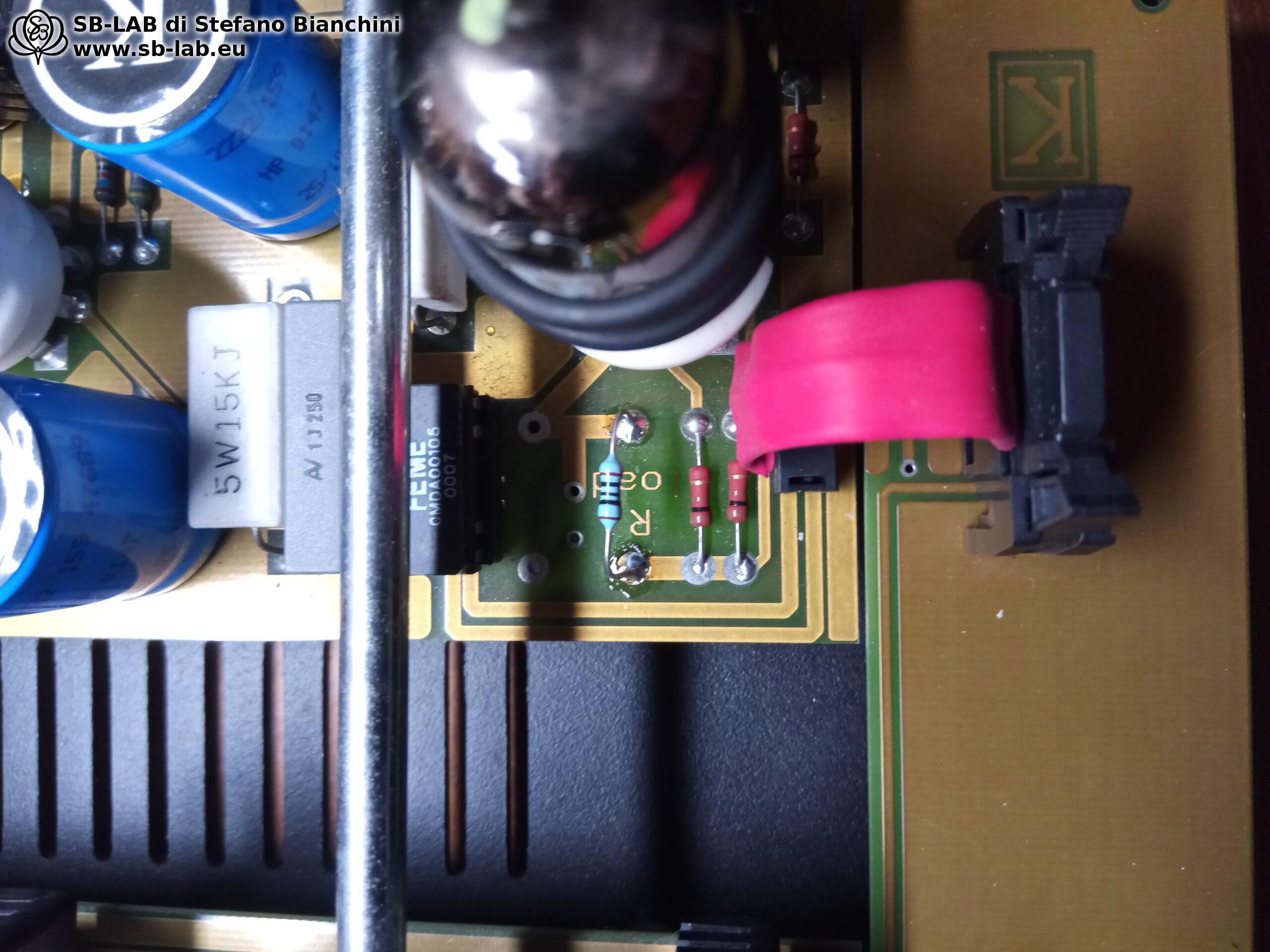
In addition, I carried out a thorough tube check using a computerized curve tracer, reselecting and matching the same tubes already owned by the client. The result of these repair operations was excellent. The output noise of the Klimo Lar was significantly reduced, dropping to only about 5/10 mV peak-to-peak. The preamplifier returned to delivering sound free from annoying noise and interference, restoring the purity and audio quality one expects.
Some curiosities about the measured tubes…
The Psvane ECC81 tubes, new and measured by me, show curves that appear to diverge from the typical curves found when measuring any NOS ECC81, as highlighted in the two comparison plots.
| Psvane | NOS |
 |
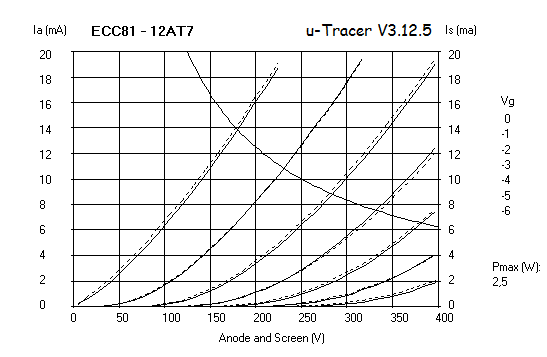 |
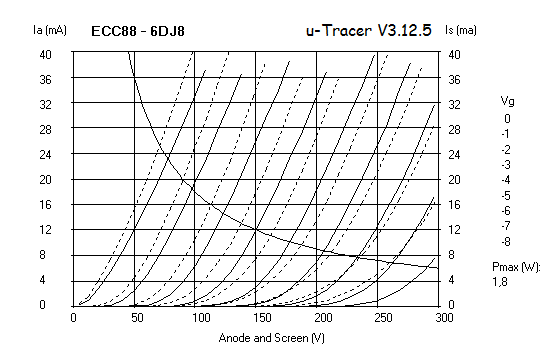
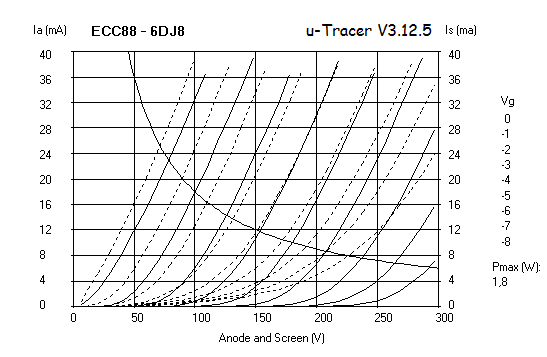
The following images show the graphs of some ECC88 tubes, which display significantly distorted curves (current production tubes). It is interesting to note that, despite not being in perfect condition, they would still work in a circuit. The graphs highlight how the use of a curve tracer can reveal unexpected aspects. This is because, when these tubes are measured on a typical tube tester, even a high-quality transconductance tester, measurement at a single static point may make the tubes appear to be in excellent condition or show only negligible current differences. Then you look at them with a curve tracer, and they appear like this: