The Advance Acoustic Tube DA Converter 24bit 384kHz DAC – MDA503 fits into the entry-level segment, presenting itself as a DAC converter with SPDIF and Toslink inputs. At first glance, it gives the impression of a fairly striking design, with solid front panels and a generously sized remote control that performs its task efficiently.
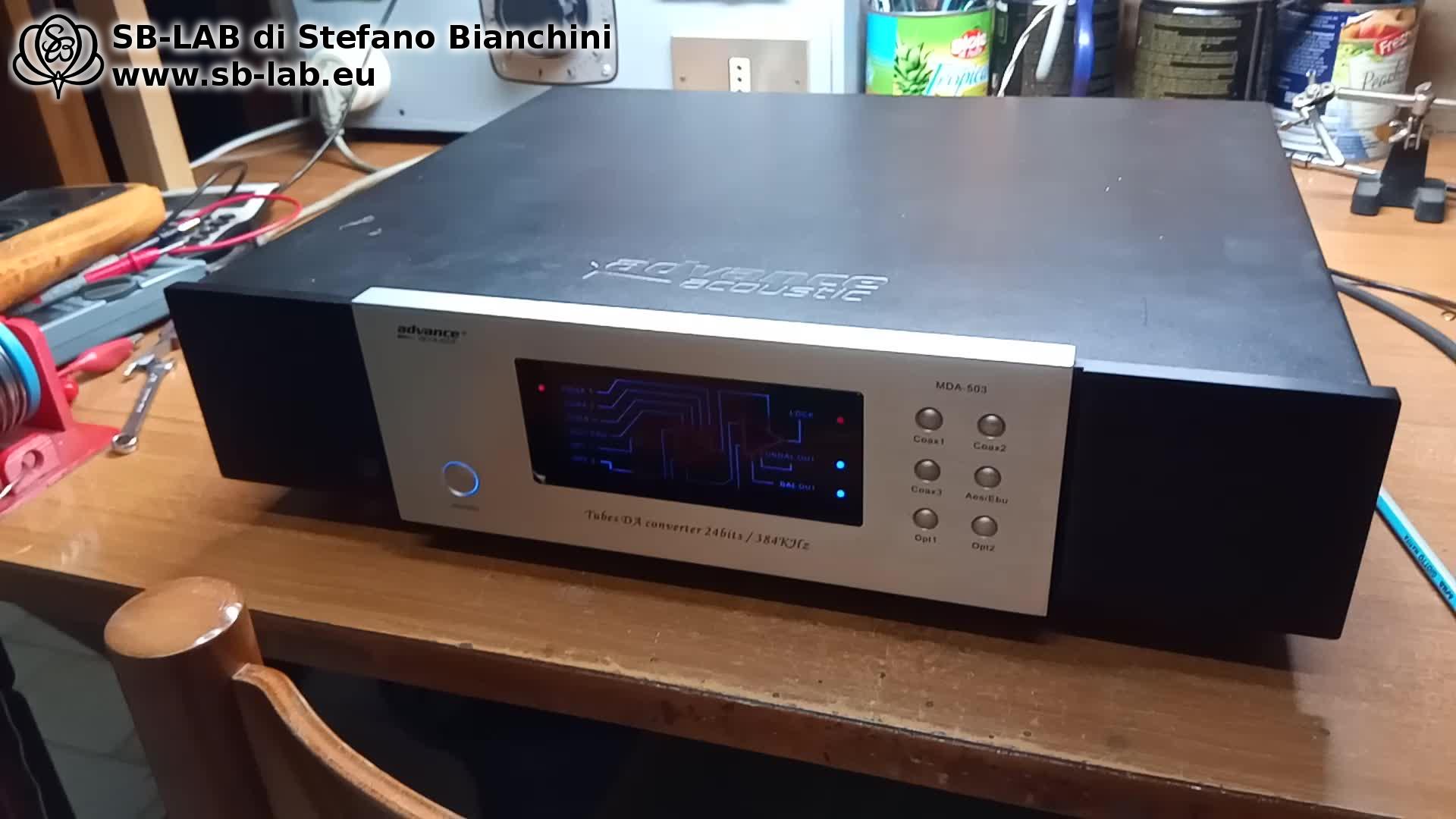
What immediately catches the eye, according to what is reported online, is the luminous display with graphics resembling a circuit diagram that adorns the front of the DAC. However, the actual chassis of the DAC conveys a sense of cost-saving.
Despite the mixed opinions found online, sometimes even negative, the MDA503 DAC demonstrates its ability to reveal a respectable level of detail, offering a tonally balanced performance without noticeable emphasis in either the high or low frequencies.
Personally, I was faced with a completely non-functioning unit, with burned power transformers and original spare parts that were impossible to find. In the following article, I will share my experience, showing how I tackled this challenge by calculating and replacing the power transformers to bring this device back to life.
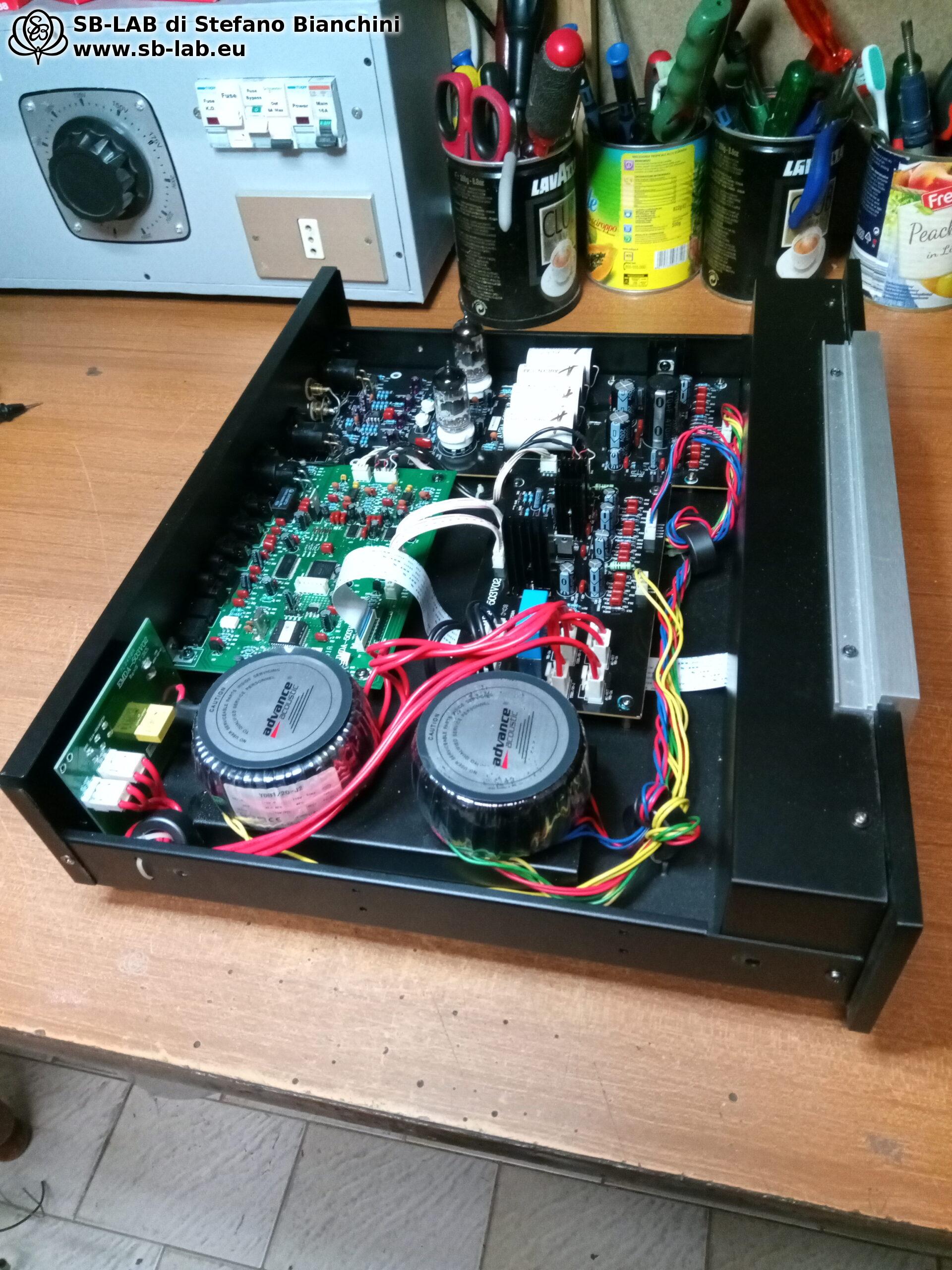
During my experience with the MDA503 DAC, I noticed a particular aspect that deserves closer examination. Despite the modest declared total power of 20 watts, the two toroidal transformers present in this device seemed to follow the classic Chinese approach of saving every possible cent.
These transformers, probably characterized by an undersized core and, more likely, by a limited amount of copper inside, tended to overheat significantly due to the high magnetic induction they were subjected to. Over time, the materials used in their construction deteriorated, eventually leading to a short circuit in the primaries and the consequent blowing of the main fuse.
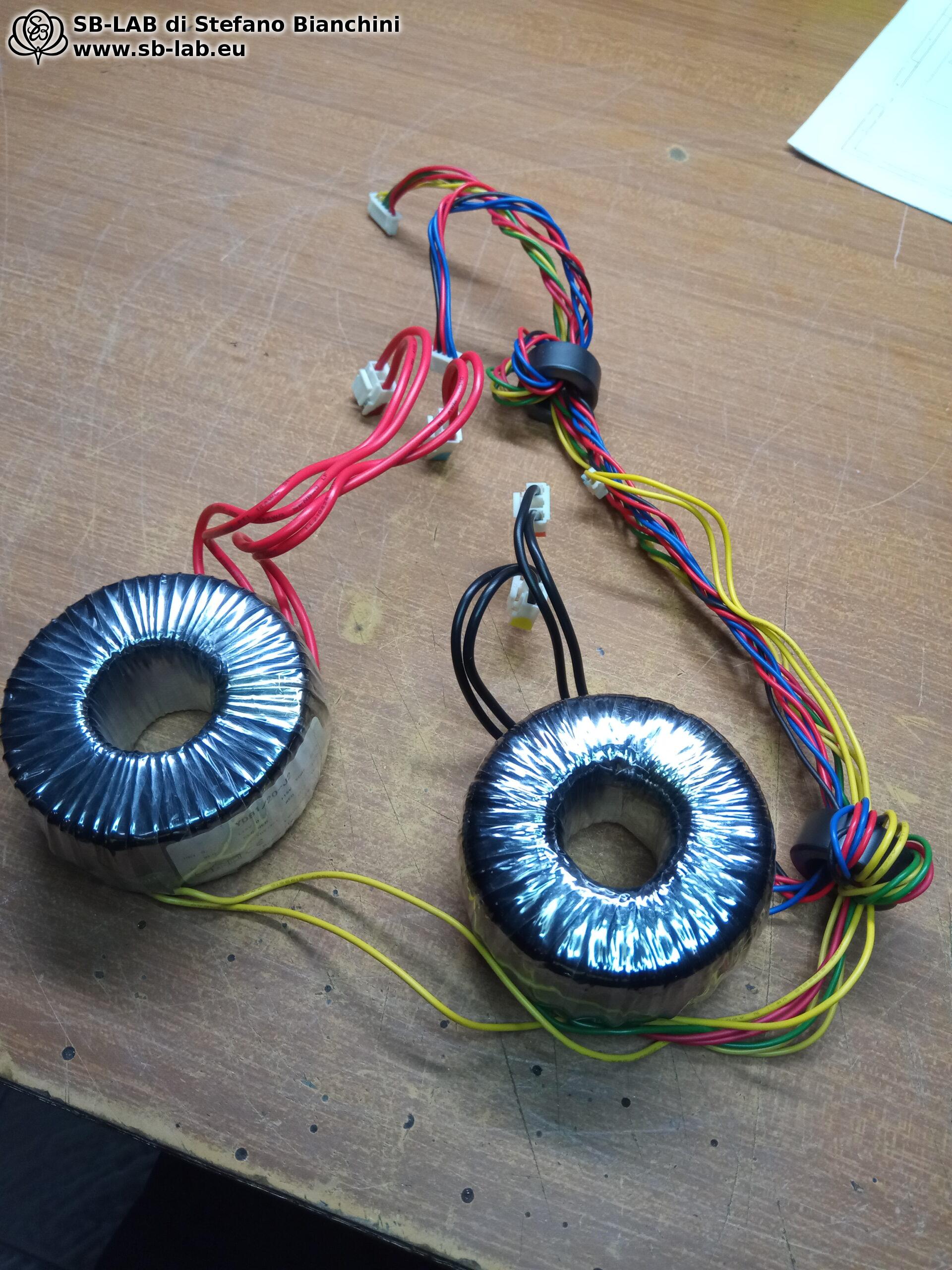
In a clumsy attempt to make the unit work, the owner replaced the original 500mA fuse with an 8 Amp fuse, completely burning the transformers to the point of driving them into insulation breakdown. Fortunately, this misguided attempt did not cause serious damage to what was connected to the secondary windings. However, this episode raises important considerations about component quality and improvised maintenance practices that can further compromise equipment over time.
Fortunately, the electrical schematics provided the AC voltages of the transformer secondaries, making it easy to trace back the currents being drawn. With this valuable information, I was able to easily calculate two new transformers using common EI-type laminations, possibly even smaller than the original toroidal ones. This raises questions about the level of induction those toroids were subjected to, leading me to wonder how unhealthy a mindset it must be to compromise quality and long-term durability so severely just to save that single euro.
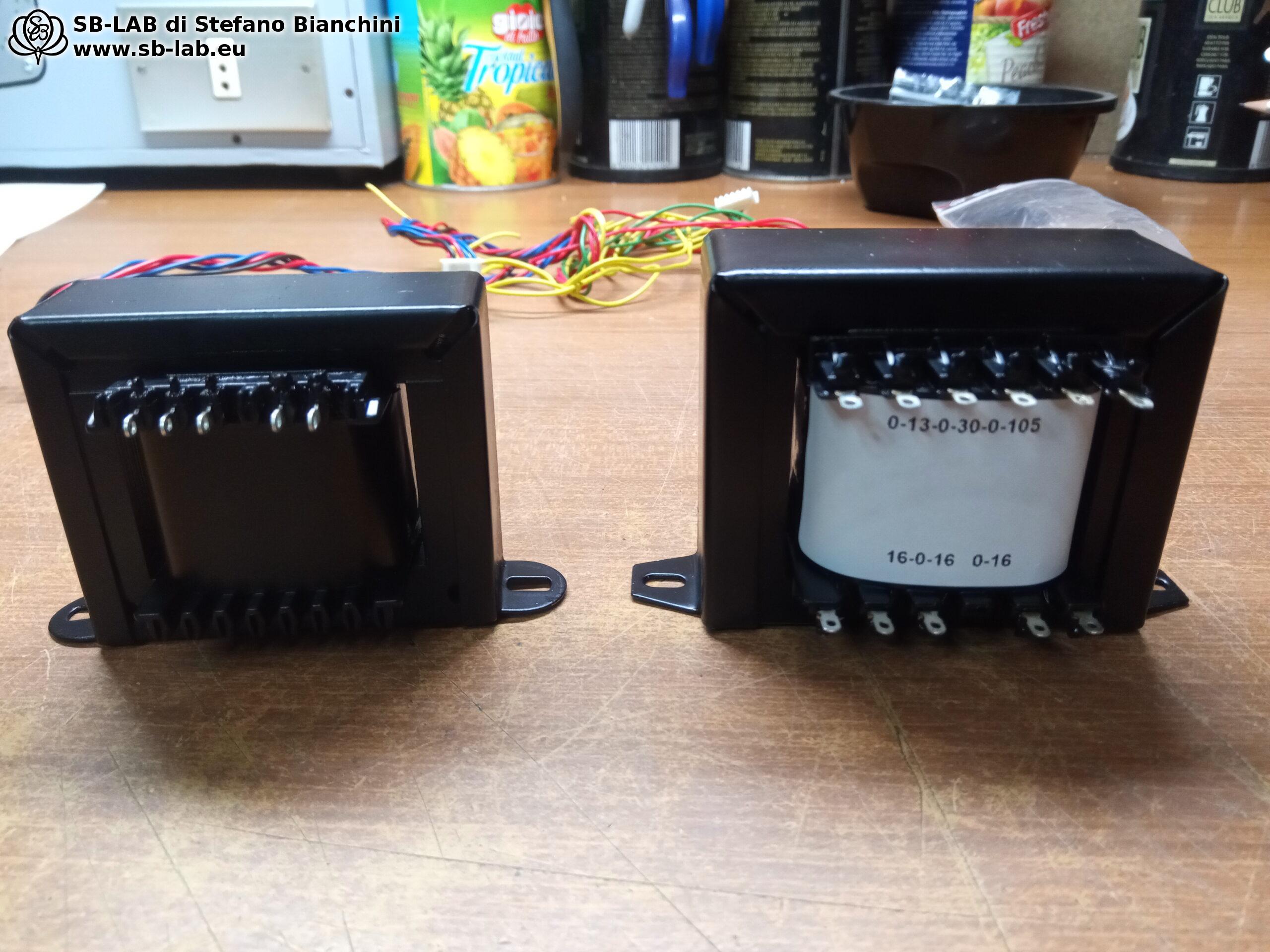
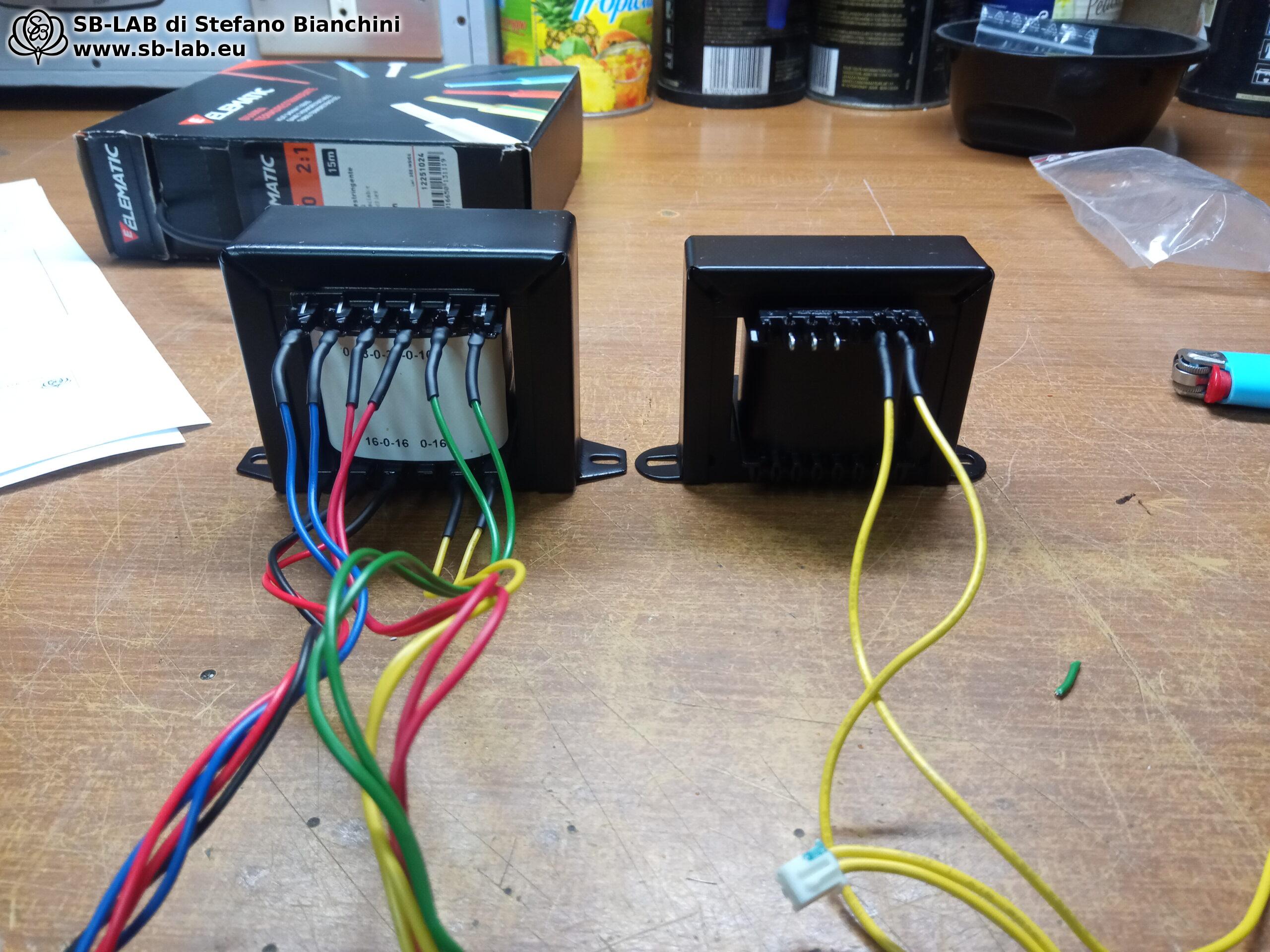
Replacement transformers for MDA503
I am pleased to inform you that I have created two new replacement transformers for the MDA503 DAC, designated models 23S70 and 23S71. If you own one of these DACs with damaged original transformers, you now have the option to obtain a pair of high-quality transformers to restore proper operation of your device.
The new transformers, specifically designed and calculated to ensure optimal performance, represent a reliable solution for anyone who needs to replace the burned components of their MDA503 DAC.
It is important to note that the cables with the connectors required for installing the new transformers must be recovered from the original transformers. If you wish to order a pair of transformers 23S70 and 23S71 or would like further details about the replacement procedure, I invite you to contact me directly. I will be happy to assist you in restoring your DAC’s performance and ensuring excellent audio quality.
In addition, it is important to emphasize that my replacement transformers, models 23S70 and 23S71, offer a significant advantage over the originals. Unlike the stock transformers, these new components are designed to ensure higher efficiency and reduced heat generation. You will benefit from cooler operation and greater energy efficiency, improving the overall longevity and performance of your MDA503 DAC.
Since the new 23S70 and 23S71 transformers have a different shape compared to the original toroids, a specific installation procedure must be followed. First, the support bracket of the old toroids must be removed. Next, the two new transformers can be installed following the orientation shown in the photographs. It will be necessary to drill four holes with a small drill and then secure the transformers with four screws, reusing the same screws previously used to fix the bracket, adding four M4 nuts. This procedure will ensure a secure and reliable fit of the new transformers, while guaranteeing proper operation of your MDA503 DAC.
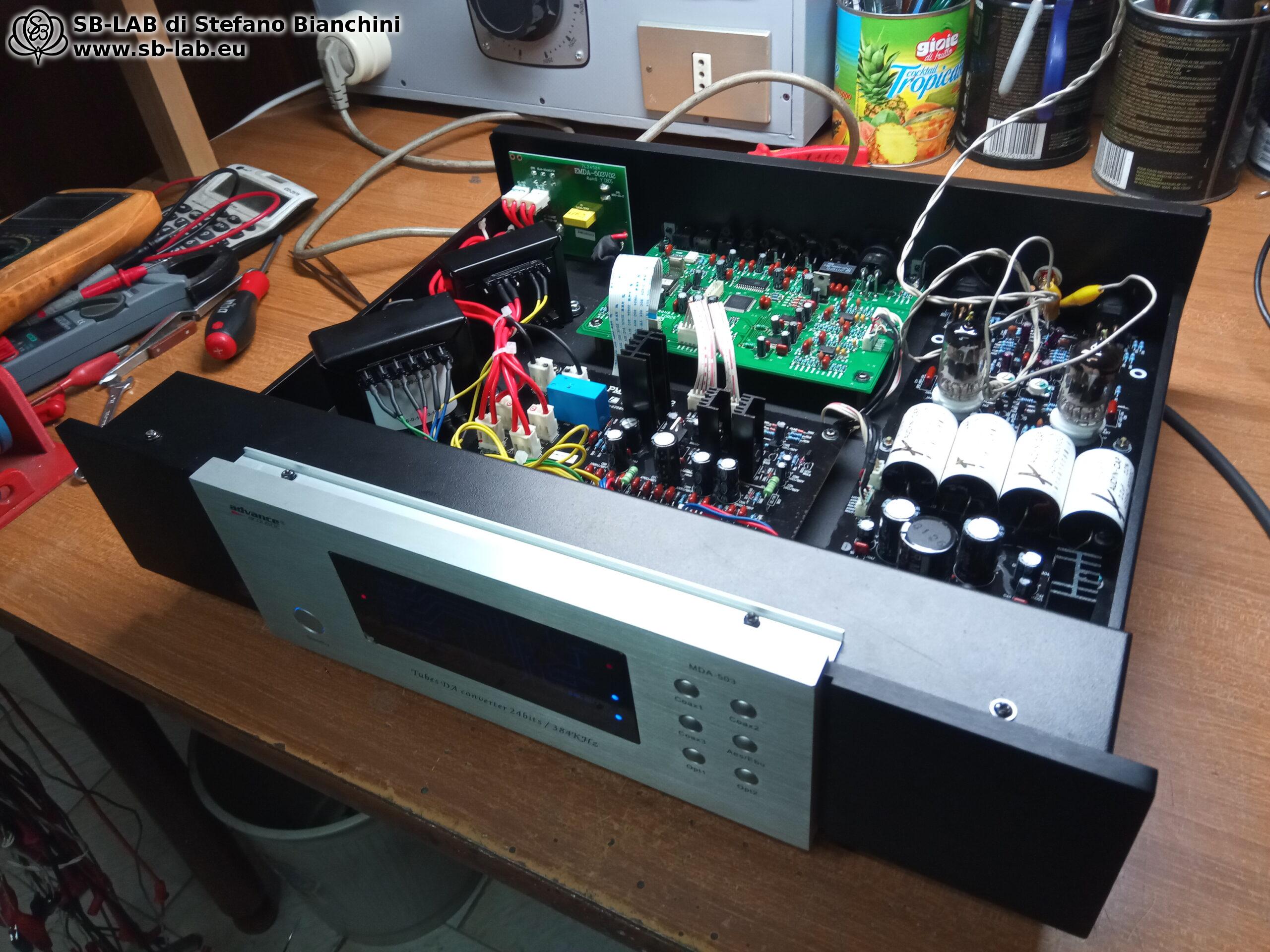
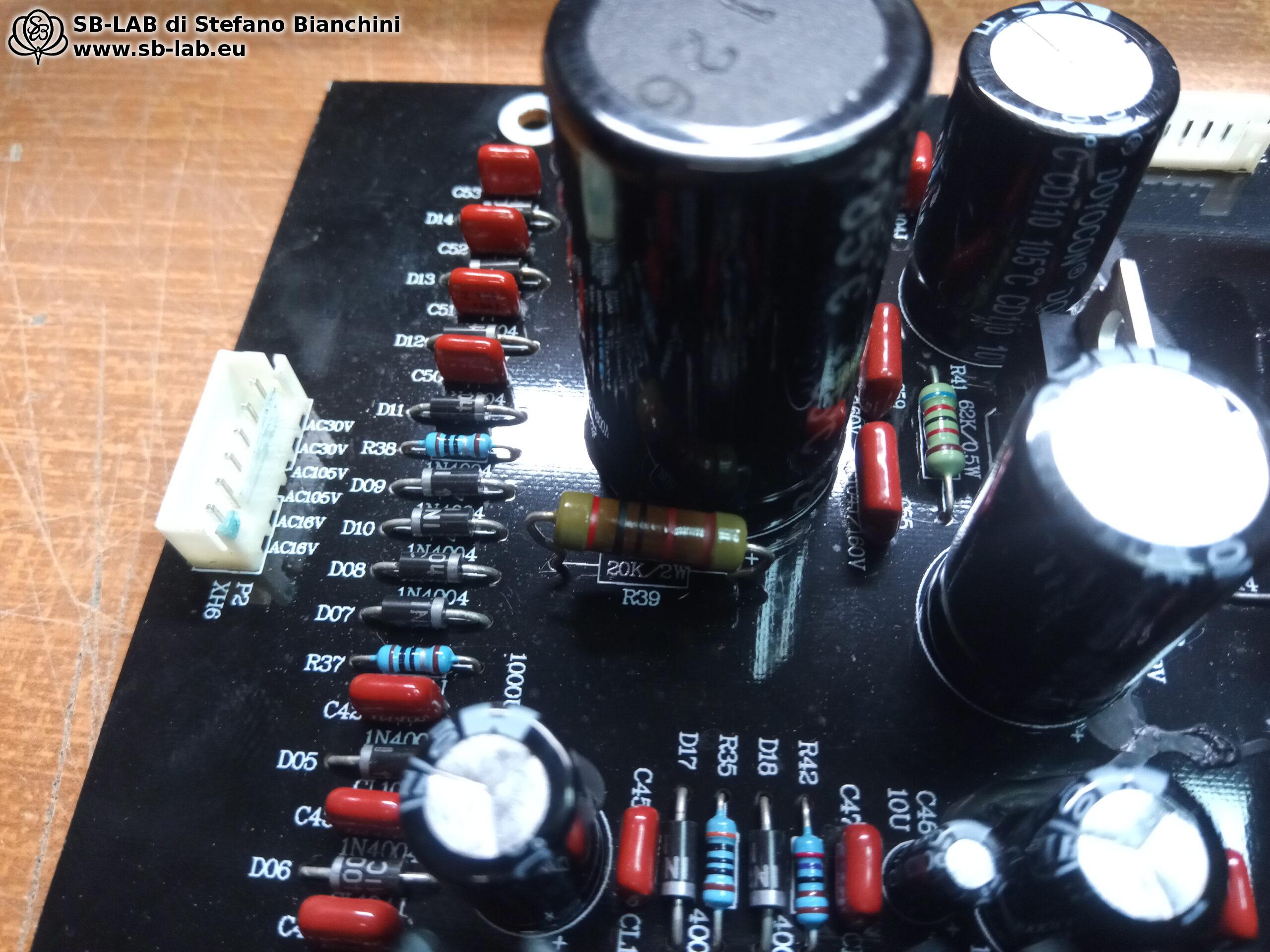
During the inspection process, I identified additional faults inside the MDA503 DAC. Among the damaged components, I found a transistor, an electrolytic capacitor located after an exploded rectifier bridge, and a damaged resistor in the high-voltage supply.

This image provides a clear view of the internal configuration of the DAC during operation.
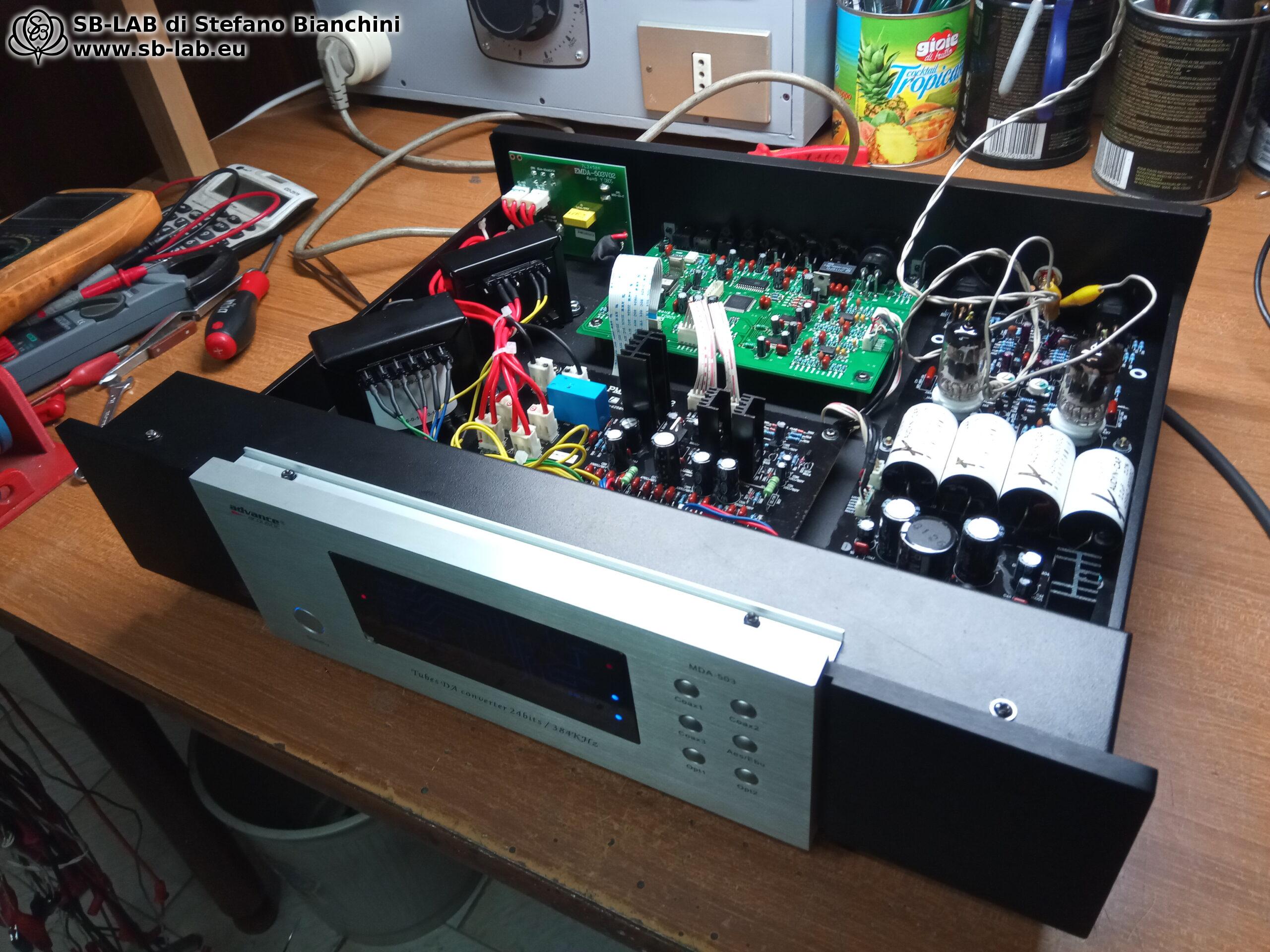
To complement this, I included a demonstration video showing the DAC in operation. In the recording, the digital source used is a computer, and to enable the connection I used a USB to SPDIF converter based on the PCM2707. To listen to the audio output from the DAC, I used my old and reliable “Calimero” project, previously presented in a past article.
In conclusion, the repair journey of the MDA503 DAC proved to be a fascinating path through technical challenges and solutions. From replacing the transformers to correcting the damaged transistor, capacitor, and resistor, each step was carried out with dedication and attention to detail.
The final result is a repaired and optimized DAC that, in addition to bringing the device back to life, introduces significant improvements over the original configuration. The use of transformers 23S70 and 23S71 not only ensured cooler operation, but also highlighted our dedication to quality and efficiency.