In the world of high-fidelity enthusiasts, the name Audio Research is synonymous with refined sound and premium craftsmanship. The Reference 210 fully embodies this philosophy: an imposing tube monoblock designed for those who seek equal measures of power and musicality. It is more than just an amplifier—it is an object to admire, combining the elegance of classic design with the solidity of a machine built to last. Behind its unmistakable front panel lies the artisanal care of a company that has been a benchmark for audiophiles for decades. With this in mind, I undertook the task of restoring a pair of REF 210 units, bringing them back to their full sonic glory.
I received a pair of Audio Research Reference 210 high-end monoblocks. One of them exhibited a pronounced mechanical hum from the power transformer. In the past, an attempt had been made to solve the problem by re-encapsulating the transformer in resin, but the remedy proved temporary: after a few months the hum returned. After a thorough check of all the electronics, I ruled out circuit faults, degraded capacitors, or other anomalies.
The manufacturer does not supply the transformer as a spare part and only proposes shipping the entire unit back to the USA, where a dedicated transformer would be installed—an option with very high costs and long turnaround times, exceeding €3000. It was therefore decided to manufacture in Italy a new compatible transformer, maintaining the same electrical characteristics while improving mechanical integrity.
To faithfully replicate the component, I first had to remove the thick resin coating from the original transformer. This revealed that the construction did not follow the most advanced solutions: all the “E” laminations were on one side and all the “I” on the other, joined by arc welding. This technique speeds up assembly but can increase magnetic leakage. In addition, the bobbin was made of cardboard and held with a simple piece of plywood, as shown in the photos.
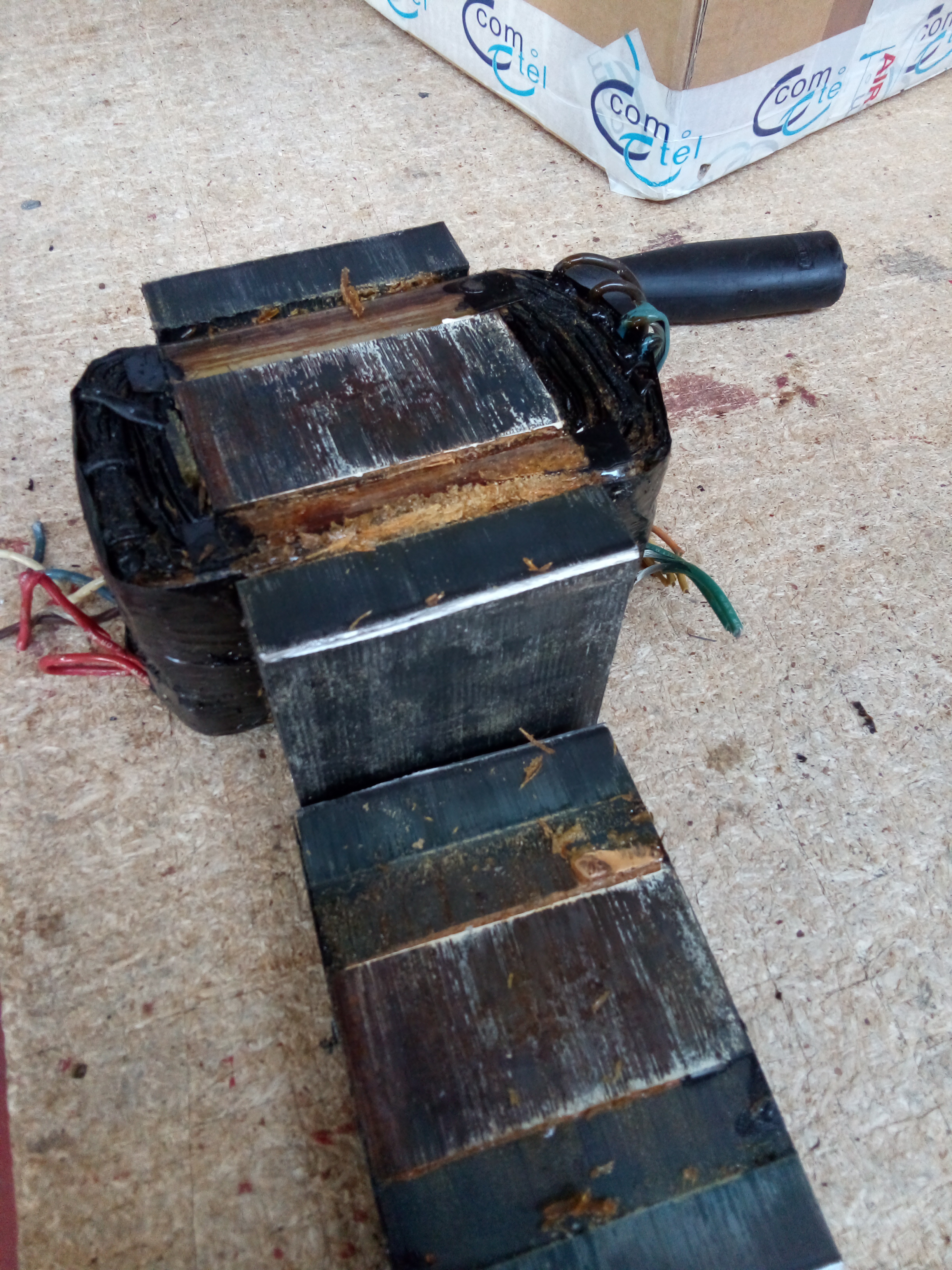

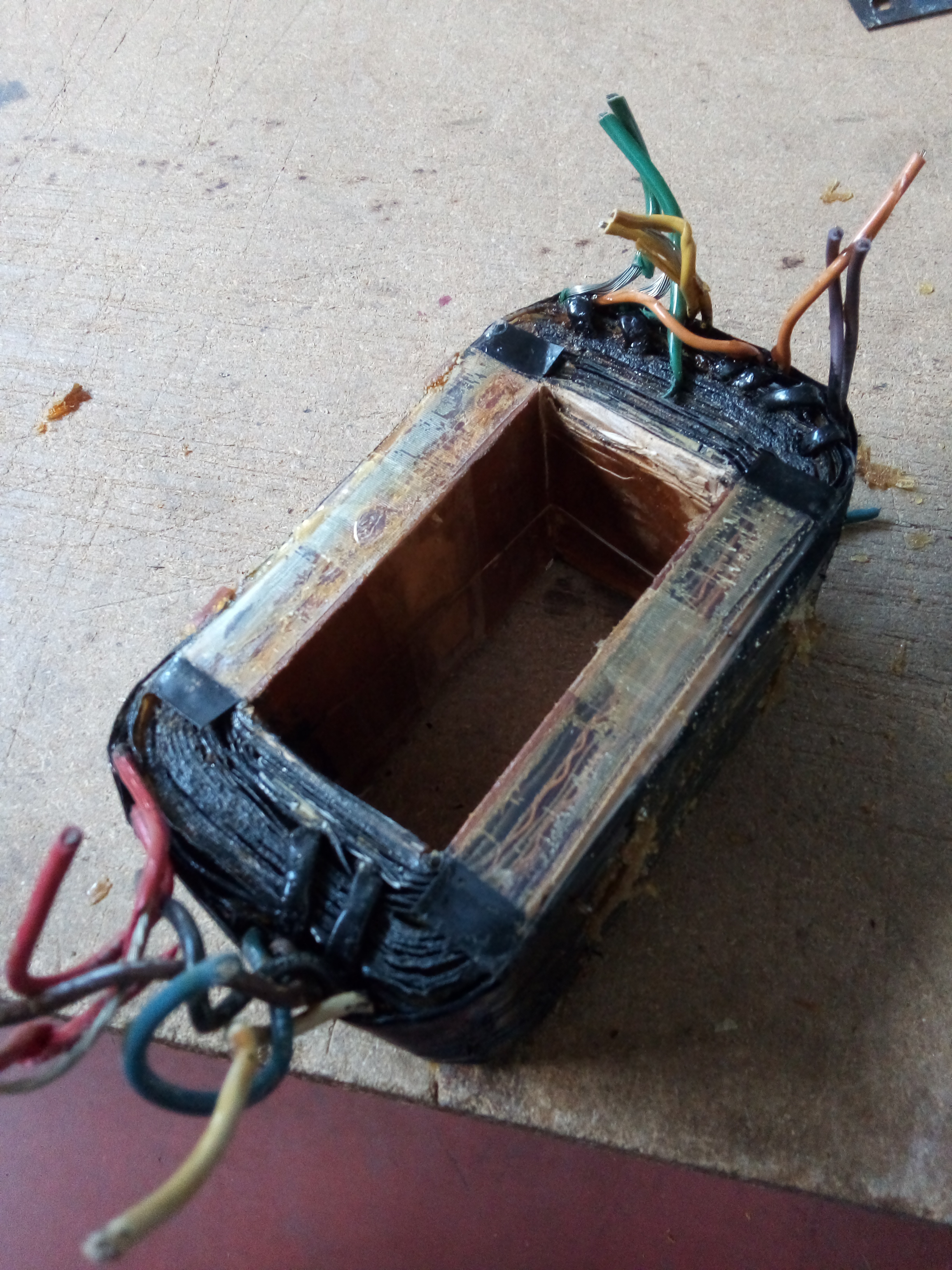
I then produced a first transformer replica, encapsulated without final clamping and mounted on the amplifier for testing.
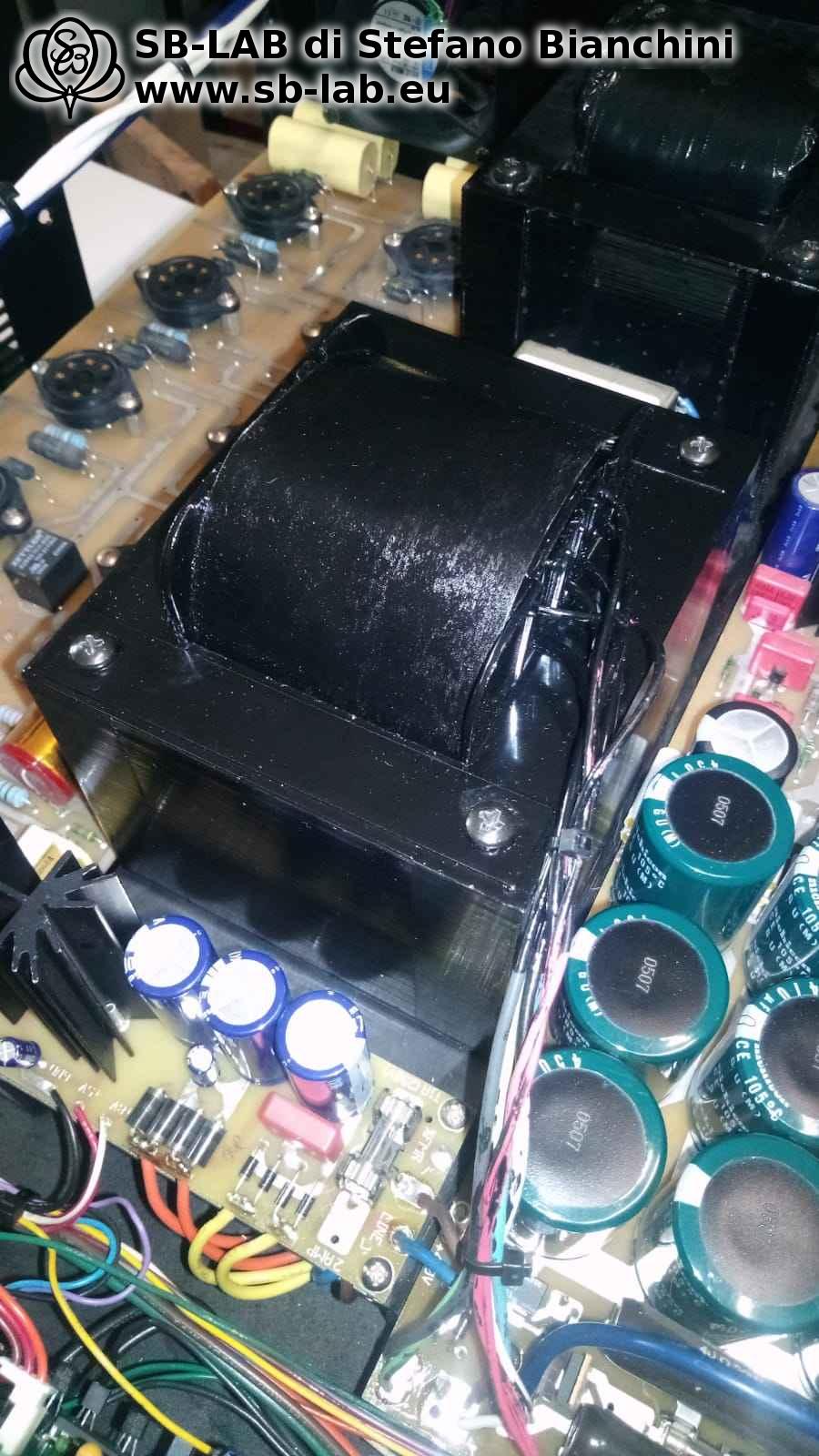
Surprisingly, the first clone also produced some hum (albeit less than the original). Further research revealed that several other users and technicians had reported the same issue. I measured the load currents of all the secondary windings and found them well below the transformer’s capacity. The amplifier features a delayed start-up: the current of the main high-voltage secondary gradually rises to about 700 mA, and vibration increases accordingly. Small increases in the primary voltage (even less than 10 V), simulated with a variac, generated current spikes and a sudden increase in hum. All this suggested a link to the charging phase of the capacitors.
Analyzing the power supply circuit showed that immediately after the rectifier bridge there is a huge bank of parallel capacitors, nearly 6000 µF at 420 V. Many of these small, very low-ESR capacitors, connected in parallel, drastically lower the circuit’s internal resistance. A SPICE simulation confirmed that the transformer is subjected to instantaneous current peaks close to 50 A at the start of each charging cycle, even though it is not overloaded in continuous operation.
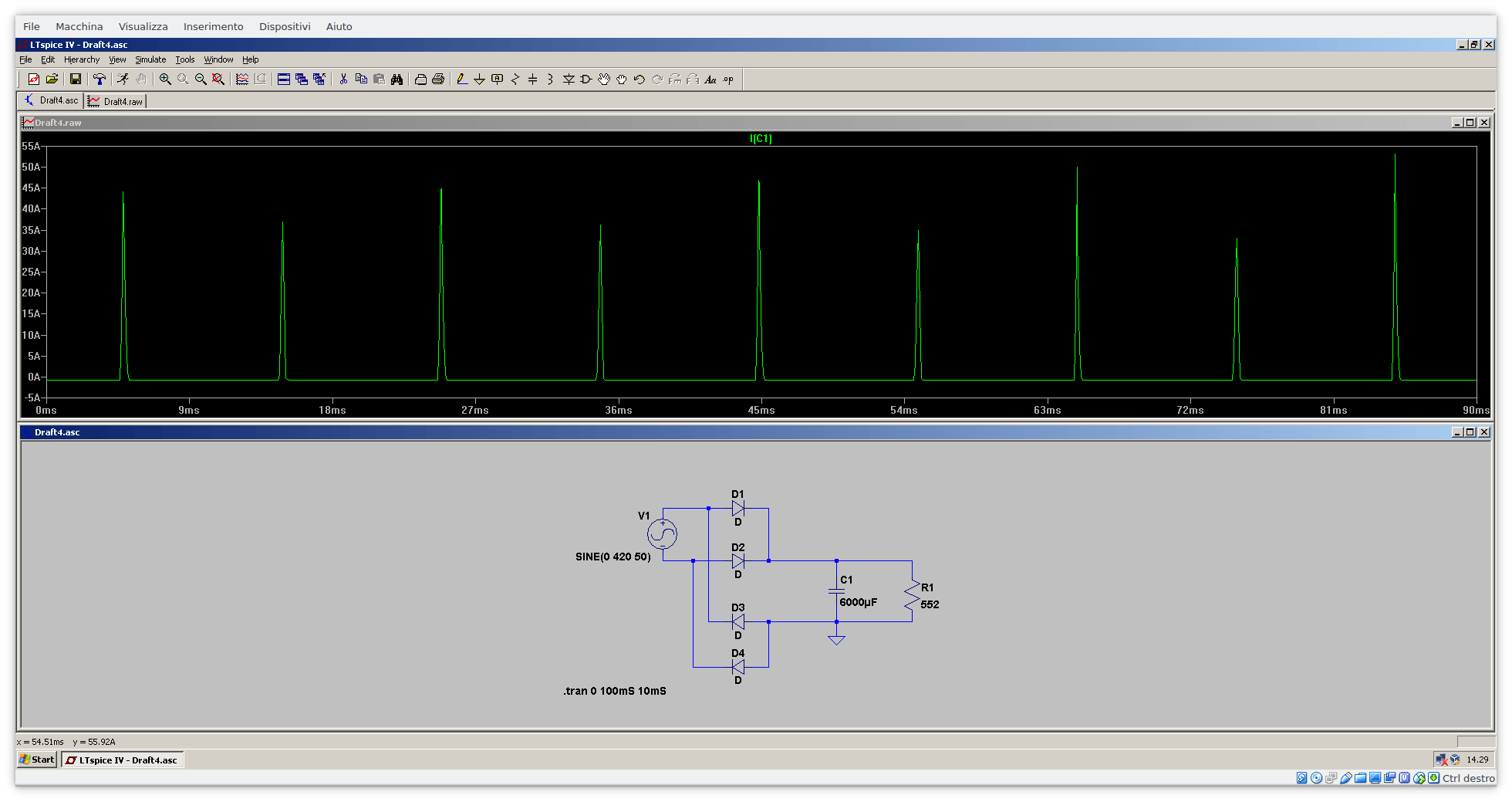
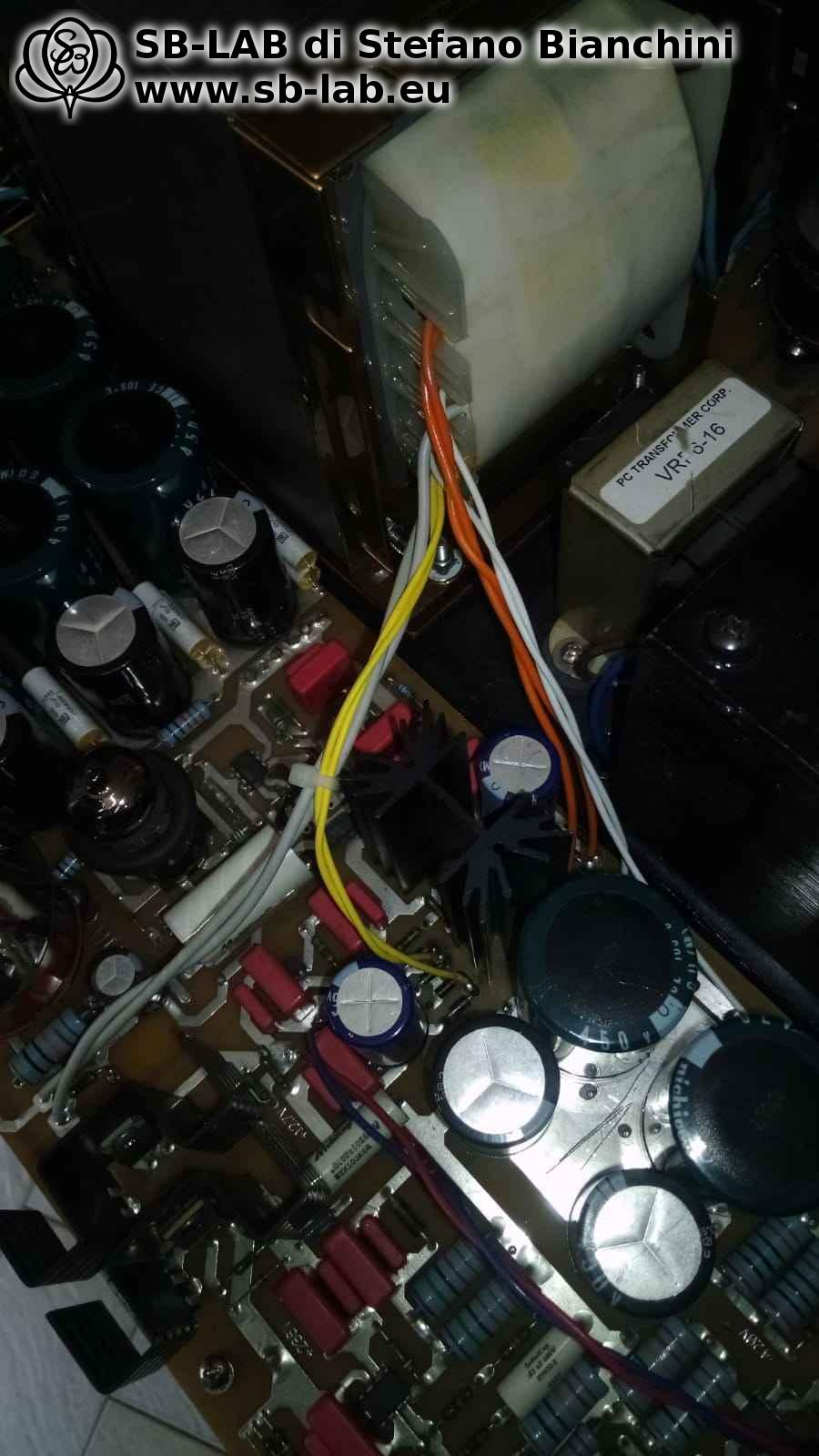
The design philosophy, aimed at minimizing ESR for a faster response, also includes the use of two 3 mm² conductors in parallel between the rectifier and the board. While this might theoretically benefit the sound, it subjects the transformer to significant transient stresses. A simple resistor of a few ohms in series with the positive side of the bridge would have greatly reduced the current peaks, protecting the transformer.
Further mechanical factors contributed as well: the very rectangular core, the lack of clamping during encapsulation, and arc welding only on the outside left the central laminations less constrained. Over time, micro-vibrations break the resin, causing the hum I encountered. A different mounting method or a more compact lamination stack would probably have extended the component’s life.
To provide a definitive solution, I therefore wound a new transformer, closed and resin-encapsulated with the core tightly clamped using a high-penetration resin. Although this required slightly adapting the mounting method, the overall solidity was greatly improved. The photo below shows the new transformer provisionally installed, with the leads still long for testing.
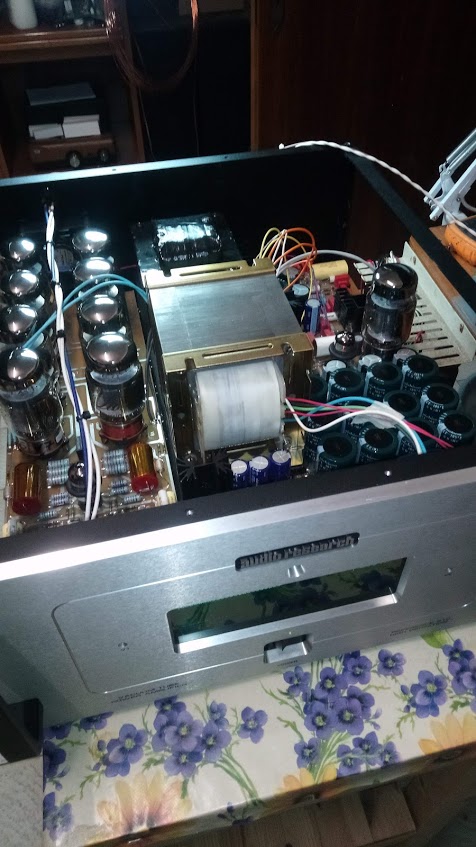
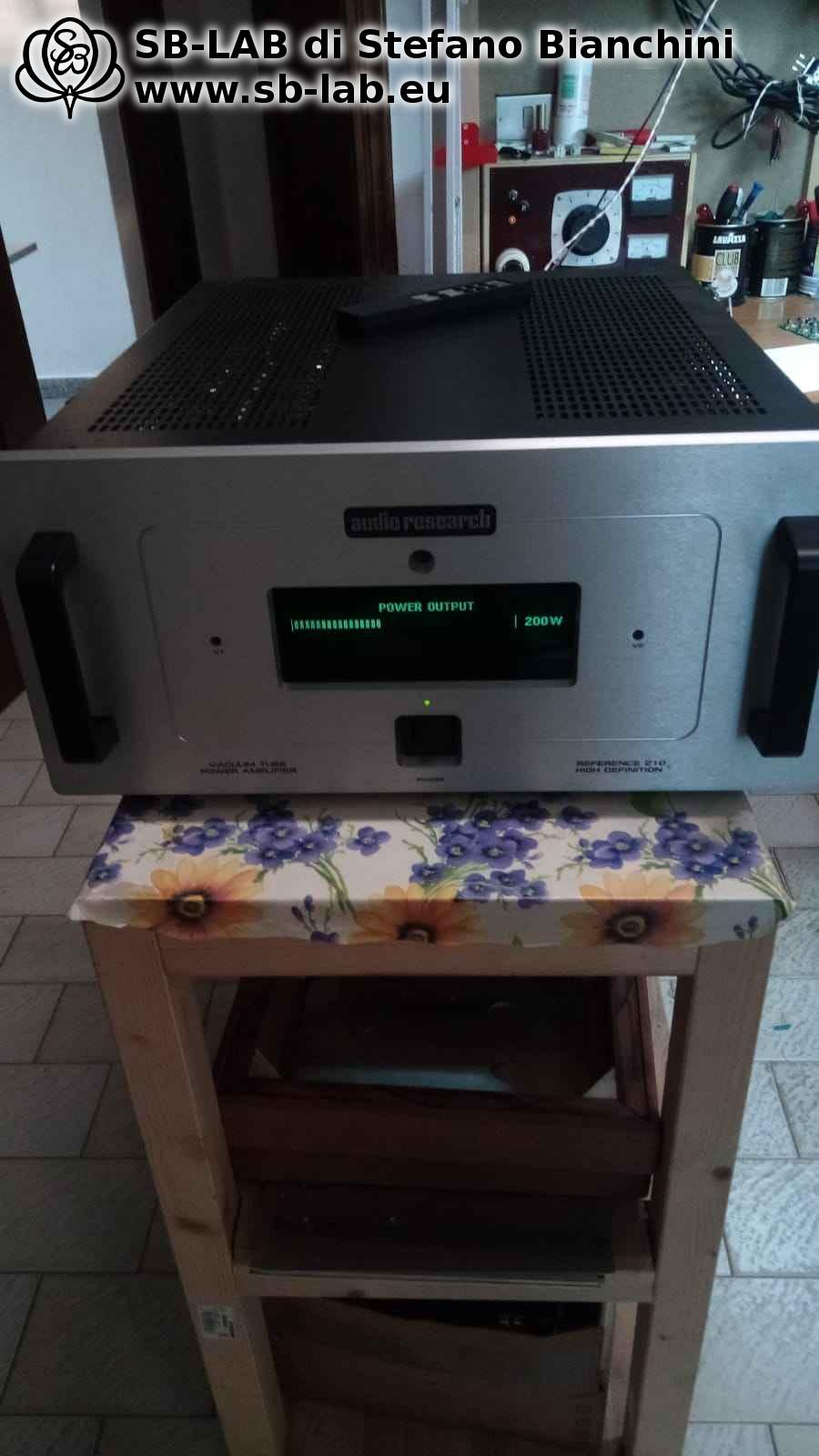
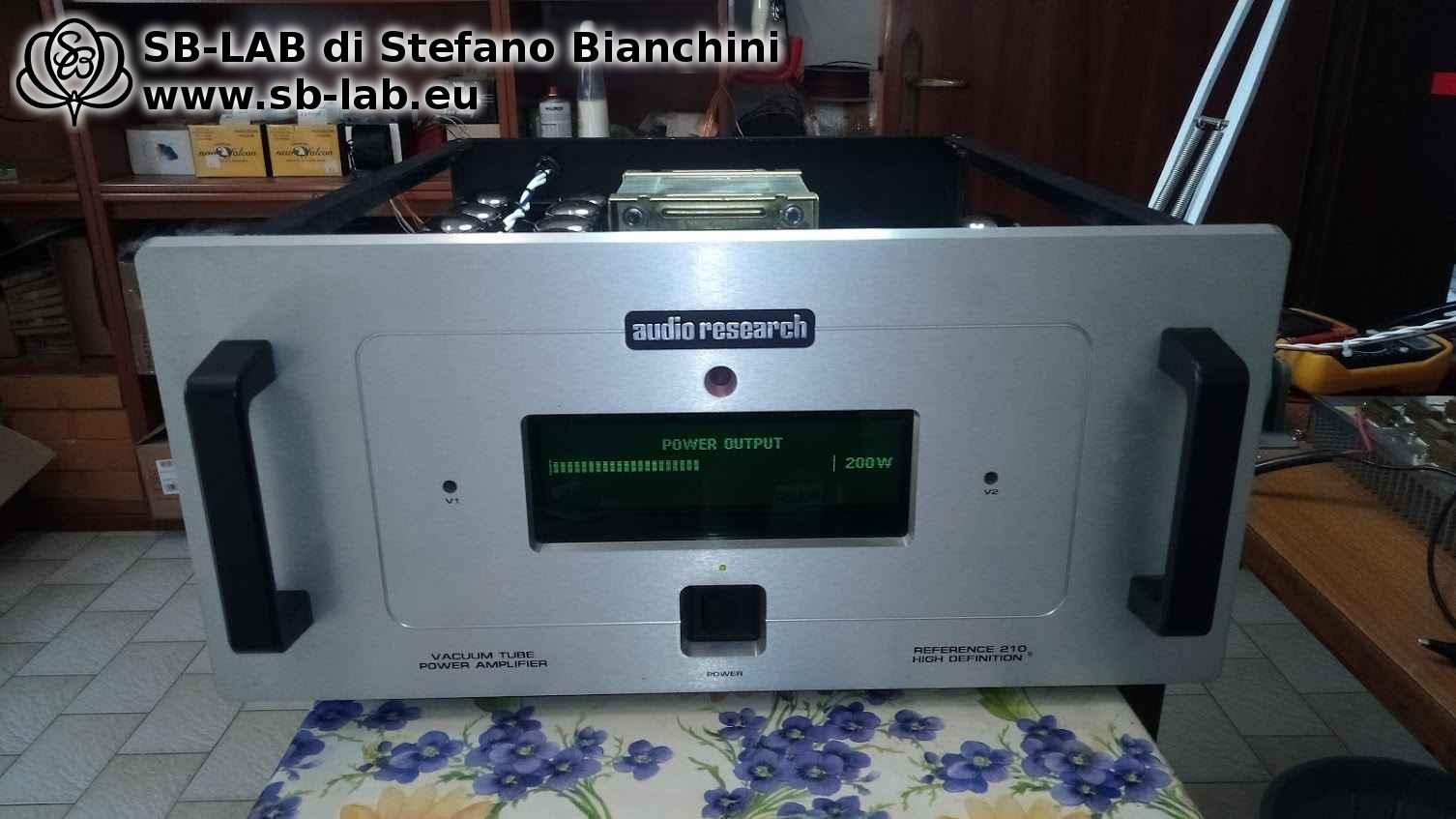
The final transformer exhibits a negligible residual hum, completely masked by the noise of the cooling fan, and passed an extended internal test session with no problems. The client was thus able to bring his Reference 210 back into service with mechanical and electrical security superior to the original design.
Owner’s feedback:
“Hi, they are sounding wonderfully, thank you so much—you did a great job.” – Gian.