New single-ended power amplifier Valvolone Sbrillu-UL, the magic of the triode, the punch of the pentode
When pure listening pleasure meets wholly “handcrafted” ingenuity, Valvolone Sbrillu-UL is born, the single-ended tube amplifier in classe A that promises to turn every note into emotion. Thanks to the exclusive ultralinear connection, that “mystical” balance between triode smoothness and pentode muscle, Sbrillu-UL delivers up to around fifteen, no wait, 4 or at most 5 watts of sparkling power per channel, ready to fill the room with sonic warmth.
Favorite tubes? EL34, KT88, 6550… you choose! With a simple gesture you go from a velvety triode to a roaring ultralinear, with no screwdrivers and no complications. Everything is enclosed in an elegant matte black gourmet chassis with flirtatious VU meters, because the eye wants its share too.
Why Sbrillu-UL
- Single-Ended Purest Classe A: the classic recipe for emotional involvement.
- Ultralinear “sweet spot”: triode detail, pentode drive.
- No-stress rolling: compatible with the great iconic power tubes.
- Enveloping soundstage: presence, depth, air between instruments.
Hit play on your music and let yourself be won over by a sound that marketing would call “purer than pure”, while your friends will ask only one thing: “Where’s the stage?”

Lately, it happens more and more often that I receive questions and requests for opinions about schematics found online that someone would like to replicate.
First, though, an ironic premise: the somewhat playful opening of this article gently pokes fun at a certain kind of audio marketing that loves to talk about “musical watts”, often twice the real ones, a made-up unit of measure designed more to impress the imagination than to describe electrical reality.
Having made it clear that the opening joke is only a fun way to break the ice, let us get to the point. The article that follows is not meant to be partisan or polemical, but aims to demonstrate, with verifiable data and explanations, a clearly defined technical reality.
For some time I had been meaning to address this topic because I keep seeing the same problem repeated: in various projects circulating online, the famous “ultralinear connection” keeps appearing when applied to single-ended stages. My answer, without fail, is always the same: forget it. In a single-ended amplifier, ultralinear does not work, it only makes sense to opt for either triode output or pentode output.
When I say that ultralinear connection in a single-ended amplifier “does not work”, I do not mean that the amplifier will explode, produce no sound, or sound disastrously distorted. I mean that a conceptually unsuitable approach has been chosen: the amplifier will play, yes, but in a suboptimal way, without real advantages and with the risk of introducing further issues. That is why I invite you to read the following observations carefully: they clarify the technical reasons behind my position and prevent misunderstandings in the comments.
Ultralinear in single-ended is a glaring mistake, yet it has been copied and spread throughout the audio world, even by prestigious brands, without anyone really bothering to verify how it actually works.
The community of DIY builders and audiophiles continues to consider it a valid connection both for push-pull and for single-ended amplifiers, as if the name itself were a guarantee: “Ultra-Linear”! Not just linear… ultra. Psychologically and commercially effective, but completely misleading on a technical level.
What is the Ultra Linear connection
Ultralinear connection is a configuration possible only with pentode valves, in which the screen grid is connected to an intermediate tap of the output transformer. In this way the screen grid voltage does not remain fixed, but partially follows the variations of the plate voltage.
The result is an operating mode that combines the high efficiency typical of the pentode with the linearity of the triode, offering behavior intermediate between the two modes. This solution, devised by Alan Blumlein, was created precisely to exploit the advantages of both valve types and finds its natural application in push-pull output stages, where it allows overall performance to be maximized.
Advantages of ultralinear connection
By precisely adjusting the percentage of screen-grid tap, it is possible to obtain an ideal balance between triode and pentode characteristics. Within a rather narrow range of values, distortion can drop to unusually low levels, sometimes lower than those obtainable in pure triode or pure pentode, while energy efficiency remains only slightly lower than that of full pentode operation.
The optimum tap percentage depends mainly on the type of valve. For KT88s, for example, the value commonly considered optimal is 43% of the primary turns of the transformer on the anode circuit, while for the 6V6GT, 20% has often been recommended. Mullard circuits made wide use of 20% distributed load, while some LEAK amplifiers went as far as 50%.
The characteristics that make distributed load particularly suitable for high-power audio amplifiers, compared with solutions based on pure triode, beam tetrode, or pure pentode, can be summarized as follows:
- Output impedance is reduced to about half of what is obtained with a pentode.
- Distortion is reduced so that it approaches that of a triode valve, but can be even lower in ultralinear operation.
- Output power is higher than that of a triode, approaching that delivered by a pentode.
- Output power is more constant, since distributed load is a combination of a transconductance amplifier and a voltage amplifier.
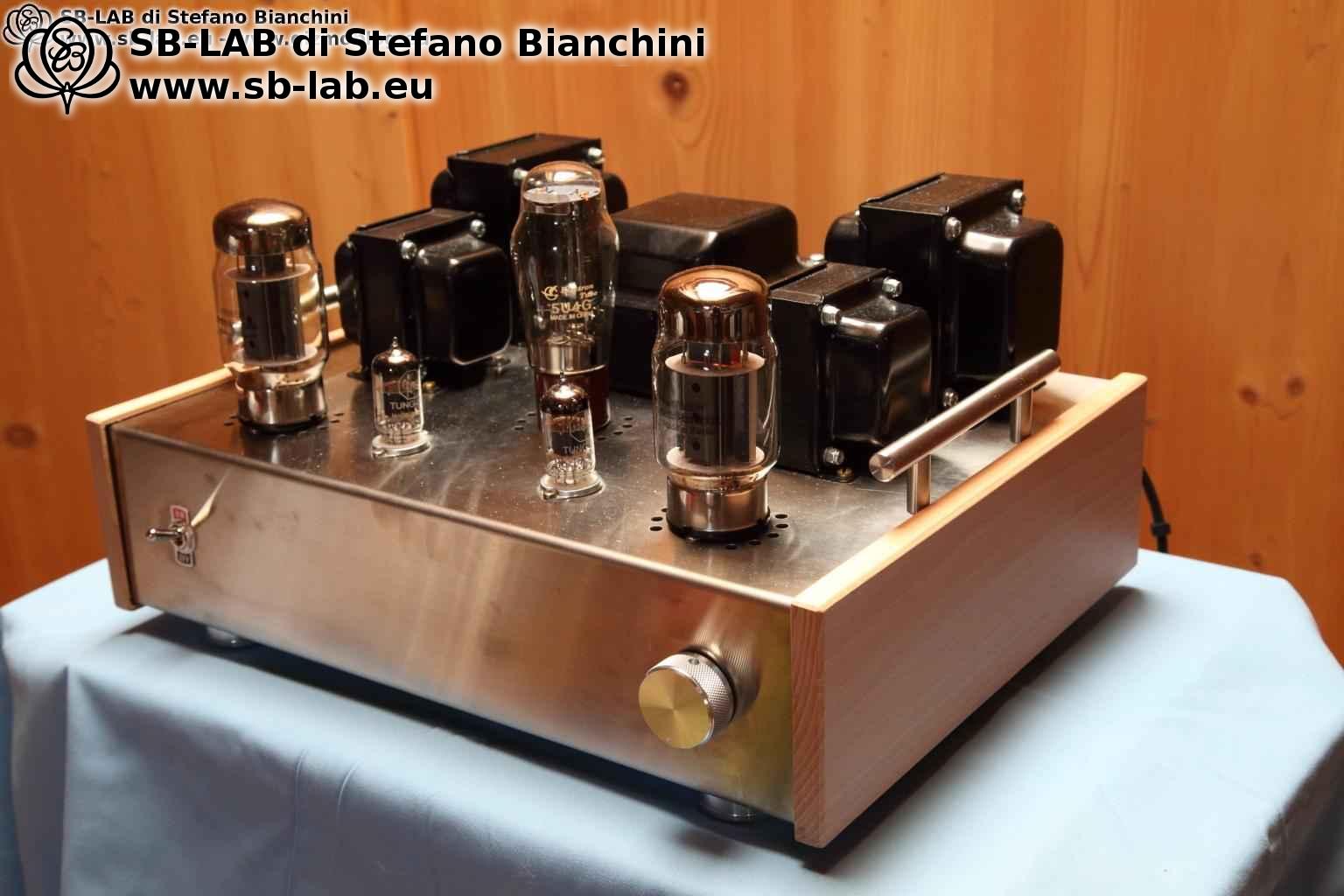
Alan Blumlein conceived and applied ultralinear connection exclusively in push-pull circuits, and the same choice was followed by all the great manufacturers of the time. There are no historical examples of single-ended amplifiers with ultralinear connection, it is an idea that appeared only in recent times. Let us see why! Below is the construction of a Single Ended Ultralinear amplifier made by an SB-LAB customer. As can be seen, the screen grid is connected to an intermediate tap of the output transformer.
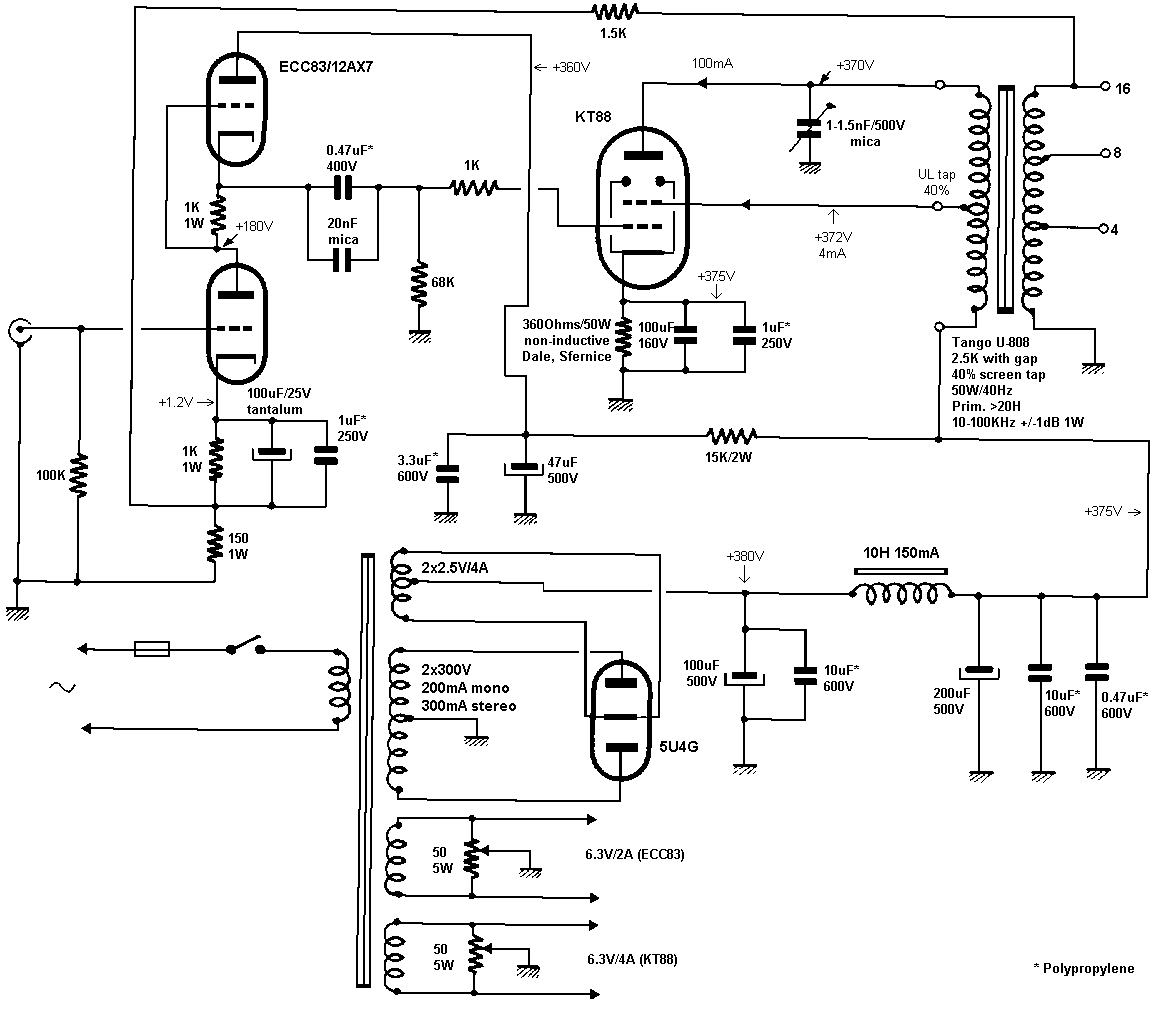
This is the construction of a single-ended amplifier using the KT88, taking the famous Jean Hiraga schematic as an example, carried out with the support of a friend.
“Claimed” data
Output 10W… (in reality less than 6 watts)
Distortion at 10w 1.8%
Frequency response, 20hz/20KHz -0db at 4w
It sounds good, not only to my ears but also to those who have heard it.
The most demanding part was the chassis work, which is made of 2 mm satin steel and laser cut.
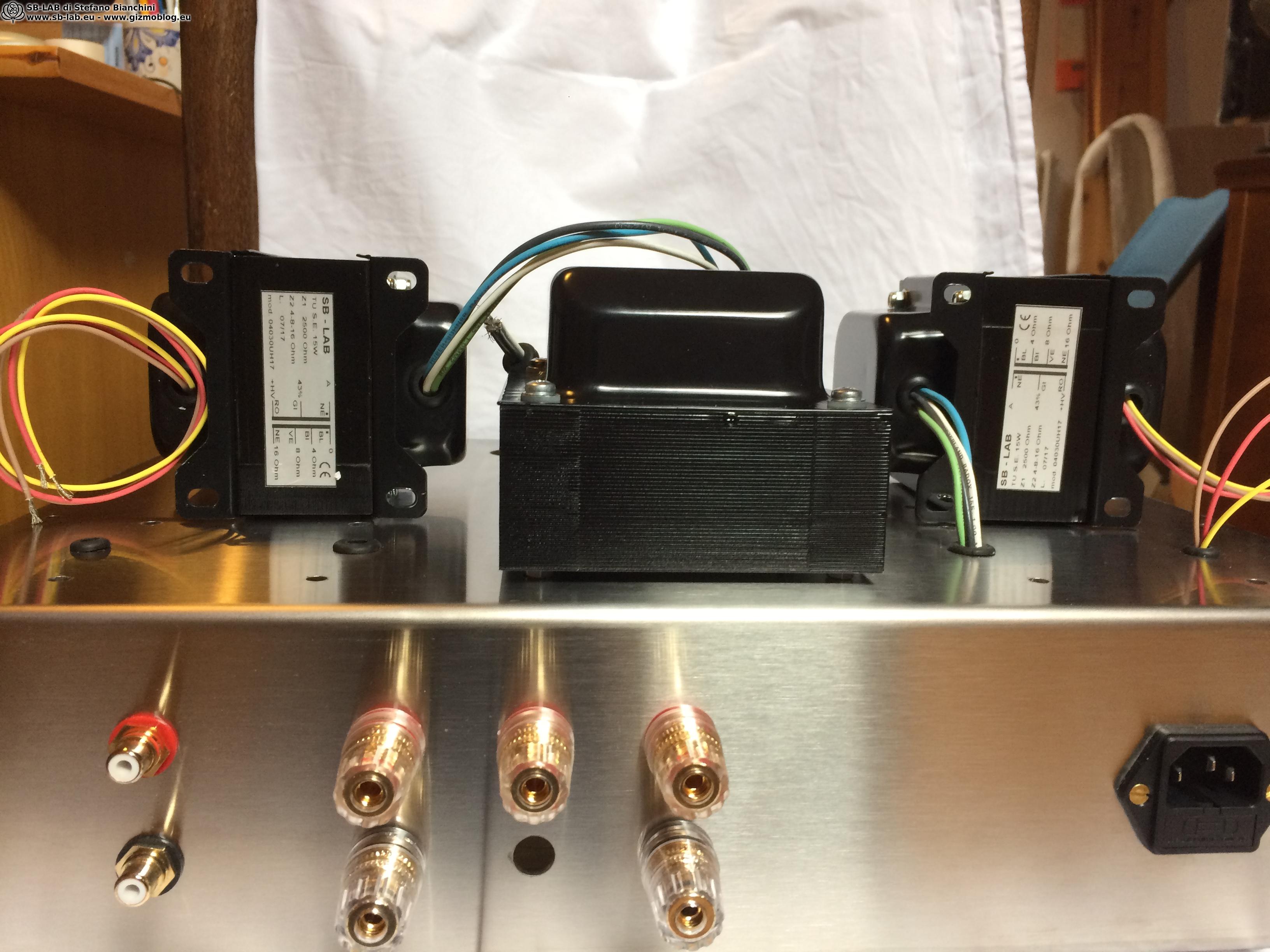
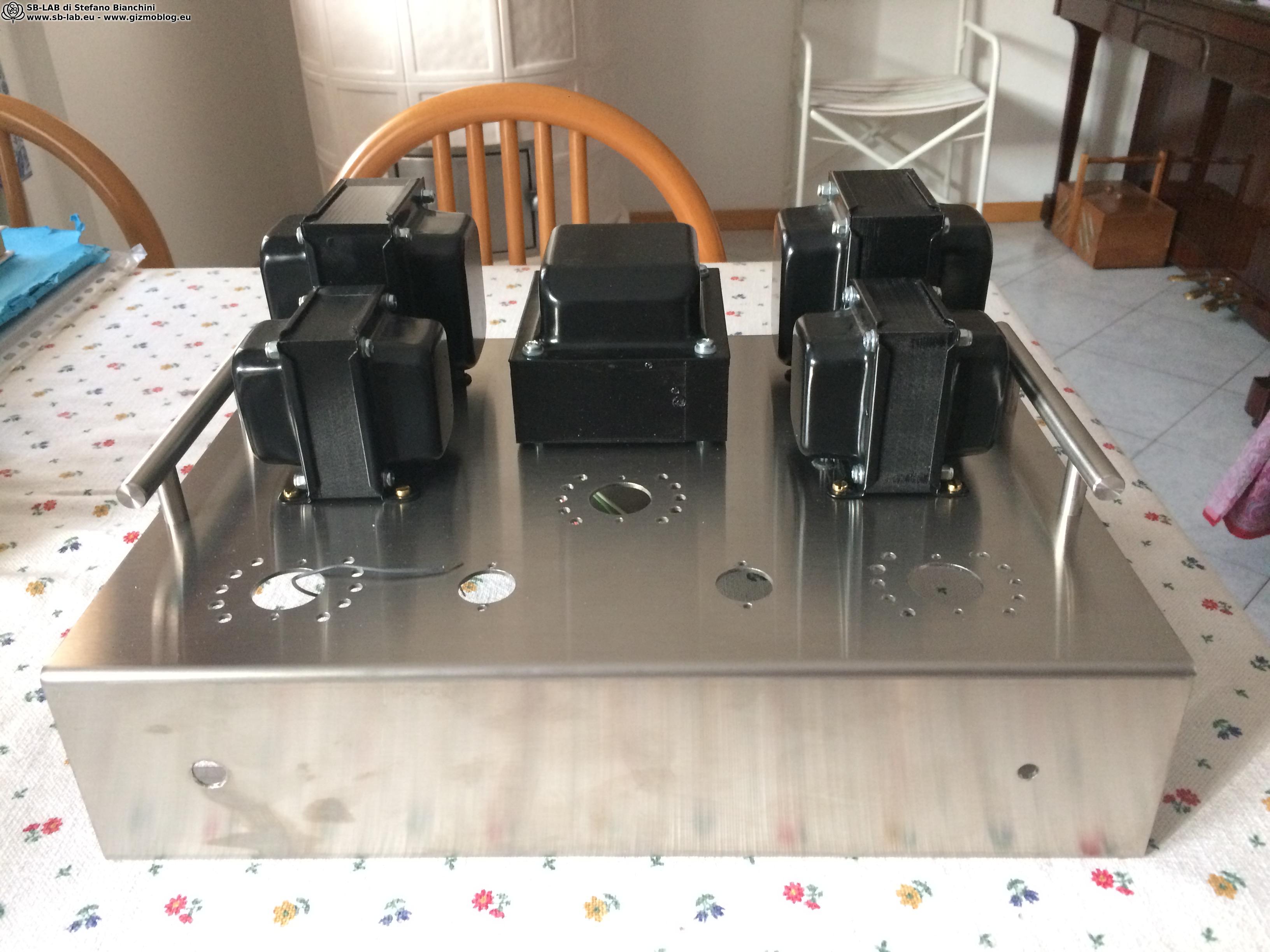
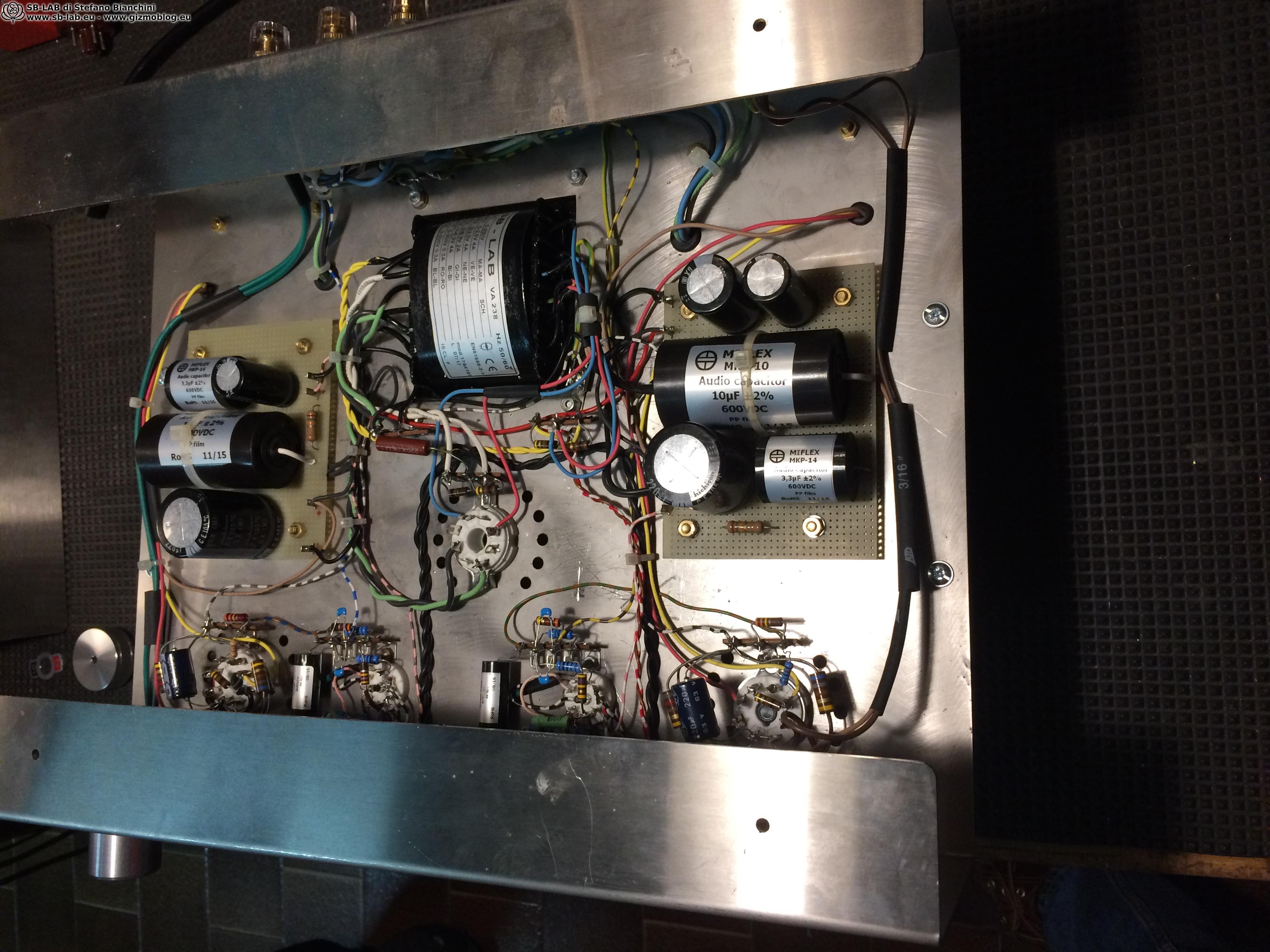
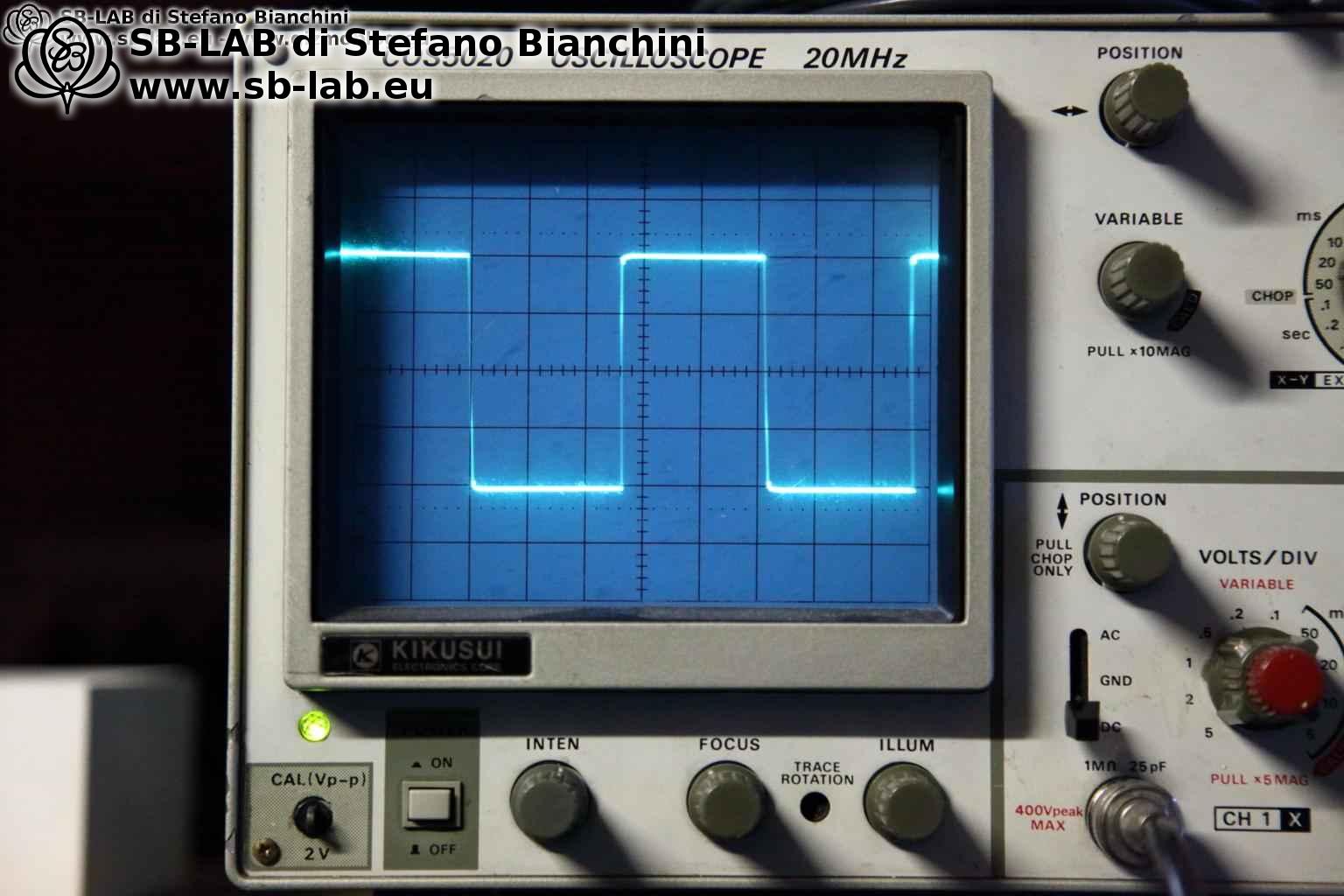
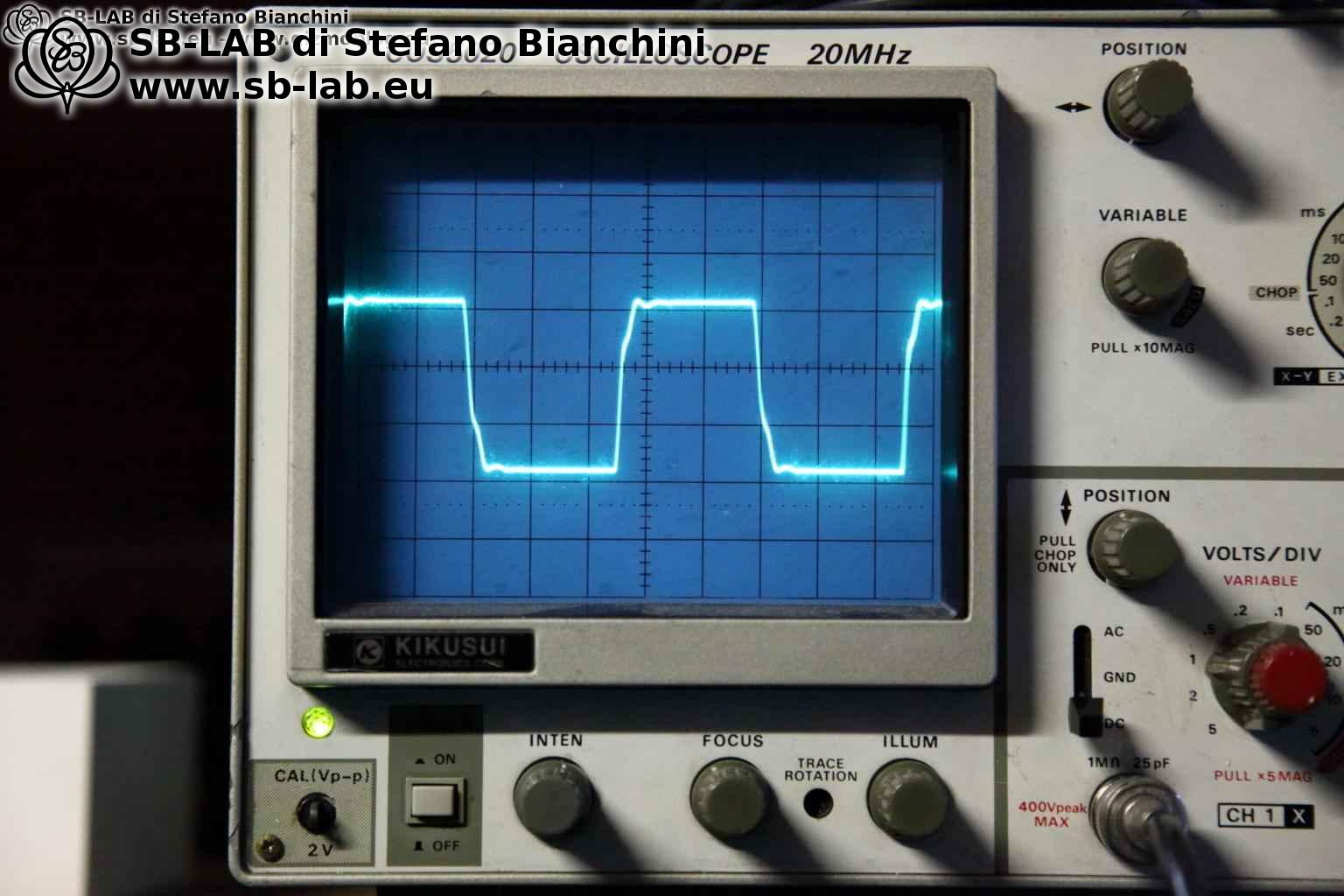
These are the square waves at 1k and 10k
I would like to draw attention to the value of the resistor placed under the cathode of the KT88 in the schematic, indicated as 360 ohm. Here are the words of a customer who built this circuit:
“If you can add a note of your own so people are not influenced by the 360 ohm resistor: I replaced it with a measured value of about 190 ohm, after several attempts, because the correct bias current was not coming out.”
This is a fundamental detail: remember it. The very fact that it is necessary to halve the resistor value highlights an underlying oversight. This is a strong indication that the published schematic was not experimentally verified under the stated conditions, otherwise the discrepancy in the output valve bias would have emerged.
Yet this schematic has been circulating on the Internet for decades, replicated and praised, without almost anyone ever investigating the reason for the bias discrepancy. Many probably did not even notice it, happily listening to distortion they believed to be “the right sound”.
Anyone with even minimal competence in design and able to read the characteristic curves of a valve, whether triode or pentode, knows the usual procedure well: choose a voltage/current operating point within the dissipation limits, then draw the load line according to the impedance of the output transformer.
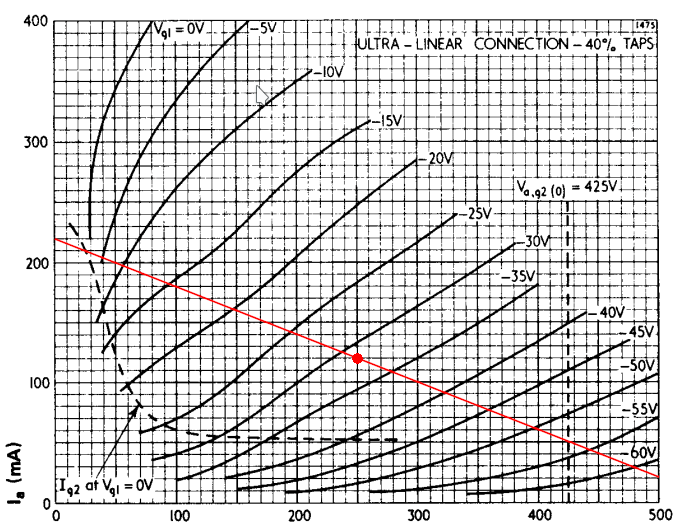
But with a valve connected in ultralinear mode, it is not possible to choose the operating point freely: the behavior is constrained by the characteristic of the screen grid. Any variation in bias voltage significantly alters the entire family of characteristic curves. To make this concept clearer, we can refer to the curves shown in the Genalex KT88 datasheet (click to enlarge):
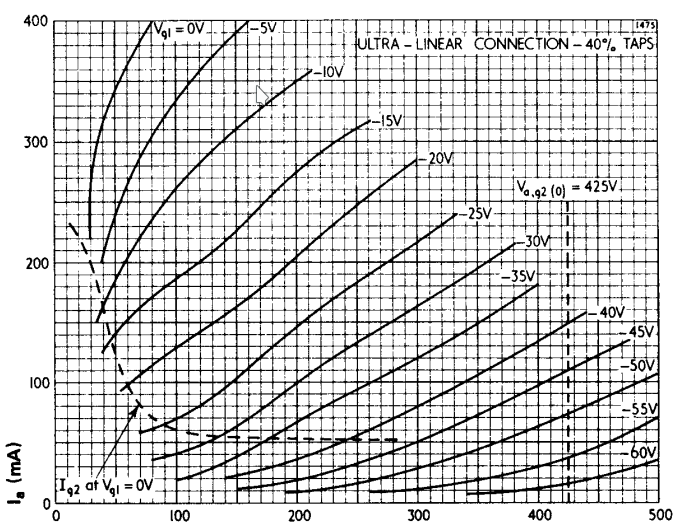
Let me start by emphasizing that, in the KT88 datasheet, the use of ultralinear mode is described only in push-pull configurations. At the time, in fact, the idea of applying it to a single-ended amplifier did not arouse any interest. Yet it is easy to imagine the reasoning of a careless designer:
“The typical impedance for a KT88 in single-ended is 2500 ohm. By eye I can set 250 V with 120 mA of bias and a grid voltage around -32 V…”
A hasty calculation like this leads to drawing a load line that, at first glance, may seem correct, as shown in the following graph:
To avoid physical tests in the lab, we can use LTSpice to simulate the biasing of a KT88 in this configuration (2.5 kohm primary, 8 ohm secondary, 50% ultralinear connection). The KT88 model used is the one developed by Norman Koren, recognized for its high accuracy: the results obtained in simulation overlap with those that would be obtained using a real valve. In theory, we would expect to measure a current of about 120 mA at the cathode…
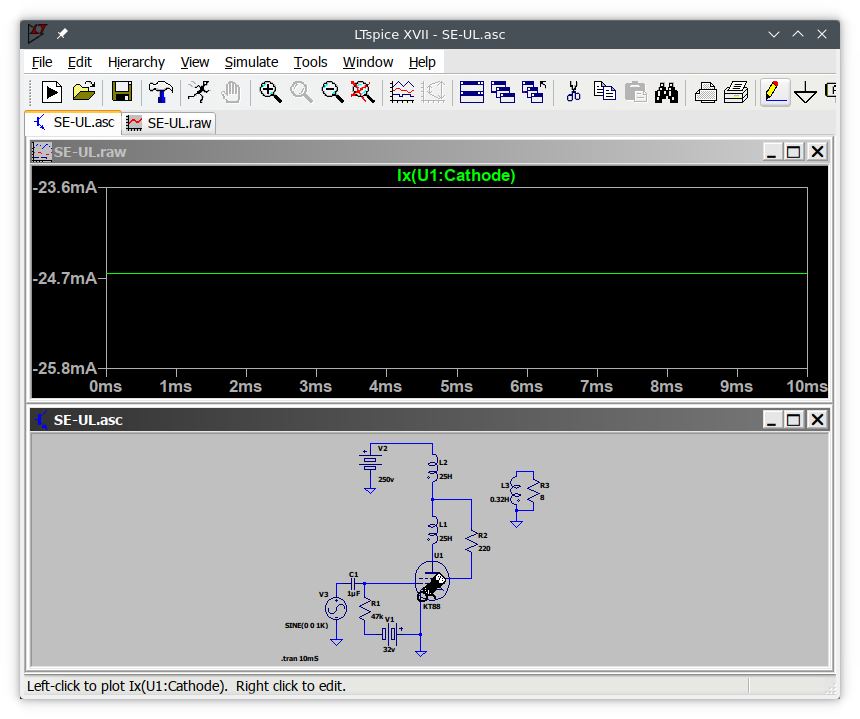
Here is the result of the simulation: the bias current is only 24 mA! At this point anyone with even a little experience, DIY hobbyists can be forgiven, but anyone calling himself a designer should notice it, ought to ask a fundamental question:
“Why do the characteristic curves indicate a current of about 120 mA, while in practice I get only 24?”
A small discrepancy due to valve tolerances is normal and can be compensated by slightly adjusting the bias. But here we are not talking about a few milliamps: going from 120 mA to 24 mA is a huge gap, one that should seriously call into question the correctness of the theory used to determine the bias.
Yet in most cases this alarm bell is ignored. People keep “pushing” the bias adjustment to force the valve current, without asking why the problem exists. Let us try to give a clear signal…
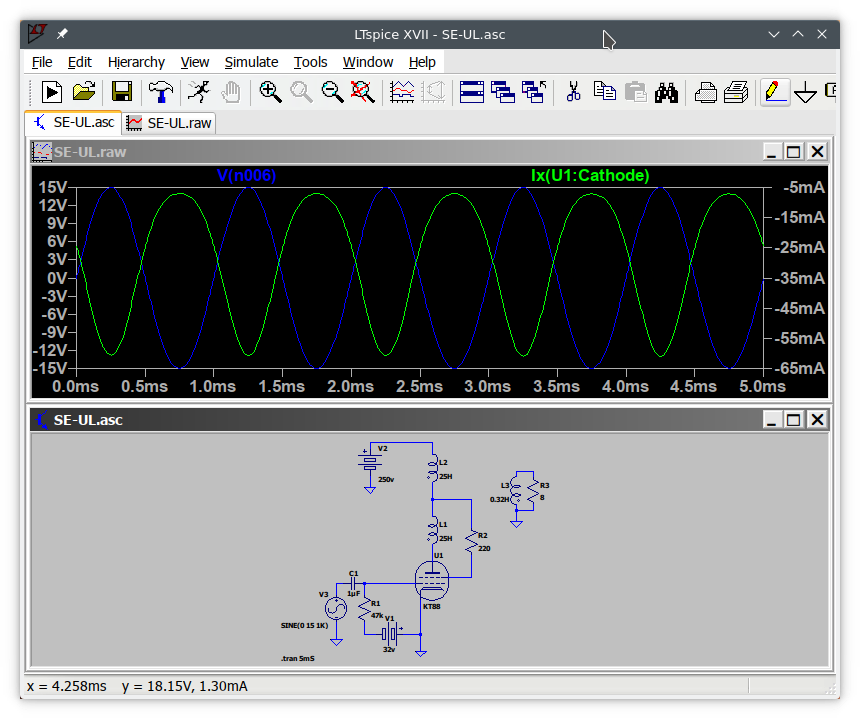
The circuit now seems to work, but the oscilloscope tells another story: the waveform is heavily distorted, with the input signal in blue and the output signal in green. At this point a spontaneous question arises:
Why, in a single-ended amplifier in ultralinear mode, do the bias current and transformer impedance not match the predictions?
To find the answer, it is necessary to analyze more carefully the characteristic curves shown in the datasheet…
Have you noticed the dotted line marked Va,g2(o) = 425 V Before going further, it is worth briefly reviewing how valves work, both triodes and pentodes, focusing in particular on their internal structure. Let us begin with the triode: it consists of a single grid and a very thin plate, almost “toast-like”, placed very close to the cathode.
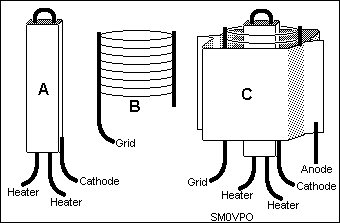
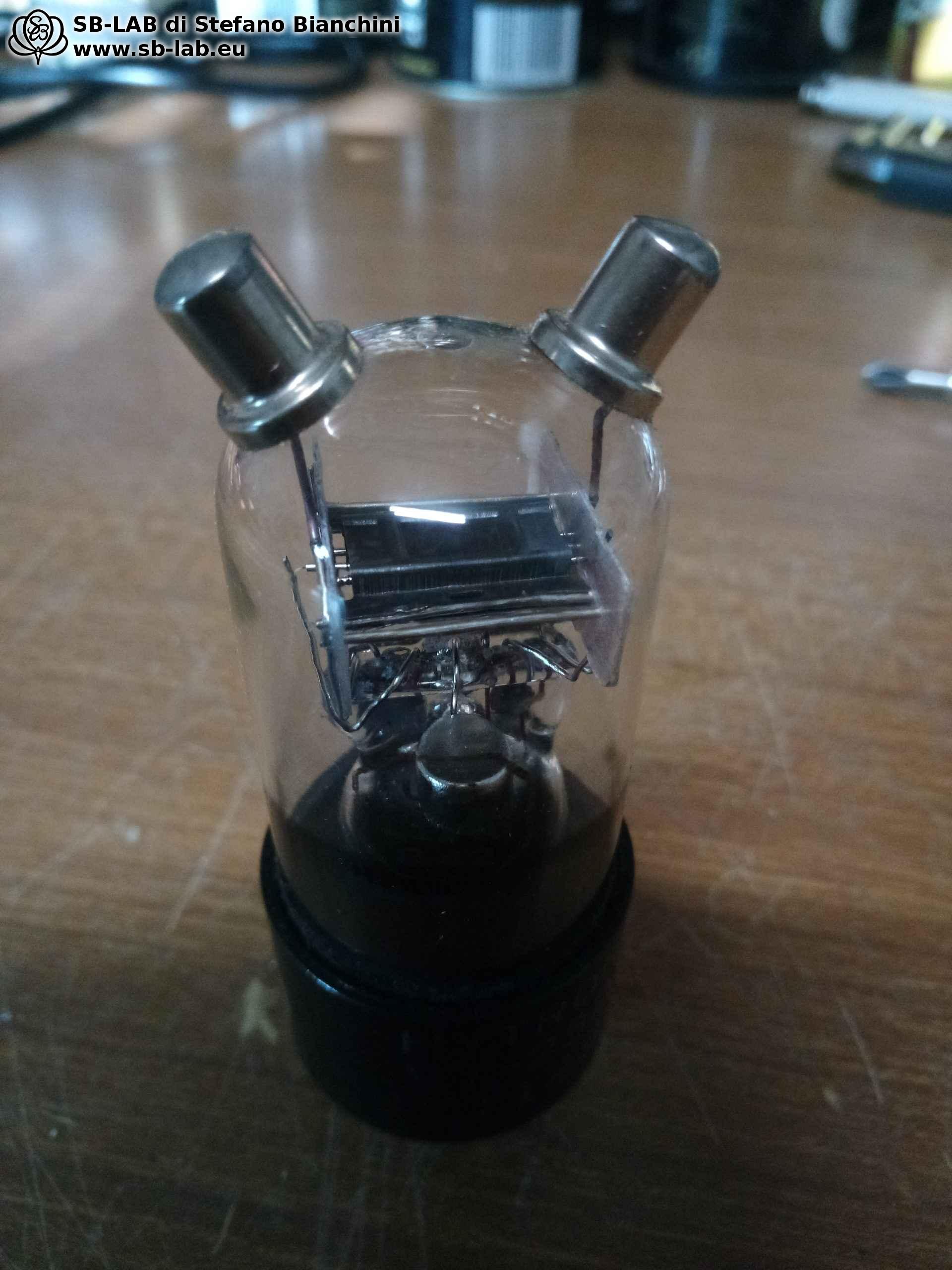
Now let us look at a tetrode or a pentode, which internally contains two or three grids. In the case of the beam tetrode, the third “grid” is actually formed by two thin metal plates, but in this article we will not dwell on that detail. What really matters is noting that, unlike the triode, the plate (anode) is located at a significantly greater distance from the cathode.
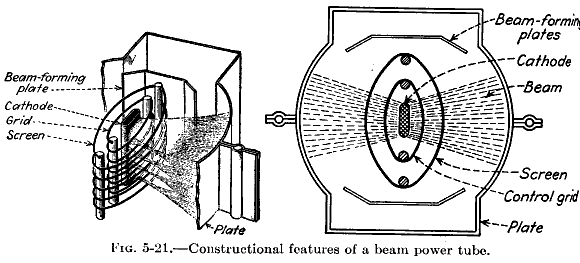
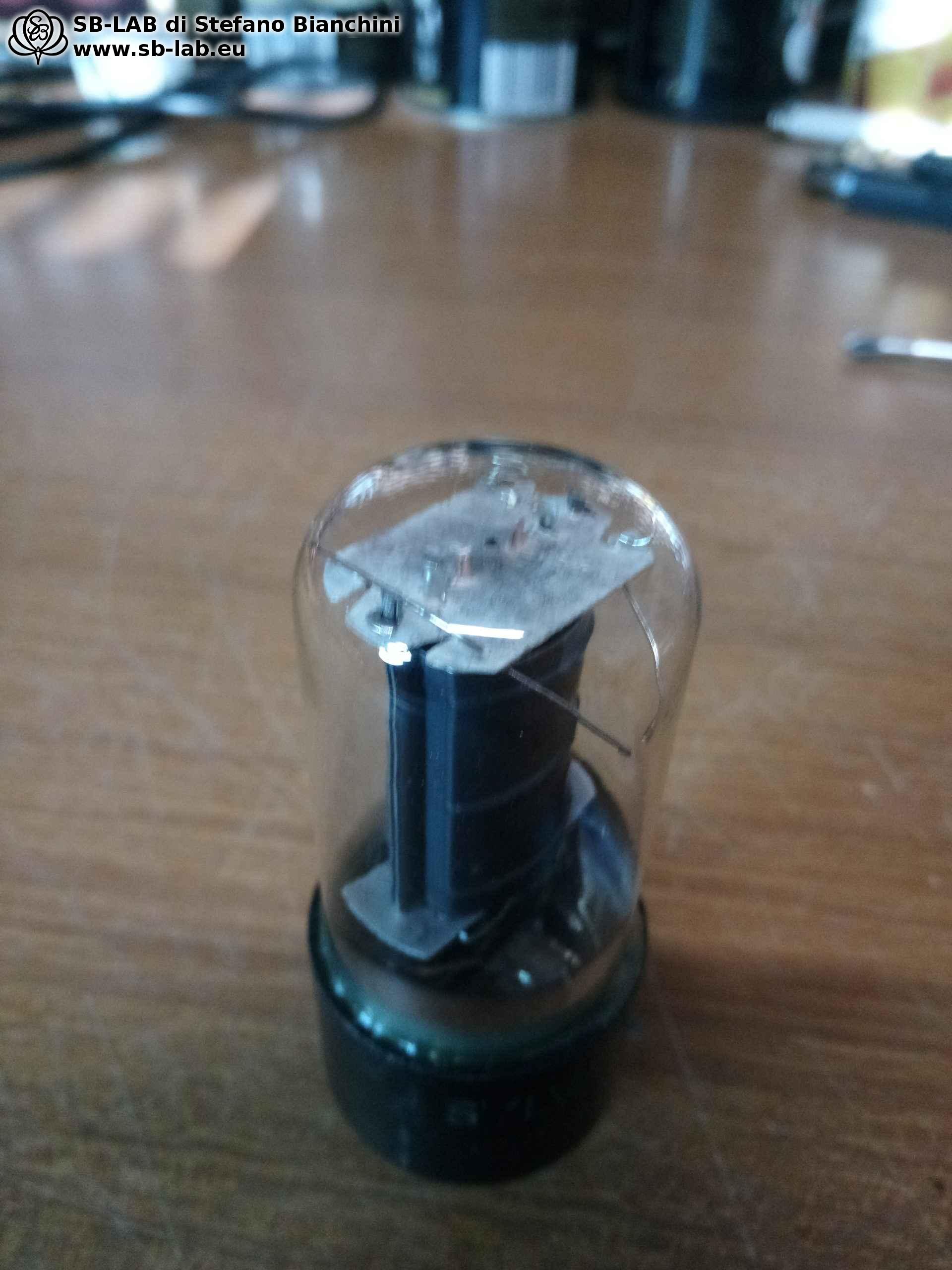
In triodes, the electric field generated by the plate (anode) acts directly on the electrons, attracting them, while the control grid (G1), held at a negative potential, restrains and regulates their flow. In tetrodes or pentodes, on the other hand, the plate is too far from the cathode to attract the electrons by itself, or would do so only weakly. In these devices the screen grid (G2), placed immediately after G1 and biased positively, steps in: it accelerates the electrons toward the anode.
Since G2 is made of very thin wires, most electrons do not land on it. On the contrary, thanks to the speed they acquire, in a sort of “slingshot effect”, they continue beyond it until they reach the electric field of the anode, which captures them definitively. It is therefore evident that, in a pentode, anode current does not depend only on the negative voltage of G1, but also on the positive voltage applied to G2.
In ultralinear connection, at idle the voltage applied to the screen grid (G2) is almost identical to that of the plate, since the internal resistance of the transformer winding is practically negligible. Consequently, every variation of plate voltage causes an equally significant variation in the current flowing through the valve: the voltage on G2 inevitably follows the plate voltage. For this reason, in ultralinear configuration we can speak of “dynamic” curves, while in triodes and in pentodes connected as pentodes the curves remain substantially “static”.
The dotted lines in the previously mentioned Genalex datasheet indicate, in essence, that the operating point can be placed at any current, but it must remain above that line, that is, at 425 volts! If the operating-point voltage is changed, the curves shown in the datasheet are no longer valid and change completely!
Let us analyze this phenomenon with the help of uTracer, which can also be configured to acquire curves in ultralinear mode. However, for the reasons already mentioned, and because of a missing software implementation, uTracer acquires dynamic curves only below the specified voltage, that of the dotted lines in the Genalex sheet.
To better illustrate the behavior of these dynamic curves, I therefore highlighted with a black dot an intermediate point corresponding to 300 volts, with the control grid G1 biased at -25 volts.
With a “stop” voltage of 400 volts we have 80mA at 200 volts with G1 at -25…
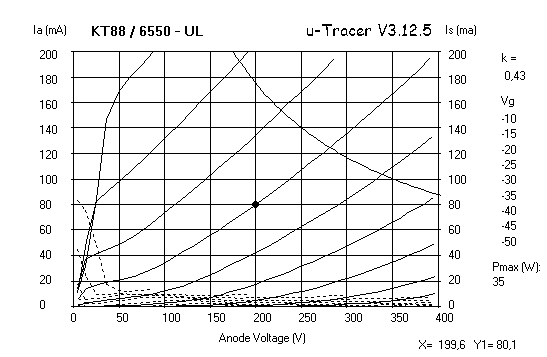
If we bring the “stop” voltage down to 300 volts, the current measured again at 200 volts with G1 at -25 drops to a little less than 40mA
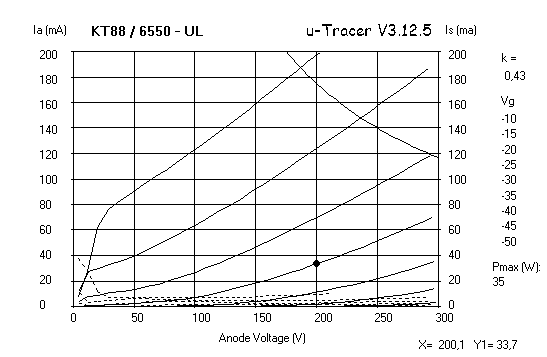
If we then lower the “stop” voltage further to 250 volts, we end up with a current below 20mA
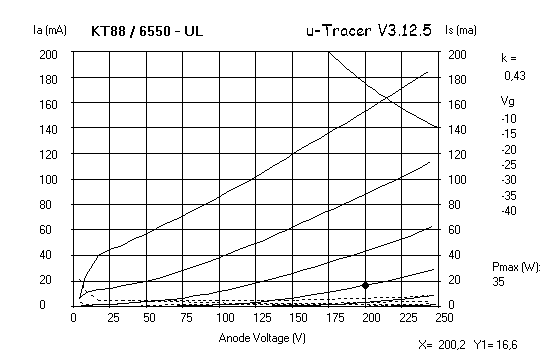
It can also be observed that, as the “stop” voltage decreases, the current delivery capability of the valve drops significantly, while its internal resistance increases, as shown by the reduced slope of the curves. This means the valve is much less capable of delivering current, and therefore power, than under optimal conditions. For example, with a stop voltage of 400 V the KT88 can reach a peak of about 170 mA at 50 V. With a stop voltage reduced to 250 V, the peak falls to about 60 mA.
As if that were not enough, the change in the slope of the curves also requires a change in transformer impedance to avoid severe distortion. The power actually delivered to the loudspeaker is almost identical to, or only slightly higher than, what can be obtained with a pure triode connection. However, in triode mode the valve works in a decisively more linear manner. In short, if one does not wish to use the valve in pure pentode mode, the most sensible choice is to use it directly as a triode, without even considering the ultralinear option: in a single-ended amplifier, it almost ends up looking like a gimmick for adding distortion.
It is essential to specify that these considerations apply to operation in classe A, both single-ended and push-pull, where the operating-point voltage is not high and the ultralinear curves at the various voltages are not known. Ultralinear connection was instead conceived for use in push-pull in class AB, a condition in which the idle voltage is higher. In this context the valve works correctly and offers real advantages in terms of distortion reduction and, at times, also greater output power.
For example, a pair of KT88 can safely deliver about 50 W in class AB as pentodes. Beyond that threshold the screen grid (G2) tends to glow red, because the plate voltage can fall below the screen voltage, generating current peaks on G2. But when the KT88s are connected in ultralinear mode, current is better controlled and 70-75 W can be obtained without problems and without any red-plating of G2.
Let us now examine the load line set with the following operating conditions: 425 V of plate voltage, 75 mA of current, -50 V on the control grid, and a transformer with 6k impedance.
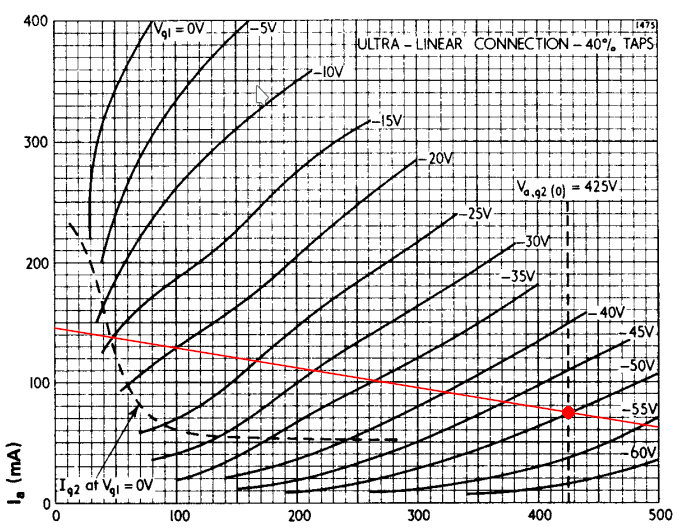
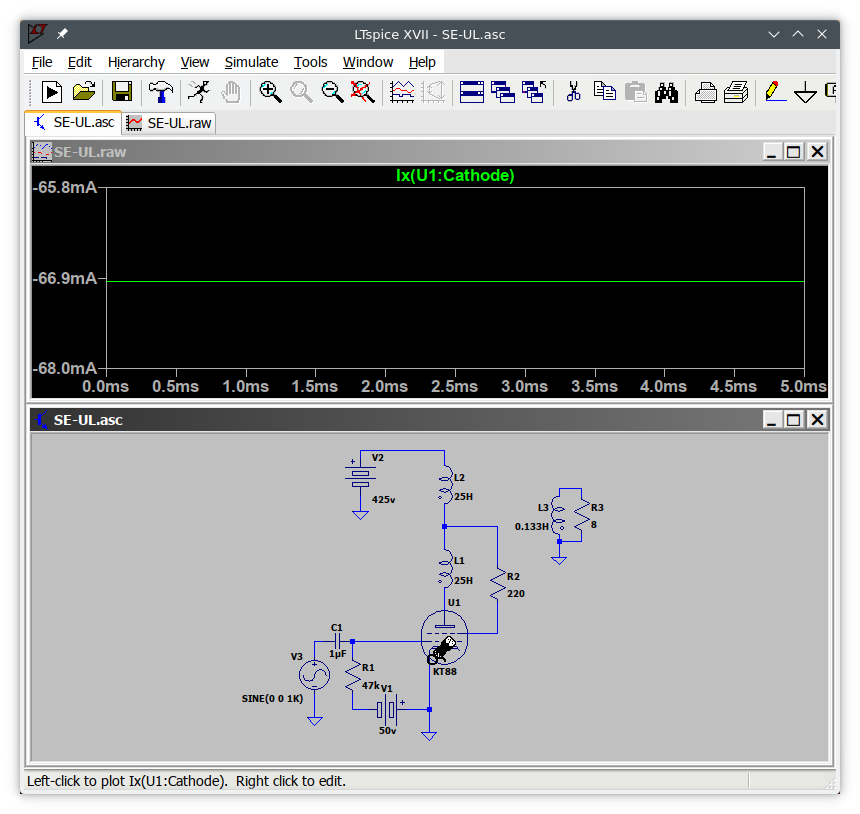
In this simulation a current of 66 mA is obtained, a value very close to the expected one, the small discrepancies are due to the mathematical model used. The bias current therefore returns to the expected level because the operating point was chosen on the dotted 425 V line of the datasheet. This result fully confirms the validity of the considerations presented so far. At this point, let us see how the circuit behaves when driven with a sine wave:
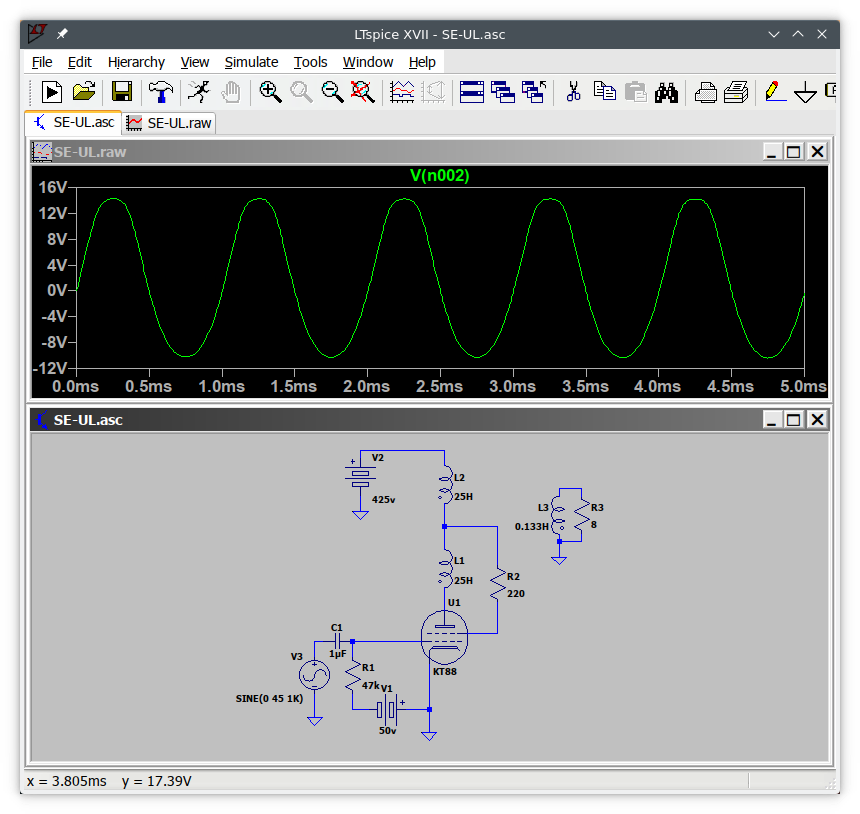
Once again, the output signal reveals heavy distortion, far from what one would expect. A clearly flattened half-wave can be seen, but what causes this problem? The asymmetry of the ultralinear curves is plain for all to see: just open the images and observe them carefully. On the left side of the graph, the spacing between the curves is noticeably greater than on the right. This means that, for any hypothetical operating point X, one half-wave will inevitably be longer and the other shorter. This phenomenon is intrinsic to ultralinear connection and explains why the circuit was conceived for push-pull operation, where the companion valve, working in opposite phase, cancels out this distortion.
It is possible to see the behavior of a real circuit in this article, at the beginning of which I examine an amplifier that used a KT88 in single-ended UL on a 6k load, whose captured waveform I show below, with the generator signal in yellow and the circuit output in blue.
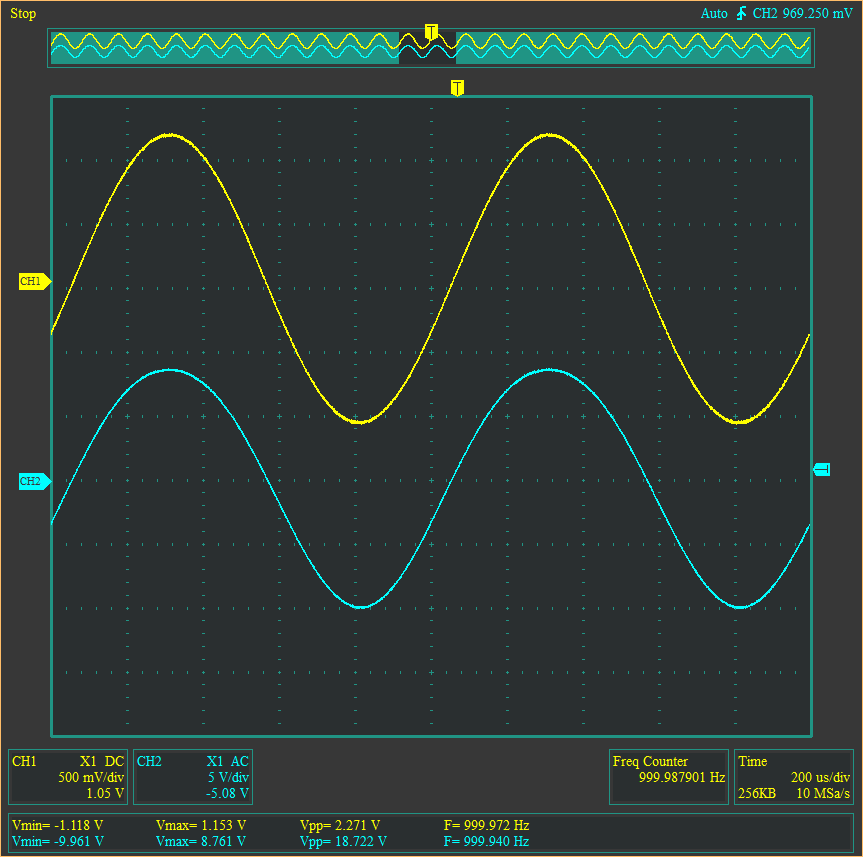
As can be seen, the real-world behavior fully confirms what emerged from the simulations. I would also like to highlight some other aspects brought to light by my experiments:
- A KT88 in single-ended ultralinear configuration can in practice deliver about 6-6.5 watts, but it does so with marked distortion. To obtain a clean sound it is therefore necessary to apply feedback, unless you are real lovers of distortion.
- The KT88 as a pentode reaches 12 watts with the use of feedback.
- The KT88 connected as a triode reaches about 5 / 5.5 watts as a triode with low distortion.
My conclusion is clear: if you are working in single-ended with a pentode, it makes sense either to use it as a pentode to prioritize power, or to connect it as a triode to prioritize linearity. Ultralinear connection, in this context, offers no real advantage: the gain in power compared with triode is negligible, while distortion remains high and forces the use of feedback. At that point it is far more logical to choose a pure pentode, which at least delivers more watts, or a pure triode, if the goal is maximum fidelity. Personally, I consider ultralinear in single-ended amplifiers, especially without feedback, little more than a trick for introducing distortion.
Naturally this judgment concerns only single-ended amplifiers: in push-pull configuration, on the contrary, ultralinear connection brings real and significant advantages.
In this regard, it is worth mentioning an alternative far more effective than ultralinear: the Schadeode connection. This configuration, also suitable for single-ended stages, combines the full power of a pentode with the linearity typical of a triode. It also offers remarkable advantages, such as a high damping factor and reduced phase rotation: exactly the areas where single-ended ultralinear fails spectacularly.
Hi, I am the actual owner of the amp that Stefano mentioned in the second link below. It was a kt88 SE set in ultralinear mode, and I can only say that it was by far the worst sounding amp I have ever heard, and I have heard quite a lot of amplifiers in my life! I was even strongly tempted to to dump it in a landfill, but then I bumped on Stefano’s website and I told myself “ok, let’s give it a shot”. Now, to cut a long story short, Stefano’s treatment turned that amp into one of the best sounding I have ever Heard! I am not a technician, electronics is not my cup of tea but, trust me on this, I can tell when a piece of hifi equipment sounds good or bad. I have no particular or personal interest in praising Stefano’s works, we’re not related nor close friends or whatever. I just want to bear witness to the fact that I have touched with my own hands his expertise and competence, so to anyone who should doubt that I can only say “try and listen to Stefano’s creations, that might be a real game changer!”…
Before building the electronics and even before listening, you first need correct design work. You cannot draw a load line or set an operating point on a tube’s curves if you do not actually know those curves, because the curves shown on the datasheet are only valid if you stay at the stated voltage. You cannot change that voltage and expect those curves to remain valid, as I clearly explained in the article. The fact that the person who drew that schematic used a cathode resistor value that would only be correct if the UL curves on the datasheet did not change when the anode voltage changes shows very clearly that he himself NEVER tested that schematic. He just drew it and uploaded it online without ever trying it. Because if he had actually built it, he would have immediately noticed that things did not add up. And no, simply sitting there changing the resistor value empirically until you force a certain bias current is not the correct way to determine that resistor value. And again, if the person who drew the schematic had really done that, he could have corrected the value shown on the published schematic, right? So we start from a design drawn by someone who never tested it.
I, on the other hand, HAVE listened many times to devices of this type. Since English translations of my website are something new, you might not know that I have been here for 10 years as a professional and even earlier as an enthusiast. This kind of circuit produces a huge amount of second-harmonic distortion, really a huge amount, because the tube is not working in class A. It is basically modulating like the class AB side of a push pull without its opposite half.
The sound that comes out of these circuits is far too distorted for my taste and also for the taste of dozens of people who were convinced that these amps were fine, but after trying my suggestions they reported a dramatic improvement. First among them is the person who originally built this schematic (from whom I derived the article), who later modified it under my guidance and obtained a major improvement (link: https://www.sb-lab.eu/jean-hiraga-12ax7-kt88-single-ended-class-a-amplifier-realizzazione-di-franco/
). But he is not the only one. Other people have worked on similar circuits, saying that at first they thought they sounded good. Then I put my hands on them and they were amazed, as you can read in this other article:
https://www.sb-lab.eu/en/single-ended-kt88-6550-with-ecc85-from-intercom-to-a-true-hi-fi-amplifier/
The fact that you claim it sounds good tells me only that you have never heard things that sound better, so you cannot recognize when something can be improved. The problem with people who listen but do not know how to design is exactly that you do not know how to design and you do not know how to modify a circuit properly to run tests and learn what actually changes, not only with instruments but also with your ears. Do you know how many people have told me “come to my home and listen”? Many enthusiasts are far too sure they have the best thing in the world and assume that anyone with technical knowledge must be deaf. I could just as easily say the same to you. Have you ever heard a device designed by me to be so certain that yours sounds better?
The use of ultralinear in single ended is and remains a way to create distortion, with no advantage compared to a direct triode connection… half a watt more? Yes, but also a lot more distortion. Or compared to pentode mode, where you need feedback but at least you get the power and still a great sound.
I’m afraid to ask… have you actually heard this amplifier in the schematic?
I agree bias will have to be adjusted based on the B+ and the characteristics of the opt. Just like any build. Mine actually settled in nicely at 76ma with a 500ohm cathode resistor. But, yes like any DIY build the builder must know how to properly bias a tube. However, it seems like you are making the point that the schematic circulating is going to match every different make/spec of UL transformer, however it’s clearly not.
Ok, Now that we got the bias set and are running at a good operating point… rather than measuring let’s listen. How does it sound to you? Don’t tell me you have not listened to it let alone built it? Do you feel like you can just analyze a circuit in spice and decide it doesn’t work? Obviously there are many many (possibly hundreds) of audiophile hobbyists that have built this amp- and after comparing it to different builds have determined that this is the best thing that they have heard.
You article has me wondering- is this all just technical speculation you are writing about? Is there somehow something you are understanding differently about the 425v line on the gec kt88 datasheet? Have you even heard this amp? Have you built one? If you have not heard this amp- then really you have no idea what all the hype is about. It’s about the sound, not about whether it’s the most conventional, or the best measuring, or makes the best sense technically.
If you haven’t done so, I invite you to build this amp, listen, and then come back to this article having proven your claims. If you don’t have the means to build this amp, then you should come to my home and listen to it. It’s no joke- I invite you to listen- then if you still feel the same about this amp you will at least be coming from an informed viewpoint.