-> The schematic and transformer set are no longer available for DIY purchase, anyone interested can now buy SB Phoenix. <-
This article was written to put some order into a story that, unfortunately, repeats itself often: a tube amplifier advertised as a “KT88 single-ended class A”, built around a PCB sold as a kit, ends up in the hands of an enthusiast who is happy at first, then changes system, changes speakers, changes room, and suddenly realizes something is not right. In cases like this it is not enough to say “it sounds good” or “it sounds bad”, you need to understand what is happening electrically and, most importantly, how compatible the amplifier really is with a real load, meaning a loudspeaker.
The amplifier in question is one of those projects that, on paper, look simple and tempting: a KT88 in single-ended, a small-signal input valve, “included” transformers, a few “audiophile” parts added for show, and an implied promise of big sound from just a handful of watts. The problem is that many of these PCBs, behind a tidy layout and seemingly easy wiring, hide heavy compromises and real design horrors. I am not talking about taste or “schools of thought”, I am talking about errors you can see on the bench, and that translate into something very simple: the amplifier does not behave like an amplifier when you connect it to a speaker.
From this experience, and from other similar ones, a completely different project was born in both philosophy and results: Phoenix. Not a cosmetic “repair”, not a patch, not a “let’s swap a couple of capacitors and pray”, but a redesign that starts with the numbers and ends with listening. In other words, the goal was not to make an inherently bad project acceptable, but to show what happens when you actually design a single-ended amplifier to work with a real loudspeaker, with proper transformers and coherent circuit choices.
One day I received this message:
I recently purchased an amplifier that uses KT88 valves in single-ended ultralinear class A. I did not build it myself, I bought it already assembled by someone else. Long story short, at first in my system I liked the sound, it was a bit particular, but it did not seem bad. Then a friend lent me an ARC SP3 preamp and I liked it even more. Then the fatal mistake: I brought it to my friend’s house and in his system, connected to Klipsch La Scala, it literally sounds awful, like an intercom. A trauma! So I ask you: would it be possible to turn it into a great-sounding amplifier? For the record, the unit uses JJ tubes. My system: Klipsch KG4 speakers, Carver C6 preamp, Aiwa AP2500 turntable with Dynavector 10×5 Neo; Dual turntable with Shure V15III + Jico SAS. My friend’s system: Klipsch La Scala, Diego Nardi 2A3 power amp, Dual turntable with Shure M91 + Jico SAS. Of course I can send photos and more details. Thank you in advance and kind regards.
The message was crystal clear, and not only because of the “intercom” line. When an amplifier changes character so dramatically just by changing loudspeakers, there is almost always a precise technical clue: impedance interaction, reactive-load handling, stability, damping, feedback margin, output transformer behaviour and, in general, the ability of the circuit to remain linear outside the “ideal world” of a dummy resistor.
It was obvious that this was one of the many impresentabili: a KT88 single-ended marketed as “serious stuff”, but in reality wired in ultralinear and driven by an ECC88, built around a questionable PCB. Everything was mounted in a patched-up wooden box, with generic hardware handles and output transformers of unknown origin, with no labels, no data, and no guarantee that they were correctly sized for the job. In cases like this the question is not “why does it sound bad”, but “how does it manage to sound tolerable under some conditions”. In short, the usual junk put together by one of the many basement tinkerers infesting Facebook.

Before even thinking about parts, the first thing I always do is the same: basic measurements, simple and repeatable. Sine wave, resistive load, low power. It is the most elementary test, and precisely for that reason it is ruthless, because if an amplifier already shows a serious problem here, it means there is something structural. On the oscilloscope, into a resistive load, at 1 watt of output power, the sine wave looked like this:
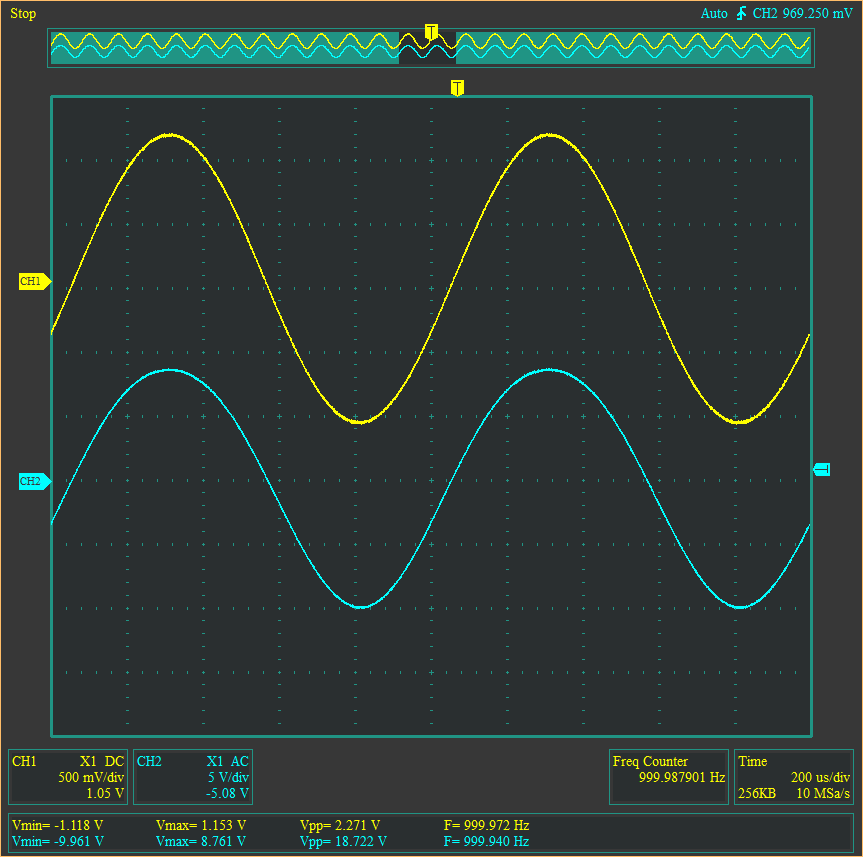
In yellow you can see the generator signal, in light blue the amplifier output. One half-cycle is heavily compressed, as if the circuit had a “preference” for one side of the waveform. This is not a cosmetic detail: it means asymmetry, it means abnormal even-harmonic generation, it means the operating point shifts, and the linearity is already compromised before you even ask for power. Below you can see the corresponding spectrum analysis.
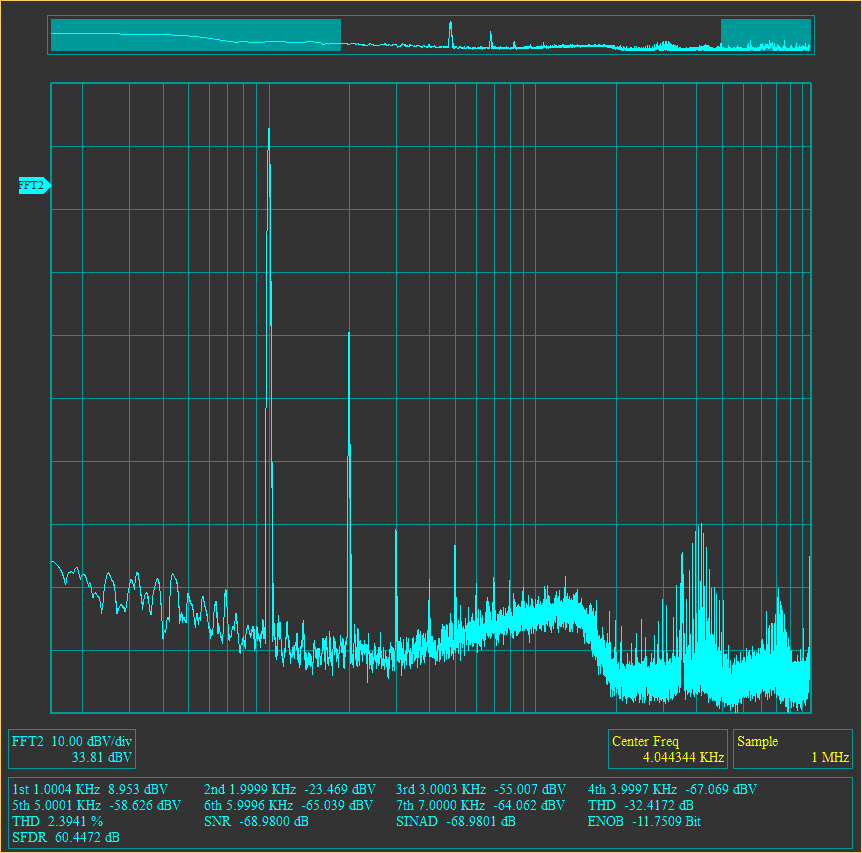
Distortion was 2.4% at 1 watt into a resistive load. Regardless of any “audiophile philosophy”, a number like that is the fingerprint of a project that is not operating in its correct regime, or of a circuit choice that introduces intrinsic, uncontrolled distortion. In this case the main reason was very clear: the use of ultralinear connection in a single-ended configuration, something I have already discussed in this article. In short, ultralinear in single-ended is not the “magic shortcut” many people believe. It can become a problem generator: worse linearity where you need stability, poor behaviour with real loads, and output power that is often not what you expect.
Also because of the ultralinear connection, the maximum RMS power the circuit could deliver was 6 watts per channel. And here comes another classic trap: “6 watts” sounds like a lot until you relate it to distortion and load type. One clean, stable watt is worth more than several distorted watts, because that is what you actually use most of the time while listening, especially with high-efficiency speakers where the quality of the first watt is everything.
Measuring bandwidth, I wanted to see how the transformers behaved. Were they reusable at least? And most importantly, were they behaving consistently with the claimed power and with a KT88 single-ended amp? The answer, as often happens with “no-name” transformers, arrived immediately.
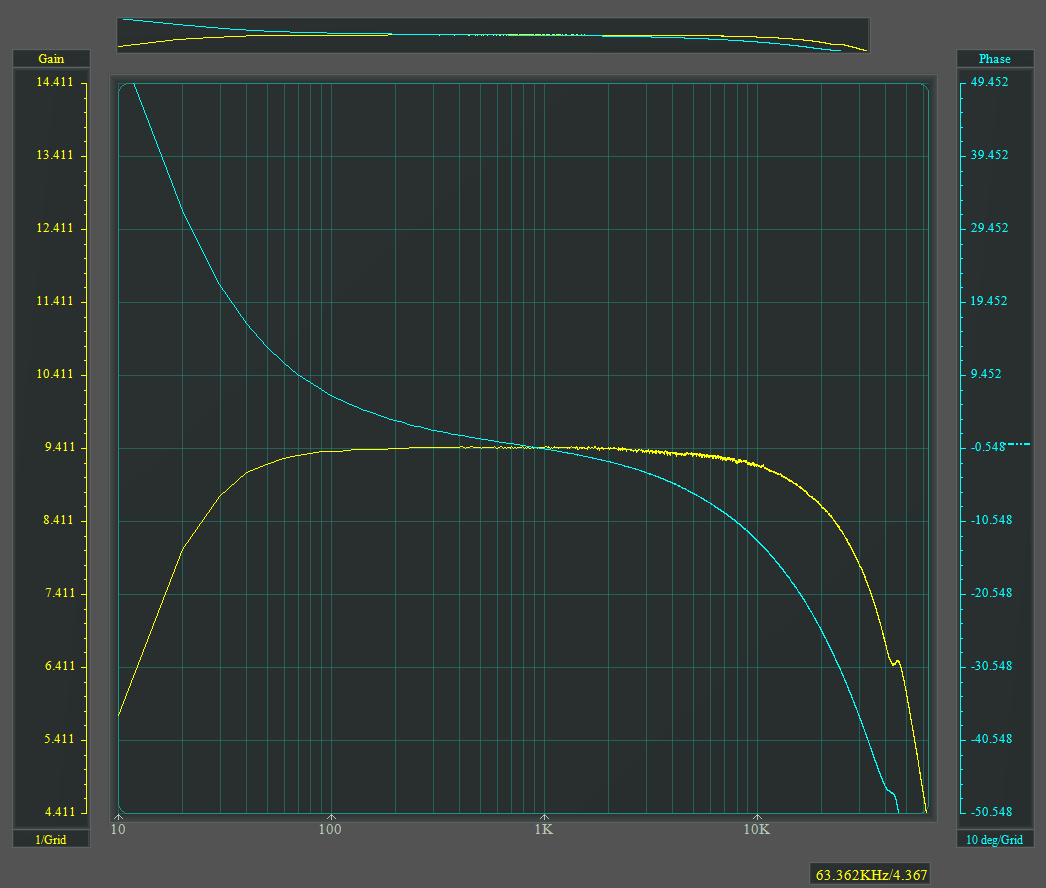
Better to forget it. Not out of pedantry, but because the output transformer in a single-ended amplifier is half the amplifier. If it cannot cope, you can change tubes, capacitors, resistors, you can “retune” forever, but you are still driving on square tyres. The result is a sound that might seem pleasant until you hear a real amplifier.
At that point the real question was different: how did the circuit behave into a reactive load? This is where the serious issues appear, the ones that perfectly explain why with an “easy” speaker the owner could fool himself, and with a more demanding, or simply more revealing loudspeaker, the amplifier turned into an intercom. Here is a simple 1 kHz sine wave, 1 watt into a reactive load…
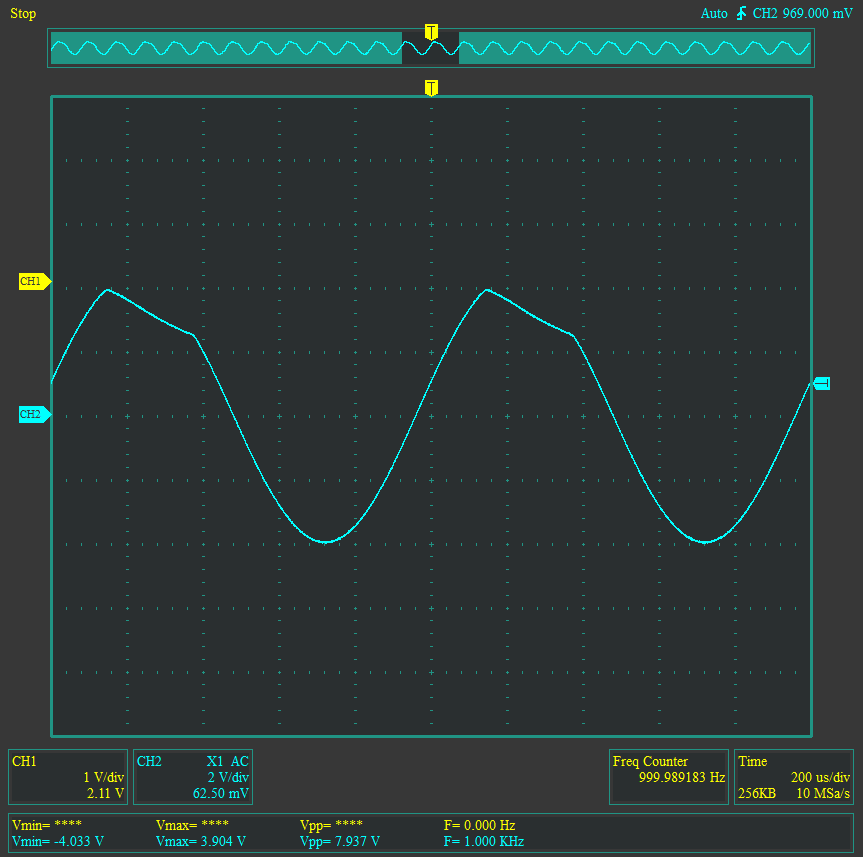
It looks clipped. Yes, but it is a strange kind of clipping, and in fact it is not clipping in the classic sense. It is a combination of multiple design problems adding up: reduced real dynamic margin, internal impedances that are too high where they should not be, questionable screen-grid management, transformers reacting badly to the reactive component and, in general, a project that “collapses” as soon as energy must actually flow into the load. This “bitten” waveform was still there even when output power was reduced to just a few milliwatts, a clear sign that it was not a power limit but an intrinsic behavioural defect. In practice, it was completely incompatible with the reactive load that, more or less, represents what the same circuit sees when connected to a loudspeaker.
You can see the absolutely disastrous spectrum analysis, with 10% total distortion at just 1 watt RMS. I fully understand why the owner called it an intercom. And the tragicomic part is that these boxes are often sold as “classe A single-ended hi-end” and, in photos, they may even look cool. Too bad that when you run a measurement that actually makes sense for real use, the whole castle collapses.
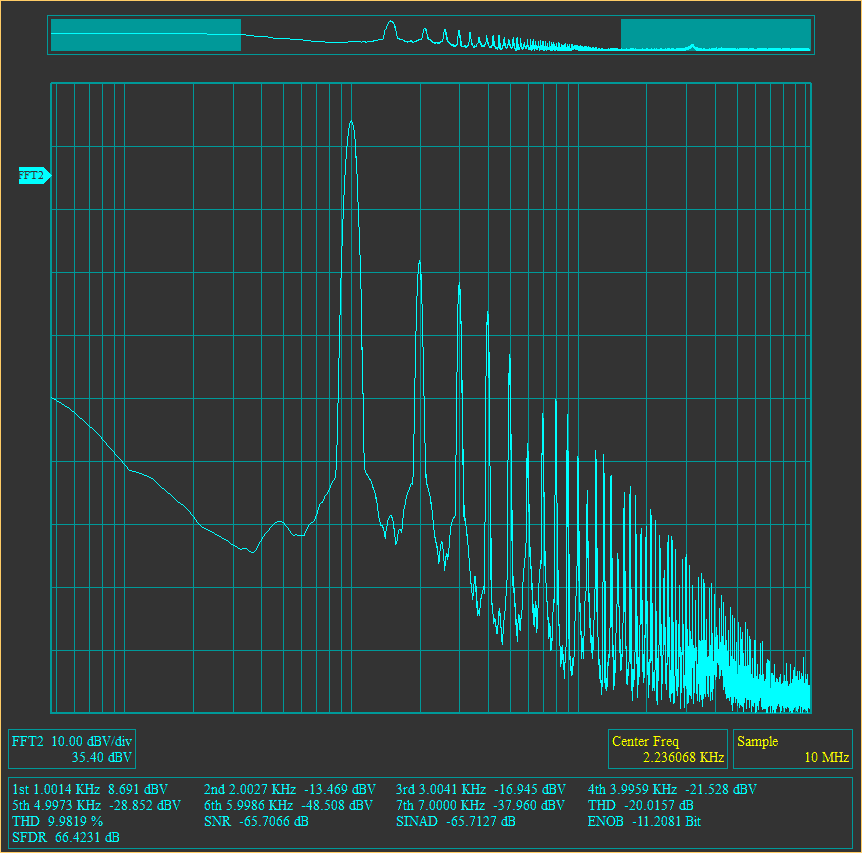
Damping did not improve things either: DF of 1.6. In practical terms, that means poor woofer control and a response that changes significantly with the loudspeaker’s impedance curve. That is why some amplifiers feel “bloated” or “flabby” in the bass, and why changing speakers can completely transform the listening experience. The frequency-response analysis into a reactive load shows the effects of all this very clearly.
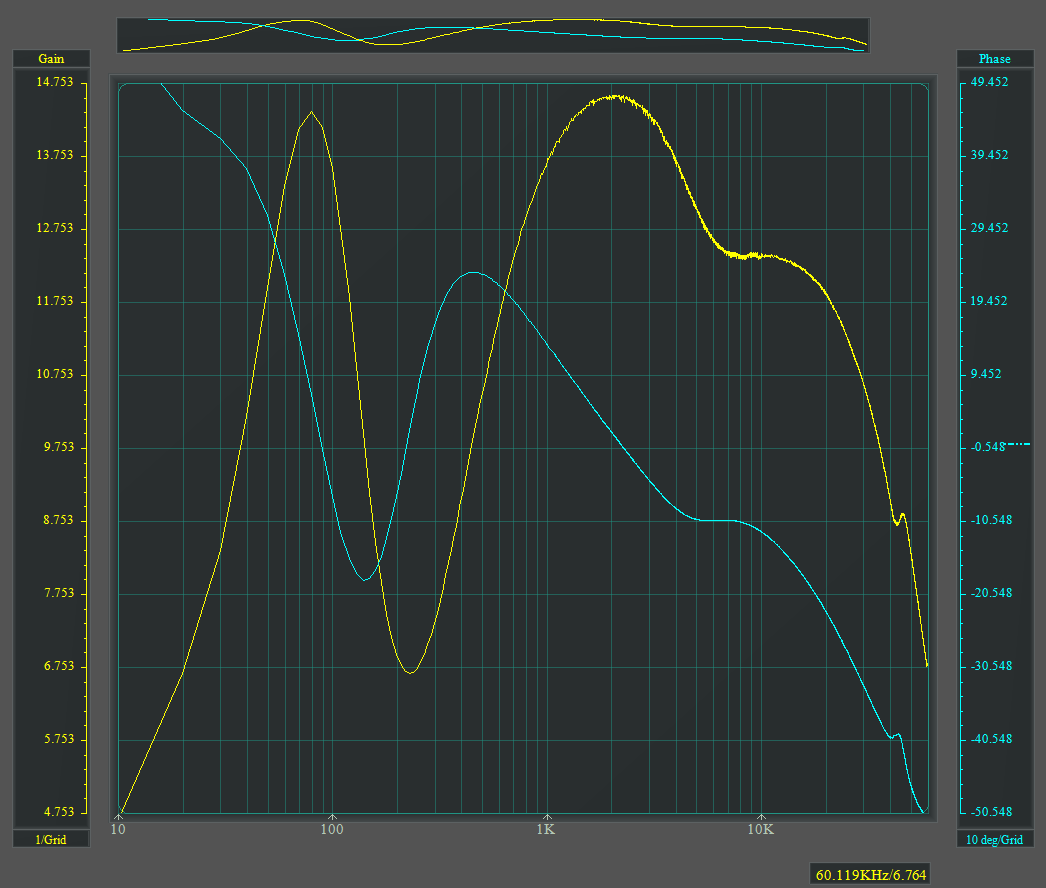
The rest of the measurements I took are superfluous, pointless, because when a circuit shows such obvious problems already in the fundamental tests, there is no need to “write poetry” with extra plots. In the end, very little of that unit could be saved: a couple of Mundorf capacitors, the power transformer, and a few other bits and pieces. Everything else, from the basic concept to the output transformers, had to be redone if the goal was a genuinely good-sounding amplifier with a real loudspeaker load.
The schematic and transformer set are no longer available for DIY purchase, anyone interested can now buy SB Phoenix. Phoenix is, effectively, the “mature” answer to this kind of case: a single-ended amplifier designed with correct criteria, measured with meaningful loads, and built to be listened to.
The input stage uses an unusual (but not too unusual) ECC85 VHF dual triode, typically found in FM front-ends of tube radios, and also used in some Luxman amplifiers, including the 3600. Here the choice is not “weird for show”, it is functional: you need a fast valve with sufficient swing and the right characteristics to drive a serious output stage properly, without stacking three gain stages just to chase voltage. The valve is loaded with a transistor constant-current source using the classic MJE350. This approach provides lower output impedance, a faster response, and cleaner behaviour as dynamic demands increase.
This choice was made to achieve everything with a single driver valve, without multiplying stages and paying the price in noise, coupling artefacts, and the typical “side effects” of overly long chains. At the same time, the goal was a bright and detailed sound, but not edgy, meaning “fresh” in the good sense. An ECC83 loaded by a resistor would have been much warmer and would behave differently, and the customer explicitly wanted a more open and faster presentation. In this context, the transistor CCS was a perfect fit.
Instead of the ECC85 you can also use the more common ECC81, which has nearly the same electrical characteristics, you just need to respect the different heater pinout. For the output valves you can use KT88 / 6550 / KT90, while keeping the project coherent and respecting the intended operating points.
The output stage is connected as a true pentode and uses fixed bias with servo control. That means an active circuit automatically regulates bias, keeping the valve in a stable condition over time. This is not the same as cathode self-bias, where a resistor (and its bypass capacitor) introduce local feedback and a reactive component that, in some conditions, can become part of the amplifier’s “character”. Here the goal is different: stability, repeatability, measurable performance, and predictable behaviour as tubes, temperature and mains conditions change.
Of course there is NFB where it is needed and in the right amount, because if you want proper loudspeaker damping, there is no way around it. Feedback is not an insult, it is a tool. Used properly it improves control, reduces distortion in critical areas, and makes the amplifier less dependent on load variations. Used badly, or added just to “make the numbers work”, it creates other problems. Here it was integrated with proper criteria, starting precisely from the limits observed in basement builds.
The power supply uses a classic CLC filter with a real inductor, not a MOSFET gyrator, generous capacitance and good-quality capacitors. In a tube amplifier the power supply is not an accessory, it is part of the sound and part of the performance. If the voltage “breathes” in the wrong way, if impulsive currents cause slow droops and recoveries, if the screen grids are not fed properly, you get distortions that some people then mislabel as “musicality” simply because they have never heard a truly linear and stable circuit.
The screen-grid voltage is obtained with a circuit often called a voltage divider, which provides a lower voltage than the main supply according to a resistive ratio, but with low output impedance. In practice, if you feed G2 with a classic RC cell, the voltage is not stable because when the audio signal crosses certain limits and G2 starts drawing current, the voltage across the capacitor droops while the signal persists and recharges when it stops, causing memory distortions. These distortions are a shift of the operating point depending on the “past” signal, with audible effects especially on dynamics and timbre. The divider, even though it is not a regulator (because it tracks the input), has very low impedance and is not significantly disturbed by G2 current draw, keeping the output stage behaviour more consistent.
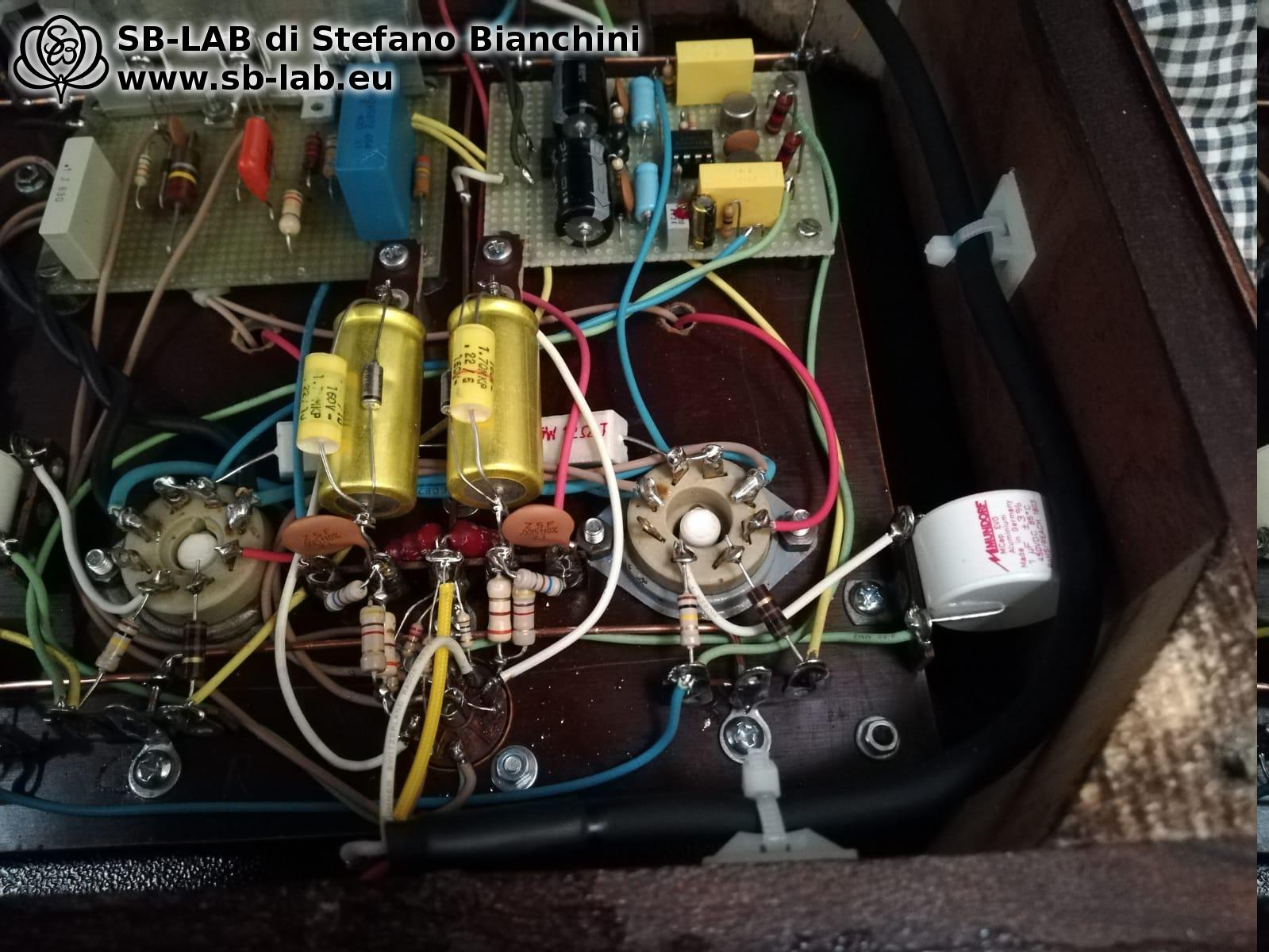
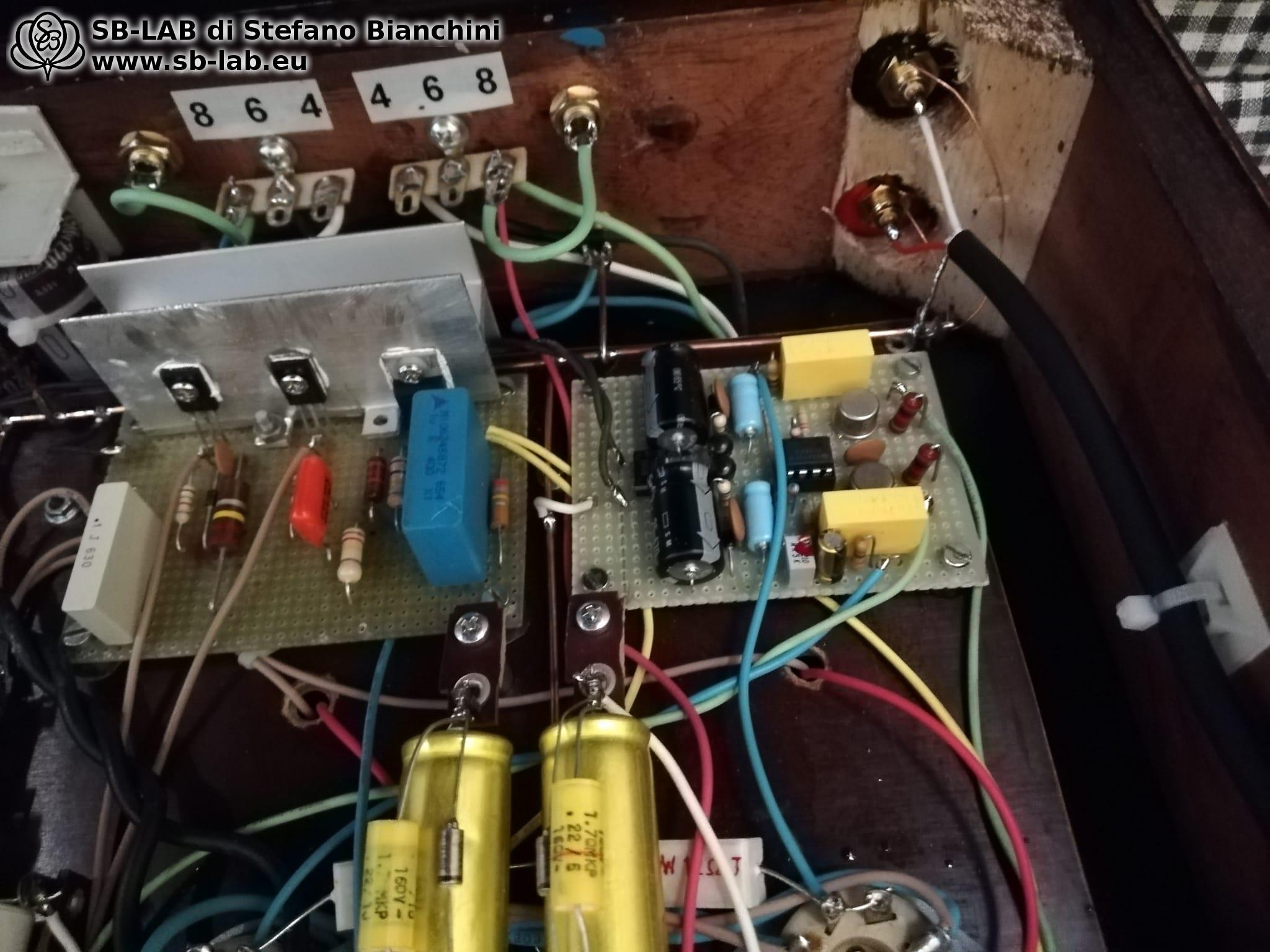
The original power transformer could be reused, while I supplied two new SE6K-KT88 single-ended output transformers and the choke. In an intervention like this, the output transformers are the key: without them, no “upgrade” can really work. The idea was to give the circuit a solid and correct foundation, then measure, verify and refine. Here is the assembly carried out by the customer:
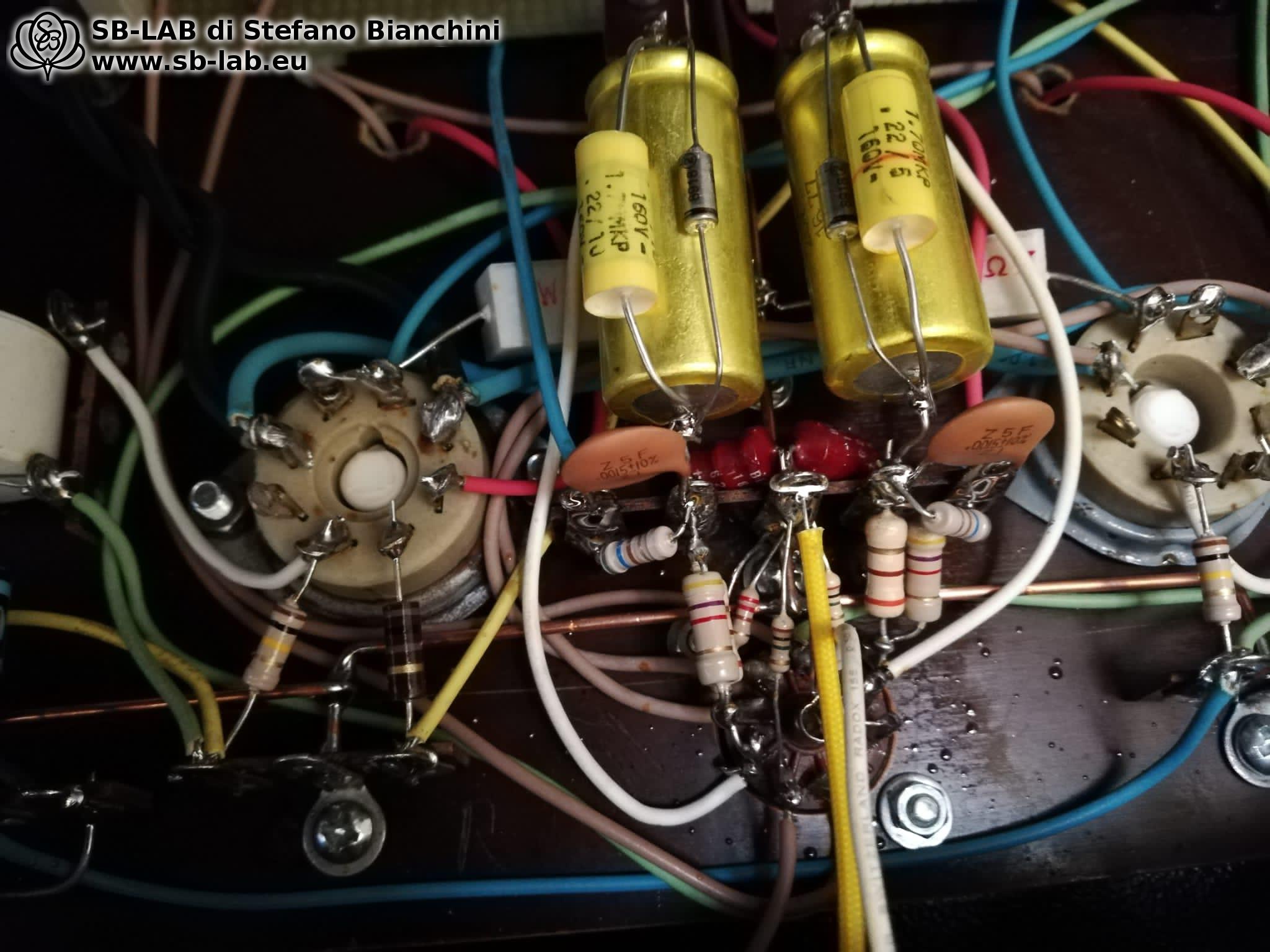
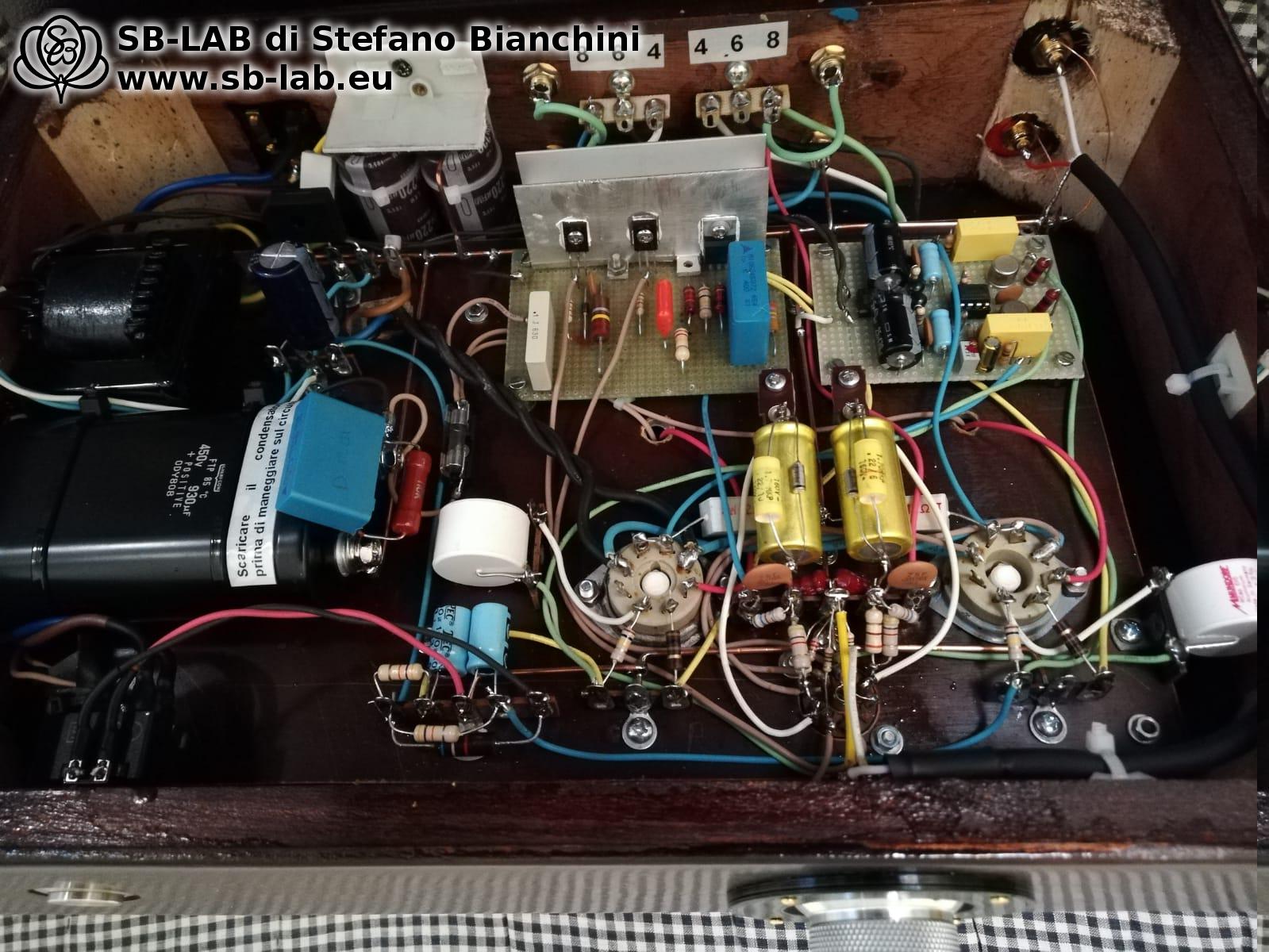
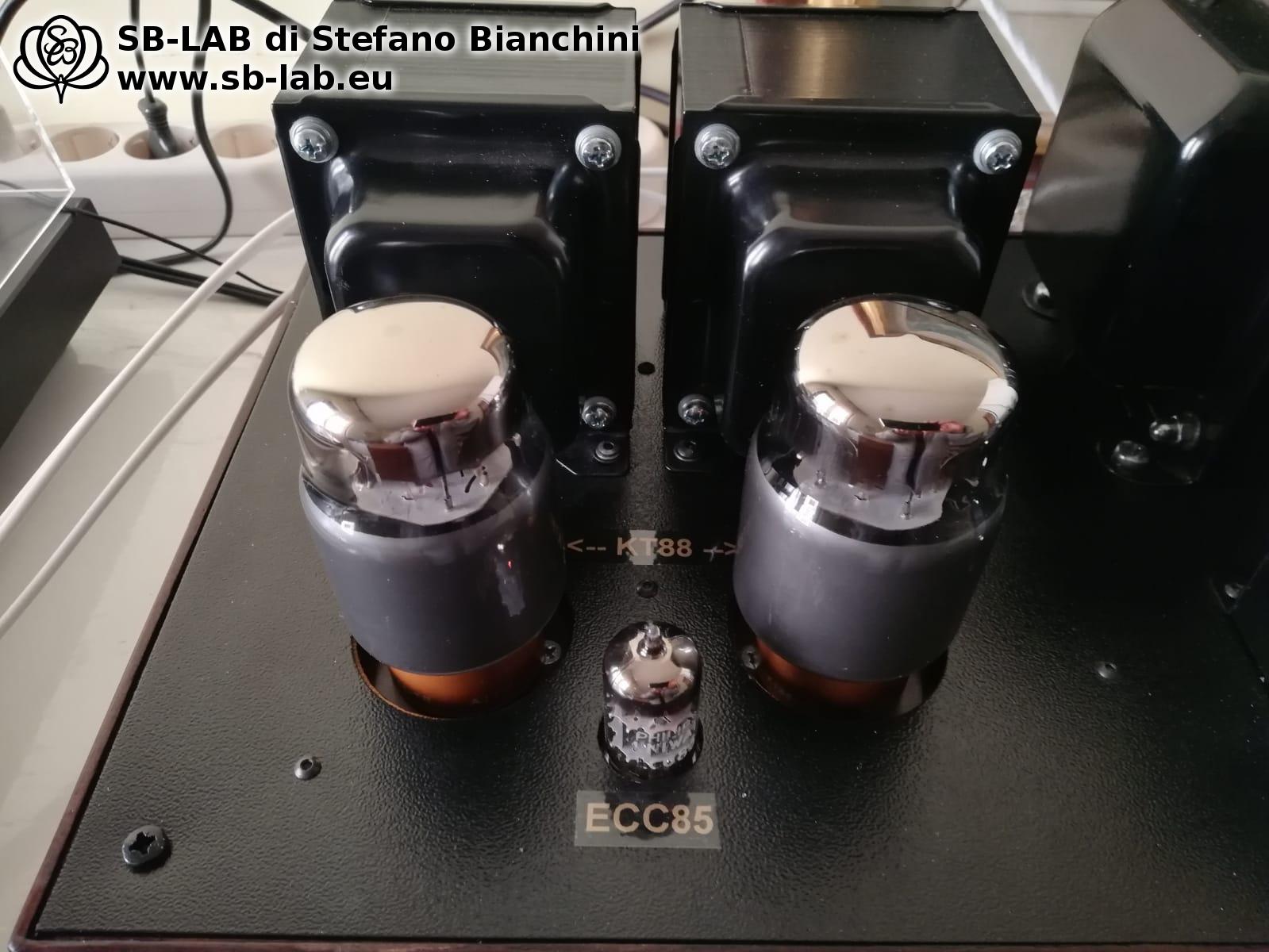
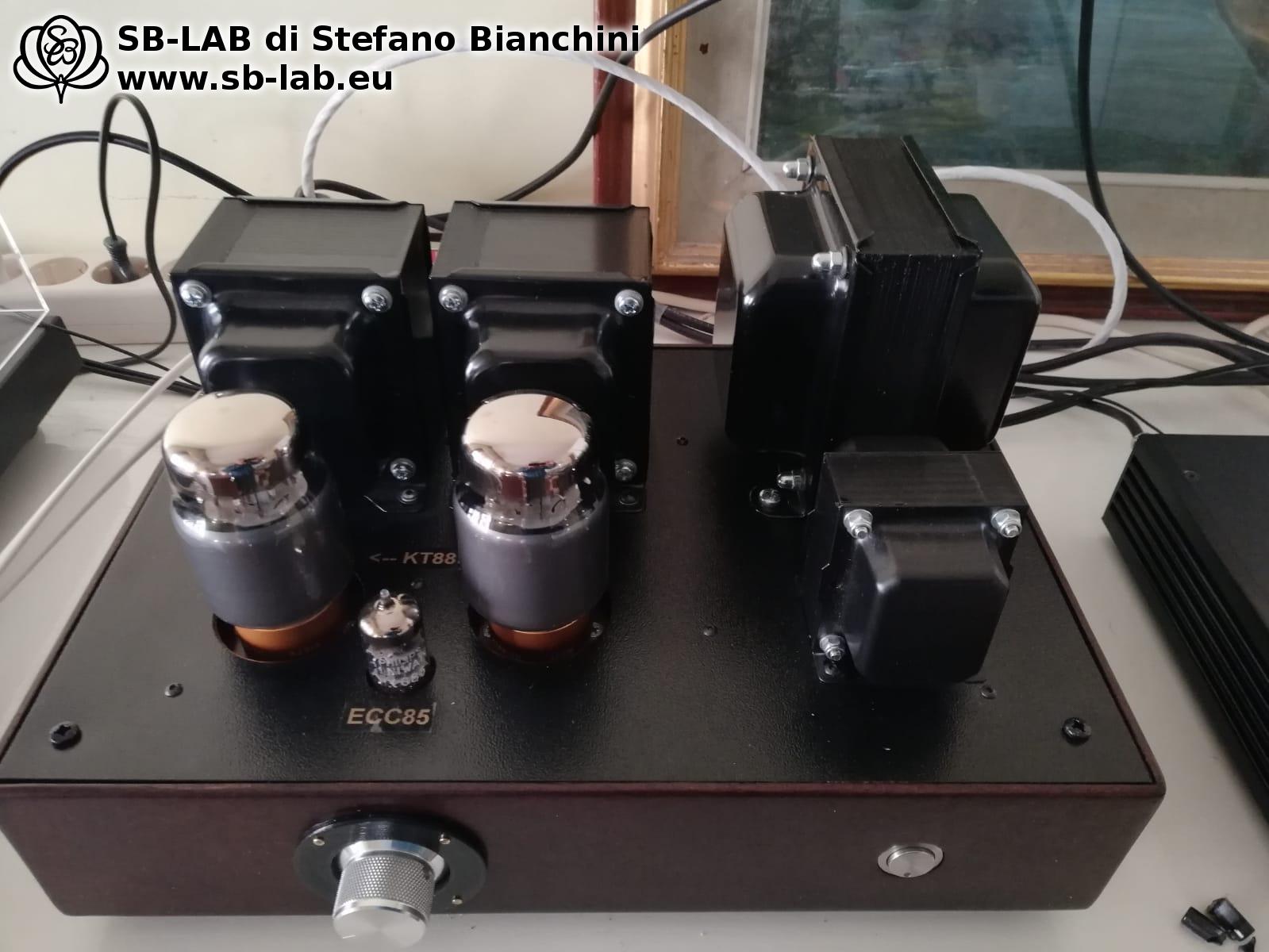
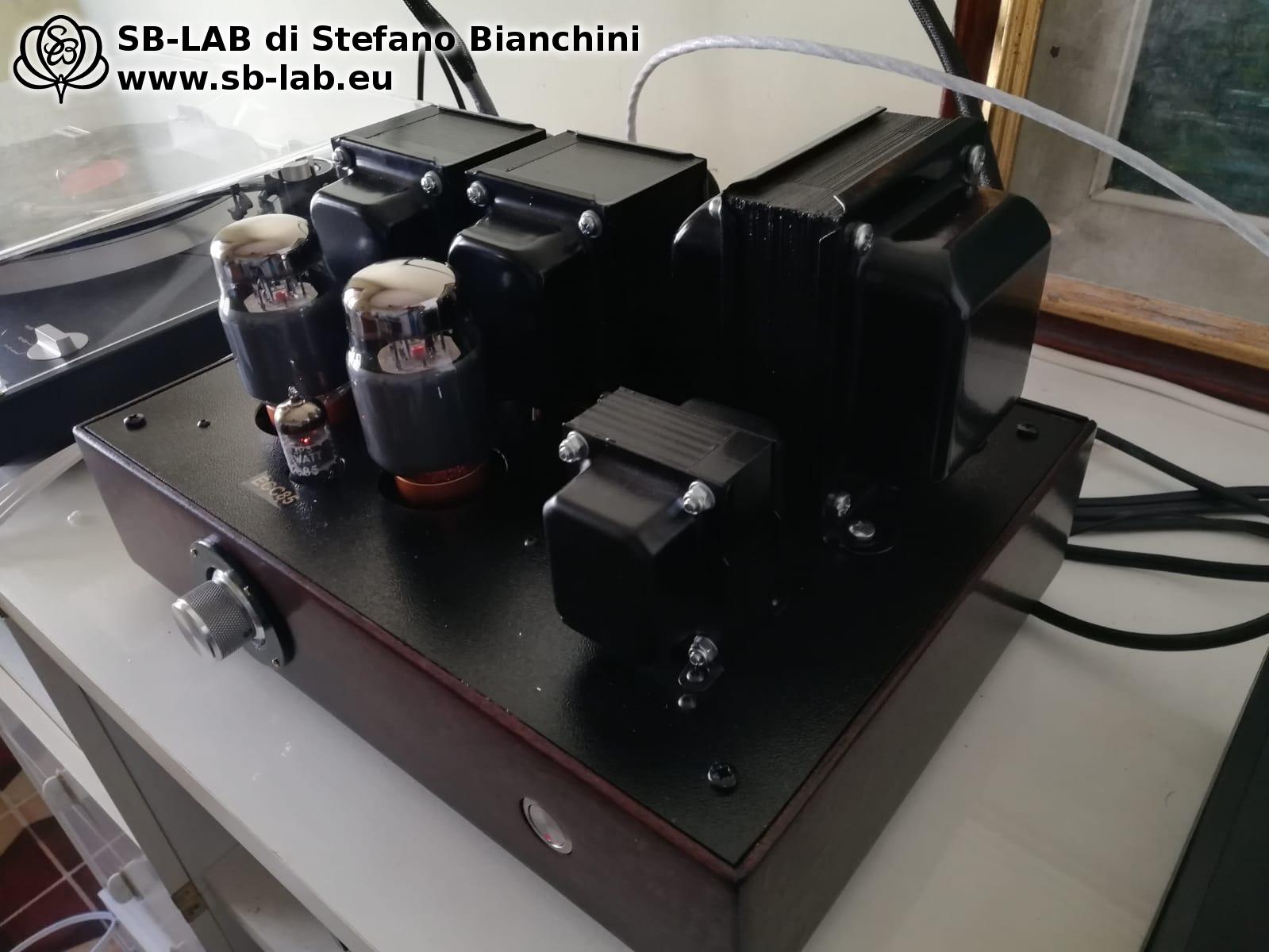
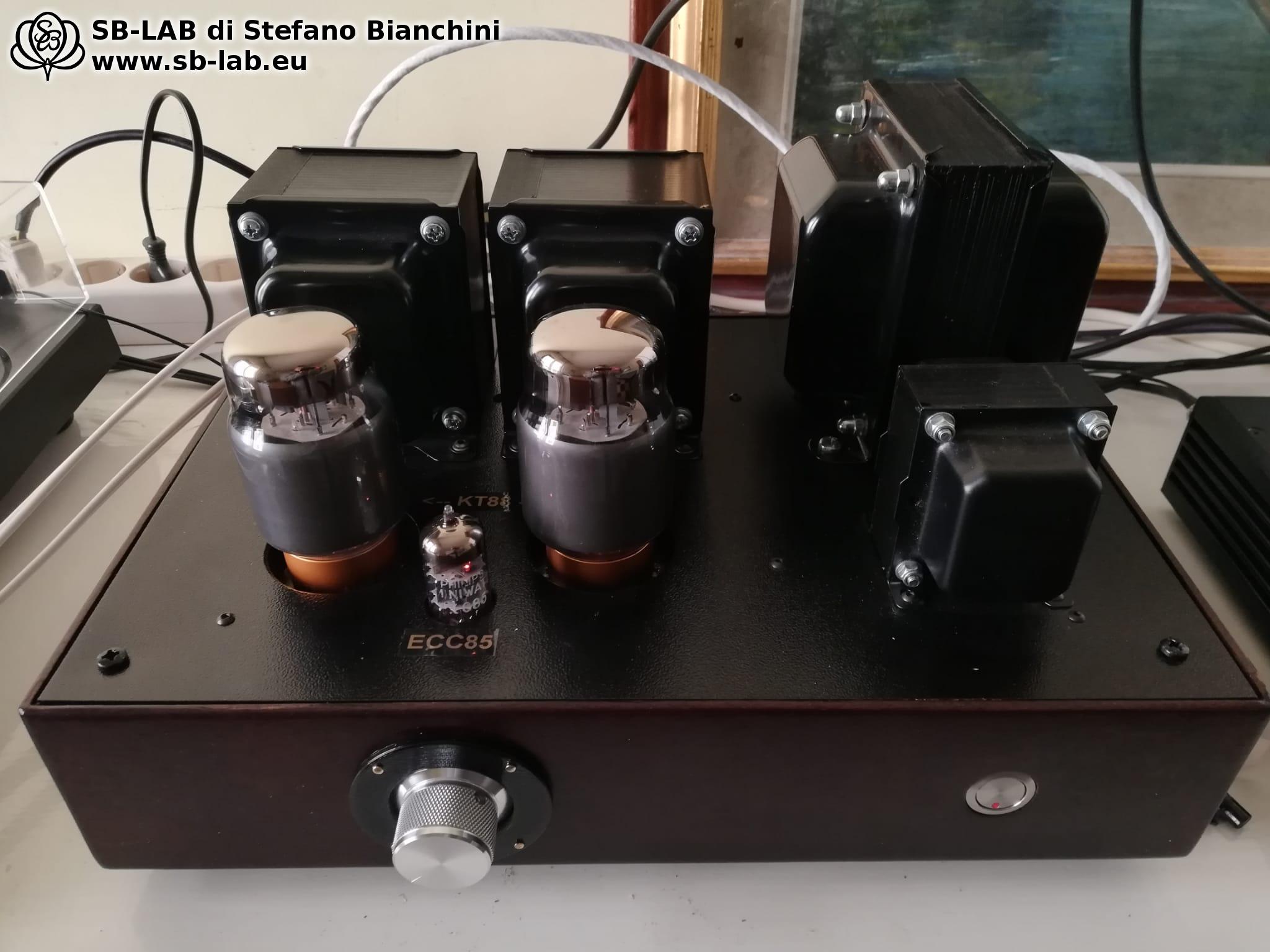
At this point the question is simple: after the redesign and with proper transformers, what measurements did the circuit deliver? The goal is not “showcase numbers”, the goal is to verify that the amplifier has become a coherent object: real power, low distortion where it matters, stability and control into a reactive load, meaning conditions similar to real-world use with a loudspeaker.
What measurements did this circuit deliver?
Power: 9.8 watts RMS
Damping factor DF: 5.6
These two numbers alone, taken together, already say a lot. Almost 10 real RMS watts from a KT88 single-ended design, and above all a damping factor that finally makes sense. It is not a “watts competition”, it is a sign that the circuit is not collapsing as soon as it meets a difficult load. A DF at this level means better loudspeaker control, a more predictable response, and less dependence on the impedance curve, which is exactly what the original project was missing.
Bandwidth 10 Hz -0.2 dB / 40 kHz -1 dB
This is the kind of measurement that, when done properly and with serious transformers, is not for bragging, but to show that the output stage was designed to behave well across the entire audio band, without strange tails and without premature collapse. In a single-ended amplifier, proper bandwidth is also an indirect indicator of transformer quality and of the match between transformer and circuit.
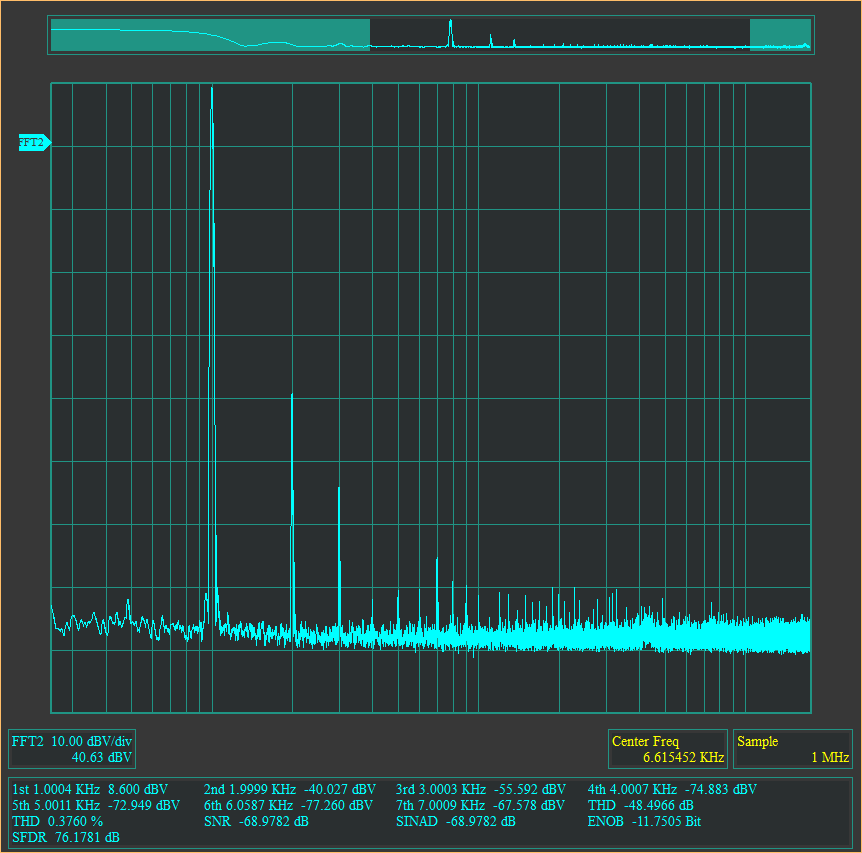
THD @ 1 watt into a resistive load: 0.37%
From 2.4% down to 0.37% in the same conditions, and we are talking about the very same “level of test” that previously already showed asymmetry and compression. This is one of the reasons why I insist on fundamental tests: if you fix the causes, the improvement is not subtle, it is dramatic. And it is not just a “lab improvement”, because the same approach shows up in reactive-load behaviour and in listening.
What does the 1-watt sine wave look like into a reactive load???
And here we are at the key point. This is where you see whether an amplifier was designed to drive a loudspeaker or to look good into a dummy resistor. A reactive load stresses whatever is weak: margins, stability, power supply, transformers and feedback. If the waveform is clean and coherent here, it means the amplifier is truly driving a load similar to a real loudspeaker without falling apart.
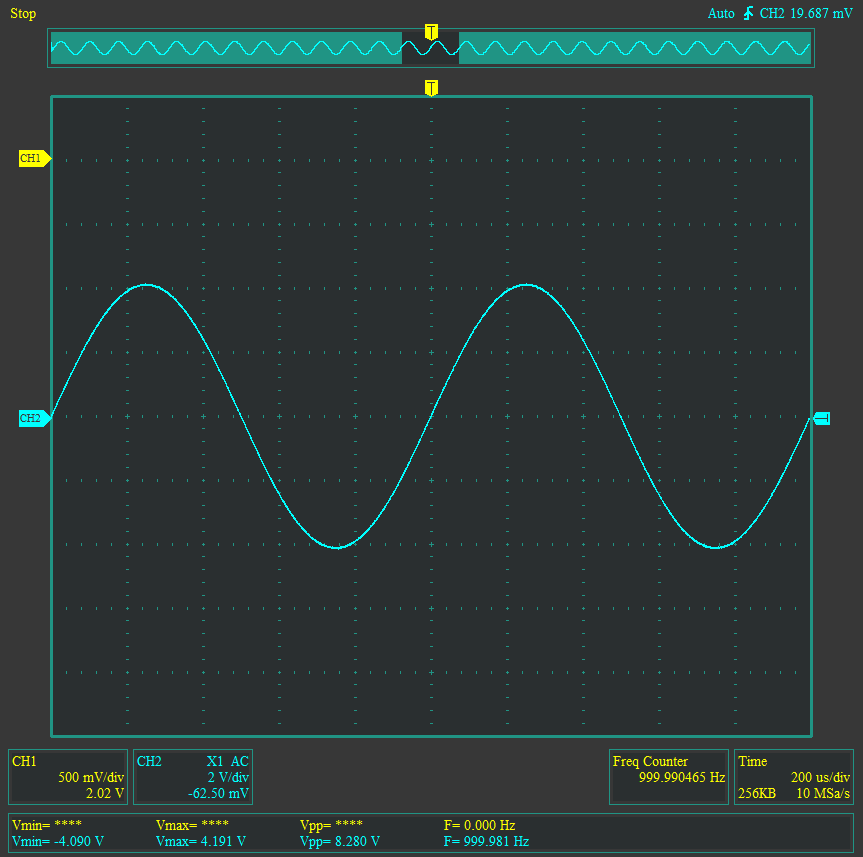
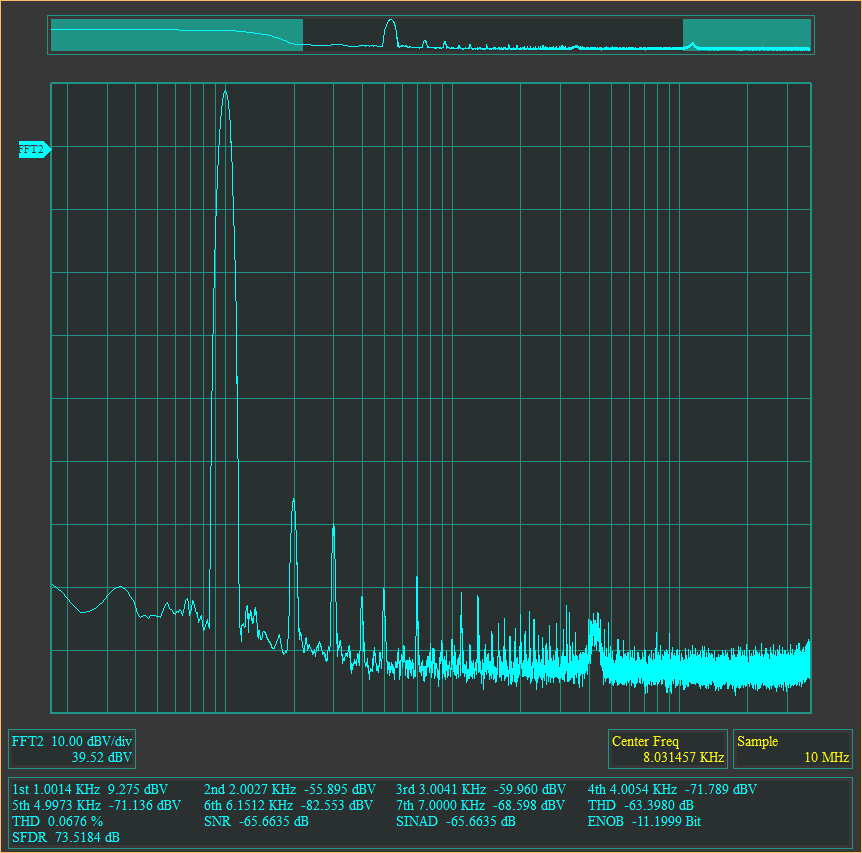
And what about distortion into the reactive load? Still at 1 watt: 0.067%. Yes, because an amplifier is meant to drive a loudspeaker, you do not listen to it into a resistor. Low distortion into a resistive load is easy, it is less easy into a reactive one. Knowing how to design a circuit also means making it behave better connected to a real loudspeaker, not only into a resistor just to show off a measurement. When an amplifier stays composed and linear into a reactive load, something happens in listening that customers always describe the same way: the sound grows in size, not in annoyance.
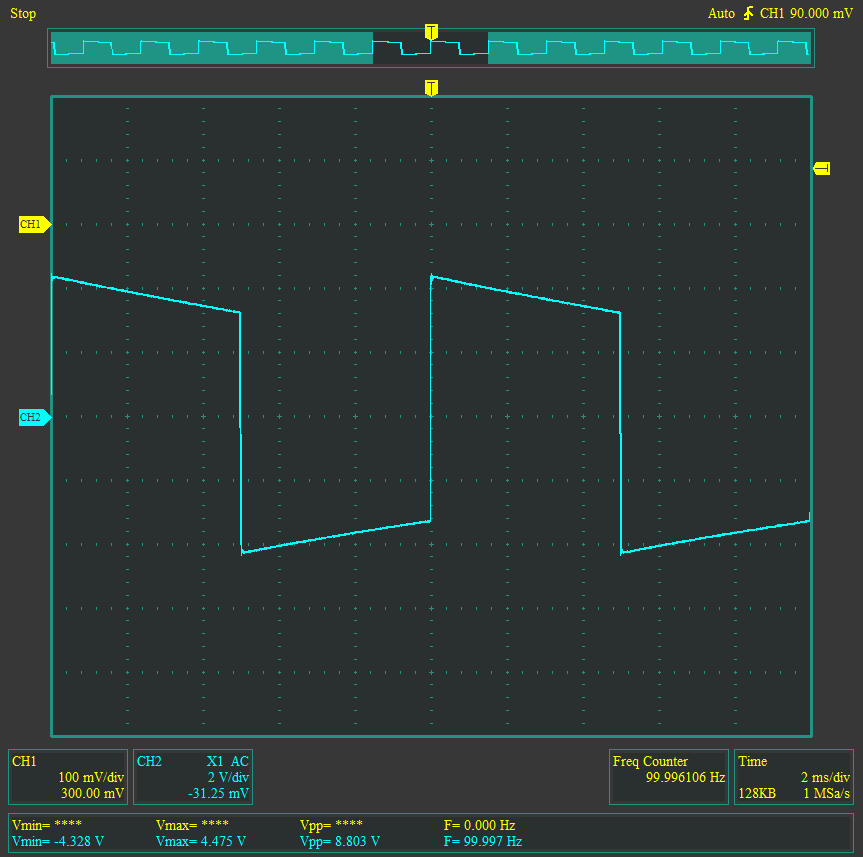
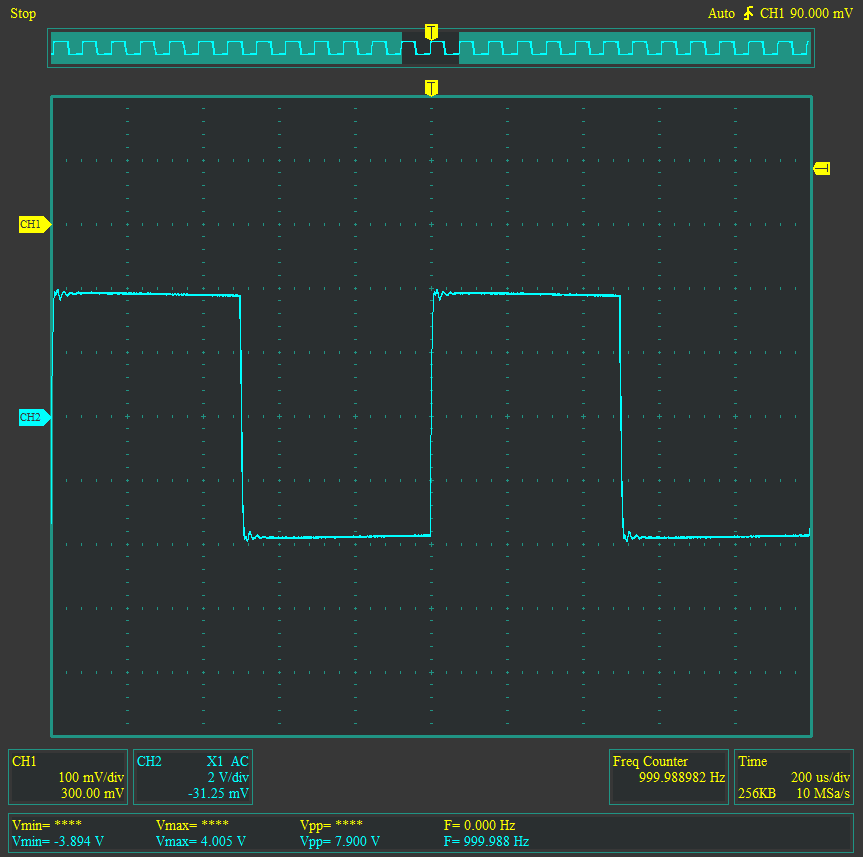
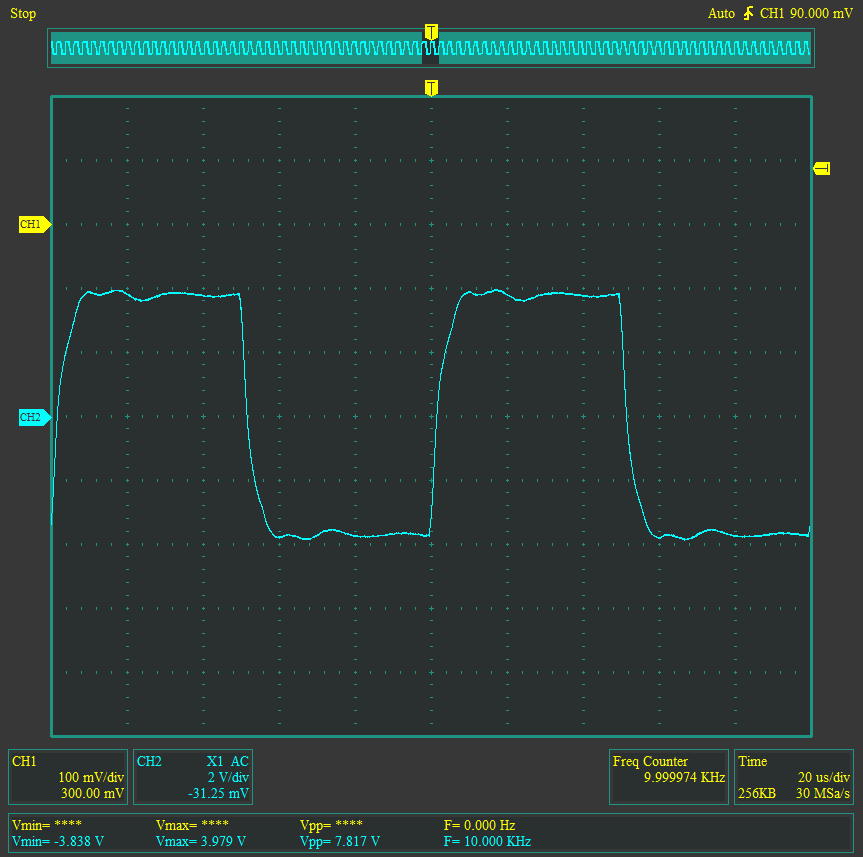
Square waves at 100 Hz / 1 kHz / 10 kHz…
You do not listen to square waves, but they tell you a lot: speed, stability, overshoot, ringing, transformer behaviour, and feedback margin. They are a fast way to see whether the circuit is “under control” or fighting itself. Here the square waves show clean and coherent behaviour, without the typical aberrations of sloppy projects.
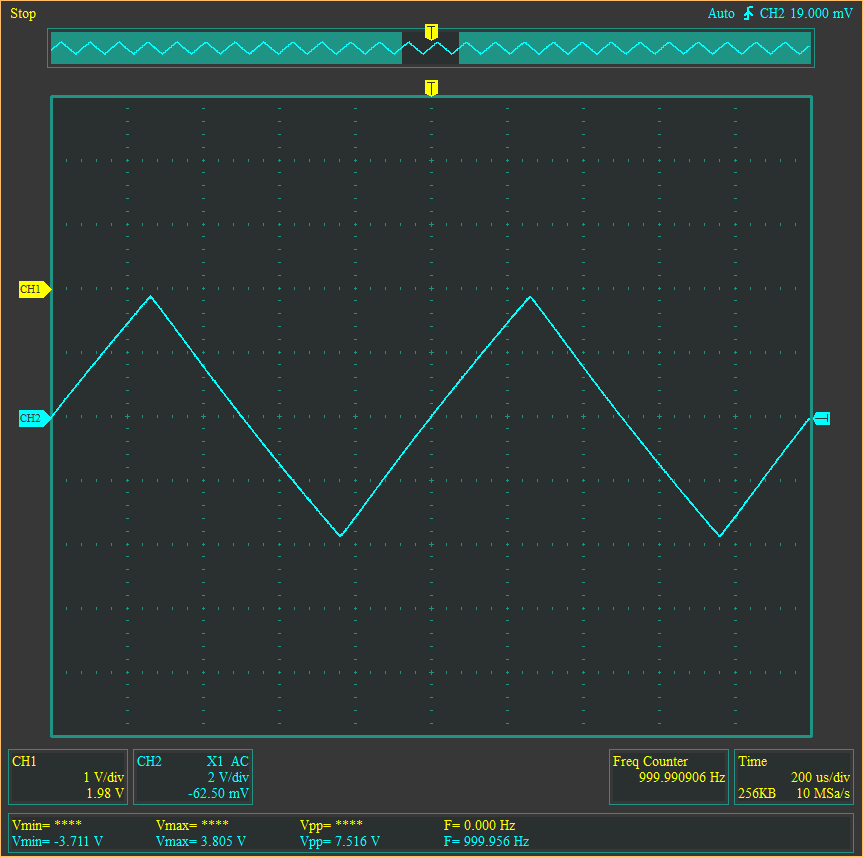
The triangle wave that shows perfect waveform symmetry
The triangle wave is another simple but revealing test: it highlights linearity and transfer symmetry, which is exactly what was previously compromised by half-cycle compression. Here the waveform is clean and symmetrical, a sign that the circuit is operating coherently and that one half of the cycle is not “weaker” than the other.
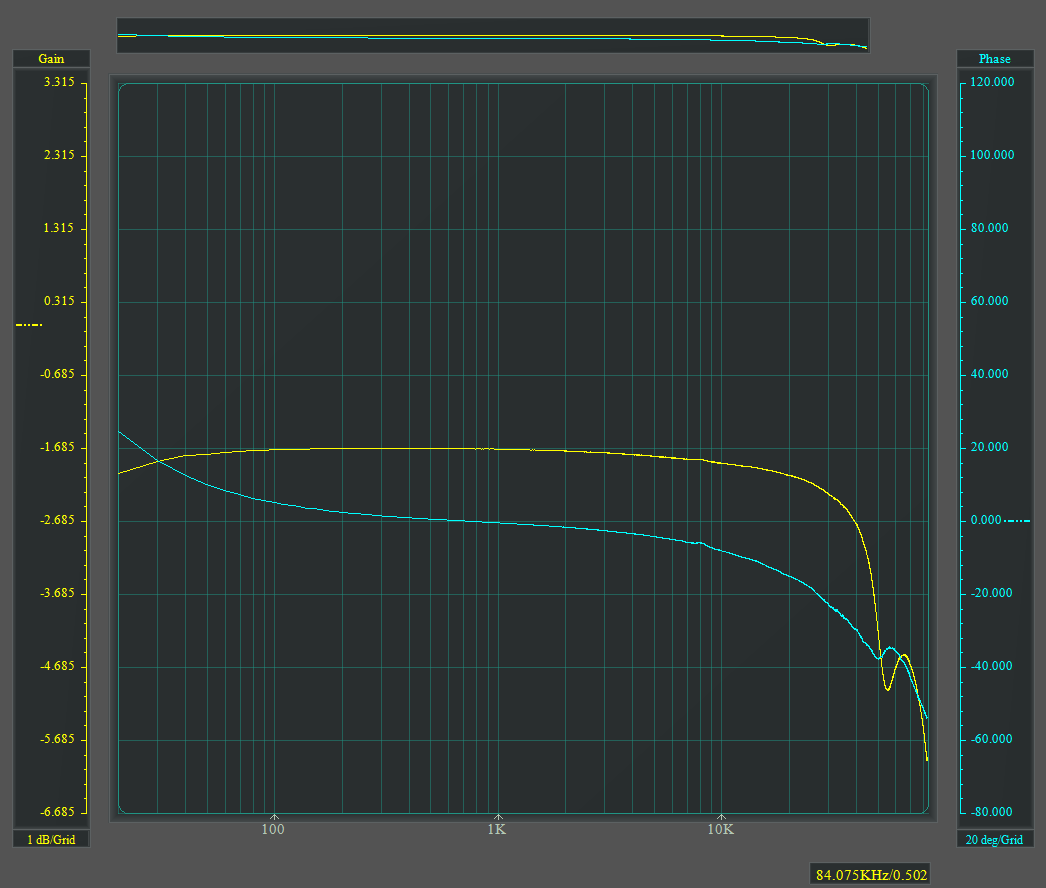
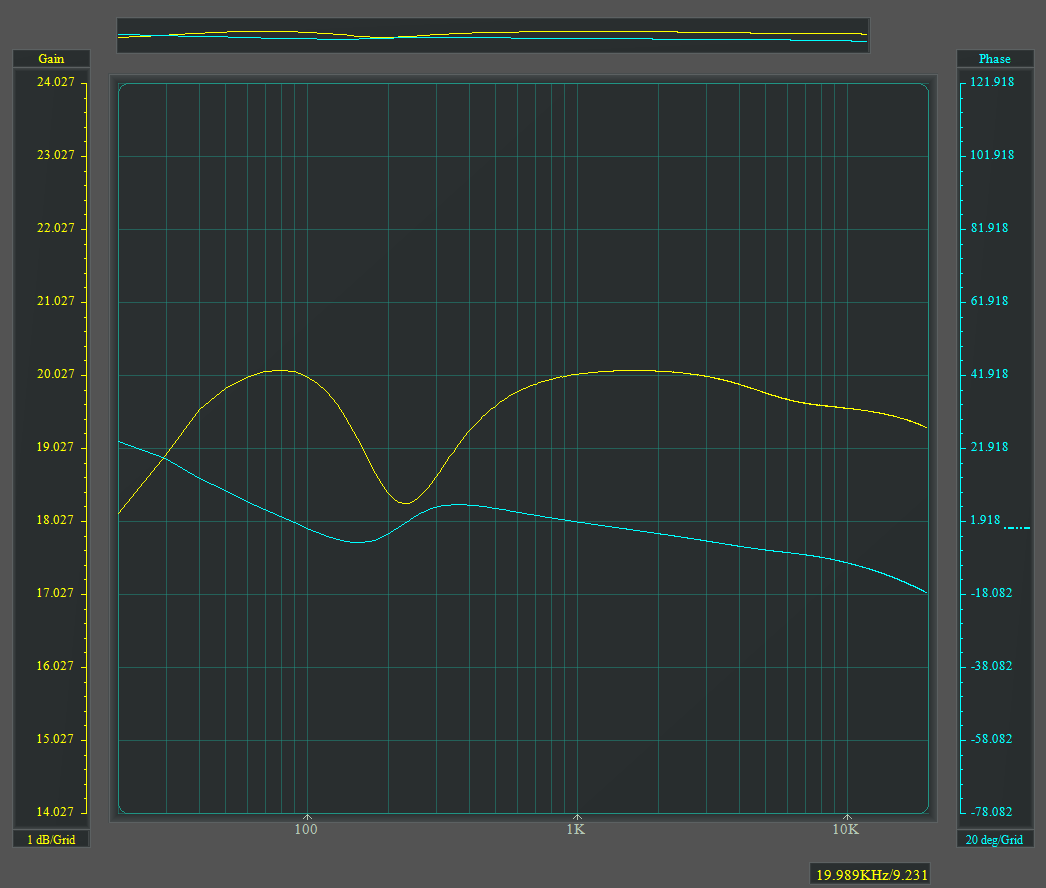
And the frequency-response trend into a reactive load
This is the measurement that closes the loop, because it summarizes in one go what really matters: how the amplifier reacts when the load is not an ideal resistor but a complex system. If the curve is regular and controlled here, then you have a single-ended amplifier that does not change character depending on the speaker, and that does not force you to hunt for “easy speakers” as a crutch to hide the project’s defects.
How does it sound? The customer who built the premium schematic with SB-LAB transformers tells us: The power is more than enough, at 10 o’clock it fills the room with sound. The harmonic content of string instruments is remarkable. The question comes naturally, but what the %$£§ have I been listening to until now? Forgive my language… I have never heard such a combination of sweetness, detail and refinement. I am basically listening to the Tannoys for the first time! It is incredible, there is not the slightest trace of hardness, the sound is a caress, even at high volume. The soundstage is breathtaking, it feels like having an orchestra in the room, it never tires, bass and mids are fabulous! But again, the thing that shocked me the most is that you do not really feel sound pressure, I turn up the volume and the sound becomes bigger, not louder. It never happened before! My compliments. It was a long story, but it was worth it.
This is the point: when a single-ended amplifier is designed properly, power stops being a “race for the number” and simply becomes adequate. Detail is not a trick caused by distortion and harshness, it is real information. Sweetness is not a blanket that hides things, it is the absence of artefacts. And above all, the perception of volume changes because you are not listening to an amplifier that struggles, but to an amplifier that is in control. This story, starting from a basement-built amp with a PCB full of compromises, led to the birth of Phoenix because once you see and measure certain mistakes, you cannot ignore them anymore.