In the audiophile world, there are many preconceived ideas about point-to-point wiring, often presented as the best method to achieve superior sound. In reality, there is no intrinsic sonic advantage between a point-to-point wired amplifier and one built on a printed circuit board (PCB), if both are correctly designed and assembled. It is worth calmly analyzing the pros and cons of each approach.
What is point-to-point wiring
Point-to-point wiring is a traditional method where components are connected to each other with wires and soldering, without using a PCB. It offers flexibility in component placement and makes modifications and customizations easier, especially during prototype tuning and on unique units.

What is PCB assembly
The printed circuit board is the standard solution in the electronics industry. It allows precision and repeatability in the placement of components, reduces the risk of assembly errors, improves thermal management, and makes the production of multiple identical units efficient.
Historical background
Point-to-point wiring has ancient roots and is widely seen in vintage radios, where components were mounted on frames or tag strips and connected with wires soldered one by one.

PCBs, as we know them today, appeared during World War II and gradually spread thanks to advantages in precision, repeatability, and compactness. Today, they are an industrial standard.
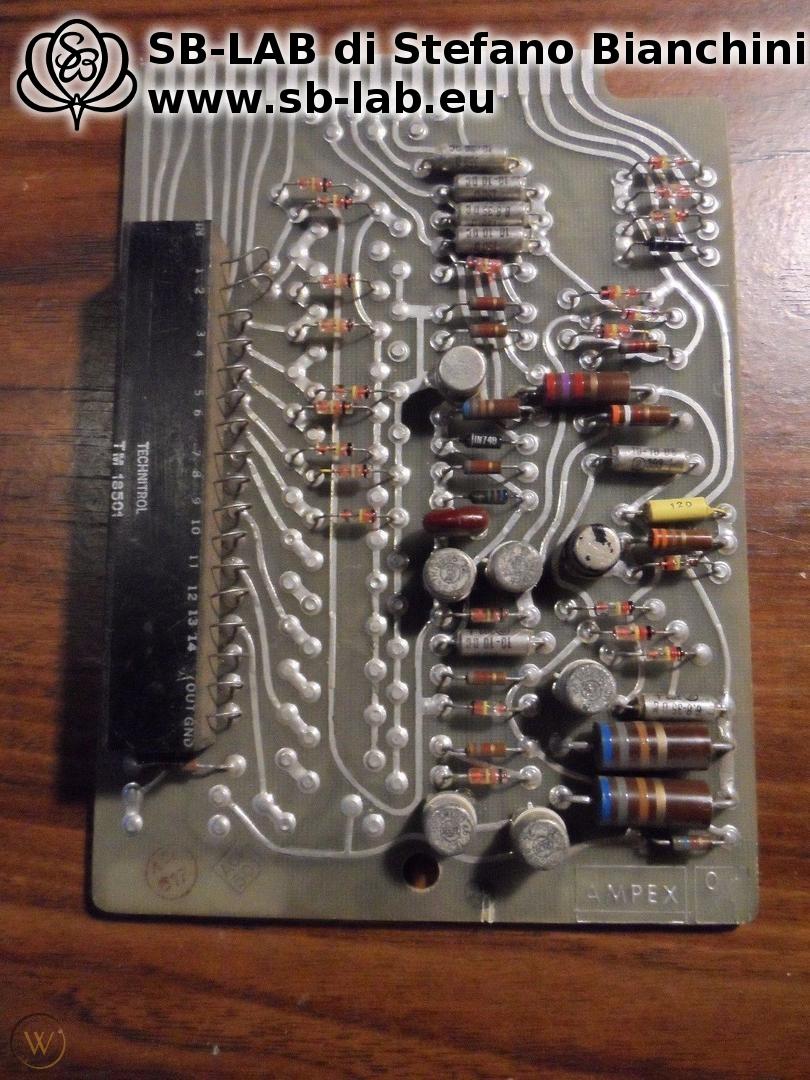
Pros and cons at a glance
- Point-to-point wiring: maximum freedom of intervention, excellent for prototypes, unique units, testing, and tuning. On the other hand, it requires skill and time, is difficult to replicate across many units, and is unsuitable for very small or SMD components.
- PCB: excellent for series production, reduces human errors, allows compact and tidy layouts, provides better current management and spacing. Flexibility for modifications is lower, so good preliminary design is essential.
When to choose one or the other
Choose point-to-point wiring for experiments, prototypes, and unique projects where fast interventions, customizations, and fine-tuning are needed. Choose PCB when the project has already been refined and you want repeatability, reduced assembly time, clean layout, and ease of producing multiple identical units.
Impact on sound: what really matters
There is no technical reason why point-to-point wiring sounds better than a printed circuit board, if both are correctly designed and built. Performance depends on concrete factors: parasitic capacitance, unwanted coupling between conductors, component quality, proper grounding paths, and attention to construction details. In short, it is not the method itself that determines the result, but the skill of the designer and assembler.
In fact, the opposite must also be said: poorly executed point-to-point wiring can become a disaster. If wires and components are arranged without logic, with long paths, unnecessary crossovers, weak solder joints, and improvised grounds, the risk is to create hum, instability, oscillations, noise, intermittent faults, and huge maintenance difficulties. It often happens to see amplifiers sold as “hi-end”, but wired so badly that at the first failure it is faster and more sensible to rebuild them from scratch rather than attempt a repair.

So, the point is not whether to use PCB or point-to-point wiring. A well-built assembly will work well in both cases, while messy point-to-point wiring is just a source of problems, not an added value.
Examples and real cases
A customer built two tube amplifiers with point-to-point wiring just for fun, achieving an excellent result. Full article available here.
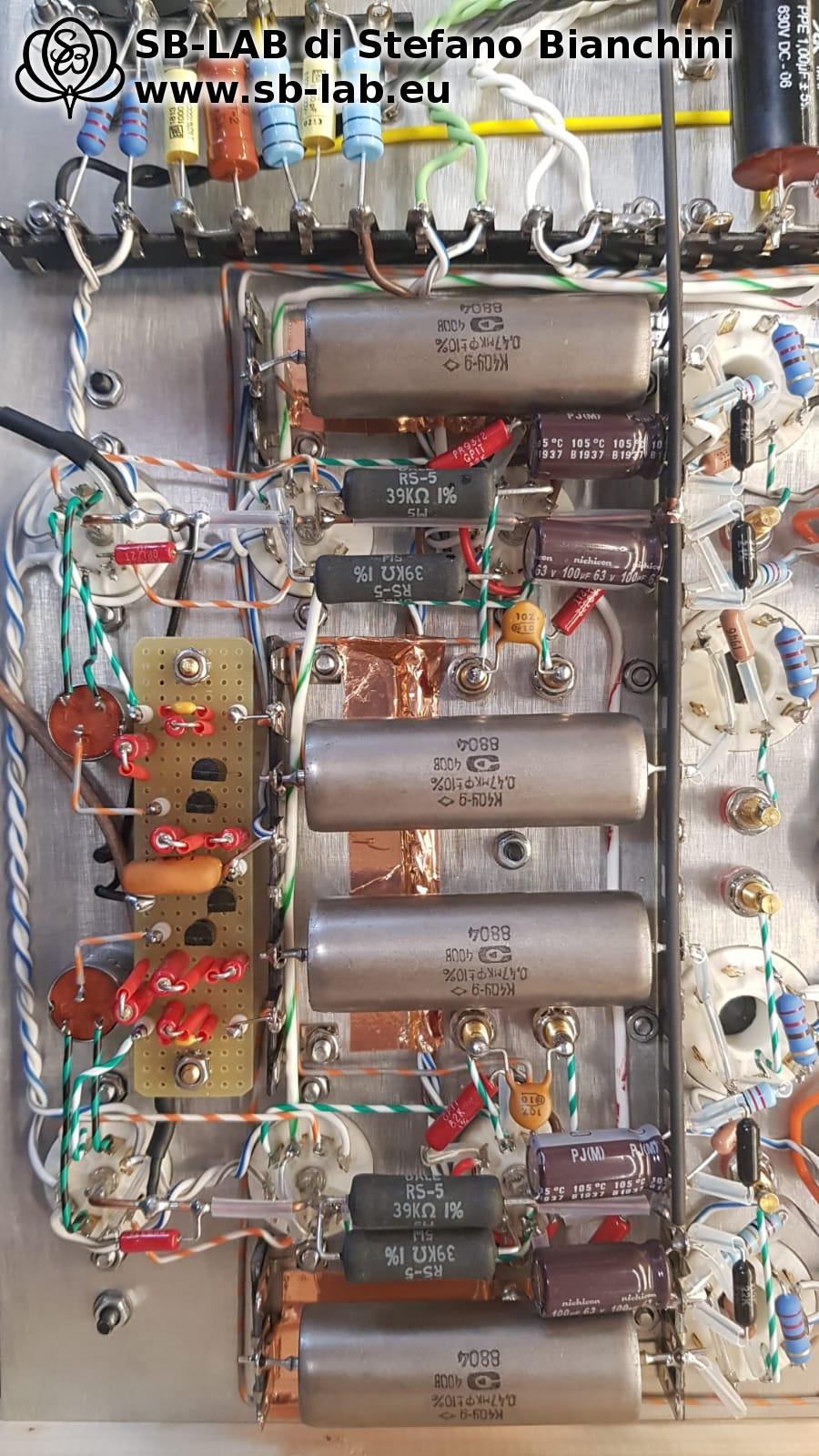
Online you can also find examples of poorly executed point-to-point wiring: simply claiming “point-to-point” does not guarantee quality. The same applies to PCBs: what matters is the design and execution, not the label. I have already talked about some questionable builds.
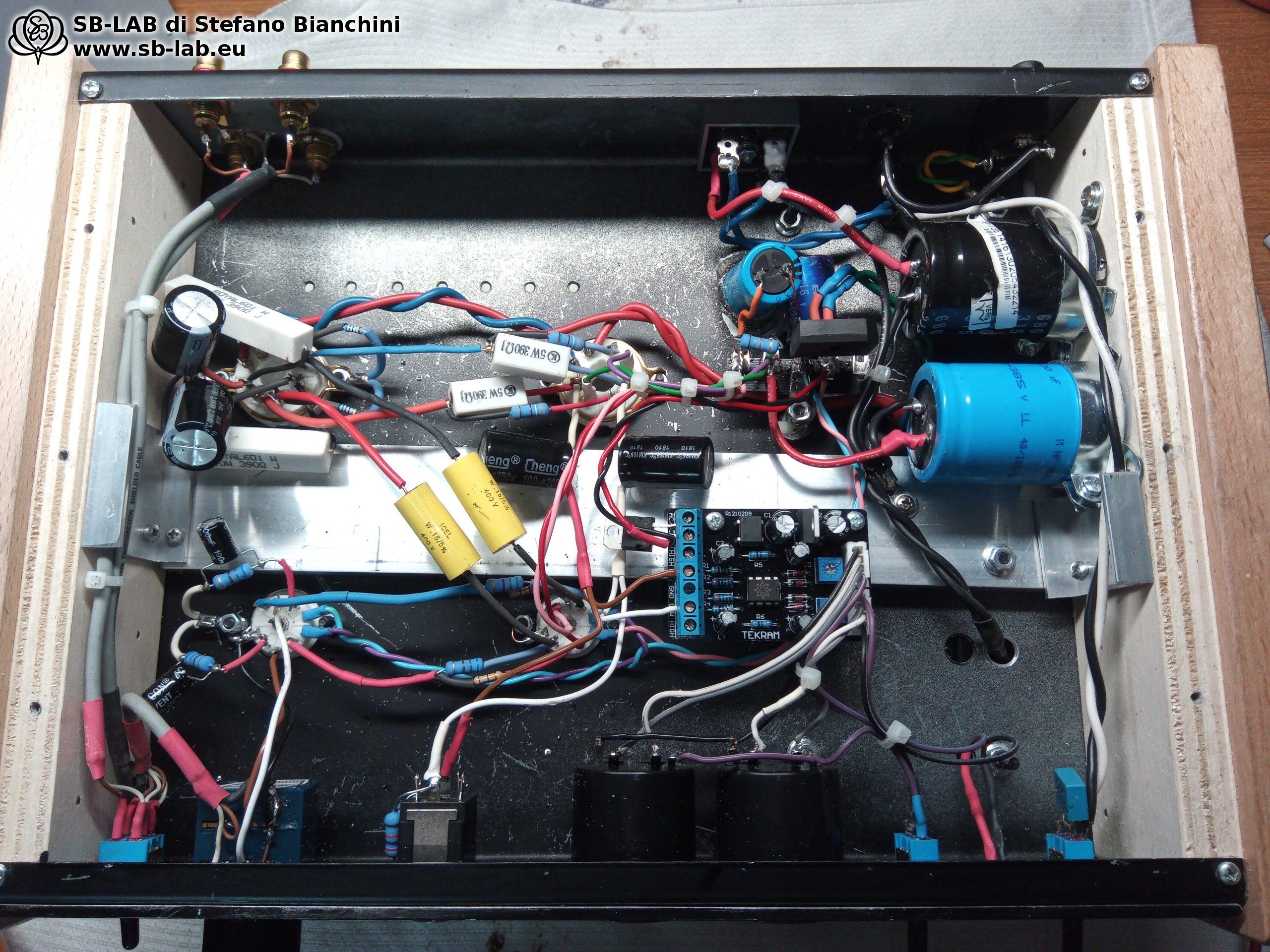
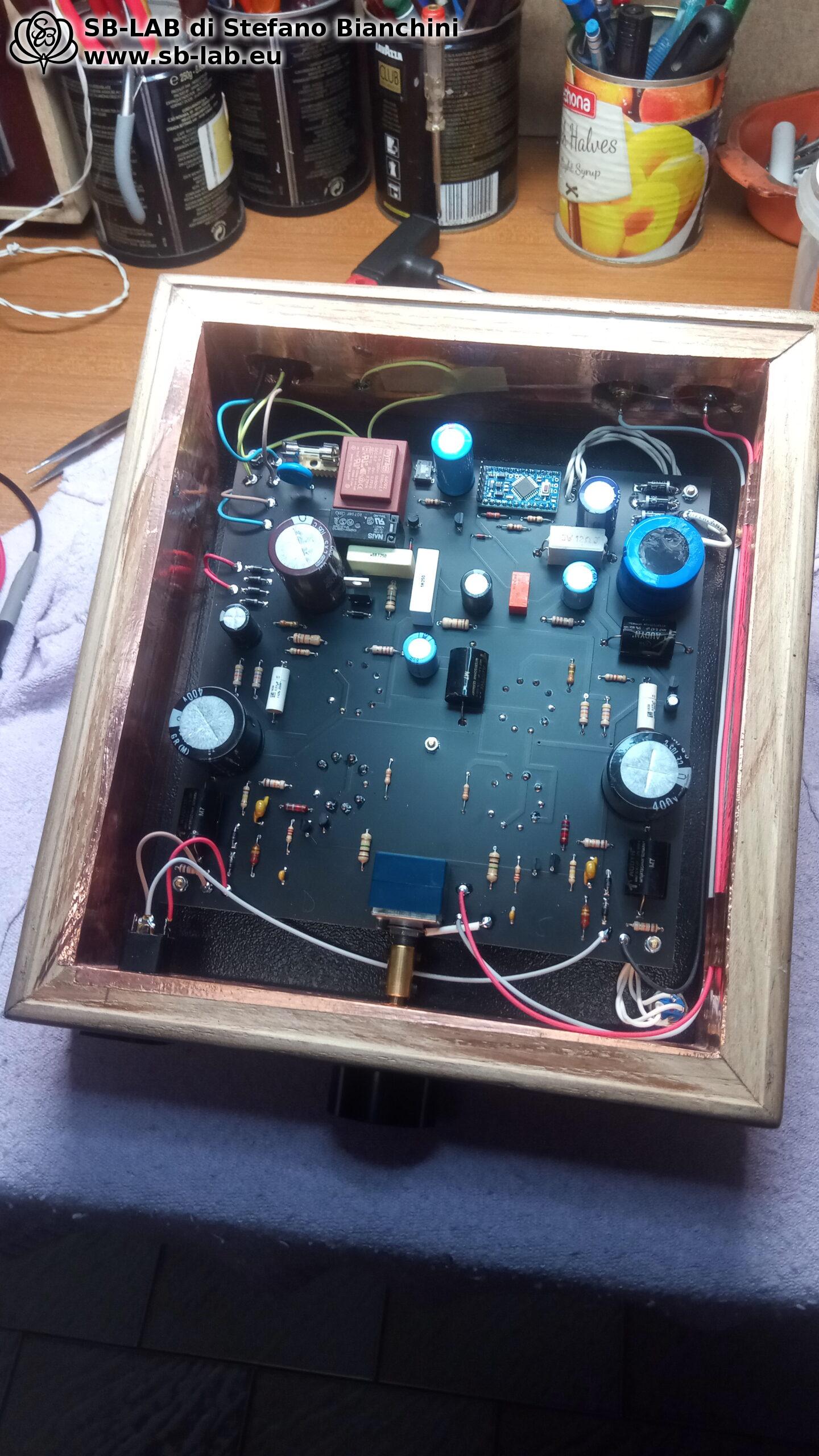
Below is my PCB-mounted version of the Nebula headphone amplifier, from design to the finished product.
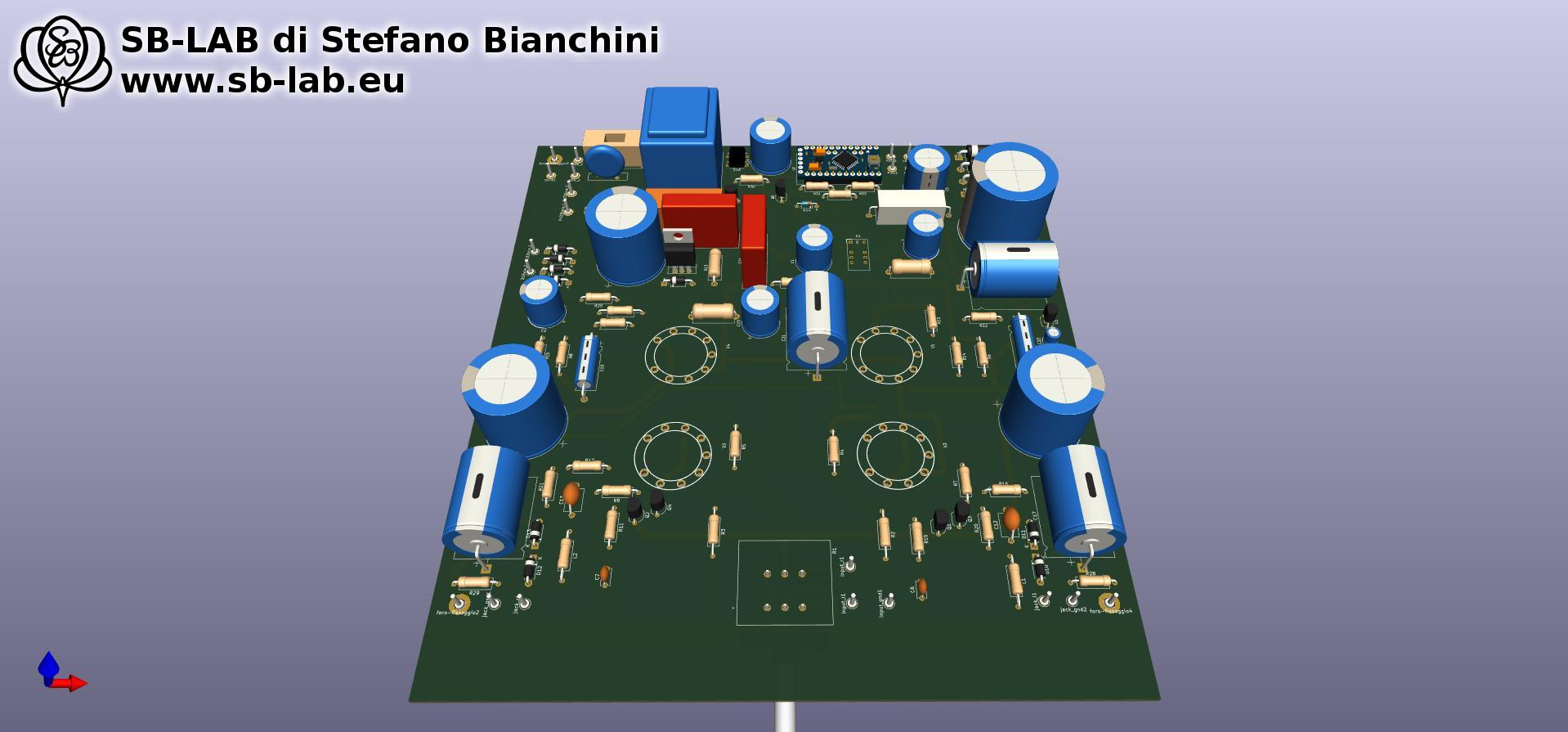
The role of PCB design in craftsmanship
Designing a good PCB requires time and attention: component placement, track widths, ground returns, insulation, and heat dissipation must all be carefully considered. The fact that the board is produced by a machine does not reduce the final quality, because assembly remains manual and every solder joint must be done precisely.
Conclusions
Point-to-point wiring and PCBs are different tools, useful at different stages of a project. The former excels in prototyping and customization, the latter in repeatability, clean layout, and production efficiency. From a sonic perspective, there is no predefined winner: what matters is the quality of the design and execution.