Ten years ago I built this Euridice preamplifier using a pair of PC88 tubes. Back then I achieved a bandwidth of 30 Hz – 65 kHz with about –3 dB attenuation. Considering they were my very first transformers and I lacked today’s measuring tools, it was acceptable. I smile now remembering how I performed spectrum analysis with a PC sound card and gauged bandwidth by eye using only an oscilloscope and a function generator.
Recently a customer asked me for a pair of transformers to use PC88 tubes in single-ended mode, so I dusted off the old I10K600A transformer design as a starting point for a new model. My current standards demand a maximum –1 dB attenuation at 20 Hz and full audible-band coverage. As the transformer is meant for a zero-feedback circuit, there’s no strict need for the high-frequency end to extend far beyond 20 kHz—nice if it does, but not essential.
In this article I present my new-generation interstage transformer, suitable for many tubes beyond the PC88. I also give practical examples of how a transformer’s primary inductance interacts with a tube’s internal resistance to shape frequency response—something I discussed theoretically in How an SB-LAB Audio Transformer Is Born. You’ll see how changing the tube type, while keeping transformer and bias current constant, alters the transformer’s behaviour. Once again, it proves that primary impedance alone is not enough: every tube really needs its own specific transformer (or close to it), contrary to those who still claim a single transformer suits both an EL34 and a 300B.
I now leave space for the historical 2013 article; below it I continue with the presentation of the new transformer…
Transformer-Coupled “Euridice-Inspired” Preamplifier
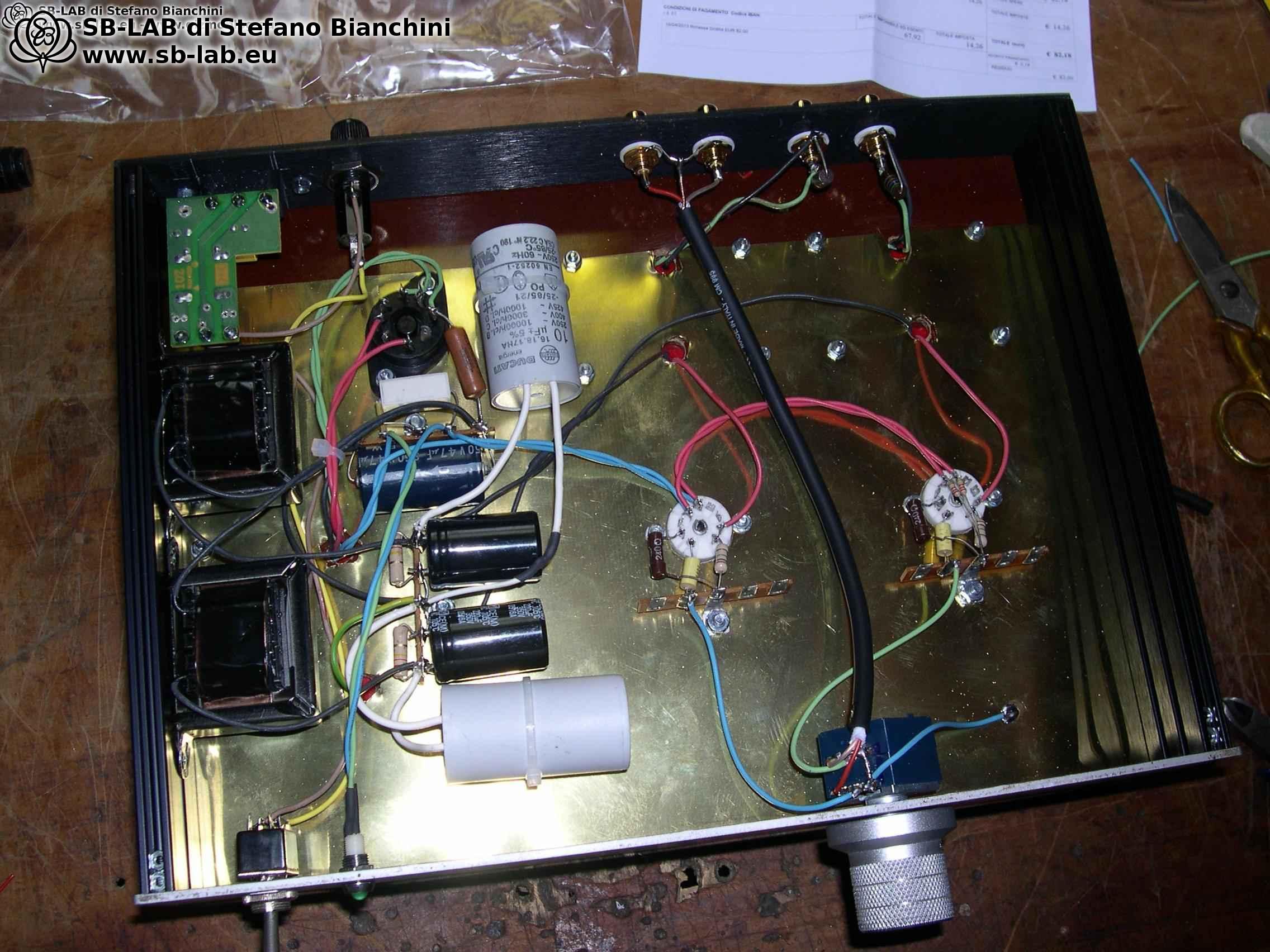
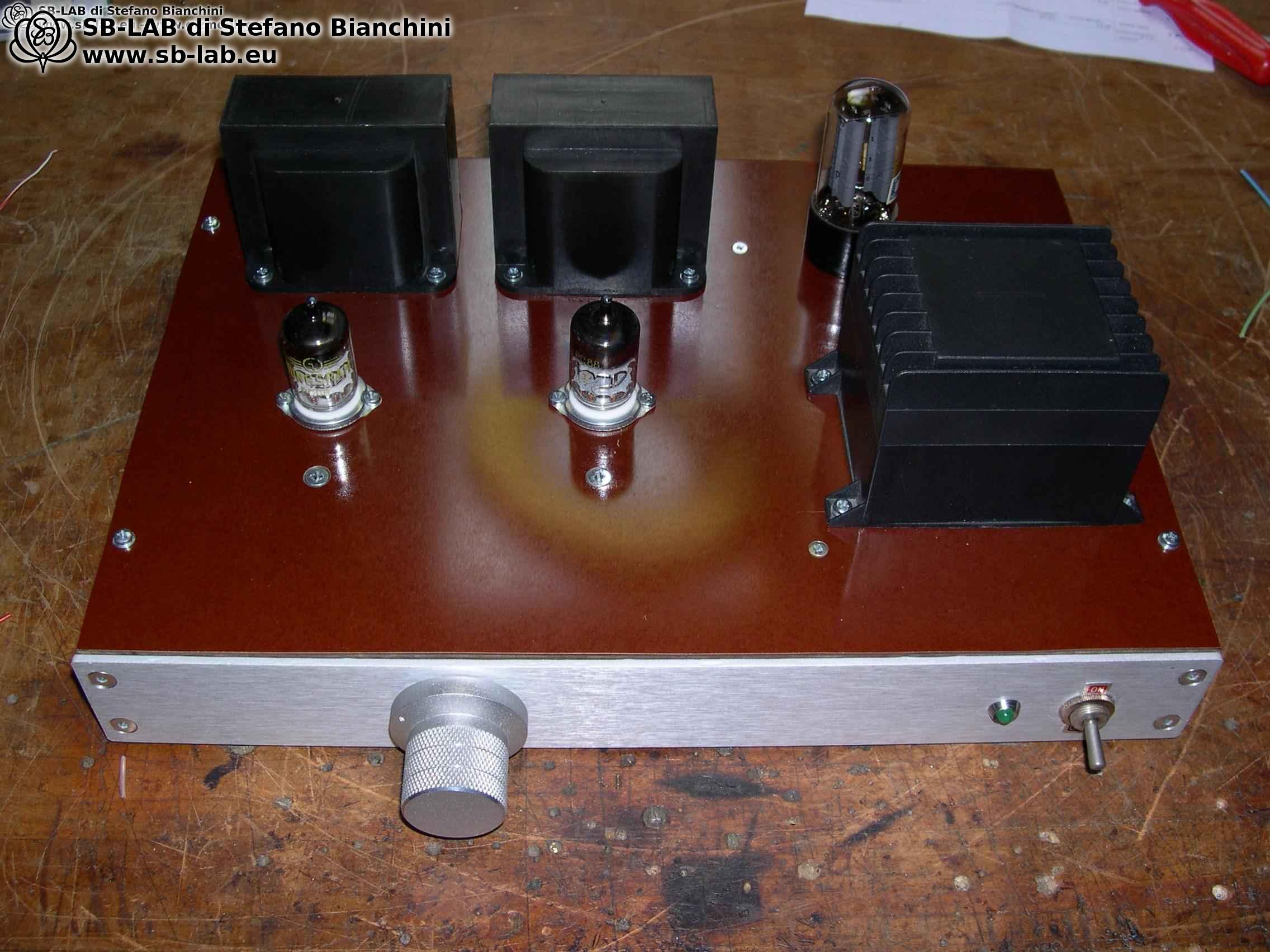
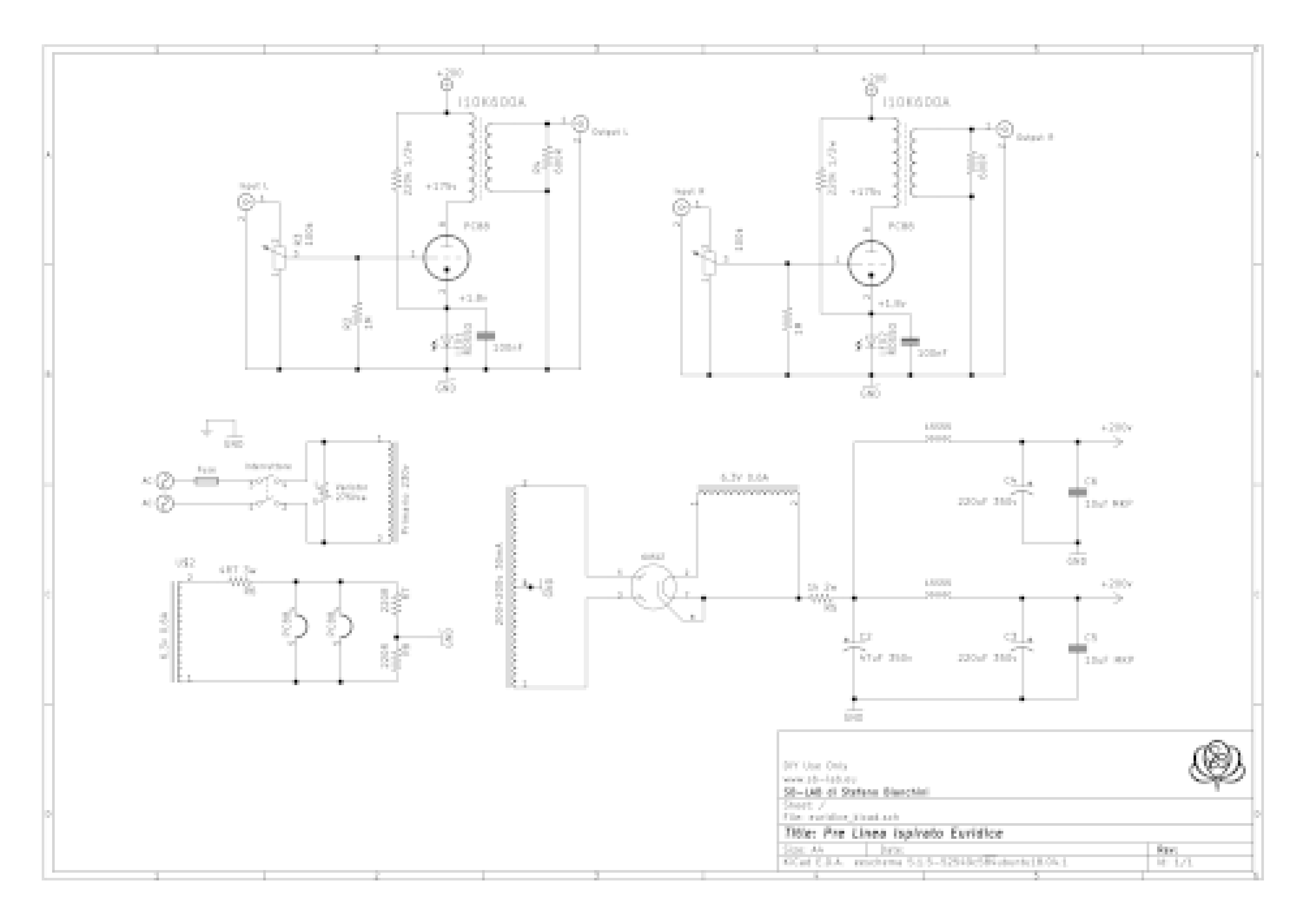
I built this transformer-coupled preamplifier on the Euridice schematic by Ciro Marzio (CHF No. 26), but without the phono stage and with a redesigned power supply using only two 20 H chokes. Because 5842 tubes are costly and hard to match, I used PC88 as the original article also suggests (6DL4 = EC88). Instead of self-biasing with a resistor and capacitor, I biased the tubes with a simple red LED, which provides just the right voltage drop. This avoids sonic coloration from the capacitor’s reactance and makes the tube behave like fixed bias. Of course you can use the classic resistor method—just choose a good electrolytic capacitor and optionally bypass it with a 1 µF polypropylene cap. The circuit also supports 5842 (remove the filament drop resistor) and PC86, EC88, EC86 or EC8010 with the same adjustment. For rectification I used a common and effective 6X5GT, more than adequate for two small tubes. In the old photos you’ll see a 5Y3GT, but when updating this article I recommended the 6X5GT as more appropriate. A 6X4 can also be used (different socket).
The premium schematic below
Although some builders split this preamp across two or even four chassis to separate power and audio stages, trust me—it’s an absolutely pointless waste of resources. The circuit is simple and the whole unit can be built on one chassis. Just rotate the power transformer 90 degrees and everything will work perfectly, hum-free and without compromising sound quality. DC filament supply is needed only for a phono stage; the line stage runs perfectly on AC filaments.
Even without replacing the PC88 with EC8010, bass is strong and there’s an overall timbral improvement with greater dynamics. Distortion and noise floor are completely inaudible.
Technical data:
Voltage gain: factor 8
Bandwidth: 30 Hz – 65 kHz (–3 dB) — with my latest transformers it can go below 20 Hz using EC8010 instead of PC88.
THD: below 0.1 % at standard line output level
Completely free of negative feedback
Spectrum analysis
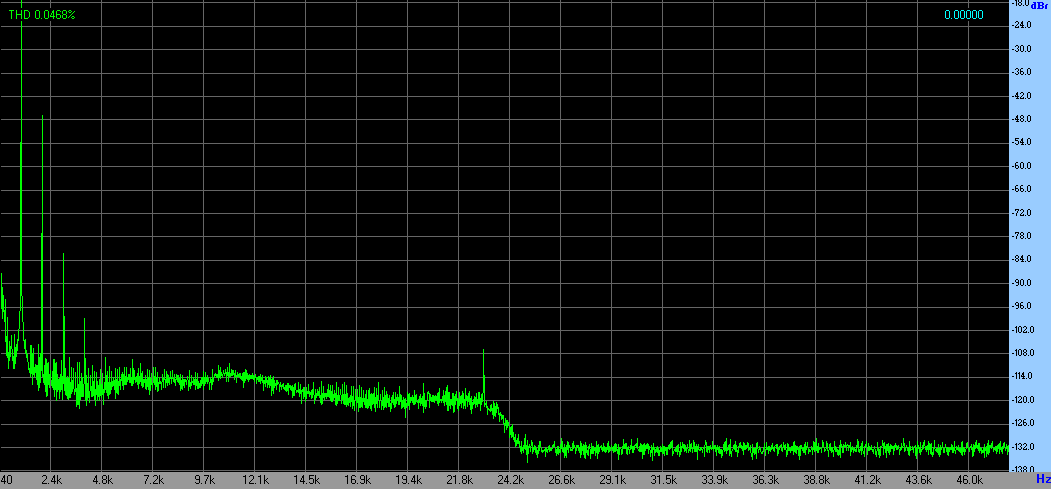
Measurement noise floor –108 dB, measured THD 0.0468 %, second harmonic –30 dB.
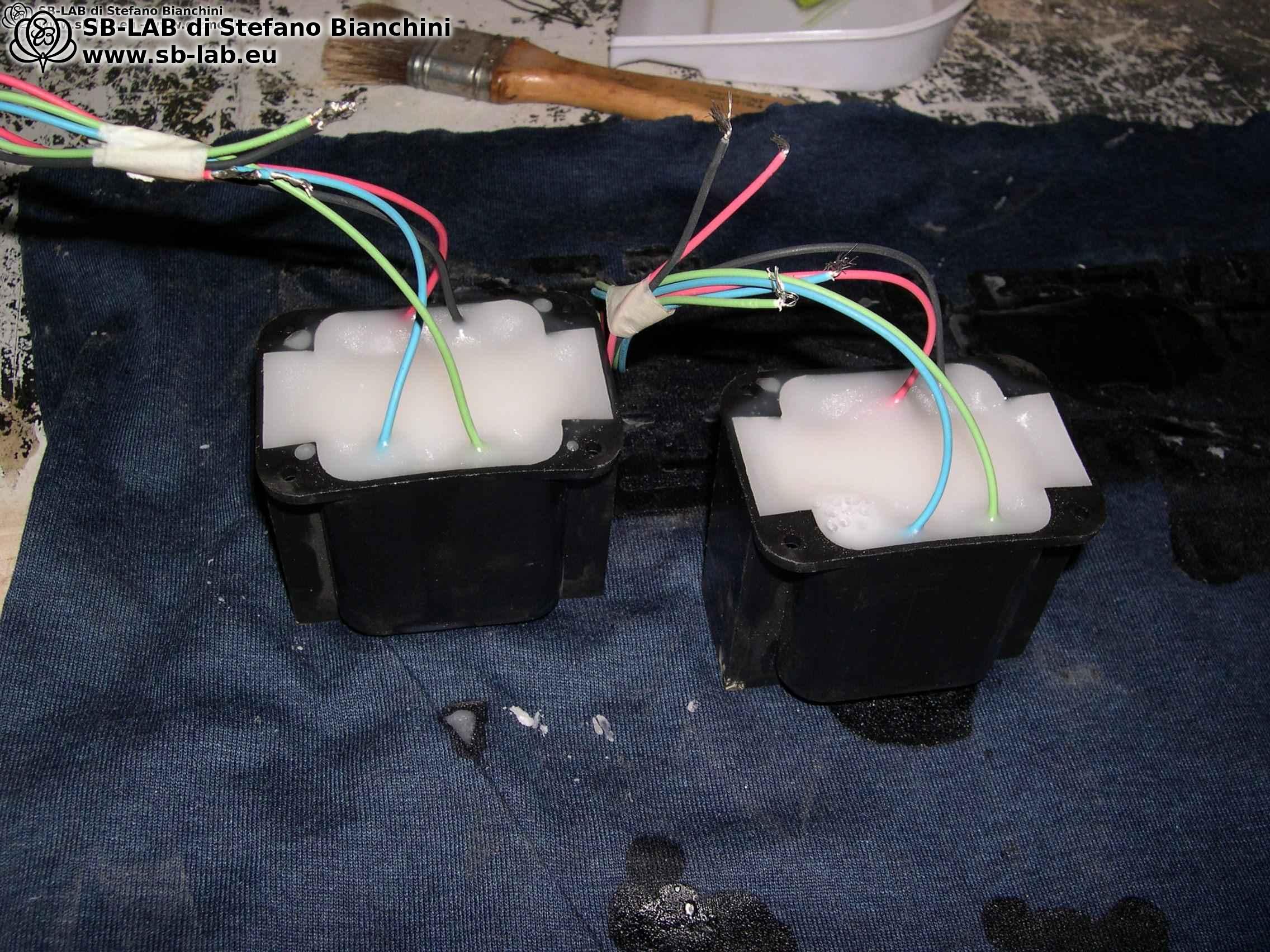
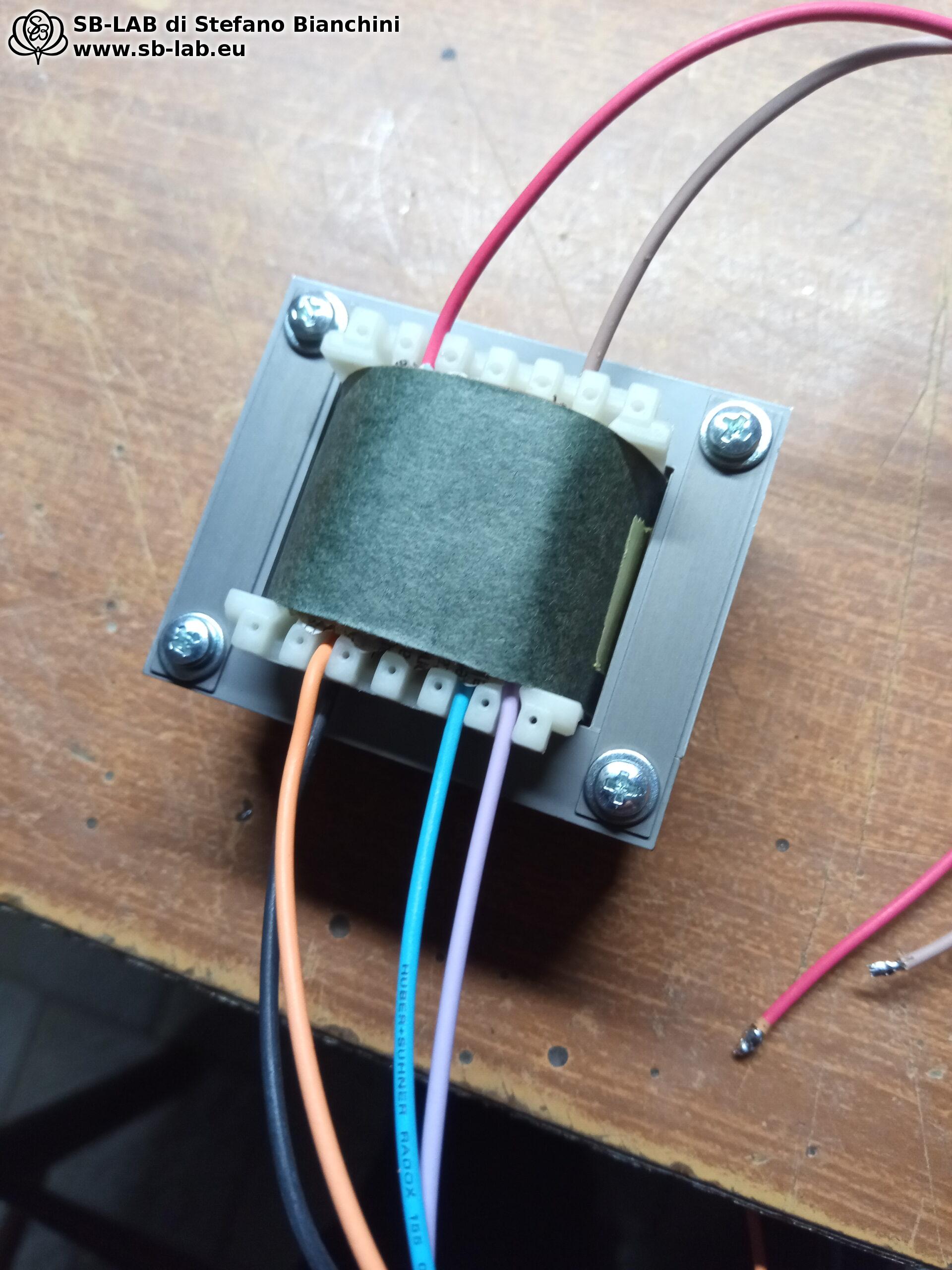
Below: the working sample (after three attempts) of the I10K600B.
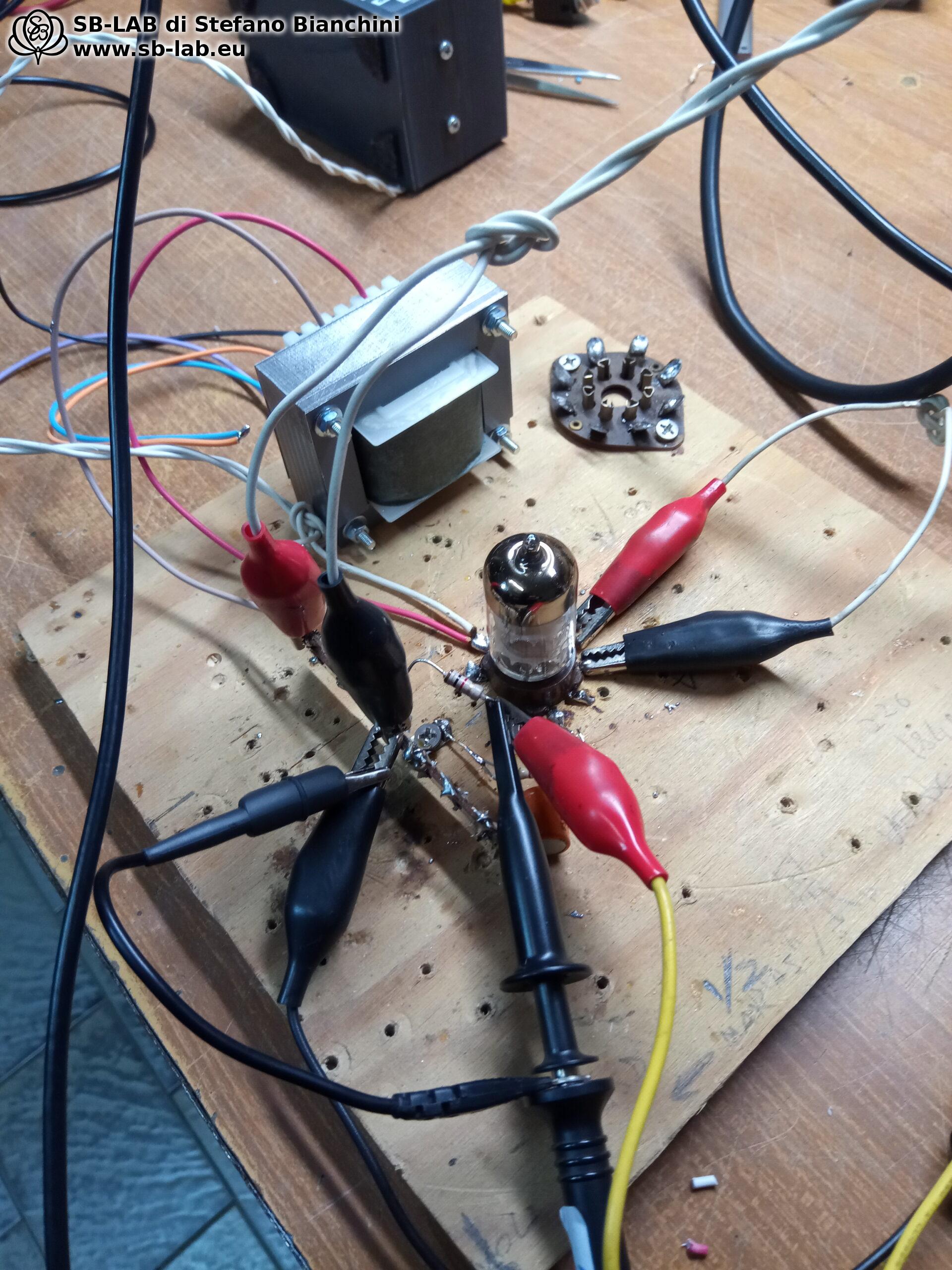
Here during testing with both the modified PS-305D supply and the tube-regulated high-voltage supply.
The table below shows frequency-response graphs of the transformer with various tubes. Measurements were made at 250 V and about 5 mA bias, adjusting input so the output stayed at 8 Vpp on a 600 ohm load at the secondary.
This transformer can therefore be used with all triodes having internal resistance up to about 7800 ohm. Examples include 6CG7, 6FQ7, 12BH7, 5814, 6N1P, 2C51, ECC84, 6CW7, 6GK5, 6FQ5, EC97, PC97, 6FY5, 4FY5, EC8010. Higher-Ri tubes can also be used by paralleling sections, provided DC current stays within 5–6 mA.
Transformer specifications:
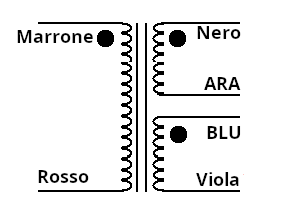
Primary impedance 10 k?. Two 300 ohm secondaries can be used separately, in series for 600 ohm with center tap, or in parallel for 150 ohm. Primary inductance 70 H; leakage inductance 38 mH; primary resistance 610 ohm. Rated power 200 mW; max DC current 7 mA. I pot the units in resin to guarantee the air gap remains locked to within a micron—something impossible with clamps or bells.
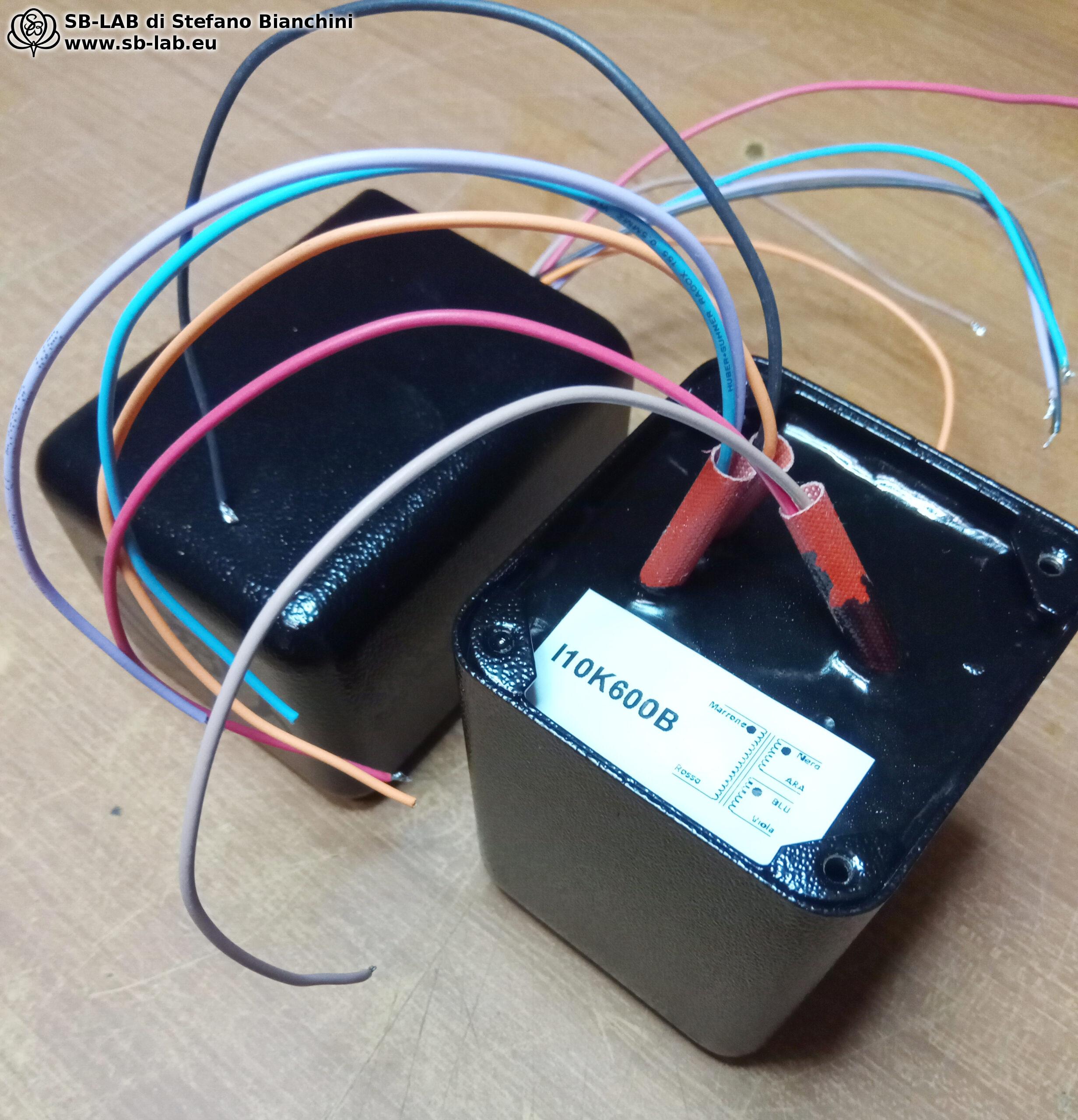
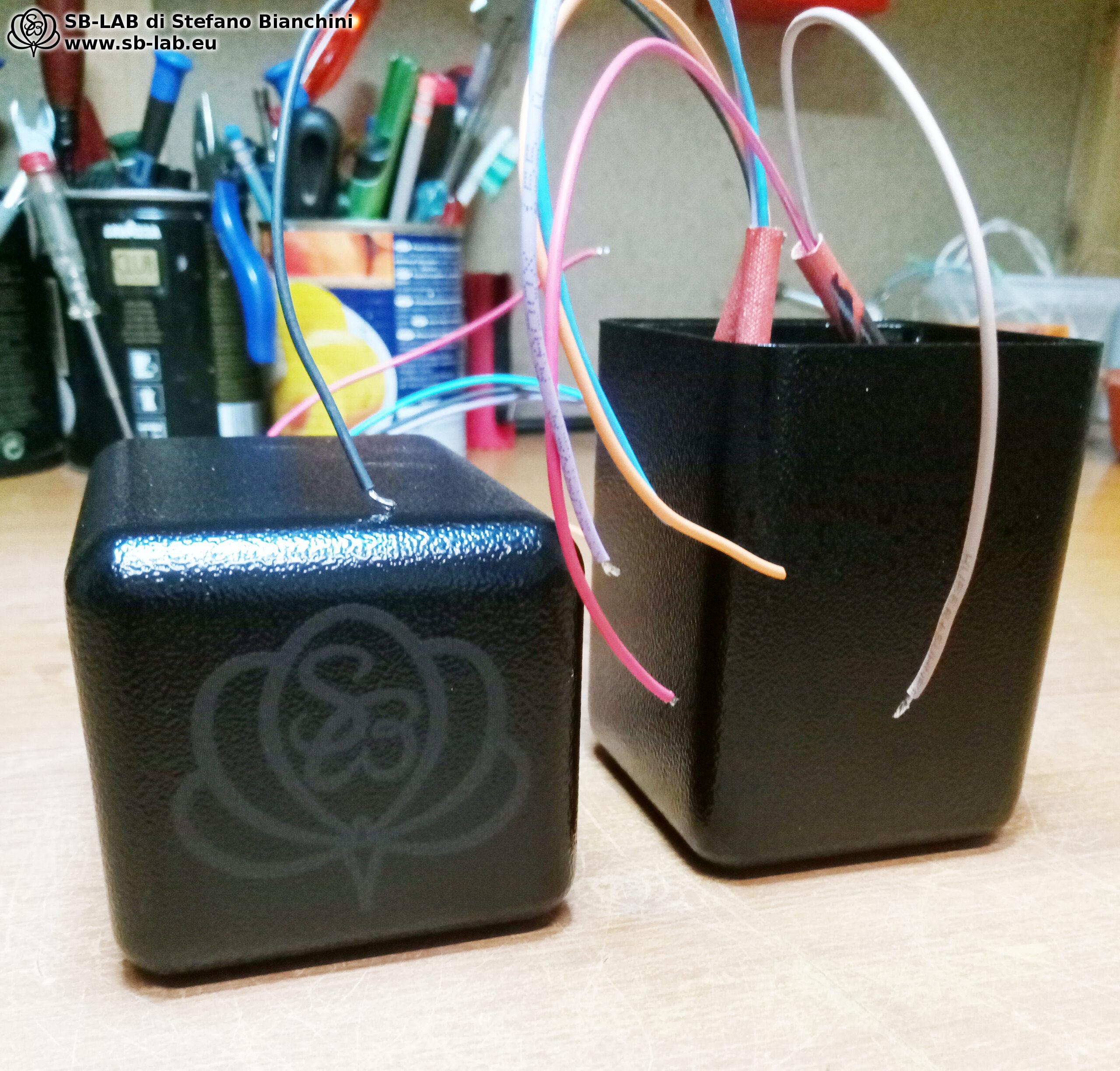
Base dimensions 77 × 71 mm, height 95 mm. On request I can build variants with different secondary impedances. This transformer is ideal for line-level preamps with balanced or unbalanced output, as interstage coupling, or for headphone amplifiers. For a quotation, click here to contact me.